Two fabrics can feel identical between your fingers and differ by 60,000 double rubs on the spec sheet. The hand of a fabric tells you almost nothing about how it wears; the tag on the back of the memo sample tells you nearly everything. Learning to read six numbers turns fabric shopping from a guess into a decision.
Abrasion: double rubs and what they predict
In the US, abrasion is usually tested by the Wyzenbeek method and reported in double rubs. A machine drags an abradant back and forth across a stretched sample; one pass out and back is one double rub, and the count is where the fabric shows visible wear or yarn breakage.
The general reference points used in the trade: around 15,000 double rubs for light residential duty, 15,000 to 30,000 for general residential, and 30,000 and up for heavy residential and light commercial use. Contract fabrics for public spaces often run well past 100,000.
Past roughly 30,000, higher numbers matter less than the marketing suggests. A 100,000 double rub fabric on a family sofa will not last three times as long as a 35,000 one, because sofas fail from soil, pet claws, sun damage and cushion collapse long before the weave abrades. Treat 30,000 as the threshold for a piece in daily use and stop optimizing.
European mills often report Martindale instead, a different test with a different motion. There is no reliable conversion between the two, so do not convert; compare Wyzenbeek to Wyzenbeek and Martindale to Martindale.
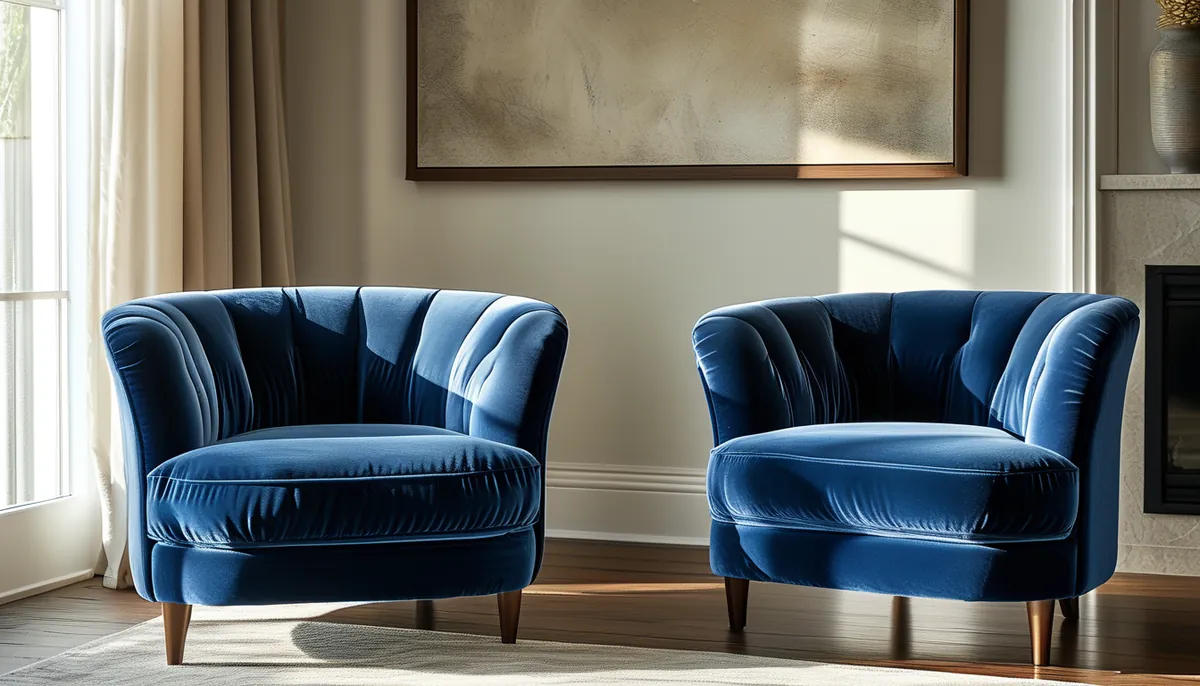
The number also says nothing about pile crush. A velvet with a high abrasion rating still develops shading and pressure marks where people sit, because the pile lies down. That is a characteristic of the construction, not a defect, and it is the most common complaint from someone who bought a velvet on abrasion numbers alone.
Cleaning codes, which matter more than abrasion in a real house
The cleaning code is a single letter and it decides how you will live with the fabric.
W means water-based cleaners only. S means solvent-based cleaners only, and water will leave a ring. WS accepts either, which is the most forgiving. X means vacuum and brush only, with no liquid at all.
An X-code fabric on a dining chair in a house with children is a mistake you will make once. An S-code linen blend in a household where drinks travel is nearly as bad, because the practical response to a spill is a damp cloth, and a damp cloth on an S-code fabric creates a water mark that then needs professional attention.
Performance fabrics change this calculus. Solution-dyed acrylic has the color built into the fiber before it is spun rather than applied to the surface, so it can usually be cleaned aggressively and it resists fading in sunlight. That is why it dominates outdoor furniture and why it has moved indoors into sunrooms and family rooms.
Stain-resistant finishes applied at the mill are real but finite. They shed spills for a period of use and cleaning, and they wear off. Ask whether the resistance is inherent to the fiber or a topical finish, because that answer predicts how the fabric behaves in year five.
Fiber content, read as a list of tradeoffs
Cotton and linen are breathable and take dye beautifully, and both wrinkle and abrade faster than synthetics. Linen in particular relaxes and shows every crease at the seat front. Blends with a synthetic component keep much of the look and add a great deal of durability.
Polyester is the workhorse. It resists abrasion, holds color, and costs less than natural fibers, and its weakness is that it can pill in a low-quality construction and it feels warmer to sit on.
Wool is exceptional for upholstery. It is naturally flame-resistant, it recovers from compression, and it resists soiling. It costs accordingly and it is not the right choice where moths or heavy pet traffic are in play.
Acrylic, specifically solution-dyed, is the sun and moisture answer. Faux leather and coated fabrics wipe clean instantly, which makes them attractive for dining seats, but check whether the coating is polyurethane or PVC and read the manufacturer’s guidance on body oils and sunscreen, both of which degrade some coatings.
Whatever the fiber, look at the construction as well. A tight, flat weave with fine yarns resists snags. A loose boucle or a chenille with long floats will be pulled into loops by a single cat, and no abrasion rating captures that. If pets are in the house, run your fingernail across the memo sample and see what happens.
Width, repeat, and railroading: the specs that set your yardage
Most upholstery fabric is 54 inches wide. Some designer goods run 50 or 56, and reading that number wrong throws off every calculation downstream.
The pattern repeat is given as vertical by horizontal in inches, for example 27 by 25 1/2. Any repeat means waste, because pieces have to be cut in register with each other. A large repeat on a sofa can add 15 to 25 percent to the yardage; a plain or a small overall texture adds almost nothing.
Railroaded means the pattern runs sideways on the roll, parallel to the selvage, so a long sofa back can be cut in one continuous piece without a seam. Up-the-roll means the pattern runs the normal direction and a wide piece needs seams, which on a large-scale print is visually awkward and adds yardage for matching. If you are covering anything wider than about 54 inches in one plane, ask whether the fabric is railroaded before falling in love with it.
Directional patterns and napped fabrics, meaning velvet and corduroy, must all be cut running the same way. A cushion flipped 180 degrees on a napped fabric reads as a different color in the same light. Tell the upholsterer if you want the seat cushions reversible, because that constrains the layout.
For rough yardage planning: a dining chair seat takes about 3/4 to 1 1/4 yards, a fully upholstered dining chair 2 to 3, an armchair 5 to 7, a loveseat 10 to 13, and a standard sofa 12 to 18. Add the repeat allowance on top, add a yard for skirts or contrast welt, and confirm with the person doing the work before ordering. Coming up half a yard short on a discontinued pattern is the worst outcome in this whole process.
Order all of it from one dye lot in one purchase. Lot-to-lot color variation is normal even at the high end, and a replacement cushion cut from a later lot will not match.
How designer fabric is priced and sold
Much of the designer market is organized in grades, meaning a mill assigns each pattern a letter or number that a furniture maker maps to a price adder. The grade reflects the mill’s cost, not durability. A high grade often means a complex weave or an expensive fiber, and a plain heavy-duty polyester in a low grade may outlast it on a sofa.
Memo samples are the standard way to evaluate. Order them, and evaluate them in the actual room, at the actual time of day you use it, laid flat against the sofa rather than held up to a window. Fabric read vertically in daylight and fabric read horizontally under lamplight are two different colors.
Ask for the roll status before committing. Discontinued patterns and short pieces at closeout pricing are genuinely good buys if you can get all your yardage from one piece, and a genuine problem if you cannot.
Check whether the price is per yard for the fabric only. Backing, knit backing for a loose weave, stain treatment, and freight are frequently separate, and a fabric that needs backing to be upholsterable has a real cost above its list price.
Finally, ask about lightfastness if the piece sits near a window. A fabric with a low rating in a room with a west-facing window fades on one arm and not the other, and the difference becomes obvious within two summers.