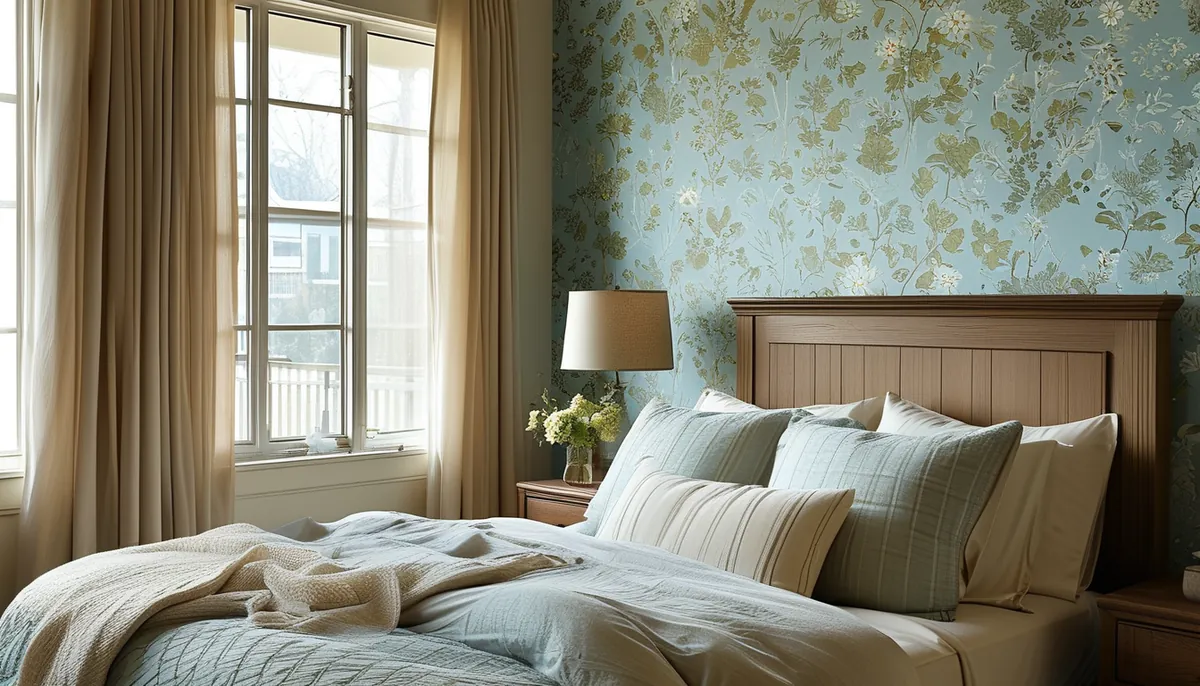
Decide if you’re covering all four walls or just one. An accent wall is a great way to introduce a bold pattern or texture without overwhelming the space, and it’s often more budget-friendly. For a full room transformation, consider lighter patterns or textures that won’t make the space feel smaller.
Choosing the right wallpaper material for your bedroom
Wallpaper materials vary significantly in durability, ease of cleaning, and installation. For bedrooms, where moisture and heavy traffic are usually less of a concern than in kitchens or bathrooms, you have more flexibility.
Paper wallpaper
This is the most traditional and often the most affordable option. It’s made entirely of paper and can be a bit more delicate to install, as it tears easily when wet. It’s best suited for low-traffic areas and may not withstand scrubbing. Expect a lifespan of 5-10 years depending on care.
Vinyl wallpaper
Vinyl wallpaper is a popular choice due to its durability and washability. It consists of a paper or fabric base with a vinyl coating. This makes it resistant to moisture and stains, so you can easily wipe away smudges or dust. It’s a good option for families or if you have pets. Installation is generally straightforward, though it can be heavier than paper.
Non-woven (also called ‘paste-the-wall’)
This is a modern and highly user-friendly material. Made from a blend of synthetic fibers and paper pulp, non-woven wallpaper is breathable, durable, and relatively easy to hang. The main advantage is that you apply the paste directly to the wall, not the paper, making the process cleaner and less physically demanding. It’s also strippable when dry, meaning you can often remove it in large pieces without damaging the drywall beneath.
Textured wallpaper
This category includes materials like grasscloth, linen, silk, or even wallpapers with raised patterns (embossed). These add a tactile dimension and a sense of luxury to your bedroom. However, they can be more expensive and often require professional installation due to their delicate nature and specific cleaning requirements. Grasscloth, for example, cannot be wet-cleaned and is best for dry, low-traffic areas.
Understanding wallpaper patterns and scale
The pattern you choose for your bedroom wall wallpaper can dramatically affect the room’s ambiance and perceived size.
Large-scale patterns
Bold, large-scale prints can make a statement and are excellent for creating a focal point, especially on an accent wall. They can also make a small room feel more expansive by drawing the eye across the pattern. Consider graphic prints, oversized florals, or abstract designs. If you’re drawn to black bedroom wallpapers that make a statement, large-scale black and white patterns can be very effective without being too dark.
Small-scale patterns
Ditsy florals, subtle geometrics, or delicate textures work well for covering all four walls. They provide visual interest without being overpowering, creating a cozy and inviting atmosphere. These are also a good choice if you want a subtle background for furniture and decor.
Vertical stripes
These patterns can visually ‘heighten’ a room, making ceilings appear taller. This is particularly useful in bedrooms with lower ceilings.
Horizontal stripes
While less common for bedrooms, horizontal stripes can make a room appear wider. Use with caution, as they can sometimes make ceilings feel lower.
Solid colors and textures
If you prefer a minimalist look, solid colors with subtle textures (like linen-look or subtle damask) can provide depth and sophistication without the busyness of a pattern. These are excellent for creating a serene retreat. For a softer feel, explore pastel bedroom wallpaper options in solid or subtly textured finishes.
Installation: DIY vs. Professional
Hanging wallpaper for bedroom walls can be a rewarding DIY project, but it requires patience and precision. If you’re new to it, start with a small area or a simpler material.
DIY installation steps
- Preparation is key: Ensure your walls are clean, dry, and smooth. Fill any holes or cracks with spackle, sand them smooth, and prime the walls. If you’re wallpapering over old wallpaper, make sure it’s securely adhered or remove it completely. Some wallpapers require a primer specifically designed for wallpaper application.
- Measure and cut: Measure the height of your wall and add 4-6 inches for trimming at the top and bottom. Cut your wallpaper panels, ensuring you match patterns if necessary. For patterned wallpaper, you’ll need to account for the pattern repeat, which might mean using more material than a simple area calculation suggests.
- Apply adhesive (if needed): For traditional paper or vinyl, apply wallpaper paste evenly to the back of the paper or directly to the wall (for paste-the-wall types). Follow the manufacturer’s instructions regarding ‘booking’ time – the time the paper needs to sit after pasting to allow it to expand.
- Hang the first strip: Start in a corner or a prominent area. Use a level or a plumb line to ensure the first strip is perfectly vertical. This is crucial, as any deviation here will be magnified with subsequent strips.
- Smooth and trim: Use a wallpaper brush or smoothing tool to eliminate air bubbles and wrinkles, working from the center outwards. Trim the excess paper at the ceiling and baseboard with a sharp utility knife or razor blade.
- Continue hanging: Hang subsequent strips, ensuring the edges butt up tightly against each other without overlapping (unless specifically designed for overlap). Match the pattern carefully at the seams.
- Clean up: Wipe away any excess paste with a damp sponge or cloth immediately.
When to call a professional
Consider professional installation if you’re working with expensive or delicate materials like silk, grasscloth, or heavily textured wallpapers. If your walls have significant imperfections, or if you’re aiming for a flawless finish in a high-visibility area, a professional can save you time and prevent costly mistakes. They also have specialized tools and experience that ensure a superior result.
Common mistakes to avoid with bedroom wall wallpaper
Even experienced DIYers can make errors. Be mindful of these common pitfalls:
- Improper wall preparation: Hanging wallpaper over a dirty, greasy, or uneven surface will lead to poor adhesion and an unprofessional look.
- Not checking the batch number: Always ensure all rolls of wallpaper have the same batch number to avoid slight color variations between rolls.
- Skipping the pattern match: Failing to align patterns at the seams creates noticeable gaps or misalignments that detract from the overall design. This is especially critical for repeating patterns.
- Over-pasting or under-pasting: Too much paste can cause the paper to stretch and tear, while too little can lead to bubbles and poor adhesion.
- Using a dull blade for trimming: A dull knife will snag and tear the wallpaper, leaving ragged edges. Always use a fresh, sharp blade.
- Hanging in direct sunlight: Avoid hanging wallpaper in direct sunlight, as the heat can dry the paste too quickly, leading to premature adhesion failure or bubbles.
Beyond the bedroom: other rooms
While this guide focuses on bedrooms, the principles of choosing and installing wallpaper apply to other areas of your home. In a hallway, consider durable, washable options. For a powder room, a bold statement wallpaper can add personality. Even a subtle texture can elevate a home office. The key is matching the material’s durability and style to the room’s function and traffic level.
Customer reviews and real-world experiences
Before committing to a specific wallpaper, take time to read customer reviews. Many online retailers and wallpaper brands feature reviews from people who have actually installed the product in their homes. Look for comments regarding:
- Ease of installation: Did customers find it easy to hang? Were there issues with pattern matching or bubbling?
- Durability and washability: How well does it hold up over time? Can it be cleaned easily?
- Color accuracy: Does the wallpaper look as vibrant and true to color in person as it does online?
- Adhesion: Did it stick well to the walls, or did the edges start to peel?
Real-world feedback can offer invaluable insights that manufacturer descriptions might not cover. For instance, some ‘easy-clean’ wallpapers might still be sensitive to abrasive cleaners, a detail a reviewer might mention. For inspiration on specific styles, explore resources like master bedroom wallpaper accent wall guides or look into adult wallpaper for bedroom options. If you’re considering a softer aesthetic, check out our guide on pastel bedroom wallpaper. For a dramatic look, consider black bedroom wallpapers that make a statement or explore forest bedroom wallpaper for a touch of nature.