Hydrangea wallpaper transforms any interior into a serene, sophisticated botanical haven, bringing the timeless beauty of these lush blooms directly onto your walls. This decorative element, available in various forms from peel-and-stick to traditional wallcoverings, offers a distinctive way to infuse spaces with color, texture, and a sense of natural elegance. Starhouse curates designs that capture the delicate artistry and vibrant spectrum of hydrangeas, ensuring every pattern offers both visual appeal and enduring quality.
The allure of hydrangea wallpaper lies in its versatility and inherent charm. From the soft, muted pastels of classic varieties to the bold, saturated hues of modern interpretations, these floral patterns evoke feelings of tranquility, romance, and sophisticated comfort. Whether you aim to create a dramatic feature wall, envelop an entire room in botanical splendor, or add a subtle touch of nature, understanding the nuances of hydrangea wallpaper—from its material composition to its stylistic potential—is essential for achieving a cohesive and impactful design. This comprehensive guide from Starhouse provides the definitive insights needed to select, install, and style hydrangea wallpaper with confidence and precision, ensuring your home reflects an elevated aesthetic.
Key takeaways
- Hydrangea wallpaper offers diverse aesthetic interpretations, from classic botanical to modern abstract, suitable for various interior design schemes.
- Material choice, including peel-and-stick, non-woven, and vinyl, significantly impacts durability, ease of installation, and suitability for different environments.
- Accurate measurement and proper wall preparation are critical for a seamless installation and to minimize material waste.
- Styling hydrangea wallpaper involves careful consideration of complementary colors, furniture, lighting, and accessories to create a harmonious space.
- Regular, gentle cleaning and environmental control are essential for maintaining the vibrancy and longevity of your wallpaper.
- Starhouse emphasizes quality and precision in curating wallpaper designs that are both aspirational and practical for the modern home.
Types of Hydrangea Wallpaper
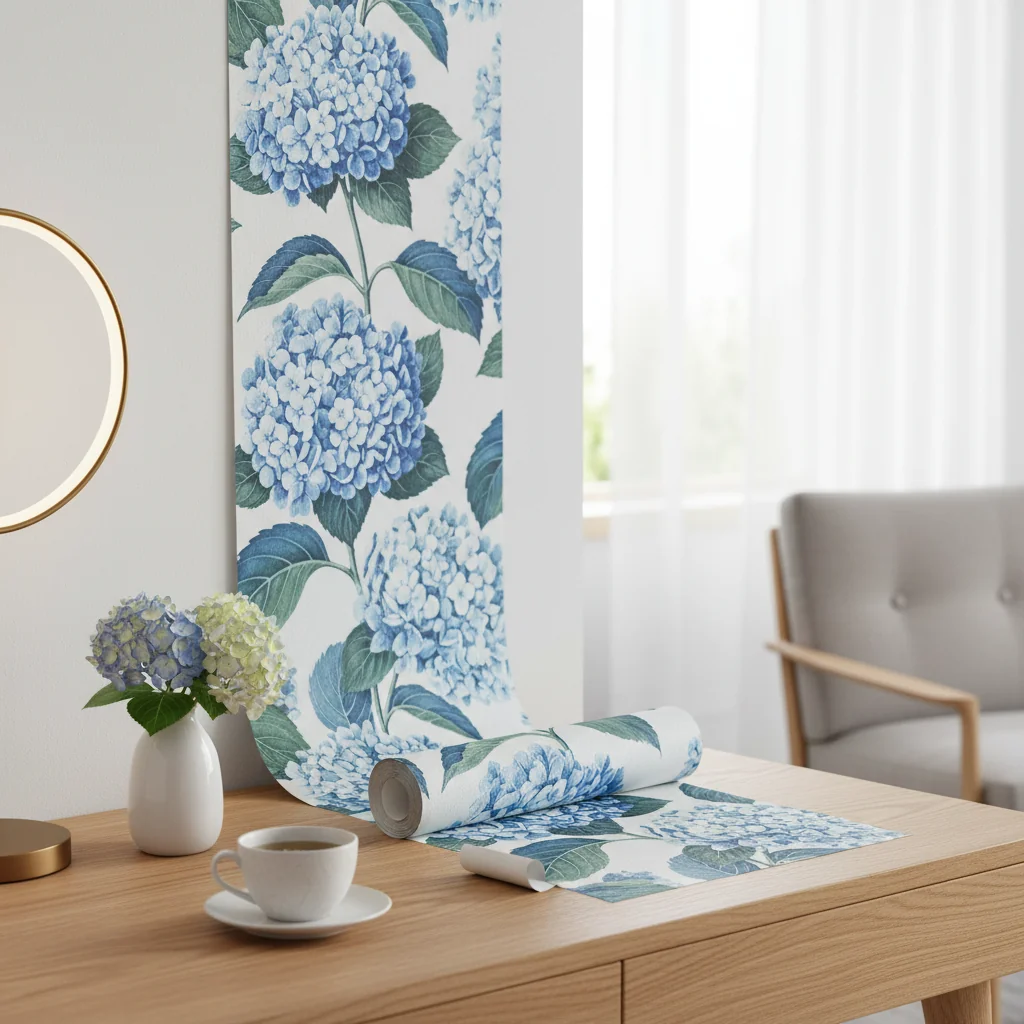
Hydrangea wallpaper is available in several distinct types, each offering unique installation methods, durability characteristics, and aesthetic considerations. Understanding these distinctions is fundamental to selecting the most appropriate option for your specific project and lifestyle.
Peel-and-Stick Hydrangea Wallpaper
Peel-and-stick hydrangea wallpaper is a self-adhesive wall covering designed for easy, temporary application and removal without damaging the underlying wall surface. This type features a backing that is peeled away to expose an adhesive layer, allowing direct application to a clean, smooth wall. It is an ideal solution for renters, those who enjoy frequent decor changes, or DIY enthusiasts seeking a straightforward installation process without the mess of traditional paste.
- Application: Involves peeling off a backing liner and smoothing the wallpaper onto the wall. Requires no additional paste or tools beyond a utility knife and a smoothing tool.
- Removal: Designed to be pulled off easily, typically leaving no residue or damage to properly prepared walls.
- Durability: Generally durable for everyday use, but may be less resistant to heavy abrasion or moisture than some traditional options, depending on the specific material composition.
- Best Use: Apartments, children’s rooms, accent walls, temporary decor, or areas where commitment to a permanent design is low.
Traditional (Pre-pasted/Unpasted) Hydrangea Wallpaper
Traditional hydrangea wallpaper typically requires a separate adhesive for installation, though some varieties come pre-pasted, meaning the adhesive is already applied to the back and activated with water. This category represents the classic method of wallpapering, offering a more permanent and often more durable finish compared to peel-and-stick options. Traditional wallpapers are known for their rich textures, intricate patterns, and longevity.
- Unpasted Wallpaper: Requires the application of a separate wallpaper adhesive directly to the back of the paper or to the wall itself. This method offers strong adhesion and long-term durability.
- Pre-pasted Wallpaper: Features a dry adhesive coating on the back that is activated by dipping the strips in water or by using a spray bottle. This simplifies the application process compared to unpasted options but still offers a more permanent bond than peel-and-stick.
- Durability: Highly durable, often resistant to moisture and wear, especially vinyl-coated or solid vinyl options. Designed for long-term wall coverage.
- Best Use: High-traffic areas, bathrooms (with appropriate material), formal living spaces, and anywhere a permanent, robust wall finish is desired.
Hydrangea Wall Murals
A hydrangea wall mural is a large-format, often custom-printed, wallpaper piece designed to cover an entire wall or a significant portion of it, creating a singular, expansive image rather than a repeating pattern. These murals offer a dramatic and immersive design statement, transforming a room with a breathtaking, continuous depiction of hydrangeas. They are typically printed on non-woven or vinyl materials and can be either peel-and-stick or traditional paste-up.
- Impact: Creates an immediate focal point and a strong design narrative, often evoking the feeling of being within a garden.
- Customization: Can often be custom-sized to fit specific wall dimensions, ensuring a perfect, seamless fit.
- Installation: Varies by material; can be peel-and-stick for easier application or traditional for a more permanent fixture. Installation requires precise alignment of panels to form the complete image.
- Best Use: Feature walls in living rooms, bedrooms, dining areas, or commercial spaces seeking a unique, artistic statement.
Comparison of Hydrangea Wallpaper Types
Choosing between these types depends on your project’s scope, desired permanence, budget, and DIY comfort level. The following table provides a clear comparison to guide your decision-making process.
| Type | Application Method | Durability & Permanence | Ideal Use Cases | Key Advantage |
|---|---|---|---|---|
| Peel-and-Stick | Self-adhesive; peel backing, apply to wall. | Moderate durability; temporary; easy removal. | Rentals, accent walls, DIY projects, frequent decor changes. | Effortless installation and damage-free removal. |
| Traditional (Unpasted) | Requires separate paste applied to paper or wall. | High durability; permanent; robust bond. | High-traffic areas, long-term decor, professional finish. | Superior adhesion and longevity. |
| Traditional (Pre-pasted) | Water-activated adhesive on backing. | High durability; permanent; strong bond. | Similar to unpasted, slightly simpler DIY. | Combines durability with slightly easier application. |
| Wall Mural | Panel-based, can be peel-and-stick or traditional. | Varies by material; creates a single large image. | Feature walls, immersive design, artistic statements. | Dramatic visual impact and unique artistic expression. |
Styles and Aesthetic Interpretations
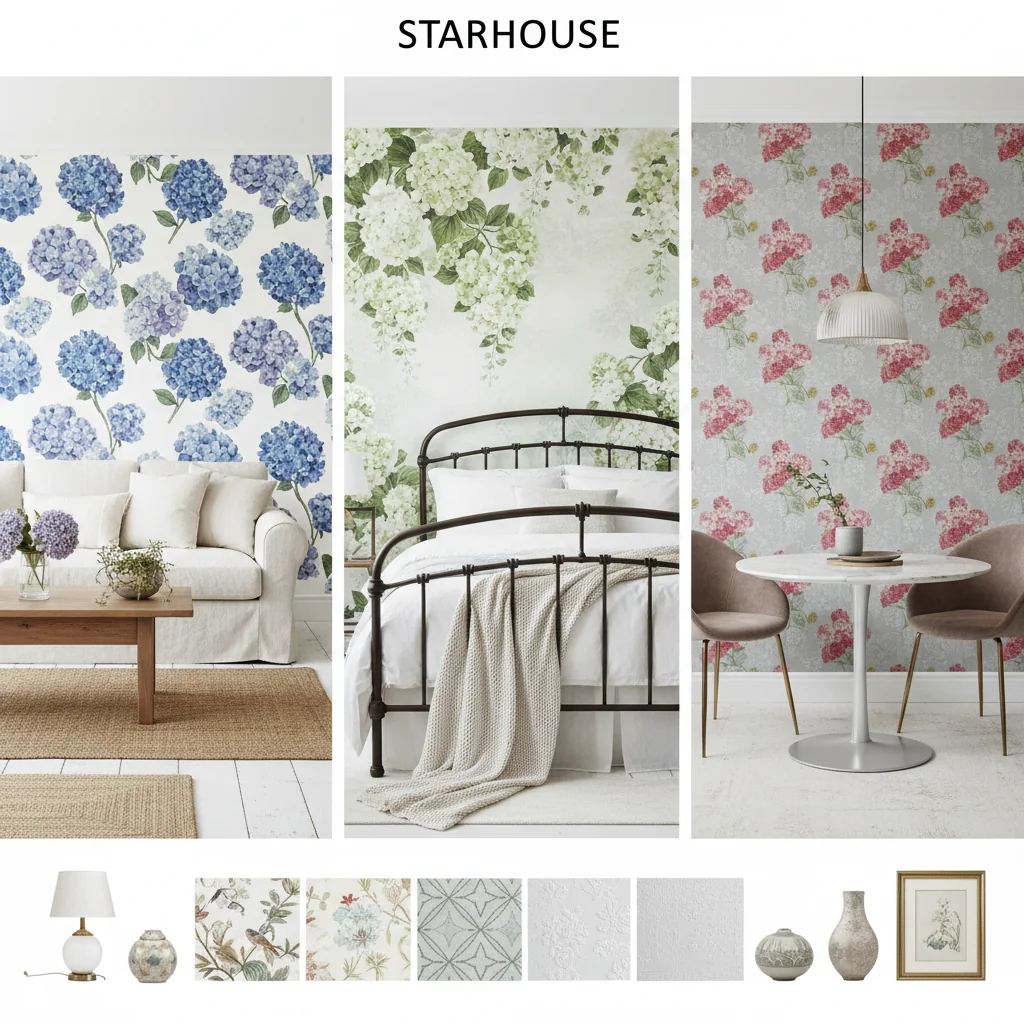
Hydrangea wallpaper offers a remarkable breadth of stylistic interpretations, allowing it to complement a wide array of interior design aesthetics, from the classically elegant to the distinctly modern. The way hydrangeas are depicted—their scale, color, and artistic rendering—defines the overall mood and character they impart to a space.
Classic Botanical Hydrangea Wallpaper
Classic botanical hydrangea wallpaper designs often feature meticulously rendered, true-to-life illustrations of hydrangea blooms and foliage, presented with a timeless elegance. These patterns typically emphasize naturalistic colors and intricate details, evoking the charm of antique botanical prints or a stately garden. The arrangement might be a repeating trellis, a scattered bouquet, or a more formal, structured layout. This style is particularly well-suited for traditional, transitional, and cottage-style interiors, lending an air of refined sophistication.
- Color Palette: Often includes soft blues, muted pinks, creamy whites, and various shades of green, reflecting natural hydrangea colors.
- Detail: High level of botanical accuracy, showcasing individual petals, leaves, and stems.
- Mood: Elegant, tranquil, timeless, and sophisticated.
- Ideal Rooms: Formal dining rooms, master bedrooms, studies, and powder rooms.
Watercolor and Artistic Interpretations
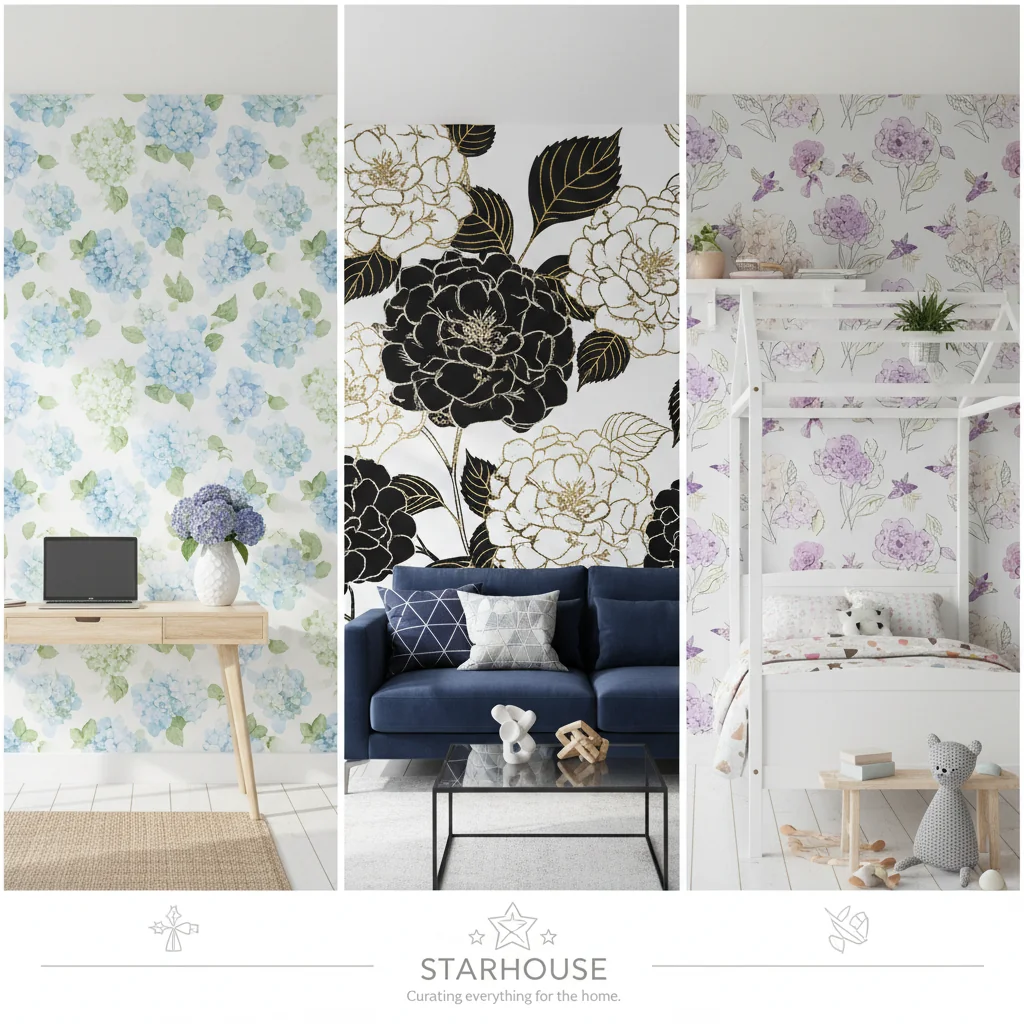
Watercolor hydrangea patterns introduce a soft, painterly aesthetic, characterized by blurred edges, translucent colors, and a fluid, ethereal quality. These designs often forgo strict botanical accuracy for artistic impression, creating a dreamy and romantic atmosphere. The washes of color and delicate brushstrokes make these wallpapers feel less formal and more organic, perfect for spaces that seek a gentle, artistic touch. Artistic interpretations can also include impressionistic or abstract representations, where the essence of the hydrangea is captured through form and color rather paler than explicit detail.
An artistic interpretation, in the context of wallpaper design, refers to a rendering that prioritizes aesthetic impression and creative expression over strict, photorealistic accuracy. These designs often use techniques like abstraction, stylization, or painterly effects to evoke the feeling or form of the subject rather than replicating it precisely.
- Color Palette: Often features a harmonious blend of pastel shades, soft blues, greens, and pinks, with gradient effects.
- Texture (Visual): Creates a visual sense of texture through watercolor washes and brushstroke effects.
- Mood: Romantic, whimsical, serene, and artistic.
- Ideal Rooms: Bedrooms, nurseries, living rooms, and sunrooms.
Modern and Abstract Hydrangea Designs
Modern hydrangea wallpaper interprets the flower’s form or color palette in a simplified, often graphic, or abstract manner. These designs might feature oversized blooms, stylized silhouettes, or a deconstructed view of the flower, focusing on bold shapes and contemporary color schemes. Abstract versions might take the color story of hydrangeas and translate it into geometric patterns or fluid, non-representational forms. This style is excellent for contemporary, minimalist, and eclectic interiors, providing a fresh and updated take on floral motifs.
- Color Palette: Can range from monochromatic schemes to vibrant, unexpected color combinations.
- Form: Simplified shapes, bold outlines, or fragmented patterns.
- Mood: Contemporary, bold, dynamic, and sophisticated.
- Ideal Rooms: Modern living spaces, entryways, home offices, and feature walls.
Chinoiserie and Toile de Jouy Hydrangea Patterns
Chinoiserie hydrangea designs integrate the floral motif into elaborate, often scenic, Eastern-inspired patterns, characterized by intricate landscapes, pagodas, birds, and sometimes human figures, all rendered with a delicate, often hand-painted feel. Toile de Jouy patterns, while typically French in origin, can incorporate hydrangeas within their pastoral scenes, often in a single, monochromatic color. Both styles offer a rich narrative and historical charm, creating a sophisticated and culturally resonant backdrop.
- Color Palette: Chinoiserie often uses vibrant multi-colors against a light background; Toile is typically monochromatic (e.g., blue on white, red on cream).
- Narrative: Often tells a story or depicts a scene, adding depth and interest.
- Mood: Elegant, exotic, historical, and luxurious.
- Ideal Rooms: Formal dining rooms, elegant bedrooms, studies, and grand entryways.
The choice of style for your hydrangea wallpaper should align with the overarching design philosophy of your home and the specific mood you wish to cultivate in a given room. Starhouse’s curated collection includes options across these styles, ensuring there is a perfect match for every discerning taste.
Materials and Durability
The material composition of hydrangea wallpaper significantly influences its durability, ease of installation, texture, and suitability for different environments within your home. Starhouse emphasizes materials that offer both aesthetic appeal and practical longevity, ensuring your investment enhances your space for years to come.
Non-Woven Wallpaper
Non-woven wallpaper is a highly durable and breathable material, composed of a blend of natural and synthetic fibers. This material is celebrated for its strength, dimensional stability, and ease of handling during installation. It is a popular choice due to its ‘paste the wall’ application method, where adhesive is applied directly to the wall rather than the paper, simplifying the process and making it less messy. Non-woven wallpapers are often resistant to tearing and shrinking, and many are strippable, meaning they can be removed in full sheets without damaging the wall.
- Composition: A mix of cellulose and polyester fibers, providing flexibility and strength.
- Installation: “Paste the wall” method; easier for DIY.
- Durability: Excellent tear resistance, dimensionally stable, often washable.
- Breathability: Resists mold and mildew growth, making it suitable for slightly humid environments.
- Removal: Generally dry-strippable in full sheets.
- Best Use: Living rooms, bedrooms, dining rooms, hallways, and commercial spaces.
Vinyl Wallpaper
Vinyl wallpaper consists of a paper or fabric backing coated with a layer of vinyl, which makes it exceptionally durable, washable, and resistant to moisture. This material is particularly well-suited for high-traffic areas and rooms prone to humidity or splashes, such as kitchens and bathrooms. Vinyl wallpaper is known for its ability to withstand scrubbing and its robust nature, making it a practical choice for busy households.
Vinyl wallpaper, a wall covering with a vinyl surface, is classified into several sub-types based on its construction: solid vinyl, vinyl-coated paper, and fabric-backed vinyl. Each type offers varying degrees of durability and moisture resistance, with solid vinyl being the most robust.
- Solid Vinyl: Features a solid sheet of vinyl, making it extremely durable, scrubbable, and waterproof. Ideal for commercial settings or very high-moisture areas.
- Vinyl-Coated Paper: A paper substrate with a liquid vinyl coating. Offers good washability and durability, better than plain paper but less than solid vinyl.
- Fabric-Backed Vinyl: A woven fabric backing with a solid vinyl surface. Highly durable, often used in commercial applications.
- Installation: Typically requires traditional paste application.
- Durability: Excellent resistance to stains, moisture, and abrasion; highly scrubbable.
- Best Use: Kitchens, bathrooms, laundry rooms, children’s rooms, and commercial spaces.
Paper Wallpaper
Traditional paper wallpaper is made from cellulose fibers, offering a classic aesthetic with a smooth, matte finish. While it may not possess the same level of durability or moisture resistance as non-woven or vinyl options, paper wallpaper is prized for its ability to showcase intricate details and vibrant colors with exceptional clarity. It creates a soft, luxurious feel that is often preferred for more formal or delicate patterns, such as fine botanical prints. Paper wallpapers are typically unpasted and require careful handling during installation.
- Composition: Primarily cellulose fibers.
- Installation: Requires traditional paste application; can be more delicate to handle when wet.
- Durability: Less durable than vinyl or non-woven; susceptible to moisture and tearing; generally wipeable but not scrubbable.
- Aesthetics: Offers a refined, classic look; excellent for intricate designs and rich color saturation.
- Best Use: Low-traffic areas, formal living rooms, bedrooms, and spaces where a delicate, traditional aesthetic is paramount.
Peel-and-Stick (Self-Adhesive) Materials
While peel-and-stick refers to an installation method, the material itself is typically a vinyl or fabric-based substrate with a low-tack adhesive backing. This combination makes it easy to install and remove without residue. The durability of peel-and-stick hydrangea wallpaper varies depending on the quality of the vinyl or fabric and the adhesive used. High-quality options offer good resistance to wear and can be wiped clean, making them suitable for various residential applications.
- Composition: Often PVC (vinyl) or polyester fabric with an acrylic adhesive.
- Installation: Self-adhesive, direct application.
- Durability: Good for temporary use; varies by product quality; generally wipeable.
- Removal: Designed for easy, damage-free removal.
- Best Use: Apartments, rental properties, accent walls, DIY projects, and areas where flexibility is desired.
When selecting hydrangea wallpaper, consider the specific demands of the room. A powder room might benefit from a vinyl or non-woven option for moisture resistance, while a formal living room might embrace the delicate beauty of a paper-based design. Starhouse provides precise material specifications for each of its curated wallpaper selections, ensuring you can make an informed decision based on both aesthetic desire and practical necessity.
How to Choose the Perfect Hydrangea Wallpaper
Selecting the ideal hydrangea wallpaper involves a thoughtful consideration of various design elements and practical factors to ensure it harmonizes with your space and lifestyle. The perfect choice will enhance the room’s aesthetics while meeting your functional needs.
Room Function and Scale
The purpose and size of the room are primary determinants when choosing wallpaper. For a large living room, a grand, large-scale hydrangea pattern can make a statement without overwhelming the space, creating a luxurious and immersive feel. In contrast, a small powder room or entryway might benefit from a more delicate, tightly-patterned hydrangea design or even a single, impactful mural on one wall to add depth without clutter. High-traffic areas like hallways or children’s rooms demand more durable, washable materials like vinyl or non-woven options, whereas a serene bedroom can accommodate more delicate paper-based designs.
- Large Rooms: Can handle bold, large-scale patterns and murals.
- Small Rooms: Benefit from smaller patterns, lighter colors, or a single accent wall to prevent feeling confined.
- High-Traffic Areas: Require durable, scrubbable materials such as vinyl.
Lighting Conditions
Natural and artificial lighting significantly impact how wallpaper colors and patterns appear throughout the day. In rooms with abundant natural light, darker or more saturated hydrangea patterns can be used effectively without making the space feel dim. Conversely, in rooms with limited natural light, lighter-colored hydrangea wallpapers with reflective elements (like subtle metallic accents) can help brighten the space and make it feel more expansive. Always observe a sample of the wallpaper in the actual room, at different times of day, to assess its true appearance.
- Bright Rooms: Offer flexibility for both light and dark patterns.
- Dim Rooms: Best suited for lighter colors and patterns, potentially with reflective surfaces, to enhance brightness.
Existing Color Palette and Decor Style
The chosen hydrangea wallpaper must complement the existing color scheme and overall decor style of your home. If your space features a minimalist aesthetic, a modern, abstract hydrangea pattern in a muted tone would integrate seamlessly. For a traditional home, a classic botanical print with rich, natural colors would be more appropriate. Consider the undertones of your existing paints, fabrics, and furnishings. A cool-toned hydrangea wallpaper (blues, purples) pairs well with cool-toned decor, while warm-toned patterns (pinks, creams) complement warmer palettes. The goal is to create a cohesive and harmonious environment where the wallpaper feels like an integral part of the design, not an afterthought.
- Complementary Colors: Select patterns that share or harmonize with existing colors in furniture, textiles, and art.
- Style Alignment: Match the wallpaper’s aesthetic (e.g., modern, traditional, whimsical) with your home’s overall design theme.
Pattern Scale and Repeat
The scale of the hydrangea pattern and its repeat size are crucial for visual balance. A large pattern repeat (e.g., 25-30 inches or more) means the design elements are spaced further apart, creating a grander, more open feel. This works well in larger rooms or on accent walls. A small pattern repeat (e.g., 10-15 inches) creates a denser, more intricate look, which can be charming in smaller spaces or for an all-over application where subtlety is desired. Be mindful that larger pattern repeats often require purchasing more rolls to account for waste during pattern matching.
Pattern repeat, in wallpaper design, refers to the vertical distance between one point on a pattern and the identical point on the next repetition of that pattern. This measurement is essential for ensuring a seamless, continuous design when hanging multiple strips of wallpaper.
- Large Pattern Scale: Best for spacious rooms or feature walls, creating a dramatic effect.
- Small Pattern Scale: Ideal for smaller rooms or for an all-over, subtle effect.
- Pattern Repeat: Larger repeats require more material due to matching waste.
Maintenance Requirements
Consider the practical aspects of maintaining your chosen wallpaper. If the room is prone to spills or dirt (e.g., a dining room or children’s play area), opt for a scrubbable vinyl or non-woven material that can be easily cleaned with soap and water. For areas with less exposure to wear and tear, a delicate paper-based wallpaper might be suitable. Always check the manufacturer’s care instructions, typically indicated by symbols on the wallpaper packaging, to ensure it aligns with your cleaning preferences and the room’s functional demands.
- High-Traffic/Wet Areas: Prioritize scrubbable and moisture-resistant materials.
- Low-Traffic/Dry Areas: More delicate paper-based options are suitable.
By thoughtfully assessing these factors, you can confidently select a hydrangea wallpaper that not only beautifies your home but also performs optimally within its specific environment. Starhouse is dedicated to providing selections that meet these high standards of both design and utility.
Sizing and Measuring for Installation
Accurate measurement is the cornerstone of a successful wallpaper installation, ensuring you purchase the correct quantity and minimize waste. Precise calculations prevent costly reorders and frustrating delays, leading to a seamless and professional finish for your hydrangea wallpaper project.
Essential Tools for Measurement
Before beginning any measurements, gather the necessary tools to ensure accuracy and efficiency:
- Steel Measuring Tape: A sturdy, retractable metal tape measure, at least 25 feet long, is essential for accurate wall dimensions.
- Pencil: For marking measurements clearly on paper.
- Calculator: To perform area calculations and quantity estimations.
- Notebook or Paper: To record all measurements systematically.
- Level or Plumb Bob: While not for measurement, these are crucial for ensuring vertical alignment during installation, which impacts how you perceive pattern repeats.
Step-by-Step Measuring Guide
Follow these steps to accurately measure your walls for hydrangea wallpaper:
1. Measure Wall Height
Measure the height of each wall from the baseboard to the ceiling. If your ceiling height varies slightly, use the tallest measurement for consistency across all strips. Measure in at least three different spots across the width of the wall and record the largest height to ensure you have enough material for the entire wall.
2. Measure Wall Width
Measure the total width of each wall you intend to cover. For walls with doors or windows, measure the full width of the wall as if these architectural features were not present. You will cut around these openings during installation, but it is critical to calculate the total surface area for material estimation. For a room, measure the perimeter by adding the widths of all walls.
3. Calculate Total Square Footage
For each wall, multiply its measured height by its measured width to get the square footage. Add the square footages of all walls you plan to cover to determine the total square footage required. For example, a wall 8 feet high and 12 feet wide is 96 square feet (8 ft * 12 ft = 96 sq ft).
4. Account for Pattern Repeat (Critical Step)
The pattern repeat is the vertical distance at which the wallpaper design repeats itself. This measurement, typically found on the wallpaper roll label or product description, must be factored into your calculations to ensure seamless matching between strips. Larger pattern repeats result in more waste. To account for this:
- Add the pattern repeat measurement to your wall height. For example, if your wall is 8 feet (96 inches) high and the pattern repeat is 21 inches, your effective strip length becomes 96 + 21 = 117 inches (9.75 feet).
- Divide the total wall width (in inches) by the width of one wallpaper roll (e.g., 20.5 inches or 27 inches) to determine the number of strips needed. Round up to the nearest whole number.
- Multiply the effective strip length (from step 1) by the number of strips needed (from step 2) to get the total length of wallpaper required for that wall.
- Convert this total length back to square footage or linear feet as per the wallpaper manufacturer’s roll specifications.
5. Add a Buffer for Waste and Future Repairs
Always add a buffer of 10-15% to your total calculated square footage. This extra material accounts for trimming, pattern matching waste, slight installation errors, and provides spare pieces for future repairs if a section gets damaged. It is always better to have a little extra than to run short, especially with specific dye lots.
Understanding Wallpaper Roll Dimensions
Wallpaper rolls come in standard widths, commonly 20.5 inches, 21 inches, or 27 inches, and varying lengths, often between 16.5 feet (5.5 yards) and 33 feet (11 yards). The total square footage a single roll covers is usually listed on the packaging. For instance, a standard single roll might cover approximately 28-30 square feet, while a double roll (the most common purchase unit) covers about 56-60 square feet. Always refer to the specific product details provided by Starhouse for precise roll dimensions and coverage estimates.
By meticulously following these measuring guidelines, you will ensure a smooth and efficient installation of your hydrangea wallpaper, achieving a polished and professional result that elevates your home’s aesthetic. Precision in this initial stage pays dividends in the final outcome.
As you plan your space, consider the transformative power of a well-chosen wallpaper. Starhouse is dedicated to helping you realize your vision for an elevated interior. If you have specific design ideas or are seeking inspiration for your next project, we invite you to tell us what you’re looking for and get early access to our curated collections.
Installation Techniques
Proper installation is paramount to achieving a flawless finish with your hydrangea wallpaper, regardless of its type. While the specific steps vary between peel-and-stick and traditional methods, meticulous preparation and careful execution are universal requirements for a professional result.
Surface Preparation
Thorough wall preparation is the most critical step, ensuring optimal adhesion and a smooth finish. Failure to properly prepare the surface can lead to bubbling, peeling, or visible imperfections.
- Clean the Walls: Wash walls with a mild detergent solution (e.g., TSP substitute) to remove dirt, grease, and grime. Rinse thoroughly with clean water and allow to dry completely, typically 24-48 hours.
- Repair Imperfections: Fill any holes, cracks, or dents with spackle or joint compound. Sand smooth once dry, ensuring the surface is perfectly flush.
- Prime the Walls: Apply a high-quality wallpaper primer (often called “sizing”) to all surfaces. Primer creates a uniform, slightly textured surface for better adhesion, seals porous walls, and aids in future removal. Allow primer to dry completely according to manufacturer instructions. For dark walls, a tinted primer may be necessary to prevent the underlying color from showing through light-colored wallpaper.
- Remove Fixtures: Remove all switch plates, outlet covers, and wall-mounted fixtures. Turn off power to outlets and switches at the circuit breaker for safety.
Traditional Wallpaper Application (Pre-pasted/Unpasted)
Traditional wallpaper installation involves careful handling and precise alignment to achieve a seamless look.
- Cut Strips: Cut wallpaper strips to the measured wall height, adding 4-6 inches extra at the top and bottom for trimming. Number the back of each strip to maintain pattern order.
- Apply Paste (Unpasted): Lay the first strip face down on a clean pasting table. Apply an even layer of wallpaper paste, ensuring edges are fully covered. Fold the pasted ends towards the center (booking) to allow the paste to activate and the paper to relax for 5-10 minutes, as per paste instructions.
- Activate Paste (Pre-pasted): Dip the pre-pasted strip into a water tray or spray the back with water to activate the adhesive, following product instructions for activation time.
- Hang the First Strip: Using a plumb line (a vertical guide), align the first strip against the wall. Start at the top, leaving a few inches overhang. Smooth the paper down using a smoothing brush or plastic smoother, working from the center outwards to remove air bubbles.
- Match Pattern: Hang subsequent strips, carefully aligning the pattern repeat with the previously hung strip. Butt edges together without overlapping.
- Trim Excess: Once each strip is in place, use a sharp utility knife and a straight edge (like a wallpaper smoother or metal ruler) to trim excess paper at the ceiling, baseboard, and around windows/doors. Change blades frequently for clean cuts.
- Seam Rolling: Gently roll seams with a seam roller to ensure they are flat and fully adhered, but avoid excessive pressure that could squeeze out too much paste.
Peel-and-Stick Wallpaper Application
Peel-and-stick wallpaper offers a simpler, less messy installation process, ideal for temporary or DIY projects.
- Cut Strips: Cut strips to wall height, adding 2-4 inches extra at top and bottom.
- Start at the Top: Peel back a few inches of the adhesive backing from the top of the first strip. Align the top edge with the ceiling line or a plumb line, ensuring it is straight.
- Smooth Downward: Slowly peel more of the backing paper while simultaneously smoothing the wallpaper onto the wall using a plastic smoother. Work from the center outwards and from top to bottom to eliminate air bubbles.
- Overlap and Match: For subsequent strips, slightly overlap the previous strip (usually by 1/8 inch or as specified by the manufacturer) to ensure pattern match and prevent gaps as the paper settles. Carefully align the pattern.
- Trim Excess: Use a sharp utility knife and a straight edge to trim excess paper at the ceiling, baseboard, and around openings.
- Remove Bubbles: If bubbles appear, gently lift the wallpaper and re-smooth, or use a pin to prick the bubble and smooth out the air.
Regardless of the method, taking your time, ensuring precise measurements, and thorough wall preparation are key to a beautiful and lasting hydrangea wallpaper installation. For large or complex projects, professional installation is always an option to guarantee a flawless outcome.
Current Trends in Hydrangea Wallpaper Design
Hydrangea wallpaper, while timeless, continually evolves to reflect contemporary interior design trends, offering fresh interpretations that blend classic beauty with modern aesthetics. Starhouse stays abreast of these developments to curate a collection that is both aspirational and current.
Large-Scale Florals and Oversized Blooms
One of the most prominent trends is the use of large-scale hydrangea motifs, often featuring oversized blooms that create a dramatic and immersive effect. These designs are less about a repeating pattern and more about creating a grand, artistic statement. An entire wall can be transformed into a lush, macro-level garden scene, making the space feel expansive and sophisticated. This trend leans into maximalism while maintaining an elegant botanical theme, perfect for accent walls in living rooms or as a focal point in master bedrooms.
Large-scale floral wallpaper refers to designs where the individual floral elements are significantly larger than life-size, often spanning several feet or appearing as dramatic, single-bloom compositions across a wallpaper panel.
Muted, Earthy Tones and Desaturated Palettes
Moving away from overly bright or saccharine pastels, current trends favor muted, earthy tones and desaturated color palettes for hydrangea wallpaper. Think dusty blues, soft sage greens, faded rose, and creamy off-whites. These subdued hues create a calming and sophisticated atmosphere, allowing the intricate details of the hydrangeas to emerge without overwhelming the senses. This trend aligns with the broader movement towards biophilic design and natural, organic aesthetics, promoting tranquility and connection to nature.
Metallic Accents and Shimmering Finishes
To add a touch of luxury and contemporary flair, many new hydrangea wallpaper designs incorporate subtle metallic accents. Gold, silver, or rose gold detailing might highlight the edges of petals, the veins of leaves, or be woven into the background, catching the light and adding a sophisticated shimmer. These metallic elements elevate the floral design, making it feel more opulent and suitable for formal living spaces or elegant bedrooms where a hint of glamour is desired.
Textural Finishes and Embossed Details
Beyond visual patterns, tactile texture is gaining importance. Hydrangea wallpapers are increasingly featuring embossed details that mimic the actual texture of petals or leaves, adding a three-dimensional quality to the design. Materials like grasscloth or subtle linen textures are also used as a base, providing an organic backdrop for printed hydrangea motifs. These textural elements add depth and a luxurious feel, inviting touch and enhancing the sensory experience of the room.
Biophilic Design Integration
The overarching trend of biophilic design—connecting interiors with nature to improve well-being—is a significant driver for hydrangea wallpaper. Designs are often crafted to evoke a sense of being immersed in a garden, using naturalistic layouts, soft gradients, and patterns that flow organically across the wall. This extends beyond just the flower itself to include subtle hints of foliage, branches, or even atmospheric elements like morning dew, fostering a calming and restorative environment.
Biophilic design is an architectural and interior design approach that seeks to connect building occupants more closely to nature, aiming to improve health, well-being, and productivity.
Vintage-Inspired and Chinoiserie Revivals
While modern interpretations are popular, there’s also a strong resurgence of vintage-inspired and Chinoiserie hydrangea patterns. These designs draw from historical archives, featuring classic botanical illustrations, intricate scenic murals, or elegant Toile de Jouy styles. The revival often sees these traditional patterns updated with contemporary color palettes or printed on modern, durable substrates, offering a blend of old-world charm and contemporary practicality.
These trends demonstrate the enduring appeal of hydrangea wallpaper, proving its capacity to adapt and remain a relevant, beautiful choice for discerning homeowners. Starhouse carefully curates designs that embody these trends, ensuring our collection offers both classic elegance and cutting-edge style.
Care and Maintenance for Longevity
Proper care and maintenance are essential for preserving the beauty and extending the lifespan of your hydrangea wallpaper, ensuring it remains a vibrant and cherished element of your home decor for years. The specific care routine largely depends on the wallpaper’s material composition.
Routine Cleaning (Dusting)
Regular, gentle dusting is the most fundamental step in maintaining any type of wallpaper. Dust and airborne particles can accumulate on the surface, dulling its appearance over time.
- Frequency: Dust your wallpaper monthly or as needed, especially in high-traffic areas.
- Method: Use a soft, dry microfiber cloth, a feather duster, or a vacuum cleaner with a soft brush attachment. Work from top to bottom to prevent dust from settling on cleaned areas. Avoid abrasive materials that could scratch or damage the surface.
Spot Cleaning and Stain Removal
Addressing spills and stains promptly is crucial. The method of spot cleaning depends heavily on the wallpaper’s material and its washability rating.
- Vinyl Wallpaper (Scrubbable/Washable):
- For most stains (e.g., dirt, food spills), gently wipe with a soft cloth or sponge dampened with a mild soap and water solution.
- For tougher stains, a slightly stronger, non-abrasive cleaner safe for vinyl surfaces can be used, but always test in an inconspicuous area first.
- Rinse with a clean, damp cloth and dry immediately with a clean, dry cloth to prevent water spots.
- Non-Woven Wallpaper (Washable/Wipeable):
- Similar to vinyl, most non-woven wallpapers can be wiped clean with a soft, damp cloth and mild soap.
- Avoid excessive scrubbing or harsh chemicals, which can damage the print or surface.
- Blot stains rather than rubbing, and dry promptly.
- Paper Wallpaper (Delicate/Wipeable):
- Paper wallpaper is the most delicate and often only “wipeable,” meaning it can withstand a very light, quick wipe with a barely damp cloth.
- For most stains, gentle blotting with a clean, dry cloth is recommended.
- For liquid spills, blot immediately to absorb as much moisture as possible. Avoid rubbing, which can spread the stain or damage the paper.
- Professional cleaning may be required for stubborn stains on paper wallpaper.
- Peel-and-Stick Wallpaper:
- Generally wipeable with a damp cloth and mild soap, similar to non-woven or vinyl-coated paper.
- Avoid abrasive cleaners or excessive moisture, which can compromise the adhesive.
Always refer to the manufacturer’s specific care instructions, usually indicated by international symbols on the wallpaper roll label. These symbols provide precise guidance on washability (e.g., spongeable, washable, scrubbable) and lightfastness.
Humidity Control
Maintaining a stable humidity level in your home is important for all types of wallpaper. Extreme fluctuations can cause wallpaper to expand, contract, peel at the seams, or even encourage mold growth, particularly in highly humid environments.
- Ideal Range: Aim for indoor humidity levels between 30% and 50%.
- Solutions: Use dehumidifiers in humid climates or during summer months, and humidifiers in dry climates or during winter to prevent excessive dryness. Ensure proper ventilation in bathrooms and kitchens.
Avoiding Direct Sunlight
Prolonged exposure to direct sunlight can cause wallpaper colors to fade over time, especially with darker or more vibrant hues. This is known as fading or “sun bleaching.”
- Protection: Use curtains, blinds, or UV-filtering window films on windows that receive intense direct sunlight.
- Lightfastness: Check the wallpaper’s lightfastness rating (often indicated by a sun symbol on the label). A higher rating means better resistance to fading.
Addressing Minor Damage
- Lifting Seams: For traditional wallpaper, use a small amount of wallpaper adhesive applied with a fine brush to re-adhere lifting seams. Smooth flat with a seam roller or clean cloth.
- Bubbles: For traditional wallpaper, a small air bubble can sometimes be flattened by gently pushing the air towards the nearest seam or by carefully making a small slit with a utility knife and smoothing out. For peel-and-stick, gently lift and re-smooth.
- Tears: Small tears can be carefully patched with a matching piece of leftover wallpaper, cut precisely to fit the damaged area.
By adhering to these care and maintenance guidelines, your hydrangea wallpaper will continue to be a source of beauty and elegance in your home, reflecting Starhouse’s commitment to lasting quality and sophisticated design.
Styling and Pairing with Decor
Styling hydrangea wallpaper involves integrating it seamlessly with your existing decor to create a cohesive and inviting atmosphere. The goal is to enhance the room’s aesthetic, allowing the wallpaper to serve as either a striking focal point or a harmonious backdrop.
Complementary Color Palettes
The color palette of your hydrangea wallpaper provides the foundation for selecting complementary hues for the rest of the room. Identify the dominant colors and subtle undertones within the pattern. For instance, a blue and green hydrangea wallpaper pairs beautifully with crisp whites, soft grays, and natural wood tones, creating a serene, coastal-inspired or classic botanical feel. A pink and cream pattern might be enhanced by deeper berry tones, warm golds, or gentle taupes for a romantic or vintage aesthetic. Use these colors in your textiles, paint choices for adjacent walls, and decorative accents to tie the room together.
- Harmonious Blends: Select accent colors that are present within the wallpaper pattern or are direct complements on the color wheel.
- Monochromatic Schemes: Use varying shades and tints of a single dominant color from the wallpaper for a sophisticated, understated look.
- Neutral Grounding: Balance vibrant patterns with neutral furnishings and wall colors to prevent overwhelming the space.
Furnishings and Textiles
The style and scale of your furniture should complement the wallpaper. For an elegant, traditional hydrangea pattern, consider classic furniture pieces with refined lines, perhaps upholstered in solid fabrics or subtle textures that don’t compete with the wallpaper. With a bold, large-scale hydrangea mural, opt for simpler, more contemporary furniture to allow the wall to be the star. Textiles—such as curtains, throw pillows, and rugs—offer an excellent opportunity to reinforce the color scheme and introduce additional textures. Choose solids, subtle geometrics, or small-scale patterns that do not clash with the floral design.
- Furniture Style: Match the furniture’s aesthetic (e.g., antique, modern, rustic) to the wallpaper’s overall style.
- Upholstery: Prefer solid colors or understated textures for upholstered pieces when using patterned wallpaper.
- Textile Patterns: Use small-scale patterns or solids for curtains, pillows, and rugs to avoid visual clutter.
Lighting Considerations
Lighting plays a crucial role in highlighting your hydrangea wallpaper. Ambient lighting (e.g., recessed lights, ceiling fixtures) should illuminate the entire space evenly. Task lighting (e.g., table lamps, floor lamps) can add warmth and functionality. Most importantly, accent lighting (e.g., wall sconces, picture lights) can be strategically placed to draw attention to the wallpaper, emphasizing its colors and textures. Ensure that light sources do not cast harsh shadows or glare that detract from the pattern. The play of light on textured or metallic wallpapers can create dynamic visual interest throughout the day.
- Ambient Light: Ensure overall brightness and even illumination.
- Accent Light: Use spotlights or wall washers to highlight the wallpaper’s pattern and texture.
- Avoid Glare: Position lights to prevent reflections or harsh shadows on the wallpaper surface.
Art and Accessories
When hanging art over hydrangea wallpaper, choose pieces that complement rather than compete. Framed prints, mirrors, or sculptural elements with simple frames and clear glass can allow the wallpaper to peek through, adding depth. Alternatively, a large, impactful piece of art with a solid mat can create a distinct focal point against a busy pattern. Accessorize with items that echo the wallpaper’s theme or colors, such as vases of fresh hydrangeas, botanical prints, or ceramic pieces in coordinating hues. Avoid overcrowding the space; sometimes, less is more when the wallpaper itself is a work of art.
- Art Placement: Use art with simple frames or ample matting to create visual separation from the wallpaper pattern.
- Mirrors: Reflect light and expand the space, while allowing the wallpaper to be seen.
- Decorative Objects: Choose accessories that reinforce the color scheme or botanical theme, such as fresh flowers or ceramic vases.
Creating a Focal Point vs. All-Over Impact
Decide whether your hydrangea wallpaper will serve as an accent wall or cover an entire room. An accent wall creates a dramatic focal point, drawing the eye to a specific area, such as behind a bed or sofa. This approach allows for a bolder pattern or color without overwhelming the space. Covering an entire room with hydrangea wallpaper creates an immersive, enveloping experience, best suited for patterns with a medium to small scale or a softer, more ethereal design. The choice depends on the desired intensity and the overall design ambition for the room.
By meticulously planning how your hydrangea wallpaper interacts with every other element in your room, you can craft a space that is not only beautiful but also harmonious and uniquely reflective of your style. Starhouse believes in the power of thoughtful design to transform a house into a truly inspiring home.
Common Mistakes to Avoid
Even with the most exquisite hydrangea wallpaper, common pitfalls during selection and installation can diminish the final aesthetic and functional outcome. Starhouse emphasizes precision and informed decision-making to help you avoid these frequent errors.
1. Underestimating Quantity
A prevalent mistake is failing to purchase enough wallpaper rolls, leading to delays and potential issues with dye lot matching. Dye lots are batches of wallpaper produced at the same time, ensuring consistent color and pattern. If you need to order additional rolls from a different dye lot, there may be subtle variations in color or sheen that become noticeable on the wall.
- Solution: Always measure accurately and add a 10-15% buffer for waste due to pattern matching, trimming, and potential errors. Keep leftover rolls for future repairs.
2. Inadequate Wall Preparation
Skipping or rushing wall preparation is a recipe for disaster. Imperfections like bumps, holes, or dirty surfaces will show through the wallpaper, and poor adhesion can lead to bubbling, peeling, or mold growth.
- Solution: Thoroughly clean, repair, and prime walls before installation. Use a high-quality wallpaper primer (sizing) to ensure optimal adhesion and easier removal in the future.
3. Ignoring Pattern Match and Repeat
Failing to account for the pattern repeat during cutting and installation results in a disjointed, unprofessional look. This is especially critical for large-scale hydrangea patterns where the continuity of the design is key.
- Solution: Carefully identify the pattern repeat measurement on the roll label. Cut strips with enough overhang (4-6 inches top and bottom) to allow for precise pattern matching between panels. Number the back of each strip in order.
4. Rushing Installation
Wallpapering is a process that requires patience and precision. Rushing can lead to misaligned strips, trapped air bubbles, torn paper, or improperly trimmed edges.
- Solution: Allocate ample time for the project. Work slowly and meticulously, especially when hanging the first strip and matching patterns. Take breaks if needed.
5. Improper Care and Cleaning
Using the wrong cleaning methods or harsh chemicals can damage the wallpaper, fading colors, altering textures, or compromising its integrity, particularly for delicate paper-based options.
- Solution: Always consult the manufacturer’s care instructions (symbols on the roll label). Use appropriate cleaning agents and methods for your specific wallpaper material (e.g., gentle wiping for paper, mild soap and water for vinyl).
6. Overlooking Room Environment
Choosing wallpaper without considering the room’s specific conditions, such as high humidity or direct sunlight, can lead to premature wear, fading, or peeling.
- Solution: Select materials suitable for the environment. Use vinyl or non-woven in high-moisture areas like bathrooms. Protect all wallpaper from prolonged direct sunlight with window treatments to prevent fading.
7. Disregarding Scale and Pattern in Small Spaces
Applying an overly large or busy hydrangea pattern in a small room can make the space feel cramped and overwhelming, rather than elegant.
- Solution: For smaller rooms, consider smaller-scale patterns, lighter colors, or using a bold pattern on just one accent wall to create impact without visual clutter.
By being aware of these common mistakes and implementing these preventative measures, you can ensure your hydrangea wallpaper project is a resounding success, delivering a beautiful and lasting transformation to your home.
Frequently Asked Questions (FAQ)
Is hydrangea wallpaper suitable for bathrooms?
Yes, hydrangea wallpaper can be suitable for bathrooms, provided you select a material specifically designed to withstand high humidity and moisture, such as vinyl or certain non-woven varieties. These materials are typically scrubbable and resistant to mold and mildew, making them practical choices for bathroom environments.
Can I paint over hydrangea wallpaper?
While it is technically possible to paint over some types of wallpaper, it is generally not recommended, especially for textured or heavily patterned hydrangea designs. Painting over wallpaper can cause it to bubble, peel, or show the underlying pattern through the paint. For the best and most durable finish, remove the old wallpaper before painting.
How do I remove peel-and-stick hydrangea wallpaper?
Peel-and-stick hydrangea wallpaper is designed for easy removal; simply start at a top corner and slowly peel the wallpaper downward at a 45-degree angle. Most high-quality peel-and-stick options will come off cleanly without damaging properly primed and painted walls, leaving minimal to no residue.
What rooms are best for hydrangea wallpaper?
Hydrangea wallpaper is versatile and can enhance almost any room. It is particularly effective in bedrooms for a serene retreat, living rooms for an elegant statement, dining rooms for a sophisticated backdrop, and powder rooms or entryways for a delightful burst of botanical charm. The specific style and scale of the pattern should align with the room’s function and size.
Does hydrangea wallpaper fade over time?
Yes, like most colored materials, hydrangea wallpaper can fade over time, especially when exposed to prolonged direct sunlight. To minimize fading, choose wallpaper with a high lightfastness rating and consider using UV-filtering window treatments in rooms that receive intense sun exposure.
Can I install hydrangea wallpaper myself, or should I hire a professional?
The decision to DIY or hire a professional depends on the wallpaper type and your experience level. Peel-and-stick hydrangea wallpaper is generally very DIY-friendly. Traditional paste-up wallpaper, especially those with large pattern repeats or delicate materials, often benefits from professional installation to ensure a flawless, seamless finish and avoid costly mistakes.
How do I match the pattern of hydrangea wallpaper at the seams?
Matching the pattern at the seams requires careful alignment of each new strip to the previously hung one, ensuring the design elements flow continuously. Most wallpaper rolls specify a “pattern repeat” measurement; you cut your strips to account for this repeat, allowing you to slide and adjust the new strip until the pattern aligns perfectly before smoothing it down.
Conclusion
Hydrangea wallpaper offers an unparalleled opportunity to infuse your home with natural beauty, sophisticated charm, and a sense of enduring elegance. From the delicate artistry of classic botanical prints to the bold statements of modern murals, these versatile designs provide a transformative backdrop for any interior. Starhouse is committed to curating a collection that meets the highest standards of design, quality, and functionality, ensuring that your choice of hydrangea wallpaper not only beautifies your space but also reflects your refined taste and lifestyle.
By understanding the different types, styles, materials, and crucial installation techniques, you are empowered to make an informed decision that will elevate your home’s aesthetic for years to come. The enduring appeal of hydrangeas, with their lush clusters and captivating hues, makes them a perennial favorite in interior design, promising a serene and stylish environment. As you embark on your design journey, remember that thoughtful selection and meticulous execution are the keys to unlocking the full potential of this exquisite wallcovering.
At Starhouse, we are passionate about helping you create spaces that inspire and delight. We are diligently curating a collection of wallpaper and home decor that embodies elegance, quality, and timeless design. We invite you to tell us what you’re looking for in your dream home, and gain early access to our exclusive launches and collections. Your vision helps us shape the future of home decor.