Chinoiserie mural wallpaper offers a sophisticated and historically rich decorative solution, transforming any wall into a captivating, expansive work of art that interprets East Asian aesthetics through a distinctive European lens. This intricate wallcovering style, characterized by its detailed hand-painted or digitally rendered scenes of exotic flora, fauna, and idyllic landscapes, introduces unparalleled depth, narrative, and a sense of timeless elegance to interior spaces. Its continuous, often panoramic design provides a immersive visual experience, making it a powerful focal point in both traditional and contemporary settings.
Key Takeaways
- Chinoiserie mural wallpaper is a European artistic interpretation of East Asian design, featuring narrative scenes, exotic motifs, and often a panoramic scope.
- Its enduring appeal lies in its ability to create immersive, elegant, and timeless interiors, offering both historical depth and modern versatility.
- Mural types range from bespoke hand-painted silk panels to durable digitally printed options and convenient peel-and-stick formats, each suited for different budgets and design needs.
- Key stylistic elements include blossoming trees, exotic birds, pagodas, and human figures, presented in both traditional and contemporary interpretations.
- Precise measurement and meticulous wall preparation are crucial for seamless installation, with professional assistance recommended for complex or high-value murals.
- Effective styling integrates the mural as a focal point, harmonizing its intricate patterns with complementary furnishings, lighting, and a well-chosen color palette.
What is Chinoiserie Mural Wallpaper? A Definitive Overview
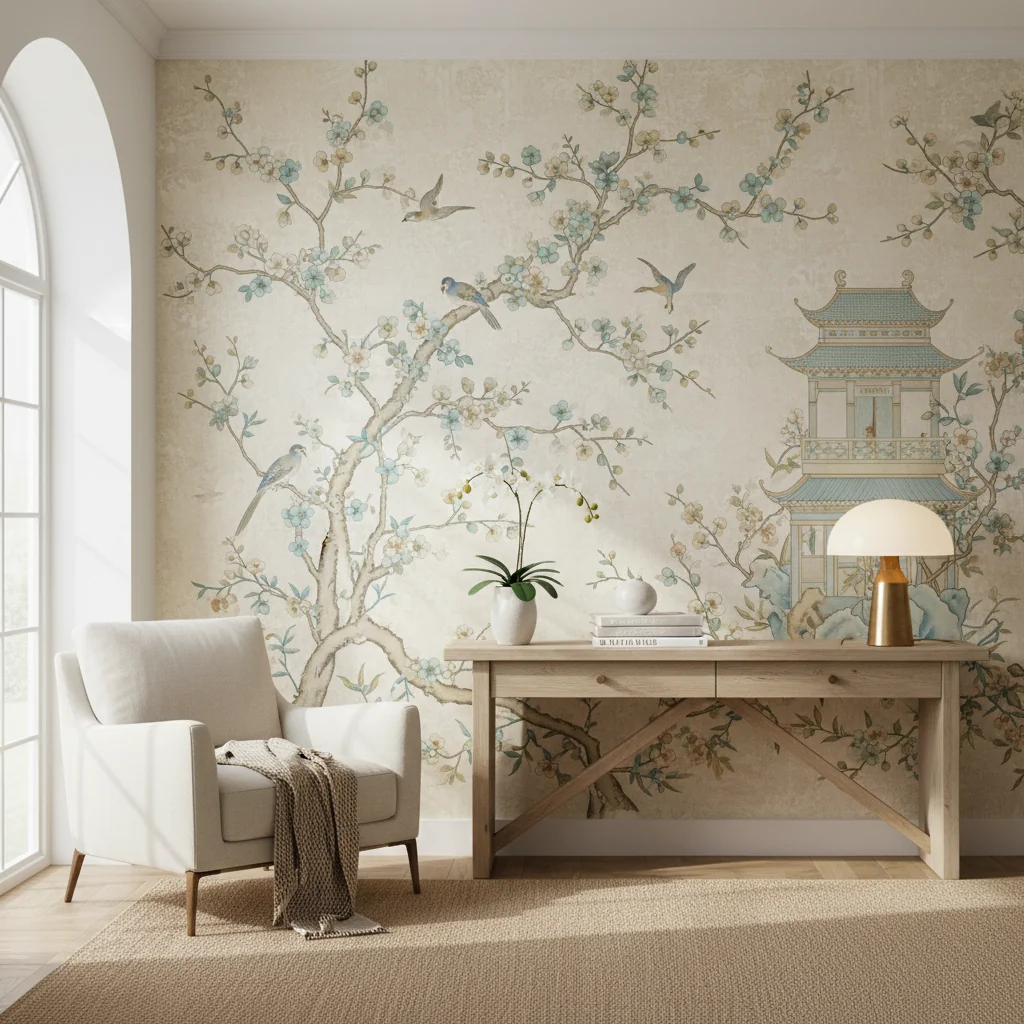
Chinoiserie mural wallpaper is a decorative wall covering style that interprets Chinese and East Asian artistic traditions through a European lens, often featuring expansive, hand-painted or digitally printed scenes of flora, fauna, and idyllic landscapes. This distinct aesthetic emerged in 17th and 18th century Europe, characterized by its intricate detail and vibrant storytelling across a continuous wall surface, transforming interiors into exotic and aspirational environments.
The term “chinoiserie” itself, derived from the French word “chinois” meaning Chinese, refers to the European interpretation and imitation of East Asian artistic and design motifs. It is crucial to understand that chinoiserie is not authentically Chinese art but rather a Western fantasy of the Orient, developed during a period of burgeoning trade and cultural exchange between Europe and Asia. European artisans and designers, captivated by imported silks, porcelains, and lacquerware, began to incorporate these exotic elements into their own creations, adapting them to suit European tastes and manufacturing capabilities. This adaptation often involved a whimsical, idealized, and sometimes exaggerated portrayal of Chinese life, nature, and architecture.
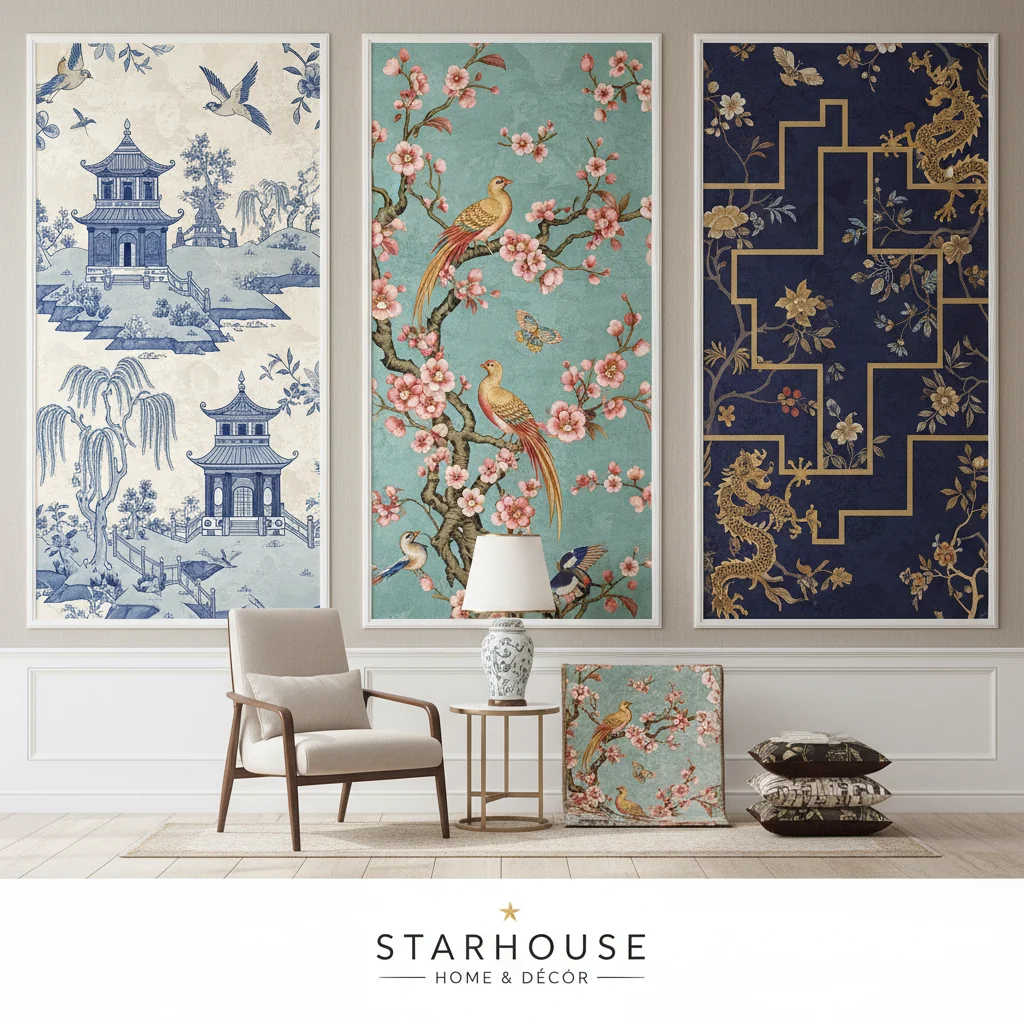
A defining characteristic of chinoiserie mural wallpaper is its narrative quality. Unlike traditional repeating wallpaper patterns, a mural presents a continuous, often panoramic scene that unfolds across the wall. These scenes typically depict fantastical gardens, serene landscapes with pagodas and bridges, delicate birds perched on blossoming branches, or elegant figures engaged in leisurely activities. The designs are frequently rendered with meticulous detail, employing a rich palette of colors that can range from soft pastels to vibrant jewel tones, often set against a solid or subtly textured background.
Historically, these murals were hand-painted on silk, rice paper, or canvas, making them exclusive and highly prized possessions of aristocratic families. Today, while bespoke hand-painted options still represent the pinnacle of luxury, technological advancements have made chinoiserie murals more accessible through high-quality digital printing. Modern methods allow for precise reproductions of classic designs, as well as contemporary interpretations, on a variety of durable materials. Regardless of the production method, the essence of chinoiserie mural wallpaper remains its ability to transport the viewer to a world of exotic beauty and refined artistry, establishing a powerful sense of place and elegance within an interior.
Chinoiserie is a European art style that emerged in the 17th century, characterized by its interpretation and imitation of Chinese and East Asian artistic traditions, often featuring fanciful motifs and exotic scenes.
The Enduring Appeal: Why Chinoiserie Murals Captivate
Chinoiserie mural wallpaper captivates designers and homeowners alike due to its unparalleled ability to introduce depth, narrative, and a sense of timeless elegance into a space, transforming plain walls into immersive works of art. Its rich historical context and intricate detailing offer a sophisticated visual experience that transcends fleeting trends, establishing a unique atmosphere that is both aspirational and deeply personal.
One of the primary reasons for its enduring appeal is its transformative power. A chinoiserie mural is not merely a decorative element; it is an experience. It creates a focal point that draws the eye and invites contemplation, turning a mundane wall into a vibrant landscape or a tranquil garden. This ability to evoke a sense of escapism and wonder is particularly potent in urban environments, offering a serene counterpoint to the hustle and bustle outside.
The inherent artistry and craftsmanship, particularly in hand-painted versions, contribute significantly to its allure. Each brushstroke, each delicately rendered bird or blossom, speaks to a tradition of meticulous artistry. Even digitally printed murals, when executed with high resolution and quality materials, retain this sense of artistry by faithfully reproducing the intricate details and painterly textures of their historical predecessors. This high level of detail ensures visual interest at every glance, revealing new nuances the longer one observes the scene.
Chinoiserie murals also possess remarkable versatility, allowing them to complement a diverse range of interior design styles. While historically associated with grand, traditional settings, contemporary designers skillfully integrate them into transitional, eclectic, and even modern minimalist spaces. They can serve as a sophisticated backdrop for antique furniture, or provide an unexpected, luxurious contrast to sleek, contemporary pieces. This adaptability ensures that chinoiserie remains relevant and desirable across different design sensibilities, appealing to those who appreciate both heritage and innovation.
Furthermore, the specific motifs often found in chinoiserie—such as blossoming trees, exotic birds, and serene landscapes—are universally appealing. These elements evoke feelings of nature, tranquility, and beauty, creating a calming and harmonious environment. The narrative quality of the murals, where a story unfolds across the walls, adds a layer of intellectual engagement, inviting viewers to interpret and connect with the depicted scenes on a deeper level. This combination of visual splendor, historical depth, and emotional resonance firmly establishes chinoiserie mural wallpaper as a captivating and enduring choice for sophisticated interiors.
Types of Chinoiserie Mural Wallpaper: From Traditional to Contemporary
Chinoiserie mural wallpaper is available in a variety of types, distinguished primarily by their manufacturing process, material composition, and installation method, ranging from historically accurate hand-painted silk panels to accessible digitally printed peel-and-stick options. These variations offer distinct aesthetic qualities, durability, and cost considerations, allowing designers and homeowners to select the most appropriate solution for their specific project and budget.
Understanding the different types is crucial for making an informed decision, as each offers unique advantages in terms of appearance, longevity, and ease of application.
Hand-Painted Silk or Paper Murals
These represent the pinnacle of luxury and authenticity in chinoiserie design. Traditionally, these murals are meticulously hand-painted by skilled artisans on panels of silk, Xuan paper, or a fine quality canvas. Each mural is a unique work of art, often custom-designed for a specific space, allowing for bespoke color palettes, motif placement, and scale. The texture and luminosity of silk or the subtle absorbency of fine paper lend a depth and richness that is unparalleled. Due to the intensive labor and rare craftsmanship involved, hand-painted murals are the most expensive option, typically requiring professional installation and careful maintenance. They are ideal for high-end residential projects, historical restorations, or as a signature statement piece in a luxury commercial space where budget is not the primary constraint.
Digitally Printed Commercial Grade Murals
Advancements in printing technology have revolutionized the accessibility of chinoiserie murals. Digitally printed options can reproduce the intricate details and painterly effects of hand-painted designs with remarkable fidelity. These murals are typically printed on high-quality, durable substrates such as non-woven paper, vinyl, or fabric-backed vinyl. Non-woven materials are breathable, tear-resistant, and often easier to remove than traditional paper, making them a popular choice for residential use. Vinyl and fabric-backed vinyl offer superior durability, washability, and resistance to moisture, making them suitable for high-traffic areas, commercial settings, or even bathrooms and kitchens. Digital printing allows for customization in terms of sizing, color adjustments, and even the incorporation of specific motifs, providing a balance between bespoke artistry and practical application. Installation generally requires wallpaper paste and can be undertaken by experienced DIY enthusiasts or professionals.
Peel-and-Stick (Removable) Chinoiserie Murals
For those seeking flexibility, ease of installation, or a temporary design solution, peel-and-stick chinoiserie murals are an excellent choice. These murals are typically printed on self-adhesive vinyl or a fabric-based material with a removable backing. The adhesive is designed to be repositionable during installation and fully removable without damaging the wall surface, making them ideal for renters, nurseries, or individuals who enjoy frequently updating their decor. While they offer convenience and a lower price point, the material quality and resolution may not always match that of commercial-grade pasted options. However, many brands now offer high-quality peel-and-stick murals that are both visually stunning and durable. Installation is a popular DIY project, though careful alignment is still essential for a seamless look.
Custom-Sized Murals
Regardless of the material (digitally printed non-woven, vinyl, or peel-and-stick), many chinoiserie murals are offered as “custom-sized” products. This means the design is scaled and printed to precisely fit the dimensions of your wall, eliminating the need for pattern repeats or excessive trimming. This ensures the integrity of the panoramic scene and prevents awkward cuts through key motifs. Custom sizing is particularly beneficial for walls with architectural features like windows, doors, or built-in shelving, as the design can be adjusted to flow around these elements seamlessly. This tailored approach guarantees a bespoke finish that maximizes the visual impact of the mural.
To summarize the distinctions, consider this comparison:
| Type | Primary Material(s) | Durability | Installation Complexity | Approx. Cost Range (per sq ft) | Ideal Use Cases |
|---|---|---|---|---|---|
| Hand-Painted | Silk, Xuan Paper, Fine Canvas | High (with careful handling) | Professional Required (Highly Complex) | $100 – $500+ | Luxury residences, historical restorations, bespoke design projects, art installations. |
| Digitally Printed (Non-Woven) | Cellulose/Synthetic Blend | Medium-High (Tear-resistant, breathable) | Moderate (Paste application, professional recommended for large murals) | $15 – $40 | Residential living areas, bedrooms, dining rooms, transitional spaces. |
| Digitally Printed (Vinyl/Fabric-backed) | PVC Vinyl, Fabric-backed Vinyl | High (Washable, moisture-resistant) | Moderate (Paste application, professional recommended for large murals) | $20 – $50 | High-traffic areas, commercial spaces, bathrooms, kitchens, kids’ rooms. |
| Peel-and-Stick (Removable) | Self-adhesive Vinyl, Fabric | Medium (Generally less durable than pasted options) | Low (DIY-friendly, repositionable) | $10 – $30 | Rentals, temporary decor, accent walls, nurseries, commitment-free design. |
Exploring Styles and Motifs: The Visual Language of Chinoiserie
The visual language of chinoiserie mural wallpaper encompasses a rich array of distinctive styles and recurring motifs, predominantly featuring idealized natural scenes, exotic flora and fauna, and elegant human figures, all interpreted with a characteristic blend of European and East Asian artistic conventions. These elements combine to create expansive, narrative designs that define the aesthetic, offering a spectrum from historically faithful reproductions to strikingly modern interpretations.
Understanding these styles and motifs allows for a deeper appreciation of chinoiserie’s intricate beauty and helps in selecting a mural that perfectly aligns with a desired interior aesthetic. The artistry lies in the delicate balance of composition, color, and symbolic representation.
Dominant Styles of Chinoiserie Murals
- Traditional/Historical Chinoiserie: This style closely emulates the opulent designs of the 18th century, often drawing inspiration from renowned manufacturers like de Gournay and Gracie. These murals typically feature sprawling, intricate scenes with a high density of motifs, rendered with a delicate, painterly quality. Color palettes often lean towards muted pastels, soft golds, and subtle blues and greens, evoking a sense of antique elegance. The composition frequently includes a ground level with flora and small animals, rising to blossoming trees and birds, culminating in a sky above. These are ideal for formal living rooms, dining rooms, and master bedrooms in traditional or grand millennial interiors.
- Panoramic/Scenic Chinoiserie: A subset of traditional, this style emphasizes expansive landscapes. These murals depict continuous scenes that wrap around a room, creating an immersive environment. Common elements include rolling hills, tranquil rivers, distant pagodas, bridges, and small boats, often with a sense of depth and perspective. While still featuring flora and fauna, the focus shifts to the grandeur of the landscape itself. They are perfect for creating a sense of calm and breadth in larger rooms or hallways.
- Floral and Avian Focused Chinoiserie: Many chinoiserie murals place a strong emphasis on botanical and ornithological elements. These designs often feature large, blossoming trees—such as cherry, magnolia, or plum—interspersed with a vibrant array of exotic birds like pheasants, cranes, peacocks, or hummingbirds. The composition can be more open than traditional panoramic scenes, allowing the beauty of individual motifs to shine. These murals often feel lighter and more airy, suitable for bedrooms, sunrooms, or spaces where a connection to nature is desired.
- Modern/Contemporary Chinoiserie: This style offers a fresh perspective on the classic aesthetic. Contemporary interpretations might simplify motifs, use bolder or more minimalist color palettes, or incorporate abstract elements. Scale can be exaggerated, with oversized blossoms or birds, or reduced to a singular, striking motif. Designers might use unexpected background colors, metallic accents, or combine chinoiserie elements with geometric patterns. This style is ideal for transitional, eclectic, or modern interiors seeking a sophisticated yet current twist on a historical theme.
Key Motifs in Chinoiserie Mural Wallpaper
The motifs within chinoiserie are highly recognizable and contribute significantly to its distinctive character. A motif in design is a recurring decorative element or pattern that holds symbolic or aesthetic significance within a larger composition.
- Flora: Blossoming trees are paramount.
- Peonies: Symbolizing wealth, honor, and prosperity, peonies are frequently depicted in full bloom, often in vibrant pinks, reds, and whites.
- Cherry Blossoms (Sakura): Representing beauty, fragility, and the transient nature of life, these delicate pink or white flowers add grace and movement.
- Magnolias: Large, elegant blossoms conveying nobility and purity.
- Chrysanthemums: Symbolizing longevity and good fortune, often shown in various shades of yellow and orange.
- Bamboo: Representing strength, resilience, and flexibility, bamboo stalks provide vertical elements and a sense of natural structure.
- Willow Trees: With their graceful, weeping branches, willows evoke serenity and often frame water features.
- Fauna: Exotic birds and insects are central to the narrative.
- Pheasants: Symbolizing good fortune, beauty, and prosperity, pheasants are often depicted with elaborate plumage.
- Cranes: Representing longevity, peace, and good luck, cranes are shown in elegant flight or standing gracefully.
- Hummingbirds: Symbolizing joy, healing, and lightness of being, these tiny birds add dynamism to floral scenes.
- Peacocks: Associated with beauty, royalty, and immortality, peacocks with their iridescent feathers are striking additions.
- Butterflies: Symbolizing transformation, joy, and often love, butterflies add delicate movement.
- Mythical Creatures: While less common in European chinoiserie (which favored a more ‘naturalistic’ fantasy), stylized dragons or phoenixes can occasionally appear, drawing directly from Chinese mythology.
- Architecture and Human Figures:
- Pagodas and Pavilions: Multi-tiered towers and open-sided structures that evoke idealized Chinese landscapes.
- Bridges: Often arching over serene rivers or ponds, connecting different parts of the scenic narrative.
- Boats and Junks: Small vessels on water, adding a sense of movement and daily life.
- Human Figures: Depicted in traditional attire, engaged in activities like fishing, playing instruments, or simply strolling through gardens, these figures add scale and a human element to the fantastical scenes.
- Landscape Elements:
- Mountains and Hills: Often stylized and misty, providing background depth.
- Water Features: Rivers, ponds, and waterfalls symbolize tranquility and flow.
- Clouds and Mist: Used to create atmospheric effects and separate design elements, adding to the ethereal quality.
The interplay of these elements, often arranged in a non-linear, flowing composition, is what gives chinoiserie murals their unique charm and enduring appeal. The careful selection of specific motifs and their stylistic rendering allows for a nuanced expression of luxury and artistic sensibility within any interior.
Choosing Your Chinoiserie Mural: Key Considerations for a Perfect Fit
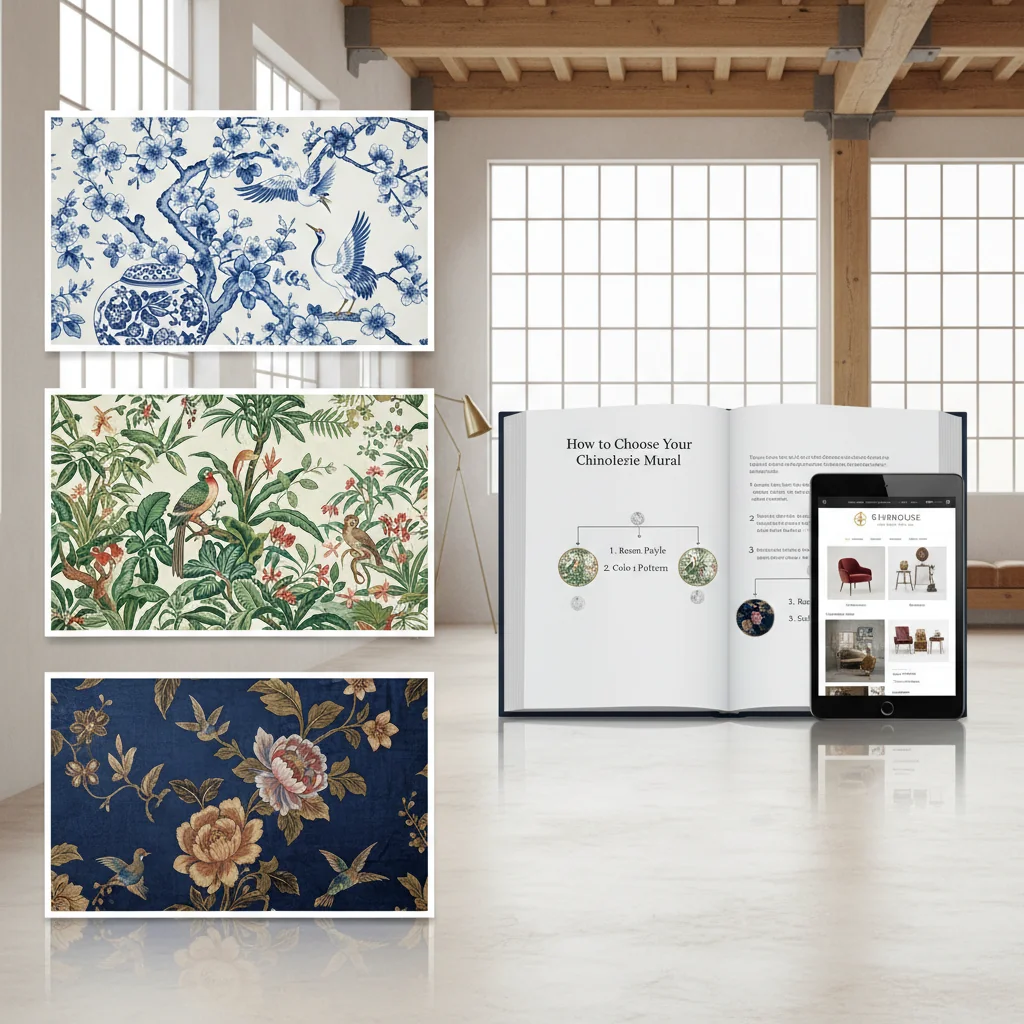
Selecting the ideal chinoiserie mural wallpaper requires careful consideration of several crucial factors, including the room’s existing aesthetic, desired mood, scale of the space, and practical aspects like material durability and installation complexity. A thoughtful approach ensures the mural harmonizes with its surroundings, fulfills its design potential, and creates a cohesive, sophisticated environment.
The impact of a chinoiserie mural is significant, so making the right choice involves balancing aesthetic aspirations with practical realities. Here are the key considerations:
1. Room Function and Desired Mood
- Bedrooms: Opt for serene scenes with soft color palettes, delicate florals, and tranquil birds to promote relaxation. A mural behind the bed creates a luxurious headboard effect.
- Dining Rooms: Grand, panoramic scenes with rich colors and intricate details can elevate formal entertaining spaces, creating a sense of occasion.
- Living Rooms: A chinoiserie mural can serve as a stunning focal point on a main wall, defining the space and sparking conversation. Consider a design that complements your existing furniture and art.
- Powder Rooms/Small Spaces: These offer an opportunity for a “jewel box” effect. A bold, vibrant, or highly detailed mural can make a small space feel unexpectedly grand and luxurious.
- Hallways/Entryways: A continuous scenic mural can guide the eye and create an impressive first impression, setting the tone for the rest of the home.
2. Color Palette Harmony
The mural’s color scheme must complement or intentionally contrast with your room’s existing furnishings, textiles, and paint colors. Analyze the dominant colors in the mural—background, flora, fauna—and consider how they will interact with your current decor. For a cohesive look, select accent colors from the mural to use in pillows, throws, or decorative objects. Consider the amount of natural and artificial light the room receives, as this will significantly impact how the colors appear throughout the day.
3. Scale and Proportion
The scale of the motifs within the mural is critical. A mural with very large, expansive motifs might overwhelm a small room or a narrow wall. Conversely, a mural with tiny, delicate details might get lost on a vast, open wall. Evaluate the size of your wall and the overall scale of your room. For a grand statement in a large space, oversized blossoms or birds can be striking. For a more subtle effect or in a smaller area, designs with a finer detail or a less dense composition might be more appropriate. Always consider how much of the mural will be visible once furniture is in place.
4. Material and Durability
The choice of material impacts both the aesthetic and the practicality of the mural:
- Hand-Painted Silk/Paper: Offers unparalleled luxury and artistic depth but requires delicate care and is not suitable for high-traffic or moisture-prone areas.
- Digitally Printed Non-Woven: A popular choice for residential use, offering good durability, breathability, and ease of removal. It provides a refined, matte finish.
- Digitally Printed Vinyl/Fabric-Backed Vinyl: Highly durable, washable, and resistant to moisture, making it ideal for bathrooms, kitchens, kids’ rooms, or commercial spaces where longevity and easy cleaning are priorities. These often have a subtle sheen.
- Peel-and-Stick: Offers convenience and removability, perfect for temporary installations or renters. Ensure the surface is smooth and clean for optimal adhesion.
Consider the room’s usage: a high-traffic family room benefits from a more robust, washable material, while a formal dining room might accommodate a more delicate option.
5. Light Exposure
Natural and artificial light can dramatically alter the appearance of your mural. Walls that receive direct, prolonged sunlight may cause colors to fade over time, especially with certain printing inks or delicate natural dyes. Consider UV-resistant options if your wall is exposed to strong sunlight. Additionally, assess how shadows and artificial lighting will interact with the mural’s texture and colors. Picture lights or strategically placed sconces can enhance the mural’s depth and highlight its intricate details.
6. Budget
Chinoiserie murals vary widely in price, from several hundred dollars for a digitally printed peel-and-stick option to tens of thousands for a custom hand-painted silk masterpiece. Determine your budget early in the process. Remember to factor in potential professional installation costs, which can be significant for complex or delicate materials.
7. Customization Options
Many suppliers offer customization for digitally printed murals. This can include:
- Custom Sizing: Ensuring the mural fits your wall dimensions precisely, avoiding awkward cropping.
- Color Adjustments: Tweaking hues to better match your existing decor.
- Motif Placement: Adjusting the position of key elements to account for furniture, windows, or doors.
These options allow you to create a truly bespoke look that integrates seamlessly into your space. As you envision the perfect chinoiserie mural for your space, consider how Starhouse can help curate your vision. We believe in creating spaces that reflect your unique style and needs. Tell us what you’re looking for, and get early access to our collection at https://starhouseusa.online/.
Sizing and Measuring for Chinoiserie Murals: Precision is Paramount
Accurate sizing and precise measurement are paramount when installing chinoiserie mural wallpaper, as murals are designed to create a continuous, seamless image tailored to specific wall dimensions, unlike traditional repeat-pattern wallpapers. Errors in measurement can lead to misaligned patterns, wasted material, and a compromised aesthetic, undermining the entire design intent. Careful planning at this stage ensures a professional and visually stunning outcome.
The unique nature of murals, where the design flows across multiple panels to form a single, expansive image, demands meticulous attention to detail during the measurement phase. Unlike standard wallpaper where a small error in cutting a repeat might be forgiving, a miscalculation with a mural can disrupt the entire scene.
Step-by-Step Measuring Guide:
- Measure Wall Width in Multiple Places: Use a high-quality steel tape measure. Measure the width of your wall at the top, middle, and bottom. Walls are rarely perfectly square, so taking multiple measurements helps identify discrepancies. Record the widest measurement.
- Measure Wall Height in Multiple Places: Similarly, measure the height of your wall from ceiling to floor at the left, center, and right. Record the tallest measurement. This is crucial for ensuring the mural panels are long enough.
- Account for Architectural Features: If your wall has windows, doors, built-in shelving, or other architectural elements, you must measure their exact dimensions and locations. This information is vital for custom murals, as the manufacturer can adjust the design or panel cuts to accommodate these features. For standard murals, you will need to plan how the design will be cut around them.
- Add a Buffer for Trimming: Always add an extra allowance to your measurements. We recommend adding at least 2-4 inches (or 5-10 cm) to both the total width and height. This buffer provides crucial room for error, ensures coverage of slight wall imperfections (like uneven ceilings or floors), and allows for precise trimming during installation for a clean edge. It is always better to have a little extra material than not enough.
- Understand Panel Widths and Design Flow: Chinoiserie murals are typically supplied in a series of numbered panels (e.g., Panel 1, Panel 2, etc.). Familiarize yourself with the manufacturer’s specified panel widths. Understanding how the design flows from one panel to the next is essential for visualizing the final layout and for accurate installation. Some murals have a slight overlap built into the panels for seamless pattern matching.
- Consider the Starting Point: For most murals, it is best to start installation from the most prominent or central part of the wall, or from a corner that will be less visible. This ensures that any minor discrepancies or pattern shifts are less noticeable. For designs with a strong central motif, starting there and working outwards can be beneficial.
- Verify Manufacturer Guidelines: Always consult the specific sizing and installation instructions provided by the mural manufacturer. They may have unique recommendations regarding buffer size, panel overlap, or specific measurement techniques tailored to their product.
Essential Tools for Measuring:
- Steel Tape Measure: A retractable metal tape measure (at least 25 feet long) provides the most accurate and consistent measurements.
- Pencil: For marking measurements lightly on the wall or on your blueprint.
- Level: A long level (2-4 feet) or a laser level helps ensure your initial plumb lines for installation are perfectly straight.
- Step Ladder or Extension Pole: To comfortably reach the top of your walls for accurate height measurements.
- Calculator: For summing up measurements and adding buffer.
- Graph Paper and Pencil: To sketch out your wall dimensions, including windows, doors, and furniture, helping you visualize the mural’s placement.
By approaching the measurement phase with precision and attention to detail, you lay the groundwork for a successful and stunning chinoiserie mural installation. This upfront investment of time prevents costly errors and ensures your mural achieves its intended visual impact.
Installation Best Practices: Bringing Your Mural to Life
Successful installation of chinoiserie mural wallpaper requires meticulous preparation of the wall surface, careful handling of the material, and precise alignment of each panel to ensure a seamless and professional finish. Proper techniques prevent common issues such as bubbling, tearing, and misaligned patterns, preserving the mural’s intricate beauty and maximizing its visual impact. While DIY installation is possible for some peel-and-stick options, complex murals often benefit from professional expertise.
The quality of the final result hinges directly on the thoroughness of the preparation and the precision of the application. Rushing or skipping steps inevitably leads to unsatisfactory outcomes.
1. Wall Preparation is Non-Negotiable
- Clean the Walls: Ensure walls are free from dust, dirt, grease, and grime. Use a mild detergent solution, rinse thoroughly, and allow to dry completely (at least 24 hours).
- Smooth the Surface: Patch any holes or cracks with spackle, sand smooth, and wipe away dust. Even minor imperfections can show through the mural, especially on lighter designs.
- Prime the Walls: Applying a high-quality wallpaper primer is essential. Wall primer is a preparatory coating applied to walls before wallpaper installation to create a uniform, non-porous surface, enhancing adhesion and making future removal easier. It seals porous surfaces, prevents paste from being absorbed too quickly, and ensures the mural adheres evenly. For darker walls, a white-pigmented primer can prevent the underlying color from showing through a lighter mural. Allow primer to dry fully according to manufacturer instructions, typically 24-48 hours.
- Remove Obstructions: Take off electrical outlet covers, light switch plates, and any wall-mounted fixtures.
2. Gather the Right Tools
- Smoothing Tool: A plastic smoothing tool or wallpaper brush to remove air bubbles and ensure firm adhesion.
- Utility Knife with Snap-Off Blades: Essential for precise trimming. Use a fresh, sharp blade for each cut to prevent tearing.
- Long Straight Edge/Ruler: For clean, straight cuts along edges and around fixtures.
- Level and Plumb Bob (or Laser Level): To ensure your first panel is perfectly vertical, setting the stage for all subsequent panels.
- Measuring Tape and Pencil: For marking guidelines.
- Sponge and Water Bucket: For cleaning excess paste (if applicable) and general cleanup.
- Wallpaper Paste (if not peel-and-stick): Use a high-quality, pre-mixed clear or heavy-duty paste suitable for your mural’s material.
- Step Ladder: For safe and easy access to the top of the wall.
3. Pre-Installation Steps
- Unroll and Inspect: Lay out all mural panels on a clean, flat surface. Inspect them for any manufacturing defects, color discrepancies, or damage. Ensure all panels are present and in correct sequence.
- Acclimatize: Allow the mural panels to acclimatize to the room’s temperature and humidity for at least 24-48 hours before installation. This prevents expansion or contraction after application.
- Layout and Plan: Dry-fit the panels on the floor or tape them lightly to the wall to visualize the full design. Determine your starting point (often the most central or prominent point of the wall, or a corner that is less visible). Mark a vertical plumb line for your first panel using a level or plumb bob. This line is critical for ensuring all subsequent panels are straight.
4. Application Techniques (Paste vs. Peel-and-Stick)
For Paste-Applied Murals (Non-Woven, Vinyl, Fabric-Backed):
- Apply Paste: Depending on the material, paste may be applied directly to the wall (paste-the-wall method, common for non-woven) or to the back of the panel (paste-the-paper method). Follow manufacturer instructions precisely. Apply paste evenly, ensuring good coverage, especially at the edges.
- Position the First Panel: Carefully align the first panel with your plumb line, starting from the top. Allow a small overlap at the ceiling and side for trimming.
- Smooth Out Bubbles: Using your smoothing tool, gently work from the center of the panel outwards, pushing out any air bubbles and excess paste.
- Trim Edges: Use a sharp utility knife and straight edge to carefully trim excess material at the ceiling, floor, and side edges.
- Install Subsequent Panels: Align the next panel carefully, matching the pattern precisely. Most murals have a slight overlap (e.g., 1/2 inch) to create a seamless joint. Ensure the pattern aligns perfectly before pressing firmly. Repeat smoothing and trimming.
- Clean Up: Immediately wipe away any excess paste from the mural surface and seams with a damp sponge.
For Peel-and-Stick Murals:
- Peel Backing: Peel only a few inches of the backing paper from the top of the first panel.
- Align and Apply: Align the top edge of the panel with your ceiling line (allowing for trimming) and the side edge with your plumb line. Slowly peel down the backing paper while simultaneously smoothing the mural onto the wall, working from top to bottom and center to edges.
- Smooth Out Bubbles: Use a smoothing tool to remove air bubbles. If a bubble persists, carefully peel back that section and re-apply.
- Trim Edges: Trim excess material at the ceiling, floor, and side edges with a sharp utility knife.
- Install Subsequent Panels: Carefully align the next panel, ensuring the pattern matches perfectly. Peel and stick as before. Many peel-and-stick murals are butt-jointed (no overlap), requiring very precise edge-to-edge alignment.
5. Post-Installation Care
Allow the mural to dry completely, typically 24-72 hours, before replacing outlet covers or hanging wall decor. Avoid touching or cleaning the mural during this drying period to ensure proper adhesion.
For complex designs, large walls, or delicate materials like hand-painted silk, hiring a professional wallpaper installer is a wise investment. Their expertise ensures a flawless finish and protects your investment.
Styling and Pairing: Integrating Chinoiserie into Your Home
Integrating chinoiserie mural wallpaper into a home requires a thoughtful approach to styling and pairing with furnishings, textiles, and accessories, ensuring the mural serves as a cohesive focal point rather than an overwhelming element. The goal is to balance its intricate beauty with complementary pieces that enhance the overall design narrative, creating a space that feels both luxurious and harmoniously composed.
A chinoiserie mural is a significant design statement, and its success lies in how well it interacts with the other elements in the room. The key is to create balance and allow the mural to be the star, while other elements play supporting roles.
1. Harmonizing with Design Styles
- Traditional/Grand Millennial: Embrace the opulence. Pair the mural with antique furniture, ornate mirrors, crystal chandeliers, and rich textiles like velvet or silk. Incorporate classic patterns in upholstery (e.g., damask, toile) in a complementary color palette.
- Transitional: Blend traditional chinoiserie with contemporary elements. Use the mural as a backdrop for modern furniture with clean lines, minimalist lighting fixtures, and abstract art on adjacent walls. This creates a sophisticated contrast that feels both current and timeless.
- Modern/Eclectic: Use a bold or simplified chinoiserie mural as a surprising, luxurious element against a backdrop of minimalist, industrial, or globally inspired pieces. Introduce unexpected textures like concrete or metal, and allow the mural to provide a rich, artistic counterpoint.
2. Color Harmony and Palette Extension
Carefully extract colors from the mural’s design to inform your room’s overall palette. Choose one or two dominant colors from the mural for larger furnishings (e.g., a sofa in a muted green from the mural’s foliage). Then, select accent colors for smaller items like throw pillows, decorative vases, or lampshades. This creates a cohesive and integrated look, making the mural feel like a natural part of the room rather than an addition. For adjacent walls not covered by the mural, choose a solid paint color that is either a subtle background shade from the mural or a complementary neutral.
3. Thoughtful Furniture Selection
The furniture should support, not compete with, the mural.
- Avoid Competing Patterns: Opt for solid-colored upholstery or subtle textures that don’t clash with the mural’s intricate design.
- Scale and Placement: Ensure furniture does not obscure key elements of the mural. Low-profile sofas or sideboards can work well. If the mural has a strong horizontal flow, avoid tall, bulky furniture that breaks the line.
- Material Mix: Introduce natural materials like wood, rattan, or linen to balance the mural’s intricate details. Lacquered furniture can enhance the Asian-inspired aesthetic.
4. Lighting to Enhance the Artistry
Strategic lighting can dramatically enhance the beauty of your chinoiserie mural.
- Picture Lights: Install discreet picture lights above the mural to illuminate its intricate details and colors, making it glow.
- Sconces: Wall sconces placed symmetrically on either side of a mural segment can provide ambient light and highlight the texture.
- Dimmable Overhead Lighting: Allows you to adjust the mood and intensity, ensuring the mural is always seen in its best light.
5. Curated Accessories and Art
Less is often more when accessorizing a room with a chinoiserie mural.
- Asian-Inspired Accents: Incorporate traditional ginger jars, porcelain vases, or antique screens in a thoughtful manner. Avoid over-cluttering.
- Minimalist Decor: Sometimes, the mural is enough. A few well-chosen, simple accessories can allow the mural to truly shine.
- Complementary Art: If hanging art on the mural itself is necessary, choose pieces with simple frames and abstract or complementary subjects that don’t distract from the mural’s narrative. Often, adjacent walls are better suited for additional artwork.
- Mirrors: A large, ornate or simple mirror can reflect the mural, expanding the perceived space and doubling its visual impact.
6. Textiles and Soft Furnishings
Use textiles to soften the space and tie the color palette together.
- Fabrics: Silk, linen, velvet, or cotton in solid colors or subtle textures drawn from the mural’s palette.
- Window Treatments: Simple drapes or Roman shades in a solid color that matches the mural’s background or a key accent color. Avoid heavy patterns that compete.
By approaching styling with intentionality and a keen eye for balance, your chinoiserie mural wallpaper will not just be a wall covering, but a masterful artistic statement that defines your space with elegance and personality.
Care and Maintenance: Preserving Your Mural’s Beauty
Proper care and routine maintenance are essential for preserving the intricate beauty and longevity of chinoiserie mural wallpaper, protecting it from damage, fading, and deterioration over time. The specific cleaning methods depend significantly on the mural’s material and finish, ensuring that its delicate designs remain vibrant and intact for years to come. Neglecting maintenance can lead to discoloration, damage, or premature wear, compromising your investment.
Understanding the material of your mural is the first step in establishing an effective care routine. Always refer to the manufacturer’s specific care instructions, as these will provide the most accurate guidance for your particular product.
General Care Guidelines for All Chinoiserie Murals:
- Regular Dusting: The most crucial step for any mural is regular, gentle dusting. Use a soft, clean microfiber cloth, a feather duster, or a soft-bristled brush attachment on your vacuum cleaner (on a low setting, held slightly away from the surface). Dust accumulates and can dull the mural’s appearance over time.
- Avoid Abrasive Contact: Prevent furniture, pets, or sharp objects from rubbing against or scratching the mural. Even minor abrasions can damage the delicate surface or print.
- Handle with Care: If you need to move furniture or perform any work near the mural, cover it with a protective sheet or blanket.
Material-Specific Cleaning and Maintenance:
1. Hand-Painted Silk or Fine Paper Murals:
These are the most delicate and require the utmost care.
- Cleaning: Hand-painted silk or paper murals are generally NOT washable. Any liquid can damage the paint, dyes, or paper. For any spills or significant marks, consult a professional conservator specializing in antique textiles or paper.
- Dusting: Use only a very soft, dry microfiber cloth or a soft-bristled brush. Avoid rubbing vigorously.
- Humidity Control: Maintain stable room temperature and humidity levels. Extreme fluctuations can cause the paper to warp, buckle, or lift. A relative humidity between 40-60% is ideal.
- UV Protection: Direct, prolonged sunlight will cause fading of the delicate pigments. Use UV-blocking window treatments (sheers, blinds, or curtains) or apply UV-protective film to windows to minimize exposure.
- Professional Cleaning: For deep cleaning or restoration, always enlist the services of a specialist.
2. Digitally Printed Non-Woven Murals:
These are generally more durable than hand-painted options and often have some level of washability.
- Spot Cleaning: Many non-woven murals are “wipeable” or “washable.” For light marks, gently blot with a soft, damp sponge or microfiber cloth using plain water. For tougher spots, a very mild, diluted soap solution (e.g., dish soap) can be used. Always test in an inconspicuous area first to ensure no color removal or damage occurs.
- Avoid Harsh Chemicals: Never use abrasive cleaners, bleach, or strong chemical solvents, as these will damage the print and material.
3. Digitally Printed Vinyl or Fabric-Backed Vinyl Murals:
These are the most robust and easiest to clean, making them suitable for high-traffic or moisture-prone areas.
- Cleaning: Vinyl murals are typically highly washable. Use a soft sponge or cloth with a mild soap and water solution to gently wipe down the surface. Rinse with clean water and pat dry.
- Stain Removal: Most common household stains can be removed with gentle cleaning agents. Always test on an inconspicuous area first.
- Durability: These materials are resistant to moisture and scuffs, but still avoid harsh scrubbing or sharp objects.
4. Peel-and-Stick Murals:
Care depends on the specific material (often vinyl or fabric).
- Cleaning: Most peel-and-stick murals are wipeable. Use a soft, damp cloth with water or a very mild soap solution. Avoid excessive moisture, especially near edges, to prevent adhesive degradation.
- Repositioning: While designed to be removable, frequent repositioning can weaken the adhesive over time.
Environmental Considerations:
- Humidity: High humidity can cause paste-applied murals to loosen or peel, and can encourage mold growth, especially on paper-based materials. Low humidity can cause materials to dry out and become brittle. Maintain consistent indoor humidity levels.
- Temperature: Avoid extreme temperature fluctuations, which can stress the mural material and adhesive.
- Ventilation: Ensure good air circulation, particularly in bathrooms or kitchens, to prevent moisture buildup.
By adhering to these care and maintenance guidelines, your chinoiserie mural wallpaper will continue to be a stunning and well-preserved feature of your home for many years, retaining its vibrant colors and intricate details.
Common Mistakes to Avoid When Designing with Chinoiserie Murals
Avoiding common pitfalls when incorporating chinoiserie mural wallpaper is crucial for achieving a sophisticated and balanced interior, preventing the space from feeling cluttered, overwhelming, or mismatched. Awareness of these errors ensures the mural enhances, rather than detracts from, the overall design, leading to a cohesive and elegant outcome. A successful chinoiserie installation is a testament to thoughtful planning and execution.
Even with the most exquisite mural, certain missteps can diminish its impact. Here are the common mistakes to actively avoid:
1. Overwhelming the Space with Too Many Competing Elements
A chinoiserie mural is inherently busy and visually rich. The biggest mistake is to pair it with equally busy patterns in upholstery, rugs, or other wall art. This creates visual clutter and prevents the eye from resting, making the room feel chaotic and uncomfortable. Instead, allow the mural to be the dominant pattern and balance it with solid colors, subtle textures, and clean lines in your furnishings and accessories.
2. Ignoring Room Proportions and Scale of Motifs
Installing a mural with very large, dramatic motifs in a small, cramped room can make the space feel even smaller and claustrophobic. Conversely, a mural with tiny, delicate details on a vast, expansive wall might appear lost and lack impact. Always consider the scale of the mural’s design elements in relation to your room’s dimensions and the wall it will adorn. A well-chosen mural complements the room’s proportions, enhancing its perceived size and flow.
3. Skipping Essential Wall Preparation
Underestimating the importance of thorough wall preparation is a critical error. Applying a mural to an uneven, dirty, or unprimed surface will lead to disastrous results: bubbles, wrinkles, visible imperfections, poor adhesion, and potential peeling. The wall must be clean, smooth, dry, and properly primed. This foundational step is non-negotiable for a professional and long-lasting finish.
4. Mismatched Furniture and Interior Style
While chinoiserie can be versatile, simply throwing it into any room without considering the existing style can create a disjointed look. For instance, pairing a highly traditional, ornate chinoiserie mural with ultra-modern, industrial furniture without a deliberate transitional strategy can clash. The furniture and decor should either complement the mural’s specific style (traditional, transitional, modern interpretation) or offer a thoughtful contrast that feels intentional rather than accidental.
5. Poor Lighting Choices
Inadequate or inappropriate lighting can render a beautiful mural flat and dull. Direct sunlight can cause fading over time, while insufficient artificial light can prevent the intricate details and colors from being appreciated. Avoid placing the mural in areas of harsh, direct glare without UV protection. Instead, use soft, diffused lighting, and consider accent lighting like picture lights or sconces to highlight the mural’s artistry, especially in the evenings.
6. Neglecting the Overall Color Palette
Choosing a mural simply because it is beautiful, without considering how its colors interact with the rest of the room, is a common mistake. A mural with a strong color palette that clashes with existing upholstery, rugs, or paint colors will create an unsettling environment. Always ensure the mural’s colors either harmonize with or thoughtfully contrast the room’s existing scheme. Pull accent colors from the mural to create a cohesive flow throughout the space.
7. DIY Installation for Complex or Delicate Murals
While peel-and-stick murals are often DIY-friendly, attempting to install large, intricate, or delicate paste-applied murals (especially those on silk or fine paper) without prior experience is a significant risk. These materials require specialized tools, precise alignment, and expert handling. A professional installer possesses the skills to ensure a flawless, seamless finish and prevent costly damage to the mural. Invest in professional installation for complex projects to protect your investment.
8. Not Considering the Long-Term Impact
Chinoiserie murals are a significant design commitment. Not considering how the design will hold up to changing trends, your personal style evolution, or the needs of your family over time can lead to regret. While chinoiserie is timeless, a very specific or highly themed mural might feel dated quicker than a more classic or versatile design. Choose a mural you genuinely love and believe you will appreciate for many years.
By being mindful of these common mistakes, you can approach your chinoiserie mural project with confidence, ensuring a stunning and enduring addition to your home’s aesthetic.
Frequently Asked Questions About Chinoiserie Mural Wallpaper
Is chinoiserie mural wallpaper still in style?
Yes, chinoiserie mural wallpaper remains a highly coveted and enduring design trend, celebrated for its timeless elegance and ability to introduce a bespoke, artistic element into contemporary interiors. Its historical richness and visual complexity ensure it transcends fleeting fads, making it a sophisticated choice for both traditional and modern spaces.
What rooms are best for chinoiserie wallpaper?
Chinoiserie mural wallpaper is exceptionally versatile and can enhance various rooms, with bedrooms, dining rooms, and powder rooms being particularly popular choices. In bedrooms, it creates a serene and luxurious retreat; in dining rooms, it elevates formal entertaining; and in powder rooms, it offers a dramatic, jewel-box effect. It also serves as a stunning focal point in living rooms or an impressive statement in entryways.
Can I use peel-and-stick chinoiserie mural wallpaper?
Yes, peel-and-stick chinoiserie mural wallpaper is a convenient and increasingly popular option, offering ease of installation and removability without damaging the wall. It is ideal for renters, temporary decor updates, or those who prefer a DIY approach, typically available in high-quality vinyl or fabric materials that are both visually appealing and durable.
How much does chinoiserie mural wallpaper cost?
The cost of chinoiserie mural wallpaper varies significantly based on material, craftsmanship, and customization, ranging from approximately $10-$30 per square foot for digitally printed peel-and-stick options to $15-$50 per square foot for commercial-grade printed murals. Bespoke hand-painted silk or paper murals represent the highest investment, often exceeding $100-$500 per square foot due to their unique artistry and labor-intensive production.
How do I clean chinoiserie wallpaper?
Cleaning chinoiserie mural wallpaper depends on its material: hand-painted silk or paper versions require dry dusting only and professional conservation for spills. Digitally printed non-woven murals are typically wipeable with a damp cloth and mild soap, while vinyl or fabric-backed vinyl murals are highly washable with a mild detergent solution. Always dry dust regularly and consult manufacturer guidelines for specific cleaning instructions to prevent damage.
What colors typically appear in chinoiserie murals?
Chinoiserie murals typically feature a rich and varied color palette, often including soft pastels such as pale blues, dusty pinks, and muted greens for backgrounds and delicate florals. Vibrant jewel tones like emerald green, sapphire blue, ruby red, and golden yellows are frequently used for exotic birds, blossoming flowers, and architectural details, all contributing to their characteristic luxurious and ethereal aesthetic.
Is chinoiserie culturally insensitive?
Chinoiserie, as a historical European art style, is an interpretation rather than an authentic representation of East Asian culture. While it emerged from a period of cultural exchange, it is important to acknowledge that it reflects a Western idealized fantasy. When incorporating chinoiserie today, approaching it with an appreciation for its artistic heritage and design beauty, rather than as a direct cultural appropriation, is key. Many contemporary designers celebrate its aesthetic without claiming cultural authenticity, focusing instead on its artistic merit and transformative power in interiors.
Conclusion: Curating Your Chinoiserie Vision
Chinoiserie mural wallpaper stands as a testament to enduring elegance and artistic ingenuity, offering a transformative power that few other design elements can match. From its rich historical roots as a European interpretation of East Asian aesthetics to its contemporary manifestations in diverse materials and styles, it consistently delivers depth, narrative, and an undeniable sense of luxury to any interior. Whether you envision a serene bedroom sanctuary, a grand dining room statement, or a vibrant powder room jewel box, a chinoiserie mural provides a sophisticated backdrop that captivates and inspires.
The journey to selecting, installing, and styling the perfect chinoiserie mural is one that rewards meticulous planning and an appreciation for detail. By understanding the various types, embracing the intricate motifs, and carefully considering how the mural interacts with your space, you curate an environment that is not only beautiful but also deeply personal and reflective of refined taste. Starhouse believes in empowering you to create spaces that resonate with your unique vision, offering curated selections that blend timeless artistry with modern living.
As you dream of the exquisite possibilities that chinoiserie mural wallpaper can bring to your home, we invite you to share your aspirations with us. Starhouse is dedicated to curating a collection that meets the highest standards of design and quality, ensuring your space becomes a true reflection of your style. Tell us what you’re looking for, and get early access to our meticulously selected collection of wall décor, furnishings, textiles, and accessories at https://starhouseusa.online/. Let us help you bring your chinoiserie vision to life, crafting an interior that is as sophisticated and unique as you are.