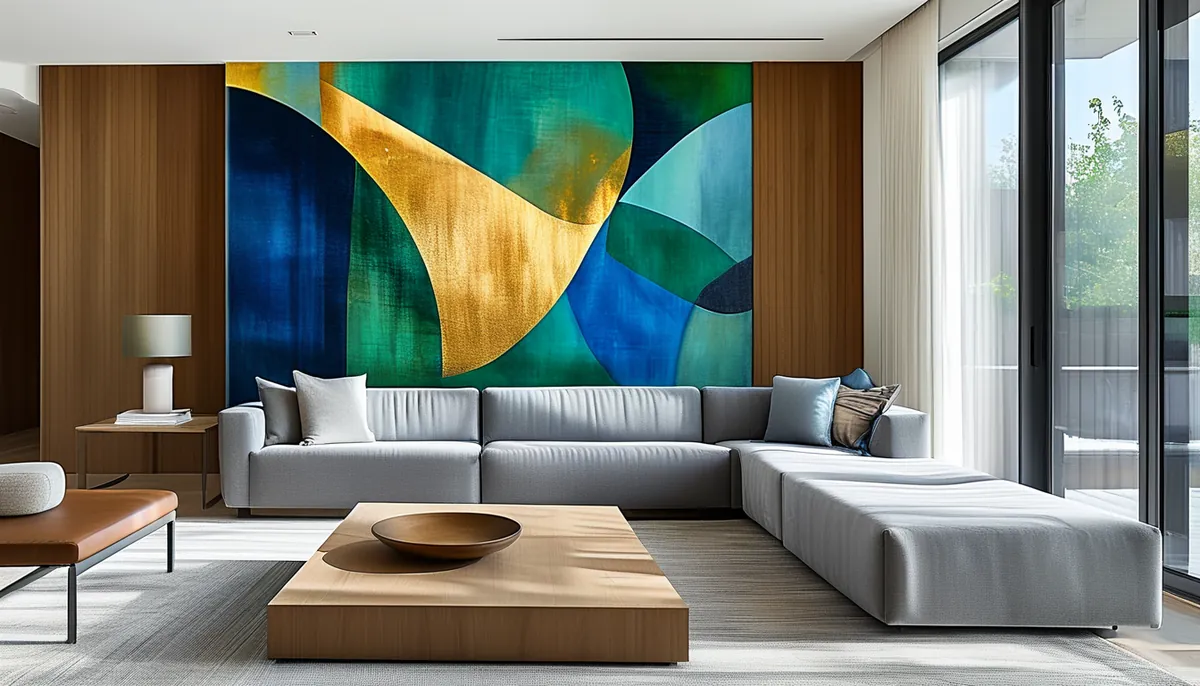
Choosing an abstract art mural means you’re opting for a conversation starter, a piece that evokes emotion and intrigue rather than a literal depiction. Unlike landscape or floral murals, abstract designs offer a broad canvas for interpretation, allowing each viewer to connect with the artwork on a personal level. This makes them exceptionally versatile for a wide range of interior styles, from minimalist to eclectic.
Selecting the right abstract mural design
The first decision is the style of abstraction. Do you gravitate towards bold, geometric shapes with sharp lines and a vibrant color palette, or do you prefer soft, organic forms with subtle gradients and a more muted, sophisticated tone? Consider the existing color scheme and mood of your room. A large-scale, high-contrast abstract mural can energize a space, while a smaller, monochromatic design might add a touch of understated elegance. Think about the scale of the mural in relation to the wall and the room. A mural that’s too busy or too large for the space can feel overwhelming, while one that’s too small can get lost.
Consider the material of the mural. Most are printed on high-quality non-woven or vinyl paper. Non-woven paper is generally breathable, washable, and easy to install and remove, making it a popular choice for DIYers. Vinyl murals offer enhanced durability and are often more resistant to moisture, making them suitable for areas like kitchens or bathrooms, provided they have adequate ventilation. The finish is also important; a matte finish absorbs light and can create a softer look, while a satin or gloss finish reflects light, adding a subtle sheen and making colors pop.
Understanding abstract art styles for murals
Abstract art encompasses a vast spectrum of styles. You might encounter:
- Geometric Abstraction: Characterized by the use of shapes like squares, circles, and triangles, often arranged in a precise, organized manner. Think Mondrian-inspired designs or modern interpretations with sharp lines and bold color blocks.
- Lyrical Abstraction: Focuses on flowing lines, expressive brushstrokes, and a more spontaneous, emotional quality. These often have a painterly feel, resembling watercolor or acrylic paintings.
- Color Field Painting: Emphasizes large areas of flat, solid color. Murals in this style create a powerful, immersive atmosphere through the sheer presence of color.
- Abstract Expressionism: Known for its energetic, gestural application of paint, often with drips, splatters, and bold marks. These murals convey a sense of raw emotion and dynamism.
- Minimalist Abstraction: Stripped down to essential elements, often featuring simple forms, limited color palettes, and clean lines. These designs offer a sense of calm and order.
Your personal preference and the desired ambiance of the room should guide your choice. Don’t be afraid to look at murals that initially seem outside your comfort zone; abstract art has a way of surprising you.
Installation: DIY vs. Professional
Installing an abstract art mural can be a rewarding DIY project, but it requires patience and precision. Most modern murals, especially non-woven ones, use a paste-the-wall application. This means you apply the adhesive directly to the wall, not the paper, which simplifies the process and reduces the risk of tearing delicate designs. Always follow the manufacturer’s instructions carefully. Ensure your walls are clean, dry, and smooth. Repair any imperfections, fill holes, and sand down any rough patches. Prime the wall if recommended, especially if you’re applying over a dark or glossy surface.
The process typically involves:
- Measuring and planning: Lay out your mural panels (they usually come numbered) to ensure you understand the sequence and have a clear starting point.
- Cutting panels: If necessary, trim excess paper to fit your wall dimensions, paying attention to any pattern matching required.
- Applying adhesive: Use the recommended wallpaper paste and apply it evenly to the wall, working in sections that correspond to the width of a single panel.
- Hanging panels: Carefully position the first panel, aligning it with a plumb line or a straight edge. Smooth out any air bubbles or wrinkles with a wallpaper brush or smoothing tool, working from the center outwards.
- Subsequent panels: Hang the following panels, butting the edges together tightly without overlapping.
- Trimming excess: Once all panels are hung, use a sharp utility knife or a straight edge and a craft knife to trim any excess paper at the ceiling, baseboard, and corners.
For larger, more intricate murals, or if you’re not comfortable with DIY projects, hiring a professional wallpaper installer is a wise investment. They have the experience and tools to ensure a flawless finish, especially with complex designs or challenging wall surfaces. This is particularly true for murals with metallic inks, textured finishes, or those that require precise pattern matching across multiple panels.
Maintenance and longevity
Abstract art murals, when properly installed and cared for, can last for many years. For most non-woven and vinyl murals, a damp cloth or sponge can be used to gently wipe away dust or light marks. Avoid abrasive cleaners or excessive moisture, as these can damage the print or the paper. If your mural is in a high-traffic area or a location prone to splashes, like a dining room or a kitchen backsplash (though full murals are rarely used as backsplashes), choose a washable or scrubbable option. Check the manufacturer’s specifications for cleaning recommendations.
Sunlight can cause fading over time, so if your mural is exposed to direct sunlight, consider using UV-protective window treatments or selecting a mural printed with UV-resistant inks. Regular dusting with a soft, dry cloth will also help maintain its appearance and prevent dirt buildup.
Where to use abstract art murals
The versatility of abstract art murals means they can enhance almost any room:
- Living Rooms: Create a dramatic focal point behind a sofa or on a prominent wall. Bold geometric patterns can add a modern edge, while softer, painterly designs can bring a sense of calm sophistication.
- Dining Rooms: An abstract mural can set a unique mood for dinner parties. Consider designs that are visually interesting but not so distracting that they overpower conversation.
- Bedrooms: Opt for more serene or mood-setting abstract designs. Large-scale, muted patterns can create a tranquil retreat.
- Home Offices: Inspire creativity with dynamic abstract art. Choose a design that motivates you without being overly distracting during work.
- Entryways and Hallways: Make a memorable first impression with a striking abstract mural. This is a great place to be bold and experimental.
When considering an abstract mural, think about the overall design aesthetic you’re aiming for. A mural can be the anchor of your decor, with furniture and accessories chosen to complement its colors and style. For instance, a mural with a predominantly blue palette could be paired with navy velvet upholstery and brushed nickel accents. Conversely, you can use an abstract mural as a way to introduce color and pattern into a more neutral space.
Trade & wholesale accounts
For designers, contractors, and businesses looking to incorporate abstract art murals into multiple projects or for resale, Starhouse USA offers dedicated trade & wholesale accounts. These accounts provide access to exclusive pricing, bulk order discounts, and dedicated support to help you source the perfect murals for your clients. Our team understands the demands of the trade and is committed to providing high-quality products and a seamless procurement process. To learn more about our trade programs and to apply for an account, please visit our trade portal or contact our sales team directly.
Schedule a callback
Selecting the right abstract art mural can be a significant decision, and we’re here to help. If you have specific questions about design options, installation, or how a particular mural might fit into your space, you can schedule a callback with one of our design consultants. Simply provide your contact details and preferred time, and we’ll reach out to discuss your project in detail. This personalized service ensures you get the expert advice needed to make the best choice for your home or business.
Beyond the visual appeal, consider how the mural integrates with other elements in the room. Textures are key. If your mural has a smooth, glossy finish, you might contrast it with rougher textures in your furniture or textiles, like a chunky knit throw or a woven rug. If the mural is highly textured, a more minimalist approach to surrounding decor can allow the artwork to shine.
Remember that abstract art is subjective. What one person sees as chaotic, another might see as dynamic energy. Trust your instincts and choose a mural that resonates with you and enhances the atmosphere you want to create. Whether you’re looking for a subtle backdrop or a bold statement piece, an abstract art mural offers endless possibilities to express your unique style. For more inspiration on transforming your walls with large-scale art, explore our comprehensive guide to wall murals. If you’re interested in other stylistic mural options, you might also find our chinoiserie mural wallpaper guide enlightening.