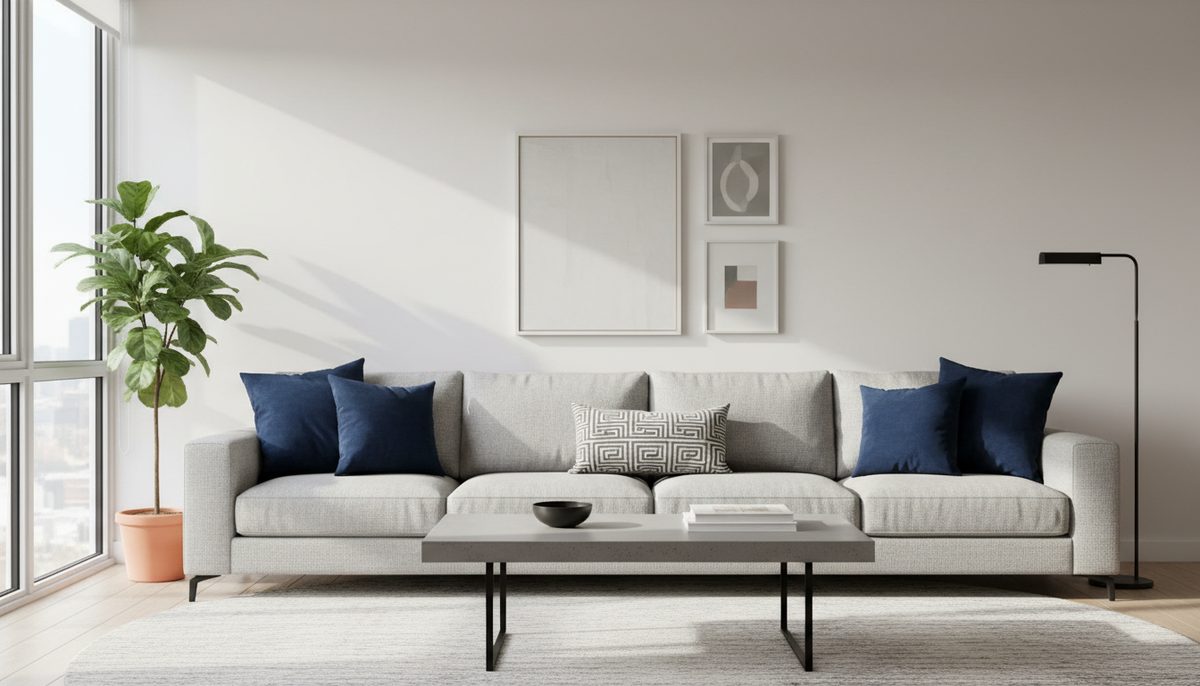
Choosing the right contemporary accent pillows makes a huge difference in a room’s feel. They are the easiest way to introduce color, pattern, and texture without a major renovation. Think of them as the jewelry for your sofa or armchair.
Consider the fabric for comfort and durability
The fabric of your accent pillows dictates both their look and how they feel. For a contemporary space, you often want fabrics that are smooth, sophisticated, or have a subtle texture.
- Cotton: A versatile choice, cotton is breathable and comes in many weaves, from smooth sateen to textured slub. It’s generally durable and easy to care for. Look for high thread counts for a softer feel.
- Linen: Offers a natural, slightly slubby texture that adds an organic, modern touch. It can wrinkle, but this often adds to its casual elegance. Blends with cotton can offer the best of both worlds.
- Velvet: Adds a luxurious, plush feel and a rich sheen. For a contemporary look, opt for smooth velvets or those with geometric patterns rather than overly ornate designs. It can be less durable against pets and heavy use.
- Polyester/Blends: Many synthetic blends offer excellent durability, stain resistance, and wrinkle-free properties. They can mimic the look of natural fibers at a lower cost and are often a practical choice for high-traffic areas or homes with children and pets.
- Performance Fabrics: Brands like Sunbrella offer fabrics designed for extreme durability, UV resistance, and stain repellency. These are ideal for outdoor spaces or very active households, and many now have sophisticated textures suitable for indoor contemporary design.
When choosing, feel the fabric. Does it snag easily? Is it too rough? Will it hold up to being sat on or leaning against? For pillows that will be heavily used, prioritize durability and ease of cleaning. For purely decorative pillows, you can lean more towards delicate or luxurious textures.
Size matters: scale your pillows to your furniture
The size of your accent pillows should be proportionate to the furniture they’re placed on. Overly large pillows can make a sofa feel cramped, while tiny ones can get lost.
- For standard sofas: A common arrangement is two to four pillows. Consider two larger pillows (e.g., 20×20 inches or 22×22 inches) at the corners and one or two smaller lumbar pillows (e.g., 14×20 inches) in front.
- For armchairs: A single, smaller square pillow (e.g., 18×18 inches) or a lumbar pillow is usually sufficient.
- For sectionals: You have more space to play with. You can use a similar arrangement to a sofa, perhaps adding a few more decorative pieces, but maintain a sense of balance.
Measure your furniture. A good rule of thumb is that the pillow should not extend beyond the arms of the sofa or chair when placed on it. You want the pillows to enhance the seating, not overwhelm it. Consider the depth of your sofa as well; a very deep sofa can accommodate slightly larger pillows.
Color and pattern: creating visual interest
This is where accent pillows truly shine. They are your opportunity to inject personality and visual excitement into your room.
- Monochromatic schemes: Use pillows in varying shades and textures of the same color. This creates a sophisticated and cohesive look that is undeniably contemporary. For example, a sofa in a neutral tone can be updated with pillows in deep navy, slate blue, and a soft sky blue, all in different fabrics.
- Complementary colors: Pair colors that are opposite each other on the color wheel for a vibrant, energetic feel. For a contemporary look, use these pairings thoughtfully. For instance, on a blue sofa, try pillows with touches of orange or coral, but keep the overall design clean and not overwhelming.
- Analogous colors: Use colors that are next to each other on the color wheel for a harmonious and calming effect. Think blues and greens, or yellows and oranges.
- Neutrals with a twist: Even if your room is largely neutral, you can add interest with pillows featuring subtle patterns, metallic threads, or interesting textures in shades of cream, grey, beige, or black.
- Geometric patterns: Stripes, checks, chevrons, and abstract geometric shapes are staples in contemporary design. They add structure and a modern edge.
- Abstract and organic prints: These can add a softer, artistic touch. Look for designs that feel modern and not overly traditional or fussy.
- Bold, graphic prints: A single pillow with a striking, large-scale graphic print can serve as a focal point.
When mixing patterns, use a formula: one large bold pattern, one medium smaller pattern, and one solid or subtly textured pillow. Ensure there’s a common color that ties all the patterns together. Don’t be afraid to mix scales of patterns – a wide stripe with a small geometric, for example.
Consider the pillow fill for comfort and shape
The inside of the pillow, the fill, greatly impacts its comfort, shape retention, and how it looks when styled.
- Polyester Fiberfill: This is the most common and affordable fill. It’s soft and hypoallergenic. However, it tends to flatten over time and can develop lumps, requiring frequent fluffing. It’s best for decorative pillows you don’t lean on heavily.
- Down/Feather: Offers a luxurious, plush feel. Down is softer and lighter, while feathers can provide more loft and support. Down/feather inserts are moldable, allowing you to achieve that perfect karate chop look. They are more expensive and require occasional fluffing to maintain their shape. They can also trigger allergies for some.
- Foam: Less common for accent pillows, foam inserts provide firm support and don’t require fluffing. They are best suited for specific shapes or for those who prefer a very firm pillow.
- Hypoallergenic alternatives: Many brands offer synthetic fills that mimic the feel of down but are hypoallergenic and more affordable.
For a truly contemporary look, you want pillows that hold their shape well. Down or high-quality synthetic down alternatives often provide the best loft and structure. If you buy pillows with polyester fill, consider replacing the insert with a down or feather one for a significant upgrade in appearance and comfort.
Pillow placement and styling tips
How you arrange your pillows is as important as the pillows themselves.
- The ‘Karate Chop’: For down or feather-filled pillows, gently press down in the center with your hand to create a slight indentation. This gives the pillow a more relaxed, lived-in, and designer look.
- Layering: Place larger pillows at the back and smaller ones in front. For example, two 20×20 inch pillows in the back corners of a sofa, with a 14×20 inch lumbar pillow centered in front of them.
- Asymmetrical balance: You don’t always need perfect symmetry. A common contemporary arrangement is one larger pillow on one end and two smaller ones on the other, as long as the visual weight feels balanced.
- Against the wall: For sofas with very deep seats or a more relaxed vibe, lean a couple of pillows against the back of the sofa rather than placing them on the seat cushions.
- Mix and match: Combine pillows of different sizes, shapes, textures, and patterns. This creates depth and interest. Ensure there’s a unifying element, like a shared color or style, to keep it cohesive.
When styling, step back and look at the arrangement from a distance. Does it feel balanced? Does it invite you to sit down? Experiment until it feels right for your space.
When to replace your accent pillows
Accent pillows don’t last forever. Look for signs they need replacing:
- Flattened fill: If the pillow no longer holds its shape, even after vigorous fluffing, the fill has likely compacted and needs replacing.
- Worn fabric: Faded color, pilling, rips, or stains that won’t come out are clear indicators it’s time for new pillows.
- Outdated style: Trends change. If your pillows look dated, they can drag down the entire room’s aesthetic.
Replacing accent pillows is a simple and cost-effective way to refresh your home’s look. Don’t be afraid to update them seasonally or whenever you feel your decor needs a lift.