Koi wallpaper, a sophisticated and evocative design choice, transforms interior spaces by introducing the serene beauty and profound symbolism of the Japanese koi fish. This distinctive wallcovering elevates a room beyond mere decoration, offering a narrative of perseverance, strength, and good fortune through its intricate patterns and vibrant imagery. At Starhouse, we understand that selecting the perfect wallpaper involves a meticulous consideration of artistic expression, material science, and the precise application techniques that ensure a flawless, enduring finish, whether you opt for a dramatic mural or a subtly repeating pattern. This comprehensive guide, updated in June 2026, delves into every facet of koi wallpaper, equipping you with the authoritative knowledge to integrate this timeless motif into your home with precision and style. We explore the diverse types, aesthetic variations, practical considerations for selection and installation, and expert styling advice, ensuring your design vision is realized with unparalleled elegance and confidence.
Key Takeaways
- Koi wallpaper offers profound symbolism of perseverance, strength, and good fortune, originating from Japanese culture, making it a meaningful design choice.
- Available in diverse forms, from large-scale murals and repeating patterns to peel-and-stick or traditional paste-the-wall options, accommodating various design preferences and installation skill levels.
- Material choices, including non-woven, vinyl, and fabric-backed varieties, dictate durability, texture, and ease of maintenance, impacting suitability for different room environments.
- Accurate measurement and consideration of pattern repeat are critical for seamless installation, with professional installation recommended for complex designs or large spaces.
- Styling koi wallpaper involves harmonizing colors, furniture, and accessories to enhance its aesthetic impact, ranging from traditional Asian-inspired to modern minimalist or eclectic interiors.
- Proper care, tailored to the wallpaper’s material, ensures longevity and preserves the vibrancy of the design, protecting your investment in sophisticated wall décor.
Introduction to Koi Wallpaper: Symbolism and Aesthetic Impact
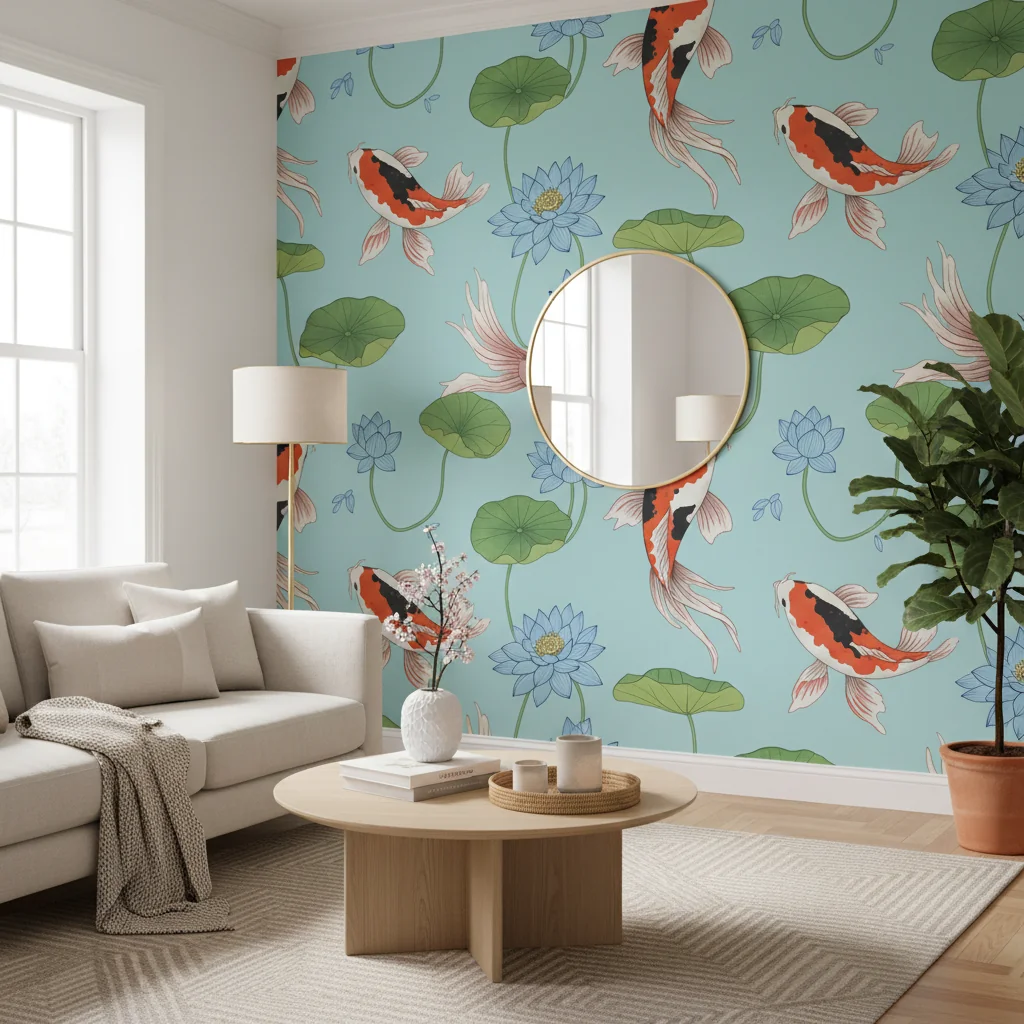
Koi wallpaper serves as a powerful design element, imbuing spaces with deep cultural significance and striking visual appeal. Originating from Japanese culture, the koi fish is a potent symbol of perseverance, strength, and good fortune, often associated with overcoming adversity and achieving aspirations. The intricate depictions of these fish, typically in vibrant orange, red, gold, or white, swimming amidst lotus flowers or flowing water, create a dynamic yet serene focal point in any room.
This wallcovering is not merely decorative; it tells a story, inviting contemplation and adding a layer of sophisticated narrative to your home. Its aesthetic impact is profound, capable of transforming a mundane wall into a captivating art installation. Whether chosen for its rich symbolism or its undeniable beauty, koi wallpaper makes an unequivocal statement about refined taste and a connection to meaningful design.
The versatility of koi designs allows for integration into a wide array of interior styles, from traditional Asian-inspired themes to contemporary minimalist aesthetics. Modern printing technologies enable unprecedented detail and color fidelity, ensuring that each scale and ripple is rendered with lifelike precision. This attention to detail is paramount in translating the inherent elegance of the koi motif onto a wallcovering, creating an immersive experience for residents and guests alike.
At Starhouse, we recognize the nuanced power of such specific design elements. Our curation emphasizes not only the visual splendor but also the underlying quality and enduring appeal of each piece. A well-chosen koi wallpaper does more than fill a space; it defines it, establishing an atmosphere of tranquility, aspiration, and distinctive style.
The Diverse Types of Koi Wallpaper: Materials and Construction
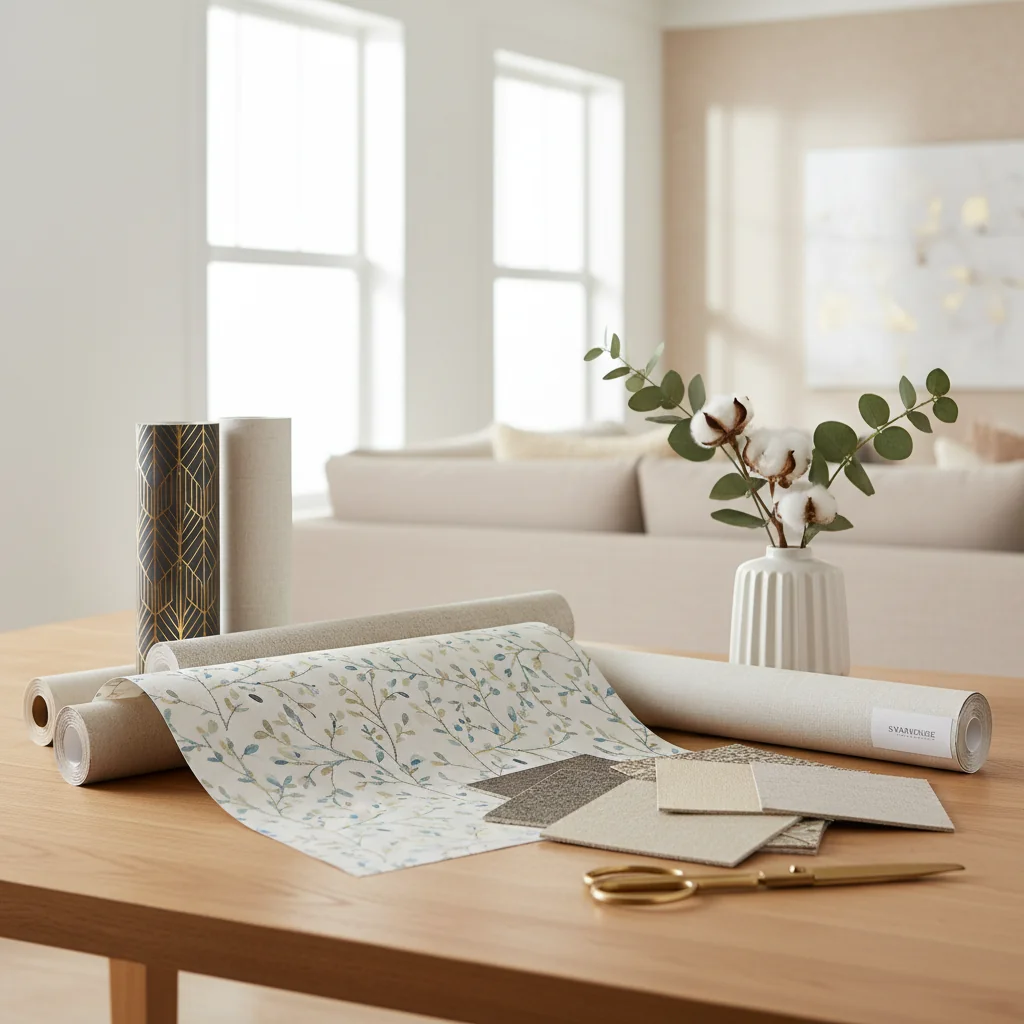
Koi wallpaper is available in several distinct types, each offering specific characteristics regarding material composition, durability, ease of installation, and aesthetic finish. Understanding these differences is crucial for selecting the appropriate wallcovering for a particular application and desired outcome. The primary classifications include traditional non-woven, vinyl-coated, solid sheet vinyl, fabric-backed vinyl, and peel-and-stick (self-adhesive) options.
Non-Woven Wallpaper: Non-woven wallpaper is a popular choice due to its superior breathability, durability, and ease of installation and removal. Constructed from a blend of natural and synthetic fibers, it resists tearing and stretching, making it forgiving during application. This type is generally “paste-the-wall,” meaning adhesive is applied directly to the wall rather than the paper, simplifying the process and reducing mess. Non-woven materials are also environmentally friendly, often made from recycled content, and are fully strippable without damaging the wall, leaving no residue. Their matte finish often enhances the intricate details and subtle color gradients characteristic of high-quality koi designs.
Vinyl-Coated Wallpaper: This type features a paper or non-woven backing with a liquid vinyl acrylic coating on the surface. The vinyl coating provides enhanced durability, making the wallpaper more resistant to moisture, stains, and general wear and tear. It is a good option for areas with moderate humidity or traffic, such as bathrooms (excluding direct shower areas) or kitchens. While not as robust as solid vinyl, it offers a cost-effective balance of aesthetics and practicality. Cleaning is typically straightforward, often requiring only a damp cloth.
Solid Sheet Vinyl Wallpaper: Solid sheet vinyl wallpaper is highly durable and waterproof, making it an excellent choice for high-traffic areas, commercial settings, or moisture-prone rooms like bathrooms and laundry rooms. It consists of a solid layer of vinyl, often with a fabric or paper backing. This robust construction makes it exceptionally resistant to scratches, scuffs, and humidity. Solid vinyl wallpapers are typically scrubbable and can withstand rigorous cleaning, ensuring the longevity of your koi motif even in demanding environments. However, their thickness can make them slightly more challenging to install for novices.
Fabric-Backed Vinyl Wallpaper: Often considered a premium option, fabric-backed vinyl wallpaper combines the strength of vinyl with the stability of a fabric backing. This construction results in an extremely durable, tear-resistant, and dimensionally stable product. It is frequently used in commercial applications but is gaining popularity in residential settings for its longevity and luxurious feel. The fabric backing prevents shrinkage and expansion, ensuring a smooth, seamless finish. It is typically heavier and requires a strong, high-quality adhesive, often necessitating professional installation.
Peel-and-Stick (Self-Adhesive) Wallpaper: Peel-and-stick wallpaper has revolutionized DIY decorating, offering unparalleled ease of installation and removal. This type features an adhesive backing protected by a removable liner; simply peel off the liner and apply the wallpaper to a clean, smooth surface. It is typically made from vinyl or a synthetic blend, offering a degree of durability and washability. While excellent for temporary installations, renters, or those who frequently update their décor, it is crucial to ensure the wall surface is impeccably smooth and properly primed for optimal adhesion and a professional finish. It is less forgiving on textured walls and may not offer the same longevity as traditional pasted options.
Each material type presents distinct advantages and considerations, from environmental impact to installation complexity and long-term performance. At Starhouse, we meticulously evaluate these characteristics to ensure our curated selection of koi wallpaper meets the highest standards of both beauty and functionality.
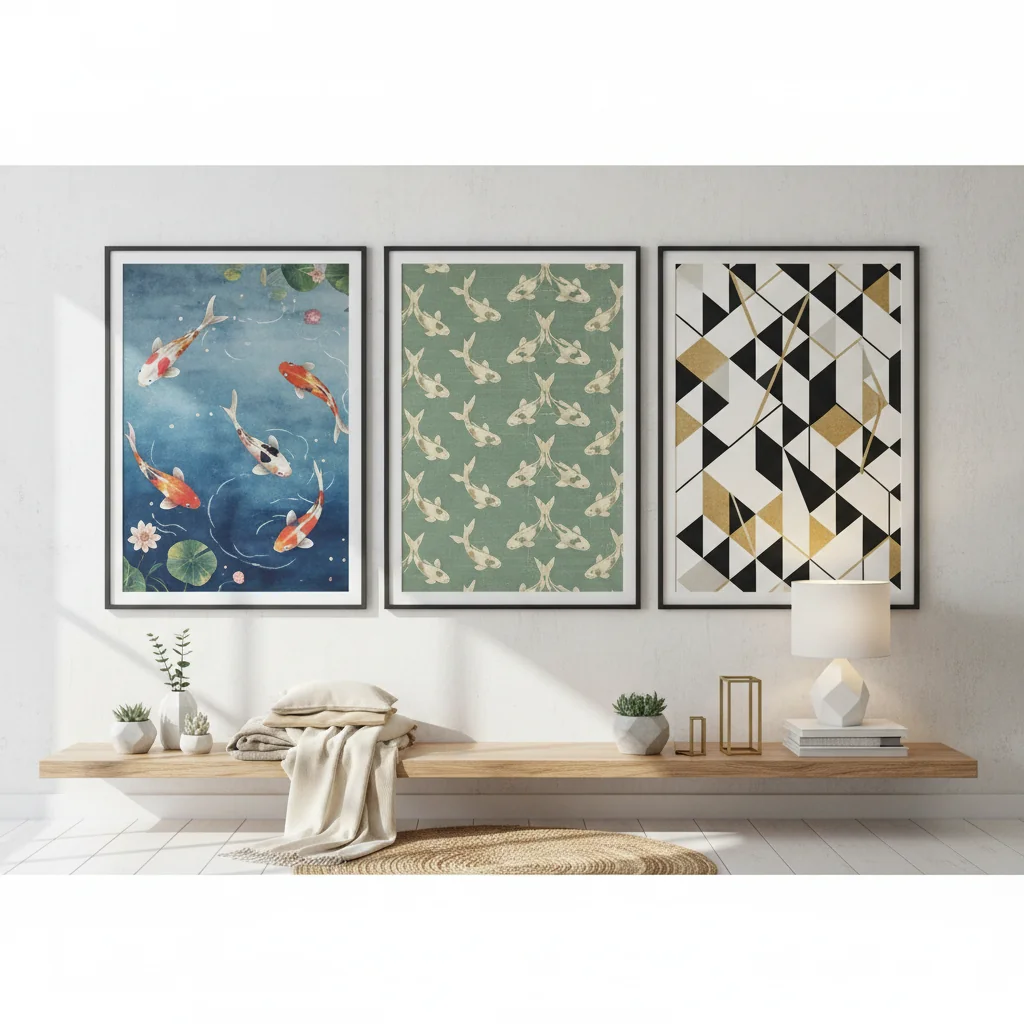
Comparison of Koi Wallpaper Material Types
Selecting the optimal material for your koi wallpaper involves balancing aesthetic preferences with practical considerations such as durability, installation effort, and maintenance requirements. The table below provides a concise comparison of common wallpaper types, aiding in an informed decision for your specific space.
| Material Type | Durability | Ease of Installation | Maintenance | Ideal Use Cases | Approx. Price Range (per single roll, USD) |
|---|---|---|---|---|---|
| Non-Woven | High; tear-resistant, breathable | Easy (paste-the-wall), strippable | Wipeable with damp cloth | Bedrooms, living rooms, low-humidity areas | $40 – $100 |
| Vinyl-Coated | Moderate to High; moisture-resistant | Moderate (paste-the-paper/wall) | Washable, scrubbable | Bathrooms (low-humidity), kitchens, hallways | $30 – $80 |
| Solid Sheet Vinyl | Very High; waterproof, highly durable | Moderate to Difficult (thick, heavy) | Scrubbable, resistant to stains | High-traffic areas, commercial, bathrooms (high-humidity) | $50 – $120 |
| Fabric-Backed Vinyl | Exceptional; extremely tear-resistant, stable | Difficult (heavy, requires strong adhesive) | Highly scrubbable, long-lasting | Commercial, luxury residential, high-impact areas | $70 – $150+ |
| Peel-and-Stick | Moderate; less durable than traditional vinyl | Very Easy (self-adhesive), temporary | Wipeable with damp cloth | Rentals, temporary décor, DIY projects, smooth surfaces | $25 – $75 |
When considering the investment in a sophisticated design element like koi wallpaper, the material choice directly correlates with its lifespan and performance in your home. We advise evaluating the specific demands of your space against these material properties to ensure lasting satisfaction.
Exploring Styles and Aesthetic Variations: From Traditional to Contemporary
Koi wallpaper transcends a singular aesthetic, encompassing a wide spectrum of artistic interpretations that allow it to integrate seamlessly into diverse interior design schemes. From meticulously rendered traditional Japanese motifs to abstract contemporary expressions, the stylistic variations dictate the mood and impact of the wallcovering within a room. Understanding these distinctions is fundamental to achieving a cohesive and impactful design.
Traditional Japanese & Chinoiserie: This category embodies the classic depiction of koi, often featuring highly detailed fish in realistic poses, swimming amidst lotus flowers, bamboo, or serene water elements. Colors are typically rich and authentic, reflecting the natural hues of the fish (orange, red, gold, white, black) against backgrounds of deep blues, greens, or muted neutrals.
Chinoiserie is a European interpretation of Chinese and East Asian artistic traditions, often characterized by fanciful, intricate designs featuring pagodas, gardens, and exotic birds alongside koi motifs.
These designs are ideal for creating an authentic, tranquil, and luxurious atmosphere, often paired with dark wood furniture, silk textiles, and delicate porcelain.
Illustrative & Hand-Painted Style: These wallpapers emulate the look of original artwork, often with visible brushstrokes or sketch-like qualities. The designs can range from delicate watercolors to bold, expressive ink drawings. This style offers a softer, more artistic feel than photographic realism, introducing an element of artisanal charm. It is particularly effective in creating a bespoke and intimate ambiance, showcasing the unique hand of the artist. The imperfections inherent in this style add character and depth.
Contemporary & Abstract: Modern interpretations of koi wallpaper often simplify the forms, focusing on fluid lines, geometric shapes, or stylized representations of the fish and water. Color palettes can be broader, incorporating unexpected hues like metallics, pastels, or monochromatic schemes. Abstract koi designs might emphasize the movement of water or the dynamic flow of the fish without adhering to strict realism. This style is perfect for modern, minimalist, or eclectic interiors, offering a fresh, artistic statement that is less literal but equally impactful.
Photographic & Realistic: Utilizing high-resolution imagery, these wallpapers create an immersive, almost three-dimensional effect. The koi appear incredibly lifelike, with every scale and fin rendered in stunning detail. Often presented as large-scale murals, these designs can transform an entire wall into an underwater tableau, offering a dramatic focal point. This style is particularly effective in spaces where a powerful visual statement is desired, such as a feature wall in a living room or a grand entrance.
Minimalist & Subtle: For those who appreciate understated elegance, minimalist koi wallpapers feature sparse designs, often with a single koi or a small cluster, set against a plain or subtly textured background. Colors are typically muted, focusing on soft grays, whites, or pale blues. The emphasis is on negative space and the graceful form of the fish, rather than elaborate detail. This style contributes to a calm, uncluttered environment, allowing other design elements in the room to coexist harmoniously without competition.
The choice among these styles is a reflection of personal taste and the overarching design narrative of your home. Starhouse curates collections that celebrate this diversity, ensuring that every design preference, from the richly ornate to the elegantly understated, finds its perfect expression.
Choosing the Ideal Koi Wallpaper: Design Principles and Room Suitability
Selecting the ideal koi wallpaper requires a thoughtful consideration of various design principles and the specific characteristics of the room it will adorn. This process ensures the wallpaper not only enhances the aesthetic but also contributes to the desired atmosphere and functionality of the space. Precision in matching the wallpaper to its environment is paramount for a cohesive and sophisticated interior.
Key Considerations When Choosing Koi Wallpaper:
- Room Function and Ambiance: Determine the primary purpose of the room. In a bedroom, a serene, muted koi design with a subtle pattern might promote relaxation, whereas a vibrant, large-scale mural could energize a living room or dining area. For a home office, a design symbolizing perseverance could be inspiring without being distracting.
- Scale of Design and Room Size: The scale of the koi motif must be proportionate to the room’s dimensions. Large, dramatic koi murals or oversized patterns are best suited for expansive walls in larger rooms, where they can be appreciated without overwhelming the space. In smaller rooms or on accent walls, smaller, more delicate patterns or single, strategically placed koi motifs will create impact without making the room feel cramped. A pattern repeat of 20-25 inches often works well in standard rooms, providing a balanced visual flow.
- Color Palette Integration: Analyze the existing color scheme of your room, including furniture, textiles, and flooring. Koi wallpaper should complement or thoughtfully contrast these elements. For example, a wallpaper with golden koi can introduce warmth to a cool-toned room, while blues and greens can enhance a tranquil, natural aesthetic. Consider the undertones of your current décor to ensure harmony.
- Desired Mood and Emotional Impact: Koi symbolism inherently evokes themes of strength, prosperity, and tranquility. A design featuring koi swimming upstream can symbolize ambition and perseverance, while a peaceful pond scene suggests calm and abundance. Choose a design that resonates with the emotional tone you wish to establish in the space.
- Lighting Conditions: The amount of natural and artificial light in a room significantly affects how wallpaper appears. In dimly lit rooms, lighter backgrounds and reflective elements (like subtle metallic accents in the wallpaper) can brighten the space. In well-lit areas, darker, richer colors can add depth and drama without appearing heavy. Sample swatches should always be viewed in the actual room under various lighting conditions.
- Durability and Maintenance Requirements: Refer back to the material types discussed previously. For high-traffic areas like hallways or children’s playrooms, or moisture-prone areas like bathrooms and kitchens, a durable, washable vinyl or fabric-backed vinyl wallpaper is essential. For bedrooms or formal living rooms, a delicate non-woven option might be suitable.
- Architectural Features: Consider how the wallpaper will interact with architectural elements such as windows, doors, built-in shelving, or fireplaces. A large koi mural might be interrupted by too many architectural breaks, diminishing its impact. Smaller patterns or strategically placed motifs can work better around these features.
At Starhouse, we guide our clients through these critical considerations, ensuring that each selection of koi wallpaper is not just beautiful but also perfectly suited to its environment, reflecting a discerning eye for detail and design integrity.
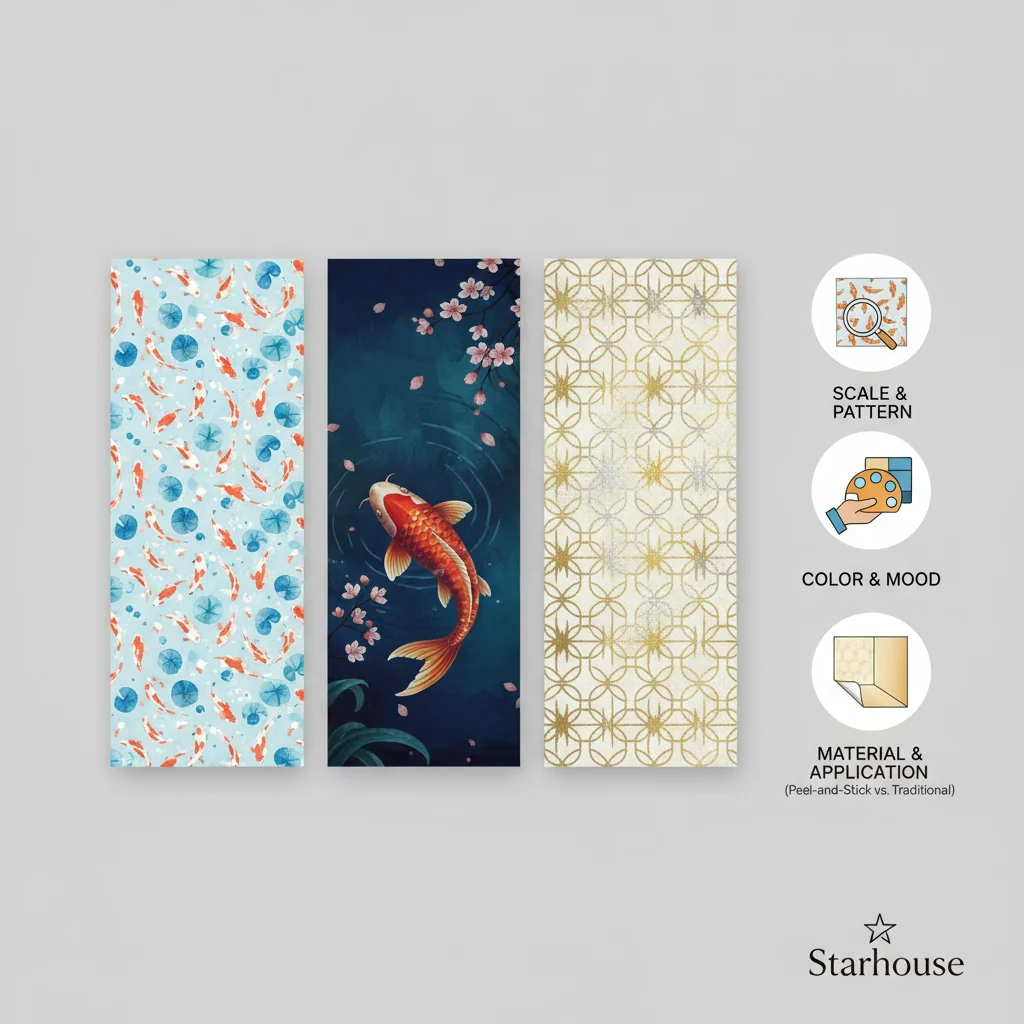
As you refine your vision for a space transformed by the elegance of koi wallpaper, you may discover specific needs or preferences that transcend conventional offerings. Starhouse is actively curating its collection to meet the evolving desires of discerning homeowners. We invite you to tell us what you’re looking for in your ideal wall décor, offering insights that will shape our future selections and granting you early access to new arrivals that perfectly align with your unique aesthetic.
Precise Sizing and Measurement: Ensuring a Flawless Installation
Accurate sizing and meticulous measurement are indispensable steps in any wallpaper installation, particularly for intricate designs like koi patterns, where continuity and alignment are crucial. Miscalculations can lead to unsightly seams, mismatched patterns, or insufficient material, compromising the entire aesthetic. This section provides a precise methodology for calculating your wallpaper needs, ensuring a professional and seamless finish.
Step-by-Step Measurement Guide:
- Measure Wall Height and Width: Using a steel measuring tape, measure the height of each wall from baseboard to ceiling in several places. Record the greatest height. Then, measure the total width of each wall. For walls with varying heights (e.g., sloped ceilings), measure the highest point.
- Calculate Total Square Footage: For each wall, multiply its height by its width to determine the square footage. Sum these values for all walls you intend to cover.
- Account for Openings (Optional, but Recommended for Large Openings): For very large windows or doors (over 20 sq ft), you can subtract their square footage from the total. However, for smaller openings, it’s generally safer to include them in your total, as the cut-outs often cannot be repurposed, and you will need material for cuts and pattern matching.
- Determine Wallpaper Roll Dimensions: Note the dimensions of the wallpaper rolls you plan to purchase. Standard U.S. rolls are typically 20.5 inches wide by 33 feet long (56 sq ft per single roll) or 27 inches wide by 27 feet long (60.75 sq ft per single roll). Double rolls are simply twice these lengths.
- Calculate Number of Vertical Strips: Divide the total width of your wall(s) by the width of one wallpaper strip (e.g., 20.5 inches or 27 inches). Round up to the nearest whole number. This gives you the total number of vertical strips required.
-
Calculate Length Per Strip, Considering Pattern Repeat:
Pattern repeat is the vertical distance at which the wallpaper design identically repeats, ensuring seamless alignment across strips.
Add the pattern repeat length (usually stated in inches on the wallpaper specifications) to your wall height measurement. Then, add an additional 4-6 inches for trimming at the top and bottom. This sum represents the minimum length required for each individual strip. - Calculate Total Linear Feet Needed: Multiply the number of vertical strips (from step 5) by the length required per strip (from step 6). This gives you the total linear feet of wallpaper needed.
- Determine Number of Rolls: Divide the total linear feet needed (from step 7) by the linear feet available per roll (e.g., 33 feet or 27 feet for a single roll). Always round up to the nearest whole number to ensure you have enough material.
- Add an Overage for Safety: Always purchase an extra roll or 10-15% more than your calculated requirement. This accounts for mistakes, miscuts, damage during installation, future repairs, or pattern matching complexities. Running out of wallpaper mid-project, especially with specific dye lots, can be a significant setback.
For example, if a wall is 8 feet (96 inches) high and 12 feet (144 inches) wide, and your wallpaper is 27 inches wide with a 24-inch pattern repeat:
- Number of strips: 144 inches / 27 inches = 5.33, rounded up to 6 strips.
- Length per strip: 96 inches (height) + 24 inches (pattern repeat) + 6 inches (trim) = 126 inches (10.5 feet).
- Total linear feet: 6 strips * 10.5 feet/strip = 63 linear feet.
- If rolls are 27 feet long: 63 linear feet / 27 feet/roll = 2.33, rounded up to 3 rolls.
- Add 1 extra roll for overage: Total 4 rolls.
Always double-check your measurements and calculations. For complex rooms with many angles, doors, or windows, or for very large-scale murals, consulting a professional installer for measurement is highly recommended to guarantee accuracy and minimize waste. Starhouse emphasizes this precision, recognizing that impeccable preparation is the foundation of an exquisite finish.
Installation Methods and Considerations: DIY vs. Professional
The successful installation of koi wallpaper is as critical as its selection, directly impacting the final aesthetic and longevity of your investment. Various installation methods exist, each with its own level of complexity, suitability for different wallpaper types, and implications for a DIY enthusiast versus professional engagement. Choosing the right approach ensures a flawless, durable finish that perfectly showcases the intricate beauty of the koi design.
Primary Installation Methods:
- Paste-the-Paper: This traditional method involves applying adhesive directly to the back of the wallpaper strips before hanging them on the wall. After pasting, the strips are typically “booked” (folded pasted-side to pasted-side) for a few minutes to allow the adhesive to fully penetrate the paper, making it more pliable and preventing bubbling. This method is common for paper-backed vinyl wallpapers and some traditional paper wallpapers. It requires careful handling to avoid tearing and can be messier than other methods.
- Paste-the-Wall: Considered more user-friendly, this method involves applying the adhesive directly to the wall surface using a roller or brush. The dry wallpaper strip is then applied to the pasted wall. This technique is predominantly used for non-woven wallpapers, which are dimensionally stable and do not expand or contract when wet. It significantly reduces mess, speeds up installation, and makes repositioning easier, as the wallpaper remains dry and strong. Non-woven wallpapers are also typically easier to remove in full sheets.
- Peel-and-Stick (Self-Adhesive): As discussed, this method is the simplest for DIYers. The wallpaper comes with a pre-applied adhesive backing protected by a liner. Installation involves peeling off the liner and pressing the wallpaper onto a clean, smooth, primed wall. It allows for easy repositioning during installation and clean removal without residue or wall damage, making it ideal for temporary décor or rentals. However, it demands a perfectly smooth surface for optimal adhesion and a seamless look.
DIY vs. Professional Installation:
The decision to undertake a DIY installation or hire a professional depends on several factors, including your skill level, the complexity of the wallpaper design, the room’s architecture, and the material type.
-
DIY Installation is Suitable When:
- You have prior experience with wallpapering or are confident in your precision skills.
- The wallpaper is peel-and-stick or a non-woven “paste-the-wall” type, which are generally more forgiving.
- The design has a small or no pattern repeat, simplifying alignment.
- The room is rectangular with minimal architectural obstructions (windows, doors, corners).
- You have ample time and patience for meticulous preparation and execution.
For DIY projects, ensure you have all necessary tools: a sharp utility knife with plenty of fresh blades, a smoothing tool/squeegee, a plumb bob or laser level, a measuring tape, a roller for adhesive (if applicable), and a clean bucket and sponges. Precision in cutting and alignment is paramount, especially with intricate koi patterns.
-
Professional Installation is Recommended When:
- The wallpaper is a large-scale mural or features a complex, large pattern repeat (e.g., 36 inches or more), requiring exact alignment across multiple panels.
- The material is heavy, such as fabric-backed vinyl, which can be challenging to manipulate and requires specialized adhesives.
- The room has irregular shapes, numerous windows, doors, or architectural details (e.g., crown molding, built-in shelving) that require intricate cuts and precise fitting.
- You desire an absolutely flawless finish, free of visible seams, bubbles, or pattern mismatches.
- Time is a constraint, and you prefer an efficient, high-quality outcome.
- The wallpaper is a significant investment, and you want to protect its integrity and appearance.
Professional installers possess the specialized tools, experience, and techniques to handle even the most challenging installations, ensuring a perfect result. They can also advise on proper wall preparation, which is crucial for adhesion and longevity. For instance, proper priming with a high-quality primer like a pigmented shellac-based primer is essential for creating an optimal surface for wallpaper adhesion and future removal, especially over painted walls.
At Starhouse, we advocate for an informed decision. While DIY can be rewarding, the complexity of certain koi wallpaper designs and the desire for a truly impeccable finish often warrant the expertise of a professional installer. This investment ensures your chosen design achieves its full potential, becoming a lasting testament to sophisticated style.
Styling and Pairing Koi Wallpaper: Harmonizing Your Interior Design
Styling and pairing koi wallpaper effectively transforms it from a mere wall covering into a cohesive and impactful element of your overall interior design. The goal is to harmonize the wallpaper’s distinct aesthetic with furniture, lighting, textiles, and accessories, creating a balanced and visually compelling space. This process requires a discerning eye for color, texture, and proportion to ensure the koi motif enhances, rather than overwhelms, the room.
Expert Strategies for Harmonious Pairing:
-
Color Palette Coordination:
Identify the dominant and accent colors within your koi wallpaper. For instance, if your wallpaper features vibrant orange koi against a deep blue background, consider incorporating these colors into your furnishings. Use the deep blue for larger furniture pieces like a sofa or an area rug, and introduce pops of orange or gold through throw pillows, ceramic vases, or decorative accents. Alternatively, select neutral tones (creams, grays, whites) for main furniture to allow the wallpaper to be the undisputed focal point, then use one or two accent colors from the wallpaper for smaller decorative items. This creates a sophisticated visual echo without creating a busy environment.
-
Furniture Selection:
The style of furniture should complement the aesthetic of the koi wallpaper. For traditional Japanese or Chinoiserie designs, dark wood furniture (e.g., mahogany, walnut) with clean lines, or ornate lacquered pieces, will enhance the classic elegance. Consider furniture with Asian-inspired details such as carved legs or brass hardware. For contemporary or abstract koi patterns, sleek, minimalist furniture in neutral tones, perhaps with metallic accents or glass elements, will create a modern and sophisticated look. Avoid overly busy or heavily patterned furniture that might compete with the wallpaper.
-
Textiles and Fabrics:
Introduce textiles that echo the textures and colors of the wallpaper. Silk, linen, and velvet can add luxurious depth and softness. For a traditional look, consider embroidered silk cushions or elegant drapery in solid colors pulled from the wallpaper. For a contemporary space, opt for textured linen throws or simple cotton curtains. Avoid competing patterns; solid colors or subtle textures are generally best. Rugs can define the space and ground the wallpaper, with natural fibers like jute or sisal offering a calming contrast to vibrant designs.
-
Lighting:
Thoughtful lighting can dramatically enhance the impact of koi wallpaper. Accent lighting, such as picture lights or recessed spotlights, can highlight specific details of a mural or a particularly beautiful section of a repeating pattern. General ambient lighting should be warm and inviting. For a traditional aesthetic, consider elegant lanterns or ceramic table lamps. Modern designs might benefit from sleek, sculptural lamps or minimalist pendant lights. Ensure lighting doesn’t create harsh shadows or glare that detract from the wallpaper’s beauty.
-
Accessories and Art:
Strategic accessorizing completes the look. For traditional koi wallpaper, incorporate decorative ceramic bowls, delicate porcelain figurines, or carefully chosen botanical elements like orchids or bamboo. Consider minimalistic framed art that complements the color palette without competing with the wall. For contemporary designs, abstract sculptures, metallic accents, or simple, understated mirrors can amplify the modern aesthetic. Remember the principle of “less is more”; allow the wallpaper to be the primary artistic statement, with accessories serving as supportive elements rather than distractions.
-
Mirror Placement:
A well-placed mirror can reflect the koi wallpaper, amplifying its presence and making a room feel larger and brighter. Choose a mirror with a frame that complements the wallpaper’s style – perhaps a bamboo-inspired frame for a traditional look or a sleek, frameless mirror for a modern interpretation.
The art of styling koi wallpaper lies in creating a cohesive narrative where every element in the room contributes to a singular, sophisticated vision. At Starhouse, we advocate for a balanced approach, allowing the inherent beauty and symbolism of the koi to shine through a carefully curated environment.
Maintenance and Care: Preserving the Beauty of Your Wallpaper
Proper maintenance and diligent care are essential for preserving the aesthetic integrity and extending the lifespan of your koi wallpaper. The specific cleaning regimen depends heavily on the wallpaper’s material composition, as different types offer varying degrees of durability and moisture resistance. Adhering to the manufacturer’s guidelines is paramount to prevent damage and ensure the vibrant beauty of your design endures for years.
General Care Guidelines:
- Dusting: Regularly dust your wallpaper using a soft, dry cloth, a feather duster, or a vacuum cleaner with a brush attachment. This prevents dust accumulation that can dull colors and become harder to remove over time. Always dust from top to bottom.
- Avoid Harsh Chemicals: Never use abrasive cleaners, strong detergents, or solvents on any wallpaper type unless specifically instructed by the manufacturer. These can strip finishes, fade colors, or damage the material.
- Spot Cleaning Immediately: Address spills or marks as soon as they occur. The longer a stain sits, the harder it is to remove.
- Test in an Inconspicuous Area: Before applying any cleaning solution to a visible area, always test it on a small, hidden patch (e.g., behind furniture or near the baseboard) to ensure it does not cause discoloration or damage.
- Control Humidity: High humidity can cause wallpaper seams to lift or encourage mold and mildew growth, especially in bathrooms. Ensure adequate ventilation in moisture-prone rooms. A dehumidifier may be beneficial in consistently humid climates.
- Protect from Direct Sunlight: Prolonged exposure to direct sunlight can cause wallpaper colors to fade over time. Use blinds, curtains, or UV-filtering window films to protect your investment, particularly for wallpapers with deep or vibrant hues.
Material-Specific Cleaning Instructions:
The care method for your koi wallpaper is directly tied to its material.
-
Non-Woven Wallpaper:
Non-woven wallpapers are typically wipeable. For minor marks, use a soft, damp sponge or cloth with lukewarm water. Avoid excessive scrubbing. For more stubborn spots, a very mild, diluted soap solution (e.g., a drop of dish soap in water) can be used, followed immediately by wiping with a clean, damp cloth to remove any soap residue, and then drying with a clean, dry cloth.
-
Vinyl-Coated and Solid Sheet Vinyl Wallpaper:
These types are generally washable and often scrubbable due to their protective vinyl layer. They can withstand more rigorous cleaning. Use a soft sponge or cloth with a mild soap solution. For tougher stains, a soft brush can be used gently. Always rinse thoroughly with a clean, damp cloth to remove all soap residue, then dry the area completely to prevent water spots or streaks. The robust nature of solid vinyl makes it exceptionally resilient to many common household stains.
-
Fabric-Backed Vinyl Wallpaper:
Similar to solid sheet vinyl, fabric-backed vinyl is highly durable and scrubbable. It can be cleaned with a mild detergent and water. Due to its texture, ensure all cleaning solution and moisture are thoroughly removed to prevent residue buildup or potential mold growth in the fabric backing. Professional cleaning may be considered for deep-seated stains or large areas.
-
Peel-and-Stick Wallpaper:
Most peel-and-stick wallpapers are made from vinyl or a vinyl blend and are wipeable. Clean with a soft, damp cloth and plain water. A very diluted, mild soap solution can be used for tough spots, but ensure it is wiped clean immediately and dried. Avoid aggressive scrubbing, which can damage the adhesive or surface. The temporary nature of this wallpaper means it may not withstand the same level of cleaning as traditional, durable options.
By adhering to these precise care instructions, you ensure that your koi wallpaper maintains its pristine appearance, continuing to bring its symbolic beauty and elegant design to your home for many years. At Starhouse, we select materials known for their beauty and their capacity for lasting performance when properly maintained.
Current Trends in Koi Wallpaper: Evolving Aesthetics and Applications
Koi wallpaper, while rooted in ancient symbolism, continually evolves to reflect contemporary design sensibilities and technological advancements. Current trends showcase a dynamic interplay between traditional reverence and modern innovation, offering fresh perspectives on this timeless motif. Discerning homeowners and designers are exploring new ways to integrate koi imagery, pushing the boundaries of scale, color, and texture.
Emerging Trends and Popular Applications:
- Large-Scale Murals as Statement Art: The most significant trend involves utilizing koi wallpaper as expansive, wall-spanning murals. These are not merely repeating patterns but complete artistic compositions that transform an entire wall into a breathtaking scene, often depicting serene pond environments or dynamic underwater narratives. This approach creates an immersive experience, making the wall a central piece of art rather than a background.
- Monochromatic and Muted Palettes: While vibrant colors remain popular, there’s a growing interest in more subdued koi designs. Monochromatic schemes, featuring shades of gray, charcoal, or subtle blues, offer a sophisticated and calming aesthetic. Muted pastels or soft, earthy tones provide a contemporary take on traditional motifs, allowing the intricate details of the koi to emerge subtly rather than with overt vibrancy.
- Textural Emphasis: Advancements in printing technology allow for wallpapers with tactile qualities. Trends include embossed textures that mimic water ripples, fish scales, or woven fabric, adding a sensory dimension to the visual appeal. These textural elements create depth and luxury, inviting touch as well as sight.
- Metallic Accents: Gold, silver, or bronze metallic inks are increasingly incorporated into koi designs, highlighting scales, water reflections, or outline details. These metallic elements catch the light, adding a subtle shimmer and a touch of glamour, elevating the design to a more luxurious realm without being ostentatious.
- Abstract and Stylized Interpretations: Contemporary designers are reimagining koi through abstract forms, fluid brushstrokes, and graphic interpretations. These designs often focus on the movement and grace of the fish rather than strict realism, making them suitable for modern, minimalist, and eclectic interiors. They offer a nuanced nod to the symbolism without being overtly traditional.
- Integration with Biophilic Design: Koi wallpaper naturally aligns with the principles of biophilic design, which seeks to connect occupants with nature. Trends involve pairing koi wallpaper with real indoor plants, natural wood furniture, and abundant natural light to create calming, nature-infused environments that promote well-being.
- Unexpected Placement: Beyond traditional living rooms and bedrooms, koi wallpaper is appearing in less conventional spaces. Powder rooms are transformed into jewel boxes of design, featuring dramatic koi murals. Home offices embrace the symbolism of perseverance, while dining rooms become artful backdrops for entertaining. Even ceilings are becoming canvases for ethereal koi designs, creating an unexpected and captivating fifth wall.
- Customization and Personalization: The desire for unique interiors drives a trend towards customizable koi wallpaper. This includes options for adjusting scale, color, and even adding personalized elements, ensuring the design perfectly fits a specific vision and space.
These trends reflect a broader movement towards highly personalized, art-driven interiors that blend cultural reverence with modern sophistication. At Starhouse, we continuously monitor these evolving aesthetics, curating a collection that embodies both timeless elegance and the cutting edge of design, ensuring our clients have access to the most refined and relevant options in koi wallpaper.
Common Mistakes to Avoid When Selecting and Installing Koi Wallpaper
Even with the most exquisite koi wallpaper, critical errors in selection or installation can undermine its intended impact and lead to significant dissatisfaction. Avoiding these common pitfalls is essential for achieving a professional, lasting, and aesthetically pleasing result. Starhouse emphasizes precision and foresight to prevent costly and time-consuming rectifications.
Mistakes to Avoid:
- Underestimating the Power of Pattern Scale: A common mistake is selecting a koi pattern that is disproportionate to the room size. A large, intricate mural in a small powder room can feel overwhelming and claustrophobic, while a tiny, repetitive pattern on a vast wall in a grand living room may get lost and appear insignificant. Always visualize the scale in your specific space; use samples or mock-ups to gauge impact.
-
Ignoring Pattern Repeat in Calculations: Failing to account for the pattern repeat during measurement is a critical error. This often leads to purchasing insufficient wallpaper, resulting in mismatched seams or a shortage of material for a continuous design.
The pattern repeat is the vertical distance at which the wallpaper design identically repeats, ensuring seamless alignment across strips.
Always add the pattern repeat length to your wall height when calculating strip length, plus an overage. - Neglecting Wall Preparation: Applying wallpaper to improperly prepared walls is a recipe for disaster. Uneven surfaces, dirt, grease, flaking paint, or unsealed drywall will compromise adhesion, leading to bubbles, peeling, or visible imperfections. Walls must be clean, dry, smooth, and primed with a high-quality primer (preferably pigmented) for optimal results.
- Skipping the Test Area (for Peel-and-Stick): For peel-and-stick wallpaper, neglecting to test adhesion in an inconspicuous spot can lead to issues. Some paints (especially those with stain-resistant properties or low-VOC formulations) may not allow for proper adhesion or clean removal. Always test a small strip for a few days to ensure compatibility.
- Failing to Order Enough Material (No Overage): Running out of wallpaper mid-installation is a significant setback. Dye lots can vary, meaning a subsequent order might not perfectly match the color or tone of your initial batch. Always order an extra roll or at least 10-15% more than your calculated requirement to account for trimming, mistakes, or future repairs.
- Ignoring Lighting Conditions: The way natural and artificial light interacts with wallpaper significantly impacts its appearance. A design that looks vibrant in a brightly lit showroom might appear dull or too dark in a dimly lit room. Conversely, a subtle design might be washed out in overly bright conditions. Always view samples in the actual room under various lighting conditions throughout the day.
- Not Considering the Room’s Function: Selecting a delicate, non-washable wallpaper for a high-traffic area like a hallway or a moisture-prone bathroom is a practical oversight. Always match the wallpaper’s material durability and maintenance requirements to the room’s specific demands.
- Overlooking Professional Installation for Complex Designs: While DIY can be rewarding, attempting to install a large-scale, intricate koi mural or heavy fabric-backed vinyl without experience often leads to visible seams, misaligned patterns, or damaged material. For significant investments or complex designs, professional installation is an investment in a flawless finish.
- Creating a Cluttered Aesthetic: Koi wallpaper, especially intricate or vibrant designs, is a powerful statement. Over-accessorizing or pairing it with competing patterns in furniture or textiles can result in a chaotic and overwhelming space. Allow the wallpaper to be the star, complementing it with simpler, coordinated elements.
By systematically addressing these potential pitfalls, homeowners can ensure their koi wallpaper project yields a result that is not only beautiful but also meticulously executed and enduring. Starhouse provides guidance rooted in extensive design and installation expertise to help you navigate these critical choices with confidence.
Sources
Frequently Asked Questions (FAQ)
What does koi fish symbolism represent in wallpaper designs?
Koi fish symbolism in wallpaper designs primarily represents perseverance, strength, ambition, good fortune, and success, stemming from the Chinese legend of koi swimming upstream to become dragons, making it a powerful and inspiring motif for home interiors.
Is koi wallpaper suitable for bathrooms or kitchens?
Yes, koi wallpaper can be suitable for bathrooms or kitchens, provided you select a material specifically designed for high-humidity and high-traffic environments, such as solid sheet vinyl or fabric-backed vinyl, which are highly durable and washable.
How do I choose the right scale of koi pattern for my room?
To choose the right scale of koi pattern, consider the room’s size: large-scale murals or oversized patterns are best for expansive walls in larger rooms, while smaller, more delicate patterns or single motifs are ideal for smaller rooms or accent walls to avoid overwhelming the space.
Can I install koi wallpaper myself, or should I hire a professional?
You can install koi wallpaper yourself if it is a peel-and-stick or non-woven paste-the-wall type with a simple pattern, but hiring a professional is strongly recommended for large-scale murals, complex pattern repeats, heavy materials like fabric-backed vinyl, or rooms with intricate architectural features to ensure a flawless finish.
How do I clean and maintain koi wallpaper?
To clean and maintain koi wallpaper, regularly dust it with a soft cloth, and for stains, use a damp cloth with plain water or a very mild soap solution, always testing on an inconspicuous area first; the specific cleaning method depends on the material, with vinyl types being more scrubbable than non-woven options.
What is pattern repeat, and why is it important for wallpaper calculations?
Pattern repeat is the vertical distance at which the wallpaper design identically repeats, ensuring seamless alignment across strips; it is crucial for wallpaper calculations because you must add this length to your wall height for each strip to ensure the pattern matches perfectly from one panel to the next, preventing unsightly breaks and ensuring you purchase enough material.
Are there specific U.S. regulations or standards for wallpaper materials that Starhouse adheres to?
Starhouse operates within the established regulatory frameworks for businesses in the U.S., which includes adherence to various standards for product quality, safety, and environmental considerations for materials. While specific wallpaper material regulations are complex and vary by component, our commitment aligns with general U.S. business standards for high-quality products and compliance, as detailed in federal initiatives like those concerning small business standards outlined by agencies such as reginfo.gov.
Conclusion: Embrace the Elegance of Koi Wallpaper
Koi wallpaper offers a unique fusion of profound symbolism and exquisite visual artistry, making it an exceptional choice for homeowners seeking to infuse their spaces with meaning, elegance, and a distinctive aesthetic. From the tranquil depths of traditional Japanese motifs to the dynamic strokes of contemporary abstract designs, the versatility of koi imagery allows for its seamless integration into a myriad of interior styles. Precision in selection, meticulous measurement, and careful consideration of installation methods are the cornerstones of a successful project, ensuring that your chosen wallcovering not only captivates the eye but also endures as a testament to sophisticated design.
At Starhouse, we are dedicated to curating a collection that embodies the highest standards of quality, design integrity, and aspirational living. We believe that every element in your home should tell a story, evoke emotion, and reflect your unique sense of style. The inherent beauty and rich narrative of koi wallpaper align perfectly with this philosophy, offering an opportunity to create an environment that is both visually stunning and deeply personal.
As we continue to develop our comprehensive catalog, we are eager to understand what truly resonates with you. Your vision is invaluable in shaping our offerings and ensuring we provide precisely what discerning homeowners across the United States desire. We invite you to tell us what you’re looking for in your ideal home décor. Share your inspirations, your challenges, and your aspirations, and gain early access to a collection meticulously crafted to elevate your living spaces. Let Starhouse be your guide in transforming your home into a sanctuary of style and meaning, beginning with the timeless allure of koi wallpaper.