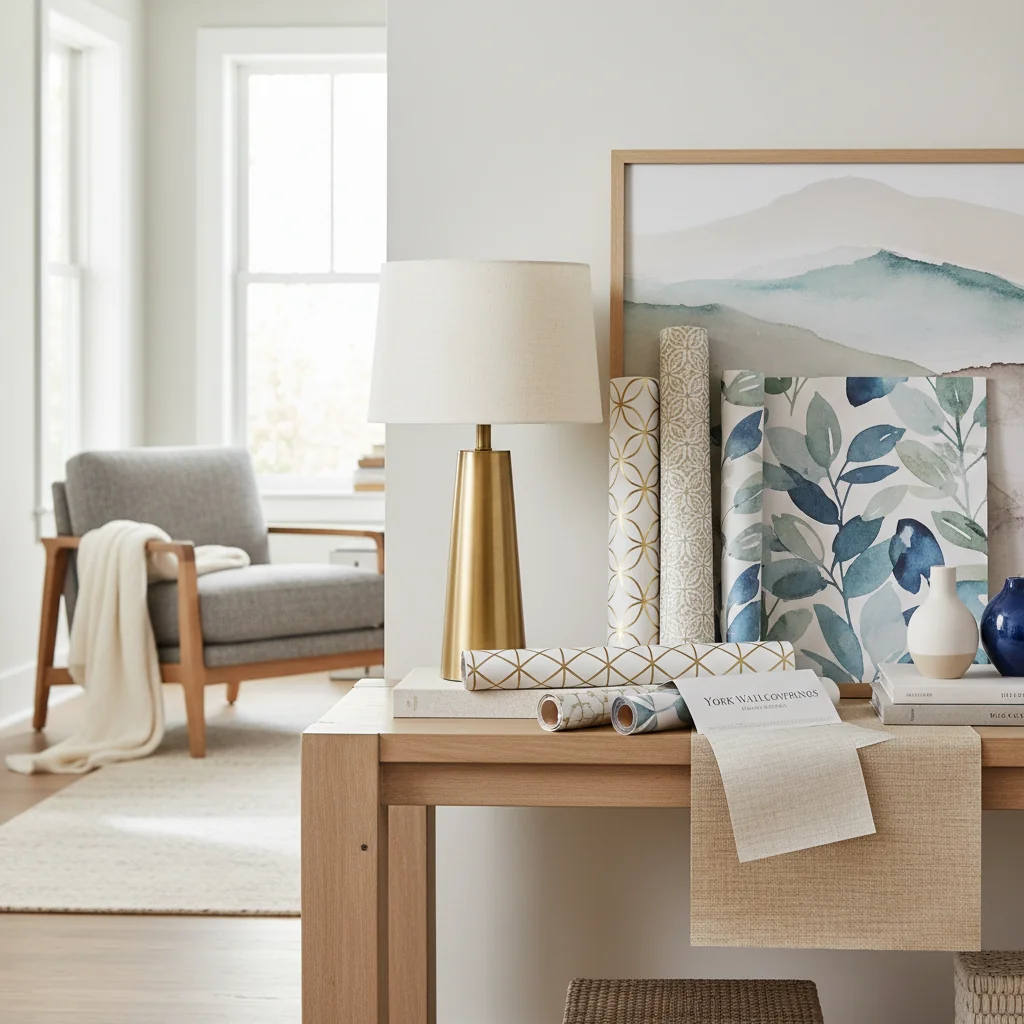
Extra wide stripe wallpaper is a sophisticated design choice characterized by its bold, expansive bands of color or texture, typically measuring 4 inches or more in width per stripe. This distinct wallpaper style offers a powerful visual statement, capable of dramatically influencing a room’s perceived dimensions, atmosphere, and overall aesthetic. At Starhouse, we understand that selecting the right wallcovering is a pivotal decision in defining your home’s character, and extra wide stripes provide a versatile foundation for both contemporary and classic interiors. This comprehensive guide delves into every facet of incorporating extra wide stripe wallpaper into your design scheme, from understanding its various types and materials to precise measurement, expert styling, and essential care, ensuring you make an informed choice that elevates your living space.
Key takeaways
- Extra wide stripe wallpaper, with stripes typically 4 inches or wider, profoundly influences a room’s perceived size and ambiance, offering both modern and classic aesthetic versatility.
- Vertical wide stripes elevate ceilings and add formality, while horizontal wide stripes expand rooms and introduce a sense of calm.
- Material choice, including non-woven, vinyl, and grasscloth, dictates durability, texture, and application method, with peel-and-stick options offering ease of installation.
- Accurate measurement and pattern repeat consideration are critical for a seamless installation, minimizing waste and ensuring visual continuity.
- Styling extra wide stripes involves balancing scale with furnishings, textiles, and lighting, treating the wallpaper as a foundational design element.
- Proper care, tailored to the wallpaper’s material, is essential for maintaining its aesthetic integrity and longevity.
What is Extra Wide Stripe Wallpaper?
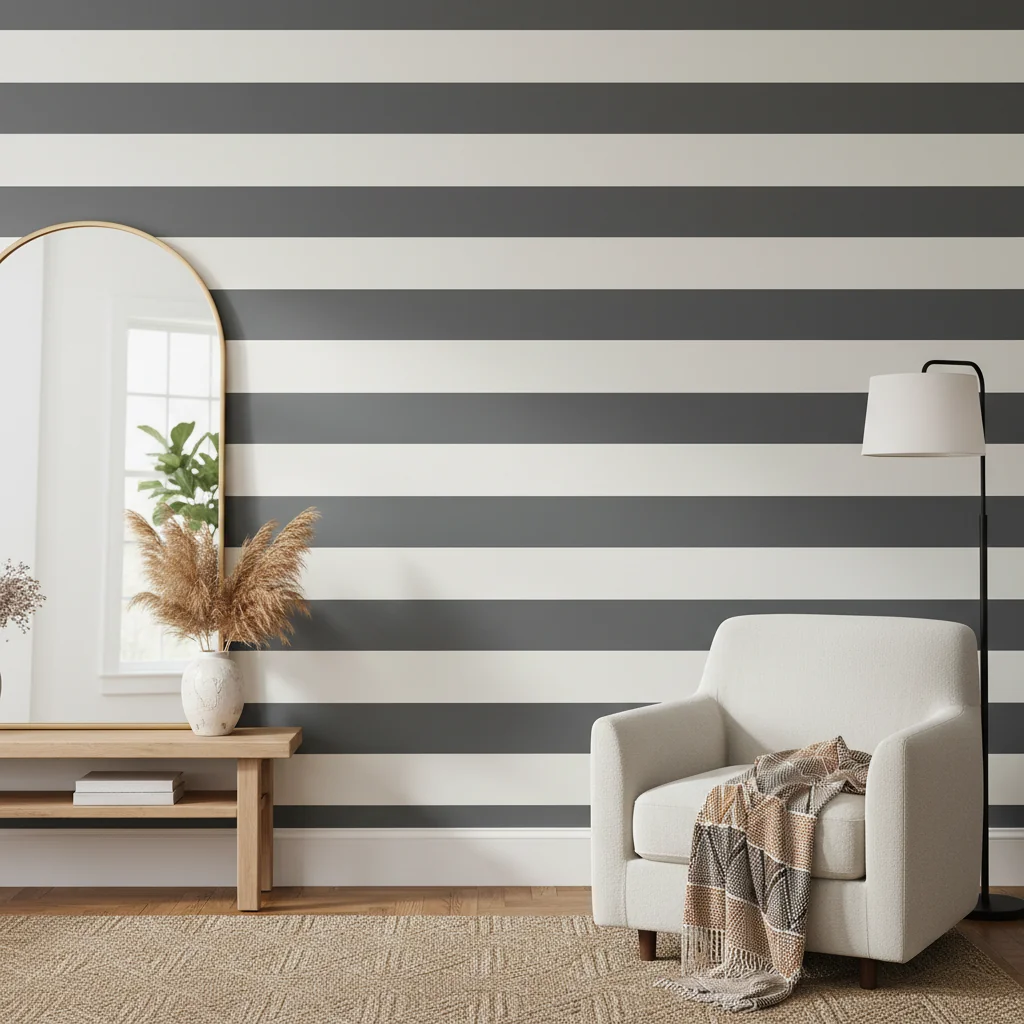
Extra wide stripe wallpaper is a distinctive wallcovering characterized by its broad, prominent bands of color or pattern, typically measuring 4 inches or more in width per stripe. This design choice stands apart from traditional pinstripes or medium-width stripes by its bold visual impact, offering a significant statement that can redefine a room’s perceived scale and atmosphere. It is a design element that commands attention, making it a focal point in any interior.
The defining characteristic of extra wide stripe wallpaper is the substantial width of its individual stripes. While standard stripes might range from a fraction of an inch to around 2-3 inches, extra wide stripes intentionally push these boundaries, often reaching widths of 4, 6, 8 inches, or even more. This increased scale transforms the stripe from a subtle accent into a dominant graphic element, influencing how light interacts with the wall and how the eye perceives the room’s dimensions. The visual weight of these wider bands creates a powerful, often architectural, effect that can anchor a space or introduce dynamic movement.
Historically, stripes have been a staple in interior design, evolving from simple painted lines to intricate woven textiles and, eventually, printed wallpapers. The advent of wider stripes represents a deliberate design evolution, moving away from repetitive, smaller patterns towards more impactful, graphic statements. This shift allows for greater versatility in modern design, where clean lines and bold forms are often celebrated. Extra wide stripes can be uniform in width and color, creating a rhythmic, consistent pattern, or they can vary in their dimensions and hues, leading to more complex and dynamic compositions.
Choosing extra wide stripe wallpaper is a commitment to a strong design identity. It offers a powerful tool for manipulating perception: vertical wide stripes can visually heighten a ceiling, while horizontal wide stripes can expand the perceived width of a room. The choice of color, texture, and stripe arrangement within this category allows for extensive customization, ensuring that the wallpaper complements the overarching design narrative of your home. Starhouse curates a selection that embraces this versatility, providing options that cater to a spectrum of aesthetic preferences, from understated elegance to dramatic flair.
The Enduring Appeal of Stripes in Interior Design
Stripes maintain an enduring appeal in interior design due to their inherent versatility, ability to influence spatial perception, and timeless elegance, making them a consistently relevant pattern choice across various aesthetic movements. This classic motif offers a unique blend of order and dynamism, capable of transforming a room’s character with remarkable efficacy. Their precise lines provide a sense of structure, while their repetitive nature can create rhythm and flow within a space.
The psychological impact of stripes is profound. Vertical stripes, for instance, naturally draw the eye upwards, creating an illusion of increased ceiling height and imparting a sense of grandeur and formality. This effect is particularly pronounced with extra wide vertical stripes, which amplify the elongating sensation without appearing too busy. Conversely, horizontal stripes guide the eye across the room, making a space feel wider and more expansive, often contributing to a more relaxed and grounded atmosphere. Diagonal stripes introduce a sense of movement and energy, adding a dynamic edge to an otherwise static wall.
Historically, stripes have been present in art and architecture for centuries, symbolizing everything from status and order to rebellion and avant-garde expression. In interior design, they gained significant traction during the Georgian and Victorian eras, often used in formal settings to convey sophistication. The mid-20th century saw a resurgence with modernist movements embracing clean lines and geometric patterns, where stripes perfectly fit the minimalist and functional aesthetic. Today, stripes continue to evolve, adapting to contemporary trends while retaining their classic integrity.
The versatility of stripes lies in their adaptability to diverse design styles. In a minimalist setting, a wide stripe in a neutral palette can add subtle texture and depth without cluttering the visual field. In a maximalist environment, bold, contrasting wide stripes can contribute to a vibrant, eclectic aesthetic. For a coastal theme, serene blue and white wide stripes evoke a nautical charm, while in a sophisticated urban apartment, monochromatic wide stripes can convey understated luxury. The simplicity of the stripe allows it to be a chameleon, capable of supporting or driving a room’s design narrative. Starhouse recognizes this inherent adaptability and curates a collection that showcases the broad spectrum of possibilities presented by extra wide stripe wallpaper, ensuring that every design aspiration can be met with precision and style.
Types of Extra Wide Stripe Wallpaper
Extra wide stripe wallpaper encompasses a diverse range of patterns, orientations, materials, and application methods, each offering distinct aesthetic and functional characteristics that influence its suitability for various spaces. Understanding these distinctions is crucial for selecting a wallpaper that perfectly aligns with your design vision and practical needs. The primary categories include variations in stripe orientation, width consistency, color execution, material composition, and installation type.
Stripe Orientation and Width Variations
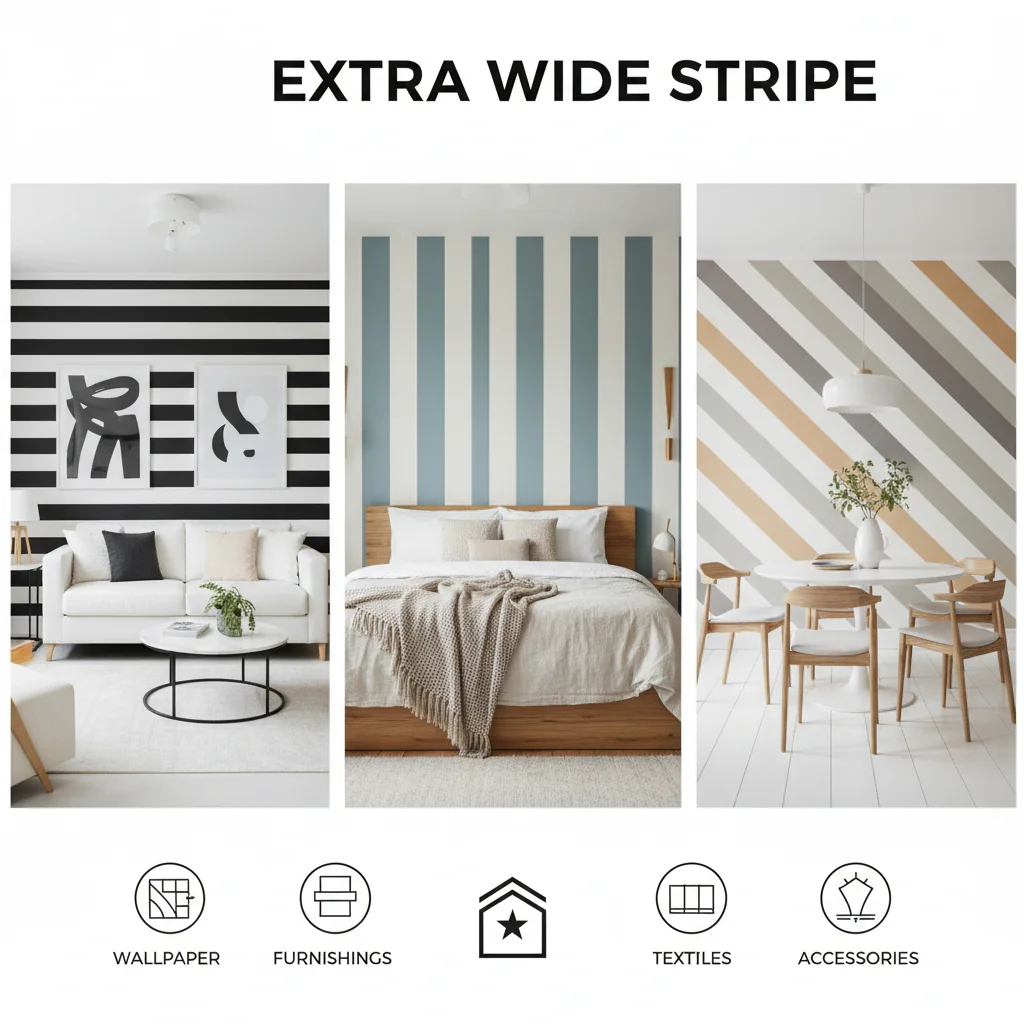
- Vertical Wide Stripes: These are the most common application, characterized by stripes running from floor to ceiling. Vertical wide stripes are highly effective at making ceilings appear taller and imparting a sense of formality and elegance to a room. They draw the eye upward, creating an expansive vertical dimension.
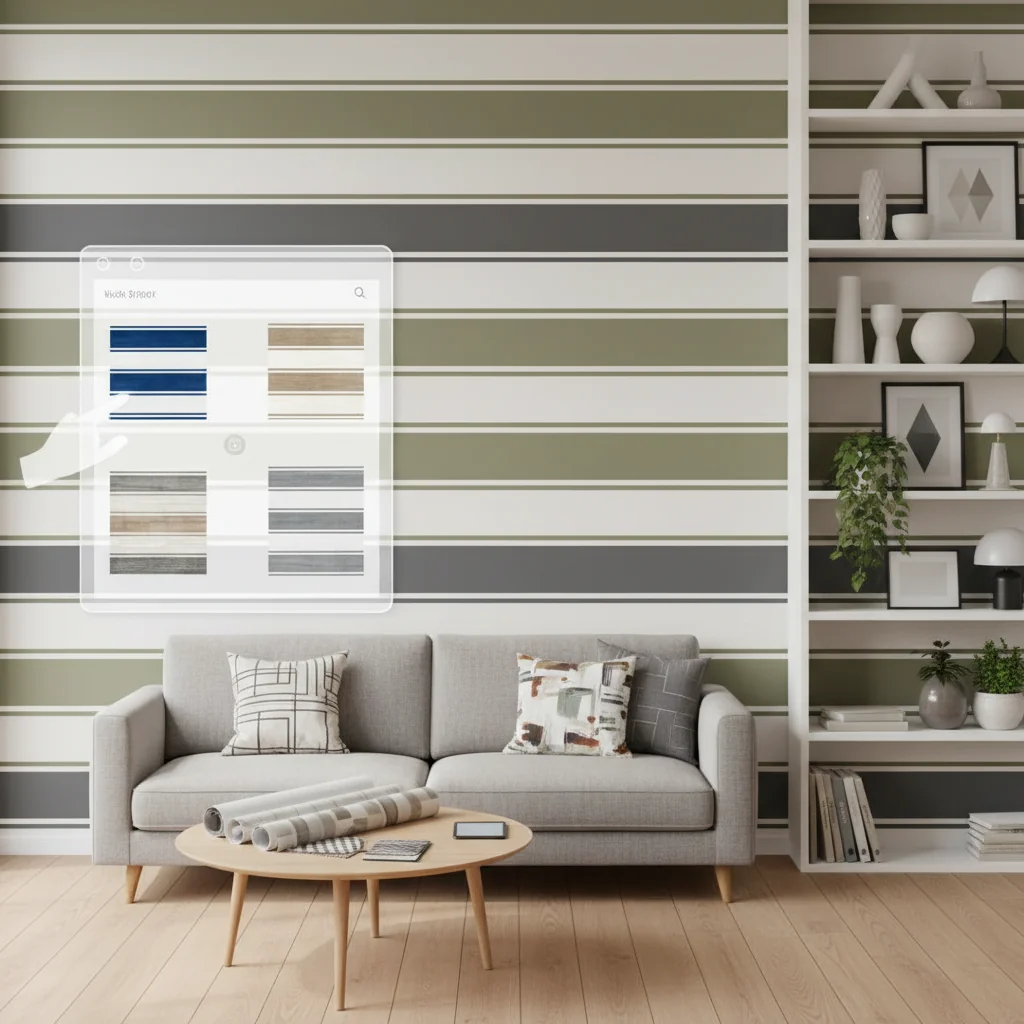
- Horizontal Wide Stripes: Applied across the wall, these stripes create an illusion of increased room width and can make a long, narrow space feel more balanced. Horizontal wide stripes often evoke a sense of calm and modernity, grounding the room and providing a strong, continuous visual line.
- Diagonal Wide Stripes: Less common but highly dynamic, diagonal wide stripes introduce energy and movement into a space. They can be used to create visual interest or to highlight architectural features, though they require careful consideration to avoid overwhelming a room.
- Uniform Wide Stripes: These patterns feature stripes of consistent width and often consistent color or texture, creating a rhythmic and orderly appearance. They are excellent for achieving a clean, classic, and sophisticated look.
- Varied Wide Stripes: These designs incorporate stripes of different widths, sometimes interspersing extra wide bands with narrower ones, or even varying widths within the “wide” category itself. This variation adds complexity and visual interest, creating a more dynamic and less predictable pattern.
- Ombre Wide Stripes: Ombre designs feature a gradual blending of colors across the width of the stripe, or from one stripe to the next, creating a soft, transitional effect. This can add depth and a subtle, sophisticated gradient to the walls.
Material Composition
The material of extra wide stripe wallpaper dictates its durability, texture, ease of cleaning, and suitability for different environments. Starhouse curates options that prioritize both aesthetic appeal and practical performance.
- Non-Woven Wallpaper: Composed of a blend of natural and synthetic fibers, non-woven wallpaper is celebrated for its durability, breathability, and ease of installation and removal. It is resistant to tearing and often washable, making it a practical choice for various rooms. Non-woven materials are also dimensionally stable, meaning they won’t expand or contract significantly when pasted.
- Vinyl Wallpaper: Highly durable and extremely washable, vinyl wallpaper is an excellent choice for high-traffic areas, bathrooms, and kitchens. It is moisture-resistant and can withstand scrubbing, making it a functional option where cleanliness and longevity are paramount. Vinyl options often come with various textures, from smooth to embossed.
- Paper-Backed Vinyl: This combines a decorative vinyl surface with a paper backing, offering a balance of durability and a slightly more traditional feel than pure vinyl. It provides good washability and resistance to wear.
- Solid Paper Wallpaper: Made entirely from paper, this type offers a classic, matte finish and is generally more environmentally friendly. While beautiful, it is less durable and washable than non-woven or vinyl options, making it best suited for low-traffic areas.
- Grasscloth and Natural Fiber Wallcoverings: For a tactile and organic look, extra wide stripes can be achieved with natural materials like grasscloth. These materials offer unique textures and variations in tone, adding warmth and depth. They are less durable and typically more challenging to clean, requiring specialized care.
- Fabric-Backed Vinyl: Offers superior durability and tear resistance due to its fabric backing, making it ideal for commercial settings or extremely high-traffic residential areas. It is typically heavier and more robust.
Application Methods
The method of application significantly impacts the installation process and potential for future removal.
- Pre-Pasted Wallpaper: Features a dry adhesive on the back that is activated by wetting it with water. This simplifies the preparation process, as no separate paste application is needed.
- Unpasted (Traditional) Wallpaper: Requires a separate wallpaper paste to be applied to the back of the paper or directly to the wall. This method offers flexibility in paste choice and can be preferred by professional installers for precise alignment.
- Peel-and-Stick (Self-Adhesive) Wallpaper: This innovative type has an adhesive backing protected by a removable liner. It is designed for easy, temporary, and DIY-friendly application and removal without damaging walls. Peel-and-stick extra wide stripes are excellent for renters or those who enjoy frequently updating their décor.
The choice among these types depends on your desired aesthetic, the room’s function, your installation preference, and your long-term commitment to the design. At Starhouse, we ensure our curated collection offers a breadth of choices in each of these categories, allowing you to select the perfect extra wide stripe wallpaper that meets both your stylistic desires and practical requirements.
York Wallcoverings, a respected name in the industry, highlights the versatility and impact of striped wallpapers, noting their ability to create an illusion of space and add architectural interest, whether in bold statements or subtle textures. This confirms the broad utility of the stripe motif across various design needs. For a deeper dive into general striped wallpaper options, you can explore resources like York Wallcoverings’ striped wallpaper collection.
Choosing the Right Extra Wide Stripe Wallpaper for Your Space
Selecting the appropriate extra wide stripe wallpaper involves a nuanced consideration of your room’s physical characteristics, existing décor, and the desired psychological impact, ensuring the chosen pattern enhances rather than overwhelms the space. This process requires a thoughtful assessment of scale, color, texture, and the overall design narrative you wish to create. A well-chosen stripe can dramatically elevate an interior, while an ill-suited one can disrupt balance.
Assessing Room Dimensions and Natural Light
- Small Rooms: In compact spaces like powder rooms or narrow hallways, extra wide stripes can be particularly impactful. Vertical wide stripes can visually lift the ceiling, making the room feel taller. Horizontal wide stripes can make a narrow room feel broader. Opt for lighter colors or muted contrasts to prevent the pattern from feeling overwhelming. A single accent wall can introduce the stripe without dominating the entire space.
- Large Rooms: Expansive rooms can comfortably accommodate bolder, more dramatic extra wide stripes. Here, you have the freedom to experiment with strong contrasts, darker hues, or even varied stripe widths across all walls without fear of constriction. Vertical stripes can add a sense of grandeur, while horizontal stripes can make a large, open-plan area feel more cohesive and intimate.
- Ceiling Height: For rooms with lower ceilings, vertical wide stripes are highly effective in creating an illusion of height, drawing the eye upwards. For very high ceilings, horizontal wide stripes can visually bring the ceiling down, making the room feel more proportionate and cozy.
- Natural Light: The amount of natural light a room receives significantly influences how colors and patterns appear. In dimly lit rooms, choose extra wide stripes in lighter colors or those with a subtle sheen to reflect light and brighten the space. In brightly lit rooms, you can confidently use darker or more saturated colors without making the room feel enclosed.
Defining the Desired Mood and Aesthetic
Extra wide stripes are incredibly versatile in shaping a room’s atmosphere.
- Formal and Elegant: Opt for vertical wide stripes in classic color combinations like navy and white, charcoal and cream, or tone-on-tone neutrals. A subtle texture, like a linen-look or a grasscloth-inspired stripe, can add a layer of sophistication. These are ideal for dining rooms, formal living areas, or master bedrooms.
- Modern and Contemporary: Embrace bold contrasts, asymmetric stripe patterns, or unexpected color pairings (e.g., black and white, emerald and gold). Horizontal wide stripes often lend themselves well to a modern aesthetic, creating clean, architectural lines. Matte finishes or subtle metallic accents can enhance this look.
- Relaxed and Coastal: Think horizontal wide stripes in soft blues, greens, sand tones, or classic navy and white. Materials with a slightly textured finish can mimic natural fibers, enhancing the coastal vibe. This style is perfect for beach houses, sunrooms, or casual living spaces.
- Playful and Energetic: Consider stripes with vibrant colors, varied widths, or even diagonal orientations for children’s rooms, playrooms, or creative studios. Peel-and-stick options are particularly suitable for these dynamic spaces, allowing for easy updates as tastes evolve.
- Understated and Minimalist: Choose tone-on-tone extra wide stripes, where the contrast between stripes is very subtle, or opt for stripes in very light, neutral colors. The emphasis here is on texture and the subtle play of light and shadow rather than overt pattern.
Harmonizing with Existing Furnishings and Color Palettes
The wallpaper should complement, not compete with, your existing furniture, textiles, and accessories.
- Color Coordination: Select stripe colors that either echo existing hues in your room (e.g., from upholstery, rugs, or artwork) or introduce a complementary accent color. Consider the 60-30-10 rule: 60% dominant color, 30% secondary color, 10% accent color. Your wallpaper can be part of the 30% or 10%, or even a sophisticated 60% if it’s a neutral.
- Pattern Mixing: If your room already features other patterns (e.g., floral curtains, geometric rugs), ensure the extra wide stripes provide a sense of balance. Generally, it is safe to mix patterns of different scales and types. For example, pair a large-scale floral with a simple extra wide stripe. The stripe acts as a grounding element, preventing the space from feeling chaotic.
- Furniture Scale: In a room with large, substantial furniture, a bold extra wide stripe can hold its own and create balance. In a room with delicate or minimalist furniture, a softer, less contrasting wide stripe might be more appropriate to maintain harmony.
A design narrative is the overarching story or theme that guides all aesthetic decisions within a space, creating a cohesive and intentional atmosphere. By carefully considering these elements, you can confidently choose an extra wide stripe wallpaper that not only looks stunning but also enhances the functionality and feeling of your home. Starhouse offers a curated collection designed to meet these diverse needs, providing precision in pattern and quality in material.
Sizing, Measuring, and Installation Considerations
Accurate sizing and precise measurement are paramount for a successful extra wide stripe wallpaper installation, ensuring a seamless pattern match, minimizing waste, and achieving a professional finish. The process involves more than just measuring wall dimensions; it requires careful calculation of pattern repeat and understanding different installation methods. A meticulously planned installation dramatically enhances the visual impact of extra wide stripes.
Accurate Wall Measurement
Before ordering any wallpaper, precise measurements of your walls are essential.
- Measure Height: Measure the height of your wall from the baseboard to the ceiling in several places. Walls are rarely perfectly uniform, so use the tallest measurement for your calculations.
- Measure Width: Measure the total width of each wall you intend to cover. Again, take measurements in multiple spots and use the widest measurement.
- Account for Obstacles: For windows, doors, and other architectural features, measure their dimensions. While you won’t wallpaper over them, you’ll need to cut around them, which can affect pattern matching and roll calculations. You still count the full wall width for calculating rolls, as the wallpaper will be cut from full strips.
- Square Footage: Calculate the total square footage by multiplying the total height by the total width. For multiple walls, sum the individual square footages.
Calculating Rolls Needed for Extra Wide Stripe Wallpaper
Calculating the correct number of rolls is critical to avoid running short or having excessive waste. Wallpaper is typically sold in double or triple rolls, even if the packaging states a single roll equivalent. Always check the square footage covered by one roll on the product specifications.
Pattern repeat is the vertical distance on a wallpaper roll before the design begins to repeat itself, a critical factor for ensuring continuous and aligned patterns across multiple strips. For extra wide stripes, especially those with varying widths or specific color sequences, the pattern repeat needs particular attention.
- Determine Strip Length: Add 4-6 inches to your wall’s height measurement for trimming at the top and bottom. This is your effective strip length.
- Calculate Strips Per Roll: Divide the total lineal yardage (or footage) of one roll by your effective strip length. Round down to the nearest whole number; this gives you the number of full strips you can get from one roll.
- Calculate Total Strips Needed: Divide the total width of your walls by the width of one wallpaper roll. Round up to the nearest whole number; this is the total number of strips you will need to cover all walls.
- Factor in Pattern Repeat: This is crucial for stripes. For each subsequent strip, you will need to align the pattern. This means you will often cut off excess at the top or bottom of a strip to match the pattern, effectively “losing” some material. Therefore, when calculating total strips needed, you might need to adjust the strip length *before* dividing into the roll’s total length. A common rule of thumb is to add the pattern repeat length to your effective strip length for each cut, or more simply, order 15-20% extra rolls for patterns with a large repeat.
- Total Rolls: Divide the total strips needed by the number of strips per roll. Always round up to the nearest whole roll. It is always recommended to purchase at least one extra roll (or 10-15% overage) for future repairs, mistakes during installation, or pattern matching adjustments, especially with bold extra wide stripes. Ensure all rolls come from the same dye lot to avoid color variations.
Example Calculation:
Let’s say your wall is 8 feet (96 inches) high and 12 feet (144 inches) wide.
Wallpaper roll is 20.5 inches wide and 33 feet (396 inches) long.
Pattern repeat is 24 inches.
1. Effective Strip Length: 96 inches (wall height) + 6 inches (trim allowance) = 102 inches.
2. Adjusted Strip Length for Repeat: For each strip, you need to account for the pattern repeat. A simpler approach for homeowners is to add the pattern repeat to the effective strip length for the first strip, and then ensure enough overall material. For a more precise calculation, consider how many repeats fit into your wall height, and ensure each strip starts at the correct point in the repeat. For general ordering, it’s safer to overestimate. Let’s use 102 inches for initial strip length.
3. Strips Per Roll: 396 inches (roll length) / 102 inches (strip length) = 3.88. Round down to 3 full strips per roll.
4. Total Strips Needed: 144 inches (wall width) / 20.5 inches (roll width) = 7.02. Round up to 8 strips.
5. Initial Rolls Needed: 8 strips / 3 strips per roll = 2.66. Round up to 3 rolls.
6. Add Overage for Pattern Match/Mistakes: With a 24-inch pattern repeat, and given that stripes require careful alignment, ordering an additional roll is prudent. So, 3 + 1 = 4 rolls.
This ensures you have enough material to manage the pattern repeat and any unforeseen issues.
Installation Considerations
- Surface Preparation: The wall must be clean, smooth, dry, and primed. Any imperfections will show through the wallpaper, especially with bold extra wide stripes. Remove old wallpaper, fill holes, sand rough patches, and apply a high-quality wallpaper primer. This is a non-negotiable step for a professional finish.
- Starting Point: For extra wide stripes, it is often recommended to start in the most inconspicuous corner or a less visible wall. However, if the stripe is a dominant feature, starting from the center of a prominent wall and working outwards can create a balanced look. Always use a plumb line to ensure the first strip is perfectly vertical, as this sets the alignment for the entire room.
- Pattern Matching: This is the most critical aspect for striped wallpaper. Each subsequent strip must be carefully aligned with the previous one to ensure the stripes run continuously and seamlessly. This often involves dry-fitting strips before applying paste or removing the backing.
- Tools: Essential tools include a tape measure, level/plumb bob, utility knife with fresh blades, smoothing tool, wallpaper brush or roller (for paste), seam roller, and a bucket of clean water. For peel-and-stick, a squeegee is indispensable.
- Professional vs. DIY: While peel-and-stick options make DIY more accessible, traditional wallpapering, especially with large-scale or high-contrast extra wide stripes, often benefits from professional installation. Professionals possess the experience and tools to handle pattern matching, tricky corners, and achieve a flawless, long-lasting finish. Consider your comfort level and experience before deciding.
Proper planning and execution during the sizing, measuring, and installation phases ensure that your extra wide stripe wallpaper becomes a striking and beautiful feature in your home, reflecting the precision and quality Starhouse represents.
Current Trends and Classic Styles in Wide Stripes
Extra wide stripe wallpaper, while inherently classic, continuously adapts to contemporary design trends, offering fresh interpretations that keep it at the forefront of stylish interiors. It bridges the gap between timeless elegance and modern aesthetics, ensuring its relevance across diverse design periods. Current trends emphasize sophisticated color palettes, textural variations, and strategic application, while classic styles remain steadfast in their enduring appeal.
Current Trends in Extra Wide Stripe Wallpaper
- Muted and Earthy Tones: A significant trend leans towards subdued and natural color palettes. Think wide stripes in shades of sage green, terracotta, warm beige, soft gray, and dusty blue. These colors create a calming and sophisticated backdrop, aligning with the growing desire for serene and nature-inspired interiors. The contrast between stripes is often subtle, relying more on tonal variation than stark difference.
- Textural Sophistication: Beyond flat color, contemporary wide stripes incorporate texture. This includes designs that mimic linen, grasscloth, plaster, or even subtle metallic sheens. These textural elements add depth and a tactile quality, making the wallcovering feel more luxurious and handcrafted. For example, a wide stripe might alternate between a matte finish and a slightly iridescent one.
- Asymmetrical and Varied Widths: Moving away from perfectly uniform stripes, current trends embrace slight variations in stripe width within a single pattern. This creates a more dynamic and less predictable rhythm, adding visual interest and a bespoke feel. Sometimes, an extra wide stripe might be paired with a much narrower pinstripe for contrast.
- Bold Monochromatics: Black and white, or deep charcoal and off-white, continue to be powerful choices for extra wide stripes. This classic combination is updated with a focus on oversized widths and often a matte finish for a modern, architectural statement. It provides high contrast and a clean, graphic appeal.
- Statement Walls and Strategic Placement: While some designers use wide stripes on all four walls, a strong trend is to deploy them strategically on a single accent wall. This allows for a dramatic impact without overwhelming the space, particularly in open-plan living areas or bedrooms where a focal point is desired. Vertical wide stripes behind a bed or horizontal wide stripes along a long wall are popular applications.
- Ombre and Gradient Stripes: Wide stripes that feature a gentle color transition or gradient within each band, or from one stripe to the next, are gaining popularity. This creates a soft, ethereal effect that adds depth and a sense of movement without harsh lines.
Classic Styles of Extra Wide Stripe Wallpaper
- Nautical/Coastal Stripes: The quintessential navy and white (or blue and white) wide stripe remains a timeless choice for coastal-inspired interiors. These horizontal stripes evoke the serenity of the sea and the classic charm of maritime aesthetics, perfect for beach houses, bathrooms, or sunrooms.
- Regency/Formal Stripes: Vertical wide stripes in elegant color combinations such as gold and cream, deep red and beige, or emerald green and white exude a sense of grandeur and formality. Often found in traditional dining rooms, libraries, or entryways, these stripes elevate the perceived height and sophistication of a space.
- Mid-Century Modern Stripes: Characterized by clean lines and often a limited, vibrant color palette, mid-century wide stripes tend to be uniform in width and bold in presence. They complement minimalist furniture and geometric accents, reflecting the era’s focus on functional design and graphic impact.
- Farmhouse/Rustic Stripes: While less overtly striped, the farmhouse aesthetic often incorporates wide, muted stripes in linen or ticking patterns. These are typically in soft grays, whites, and natural beiges, providing a relaxed, understated charm that pairs well with natural wood and vintage elements.
- Architectural Stripes: These are often monochromatic or tonal wide stripes that emphasize the structural lines of a room. They create a strong, clean backdrop that highlights architectural features and contemporary furnishings, serving as a foundational element rather than a decorative flourish.
The enduring appeal of extra wide stripe wallpaper lies in its ability to adapt and reinterpret itself while retaining its fundamental power to define and enhance a space. Whether you lean towards a fresh, trend-driven aesthetic or a time-honored classic, Starhouse curates a selection that empowers you to make a precise and confident design statement in your home.
Styling and Pairing Extra Wide Stripe Wallpaper
Styling extra wide stripe wallpaper effectively involves a deliberate approach to balancing its bold visual presence with complementary furnishings, textiles, and accessories, creating a cohesive and harmonious interior. The wallpaper serves as a foundational design element, dictating the mood and influencing subsequent décor choices, making thoughtful pairing essential for achieving a polished and sophisticated look.
Integrating with Furniture Selection
- Scale and Proportion: When using extra wide stripes, particularly those with high contrast, select furniture pieces that are substantial enough to hold their own. Delicate or overly ornate furniture might get lost against a bold striped backdrop. Conversely, if your stripes are subtle (e.g., tone-on-tone), you can introduce more visually interesting or even slightly smaller-scale furniture without creating imbalance.
-
Style Harmony:
- Modern Stripes: Pair with clean-lined, minimalist furniture in solid colors or subtle textures. Think mid-century modern sofas, sleek console tables, or geometric accent chairs.
- Traditional Stripes: Classic vertical wide stripes (e.g., Regency style) complement antique or reproduction furniture, upholstered pieces with traditional silhouettes, and rich wood tones.
- Coastal Stripes: Natural wood furniture, rattan, wicker, and slipcovered sofas in light fabrics beautifully enhance horizontal wide stripes in blues and whites.
- Color Play: Choose furniture upholstery in colors that either match one of the stripe colors, provide a complementary contrast, or act as a neutral anchor. For instance, a room with navy and white wide stripes could feature a navy sofa, white armchairs, and a pop of coral in throw pillows.
Complementing with Textiles and Soft Furnishings
Textiles offer an opportunity to soften the linear quality of stripes and introduce additional layers of texture and pattern.
- Solid Colors and Textures: The safest and most effective approach is to use solid-colored textiles for curtains, rugs, and upholstery. Choose colors that pick up on shades within the wallpaper or introduce a harmonious neutral. Focus on varied textures—a chunky knit throw, a silky pillow, a plush rug—to add richness without competing visually.
-
Pattern Mixing (with caution): Mixing patterns with extra wide stripes can be highly effective but requires a discerning eye.
- Vary Scale: Pair large-scale stripes with small-scale patterns (e.g., a tiny floral print, a subtle geometric, or a delicate toile).
- Vary Type: Combine different types of patterns. A bold wide stripe can be balanced by an organic botanical print or a classic damask, as long as their scales and color palettes are harmonized.
- Cohesive Color Palette: Ensure all patterns share at least one common color or belong to the same overall color family to maintain visual unity.
- Curtains and Drapes: For wide striped walls, choose solid drapes in a color pulled from the wallpaper or a neutral that complements it. Alternatively, drapes with a very subtle texture or a tone-on-tone pattern can work. Avoid curtains with competing bold patterns unless the stripes are very understated. Consider mounting curtain rods high and wide to emphasize height and draw attention away from the wall’s edge.
Lighting and Accessories
Lighting and accessories are crucial for completing the look and adding personality to a room with extra wide stripe wallpaper.
-
Lighting:
- Ambient Lighting: Ensure adequate ambient lighting to showcase the wallpaper and prevent shadows that might distort the stripe pattern.
- Accent Lighting: Use sconces or picture lights to highlight artwork against the striped wall. The play of light and shadow can enhance the texture or sheen of the wallpaper.
- Fixtures: Choose lighting fixtures that complement the overall style. Sleek metallic fixtures for modern stripes, crystal chandeliers for formal, or natural fiber pendants for coastal.
- Mirrors and Artwork: Mirrors are excellent against striped walls as they reflect light and create an illusion of depth, breaking up the pattern without covering it entirely. For artwork, choose pieces with solid matting or simple frames to allow the art to stand out against the busy background. Large-scale artwork can anchor a wall and provide a focal point.
- Decorative Objects: Use decorative objects, such as vases, sculptures, or books, to add personality. Groupings of objects on shelves or console tables can provide visual breaks and introduce different textures and shapes. Avoid clutter; let the stripes be a strong element.
- Plants: Greenery always adds life and a natural element that contrasts beautifully with geometric patterns. Large floor plants or smaller potted plants can soften the lines of the stripes.
Using Stripes as an Accent or Dominant Feature
- Accent Wall: Applying extra wide stripe wallpaper to a single wall creates a dramatic focal point without overwhelming the entire room. This is ideal for behind a bed, in an entryway, or on the main wall of a living room.
- Dominant Feature: For a more immersive experience, use extra wide stripes on all four walls. This approach works best in larger rooms, or with more subtle, tonal stripes in smaller spaces. It creates a strong, enveloping atmosphere.
By meticulously considering these styling elements, you can transform extra wide stripe wallpaper from a simple wallcovering into a sophisticated design statement that reflects your personal style and enhances your home’s aesthetic. Starhouse is dedicated to providing you with the inspiration and quality materials to achieve these refined looks.
Starhouse is curating an exquisite collection of home & décor elements, including a diverse range of extra wide stripe wallpapers. We are passionate about helping you create spaces that truly reflect your style. Tell us what you’re looking for in your ideal home environment, and get early access to our upcoming collections: share what you’re looking for.
Care and Maintenance for Your Striped Wallpaper
Proper care and maintenance are essential for preserving the beauty and longevity of your extra wide stripe wallpaper, ensuring its vibrant pattern and pristine finish endure for years. The specific cleaning methods depend significantly on the wallpaper’s material, making it crucial to understand its composition before attempting any maintenance. Regular, gentle cleaning prevents the buildup of dust and grime, which can dull the appearance of even the boldest stripes.
General Care Tips for All Wallpaper Types
- Regular Dusting: Use a soft, dry cloth, a feather duster, or a soft brush attachment on your vacuum cleaner to gently remove dust and cobwebs from the wallpaper surface. Do this regularly to prevent accumulation, which can make colors appear dull.
- Avoid Direct Sunlight: Prolonged exposure to direct sunlight can cause wallpaper colors to fade over time. Consider using blinds, curtains, or UV-filtering window films in rooms that receive intense sun exposure.
- Address Stains Promptly: The quicker a stain is addressed, the higher the chance of successful removal. Always test any cleaning solution on an inconspicuous area first to ensure it does not damage or discolor the wallpaper.
- Avoid Harsh Chemicals: Never use abrasive cleaners, bleach, or strong chemical solvents, as these can permanently damage the wallpaper’s finish, color, or material.
Material-Specific Cleaning Instructions
Always refer to the manufacturer’s care instructions provided with your specific wallpaper, as these will be the most accurate. However, here are general guidelines based on common wallpaper materials:
-
Non-Woven Wallpaper:
- Washable: Most non-woven wallpapers are washable. Use a soft sponge or cloth dampened with lukewarm water and a mild, non-abrasive soap (like dish soap). Gently wipe the stained area, then wipe with a clean, damp cloth to remove soap residue. Pat dry with a clean, soft towel. Avoid saturating the paper.
- Scrubbable: Some non-woven varieties are labeled as scrubbable, meaning they can withstand slightly more vigorous cleaning. However, always start with gentle pressure and increase only if necessary.
-
Vinyl and Paper-Backed Vinyl Wallpaper:
- Highly Washable/Scrubbable: Vinyl wallpapers are the most durable and easiest to clean. They can typically be cleaned with a sponge or soft brush, warm water, and a mild detergent. For tougher stains, a slightly stronger cleaning solution (e.g., diluted all-purpose cleaner) might be used, but always test first. Rinse thoroughly with a clean, damp cloth and dry with a soft towel.
- Moisture Resistant: Their moisture resistance makes them ideal for kitchens and bathrooms where splashes and humidity are common.
-
Solid Paper Wallpaper:
- Delicate: Paper wallpaper is the least durable and generally not washable.
- Spot Cleaning Only: For very minor, non-greasy marks, you might carefully try to blot the stain with a clean, dry eraser or a very slightly dampened cloth, but proceed with extreme caution as water can cause bubbling, tearing, or color bleeding.
- Dusting is Key: Regular dusting is the primary method of care.
-
Grasscloth and Natural Fiber Wallcoverings:
- Non-Washable: These delicate materials are generally not washable and should not come into contact with water, which can cause discoloration or damage.
- Vacuum or Dry Dust: Use a vacuum cleaner with a soft brush attachment on a low setting, or a dry, soft cloth/feather duster for regular cleaning.
- Spot Cleaning (Limited): For specific marks, consult a professional wallcovering cleaner. Attempting DIY stain removal can easily lead to permanent damage.
Addressing Common Issues
- Bubbles: Small bubbles often disappear as the wallpaper dries completely. For persistent bubbles, use a utility knife to make a tiny slit in the center of the bubble, then gently push out the air with a smoothing tool. If adhesive is needed, apply a small amount with a syringe before smoothing.
- Lifting Seams: If seams begin to lift, re-apply wallpaper paste to the underside of the seam using a small brush or syringe. Press the seam firmly back down with a seam roller and wipe away any excess adhesive.
- Tears: For small tears, carefully apply a small amount of wallpaper adhesive to the underside of the torn piece and press it back into place. For larger tears, you may need to cut a patch from a leftover piece of wallpaper, carefully matching the extra wide stripe pattern.
By following these guidelines and adhering to specific manufacturer instructions, you can ensure your extra wide stripe wallpaper from Starhouse remains a stunning and pristine feature in your home for many years. Consistent, gentle care is the key to preserving its distinctive appeal.
Common Mistakes to Avoid When Using Extra Wide Stripe Wallpaper
While extra wide stripe wallpaper offers immense design potential, certain common mistakes can undermine its impact and detract from a room’s aesthetic, making careful planning and execution essential. Awareness of these pitfalls allows for proactive avoidance, ensuring a professional and visually appealing outcome. Even experienced designers approach stripe application with precision to harness its full transformative power.
-
Ignoring Room Proportions and Scale:
A primary error is choosing stripe width and orientation without considering the room’s actual dimensions. Vertical wide stripes in an already very tall, narrow room can exaggerate its height to an uncomfortable degree. Conversely, horizontal wide stripes in a short, wide room might make the ceiling feel even lower. The key is to use stripes to *balance* proportions, not to overemphasize existing ones. Always visualize the effect before committing.
-
Poor Surface Preparation:
Wallpaper, especially with bold, contrasting extra wide stripes, is unforgiving of uneven surfaces. Bumps, cracks, old paint drips, or unprimed walls will show through the wallpaper, creating an amateurish finish. Failure to properly clean, patch, sand, and prime walls leads to adhesion issues, bubbles, and visible imperfections that detract from the elegant lines of the stripes.
-
Incorrect Measurement and Under-Ordering:
Underestimating the amount of wallpaper needed, particularly when accounting for pattern repeat, is a frequent mistake. Running out of wallpaper mid-project, only to find the next batch is from a different dye lot (leading to subtle color variations), is a significant setback. Always calculate generously, adding 10-15% for waste and an extra roll for pattern matching and future repairs.
-
Neglecting Pattern Match and Alignment:
The essence of striped wallpaper lies in its continuous, perfectly aligned lines. A misaligned pattern, even by a fraction of an inch, is glaringly obvious with extra wide stripes. This often stems from not using a plumb line for the first strip, rushing the installation, or failing to account for the pattern repeat when cutting. Precision in alignment is non-negotiable for a professional look.
-
Overwhelming Small Spaces with High Contrast:
While extra wide stripes can work in small rooms, using high-contrast, very bold stripes on all four walls can make a small space feel claustrophobic and busy. In such cases, consider using wide stripes on a single accent wall, opting for tone-on-tone or muted color palettes, or choosing horizontal stripes to expand the perceived width rather than intense verticality.
-
Clashing with Existing Patterns and Décor:
Introducing extra wide stripe wallpaper into a room already rich with other patterns (e.g., floral upholstery, geometric rugs) without careful consideration can lead to visual chaos. The stripes should either complement or provide a harmonious contrast in scale and style. If the room is already “busy,” the stripes should be a unifying element, often through subtle texture or color, rather than adding more visual noise.
-
Ignoring Lighting Conditions:
The way natural and artificial light hits the wallpaper can significantly alter its appearance. Glossy or metallic stripes can create glare in brightly lit rooms, while very dark, matte stripes might make a dimly lit room feel oppressive. Consider how light plays on the surface and colors throughout the day and evening.
-
Improper Installation Tools and Techniques:
Attempting to install wallpaper without the correct tools (e.g., a sharp utility knife, smoothing tool, plumb bob) or rushing the process can result in bubbles, wrinkles, torn edges, and visible seams. Investing in quality tools and taking the time to learn proper techniques (or hiring a professional) is crucial for a flawless finish.
By meticulously avoiding these common mistakes, you can ensure your extra wide stripe wallpaper installation is not only successful but also transforms your space with the intended sophistication and style that Starhouse champions. Precision and thoughtful design are the hallmarks of a truly beautiful interior.
Sources
Frequently Asked Questions About Extra Wide Stripe Wallpaper
Do extra wide stripes make a room look bigger or smaller?
Extra wide stripes can make a room look both bigger or smaller depending on their orientation and color. Vertical wide stripes draw the eye upwards, making ceilings appear taller and the room feel more expansive vertically. Horizontal wide stripes make a room feel wider and longer, expanding its perceived breadth. High-contrast stripes can make a room feel more defined, while subtle, tonal stripes can create an illusion of softness and openness.
Can I use extra wide stripe wallpaper in a small room?
Yes, you can absolutely use extra wide stripe wallpaper in a small room, but strategic choices are essential. Opt for vertical wide stripes in lighter colors or tone-on-tone patterns to visually lift the ceiling and expand the space without overwhelming it. Consider using it on a single accent wall rather than all four walls to create a focal point and introduce pattern without making the room feel too busy or enclosed.
What’s the difference between peel-and-stick and traditional extra wide stripe wallpaper?
The primary difference lies in the application method and permanence. Peel-and-stick (self-adhesive) extra wide stripe wallpaper has an adhesive backing that is exposed by peeling off a liner, making it easy to apply and remove without damaging walls, ideal for DIYers or temporary décor. Traditional (unpasted) wallpaper requires a separate adhesive (paste) to be applied to the back of the paper or directly to the wall, offering a more durable and long-term installation that typically requires more skill to apply and remove.
How do I clean extra wide stripe wallpaper?
Cleaning methods depend entirely on the wallpaper’s material. Most non-woven and vinyl extra wide stripe wallpapers are washable: gently wipe with a soft cloth dampened with lukewarm water and a mild, non-abrasive soap, then rinse with a clean, damp cloth and pat dry. Solid paper wallpaper is generally not washable and should only be dry dusted. Natural fiber wallcoverings like grasscloth are also not washable and require gentle vacuuming with a brush attachment. Always check the manufacturer’s specific care instructions.
What colors pair well with extra wide stripe wallpaper?
The best colors to pair with extra wide stripe wallpaper are typically those that are already present in the wallpaper’s pattern or complementary neutrals. For instance, if your wallpaper features navy and white stripes, you can pair it with other shades of blue, crisp whites, warm creams, or even a contrasting accent color like coral or yellow. Solid colors and subtle textures in furnishings and textiles prevent the room from feeling too busy, allowing the stripes to be the dominant pattern.
Can I mix extra wide stripe wallpaper with other patterns?
Yes, mixing extra wide stripe wallpaper with other patterns is a sophisticated design technique, but it requires careful execution. The key is to vary the scale of the patterns: pair large-scale wide stripes with small-scale patterns (e.g., a tiny floral, a subtle geometric, or a delicate toile). Ensure the patterns share a cohesive color palette or at least one common color to maintain visual harmony. Stripes often act as a grounding, neutral pattern that can balance more intricate designs.
Is extra wide stripe wallpaper suitable for bathrooms or kitchens?
Extra wide stripe wallpaper can be suitable for bathrooms and kitchens, provided you select the correct material. Vinyl or paper-backed vinyl wallpapers are highly recommended for these high-moisture, high-traffic areas because they are durable, moisture-resistant, and typically washable or scrubbable. Avoid delicate materials like solid paper or natural fibers in these environments, as they are susceptible to damage from humidity and splashes.
Conclusion
Extra wide stripe wallpaper stands as a powerful and versatile design element, capable of profoundly transforming any interior with its bold lines and compelling visual impact. From manipulating perceived room dimensions to establishing a distinct aesthetic, its application is limited only by imagination and careful planning. We have explored the diverse types, crucial measurement techniques, and expert styling approaches that ensure your chosen extra wide stripe wallpaper becomes a sophisticated and enduring feature in your home.
At Starhouse, we believe that every detail contributes to the overall narrative of your living space. The precision, confidence, and authoritative presence that extra wide stripes bring are attributes we embody in our curated collection. By understanding the nuances of this design choice, you are empowered to make a statement that is both aspirational and deeply personal.
As Starhouse meticulously curates its collection of premium home & décor elements, including an exceptional range of extra wide stripe wallpapers, we are eager to align our offerings with your unique vision. We invite you to be part of our journey in shaping beautiful homes across the United States. Share your design aspirations with us and gain early access to our upcoming collections, designed to inspire and elevate every room. Tell us what you’re looking for to complete your dream space by visiting starhouseusa.online.
Updated: June 2026