Choosing the best wallpaper for bathroom walls means understanding moisture dynamics before you ever look at a pattern. Many homeowners pick a design they love, then watch it peel or mold within months because the material can’t handle steam, condensation, or direct splashes. This guide breaks down vinyl grades, installation zones, and adhesive performance so you can match the right product to your specific space instead of trusting generic waterproof claims that often fail in practice.
Understanding Vinyl Grades for Humid Bathrooms
Not all vinyl wallcoverings hold up the same way under sustained bathroom humidity, and mixing up the two main types is the most common reason installations fail early. Industry standards classify solid vinyl as the only wallpaper grade suitable for full bathroom use, because its impermeable surface layer keeps water vapor from reaching the substrate or the wall beneath.
Solid Vinyl vs. Expanded Vinyl Backing
Solid vinyl wallpaper has a dense, continuous film that blocks moisture penetration entirely. That makes it the right call for areas where condensation is constant. Check that the product specification says “solid vinyl” rather than just “vinyl”, manufacturers sometimes use the word loosely for cheaper alternatives that skip this protective density.
Expanded vinyl wallpaper contains air pockets that can trap moisture against the wall, which rules it out for direct splash zones even though it feels durable and textured. The foam backing creates a thermal barrier that feels warmer to the touch, but those same microscopic voids turn into reservoirs for mold spores once steam cycles start wetting and drying the surface day after day.
Why Paper-Backed Options Fail in Wet Zones
Paper-backed wallpaper absorbs ambient moisture like a sponge. The fibers swell and contract with every shower until the adhesive bond gives out. Even when the face is coated, unsealed edges and seams let vapor in, and eventually the paper delaminates from the wall, bubbling visibly long before you’d notice any structural damage.
That limitation puts paper-backed options strictly off-limits for any bathroom zone where humidity runs above normal living-room levels, no matter how good the print looks.
Matching Wallpaper Type to Bathroom Zones
Treating your bathroom as one single environment leads to bad material choices. The wall behind a sink takes on completely different stress than the wall opposite the towel rack. Sorting your space by exposure level means you spend on heavy-duty protection only where it’s needed, and save budget for looks in the safer zones.
Full-Wet Areas: Shower and Tub Surrounds
Wallpaper inside a shower enclosure or tub surround faces direct water impact that no residential wallcovering reliably survives without specialized sealing systems built for commercial wet rooms. Is it safe to use wallpaper inside a shower or tub surround? Generally, no. Even solid vinyl eventually fails at the seams under daily pressurized spray and standing water.
Tile, solid surface panels, or properly sealed natural stone are the only durable solutions for these zones. Substitute wallpaper here and you risk costly remediation once water gets into the wall cavity behind the failed covering.
Splash Zones: Vanity and Sink Backsplashes
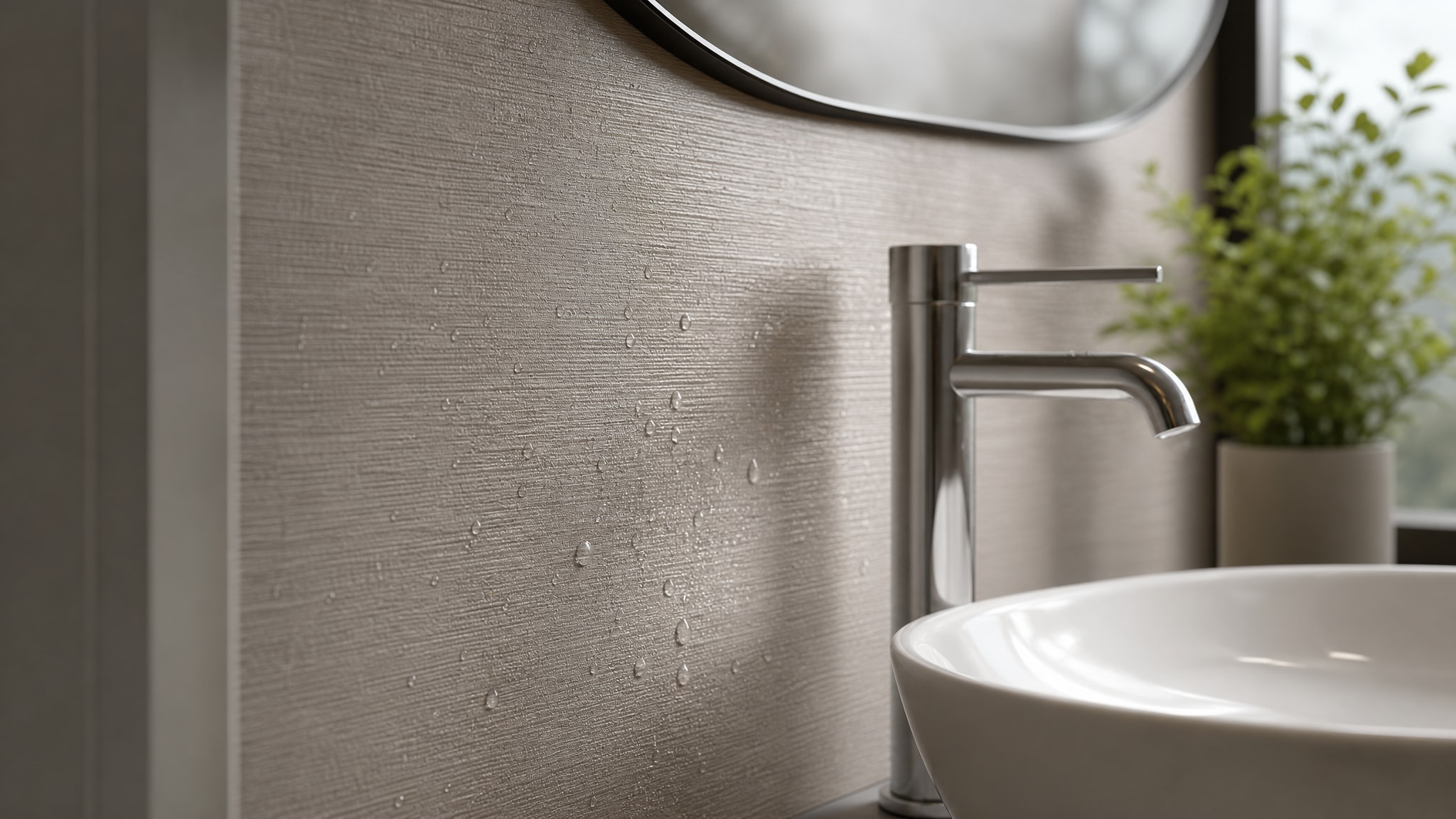
The area extending eighteen inches above and beside your sink takes frequent splashing and toothpaste residue, which calls for a scrubbable, non-porous surface rated for repeated cleaning. Solid vinyl or high-performance washable vinyl works well here, since you can wipe away soap scum and cosmetics without degrading the finish or weakening the adhesive over time.
Seal the bottom edge where the wallpaper meets the countertop with a bead of clear silicone caulk. Otherwise capillary action draws standing water up behind the material, the primary failure point in vanity installations.
Low-Humidity Areas: Powder Rooms and Accent Walls
Powder rooms without showers generate minimal moisture, so you can consider expanded vinyl or even high-quality non-woven materials that would fail in a full bath. These spaces give you a broader range of textures and finishes than the technical grades allow, so you can prioritize tactile appeal over extreme water resistance.
For accent walls positioned away from direct water sources, you can explore statement wall wallpaper ideas that balance visual impact with the durability the room’s actual humidity profile calls for.
Peel and Stick vs. Traditional Paste for Bathrooms
Self-adhesive wallpaper appeals to renters and DIYers, but the adhesive chemistry behaves unpredictably in steamy environments compared with traditional paste. Our testing shows peel-and-stick adhesives frequently lose bond strength above 70% relative humidity unless specifically formulated for wet areas, and many decorative products aren’t.
Adhesion Challenges in High Humidity
Standard peel-and-stick adhesives soften under sustained heat and moisture. Edges lift and bubbles form as the glue reactivates and loses its grip on the wall. Can peel and stick wallpaper withstand bathroom steam and moisture? Only if the manufacturer explicitly rates it for high-humidity use and backs that up with test data, not just marketing language.
Traditional unpasted vinyl wallpaper uses starch-based or synthetic adhesives that cure into a rigid bond unaffected by steam cycles. That gives it mechanical stability pressure-sensitive adhesives simply can’t match in wet environments.
When Removable Wallpaper Actually Works
Removable wallpaper works in powder rooms, guest baths used infrequently, or rental bathrooms where the tenant accepts possible replacement costs as part of temporary customization. Keep it off any wall that gets direct splash exposure, and make sure the room has enough ventilation to keep relative humidity below the adhesive’s failure threshold during peak use.
If you go with peel-and-stick in a bathroom, apply it during the driest season and run the exhaust fan continuously for forty-eight hours afterward, so the adhesive reaches maximum initial bond before it meets any steam.
Top Moisture Resistant Wallpaper Materials for 2027
Picking the best wallpaper material for humidity means weighing performance specs alongside looks, because the most beautiful pattern is worthless if it can’t survive your household’s daily routine. Manufacturing has improved both durability and print quality, so you have viable options across several price points without giving up technical integrity.
Washable Vinyl for Family Bathrooms
Washable vinyl for bathroom walls carries a scrub rating that tells you whether it can take abrasive cleaners and repeated wiping without fading, scratching, or losing its protective topcoat. Look for products labeled “scrubbable” rather than merely “washable”, the latter often means gentle dabbing only, which won’t cut it for grime in a high-traffic family bathroom where fingerprints and splashes pile up daily.
That distinction matters a lot for households with kids or shared facilities, where how often you clean it determines whether the installation lasts two years or ten.
Mold-Inhibiting Treatments and Coatings
Some premium bathroom wallpapers build antimicrobial additives into the vinyl layer or adhesive system to suppress mold growth on the surface itself, adding a layer of defense beyond plain water resistance. These treatments don’t remove the need for proper ventilation or edge sealing, but they buy you margin when humidity spikes unexpectedly from guest visits or seasonal weather shifts.
Check that any antimicrobial claim references EPA registration or equivalent third-party testing. Unverified marketing language is no guarantee against bathroom-specific mold strains.
Design Ideas for Bathroom Accent Walls
Styling moisture-prone spaces means building in protective architectural details that do a job while still looking good. Wainscoting caps, chair rails, or tile borders at splash height create a physical barrier that shields vulnerable wallpaper edges from direct water contact, and that extends service life well past running the material uninterrupted to the floor.
You can coordinate these transitional elements with fixtures and hardware finishes to tie the technical protection to the decorative scheme, so the bathroom reads as intentionally designed rather than defensively patched. For broader inspiration that connects your bathroom refresh to other home projects, browse the home decor category for how consistent material palettes unify disparate spaces.
Installation Prep and Sealing for Longevity
What preparation is required to prevent bathroom wallpaper from molding? Proper bathroom ventilation must hit at least eight air changes per hour to safely support any wallcovering installation. Even the most moisture-resistant material fails if saturated air lingers against the surface after every shower.
Priming and Ventilation Requirements
A mold-inhibiting primer formulated for high-humidity environments gives you a secondary moisture barrier and better adhesive bonding on surfaces that may still hold residual dampness from previous use. Check that your exhaust fan’s CFM rating matches the room’s cubic footage, and upgrade the unit before hanging wallpaper if it doesn’t, since weak airflow undermines every other precaution you take.
Running the fan during showers and for thirty minutes afterward isn’t optional. It protects your investment no matter how good the material is.
Sealing Edges Against Water Intrusion
Every seam, corner, ceiling line, and fixture cutout is a potential entry point for moisture that migrates behind the wallpaper and causes hidden damage over time. Once the wallpaper has fully cured, apply clear silicone caulk along the perimeter edges and around plumbing penetrations, smoothing the bead so it flexes with thermal expansion without cracking or discoloring.
This step takes less than an hour. It’s also what decides whether your installation survives five years or peels within eighteen months, the single most important task after installation.
Common Mistakes When Choosing Bathroom Wallpaper
Focusing only on material ratings while ignoring ventilation specs leads to predictable failures, because no wallpaper can make up for a bathroom that traps steam like a greenhouse. Using non-washable paper in splash zones, choosing expanded vinyl for full-bath applications, and skipping edge sealing are all common errors that come from treating bathroom wallpaper like bedroom or hallway wallpaper.
Our moisture resistant bathroom wallpaper guide walks through these pitfalls in more detail, matching product specs to your actual zone conditions instead of aspirational marketing claims. The best wallpaper for bathroom walls is the one whose technical limits honestly match your space’s realities, not the one whose looks make you overlook the fundamental mismatch.
Frequently Asked Questions
Does wallpaper work in a bathroom?
Yes, but only if you select solid vinyl or specially rated moisture-resistant materials and install them in appropriate zones away from direct shower spray. Proper ventilation achieving at least eight air changes per hour and sealed edges are mandatory companions to material selection for long-term success.
What is the cheapest way to cover bathroom walls?
Paint remains the most economical option for full bathroom coverage, especially when using mold-inhibiting formulations designed for wet environments. If you want pattern, limiting wallpaper to a single accent wall in a low-splash zone reduces material costs while avoiding the expense of tiling or solid surface panels in wet areas.
What color makes a small bathroom look bigger?
Light, cool tones like soft blues, pale greens, and off-whites reflect light and create the perception of expanded space in compact bathrooms. Avoiding high-contrast patterns and choosing smaller-scale repeats also prevents visual clutter that can make tight quarters feel more confined than they actually are.
What are the pros and cons of wallpaper in bathrooms?
Wallpaper adds pattern and personality that paint cannot achieve, and solid vinyl options offer scrubbable durability suitable for family use. The cons include higher upfront cost, mandatory ventilation and sealing requirements, and the risk of premature failure if you choose the wrong material grade for your specific humidity zone.