Leather wallpaper is a distinctive and luxurious wallcovering designed to replicate the rich texture, sophisticated appearance, and tactile quality of genuine leather, offering a unique blend of classic elegance and contemporary design. It is typically crafted from durable materials such as vinyl, non-woven substrates, or sometimes even recycled leather fibers, providing an elevated aesthetic that adds depth and character to any interior space. This specialized wallcovering introduces an unparalleled sense of warmth, opulence, and visual interest, transforming ordinary walls into focal points that evoke a sense of refined craftsmanship and timeless style.
Key takeaways
- Leather wallpaper precisely emulates the texture and appearance of genuine leather, offering an elevated aesthetic without the inherent challenges of real hide.
- Available in diverse materials, including durable vinyl, non-woven fabric, and eco-friendly faux options, it suits various design preferences and functional needs.
- It delivers significant acoustic benefits by absorbing sound, enhancing room comfort, and provides excellent durability and ease of maintenance compared to natural leather.
- Proper measurement and surface preparation are critical for a flawless installation, with both traditional and peel-and-stick options available to accommodate different skill levels.
- Styling leather wallpaper involves careful consideration of complementary textures, colors, and lighting to create harmonious and sophisticated interiors, from classic studies to modern bedrooms.
- Regular, gentle cleaning with a soft, damp cloth is sufficient for maintenance, ensuring the longevity and pristine appearance of the wallcovering.
What Is Leather Wallpaper? Types, Materials, and Origins
Leather wallpaper is a sophisticated wallcovering designed to mimic the aesthetic and tactile qualities of genuine leather, offering a luxurious and distinctive finish for interior spaces. It achieves this effect through specialized manufacturing processes that emboss, print, or layer materials to replicate the grain, texture, and visual depth characteristic of various leather types. While some historical versions incorporated actual leather or parchment, contemporary leather wallpaper primarily utilizes advanced synthetic and natural fiber composites to deliver durability, versatility, and a more accessible price point.
Defining Leather Wallpaper: Beyond the Traditional
Leather wallpaper, at its core, is a decorative material applied to walls that replicates the appearance and often the feel of leather. This replication is typically so precise that it can be difficult to distinguish from genuine leather without close inspection. The term encompasses a broad range of products, from highly realistic vinyl imitations to more artisanal wallcoverings that incorporate recycled leather components or intricate embossing techniques.
Historically, true leather wall coverings were a hallmark of extreme luxury, found in castles and grand estates, involving tanned animal hides meticulously applied to walls. These were rare, incredibly expensive, and required specialized preservation. The modern iteration, however, provides the same visual impact with enhanced practicality.
Primary Materials Used in Modern Leather Wallpaper
The majority of leather wallpapers available today leverage advanced materials to achieve their distinctive look and feel. These materials are chosen for their durability, flexibility, and ability to hold intricate textures.
- Vinyl Leather Wallpaper: This is the most common and versatile type, composed of a vinyl surface layer bonded to a paper or fabric backing. The vinyl allows for deep embossing that convincingly mimics leather grains such as crocodile, ostrich, distressed, or smooth aniline. Vinyl is highly durable, washable, and resistant to moisture, making it suitable for various environments, including high-traffic areas. Its strength and resilience contribute significantly to its popularity in both residential and commercial applications.
- Non-Woven Leather Wallpaper: Constructed from a blend of natural and synthetic fibers, non-woven wallpaper offers a breathable and dimensionally stable option. While it may not always achieve the same depth of texture as heavy-duty vinyl, it is often easier to install and remove, as it does not expand or contract when wet. Non-woven variants can be printed with leather patterns and sometimes feature subtle embossing for a refined, understated texture.
- Faux Leather Wallpaper (PU/PVC): Faux leather, often made from polyurethane (PU) or polyvinyl chloride (PVC), is a synthetic material designed specifically to look and feel like real leather. When used as a wallpaper surface, it offers excellent durability, water resistance, and a consistent finish. These options provide the aesthetic appeal of leather without using animal products, appealing to a broader consumer base.
- Textile-Backed Leather Wallpaper: Some premium wallcoverings feature a textile backing (e.g., cotton or polyester) for added strength and a more luxurious feel. The surface layer, often vinyl or a synthetic blend, is then textured and printed to resemble leather. This construction offers enhanced stability and can be particularly effective for large-scale installations.
- Recycled Leather Fiber Wallpaper: A more specialized and eco-conscious option, this type incorporates actual recycled leather fibers into the wallcovering material. These fibers are often mixed with other binders and then pressed and treated to create sheets that possess a genuine leather aroma and a unique, authentic texture. This variety offers a true connection to the material while being environmentally responsible.
Embossing: The Key to Authentic Texture
Embossing is a manufacturing process that creates a raised or recessed design or texture on a material, such as wallpaper, to mimic the tactile qualities of surfaces like leather. This technique is fundamental to the realistic appearance of leather wallpaper. Manufacturers use specialized rollers or plates to press patterns into the surface material, replicating the natural variations and irregularities found in genuine leather hides.
The quality of embossing directly correlates with the authenticity of the wallpaper’s appearance. High-quality embossing can simulate fine grain, deep creases, pebble finishes, or even exotic animal skins with remarkable precision, adding a crucial three-dimensional element that standard printed patterns cannot achieve.
Origins and Evolution of Wallcoverings Mimicking Leather
The desire to adorn walls with materials of status is ancient. While true leather wall hangings date back centuries, the concept of a more accessible, manufactured alternative gained traction as industrial processes advanced. Early iterations might have involved treated papers or fabrics stained and textured to vaguely resemble leather.
The 19th and 20th centuries saw significant advancements in printing and embossing technologies, allowing for more realistic reproductions. The mid-20th century, with the rise of synthetic materials like vinyl, revolutionized the wallpaper industry. Vinyl allowed for unparalleled durability, washability, and, crucially, the ability to create deep, convincing textures that could mimic a wide array of natural materials, including various types of leather. This innovation made luxurious-looking wall finishes attainable for a broader market, transforming interior design possibilities.
Today, leather wallpaper continues to evolve, with manufacturers focusing on enhanced realism, sustainable materials, and ease of installation, offering sophisticated options for every design sensibility. The Juniper Leather Lux Wallpaper from York Wallcoverings exemplifies this modern approach, showcasing how advanced techniques create a rich, tactile experience that elevates interior spaces.
The Enduring Allure and Benefits of Leather Wallpaper
Leather wallpaper offers a unique combination of aesthetic appeal, functional benefits, and practical advantages that make it a compelling choice for discerning homeowners and designers. Its enduring allure stems from its ability to introduce a sophisticated, tactile dimension to interiors, while its practical benefits address common concerns regarding durability, maintenance, and acoustic performance. This wallcovering elevates spaces by infusing them with warmth, richness, and a sense of refined luxury that is both visually striking and remarkably versatile.
Aesthetic Superiority: Luxury, Texture, and Depth
The primary draw of leather wallpaper lies in its unparalleled aesthetic contribution. It immediately injects a sense of luxury and sophistication into any room, transforming plain walls into statements of design. The textured surface catches light in unique ways, creating shadows and highlights that add depth and visual interest far beyond what flat paint or standard patterned wallpapers can achieve.
- Opulent Visual Impact: Leather wallpaper inherently conveys richness and high-end design. It evokes images of classic libraries, executive offices, or boutique hotel lounges, instantly upgrading the perceived value and sophistication of a space.
- Tactile Dimension: Unlike purely visual wallcoverings, leather wallpaper engages the sense of touch. The embossed textures, whether a smooth, supple finish or a rugged, distressed grain, invite interaction and add another layer to the sensory experience of a room. This tactile quality contributes significantly to a space feeling more “finished” and thoughtfully designed.
- Warmth and Richness: The characteristic colors associated with leather—deep browns, caramels, charcoal grays, and even rich jewel tones—bring an inherent warmth and richness to interiors. These tones create inviting atmospheres, especially when paired with complementary lighting and furnishings.
- Versatility in Style: From vintage and industrial to contemporary and minimalist, leather wallpaper adapts to various design styles. A distressed leather look suits a rustic or industrial loft, while a sleek, fine-grain leather pattern can enhance a modern, minimalist aesthetic. The ability to mimic various leather types (e.g., alligator, ostrich, suede) expands its stylistic range exponentially.
Durability and Longevity: A Smart Investment
One of the most significant practical advantages of modern leather wallpaper, especially vinyl-based options, is its exceptional durability. This makes it a sound investment for areas that experience regular wear and tear.
- Resilience to Wear: High-quality vinyl leather wallpaper is highly resistant to scuffs, scratches, and impacts, outperforming many traditional wallpapers and painted surfaces. This makes it ideal for hallways, children’s rooms, commercial spaces, and other high-traffic areas.
- Washability and Easy Maintenance: Most contemporary leather wallpapers are washable, meaning they can be gently wiped clean with a damp cloth and mild soap. This characteristic is a major advantage over genuine leather, which requires specific cleaning agents and is prone to staining. Easy maintenance ensures the wallcovering retains its pristine appearance for years.
- Fade Resistance: Modern manufacturing techniques incorporate UV-resistant properties into the materials and inks, preventing the wallpaper from fading when exposed to sunlight. This ensures that the rich colors and intricate patterns remain vibrant over time.
- Longevity: Given its durability and ease of care, leather wallpaper boasts a long lifespan. A properly installed, high-quality leather wallcovering can maintain its aesthetic appeal for 10-15 years or even longer, offering excellent value compared to more frequently painted or less robust wall finishes.
Acoustic and Insulative Properties
Beyond aesthetics and durability, leather wallpaper offers practical functional benefits that contribute to the overall comfort of a space.
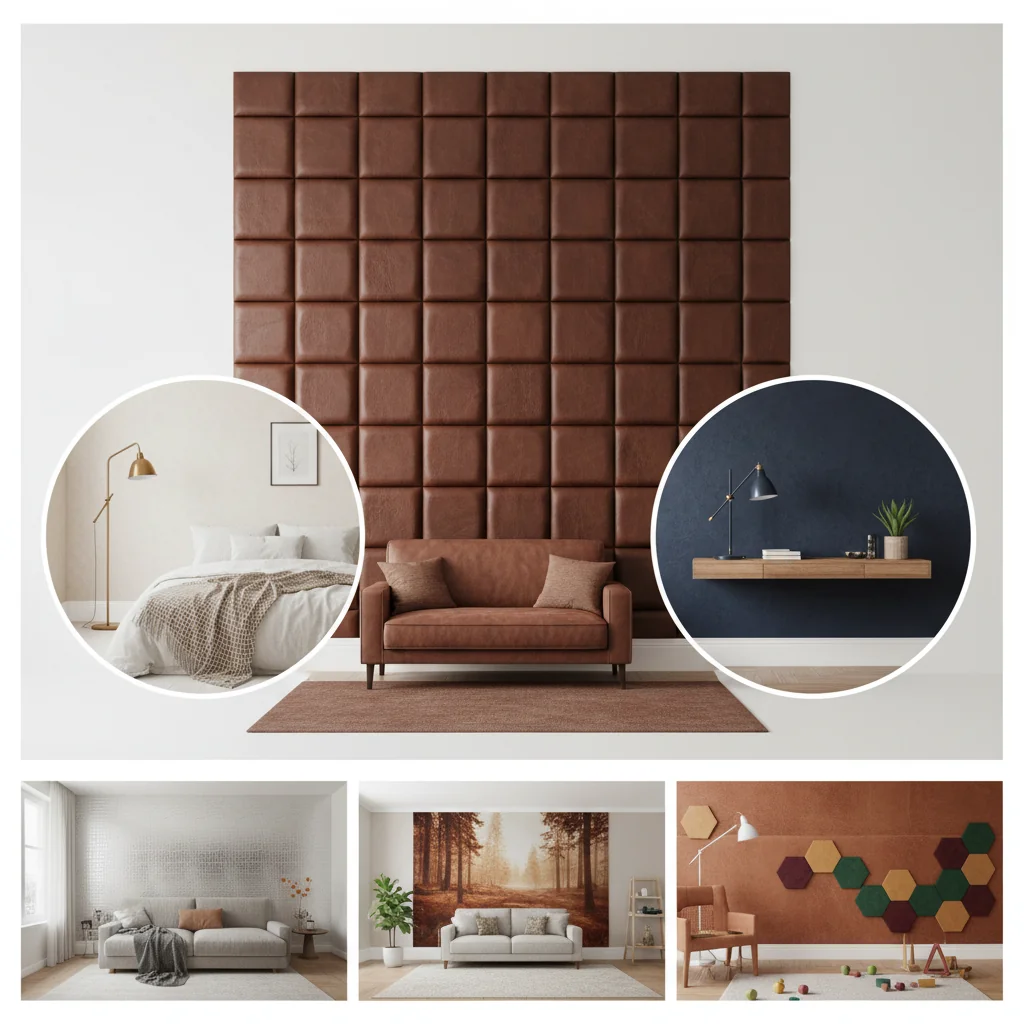
- Sound Absorption: The textured, often multi-layered nature of leather wallpaper, particularly thicker vinyl or textile-backed varieties, provides a degree of sound absorption. This can help to dampen echoes and reduce ambient noise within a room, creating a quieter, more intimate atmosphere. In media rooms, studies, or bedrooms, this acoustic benefit significantly enhances comfort.
- Thermal Insulation: While not a primary insulator, the added layer of wallcovering can offer a marginal increase in thermal resistance. This can contribute to slightly better temperature regulation, making rooms feel cozier in colder months and potentially helping to maintain cooler temperatures in warmer climates by adding a subtle barrier.
Versatility Across Spaces
Leather wallpaper is not confined to a single room type; its adaptability allows it to enhance a wide array of interiors.
- Living Rooms: Create a dramatic accent wall behind a sofa or fireplace, adding warmth and a focal point.
- Bedrooms: Use on a headboard wall for a luxurious, inviting retreat, enhancing a sense of comfort and intimacy.
- Studies and Home Offices: Evoke a classic, distinguished atmosphere, promoting focus and a professional ambiance.
- Dining Rooms: Add sophistication and a touch of formal elegance, making gatherings feel more special.
- Entryways and Hallways: Introduce immediate visual impact and durability in high-traffic zones.
- Commercial Spaces: Ideal for hospitality (boutique hotels, restaurants), retail (high-end boutiques), and corporate offices, where durability and a distinctive aesthetic are paramount.
The combined advantages of luxurious aesthetics, robust durability, practical maintenance, and functional benefits firmly establish leather wallpaper as an outstanding choice for elevating any interior design project.
Choosing the Right Leather Wallpaper for Your Space
Selecting the appropriate leather wallpaper involves a meticulous consideration of several critical factors, including the specific type of leather effect desired, the material composition, color palette, and the intended application. A precise evaluation of these elements ensures the chosen wallcovering harmonizes with existing décor, withstands the demands of its environment, and achieves the desired aesthetic impact. This careful selection process guarantees a sophisticated and enduring addition to any room.
Understanding Leather Effects and Textures
The diversity of leather effects available in wallpaper is vast, each offering a distinct mood and stylistic direction. Understanding these variations is crucial for making an informed choice.
- Smooth/Aniline Leather Effect: This style mimics the look of high-quality, minimally processed leather, featuring a subtle, natural grain and a soft, often matte or semi-gloss finish. It conveys understated elegance and sophistication, suitable for contemporary or minimalist designs where texture is felt rather than overtly seen.
- Distressed/Aged Leather Effect: Characterized by subtle imperfections, faded areas, and a worn-in appearance, distressed leather wallpaper evokes a sense of history, rugged charm, and vintage appeal. It is perfect for industrial, rustic, or eclectic interiors, adding character and warmth.
- Pebbled/Grain Leather Effect: This is one of the most common and versatile textures, replicating the small, raised bumps typical of many processed leathers. It offers a noticeable tactile quality and visual depth, making it a safe and stylish choice for a broad range of applications, from classic to transitional.
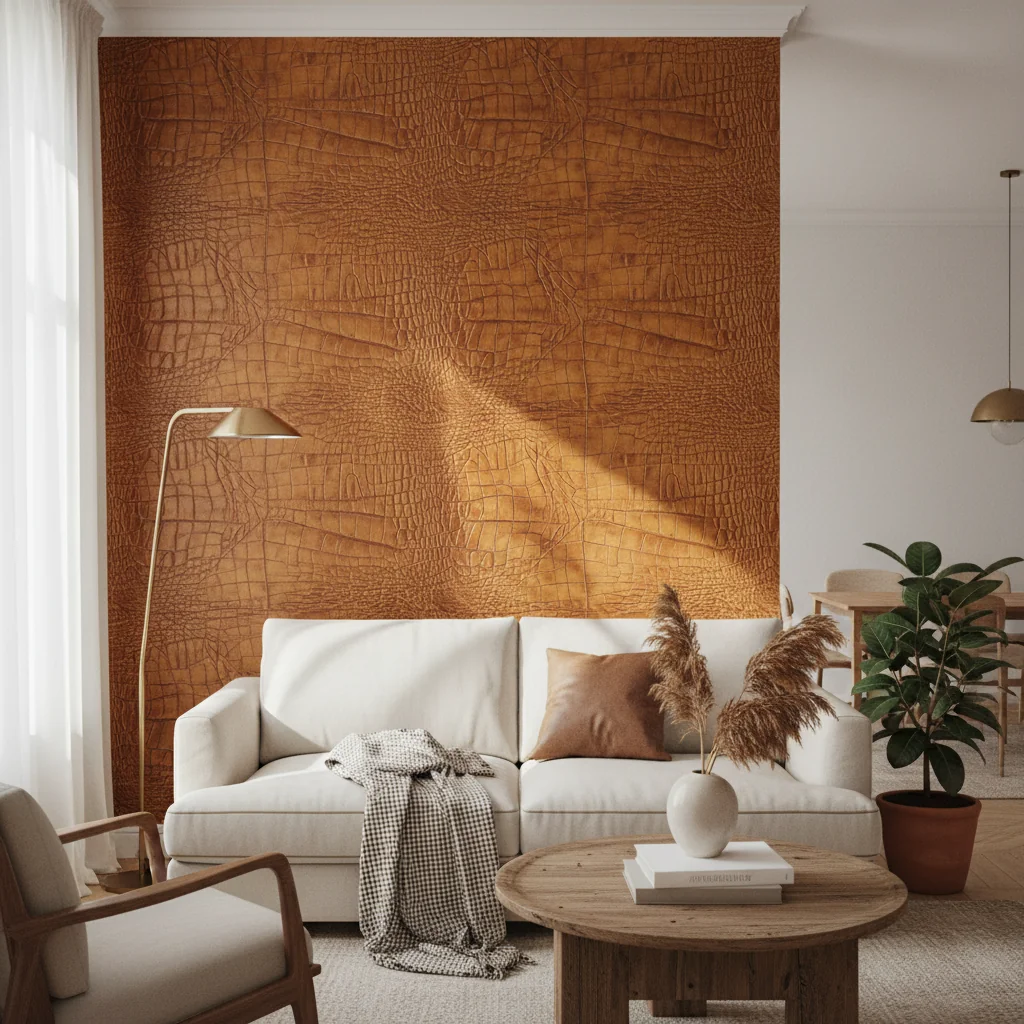
- Exotic Animal Skin Effects: These highly decorative options mimic patterns like crocodile, alligator, ostrich, or snakeskin. They are bold, luxurious, and make a strong design statement, ideal for accent walls, powder rooms, or areas where a dramatic focal point is desired. These textures often feature a higher sheen to emphasize their intricate patterns.
- Suede/Nubuck Effect: Designed to replicate the soft, velvety feel and matte appearance of suede or nubuck leather, these wallpapers often have a flocked or lightly textured surface. They create a plush, sophisticated, and warm atmosphere, excellent for bedrooms, studies, or lounges where comfort and intimacy are paramount.
- Quilted/Tufted Leather Effect: These highly dimensional wallpapers mimic the look of upholstered leather panels, often featuring faux stitching or button tufting. They are ideal for creating a bespoke, architectural feature wall, particularly effective behind a bed or in a formal living area.
Material Considerations: Vinyl vs. Non-Woven vs. Faux Leather
The base material significantly impacts the wallpaper’s durability, appearance, and ease of installation and maintenance.
| Material Type | Durability | Maintenance | Texture Realism | Installation | Ideal Use |
|---|---|---|---|---|---|
| Vinyl (Solid Sheet) | Excellent (high resistance to scratches, moisture) | Very Easy (washable with soap and water) | High (deep, intricate embossing possible) | Moderate (can be stiff, requires paste) | High-traffic areas, bathrooms, kitchens, commercial spaces |
| Vinyl (Fabric-backed) | Excellent (very strong, tear-resistant) | Very Easy (washable) | High (deep embossing) | Moderate (flexible but heavier, requires paste) | Similar to solid sheet vinyl, often for larger areas or where durability is paramount |
| Non-Woven (with vinyl surface) | Good (durable, breathable) | Easy (wipeable) | Good (can achieve refined textures) | Easy (paste-the-wall, dimensionally stable) | Bedrooms, living rooms, dining rooms, DIY projects |
| Faux Leather (PU/PVC, often peel-and-stick) | Good to Excellent (depending on quality) | Easy (wipeable) | High (consistent, often very realistic) | Very Easy (peel-and-stick options) | Accent walls, renter-friendly, quick makeovers, specific design statements |
| Recycled Leather Fiber | Good (unique, natural feel) | Moderate (may require specific care, not typically washable) | Authentic (genuine leather aroma and feel) | Moderate to Difficult (can be less flexible, may require professional) | Luxury accent walls, studies, bespoke interiors where authenticity is key |
Color Palette and Its Impact
The color of your leather wallpaper significantly influences the mood and perceived size of a room.
- Classic Browns and Tans: From rich chocolate to warm caramel, these colors evoke traditional elegance, warmth, and comfort. They are timeless and pair well with a wide range of furniture styles and metallic accents.
- Grays and Charcoals: Offering a modern, sophisticated, and often masculine aesthetic, grays provide a contemporary twist on traditional leather. They work beautifully in minimalist, industrial, or urban-chic interiors.
- Black: A bold and dramatic choice, black leather wallpaper creates a powerful statement of luxury and depth. It is best used sparingly, perhaps on an accent wall, to avoid overwhelming a space, and pairs exquisitely with metallic accents like gold or silver.
- Deep Jewel Tones: Emerald green, sapphire blue, or ruby red leather wallpaper can add unexpected richness and a touch of theatrical flair. These colors are excellent for creating a focal point or adding personality to a more eclectic design.
- Off-Whites and Creams: For a softer, more subtle application, lighter shades provide texture without heavy visual weight. They maintain an airy feel while still introducing the luxurious dimension of leather.
Application and Placement Considerations
Where you intend to use the wallpaper should guide your selection.
- Accent Wall: This is the most common application, allowing for a bold statement without overwhelming the room. Choose a wall that naturally draws the eye, such as behind a bed, sofa, or fireplace.
- Whole Room: For a truly immersive and luxurious experience, covering an entire room can be stunning, especially in smaller, more intimate spaces like a study, powder room, or a formal dining area. Ensure the pattern and color are not too busy to avoid a claustrophobic feel.
- High-Traffic Areas: In hallways, entryways, or commercial settings, prioritize highly durable, washable vinyl options that can withstand frequent contact and cleaning.
- Moisture-Prone Areas: While most leather wallpapers are not recommended for direct water contact, high-quality vinyl can be suitable for powder rooms or well-ventilated bathrooms where moisture exposure is minimal. Always check manufacturer specifications.
- Renter-Friendly Options: If you’re looking for a temporary solution, many faux leather designs are available as peel-and-stick wallpaper, offering easy application and removal without damaging walls.
Considering Scale and Pattern Repeat
The scale of the leather pattern and its repeat are crucial for visual harmony.
- Large-Scale Patterns: Exotic skins or deeply distressed textures with large repeats work best in larger rooms or on accent walls where their detail can be appreciated without feeling overwhelming.
- Small-Scale or Subtle Patterns: Fine grains or subtly pebbled textures with smaller repeats are more versatile and can be used in smaller rooms or on all four walls without making the space feel busy.
By carefully evaluating these factors—from the specific leather effect and material composition to color, application, and pattern scale—you can confidently select a leather wallpaper that precisely meets your design aspirations and functional requirements, creating a truly exceptional interior.
Sizing, Measuring, and Installation Best Practices
Accurate measurement and meticulous surface preparation are paramount for a professional and enduring leather wallpaper installation, regardless of whether you opt for traditional paste-the-wall or convenient peel-and-stick varieties. Proper planning prevents material waste, ensures pattern alignment, and guarantees a seamless finish that enhances the luxurious aesthetic of the wallcovering. Adhering to manufacturer guidelines for both measurement and application is crucial for achieving optimal results and longevity.
Accurate Measurement: The Foundation of a Flawless Finish
Precise measurements are critical to avoid material shortages or excessive waste. Always measure twice and cut once.
- Measure Wall Dimensions: Measure the height and width of each wall section you intend to cover. For walls with architectural features (windows, doors, built-ins), measure the total wall area first, then measure the dimensions of these features separately.
- Calculate Total Square Footage: Multiply the height by the width of each wall to get its square footage. Sum these values for the total square footage requiring coverage.
- Account for Pattern Repeat: Leather wallpapers often have a distinct pattern repeat. This is the vertical distance between where the pattern repeats itself. You must add the pattern repeat length to each strip’s height to ensure proper alignment. For instance, if your wall is 8 feet high and the pattern repeat is 24 inches (2 feet), each cut strip will need to be 10 feet long to allow for matching.
- Add a Waste Factor: Always purchase an additional 15-20% of wallpaper to account for trimming, pattern matching, and potential errors. This buffer is especially important for large-scale patterns or complex room layouts.
- Roll Coverage: Check the square footage coverage specified on the wallpaper roll. Divide your total required square footage by the roll’s coverage to determine the number of rolls needed, rounding up to the nearest whole roll.
For example, a wall 10 feet high and 12 feet wide is 120 sq ft. If the pattern repeat is 2 feet, and you need 5 strips, each strip will be 12 feet long. If a roll covers 50 sq ft, you would need 120 / 50 = 2.4 rolls, rounded up to 3 rolls, plus the waste factor, bringing it to 4 rolls for safety.
Surface Preparation: The Unsung Hero of Wallpaper Installation
A well-prepared surface ensures maximum adhesion, prevents imperfections from showing through, and guarantees a smooth, professional result.
- Clean Walls Thoroughly: Wash walls with a mild detergent solution (like TSP or sugar soap) to remove dirt, grease, and grime. Rinse thoroughly with clean water and allow to dry completely.
- Repair Imperfections: Fill any holes, cracks, or dents with spackle or joint compound. Sand smooth once dry, ensuring the surface is perfectly flat. Even minor bumps can be magnified under textured wallpaper.
- Remove Old Wallpaper: If existing wallpaper is present, it must be removed. Old wallpaper can compromise adhesion and create an uneven surface.
- Prime Walls: Apply a high-quality primer specifically designed for wallpaper. This seals porous surfaces, promotes better adhesion, and makes future removal easier. For dark or highly textured walls, a pigmented primer ensures a uniform base color and prevents bleed-through. Allow the primer to dry completely according to manufacturer instructions, typically 24 hours.
- Ensure Smoothness: Leather wallpaper, especially those with a subtle grain, will show underlying wall imperfections. Invest time in achieving a perfectly smooth and clean substrate.
Installation Methods: Traditional vs. Peel-and-Stick
The installation method depends on the type of leather wallpaper chosen.
Traditional (Paste-the-Wall or Paste-the-Paper)
Most durable leather wallpapers, especially heavy vinyl or fabric-backed options, require traditional paste application.
- Gather Tools: You will need wallpaper paste (specific to your wallpaper type), a plumb bob or level, a measuring tape, utility knife with fresh blades, smoothing brush or plastic smoother, seam roller, sponge, and a large, clean work surface.
- Cut Strips: Cut your pre-measured strips, adding 4-6 inches to the top and bottom for trimming. Number the back of each strip lightly to maintain the correct hanging order.
- Apply Paste: Depending on the wallpaper, either apply paste directly to the wall (paste-the-wall) or to the back of the wallpaper strip (paste-the-paper). If pasting the paper, “book” the strip (fold pasted sides together) and allow it to relax for 5-10 minutes (booking time) as per manufacturer instructions.
- Hang First Strip: Using a plumb line as your guide, hang the first strip from the ceiling down, allowing overhang at the top and bottom. Smooth out bubbles with your brush or smoother, working from the center outwards.
- Match Pattern and Hang Subsequent Strips: Align the pattern of the next strip precisely with the first. Butt seams together tightly; do not overlap. Continue hanging strips, ensuring pattern match and smooth application.
- Trim Excess: Once a section is hung, use a sharp utility knife and a straight edge to trim excess wallpaper at the ceiling, baseboards, and around windows/doors.
- Clean Up: Immediately wipe off any excess paste from seams and the wallpaper surface with a damp sponge.
Peel-and-Stick (Self-Adhesive)
Ideal for DIY enthusiasts and renters, peel-and-stick leather wallpaper offers a simpler, cleaner installation process.
- Gather Tools: You will need a measuring tape, utility knife with fresh blades, smoothing tool (squeegee), and a level.
- Cut Strips: Measure and cut strips, adding 2-4 inches to the top and bottom for trimming.
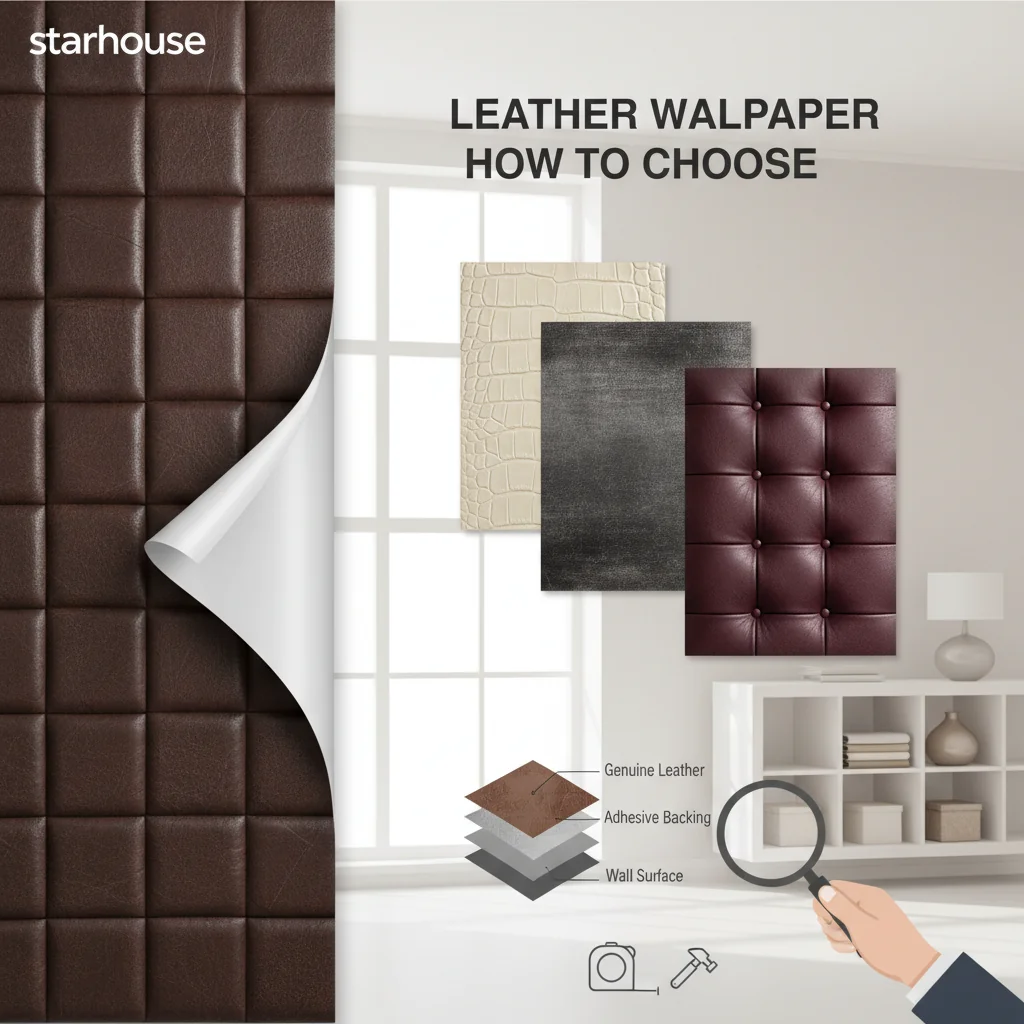
- Peel and Align: Starting at the top corner, peel back only a few inches of the backing paper. Align the wallpaper carefully with your plumb line, ensuring it is level.
- Smooth and Adhere: Slowly peel more of the backing paper away while simultaneously smoothing the wallpaper onto the wall with your squeegee, working downwards and outwards to remove air bubbles.
- Match Pattern: For subsequent strips, carefully align the pattern edge-to-edge. If an overlap is recommended (some brands suggest a slight overlap), follow those instructions precisely.
- Trim Excess: Use a sharp utility knife and straight edge to trim excess at the ceiling, baseboards, and around obstacles.
- Address Bubbles: If bubbles appear, gently lift the wallpaper and re-smooth, or use a pin to prick small bubbles and press out the air.
Important Considerations for Leather Wallpaper Installation
- Temperature and Humidity: Ensure the room temperature is between 65-75°F (18-24°C) and humidity is moderate. Extreme conditions can affect paste drying times and wallpaper adhesion.
- Working with Patterns: Leather patterns, especially large or complex ones, require extra care in matching. Dry-hang a few strips first to visualize the match before applying paste or peeling the backing.
- Seams: With textured wallpapers, seams can be more noticeable. Use a seam roller gently to press edges down, but avoid excessive pressure that could flatten the texture.
- Professional Installation: For intricate patterns, large rooms, or if you lack experience, consider hiring a professional wallpaper installer. Their expertise guarantees a flawless, long-lasting finish, especially with premium, high-cost leather wallcoverings.
By dedicating attention to accurate measurements, thorough surface preparation, and precise application techniques, your leather wallpaper installation will achieve a professional, enduring, and stunning result.
Care, Maintenance, and Longevity
Proper care and routine maintenance are essential for preserving the luxurious appearance and extending the lifespan of your leather wallpaper, ensuring its sophisticated aesthetic remains intact for years. The specific cleaning regimen largely depends on the wallpaper’s material composition, with vinyl-based options generally offering the easiest upkeep. Adhering to the manufacturer’s cleaning instructions is paramount to prevent damage and maintain the integrity of the wallcovering.
Routine Cleaning for Everyday Upkeep
Most modern leather wallpapers are designed for ease of care, making routine maintenance straightforward.
- Dusting: Regularly dust your leather wallpaper with a soft, dry cloth or a feather duster. This prevents dust accumulation in the textured crevices, which can dull the appearance over time. For deeper textures, a soft brush attachment on a vacuum cleaner can be effective, used gently.
- Spot Cleaning (Vinyl/Washable Types): For minor marks or spills on vinyl or washable non-woven leather wallpaper, immediately blot the area with a clean, soft, damp cloth. Use a very mild soap solution (e.g., a few drops of dish soap in water) for stubborn spots. Gently wipe the area, then rinse with a clean, damp cloth to remove any soap residue. Pat dry with a clean, soft towel.
- Avoid Harsh Cleaners: Never use abrasive cleaners, scouring pads, bleach, or strong chemical solvents on any type of leather wallpaper. These can damage the surface, fade colors, or compromise the texture and finish.
- Test in an Inconspicuous Area: Before applying any cleaning solution to a visible area, always test it on a hidden spot (e.g., behind furniture or near the baseboard) to ensure it does not cause discoloration or damage.
Special Considerations for Different Materials
The care instructions can vary based on the wallpaper’s specific material composition.
- Vinyl Leather Wallpaper: These are generally the most durable and easiest to clean. They are often classified as “scrubbable” or “washable,” meaning they can withstand more rigorous cleaning with mild soap and water. However, still avoid aggressive scrubbing that could damage the embossed texture.
- Non-Woven Leather Wallpaper: Many non-woven varieties with a vinyl or acrylic top layer are wipeable. Follow the same spot-cleaning guidelines as for vinyl, being mindful that they might be less resistant to heavy scrubbing.
- Faux Leather (PU/PVC) Wallpaper: Similar to vinyl, these are typically very easy to clean with a damp cloth and mild detergent. Their synthetic nature often makes them quite resilient to spills.
- Recycled Leather Fiber Wallpaper: This type requires the most delicate care. It is generally not washable and should only be dusted or very lightly wiped with a barely damp cloth for surface dirt. Liquid spills should be blotted immediately without rubbing. Consult the manufacturer’s specific guidelines, as some may recommend specialized leather cleaning products designed for wall applications.
- Suede/Nubuck Effect Wallpaper: These wallpapers, often with a flocked finish, are typically not washable. Dusting with a very soft brush or vacuum cleaner attachment is the preferred method. Avoid any liquids, as they can permanently stain or flatten the delicate texture.
Protecting Against Damage
Proactive measures can significantly extend the life and beauty of your leather wallpaper.
- Sunlight Exposure: While modern wallpapers are often UV-resistant, prolonged, direct exposure to intense sunlight can still cause fading over many years. Consider using curtains, blinds, or UV-filtering window films on windows facing direct sun to protect your investment.
- Humidity Control: Maintain consistent indoor humidity levels. Extreme fluctuations can affect the adhesive bond and potentially cause seams to lift or the wallpaper to buckle. A relative humidity between 30-50% is ideal for most wallcoverings.
- Avoid Abrasions: Be mindful of furniture edges, moving objects, or pets that could scratch or tear the wallpaper. Place furniture a few inches away from walls if possible, or use felt pads on items that might rub against the surface.
- Ventilation: In rooms like bathrooms where leather wallpaper might be used, ensure adequate ventilation to prevent excessive moisture buildup, which can lead to mold or mildew, especially on the backing.
Longevity Expectations
With proper installation and consistent maintenance, high-quality leather wallpaper can last for an impressive duration.
- Vinyl and Faux Leather: These types can easily last 10-15 years, and often longer, maintaining their appearance and structural integrity. Their robust nature makes them a durable choice for long-term design.
- Non-Woven: While also durable, their lifespan might be slightly shorter than heavy-duty vinyl, typically 7-12 years, largely due to their less robust surface layer in some cases.
- Recycled Leather Fiber: The longevity of these more specialized products can vary. With careful handling and specific care, they can also last many years, but they are generally less forgiving of physical abuse or improper cleaning.
By committing to these care and maintenance practices, your leather wallpaper will continue to exude its sophisticated charm and tactile luxury, offering lasting beauty and value to your home.
Styling and Pairing Leather Wallpaper for Refined Interiors
Styling leather wallpaper effectively requires a thoughtful approach to complementary textures, color palettes, and lighting, ensuring the wallcovering enhances the overall aesthetic rather than overpowering it. Its inherent richness and tactile quality position it as a powerful design element that can anchor a room’s theme, create dramatic focal points, or add subtle depth when paired judiciously with other materials. The goal is to achieve a balanced and sophisticated interior that leverages the unique character of leather wallpaper.
Creating Focal Points and Accent Walls
Leather wallpaper excels as an accent, drawing the eye and defining specific zones within a room.
- Behind the Bed: An accent wall behind a headboard in a bedroom creates a luxurious, inviting retreat. A deep charcoal or rich brown leather wallpaper with a subtle grain can provide a sophisticated backdrop, especially when paired with soft linens and layered textiles.
- Fireplace Wall: Elevate a living room by covering the wall surrounding a fireplace with a distressed or pebbled leather wallpaper. This adds warmth, texture, and a sense of history, complementing traditional or industrial-chic décor.
- Dining Room Drama: In a dining room, a bold leather wallpaper—perhaps an exotic skin print or a deep jewel-toned hue—on one wall can add a dramatic touch, making the space feel more formal and elegant for entertaining.
- Entryway Statement: The first impression of your home can be significantly enhanced with a leather wallpaper accent wall in the entryway. It introduces texture and sophistication immediately, setting the tone for the rest of the house.
- Home Office/Study: A wall covered in a classic smooth or aged leather effect wallpaper can create a distinguished and focused environment, evoking the feel of a traditional library or executive suite.
Complementary Textures and Materials
The key to successful styling with leather wallpaper is balancing its strong texture with other materials that provide contrast and harmony.
- Soft Textiles: Pair leather wallpaper with plush fabrics like velvet, chenille, wool, or thick linen. The softness of these textiles provides a beautiful contrast to the structured texture of leather, enhancing comfort and luxury. Consider velvet sofas, linen drapes, or cashmere throws.
- Natural Woods: Wood, especially darker or richly grained varieties like walnut, mahogany, or reclaimed oak, complements leather wallpaper exceptionally well. The organic warmth of wood furniture, flooring, or architectural details creates a cohesive and grounded aesthetic.
- Metallics: Introduce metallic accents in gold, brass, bronze, or even matte black. These elements add a touch of glamour and shine that beautifully contrasts with the earthy, matte, or semi-gloss finish of leather wallpaper. Think metallic light fixtures, picture frames, or decorative objects.
- Stone and Concrete: For an industrial or modern aesthetic, pair leather wallpaper with raw materials like exposed brick, polished concrete floors, or stone countertops. The combination creates a sophisticated, urban edge.
- Glass and Mirror: These reflective surfaces add lightness and expand the perception of space, preventing a room with dark or textured leather wallpaper from feeling too heavy. Glass tables, mirrored accents, or sleek glass light fixtures work well.
- Ceramics and Pottery: Hand-thrown pottery, sculptural ceramics, or decorative vases can introduce an artisanal, handcrafted element that harmonizes with the natural-inspired texture of leather.
Color Palettes and Schemes
Choosing the right color scheme is vital to integrate leather wallpaper seamlessly into your design.
- Monochromatic Elegance: If using a brown leather wallpaper, choose varying shades of brown, tan, and cream for furniture, textiles, and accessories. This creates a cohesive, sophisticated, and calming environment.
- Earthy Neutrals: Pair deep brown or gray leather wallpaper with a palette of other neutrals like beige, taupe, off-white, and soft greens. This creates a serene, grounded, and timeless appeal.
- Dramatic Contrasts: For a bold statement, pair dark leather wallpaper (charcoal, black) with crisp whites, bright metallics, or vibrant jewel-toned accents (emerald green, sapphire blue) in cushions or artwork.
- Warm and Inviting: Combine caramel or cognac-toned leather wallpaper with warm wood tones, brass accents, and textiles in creams, rusts, or deep oranges for an exceptionally cozy and inviting atmosphere.
- Cool Sophistication: Gray or black leather wallpaper can be paired with cool-toned furnishings, such as silver metallics, deep blues, or cool greens, to create a sleek, modern, and sophisticated space.
Lighting Strategies to Enhance Texture
Lighting plays a crucial role in highlighting the texture and depth of leather wallpaper.
- Layered Lighting: Implement a mix of ambient, task, and accent lighting. Ambient lighting provides overall illumination, while task lighting supports activities. Accent lighting is key for leather wallpaper.
- Wall Washers: Install recessed or track lighting that “washes” light down the textured wall. This creates dramatic shadows and highlights, emphasizing the three-dimensional quality of the leather effect.
- Sconces and Picture Lights: Sconces placed strategically along a leather accent wall, or picture lights above artwork, can draw attention to specific areas and enhance the tactile quality.
- Dimmable Fixtures: Use dimmers on all lighting fixtures to control the intensity and mood. Lower light levels can make the texture appear richer and more intimate, while brighter light can showcase its detail.
- Natural Light: Maximize natural light where possible. The changing light throughout the day will reveal different nuances of the leather texture, adding dynamic interest to the room.
Starhouse is committed to helping you curate spaces that reflect your unique style and needs. While our comprehensive collection is still being finalized, we invite you to tell us what you’re looking for in wallcoverings and home décor. Your input directly shapes our offerings, ensuring we bring you the finest selections for your sophisticated interiors.
Furniture Selection and Placement
The furniture you choose and how you arrange it can either complement or compete with leather wallpaper.
- Complementary Styles: If your leather wallpaper is distressed, consider vintage or industrial furniture. For a sleek, smooth leather effect, opt for modern, clean-lined pieces.
- Scale and Proportion: Ensure furniture is proportionate to the room and the wallcovering. Large, heavy furniture might overwhelm a small room with bold leather wallpaper, while delicate pieces might get lost.
- Avoid Over-Accessorizing: Leather wallpaper is a statement in itself. Keep accessories minimal and well-chosen to avoid clutter. Let the wallcovering be a star, not just another element in a busy space.
- Texture Repetition (Subtle): While contrasting textures are vital, a very subtle repetition of the leather texture in an upholstered armchair or a few decorative leather-bound books can create a cohesive, layered look without being redundant.
By thoughtfully integrating these styling principles, your leather wallpaper will not merely be a wall covering but a foundational element that defines and elevates the entire design narrative of your home.
Current Trends and Future Outlook in Leather Wallcoverings
The current landscape of leather wallpaper trends is marked by a strong emphasis on sophisticated textures, expanded color palettes beyond traditional browns, and a growing demand for sustainable and high-performance materials. Designers are increasingly leveraging leather wallcoverings to create immersive, tactile environments that blend classic luxury with contemporary sensibilities. The future outlook points toward continued innovation in eco-friendly production, enhanced customization options, and even more realistic digital printing techniques.
Dominant Trends in Leather Wallpaper Design (2024-2026)
- Subtle Sophistication: While exotic prints remain popular for accent walls, there’s a significant shift towards more refined, understated leather textures. Fine grain, soft pebble, and buttery smooth finishes in muted tones are gaining prominence, offering luxury without overt ostentation. These designs provide a tactile backdrop that complements a minimalist or transitional aesthetic.
- Expanded Color Palettes: Beyond traditional browns and tans, designers are embracing a broader spectrum of colors. Deep charcoal grays, rich forest greens, muted blues, and even sophisticated off-whites are increasingly popular. These colors allow leather wallpaper to integrate seamlessly into diverse design schemes, from industrial chic to serene contemporary.
- Distressed and Aged Effects: The appeal of vintage and reclaimed aesthetics continues to drive demand for distressed, aged, and weathered leather effects. These designs add character, depth, and a sense of history to a space, perfectly suiting industrial, rustic, or eclectic interiors. They often feature subtle variations in color and texture to simulate years of natural wear.
- Large-Scale Patterns and Panels: Instead of small, repetitive patterns, there is a trend towards larger-scale leather effects that mimic oversized hide panels or even quilted leather upholstery. This creates a dramatic, architectural statement, often used on a single accent wall to define a zone or elevate a feature.
- Matte and Low-Sheen Finishes: While some exotic prints still feature a gloss, many contemporary leather wallpapers are opting for matte or very low-sheen finishes. This contributes to a more authentic, natural leather appearance and reduces glare, creating a softer, more inviting ambiance.
- Textural Layering: Designers are using leather wallpaper as a base layer for rich textural compositions. It is paired with other tactile elements like chunky knits, velvet furniture, rough-hewn wood, and natural stone to create multi-sensory, deeply comfortable spaces.
According to Elle Decor’s selection of best faux leather wallpapers, the focus is on achieving a luxurious touch through various faux options and high-end buys, highlighting the breadth of styles available to consumers today.
Innovations Driving the Future of Leather Wallcoverings
The future of leather wallpaper will be shaped by ongoing advancements in materials science, digital printing, and sustainable practices.
- Enhanced Realism through Digital Printing: As digital printing technology advances, the ability to replicate the nuances of genuine leather—including its subtle imperfections, variations in grain, and natural patina—will become even more precise. This will lead to hyper-realistic designs that are virtually indistinguishable from actual leather.
- Sustainable Materials: The demand for environmentally responsible products will continue to grow. This includes more widespread use of recycled leather fibers, bio-based vinyl alternatives, and non-toxic, VOC-free materials in the production of leather wallpaper. Manufacturers will focus on closed-loop manufacturing processes and end-of-life recyclability.
- Smart Wallcoverings: While still nascent, the integration of smart technologies could eventually extend to wallcoverings. This might include wallpapers with subtle integrated lighting, acoustic panels, or even climate-regulating properties, adding functional benefits beyond aesthetics.
- Customization and Personalization: Advances in digital printing will make bespoke leather wallpaper designs more accessible. Customers may be able to specify unique patterns, colors, or even incorporate personalized motifs into their leather-effect wallcoverings, allowing for truly unique interior statements.
- Performance Enhancements: Future leather wallpapers will likely feature even greater durability, stain resistance, and ease of cleaning, pushing the boundaries of what is possible for high-traffic and specialized environments. Anti-microbial properties and enhanced fire ratings will also become more standard.
Leather wallpaper is not merely a passing trend but a continually evolving category within wallcoverings, driven by a timeless appeal for luxury, texture, and refined design. Its future promises even greater realism, sustainability, and functional integration, cementing its place as a sophisticated choice for discerning interiors.
Common Mistakes to Avoid When Using Leather Wallpaper
Avoiding common pitfalls during the selection and installation of leather wallpaper is crucial for achieving a professional, long-lasting, and aesthetically pleasing result. Errors in measurement, inadequate surface preparation, or inappropriate styling can diminish the luxurious impact and lead to costly rectifications. Careful planning and adherence to best practices are essential to leverage the full potential of this distinctive wallcovering.
1. Underestimating the Impact of Texture
Leather wallpaper inherently possesses a strong visual and tactile presence due to its texture. A common mistake is to treat it like a flat, patterned wallpaper without accounting for its three-dimensional quality.
- Overuse in Small Spaces: Applying a heavily textured or dark leather wallpaper to all four walls of a small room can make the space feel confined and overwhelming.
- Correction: In smaller rooms, use leather wallpaper as a single accent wall. For all-over application, opt for lighter colors and subtle, fine-grain textures.
- Clashing with Other Textures: Pairing leather wallpaper with too many other dominant textures (e.g., heavily patterned rugs, ornate furniture, busy drapes) creates visual chaos.
- Correction: Balance the leather wallpaper with smoother, plainer textiles and furnishings. Let the leather be the primary textural statement.
2. Neglecting Proper Surface Preparation
The quality of the wall surface directly impacts the final appearance of the wallpaper. Skipping steps here leads to visible flaws.
- Unfilled Imperfections: Small holes, bumps, or cracks on the wall will be magnified and clearly visible through the wallpaper, especially under certain lighting conditions.
- Correction: Meticulously fill all imperfections, sand smooth, and clean the wall thoroughly before priming. A perfectly smooth substrate is non-negotiable.
- Skipping Primer: Failing to prime the walls can lead to poor adhesion, difficulty repositioning strips, and future removal issues. On porous walls, it can also lead to uneven absorption of paste.
- Correction: Always apply a high-quality, oil-based or acrylic wallpaper primer. This creates a uniform surface for adhesion and protects the wall.
3. Inaccurate Measurement and Insufficient Material
Running out of wallpaper mid-project or having noticeable seams due to poor pattern matching is a frustrating and avoidable error.
- Under-ordering: Not accounting for pattern repeat, trimming, and potential errors leads to insufficient material. Dye lots can vary, making it difficult to find an exact match later.
- Correction: Always measure meticulously, account for pattern repeat, and add a minimum of 15-20% extra for waste and contingency. Purchase all rolls from the same dye lot.
- Ignoring Pattern Repeat: Cutting strips without factoring in the pattern repeat results in mismatched designs and an unprofessional look.
- Correction: Understand the pattern repeat of your chosen wallpaper and add this length to each strip when cutting to ensure seamless alignment.
4. Improper Installation Techniques
Even with the right materials, poor installation can ruin the aesthetic.
- Crooked First Strip: If the first strip is not perfectly plumb, subsequent strips will also be off, leading to a visibly crooked installation.
- Correction: Use a plumb bob or a laser level to establish a perfectly vertical line for your first strip. This sets the foundation for the entire project.
- Overlapping or Gapping Seams: Improperly butted seams create visible lines or gaps, detracting from the seamless look of leather.
- Correction: For most wallpapers, seams should be butt-joined tightly. Practice before applying paste, and use a seam roller gently to secure edges without flattening the texture.
- Air Bubbles and Wrinkles: Trapped air or wrinkles disrupt the smooth appearance of the wallpaper.
- Correction: Smooth each strip from the center outwards and from top to bottom using a smoothing tool or brush. For stubborn bubbles, a small pinprick and re-smoothing can help.
5. Inappropriate Lighting
Lighting can either enhance or detract from the beauty of leather wallpaper.
- Flat, Undramatic Lighting: Without proper lighting, the texture and depth of leather wallpaper can appear flat and uninteresting.
- Correction: Implement layered lighting. Use wall washers, sconces, or track lighting to create grazing light that highlights the texture and creates dramatic shadows. Dimmers are essential for mood control.
6. Neglecting Manufacturer’s Instructions
Each wallpaper has specific requirements for installation and care.
- Ignoring Paste Recommendations: Using the wrong type of adhesive can lead to poor adhesion, lifting seams, or difficulty removing the wallpaper in the future.
- Correction: Always use the specific type of wallpaper paste recommended by the manufacturer for your chosen wallcovering.
- Improper Cleaning: Using harsh chemicals or abrasive tools on non-washable leather wallpaper can cause irreversible damage to the finish or texture.
- Correction: Adhere strictly to the manufacturer’s cleaning and maintenance guidelines to preserve the wallpaper’s appearance and longevity.
By being aware of these common mistakes and actively taking steps to prevent them, you ensure that your leather wallpaper project is a success, delivering lasting beauty and sophistication to your home.
Sources
- York Wallcoverings. Juniper Leather Lux Wallpaper | Ronald Redding Designs | yorkwallcoverings.com
- 15 Leather Wallpapers to Bring Luxury and Texture to Your Space | elledecor.com
Frequently Asked Questions About Leather Wallpaper
What is leather wallpaper made of?
Leather wallpaper is primarily made from durable synthetic materials such as vinyl (solid sheet or fabric-backed) or non-woven substrates, which are then embossed and printed to replicate the texture and appearance of genuine leather. Some specialized options may incorporate recycled leather fibers for a more authentic material composition.
Is leather wallpaper durable?
Yes, modern leather wallpaper, particularly vinyl-based varieties, is exceptionally durable. It offers high resistance to scuffs, tears, and moisture, making it a robust choice for high-traffic areas and ensuring a long lifespan of 10-15 years or more with proper care.
Can leather wallpaper be used in bathrooms or kitchens?
High-quality vinyl leather wallpaper can be used in well-ventilated powder rooms or kitchens where direct water exposure is minimal. Its moisture resistance makes it suitable for these environments, but it is not recommended for areas with high humidity or direct splashing like inside a shower enclosure.
How do I clean leather wallpaper?
Most vinyl or faux leather wallpapers are washable and can be cleaned by gently wiping with a soft, damp cloth and a mild soap solution. Always avoid abrasive cleaners or harsh chemicals, and test any cleaning solution on an inconspicuous area first to prevent damage.
Is leather wallpaper easy to install?
Installation ease varies by type. Peel-and-stick leather wallpaper is generally easy for DIY enthusiasts, while traditional paste-the-wall or paste-the-paper options require more precision and experience. Proper surface preparation is critical for all types to ensure a flawless finish.
What styles does leather wallpaper complement?
Leather wallpaper is remarkably versatile, complementing a wide range of interior design styles including traditional, industrial, modern, rustic, eclectic, and transitional. Its varied textures and colors allow it to adapt from a classic library aesthetic to a sleek, contemporary urban loft.
Does leather wallpaper have acoustic benefits?
Yes, the textured and often multi-layered composition of leather wallpaper, particularly thicker vinyl or fabric-backed options, provides a degree of sound absorption. This can help reduce echoes and ambient noise within a room, contributing to a quieter and more comfortable environment.
Conclusion
Leather wallpaper stands as a testament to sophisticated design, offering an unparalleled blend of luxurious aesthetics, tactile depth, and practical durability for contemporary interiors. From its diverse range of textures and colors to its significant functional benefits like acoustic dampening and ease of maintenance, this wallcovering provides a powerful means to elevate any space. It transforms ordinary walls into focal points of refined elegance, creating environments that are both visually captivating and exceptionally comfortable.
Whether you envision a dramatic accent wall in a living room, a distinguished backdrop for a home office, or a complete immersive experience in a formal dining area, leather wallpaper delivers a distinctive character that resonates with discerning taste. Its adaptability across various design styles, coupled with ongoing innovations in materials and realism, ensures its enduring relevance in the world of interior décor. By carefully considering the type, material, and application, and by adhering to best practices in installation and care, you can unlock the full potential of this remarkable design element.
As you embark on your journey to curate a space that truly reflects your unique vision, Starhouse is dedicated to providing exquisite solutions. Our collection is meticulously crafted to meet the highest standards of design and quality. We invite you to tell us what you’re looking for in your home & décor selections and be among the first to explore our upcoming curated offerings. Share your aspirations, and let us help you create an interior that is not just beautiful, but truly exceptional.