Paisley wallpaper, characterized by its distinctive curvilinear teardrop motif, offers a timeless and sophisticated design element that can transform any interior space. This enduring pattern, often referred to as a “boteh” or “buta,” features an intricate, swirling botanical or floral design that has captivated designers and homeowners for centuries, providing a rich tapestry of history and aesthetic versatility. Its complex yet fluid lines introduce a dynamic visual interest, making it a powerful statement piece or a subtle backdrop, depending on its scale and coloration. Whether rendered in vibrant hues or subdued monochromes, paisley wallpaper imbues rooms with an unparalleled sense of depth, character, and refined elegance, seamlessly blending historical grandeur with contemporary design sensibilities.
Key takeaways
- Paisley wallpaper features the distinctive boteh motif, a curvilinear teardrop shape with intricate detailing, originating from ancient Persia and India.
- Its design versatility allows for application in various interior styles, from traditional and bohemian to modern and eclectic, depending on the pattern’s scale, color, and density.
- Wallpaper materials, including non-woven, vinyl, and peel-and-stick options, dictate durability, ease of installation, and maintenance requirements, influencing long-term aesthetic and functional performance.
- Accurate measurement and consideration of pattern repeat are critical for seamless installation and minimizing material waste, particularly with large-scale or complex paisley designs.
- Current trends for paisley wallpaper include updated color palettes, metallic accents, and large-scale, sometimes abstract, interpretations that fuse classic elegance with contemporary design.
- Thoughtful styling, pairing paisley wallpaper with complementary furnishings, textiles, and lighting, ensures a cohesive and sophisticated interior aesthetic.
What is Paisley Wallpaper? A Timeless Motif Defined
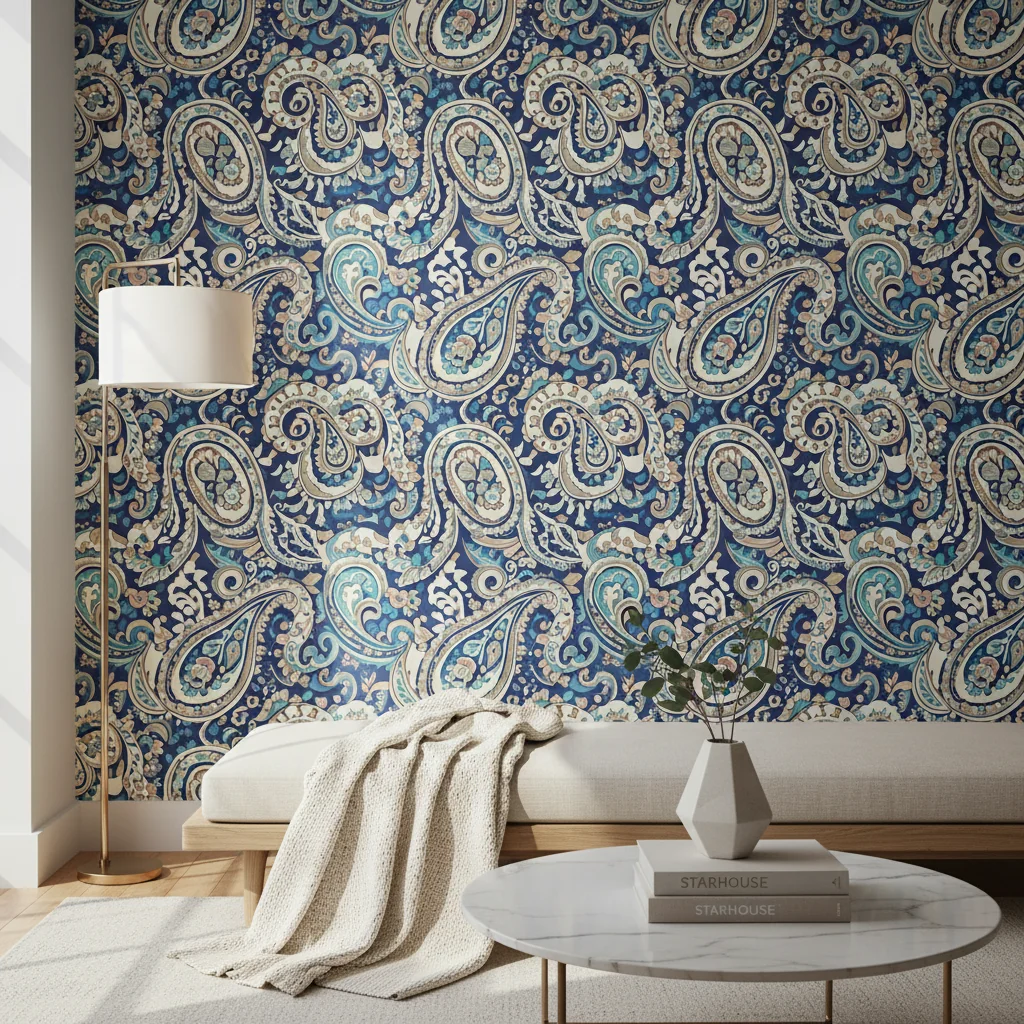
Paisley wallpaper features the distinctive curvilinear teardrop or kidney-shaped motif known as the boteh or buta, a design element characterized by its intricate, swirling internal patterns that evoke a sense of organic movement and opulent detail. This iconic pattern transcends mere decoration, embodying a rich cultural history and providing a sophisticated visual anchor in diverse interior settings. Its enduring appeal lies in its ability to combine complexity with fluidity, offering a visual texture that is both captivating and harmonious.
The paisley motif boasts a profound historical lineage, tracing its origins back to ancient Persia (modern-day Iran) around 2000 BCE. There, it was known as the “boteh,” meaning “cluster of leaves” or “flower bud,” symbolizing fertility, life, and eternity. Early renditions were often woven into luxurious textiles, particularly cashmere shawls, which were highly prized by royalty and nobility.
From Persia, the design migrated to India, where it flourished, becoming an integral part of traditional Indian textiles, especially in the Kashmir region. Kashmiri shawls, renowned for their intricate paisley patterns, became highly sought after by European travelers and merchants. These exquisite textiles made their way to Europe in the 17th and 18th centuries, igniting a fascination with Eastern aesthetics.
The pattern gained immense popularity in the Western world during the 19th century, particularly in Great Britain. The town of Paisley in Scotland became a prominent center for textile production, mass-producing these patterned shawls using Jacquard looms. This industrialization made the design more accessible and, in turn, led to the pattern becoming universally known as “paisley,” named after its Scottish manufacturing hub.
Throughout its evolution, the paisley motif has adapted to various artistic interpretations, from its tightly packed, ornate traditional forms to more contemporary, abstract, and simplified renditions. Its versatility allows it to bridge historical periods and design philosophies, making it a perennial favorite in fashion and interior design. The fundamental element of the paisley motif is its distinctive curved form, which can be interpreted as a stylized cypress tree, a mango, a seed, or even a fetal form, each interpretation adding layers of symbolic depth to the pattern.
Today, paisley wallpaper translates this rich heritage into a compelling wallcovering. It can range from densely packed, highly detailed patterns that evoke historical grandeur to sparse, large-scale designs that offer a modern, graphic statement. The choice of color, scale, and material dramatically alters its impact, allowing it to serve as a focal point or a subtle, sophisticated backdrop. Its inherent complexity ensures that even a monochromatic paisley wallpaper maintains a dynamic visual interest, adding texture and depth without overwhelming the space.
Paisley motif is a decorative design featuring a curving, teardrop-shaped vegetable or floral element, often with an elaborate internal pattern, widely recognized for its historical roots in Persian and Indian textiles.
Exploring the Diverse Types of Paisley Wallpaper
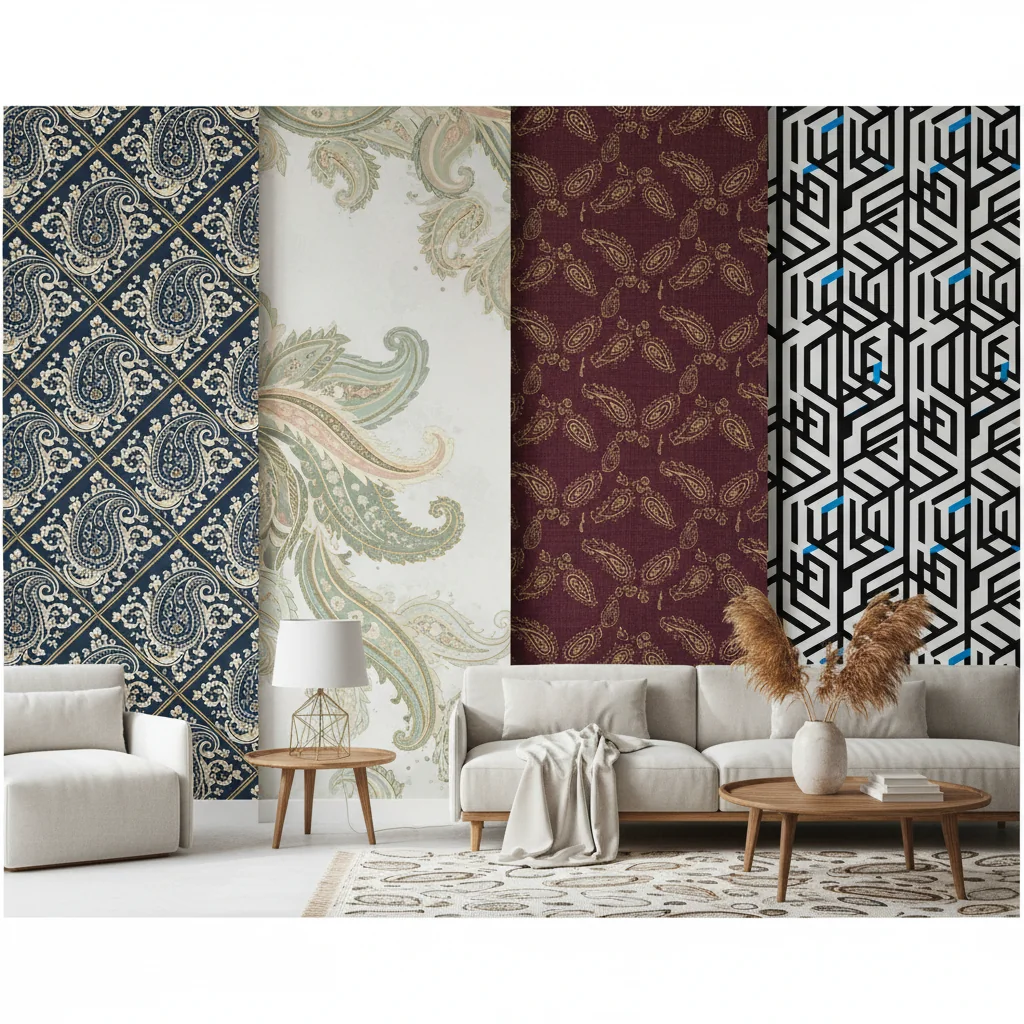
Paisley wallpaper encompasses a wide range of types, categorized by pattern scale, density, artistic interpretation, and color palette, allowing for distinct aesthetic expressions in any interior. The variations in design ensure that a suitable paisley pattern exists for virtually every design preference, from understated elegance to bold, maximalist statements.
Traditional Paisley Wallpaper
Traditional paisley wallpaper typically features the classic boteh motif in its historically accurate form: intricate, densely packed, and often rendered in rich, jewel-toned colors such as deep reds, emerald greens, and sapphire blues, or autumnal shades of gold, rust, and brown. These designs often incorporate additional floral elements, vines, and filigree, creating a lush, ornate tapestry effect. Traditional paisley is ideal for spaces aiming for a sense of historical gravitas, classic luxury, or a bohemian-chic ambiance with a nod to its origins. It pairs exceptionally well with antique furniture, dark wood finishes, and sumptuous textiles like velvet or silk.
Contemporary Paisley Wallpaper
Contemporary paisley wallpaper reinterprets the classic motif with a modern sensibility, often simplifying the intricate details, scaling up the pattern, or employing updated color schemes. These designs might feature fewer internal embellishments, cleaner lines, and a more graphic quality. Color palettes tend towards muted tones like grays, taupes, and creams, or bold, contrasting colors such like black and white, or vibrant single-color applications. Metallic accents, such as silver or gold leaf, are also common, adding a touch of modern glamour. Contemporary paisley works well in minimalist, transitional, or urban modern interiors, providing a sophisticated pattern without feeling overtly historical.
Large-Scale Paisley Wallpaper
Large-scale paisley patterns feature oversized boteh motifs that can span several feet, making a dramatic visual impact. These designs are particularly effective in spacious rooms or on accent walls, where their grandeur can be fully appreciated. The enlarged scale often means fewer motifs per roll, creating a more open and less busy aesthetic compared to smaller, denser patterns. Large-scale paisley can feel incredibly modern and artistic, transforming a wall into a piece of art. It demands attention and is best used where it can be the primary focal point, allowing other décor elements to remain understated.
Small-Scale Paisley Wallpaper
Conversely, small-scale paisley wallpaper features diminutive, often repeating boteh motifs that create a more subtle texture on the wall. These patterns are less about individual motif recognition and more about creating an overall visual texture that reads as sophisticated and nuanced from a distance. Small-scale paisley is an excellent choice for smaller rooms, powder rooms, or for those who desire the elegance of paisley without overwhelming the space. It can serve as a refined backdrop, allowing furniture and artwork to take center stage, while still providing depth and character. Often found in more muted or monochromatic colorways, it offers a sophisticated alternative to solid walls.
Abstract and Deconstructed Paisley
Abstract or deconstructed paisley wallpaper takes the essence of the motif and reinterprets it through artistic license. This might involve distorting the traditional teardrop shape, fragmenting the pattern, or blending it with other abstract forms. The result is a more avant-garde and artistic expression, often veering into painterly or graphic territory. These types of paisley are suited for highly contemporary or eclectic interiors, offering a unique visual statement that challenges traditional expectations of the pattern. They often utilize a modern color palette and can introduce a sense of dynamic movement and artistic flair.
Medallion Paisley Wallpaper
Medallion paisley designs feature the boteh motif arranged in a circular or symmetrical medallion format, often with a central focal point and repeating elements radiating outwards. This type of pattern creates a sense of order and grandeur, reminiscent of classic architectural elements or elaborate ceiling rosettes. Medallion paisley is particularly effective in formal living rooms, dining areas, or grand entryways where a sense of structured elegance is desired. The symmetrical arrangement provides a calming visual rhythm while retaining the intricate detail of the paisley motif.
Folk-Art Inspired Paisley
Some paisley wallpapers draw inspiration from folk art, featuring simpler, often hand-drawn or block-printed interpretations of the motif. These designs might have a slightly rustic or artisanal quality, often rendered in a limited color palette with a handmade feel. Folk-art inspired paisley can bring warmth and character to more casual or bohemian spaces, adding a touch of whimsical charm without sacrificing sophistication. They often feature less intricate internal details, focusing instead on the organic shape of the boteh and its repetitive rhythm.
The extensive range of paisley wallpaper types ensures that this historic motif remains relevant and adaptable to virtually any interior design vision. From the rich opulence of traditional designs to the clean lines of contemporary interpretations, paisley offers a unique opportunity to infuse a space with character, history, and undeniable style.
Materials and Construction: Understanding Your Wallpaper Options
The material composition of paisley wallpaper significantly influences its durability, texture, ease of installation, and maintenance, making it a critical factor in selecting the appropriate wallcovering for your space. Understanding these material properties ensures a successful application and long-term satisfaction with your chosen design.
Non-Woven Wallpaper
Non-woven wallpaper is a popular and versatile choice, manufactured from a blend of natural and synthetic fibers, making it breathable, tear-resistant, and dimensionally stable. This material does not expand when wet or shrink when dry, which simplifies the installation process significantly, as paste is applied directly to the wall rather than the paper. Non-woven wallpaper is also highly durable, often washable, and notably easy to remove in full sheets without damaging the wall, making it an excellent option for those who anticipate redecorating in the future. It is a preferred material for high-quality, long-lasting installations and is frequently used for sophisticated designs like intricate paisley patterns due to its ability to hold fine detail.
Non-woven wallpaper is a durable, breathable wallcovering made from natural and synthetic fibers, known for its ease of installation (paste-the-wall method) and clean removal.
Vinyl Wallpaper
Vinyl wallpaper is renowned for its exceptional durability, moisture resistance, and ease of cleaning, making it ideal for high-traffic areas, kitchens, and bathrooms. There are several types of vinyl wallpaper:
- Solid Sheet Vinyl: This type features a solid layer of vinyl with a paper or fabric backing. It is highly robust, scrubbable, and resistant to stains and grease. Its heavy-duty nature makes it suitable for commercial applications or very active residential spaces.
- Expanded Vinyl: Expanded vinyl wallpaper has a foamed vinyl surface, creating a raised, textured effect. This adds depth and dimension to paisley patterns, making them tactile as well as visual. While durable, it may be slightly less resistant to heavy scrubbing than solid sheet vinyl due to its textured surface.
- Paper-Backed Vinyl: This consists of a vinyl surface layer laminated to a paper backing. It offers good durability and washability, though it may not be as robust as solid sheet vinyl. It is a common and cost-effective option for many residential settings.
- Fabric-Backed Vinyl: Featuring a vinyl surface on a woven fabric backing, this is one of the most durable and dimensionally stable vinyl options. It is often used in commercial settings due to its strength and resistance to tearing and puncturing.
Paper Wallpaper
Traditional paper wallpaper is an eco-friendly option made entirely from paper, often with a protective coating to enhance durability. It offers a classic, matte finish that can beautifully showcase intricate paisley details. While generally less durable and washable than vinyl or non-woven options, modern paper wallpapers often feature better coatings and can be gently wiped. Installation requires careful handling, as paper can tear when wet, and it typically requires paste applied to the paper itself. It is valued for its authentic look and feel, particularly for heritage-inspired paisley designs.
Peel-and-Stick Wallpaper (Removable Wallpaper)
Peel-and-stick wallpaper, also known as removable wallpaper, is a self-adhesive vinyl or fabric-based material designed for easy application and removal. It features an adhesive backing that is protected by a liner, which is peeled away during installation. This type is highly popular for DIY enthusiasts, renters, or those who enjoy frequently changing their décor, as it can be removed cleanly without damaging walls or leaving residue. While generally less durable than traditional paste-applied options for very long-term use in high-traffic areas, its convenience and flexibility are unparalleled. Paisley patterns on peel-and-stick offer a low-commitment way to experiment with this bold motif.
Grasscloth and Natural Fiber Wallpaper
While not a primary material for printed paisley, sometimes a subtle paisley motif is embossed or woven into natural fiber wallpapers like grasscloth. Grasscloth wallpaper is made from natural fibers such as jute, sisal, or seagrass woven onto a paper backing. It provides a rich, tactile texture and an organic aesthetic. When combined with a subtle paisley pattern, it offers a sophisticated, understated elegance. Grasscloth is delicate and requires specialized care; it is not washable and can be prone to staining. Its beauty lies in its natural imperfections and unique texture.
Material Comparison Table
Understanding the properties of each material is crucial for making an informed decision, balancing aesthetic desires with practical considerations like durability, maintenance, and ease of installation.
| Material Type | Key Characteristics | Durability | Ease of Installation | Maintenance & Care | Ideal Use Cases for Paisley |
|---|---|---|---|---|---|
| Non-Woven | Breathable, tear-resistant, dimensionally stable, paste-the-wall. | Excellent (long-lasting, resistant to shrinking/expanding). | Very Easy (paste to wall, removable in full sheets). | Washable (can be wiped with damp cloth). | Bedrooms, living rooms, dining rooms, high-quality residential. |
| Vinyl (Paper-Backed) | Vinyl surface laminated to paper backing, good moisture resistance. | Good (resistant to wear, some moisture). | Moderate (paste to paper, can be heavier). | Washable (can be wiped with damp cloth). | Kitchens, bathrooms (moderate humidity), hallways, children’s rooms. |
| Solid Sheet Vinyl | Thick vinyl layer, highly robust, often fabric-backed. | Superior (highly resistant to moisture, scrubbing, impact). | Moderate to Difficult (heavy, requires strong adhesive, precise alignment). | Scrubbable (can withstand vigorous cleaning). | High-traffic commercial areas, very active residential spaces, moisture-prone areas. |
| Paper | Eco-friendly, authentic feel, often coated for protection. | Moderate (can tear when wet, less durable than vinyl/non-woven). | Moderate (paste to paper, careful handling required). | Gently wipeable (not fully washable or scrubbable). | Formal living rooms, bedrooms, areas with low traffic, historical interiors. |
| Peel-and-Stick | Self-adhesive vinyl or fabric, removable without residue. | Good (for temporary/mid-term use, less robust for long-term heavy traffic). | Very Easy (DIY-friendly, repositionable). | Wipeable (can be wiped with damp cloth). | Rentals, accent walls, nurseries, quick makeovers, low-commitment design. |
Choosing the Perfect Paisley for Your Space: A Design Guide
Selecting the ideal paisley wallpaper requires careful consideration of your room’s function, existing décor, and desired aesthetic impact, ensuring the pattern harmonizes with your overall design vision. The right choice can elevate a space, infusing it with character and sophistication, while an ill-suited pattern can overwhelm or clash.
Consider the Room’s Function and Scale
The purpose and size of a room are paramount in guiding your paisley selection. In a powder room or a small alcove, a bold, large-scale paisley can create a jewel-box effect, making a dramatic statement in a contained area. Conversely, in a sprawling living room, a large-scale pattern can define zones or add grandeur without feeling overwhelming. For bedrooms, a more muted or small-scale paisley can foster a serene and intimate atmosphere, while a vibrant, larger pattern might be better suited for a guest room or a creative studio. High-traffic areas like hallways benefit from durable, washable materials like vinyl, regardless of the pattern scale, to withstand daily wear and tear.
Color Palette: Setting the Mood
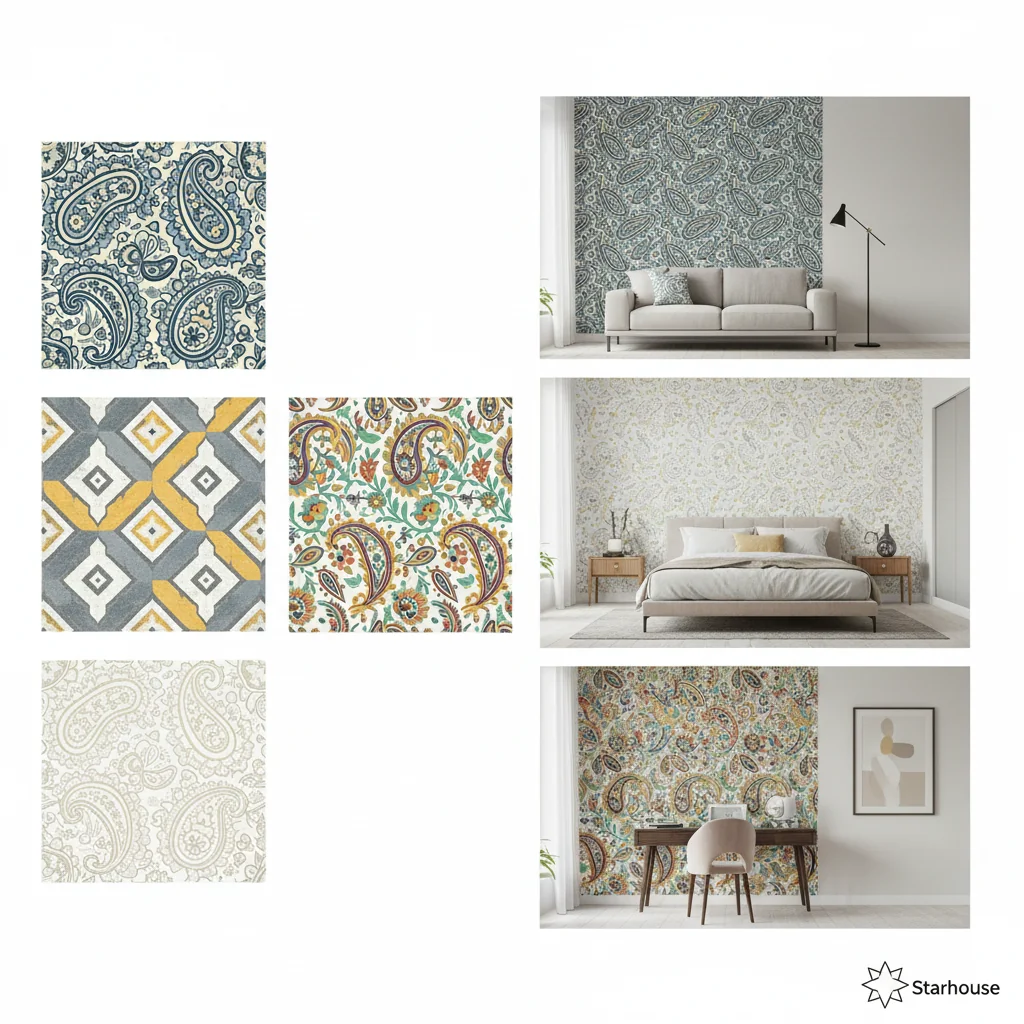
The color scheme of your paisley wallpaper is instrumental in establishing the room’s mood and integrating with existing furnishings. Bold, contrasting colors (e.g., black and white, deep blues and golds) create a dramatic and energetic ambiance, suitable for accent walls or spaces where you want to make a strong visual statement. Muted tones (e.g., grays, soft blues, creams, pastels) offer a more understated elegance, providing texture and pattern without overwhelming the senses; these are excellent for creating a calming backdrop in bedrooms or formal living areas. Monochromatic paisley, featuring variations of a single color, adds sophisticated depth and visual interest while maintaining a cohesive and serene feel, often used in contemporary or minimalist designs. Consider the existing colors in your furniture, artwork, and textiles to ensure a harmonious blend.
Pattern Scale: Visual Impact and Room Size
The scale of the paisley motif directly impacts the perceived size and energy of a room. Large-scale paisley patterns tend to make a room feel more expansive and grand, drawing the eye and creating a focal point. They are best reserved for larger rooms or accent walls where the pattern can breathe and be fully appreciated. Small-scale or micro-paisley patterns, on the other hand, create a more subtle texture and can make a small room feel cozy and intricate without being claustrophobic. They function almost like a solid color with added depth, offering a sophisticated backdrop. In general, avoid overly large patterns in very small rooms, as they can feel overpowering, and conversely, very small patterns in vast rooms might get lost.
Achieving Desired Aesthetic and Mood
- Bohemian Chic: Embrace vibrant, multi-colored paisley patterns with a slightly distressed or hand-drawn feel. Pair with natural textures, global-inspired furnishings, and an eclectic mix of accessories.
- Traditional Elegance: Opt for classic, densely detailed paisley in rich, jewel tones or muted historical palettes. Complement with antique furniture, heavy drapes, and ornate lighting fixtures.
- Modern Sophistication: Choose large-scale, simplified paisley designs in monochromatic schemes, metallic finishes, or bold, contrasting colors. Integrate with clean-lined furniture, minimalist decor, and contemporary art.
- Eclectic Charm: Mix and match paisley with other patterns, textures, and styles. The key is to find a common color thread or a harmonious balance of scale to ensure cohesion rather than chaos.
- Subtle Serenity: Select small-scale or tone-on-tone paisley in soft, muted colors. Use it on all four walls to create a enveloping, textural backdrop that promotes relaxation and calm.
Before committing to a full installation, it is always advisable to obtain wallpaper samples. Place these samples in different areas of your room and observe them throughout the day under varying light conditions. This practice allows you to assess how the color, scale, and texture of the paisley pattern interact with your space and existing décor, helping you make a confident and informed decision. The interplay of natural and artificial light can dramatically alter the perception of color and pattern, making samples indispensable for accurate evaluation.
At Starhouse, we understand that selecting the perfect wallpaper is a deeply personal journey, reflecting your unique style and vision for your home. We are curating a collection that speaks to diverse tastes and design aspirations. Tell us what you’re looking for in your space and get early access to our exclusive collections at starhouseusa.online.
Sizing and Measuring for Paisley Wallpaper Installation
Accurate sizing and precise measurement are fundamental steps to ensure a flawless and efficient installation of paisley wallpaper, minimizing waste and maximizing aesthetic impact. Improper measurements can lead to insufficient material, unsightly seams, or pattern misalignment, compromising the overall finish. This meticulous preparation is especially critical for patterns with a distinct repeat, such as paisley, where alignment is key to maintaining visual continuity.
Step 1: Gather Your Tools
Before you begin measuring, ensure you have the necessary tools: a metal tape measure (at least 25 feet long), a pencil, a notepad, and a step stool or ladder for reaching high areas. A calculator will also be invaluable for crunching the numbers.
Step 2: Measure Wall Dimensions
Measure the height and width of each wall you intend to wallpaper. For height, measure from the baseboard to the ceiling (or crown molding) in several spots across the wall and use the longest measurement to account for any inconsistencies. For width, measure the entire horizontal span of the wall. Record these measurements accurately for each wall.
Step 3: Account for Doors and Windows
While you won’t be wallpapering over doors and windows, you need to calculate their areas to subtract them from the total. Measure the height and width of each door and window opening. These areas will be deducted from your total square footage calculation, but it’s crucial to remember that you still need to purchase enough wallpaper to cut around these openings, often requiring extra material for pattern matching.
Step 4: Calculate Total Square Footage
For each wall, multiply its height by its width to get the square footage. Sum the square footages of all walls you plan to cover. Then, calculate the square footage of all doors and windows (height x width for each) and sum those. Subtract the total window/door square footage from the total wall square footage to get a preliminary estimate of the area to be covered.
Step 5: Understand Wallpaper Roll Dimensions
Wallpaper typically comes in standard roll sizes. A common U.S. standard roll measures approximately 20.5 inches wide by 33 feet long, covering about 56 square feet. However, double rolls are also common, measuring 20.5 inches wide by 66 feet long, covering approximately 112 square feet. Always verify the specific dimensions of the wallpaper rolls you intend to purchase, as these can vary by manufacturer and pattern.
Step 6: Account for Pattern Repeat (Crucial for Paisley)
Pattern repeat refers to the vertical distance on a wallpaper roll before the pattern begins to repeat itself, ensuring that adjacent strips can be aligned seamlessly. Paisley patterns often have significant and intricate repeats, which demand careful consideration. You must add the pattern repeat length to each cut length of wallpaper to ensure proper matching. For example, if your wall height is 8 feet and the pattern repeat is 24 inches (2 feet), each strip you cut will need to be 10 feet long (8 feet wall height + 2 feet for pattern matching). This extra length ensures that when you hang adjacent strips, the paisley motifs align perfectly without interruption.
To calculate the number of strips per roll: Divide the length of one roll by the cut length (wall height + pattern repeat). Round down to the nearest whole number. For example, a 33-foot roll (396 inches) with a 10-foot (120 inches) cut length yields 3 strips per roll (396 / 120 = 3.3, rounded down to 3).
Pattern repeat refers to the vertical distance on a wallpaper roll where the design starts over, enabling seamless alignment of the pattern across multiple strips.
Step 7: Calculate Number of Rolls Needed
First, determine how many strips you will need to cover the width of your walls. Divide the total width of your walls (in inches) by the width of one wallpaper roll (in inches). Round up to the nearest whole number. This gives you the total number of strips required.
Next, divide the total number of strips required by the number of strips you can get from one roll (calculated in Step 6). Round up to the nearest whole number. This will give you the total number of rolls you need to purchase.
Step 8: Add a Waste Factor
Always purchase an extra roll (or at least 10-15% more than your calculated total) to account for potential errors, pattern mismatches, cutting mistakes, or future repairs. This waste factor is particularly important for large, intricate paisley patterns with significant repeats, as more material is often needed for precise alignment. It is far better to have a little extra than to run short mid-project and risk color or dye lot discrepancies if you need to reorder.
By meticulously following these steps, you can confidently determine the correct amount of paisley wallpaper needed for your project, ensuring a professional and visually stunning installation.
Current Trends in Paisley Wallpaper Design
Contemporary trends in paisley wallpaper blend classic motifs with modern sensibilities, featuring updated color schemes, metallic accents, and innovative material textures to create fresh and impactful design statements. Designers are reinterpreting this historical pattern in ways that make it relevant for today’s diverse interior aesthetics, moving beyond its traditional associations to embrace new forms and expressions.
Maximalist and Grand-Scale Paisley
In line with the broader maximalist movement in interior design, paisley wallpaper is increasingly seen in grand, oversized patterns that cover entire walls or serve as dramatic murals. These large-scale interpretations often feature fewer, larger boteh motifs, allowing the intricate details of each element to be fully appreciated. The effect is one of luxurious abundance and artistic statement, transforming a wall into a focal point rather than just a background. This trend pairs well with rich textures, layered furnishings, and bold color palettes, creating spaces that feel curated and deeply personal.
Muted and Monochromatic Tones
Moving away from traditional vibrant hues, a significant trend involves rendering paisley patterns in sophisticated, muted, or monochromatic color schemes. Think tone-on-tone grays, soft blues, creamy whites, or subtle taupes. This approach allows the intricate detail of the paisley motif to provide texture and depth without overwhelming the space with color. It creates a serene yet sophisticated backdrop, ideal for contemporary, minimalist, or transitional interiors where understated elegance is preferred. The pattern becomes a subtle whisper rather than a shout, offering visual interest without competing with other design elements.
Metallic Accents and Sheen
The integration of metallic elements—such as gold, silver, bronze, or copper—within paisley designs adds a touch of modern glamour and luxury. These metallic accents can be printed as part of the motif, embossed, or woven into the wallpaper material itself, catching the light and adding a subtle shimmer. This trend elevates paisley from a purely decorative pattern to a luminous, sophisticated surface, particularly effective in spaces that benefit from a touch of opulence, such as dining rooms, powder rooms, or formal living areas. The reflective qualities of metallic inks enhance the depth and movement of the paisley’s curves.
Biophilic and Nature-Inspired Interpretations
Reflecting a growing desire to connect with nature, some contemporary paisley designs incorporate biophilic elements. This might involve rendering the boteh motif with more organic, leaf-like textures, or intertwining it with botanical elements such as vines, flowers, or foliage. Color palettes often lean towards earthy greens, warm browns, and natural blues, evoking a sense of calm and natural harmony. This trend allows paisley to contribute to biophilic design principles, bringing the soothing aesthetics of the natural world indoors in a stylized fashion.
Textured and Embossed Finishes
Beyond visual patterns, designers are exploring the tactile dimension of paisley wallpaper through textured and embossed finishes. Raised elements within the pattern create a three-dimensional effect, adding depth and a luxurious feel to the walls. These textures can mimic the look of fabric, embroidery, or even subtle plasterwork, making the wallpaper not just a visual treat but also a tactile experience. Embossed paisley is particularly effective in monochromatic schemes, where the play of light and shadow on the raised surfaces highlights the pattern without relying on color variations.
Abstract and Deconstructed Forms
For those seeking a more avant-garde aesthetic, abstract and deconstructed paisley patterns are emerging. These designs take the traditional boteh motif and fragment it, stretch it, or blend it with other abstract shapes, creating a highly artistic and modern interpretation. The result is a dynamic and often painterly effect that challenges conventional expectations of paisley. This trend is ideal for contemporary art-inspired spaces, adding a unique and sophisticated visual intrigue.
These current trends demonstrate paisley wallpaper’s remarkable adaptability and enduring relevance in the ever-evolving world of interior design. By embracing new interpretations, materials, and colorways, paisley continues to offer a compelling choice for homeowners seeking to infuse their spaces with character, history, and a touch of modern sophistication.
Care and Maintenance: Preserving Your Paisley Wallpaper’s Beauty
Proper care and routine maintenance are essential for preserving the vibrancy and longevity of your paisley wallpaper, ensuring it remains a focal point in your interior design for years to come. The specific cleaning methods depend heavily on the wallpaper’s material, as different compositions possess varying degrees of durability and moisture resistance.
Understanding Wallpaper Washability Ratings
Before any cleaning, identify your wallpaper’s washability rating, usually found on the roll’s label or manufacturer’s specifications. These ratings dictate the appropriate cleaning methods:
- Wipeable: Can be gently wiped with a slightly damp cloth, typically for light dust or very minor smudges. Avoid excessive moisture. Common for delicate paper-based wallpapers.
- Washable: Can withstand cleaning with a damp sponge and mild soap solution. Suitable for light to moderate stains. Many non-woven and paper-backed vinyl wallpapers fall into this category.
- Scrubbable: Designed to tolerate more vigorous cleaning with a brush and a stronger cleaning solution. This rating is common for solid vinyl or fabric-backed vinyl wallpapers, ideal for high-traffic or moisture-prone areas.
- Extra Scrubbable: The most durable category, capable of withstanding heavy-duty cleaning and strong detergents. Primarily found in commercial-grade vinyl wallcoverings.
General Cleaning Practices
For all types of paisley wallpaper, regular dusting is the first line of defense against grime accumulation. Use a soft, dry cloth, a feather duster, or a vacuum cleaner with a brush attachment to gently remove surface dust and cobwebs. This prevents dirt from embedding into the pattern or becoming harder to remove over time.
When deeper cleaning is required, always start with the mildest method appropriate for your wallpaper’s rating. For washable and scrubbable wallpapers, prepare a solution of warm water and a small amount of mild, non-abrasive dish soap. Dampen a clean, soft sponge or cloth (never saturate it) and gently wipe the affected area. Always test the cleaning solution on an inconspicuous spot first, such as behind a piece of furniture or near a baseboard, to ensure it does not cause discoloration or damage to the paisley pattern or material.
Dealing with Specific Stains
- Grease Stains: For washable vinyl wallpapers, a mild degreaser or a paste of baking soda and water can be effective. Apply gently, let it sit briefly, then wipe clean. For more delicate papers, try carefully blotting with a dry cloth or using a specialized wallpaper cleaner designed for the material.
- Ink Marks: These are particularly challenging. For vinyl, rubbing alcohol on a cotton swab might work, but test first. For paper-based wallpapers, ink stains are often permanent.
- Scuffs and Smudges: A clean, white art eraser can sometimes lift light scuff marks from non-vinyl surfaces. For vinyl, a gentle scrub with mild soap usually suffices.
Always work from the bottom up when cleaning larger areas to prevent dirty water from dripping down onto cleaner sections and causing streaks. After cleaning, gently wipe the area with a clean, damp cloth to remove any soap residue, then immediately dry with a clean, soft towel to prevent water spots or moisture damage.
Addressing Common Issues
- Lifting Seams: If wallpaper seams begin to lift, use a specialized seam adhesive (available at most hardware stores) to re-secure them. Apply a thin line of adhesive to the underside of the lifted seam, press it firmly back into place with a seam roller, and wipe away any excess glue with a damp cloth.
- Bubbles: Small air bubbles can sometimes form after installation. For minor bubbles, use a utility knife to make a small slit in the center of the bubble, then gently smooth out the air with a wallpaper smoother or clean cloth. For larger bubbles, inject a small amount of wallpaper adhesive into the slit using a syringe, then smooth it out.
Protection from Environmental Factors
Direct and prolonged exposure to sunlight can cause the colors of any wallpaper, including paisley, to fade over time. Consider using UV-protective window films, blinds, or curtains in rooms with significant sun exposure to protect your investment and maintain the vibrancy of the paisley pattern. Maintain consistent humidity levels in your home, as extreme fluctuations can cause wallpaper to peel or bubble. A humidifier in dry climates or a dehumidifier in humid ones can help.
By adhering to these care and maintenance guidelines, your paisley wallpaper will continue to be a source of aesthetic pleasure and sophisticated design for many years, preserving its intricate beauty and contributing to the timeless elegance of your home.
Styling and Pairing Paisley Wallpaper with Other Décor Elements
Integrating paisley wallpaper seamlessly into your interior design involves thoughtful pairing with furniture, textiles, lighting, and accessories to create a cohesive and harmonious aesthetic. The key is to balance the inherent complexity of the paisley pattern with complementary elements that enhance its beauty without creating visual clutter.
Harmonizing with Furniture Styles
Paisley wallpaper is remarkably versatile and can complement a range of furniture styles:
- Traditional and Antique Furniture: Classic, richly colored paisley patterns are a natural fit for traditional and antique furniture. Dark wood finishes, ornate carvings, and upholstered pieces in luxurious fabrics like velvet or brocade will enhance the historical grandeur of the paisley. Ensure the furniture’s scale is substantial enough to hold its own against a detailed pattern.
- Modern and Mid-Century Modern: For contemporary or mid-century modern settings, opt for large-scale, simplified paisley in muted or monochromatic palettes. Pair with clean-lined furniture, minimalist forms, and materials like polished wood, metal, and leather. The paisley can act as an artistic backdrop, providing texture and depth without competing with the furniture’s sleekness.
- Bohemian and Eclectic: Paisley is a cornerstone of bohemian design. Embrace a mix of patterns, textures, and global-inspired furniture. Rattan, macramé, distressed wood, and colorful textiles will amplify the free-spirited charm of a vibrant, multi-hued paisley wallpaper.
- Transitional: In transitional spaces that blend classic and contemporary, choose a paisley with a balanced scale and a refined color palette. Pair with furniture that has classic silhouettes but modern finishes or upholstery, creating a sophisticated bridge between styles.
Integrating with Textiles and Soft Furnishings
Textiles play a crucial role in softening a space and introducing additional layers of texture and color. When pairing with paisley wallpaper:
- Solid Colors: The safest and often most effective approach is to use solid-colored textiles that pick up one or two hues from the paisley pattern. This allows the wallpaper to be the star while providing visual rest areas.
- Complementary Patterns: If you’re confident in pattern mixing, introduce smaller-scale geometric patterns (like stripes or subtle plaids) or abstract textures in complementary colors. Avoid competing floral or ornate patterns that could clash with the paisley’s intricate details. The key is to vary scale and intensity.
- Texture: Introduce varied textures through throw pillows, blankets, rugs, and curtains. Think linen, silk, wool, velvet, or faux fur to add tactile richness and visual interest that balances the wallpaper’s pattern.
- Drapery: For curtains, choose solid colors that match a subtle tone in the paisley or opt for a sheer fabric that allows the wallpaper to peek through. If using a patterned curtain, ensure it is significantly different in scale or style from the wallpaper to avoid a chaotic look.
Color Theory and Cohesion
Successful pairing hinges on a thoughtful approach to color. Identify the dominant and accent colors within your paisley wallpaper. Use these as a guide for selecting paint colors for adjacent walls, upholstery, and accessories. Analogous color schemes (colors next to each other on the color wheel) create a harmonious and calming effect, while complementary colors (opposite on the color wheel) offer dynamic contrast and energy. A monochromatic scheme, using different shades and tints of a single color found in the paisley, creates a sophisticated and cohesive look.
Lighting Considerations
Lighting can dramatically alter how paisley wallpaper is perceived. Thoughtful lighting enhances the pattern’s depth and texture:
- Ambient Lighting: Ensure adequate ambient light to illuminate the entire pattern. Recessed lighting or a central fixture provides overall brightness.
- Accent Lighting: Use accent lighting, such as wall sconces, picture lights, or strategically placed floor lamps, to highlight specific areas of the paisley pattern or to create dramatic shadows that emphasize its texture, especially with embossed or metallic designs.
- Natural Light: Consider how natural light hits the wallpaper throughout the day. Patterns with metallic accents will shimmer more in direct sunlight, while matte finishes will appear softer.
Accessories and Artwork
With paisley wallpaper, less is often more when it comes to accessories and artwork. Choose pieces that complement rather than compete:
- Mirrors: A large, framed mirror can reflect the paisley pattern, expanding the sense of space and doubling its visual impact.
- Artwork: Opt for artwork with simple frames and either solid mats or very subtle patterns. Abstract art with a limited color palette or landscape paintings with ample negative space can provide a visual break. Avoid highly detailed or busy artwork that clashes with the paisley.
- Decorative Objects: Select decorative objects in solid colors or with simple forms. Ceramic vases, metallic sculptures, or glass pieces can add elegance without overwhelming the intricate wallpaper.
Paisley as an Accent Wall vs. Entire Room
Decide whether you want the paisley to be an accent or an enveloping feature. An accent wall (e.g., behind a bed, sofa, or dining table) is perfect for introducing a bold paisley pattern without committing to the entire room. It creates a focal point and adds a pop of personality. For an entire room, especially with a large or busy pattern, consider using a more subdued color palette or a smaller-scale design to avoid overwhelming the space. Alternatively, pair a bold paisley with calm, solid-colored furnishings and ample negative space to allow the pattern to dominate elegantly.
By carefully orchestrating these elements, paisley wallpaper can transform your space into a reflection of refined taste and sophisticated design, creating an environment that is both visually stimulating and harmoniously balanced.
Common Mistakes to Avoid When Choosing and Installing Paisley Wallpaper
Avoiding common pitfalls when selecting and installing paisley wallpaper ensures a successful outcome that enhances your home’s aesthetic without unintended consequences. Awareness of these frequent errors can save time, money, and frustration, leading to a professional-looking and satisfying finish.
1. Underestimating Pattern Repeat and Waste
A frequent and costly mistake is failing to adequately account for the pattern repeat, especially with intricate designs like paisley. The pattern repeat adds extra length to each strip, significantly increasing the total amount of wallpaper required. Not calculating this extra length often results in running out of wallpaper mid-project, leading to delays and the risk of purchasing rolls from a different dye lot, which can result in noticeable color variations. Always add a minimum of 10-15% extra material to your calculations, particularly for large or complex paisley patterns.
2. Ignoring Room Scale and Pattern Size
Choosing a paisley pattern that is disproportionate to the room’s size is a common error. A very large, bold paisley in a small room can overwhelm the space, making it feel cramped and busy. Conversely, a tiny, delicate paisley pattern can get lost in a vast room, failing to make any significant visual impact. Assess the room’s dimensions and ceiling height. For smaller spaces, consider smaller-scale patterns or using a bold, large-scale paisley only on an accent wall. For larger rooms, grander patterns can establish a sense of drama and sophistication.
3. Poor Surface Preparation
Skipping or rushing surface preparation is detrimental to any wallpaper installation, but particularly for intricate patterns like paisley where imperfections are more noticeable. Walls must be clean, smooth, dry, and primed. Any cracks, holes, or uneven textures will show through the wallpaper, creating an unprofessional finish. Old wallpaper should be completely removed, and glossy paint should be lightly sanded. Priming the walls ensures proper adhesion and makes future removal easier, preventing damage to the drywall.
4. Overlooking Wallpaper Material Properties
Not considering the practical implications of the wallpaper material is a significant oversight. Installing delicate paper-based paisley in a high-humidity bathroom or a high-traffic hallway is a recipe for premature wear and damage. Always match the wallpaper’s material (e.g., non-woven, vinyl, peel-and-stick) to the room’s function and expected wear. For kitchens and bathrooms, opt for washable and durable vinyl options. For temporary applications or rentals, peel-and-stick offers flexibility. Understanding the material ensures the wallpaper performs as expected and lasts longer.
5. Neglecting Lighting Conditions
The way natural and artificial light interacts with paisley wallpaper can dramatically alter its appearance. A pattern that looks stunning in a brightly lit showroom might appear muted or too dark in a room with limited natural light. Similarly, metallic accents might shimmer beautifully in certain light but disappear in others. Always view wallpaper samples in the actual room under various lighting conditions (daylight, evening, artificial light) before making a final decision. This helps ensure the chosen pattern and color achieve the desired effect in your specific environment.
6. Excessive Pattern Mixing or Clashing Colors
While paisley can be a fantastic pattern to mix with others, overdoing it or choosing clashing patterns and colors can lead to a chaotic and visually jarring space. If your paisley wallpaper is bold and intricate, balance it with solid-colored furnishings and textiles. If you introduce other patterns, ensure they are significantly different in scale or type (e.g., a small geometric alongside a large paisley) and share a common color palette to maintain cohesion. Avoid pairing multiple large, busy patterns in the same visual field.
7. Rushing the Installation Process
Wallpapering, especially with a detailed pattern like paisley, requires patience and precision. Rushing can lead to misaligned patterns, bubbles, tears, and crooked strips. Take your time with measuring, cutting, and aligning each strip. Enlist help if necessary, as two sets of hands can make the process much smoother, especially for large, heavy rolls or high walls. Proper tools, such as a plumb line, smoothing brush, and sharp utility knife, are also essential for a professional finish.
8. Not Using a Primer
Failing to prime walls before wallpapering is a common mistake that can lead to poor adhesion, difficulty in future removal, and potential damage to the underlying drywall. Primer creates a consistent, smooth surface for the wallpaper to adhere to, prevents the paste from soaking into the drywall (which makes removal difficult), and can block stains from bleeding through the wallpaper. Use a high-quality, clear, acrylic wallpaper primer for best results.
By being mindful of these common mistakes, you can approach your paisley wallpaper project with confidence, ensuring a beautiful, lasting, and professionally executed design statement in your home.
Sources
Frequently Asked Questions About Paisley Wallpaper
Is paisley wallpaper still in style?
Yes, paisley wallpaper remains a timeless and stylish choice in interior design, continuously reinterpreted to suit contemporary aesthetics. While traditional paisley offers classic elegance, modern versions feature updated color palettes, varying scales, and abstract interpretations that align with current trends in maximalism, biophilic design, and sophisticated monochromatic schemes, ensuring its enduring relevance.
What colors go well with paisley wallpaper?
Colors that go well with paisley wallpaper depend on the pattern’s specific hues and the desired mood. Generally, solid colors extracted directly from the paisley pattern create a harmonious look. Neutral tones like creams, grays, and whites provide a sophisticated balance, allowing the paisley to be the focal point. For a bolder statement, complementary colors (e.g., deep blue with orange accents) can be used judiciously in furnishings or accessories, while analogous colors (e.g., greens and blues) foster a serene environment.
Can I use paisley wallpaper in a small room?
Yes, paisley wallpaper can be effectively used in a small room, but careful consideration of scale and color is crucial. Small-scale or micro-paisley patterns in muted or monochromatic tones can add subtle texture and depth without overwhelming the space, creating a cozy and intricate feel. For a dramatic statement, a bold, large-scale paisley can be used on a single accent wall, transforming a small space into a jewel box of design without making it feel claustrophobic.
How do I clean paisley wallpaper?
The cleaning method for paisley wallpaper depends on its material and washability rating. For most non-woven and vinyl wallpapers, regular dusting with a soft cloth or vacuum attachment is recommended. For deeper cleaning, use a damp sponge with a mild soap solution for washable types, or a brush for scrubbable vinyls, always testing on an inconspicuous area first. Paper-based wallpapers are typically only wipeable with a slightly damp cloth, requiring extreme care to avoid damage.
What’s the difference between peel-and-stick and traditional paisley wallpaper?
The primary difference between peel-and-stick and traditional paisley wallpaper lies in their installation and adhesive. Peel-and-stick wallpaper features a self-adhesive backing with a removable liner, allowing for easy, mess-free application and clean removal without wall damage. Traditional wallpaper, conversely, requires a separate adhesive (paste) to be applied to the paper or the wall, offering superior long-term durability and a more permanent installation, but requiring more effort and skill to install and remove.
Where does the paisley pattern come from?
The paisley pattern, originally known as the “boteh” or “buta” motif, originated in ancient Persia (modern-day Iran) around 2000 BCE, symbolizing fertility and life. It gained widespread popularity in India, particularly in Kashmir, before being introduced to Europe through trade. The pattern earned its current name from the town of Paisley in Scotland, which became a prominent manufacturing center for paisley-patterned textiles in the 19th century.
Can paisley wallpaper be used in a bathroom?
Yes, paisley wallpaper can be successfully used in a bathroom, provided you select a material specifically designed for high-humidity environments. Vinyl wallpaper (solid sheet, paper-backed, or expanded) is the most suitable choice due to its excellent moisture resistance, durability, and washability, which are essential for bathrooms. Non-woven options can also work in well-ventilated bathrooms, but traditional paper-based wallpapers are generally not recommended for areas with significant moisture exposure.
Conclusion
Paisley wallpaper stands as a testament to enduring design, offering a rich tapestry of history, versatility, and undeniable elegance that can transform any interior space. From its ancient origins in Persia and India to its modern interpretations, the distinctive boteh motif continues to captivate, providing a sophisticated layer of pattern and texture. Whether you seek to infuse your home with traditional grandeur, bohemian charm, or contemporary sophistication, there is a paisley design perfectly suited to your vision, capable of creating a truly unique and aspirational environment.
The journey of selecting and integrating paisley wallpaper is one of careful consideration—balancing pattern scale with room dimensions, harmonizing color palettes, and understanding the practicalities of material and installation. When thoughtfully chosen and expertly applied, paisley wallpaper ceases to be merely a wallcovering; it becomes a foundational element of your home’s character, reflecting a discerning eye for design and a commitment to timeless style. It offers an opportunity to imbue your walls with a story, a sense of depth, and a visual allure that transcends fleeting trends.
At Starhouse, we are dedicated to curating collections that embody this blend of heritage and contemporary appeal, bringing you the finest in home décor. We believe that every wall has a story to tell, and paisley offers a particularly rich narrative. As we build our exquisite collection, we invite you to be a part of our journey. Share your design aspirations and tell us what you’re looking for to complete your space. Join our community and get early access to our exclusive selections by visiting starhouseusa.online. Let us help you discover the perfect elements to craft a home that is uniquely yours, filled with beauty, comfort, and sophisticated design.