Toile wallpaper, often recognized by its intricate, monochromatic pastoral or historical scenes, is a timeless design element that imbues any space with a narrative elegance and sophisticated charm. This enduring wallcovering, distinguished by its detailed, repeating vignettes typically rendered in a single color against a lighter ground, offers a unique blend of artistry and tradition, capable of transforming interiors from the classically grand to the subtly modern. Its enduring appeal lies in its ability to tell a story on the walls, creating a focal point that is both visually rich and deeply resonant with historical aesthetics.
Key Takeaways
- Toile wallpaper, or Toile de Jouy, originated in 18th-century France, characterized by monochromatic, intricate narrative scenes.
- Beyond traditional pastoral motifs, contemporary toile encompasses diverse themes like Chinoiserie, nautical, and modern abstract designs, available in various color palettes.
- Material choices for toile wallpaper include traditional paper, durable non-woven, versatile vinyl, and convenient peel-and-stick options, each offering distinct benefits in terms of application and longevity.
- Accurate measurement and consideration of pattern repeat are crucial for seamless installation, with professional consultation often recommended for complex patterns or large spaces.
- Styling toile wallpaper effectively involves balancing its detailed patterns with complementary furnishings, textiles, and lighting, ensuring the wallpaper enhances, rather than overwhelms, the room’s aesthetic.
- Proper care, dictated by the wallpaper’s material, is essential for maintaining its beauty and durability over time, ensuring the longevity of your design investment.
What is Toile Wallpaper? A Timeless Narrative for Your Walls
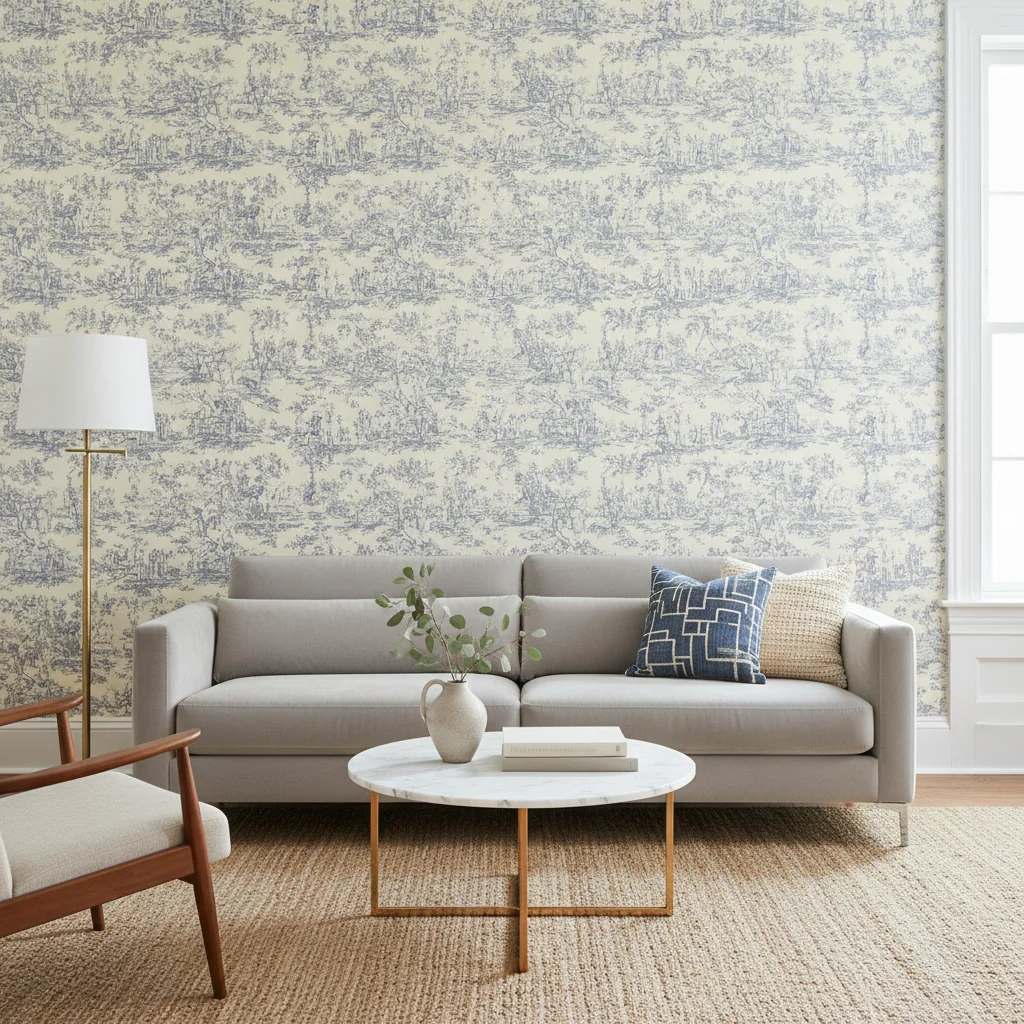
Toile wallpaper is a distinctive wallcovering characterized by its repeating pattern of detailed, monochromatic scenes, typically depicting pastoral landscapes, historical events, mythological narratives, or intricate floral arrangements. This design style, often referred to as Toile de Jouy, is defined by a single color—most commonly red, blue, green, or black—printed on a lighter, often off-white or cream, background, creating a sophisticated and illustrative effect that adds depth and character to any room. Its aesthetic merges fine art with functional decor, transforming walls into engaging visual stories.
The essence of toile lies in its illustrative quality, where each motif tells a part of a larger story, meticulously rendered with fine lines and shading. This intricate detailing is what distinguishes toile from other patterned wallpapers, offering a level of visual complexity and narrative engagement that is unparalleled. While traditionally associated with rustic French country style, modern interpretations of toile have expanded its thematic and color palettes, making it a versatile choice for a broad spectrum of interior design aesthetics, from classic to contemporary. Its ability to evoke a sense of history and romance, combined with its crisp, clean lines, ensures its continued relevance in today’s design landscape.
At its core, toile is more than just a pattern; it is a design language that speaks of heritage, artistry, and deliberate curation. The recurring scenes, whether of frolicking shepherds, elegant ladies picnicking, or historical figures in dramatic poses, invite closer inspection and contribute a unique layer of visual interest that plain or abstract patterns cannot achieve. This narrative depth makes toile wallpaper a powerful tool for defining the mood and character of a space, offering a backdrop that is both decorative and conversation-starting.
The design’s enduring popularity stems from its unique balance of intricate detail and understated color, preventing it from overwhelming a room despite its busy patterns. Instead, it offers a sophisticated visual texture that enriches the environment without demanding constant attention. Modern manufacturing techniques allow for a wide range of materials and finishes, from traditional paper to durable vinyl and convenient peel-and-stick options, ensuring that the timeless beauty of toile is accessible for diverse applications and lifestyles. Starhouse recognizes the profound impact such an iconic design can have, curating selections that honor its heritage while embracing contemporary sensibilities.
The Rich History of Toile: From Jouy-en-Josas to Modern Interiors
The story of toile wallpaper begins in the mid-18th century in Jouy-en-Josas, a small town near Versailles, France, where Christophe-Philippe Oberkampf established a textile factory in 1760. Toile de Jouy, meaning “cloth from Jouy,” originally referred to printed cotton or linen fabric featuring elaborate, monochromatic engraved patterns, and its distinctive aesthetic quickly captivated the French aristocracy before spreading across Europe and eventually influencing wallcoverings. This historical connection to luxury and craftsmanship is fundamental to toile’s lasting appeal, making it a symbol of refined taste.
Oberkampf’s factory became renowned for its innovative printing techniques, particularly the copperplate engraving method, which allowed for unprecedented detail and intricacy in textile designs. These early designs predominantly depicted idyllic pastoral scenes, classical myths, and significant historical events, often with a romanticized, bucolic quality. The popularity of these fabrics soon led to their adaptation for wallcoverings, bringing the same storytelling elegance to interior walls. The transition of these patterns from fabric to paper was a natural evolution, allowing for broader application and greater accessibility to this coveted aesthetic.
By the late 18th century, toile de Jouy had become a staple in fashionable homes, admired for its ability to transform spaces with narrative charm and a touch of French countryside romance. Its distinctive aesthetic, characterized by a single color (most famously red or blue) on an off-white background, became instantly recognizable. The themes expanded to include exotic Chinoiserie, scenes from newly discovered lands, and allegories reflecting contemporary social or political sentiments. This period established toile as a versatile decorative element, capable of conveying different moods and narratives.
The 19th century saw toile maintain its popularity, adapting to various design movements, from Regency to Victorian. Its enduring appeal lies in its sophisticated simplicity and the depth of its storytelling. In the 20th century, designers began to reinterpret toile, introducing new color palettes, modern themes, and abstract elements while retaining the core monochromatic, illustrative style. This evolution ensured that toile remained relevant, moving beyond its traditional aristocratic roots to become a cherished design choice for a wider audience.
Today, toile wallpaper continues to be a celebrated design element, bridging historical elegance with contemporary living. Modern interpretations feature unexpected motifs, vibrant color combinations, and innovative materials like peel-and-stick options, allowing for easier application and broader design flexibility. Whether adorning a grand dining room or a cozy powder room, toile wallpaper offers a unique blend of heritage and style, inviting occupants to engage with the stories it tells. Starhouse embraces this rich legacy, curating designs that honor toile’s historical significance while meeting the demands of modern American homes.
Exploring the Diverse Types of Toile Wallpaper
While traditional toile wallpaper is synonymous with idyllic French pastoral scenes, the genre has evolved significantly, encompassing a broad spectrum of themes, styles, and color palettes that cater to diverse aesthetic preferences. Understanding these variations is crucial for selecting a toile wallpaper that authentically reflects the desired mood and character of a space. The expansion of toile’s thematic range ensures that its narrative charm is accessible across various design schemes, from classic to avant-garde.
Traditional Toile (Toile de Jouy)
This is the quintessential toile, featuring intricate scenes of rural life, courtly pursuits, historical events, or mythological narratives. Key characteristics include:
- Pastoral Scenes: Depicting shepherds, milkmaids, children at play, or leisurely picnics in idyllic landscapes. These evoke a sense of calm and nostalgia.
- Historical/Mythological Narratives: Illustrations of significant moments from history, classical fables, or mythological figures, often rendered with dramatic flair.
- Monochromatic Palette: Typically a single color (red, blue, green, sepia, or black) printed on an off-white, cream, or ecru background. This classic color scheme ensures timeless elegance.
- Fine Detail: Achieved through engraving techniques, allowing for subtle shading and intricate line work that gives the scenes depth and realism.
Traditional toile creates a sense of heritage and refined sophistication, making it ideal for formal living areas, dining rooms, or master bedrooms where a classic aesthetic is desired.
Chinoiserie Toile
Chinoiserie toile draws inspiration from Eastern Asian art and culture, specifically the European interpretation of Chinese and Japanese motifs popular in the 17th and 18th centuries. This style diverges from European pastoral scenes by incorporating:
- Exotic Flora and Fauna: Cherry blossoms, bamboo, pagodas, birds (like pheasants or cranes), and intricate garden scenes.
- Figural Elements: Depictions of figures in traditional Asian attire, often engaged in leisure activities or rituals within a garden setting.
- Rich Color Palettes: While still often monochromatic, Chinoiserie toile may feature more vibrant background colors or subtle hints of secondary colors within the motifs, though the distinct single-color emphasis remains.
Chinoiserie toile offers a sense of exoticism and artistic flair, perfectly suited for spaces that aim for a global-inspired or eclectic elegance, such as powder rooms, studies, or accent walls in a living room.
Nautical Toile
A specialized variation, nautical toile brings the charm of coastal life and maritime adventures to interior spaces. This type of toile features:
- Maritime Motifs: Sailing ships, lighthouses, anchors, seagulls, seashells, and scenes of seaside towns or ocean voyages.
- Color Scheme: Often rendered in classic navy blue or deep red on a crisp white or sandy beige background, reflecting traditional nautical aesthetics.
Nautical toile is an excellent choice for beach houses, children’s rooms, or any space where a refreshing, sea-inspired ambiance is desired, offering a sophisticated alternative to more overt coastal themes.
Modern/Contemporary Toile
Contemporary toile represents an evolution of the traditional style, reinterpreting its core elements for modern sensibilities. These designs often feature:
- Unexpected Themes: Urban landscapes, contemporary life scenes, whimsical or fantastical narratives, or even abstract interpretations of classic toile motifs. Some modern toiles might depict cityscapes, pop culture references, or even science fiction elements.
- Bold Color Variations: While still often monochromatic, modern toile can feature unexpected colors like vibrant pinks, electric blues, deep charcoals, or metallic accents on varied backgrounds.
- Oversized Motifs: Patterns may be scaled up dramatically, creating a more impactful, graphic statement compared to the typically smaller, intricate scenes of traditional toile.
- Subtle Abstraction: Some contemporary toiles maintain the illustrative quality but abstract the scenes, focusing on silhouettes or simplified forms.
Modern toile is versatile, fitting well into urban apartments, minimalist homes, or spaces seeking a fresh, playful, or edgy take on a classic. It challenges perceptions of what toile can be, proving its adaptability.
Floral Toile
While many toile patterns include botanical elements, floral toile places flowers and intricate botanical arrangements at the forefront of its narrative. These can range from:
- Garden Scenes: Depicting lush gardens, trellises, and various flowering plants, often with birds or insects.
- Botanical Studies: More detailed illustrations of individual flowers or plant species, arranged in a repeating pattern.
Floral toile, often in softer greens, blues, or pinks on a light background, brings a delicate and romantic quality to bedrooms, sunrooms, or traditional living spaces, offering a gentle narrative.
Each type of toile wallpaper offers a distinct personality and narrative potential, allowing designers to select a pattern that not only complements the architectural style of the home but also resonates with the desired emotional tone of the interior. Starhouse curates a diverse range of toile options to ensure every design vision can be realized with precision and elegance.
Materials and Manufacturing: The Foundation of Durability and Aesthetics
The material composition of toile wallpaper significantly influences its durability, ease of installation, maintenance requirements, and overall aesthetic quality, making material selection a critical consideration in the design process. Modern manufacturing has introduced a variety of options, each with distinct advantages suited to different applications and environments. Understanding these material properties is essential for ensuring both the longevity and visual integrity of your chosen toile.
Toile wallpaper, like all wallcoverings, is produced through a process that involves printing patterns onto a substrate material. The traditional method involved roller printing or screen printing, but modern techniques often utilize digital printing, which allows for greater precision, a wider range of colors, and customization. The base material, however, remains the primary determinant of the wallpaper’s functional characteristics.
Common Toile Wallpaper Materials:
-
Traditional Paper (Uncoated Paper)
Traditional paper wallpaper is made from cellulose pulp, offering a classic, matte finish that enhances the delicate detail of toile patterns. It is typically applied with a separate adhesive. Paper wallpapers are often the most economical option and provide a breathable surface, which can be beneficial in certain environments. However, they are generally less durable than other materials, more susceptible to moisture damage, and can be challenging to clean. They are best suited for low-traffic areas like bedrooms, formal living rooms, or dining rooms where moisture and wear are not significant concerns.
-
Non-Woven Wallpaper
Non-woven wallpaper is a popular and versatile choice, manufactured from a blend of natural and synthetic fibers. This material is highly durable, tear-resistant, and breathable, making it an excellent option for various rooms, including those with higher humidity like bathrooms (with proper ventilation) and kitchens. Non-woven wallpapers are renowned for their “paste-the-wall” application method, where adhesive is applied directly to the wall, simplifying installation and making removal significantly easier without damaging the underlying surface. They are also often washable, resisting stains and fading, which extends their lifespan and maintains their aesthetic appeal.
-
Vinyl Wallpaper
Vinyl wallpaper consists of a paper or fabric backing coated with a layer of vinyl (PVC). This construction makes it exceptionally durable, highly resistant to moisture, and very easy to clean with a damp cloth. Vinyl wallpapers are ideal for high-traffic areas such as hallways, children’s rooms, kitchens, and bathrooms, where resilience and frequent cleaning are necessary. They are available in various textures and finishes, from matte to subtle sheens, which can add another dimension to toile patterns. While extremely robust, vinyl wallpapers are less breathable than paper or non-woven options and can sometimes be more challenging to remove due to their strong adhesive properties.
-
Peel-and-Stick (Removable) Wallpaper
Peel-and-stick wallpaper, often made from vinyl or a synthetic blend, features an adhesive backing that is activated by removing a protective liner, eliminating the need for separate paste. This material is celebrated for its ease of installation and, crucially, its removability without leaving residue or damaging walls, making it perfect for renters, temporary decor, or those who frequently update their interiors. While generally durable and washable, the adhesive may not be as permanent as traditional paste, and it is best suited for smooth, well-prepared surfaces. Peel-and-stick toile offers a low-commitment way to experiment with this classic design.
-
Fabric-Backed Vinyl (Commercial Grade)
For commercial or very high-traffic residential applications, fabric-backed vinyl offers superior durability. It combines a robust fabric backing with a heavy vinyl surface, providing extreme resistance to abrasion, tears, and moisture. This type is typically thicker and more rigid, requiring professional installation. While less common for standard residential toile, it is available for specialized projects where maximum resilience is paramount.
The choice of material for toile wallpaper dictates not only its functional performance but also contributes to the tactile and visual experience of the finished wall. For instance, a paper toile offers a soft, traditional feel, while a vinyl toile provides a practical, resilient surface. Starhouse recommends carefully assessing the intended use and environmental conditions of the room before making a material selection, ensuring the chosen toile wallpaper performs optimally and retains its beauty for years to come.
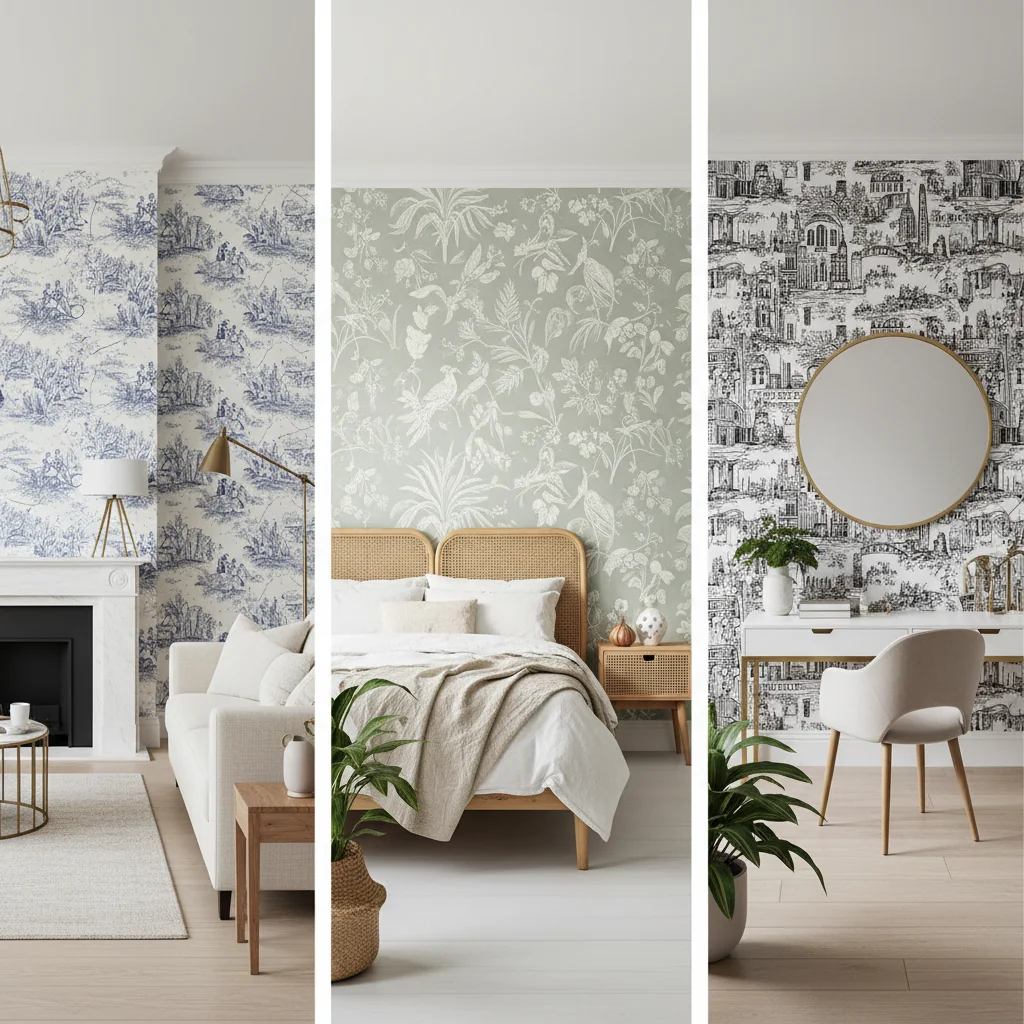
Comparison of Toile Wallpaper Materials
| Material Type | Durability & Moisture Resistance | Ease of Installation | Ease of Removal | Ideal Use Cases | Approx. Price Range (per single roll, 20.5 in x 33 ft) |
|---|---|---|---|---|---|
| Traditional Paper | Low durability, low moisture resistance; tears easily. | Moderate; requires separate paste, can be delicate when wet. | Moderate; can be difficult to remove cleanly, may damage walls. | Low-traffic areas, formal living rooms, bedrooms, dining rooms. | $25 – $75 |
| Non-Woven | High durability, good moisture resistance; tear-resistant. | High; “paste-the-wall” application, easy to maneuver. | High; dry strippable, typically removes in full sheets without damage. | Most rooms, including bathrooms and kitchens (with ventilation), high-traffic areas. | $40 – $120 |
| Vinyl (Solid Sheet) | Very high durability, excellent moisture resistance; highly washable. | Moderate; often heavier, requires strong adhesive. | Moderate; can be peelable, but stronger adhesives may leave residue. | High-traffic areas, kitchens, bathrooms, commercial settings. | $30 – $100 |
| Peel-and-Stick | Moderate durability, moderate moisture resistance; durable surface. | Very High; self-adhesive, no paste required, repositionable. | Very High; fully removable and repositionable without residue. | Rentals, temporary decor, accent walls, DIY projects, low-to-medium traffic areas. | $35 – $150 |
| Fabric-Backed Vinyl | Exceptional durability, superior moisture resistance, highly scrubbable. | Low; heavy-duty, often requires professional installation. | Moderate; can be more challenging due to strong adhesives and weight. | Commercial spaces, very high-traffic residential areas, institutional settings. | $75 – $200+ |
How to Choose the Perfect Toile Wallpaper for Your Space
Selecting the ideal toile wallpaper involves a thoughtful consideration of several design elements, ensuring the chosen pattern harmonizes with your existing decor, the room’s function, and your personal aesthetic preferences. The right toile can elevate a space, creating a cohesive and visually captivating environment, while an ill-suited choice can disrupt the balance. This decision-making process requires a precise understanding of how pattern, color, and scale interact within a given architectural context.
1. Assess the Room’s Function and Traffic
The purpose of the room dictates the practical requirements for your wallpaper. For high-traffic areas like hallways, kitchens, or children’s rooms, durability and washability are paramount. We recommend non-woven or vinyl toile wallpapers for these spaces, as they offer superior resistance to wear, moisture, and stains. In contrast, for formal living rooms, dining rooms, or bedrooms where wear is minimal, traditional paper toile can provide a softer, more authentic texture, prioritizing aesthetic fidelity over extreme resilience.
2. Consider the Room’s Size and Natural Light
The scale of the toile pattern should correspond to the size of the room. In smaller spaces or rooms with limited natural light, opt for toile patterns with smaller motifs and lighter backgrounds to prevent the space from feeling overwhelmed or closed in. A large-scale toile pattern, while dramatic, can make a small room feel even more confined. Conversely, expansive rooms or those with abundant natural light can accommodate bolder, larger-scale toile patterns and darker colorways, allowing the intricate details to truly shine without crowding the visual field. Always consider how the pattern repeat will play out across a large surface.
3. Determine Your Desired Aesthetic and Existing Decor
Toile wallpaper is incredibly versatile, but its specific style should complement the overall aesthetic of your home. For a classic French country or traditional look, choose toile with pastoral scenes in traditional red, blue, or green on an off-white background. If your home leans more contemporary or eclectic, explore modern toile interpretations featuring urban scenes, bold colors, or unexpected motifs. Ensure the toile’s color palette either matches or harmonizes with existing furnishings, textiles, and paint colors to create a cohesive design narrative.
4. Evaluate Color and Pattern Scale
- Color: The monochromatic nature of toile means the chosen color will dominate. Lighter colors (e.g., pale blue, soft grey) create a serene and airy atmosphere, while darker colors (e.g., deep red, navy blue, charcoal) offer a dramatic and sophisticated statement. Consider how the color will affect the room’s mood and perceived temperature.
- Pattern Scale: As mentioned, scale is critical. A toile with tightly packed, small motifs creates a dense, textural effect. A toile with widely spaced, larger vignettes allows individual scenes to stand out, making a bolder statement. Hold samples against the wall and step back to assess how the pattern reads from a distance and up close.
5. Order Samples and Test in Your Space
Before committing to a full purchase, always order samples of your preferred toile wallpapers. Attach these samples to different walls in the room and observe them throughout the day under various lighting conditions—natural daylight, evening lamplight, and overhead fixtures. This allows you to see how the colors shift and how the pattern interacts with the room’s unique light and existing elements. What looks perfect online or in a showroom can appear entirely different in your home.
6. Consider Installation Method
Your comfort level with DIY projects or budget for professional installation might influence your material choice. Peel-and-stick toile offers the easiest DIY option, while traditional paper and fabric-backed vinyl often benefit from professional application due to their weight and the precision required for pattern matching. Non-woven wallpapers strike a good balance, often being manageable for experienced DIYers. York Wallcoverings, for example, offers various installation types for their toile collections, catering to different skill levels.
By systematically addressing these considerations, you can confidently select a toile wallpaper that not only meets your practical needs but also beautifully enhances the aesthetic and emotional resonance of your home. Starhouse is dedicated to guiding you through this selection process, ensuring your choice is both informed and inspiring.
Sizing and Measuring: Ensuring a Seamless Installation
Accurate sizing and meticulous measurement are the cornerstones of a successful wallpaper installation, particularly with patterned designs like toile, where precise pattern matching is essential for a cohesive visual narrative. Underestimating these steps can lead to costly material shortages, visible seams, or misaligned motifs, ultimately detracting from the desired aesthetic. A precise approach guarantees a professional finish that truly showcases the beauty of your chosen toile wallpaper.
1. Gather Your Tools
Before you begin, ensure you have the following:
- Steel measuring tape (at least 25 feet long)
- Pencil
- Notebook or calculator
- Level or laser level
- Step ladder
2. Measure the Room’s Dimensions
Begin by measuring the height and width of each wall you intend to paper. Do not assume walls are perfectly uniform; measure at several points along both the height and width, especially if your home is older. Use the largest measurement for each dimension to account for any irregularities. For example, if a wall is 8 feet tall at one end and 8 feet 2 inches at the other, use 8 feet 2 inches for your calculations.
- Wall Height: Measure from the baseboard to the ceiling. If you have crown molding, measure from the top of the baseboard to the bottom of the crown molding.
- Wall Width: Measure the total width of each wall.
- Total Wall Area: Multiply the height by the width for each wall, then sum these areas to get the total square footage to be covered.
3. Account for Doors, Windows, and Obstacles
While you won’t wallpaper over these openings, it’s generally recommended to include them in your initial total square footage calculation. This provides a buffer for pattern matching and trimming. However, for a more precise estimate of usable wallpaper, you can calculate the area of doors and windows (height x width) and subtract them from the total wall area. Always round up to the nearest half or full roll to ensure you have enough material.
4. Understand Wallpaper Roll Dimensions
Wallpaper is typically sold in rolls with standard dimensions, though these can vary. Common single roll sizes in the U.S. are:
- Standard Single Roll: Approximately 20.5 inches wide by 16.5 feet long (30 sq ft).
- Double Roll Equivalent: Often sold as one continuous roll, measuring about 20.5 inches wide by 33 feet long (56 sq ft). Note that while it’s called a “double roll,” it’s not exactly double the square footage due to trimming for pattern matching.
Always check the specific dimensions provided by the manufacturer, as they can impact your calculations significantly. The manufacturer’s stated square footage per roll is usually based on continuous, untrimmed application, which isn’t realistic for patterned wallpaper.
5. Crucial Factor: Pattern Repeat
The pattern repeat is the vertical distance between where the design exactly repeats itself on a wallpaper roll. This is arguably the most critical factor for patterned wallpapers like toile. A larger pattern repeat means more waste per strip, as you must align each subsequent strip to match the pattern of the previous one. The pattern repeat is usually listed in inches on the wallpaper label or product description.
- Match Type:
- Random Match: Requires no matching at the seams. Minimal waste.
- Straight Match: The pattern matches across the seams at the same height.
- Drop Match: The pattern matches across the seams, but the design drops or steps down on alternating strips. This requires the most waste, as you may need to cut strips from different points on the roll to achieve alignment. Toile typically features a drop match or straight match.
6. Calculate the Number of Rolls Needed
Here’s a simplified method for patterned wallpaper, accounting for pattern repeat:
- Determine Usable Strip Length: Add the pattern repeat to your wall height. For example, if your wall is 8 feet (96 inches) tall and the pattern repeat is 24 inches, your usable strip length is 96 + 24 = 120 inches (10 feet). This accounts for trimming and matching.
- Calculate Strips Per Roll: Divide the total length of one roll (e.g., 33 feet or 396 inches for a double roll) by your usable strip length (e.g., 120 inches). Round down to the nearest whole number. So, 396 / 120 = 3.3, meaning you get 3 usable strips per double roll.
- Calculate Total Strips Needed: Divide the total width of the walls to be papered by the width of one wallpaper strip (e.g., 20.5 inches). Round up to the nearest whole number. For a 12-foot (144-inch) wide wall, 144 / 20.5 = 7.02, so you need 8 strips.
- Calculate Total Rolls: Divide the total strips needed by the number of usable strips per roll. For example, 8 strips / 3 strips/roll = 2.67, so you need 3 rolls.
It is always prudent to purchase at least one extra roll beyond your calculation, especially for intricate patterns like toile. This provides a buffer for errors, future repairs, or pattern mismatches, as dye lots can vary between batches. An extra roll ensures continuity in color and pattern if additional material is needed later. Starhouse emphasizes that precise measurements prevent frustration and ensure a flawless finish, transforming your space with the intended elegance of toile.
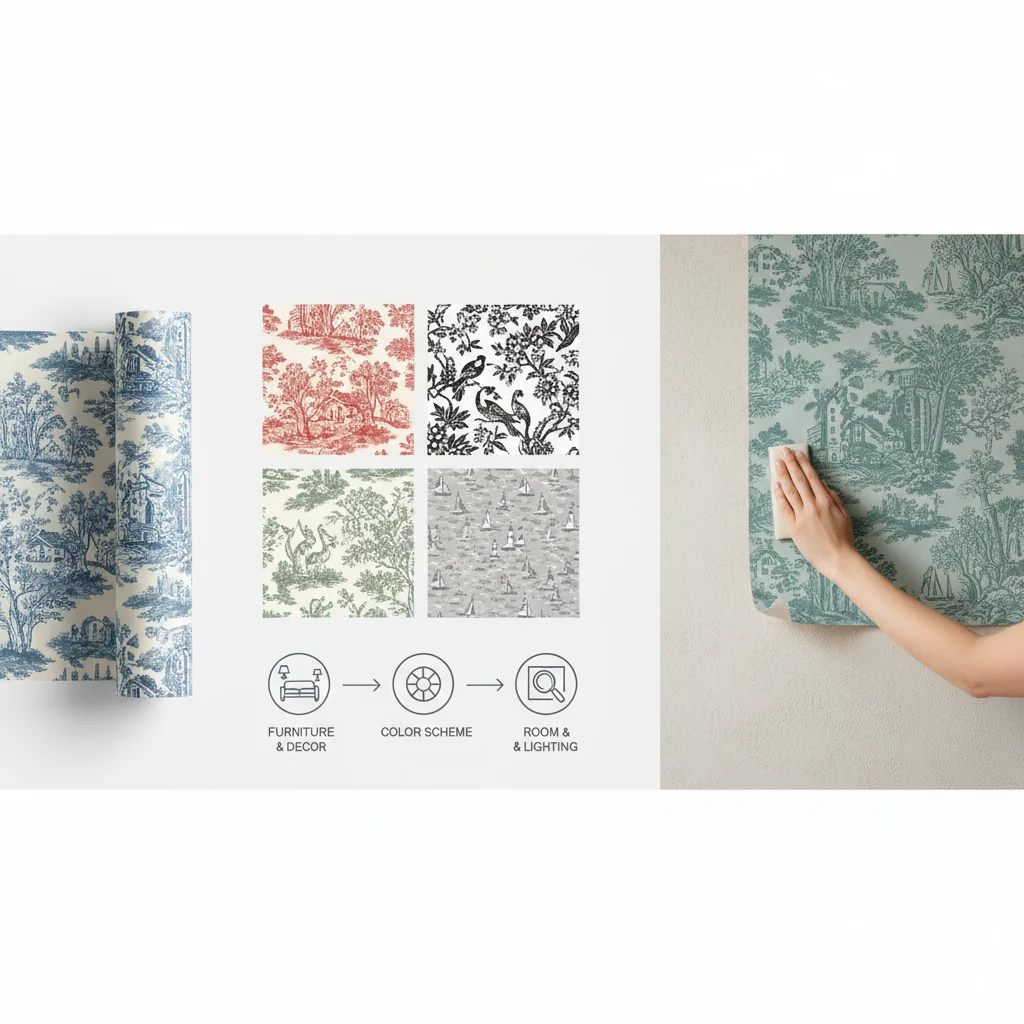
Current Trends in Toile Wallpaper Design
Toile wallpaper, far from being confined to historical reproductions, is experiencing a vibrant resurgence in contemporary interior design, with innovative interpretations that blend its classic narrative charm with modern aesthetics. Designers are pushing the boundaries of traditional toile, introducing fresh color palettes, unexpected motifs, and novel applications that make it relevant and exciting for today’s homes. These evolving trends demonstrate toile’s remarkable adaptability and enduring appeal across diverse design sensibilities.
1. Color Reimagined: Beyond Monochromatic Norms
While classic toile is defined by its single-color print, current trends are experimenting with new color combinations. Expect to see:
- Bold & Unexpected Hues: Toile patterns printed in vibrant pinks, electric blues, deep emeralds, or even neon accents on white or colored backgrounds. This injects a playful, contemporary energy into the traditional motif.
- Sophisticated Neutrals: Toile rendered in charcoal grey, soft taupe, or warm beige on equally subtle backgrounds, offering a refined, understated elegance that complements minimalist or Scandinavian-inspired interiors.
- Metallic Accents: Subtle touches of gold, silver, or copper in the print, adding a luxurious shimmer that catches the light and elevates the pattern’s intricacy. This is particularly popular in high-end designs.
- Multi-color Toile: While less common, some contemporary designs feature two or three muted colors within the pattern, adding depth while maintaining a sophisticated feel.
These updated colorways allow toile to integrate seamlessly into modern homes that favor bolder statements or softer, more nuanced palettes.
2. Unconventional Motifs and Narrative Shifts
The traditional pastoral scenes are being reinterpreted or replaced entirely with themes that resonate with modern life and interests:
- Urban Toile: Depicting cityscapes, iconic landmarks, bustling street scenes, or everyday modern life, offering a witty and sophisticated twist on the classic.
- Whimsical & Fantastical: Illustrations of mythical creatures, fantastical landscapes, or surreal narratives, perfect for children’s rooms or spaces seeking a playful, imaginative touch.
- Pop Culture & Abstract Toile: Some avant-garde designs incorporate elements of pop art, abstract forms, or even subtle references to contemporary culture, challenging the traditional definition of toile.
- Local & Regional Narratives: Toile patterns that tell stories specific to a region, city, or even a personal hobby, making the design deeply personalized and unique.
These new narratives transform toile from a historical artifact into a dynamic form of artistic expression.
3. Oversized and Small-Scale Patterns
The scale of toile patterns is also being manipulated to create different visual impacts:
- Grand Scale: Extra-large motifs and expansive scenes that make a dramatic statement, often used on a single accent wall or in spacious rooms to create a mural-like effect. This allows the intricate details to be appreciated from a distance.
- Micro Toile: Very small, tightly packed toile patterns that read almost as a texture from afar, revealing their intricate details only upon closer inspection. This offers a subtle way to introduce toile’s charm without overwhelming a space.
These variations in scale provide designers with greater flexibility in how toile is perceived and integrated into a room’s overall composition.
4. Innovative Applications and Textures
Beyond traditional wall application, toile is finding its way into new contexts:
- Ceiling Statements: Applying toile wallpaper to the ceiling creates an unexpected and luxurious fifth wall, drawing the eye upwards and adding architectural interest.
- Furniture and Cabinetry: Using peel-and-stick toile or carefully applied traditional wallpaper to upcycle furniture pieces, line cabinet interiors, or adorn closet doors, adding a bespoke, decorative touch.
- Textural Toile: Toile patterns printed on textured substrates like grasscloth, linen-look vinyl, or even embossed papers, adding tactile depth and a more organic feel to the design.
These creative applications demonstrate toile’s versatility and its ability to serve as more than just a wallcovering, becoming a key decorative element throughout the home.
5. Eco-Conscious Toile
Reflecting a broader industry trend, there is an increasing demand for environmentally friendly wallpaper options. Manufacturers are responding with:
- Sustainable Materials: Toile printed on FSC-certified paper, recycled content, or non-woven substrates made from renewable resources.
- Low-VOC Inks: Utilizing water-based, non-toxic inks that contribute to better indoor air quality.
This commitment to sustainability ensures that the beauty of toile can be enjoyed with a reduced environmental footprint. Starhouse is dedicated to offering selections that align with these evolving trends, providing our customers with both classic elegance and contemporary innovation in toile wallpaper.
Care and Maintenance: Preserving the Beauty of Your Toile
Proper care and maintenance are essential for preserving the intricate beauty and extending the lifespan of your toile wallpaper, ensuring it remains a captivating feature in your home for years to come. The specific cleaning and maintenance regimen depends critically on the material of the wallpaper, as different substrates respond uniquely to moisture and cleaning agents. Understanding these material-specific guidelines prevents damage and maintains the vibrancy of the delicate toile patterns.
General Principles for All Toile Wallpapers:
- Act Quickly: Address spills or marks as soon as possible to prevent them from setting into the material.
- Test in an Inconspicuous Area: Before applying any cleaning solution to a visible part of the wallpaper, always test it on a small, hidden section (e.g., behind a door or a piece of furniture) to ensure it does not cause discoloration or damage.
- Avoid Harsh Chemicals: Never use abrasive cleaners, strong detergents, or solvents, as these can strip colors, damage the surface, or degrade the material.
- Gentle Approach: Always start with the mildest cleaning method and escalate only if necessary.
- Avoid Oversaturation: Do not soak the wallpaper with water or cleaning solutions, as excessive moisture can weaken adhesives, cause bubbling, or damage the paper backing.
Material-Specific Care Instructions:
1. Traditional Paper Toile
Traditional paper wallpaper is the most delicate type and requires the gentlest care. It is generally not washable and is highly susceptible to water damage.
- Dusting: Regularly dust paper toile with a soft, dry cloth, a feather duster, or a vacuum cleaner with a brush attachment on a low setting. This prevents dust buildup that can dull the pattern.
- Spot Cleaning (Extreme Caution): For very small, non-greasy marks, lightly dab with a barely damp (almost dry) white cloth, using only distilled water. Do not rub, and blot dry immediately. For greasy stains, a dry cleaning sponge (often called a “chemical sponge”) can sometimes lift marks without moisture.
- Avoid Moisture: Do not use liquid cleaners or excessive water, as this will stain, warp, or tear the paper.
2. Non-Woven Toile
Non-woven wallpapers are generally durable and washable, offering more flexibility in cleaning.
- Dusting: Regular dusting with a soft cloth or vacuum cleaner attachment is recommended.
- Cleaning: For most marks and general cleaning, gently wipe the surface with a soft sponge or cloth dampened with a mild soap-and-water solution. Use a non-abrasive, pH-neutral soap. Rinse the cloth frequently with clean water and wring it out thoroughly.
- Drying: Immediately follow with a clean, dry cloth to absorb any excess moisture and prevent water spots.
- Stains: For tougher stains, a very diluted solution of white vinegar (1 part vinegar to 10 parts water) can be used, but always test first.
3. Vinyl Toile (Solid Sheet and Fabric-Backed)
Vinyl wallpapers are the most robust and easiest to clean, making them ideal for high-traffic or moisture-prone areas.
- Dusting & Cleaning: Vinyl toile can be regularly wiped down with a damp cloth and a mild detergent solution. Its surface is highly resistant to water and most household cleaners.
- Scrubbing: For stubborn stains or grime, a soft-bristled brush can be used gently with the cleaning solution, followed by rinsing with a clean, damp cloth.
- Drying: Pat dry with a clean cloth to prevent water streaks.
- Disinfecting: In areas requiring more rigorous cleaning (like kitchens or bathrooms), a diluted disinfectant spray can be used, ensuring it is safe for vinyl surfaces.
4. Peel-and-Stick Toile
Care for peel-and-stick toile is similar to non-woven or vinyl, as most removable wallpapers are made from these materials.
- Dusting & Cleaning: Use a soft, damp cloth with mild soap and water for cleaning. Avoid harsh scrubbing, especially near edges, as this could lift the adhesive.
- Avoid Excessive Moisture: While generally water-resistant, prolonged exposure to excessive moisture (e.g., in a poorly ventilated shower area) can compromise the adhesive.
- Gentle Drying: Blot dry with a clean cloth.
Preventative Measures:
- Control Humidity: Maintain consistent indoor humidity levels (ideally between 30-60%) to prevent wallpaper from expanding, contracting, or peeling. Use humidifiers or dehumidifiers as needed.
- Protect from Direct Sunlight: Prolonged exposure to direct sunlight can cause colors to fade over time. Use curtains, blinds, or UV-filtering window treatments in sun-drenched rooms.
- Ventilate Rooms: Ensure good ventilation in kitchens and bathrooms to minimize moisture and steam buildup, which can damage wallpaper.
By adhering to these specific care guidelines, your toile wallpaper will retain its intricate details and vibrant narrative, continuing to enhance your home’s aesthetic for many years. Starhouse advises always referring to the manufacturer’s specific care instructions provided with your wallpaper for the most accurate guidance.
Styling and Pairing: Integrating Toile into Your Design Scheme
Integrating toile wallpaper into your interior design scheme requires a thoughtful approach to styling and pairing, ensuring its intricate patterns enhance rather than overwhelm the space. The key lies in balancing its detailed narrative with complementary furnishings, textiles, lighting, and accessories, creating a cohesive and sophisticated environment. When executed precisely, toile wallpaper acts as a powerful design anchor, elevating the entire room with its historical charm and artistic depth.
1. Define the Room’s Mood and Focal Point
Toile wallpaper naturally draws attention, making it an excellent candidate for a focal point. Decide if you want the toile to be the dominant element or a sophisticated backdrop. For a dramatic statement, apply toile to all walls in a smaller room (like a powder room or study) or to a single accent wall in a larger space (e.g., behind a bed, sofa, or dining buffet). If a subtler approach is desired, consider using toile within framed panels or on the ceiling to add unexpected charm.
2. Complementary Furniture Styles
The historical roots of toile make it a natural fit for classic and traditional furniture, such as:
- French Country & Rococo: Distressed wood, curved lines, and ornate details harmonize beautifully with toile’s romantic narratives. Think Louis XV chairs, antique commodes, or carved headboards.
- Traditional American: Solid wood pieces, upholstered sofas with rolled arms, and classic case goods provide a sturdy counterpoint to toile’s delicate patterns.
- Modern & Transitional: Toile can surprisingly elevate modern and transitional spaces. Pair it with clean-lined, minimalist furniture in solid colors to allow the toile to provide texture and historical contrast. Avoid overly busy or patterned contemporary furniture, which can clash.
3. Selecting Textiles and Upholstery
When pairing toile with fabrics, aim for balance and texture:
- Solid Colors: Choose solid-colored upholstery, drapes, and bedding in hues extracted directly from the toile pattern (e.g., the background color or the print color). This creates cohesion and prevents visual clutter.
- Subtle Textures: Incorporate fabrics with interesting textures like linen, velvet, silk, or chenille. These add depth without introducing competing patterns.
- Small-Scale Patterns: If introducing other patterns, opt for very small, subtle designs like thin stripes, delicate checks, or tone-on-tone damasks. Ensure these patterns are significantly different in scale from the toile to avoid competition.
- Natural Fibers: Linen, cotton, and wool complement toile’s organic, illustrative quality.
4. Lighting Fixtures
Lighting plays a crucial role in highlighting toile wallpaper and setting the room’s ambiance:
- Traditional & Ornate: Crystal chandeliers, brass sconces, or intricate iron fixtures enhance the historical elegance of classic toile.
- Transitional & Modern: Sleek, minimalist pendant lights or understated task lighting can provide a contemporary contrast to traditional toile, or complement a modern toile design.
- Layered Lighting: Utilize a mix of ambient, task, and accent lighting to illuminate the toile’s details and create depth. Wall-mounted picture lights can beautifully highlight specific vignettes within the pattern.
5. Accessories and Art
Accessories should support the toile without competing for attention:
- Mirrors: Large mirrors with ornate or simple frames reflect the toile pattern, expanding the sense of space and enhancing its visual impact.
- Artwork: Choose artwork with ample negative space or simple, abstract compositions that do not clash with the toile’s narrative. Framed botanical prints, abstract art, or subtle landscapes can work well. Ensure frames are complementary to the toile’s style.
- Decorative Objects: Select decorative objects in solid colors, metallic finishes, or natural materials (ceramics, glass, wood). Group items in odd numbers for visual interest.
- Greenery: Live plants or elegant floral arrangements add freshness and an organic touch that complements toile’s often natural themes.
6. Room-by-Room Applications
- Bedrooms: A romantic toile behind the bed creates a serene and sophisticated retreat. Pair with soft linens and classic furniture.
- Dining Rooms: Toile can create a formal yet inviting atmosphere. Use it on all walls, paired with a stately dining set and elegant lighting.
- Powder Rooms: An ideal space for bold toile choices. Go for a dramatic, large-scale pattern or an unexpected color to make a small space memorable.
- Nurseries/Children’s Rooms: Whimsical or animal-themed toile can be charming and sophisticated, growing with the child.
- Home Offices/Studies: Toile can add a layer of intellectual charm and depth, especially in darker, more saturated colors.
By carefully considering these styling principles, you can transform your space with the timeless elegance of toile wallpaper, creating an environment that is both visually rich and harmoniously designed. Starhouse believes that precise pairing is paramount to achieving a truly curated aesthetic.
Common Mistakes to Avoid When Designing with Toile Wallpaper
While toile wallpaper offers immense potential for elevating an interior, certain pitfalls can diminish its impact or create a chaotic rather than cohesive look. Avoiding these common mistakes is crucial for achieving a refined and successful design. Precision in planning and execution ensures that the toile serves as an asset, contributing to an elegant and well-balanced space.
1. Overuse or Inappropriate Placement
Mistake: Applying a busy toile pattern to every wall in a large, open-concept space, or using it in a room already filled with numerous patterns and textures. This can lead to visual overload and make the room feel chaotic and overwhelming, rather than sophisticated. Another mistake is placing toile in a room where it directly clashes with the room’s primary function or existing style without thoughtful integration.
Correction: Treat toile as a feature, not a default. In larger rooms, consider using it on a single accent wall (e.g., behind the bed, sofa, or a console table) to create a focal point. For smaller spaces like powder rooms or hallways, applying toile to all walls can be effective, creating an immersive jewel-box effect, but ensure accompanying elements are subdued. Always consider the room’s existing architectural details and furniture to ensure the toile enhances, rather than competes with, the overall aesthetic.
2. Ignoring Pattern Scale in Relation to Room Size
Mistake: Selecting a large-scale toile pattern for a very small room, or a minuscule pattern for a grand, expansive space. A large pattern in a small room can visually shrink the space and make it feel cramped, while a tiny, intricate pattern in a vast room can get lost and appear indistinct from a distance.
Correction: Match the scale of the toile pattern to the room’s dimensions. For smaller rooms, opt for toile with smaller, more delicate motifs or a larger pattern with more negative space between vignettes. In spacious rooms with high ceilings, embrace large-scale toile patterns that allow the intricate details to be appreciated and make a bold statement. Always view a sample at a distance to assess its visual impact.
3. Clashing Color Palettes
Mistake: Introducing toile wallpaper with a color palette that clashes with existing paint colors, furniture upholstery, or textiles. This creates visual dissonance and undermines the room’s harmony, making the space feel disjointed rather than curated.
Correction: Ensure the toile’s colors complement or directly coordinate with the room’s existing palette. If the toile is monochromatic (e.g., blue on white), use the blue as an accent color in textiles or accessories, and the white as a dominant neutral. For more modern toiles with unexpected colors, ensure those hues are repeated in other elements of the room to create a cohesive flow. When in doubt, stick to neutrals for accompanying elements.
4. Neglecting Pattern Repeat and Seam Matching
Mistake: Failing to account for the pattern repeat during calculation and installation, leading to insufficient material or visible, mismatched seams. This is a critical error for any patterned wallpaper but particularly noticeable with the narrative scenes of toile.
Correction: Always calculate wallpaper rolls needed by adding the pattern repeat to the wall height to determine usable strip length. Purchase at least one extra roll to account for waste from pattern matching and potential errors. During installation, meticulously align each strip to ensure the toile’s scenes flow seamlessly across the wall, creating an uninterrupted narrative. For complex patterns or large areas, professional installation is often a worthwhile investment to guarantee a flawless finish.
5. Over-Accessorizing or Competing Patterns
Mistake: Filling a toile-wallpapered room with too many patterned rugs, busy artwork, or heavily patterned textiles. This creates visual noise and detracts from the toile’s inherent artistry.
Correction: Let the toile be the star. Balance its intricate patterns with solid-colored furnishings, textiles with subtle textures (e.g., linen, velvet), and understated accessories. When choosing artwork, opt for pieces with plenty of negative space, simple frames, or abstract compositions that complement, rather than compete with, the wallpaper. Mirrors are an excellent choice as they reflect the pattern without adding another visual layer.
6. Improper Surface Preparation and Installation
Mistake: Applying toile wallpaper to an unprepared or uneven wall surface, or using incorrect adhesive/installation techniques. This can result in bubbles, wrinkles, peeling seams, or the pattern not lying flat, severely compromising the aesthetic and longevity of the wallpaper.
Correction: Ensure walls are clean, smooth, dry, and primed before installation. Repair any holes or imperfections. Use the adhesive specifically recommended for your wallpaper material. Follow manufacturer instructions precisely for hanging, trimming, and smoothing. For peel-and-stick, ensure the surface is smooth and free of texture. Proper preparation and installation are foundational to a professional-looking and durable result, preserving the investment in your toile wallpaper.
By consciously avoiding these common design and installation pitfalls, you can ensure your toile wallpaper achieves its full potential, transforming your space into a testament to sophisticated design and timeless elegance. Starhouse advocates for meticulous planning to secure an impeccable outcome.
Sources
- Toile Wallpaper | Country Toile Wallpaper | Oriental Toile Wallpaper | brewsterwallcovering.com
- Toile Wallpaper | York Wallcoverings | yorkwallcoverings.com
Frequently Asked Questions About Toile Wallpaper
What is the origin of Toile de Jouy?
Toile de Jouy originated in the mid-18th century in Jouy-en-Josas, France, at a factory established by Christophe-Philippe Oberkampf in 1760, becoming renowned for its detailed monochromatic printed fabrics.
Is toile wallpaper still in style?
Yes, toile wallpaper remains highly stylish and relevant, continually reinterpreted through modern color palettes, unconventional motifs, and varied scales, making it a versatile choice for both classic and contemporary interiors.
What kind of scenes are typically depicted on toile wallpaper?
Traditional toile wallpaper typically depicts intricate monochromatic scenes of pastoral life, historical events, classical mythology, or romanticized rural landscapes, often with figures in 18th-century attire.
Can I use toile wallpaper in a bathroom or kitchen?
Yes, you can use toile wallpaper in bathrooms and kitchens, provided you select a material specifically designed for high-moisture environments, such as durable vinyl or washable non-woven options, and ensure adequate ventilation.
How do I clean toile wallpaper?
Cleaning methods for toile wallpaper depend on its material: traditional paper toile requires gentle dusting with a dry cloth, while non-woven and vinyl options can be carefully wiped with a soft, damp cloth and a mild soap solution, followed by drying.
How do I calculate how much toile wallpaper I need?
To calculate wallpaper needs, measure the height and width of each wall, then factor in the wallpaper’s pattern repeat and roll dimensions; it is always advisable to purchase at least one extra roll to account for waste and potential errors.
What is the difference between traditional and modern toile?
Traditional toile features classic pastoral or historical scenes in monochromatic hues, while modern toile reinterprets the style with contemporary themes like urban landscapes, bold new color palettes, oversized motifs, or unexpected abstract elements, broadening its design appeal.
Conclusion: Embrace the Enduring Elegance of Toile
Toile wallpaper stands as a testament to timeless design, a narrative art form that has gracefully evolved from 18th-century French châteaux to discerning modern American homes. Its intricate, monochromatic scenes offer a unique blend of historical charm, artistic depth, and sophisticated elegance, capable of transforming any space into a curated environment. From its diverse types and materials to meticulous sizing and thoughtful styling, toile demands a precise and considered approach, ensuring its enduring beauty is fully realized.
Whether you are drawn to the classic allure of pastoral vignettes, the exotic charm of Chinoiserie, or the fresh perspective of contemporary interpretations, toile wallpaper provides an unparalleled opportunity to infuse your interiors with character and a captivating story. Its versatility allows it to harmonize with a spectrum of design aesthetics, making it a powerful tool for defining mood, creating focal points, and elevating the overall ambiance of a room.
At Starhouse, we understand the profound impact that such a distinctive design element can have on a home. We are meticulously curating a collection of wallcoverings that honor the heritage of toile while embracing the innovations of modern design and manufacturing. Our aim is to provide you with exceptional choices that meet the highest standards of quality, aesthetics, and functionality, empowering you to create spaces that are both beautiful and deeply personal.
As you envision the narrative possibilities for your own walls, we invite you to be part of our journey. Starhouse is curating its collection with an unwavering commitment to design excellence. Tell us what you’re looking for in your next design project, and gain early access to our meticulously selected range of wall décor and home furnishings. Discover how the enduring elegance of toile wallpaper can redefine your space, creating a backdrop that tells your unique story with unparalleled sophistication.