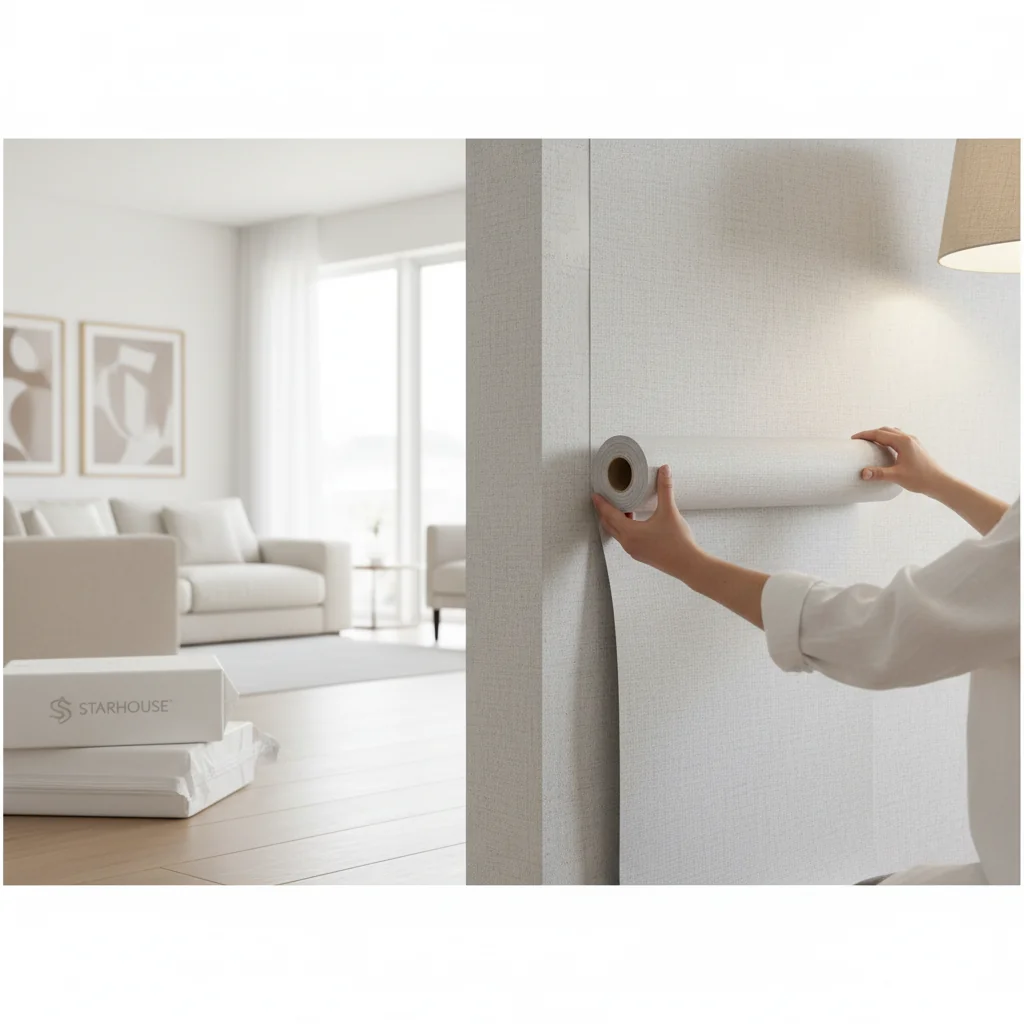
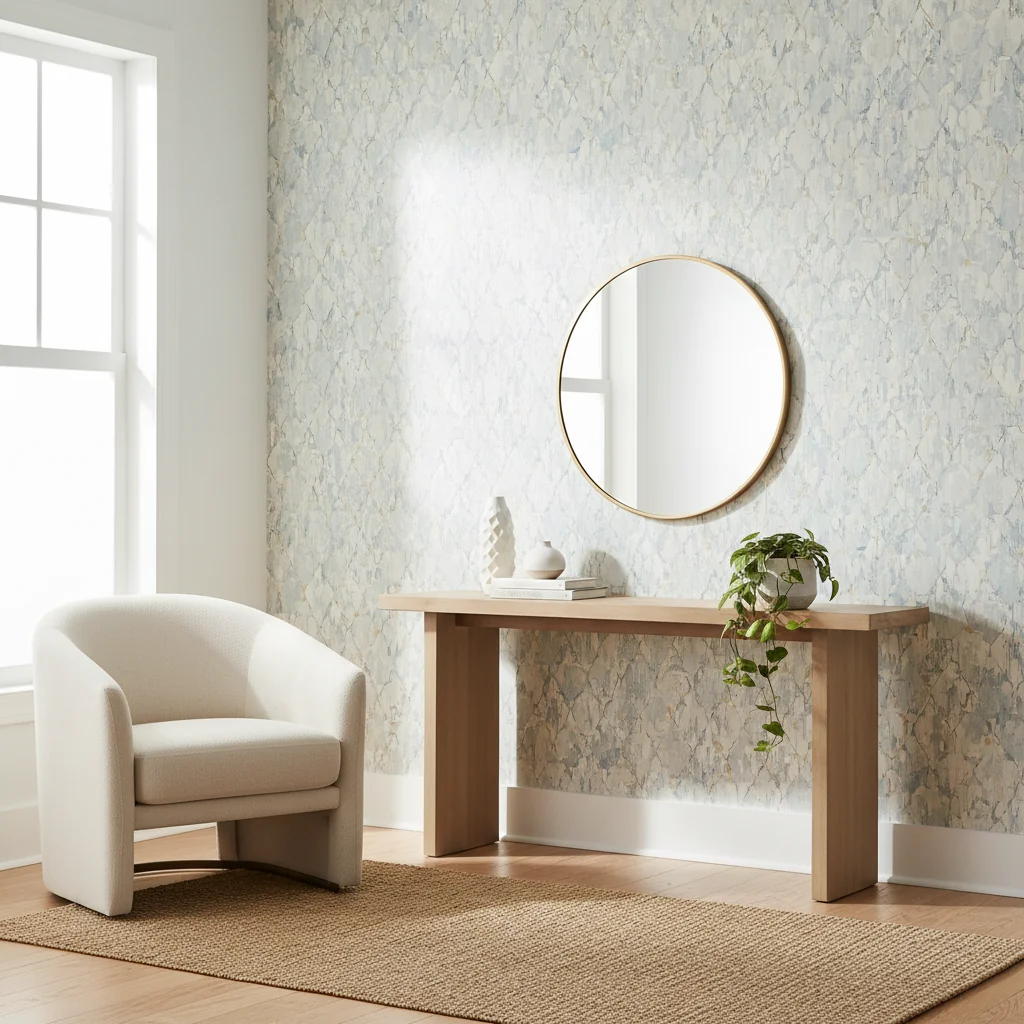
Art Deco wallpaper represents a distinctive and influential design movement from the early 20th century, characterized by its opulent, geometric, and streamlined aesthetic that continues to captivate designers and homeowners today. This guide from Starhouse provides a comprehensive exploration of Art Deco wallpaper, detailing its origins, diverse styles, material considerations, and practical applications, ensuring you can confidently integrate this iconic look into your living spaces with precision and flair. Understanding the nuances of Art Deco wallpaper, from its historical context to contemporary installation techniques like peel-and-stick options, is essential for achieving an authentic and sophisticated interior design.
Key takeaways
- Art Deco wallpaper is defined by geometric patterns, metallic accents, and a sense of luxury, originating from the 1920s and 1930s.
- Choosing the right Art Deco wallpaper involves considering material type (e.g., vinyl, non-woven, peel-and-stick), pattern scale, and color palette to complement your room’s function and existing decor.
- Accurate measurement is critical for successful wallpaper installation; factor in pattern repeat and additional waste for optimal results.
- Styling Art Deco wallpaper effectively requires pairing it with complementary furnishings, lighting, and accessories that echo the era’s sophisticated elegance.
- Proper care and maintenance, specific to the wallpaper material, ensure the longevity and pristine appearance of your Art Deco wall treatment.
- Avoid common pitfalls such as overwhelming small spaces with large patterns or neglecting surface preparation for a flawless application.
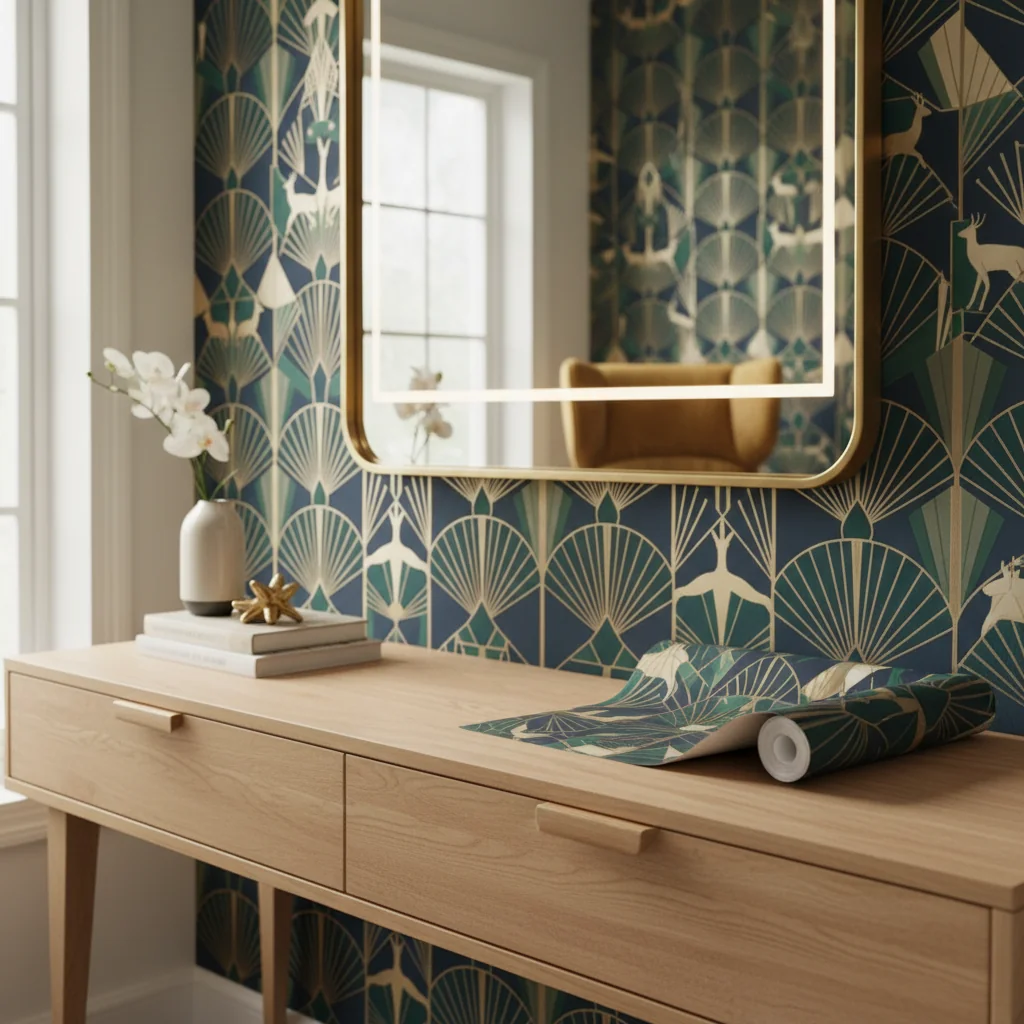
What Is Art Deco Wallpaper? A Definitive Introduction
Art Deco wallpaper embodies the distinctive aesthetic of the Art Deco movement, a globally influential design style that emerged in the 1920s and flourished through the 1930s, characterized by its celebration of modernity, luxury, and geometric precision. This wallpaper style integrates bold lines, opulent materials, and symmetrical patterns, reflecting the optimism and technological advancements of its era. It represents a departure from the organic forms of Art Nouveau, embracing instead a sleek, machine-age elegance that remains highly sought after in contemporary interiors.
The term “Art Deco” itself derives from the 1925 Exposition Internationale des Arts Décoratifs et Industriels Modernes in Paris, where the style gained widespread recognition. Designers of the period sought to combine traditional craftsmanship with the machine age, resulting in a look that was both sophisticated and progressive. Art Deco wallpaper is not merely a decorative element; it is a statement piece that infuses a space with historical grandeur and a timeless sense of glamour.
Historical Context and Origins
Art Deco emerged in post-World War I France, a period marked by profound social and technological change, offering a refreshing antidote to the austerity of wartime and the previous century’s ornate styles. It quickly spread across the globe, influencing architecture, fashion, industrial design, and interior décor. The style drew inspiration from diverse sources, including ancient Egyptian and Mesoamerican art, Cubism, Fauvism, and the Ballet Russes, synthesizing them into a coherent, luxurious aesthetic.
Key to its development was the increasing availability of new materials and manufacturing techniques. The rise of skyscrapers, luxury liners, and grand theaters provided the perfect canvases for Art Deco’s dramatic and sophisticated expressions. Wallpaper, as an accessible form of decorative art, played a significant role in bringing this high-end aesthetic into residential and commercial interiors alike.
Defining Characteristics of Art Deco Design
Art Deco design is immediately recognizable through several core characteristics that are consistently translated into its wallpaper patterns. These elements combine to create a cohesive and impactful visual language:
- Geometric Precision: Sharp angles, chevrons, zigzags, sunbursts, fan shapes, and stepped patterns are hallmarks. These geometric motifs often create a sense of order, movement, and dynamism.
- Symmetry and Repetition: Many Art Deco patterns are perfectly symmetrical, contributing to a feeling of balance and sophisticated order. Repetitive motifs create a rhythmic visual flow.
- Rich Color Palettes: While some Art Deco designs employ muted tones, the style is renowned for its bold and luxurious color schemes. Common palettes include deep jewel tones (emerald, sapphire, ruby), contrasting with metallics like gold, silver, and bronze, as well as high-contrast black and white.
- Opulent Materials and Finishes: Although wallpaper cannot replicate solid brass or polished lacquer, Art Deco patterns often mimic these luxurious textures through clever use of metallic inks, reflective surfaces, and trompe l’oeil effects.
- Streamlined Forms: A focus on sleek, elongated forms and aerodynamic curves, particularly in the later phase known as Streamline Moderne, suggests speed and efficiency, reflecting the era’s fascination with machines and progress.
- Exotic Motifs: Elements inspired by ancient cultures, particularly Egyptian and Mayan art, as well as Asian and African influences, were often stylized and integrated into patterns, adding an element of the exotic and sophisticated.
Understanding these foundational characteristics allows for a discerning eye when selecting Art Deco wallpaper, ensuring the chosen design authentically represents the period’s grandeur and distinctive appeal.
The Enduring Allure: Why Choose Art Deco Wallpaper?
Choosing Art Deco wallpaper offers a distinctive way to infuse a space with timeless elegance, sophisticated drama, and a tangible connection to a glamorous historical era. Its unique blend of modernity and classic luxury provides an aesthetic that is both striking and enduring, unlike transient trends. The precise geometric patterns and often opulent colorways create a powerful visual statement that can transform an ordinary room into an extraordinary design showcase.
Making a Statement with Style and Sophistication
Art Deco wallpaper is inherently a statement piece. Its bold patterns and luxurious finishes command attention, immediately elevating the perceived value and design integrity of a room. Whether it’s a dramatic geometric print in a dining room or a subtle metallic fan pattern in a powder room, the wallpaper acts as the focal point, around which other design elements can be harmoniously arranged. This style conveys a sense of deliberate design and attention to detail, reflecting a homeowner’s sophisticated taste. It speaks to an appreciation for history, art, and refined living.
Versatility Across Rooms and Design Schemes
Despite its distinctive aesthetic, Art Deco wallpaper exhibits remarkable versatility, adapting to various rooms and complementing diverse design schemes. In a living room, a large-scale geometric pattern can define a feature wall, while a more subtle, repeating motif can add texture and depth to an entire space. For bedrooms, softer metallic patterns or botanical Art Deco interpretations can create a serene yet luxurious retreat. Even in kitchens or bathrooms, appropriate material choices allow for the integration of Art Deco flair, perhaps through a stylized tile-effect pattern or a bold geometric splashback.
The adaptability extends to pairing with other styles. Art Deco wallpaper can seamlessly integrate with contemporary minimalist furniture, adding warmth and character, or complement traditional pieces by introducing a dynamic contrast. It acts as a bridge between historical grandeur and modern living, proving that true style transcends specific eras.
Creating Depth and Dimension
The intricate patterns and often metallic or reflective elements inherent in Art Deco wallpaper are exceptionally effective at creating visual depth and dimension within a space. Geometric designs, especially those with an optical illusion or a stepped motif, can make walls appear to recede or advance, manipulating the perception of room size. Metallic accents catch and reflect light, adding a shimmering quality that changes throughout the day, imparting a dynamic and luxurious feel. This play of light and shadow, pattern and sheen, gives rooms a layered complexity that flat paint simply cannot achieve, contributing to a more engaging and visually rich environment.
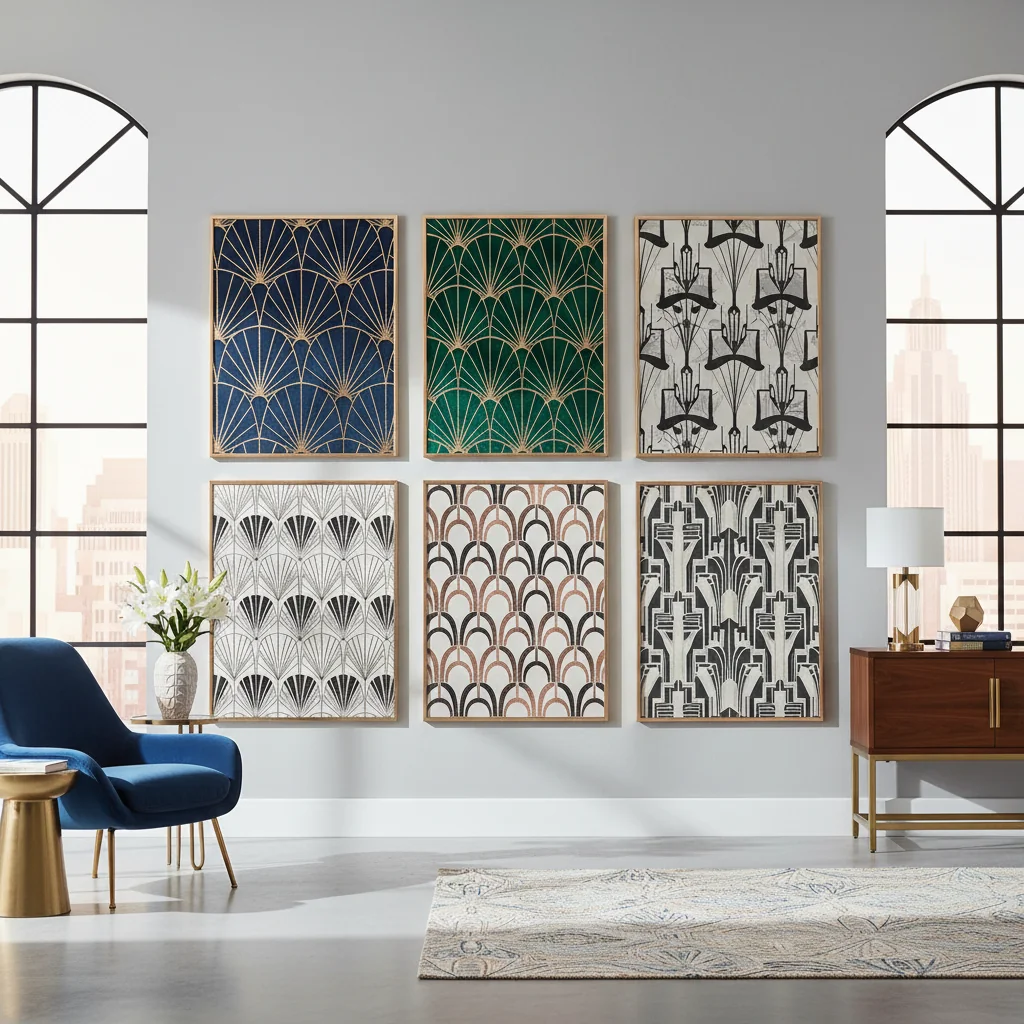
Types of Art Deco Wallpaper: Materials and Construction
Art Deco wallpaper is available in a variety of material constructions, each offering distinct advantages in terms of durability, ease of installation, and aesthetic finish, making the choice dependent on the specific application and desired longevity. Understanding these material types—from traditional paper to modern peel-and-stick options—is crucial for selecting the most appropriate wallpaper for any given space. The manufacturing process and base materials directly impact the wallpaper’s texture, washability, and overall performance.
Traditional Paper Wallpaper
Traditional paper wallpaper consists of a decorative paper layer printed with Art Deco patterns, often with a paper backing. This type is generally more breathable and offers a classic, matte finish that can be ideal for a historically authentic look. However, paper wallpaper is typically less durable than other options, more susceptible to moisture damage, and can be challenging to install as it requires paste application and precise handling to avoid tearing. It is generally recommended for low-traffic areas or spaces where a delicate, traditional aesthetic is prioritized, such as formal living rooms or bedrooms.
Vinyl Wallpaper
Vinyl wallpaper features a paper or fabric backing coated with a layer of vinyl, which makes it exceptionally durable, washable, and resistant to moisture and stains. This resilience makes vinyl an excellent choice for high-traffic areas like hallways, family rooms, and even bathrooms or kitchens, where an Art Deco pattern can introduce glamour without compromising practicality. Vinyl options can mimic a wide range of textures, from subtle fabric weaves to embossed metallic finishes, allowing for a luxurious Art Deco appearance that is also highly functional. Its robust nature contributes to its longevity, often outperforming other types in busy environments.
Non-Woven Wallpaper
Non-woven wallpaper is a modern innovation made from a blend of natural and synthetic fibers, offering a balance of durability, breathability, and ease of use. It is distinguished by its “paste the wall” application method, where adhesive is applied directly to the wall rather than the wallpaper, simplifying installation and making it easier to remove without damage. Non-woven Art Deco wallpapers are often washable, tear-resistant, and dimensionally stable, meaning they won’t expand or contract when wet. This makes them a versatile and popular choice for various rooms, providing a sophisticated look with practical benefits.
Fabric-Backed Wallpaper
Fabric-backed wallpaper, often referred to as textile wallpaper, features a fabric substrate (like linen, silk, or polyester) laminated onto a paper or non-woven backing. This construction offers a luxurious, tactile finish that adds significant texture and warmth to a room. Art Deco patterns printed on fabric-backed wallpaper often achieve a richer, more nuanced appearance, with the fabric weave adding depth to metallic or geometric designs. While generally more expensive and requiring professional installation due to its weight and delicate nature, it is highly durable and provides exceptional acoustic properties, making it ideal for creating opulent and quiet spaces like master bedrooms or formal studies.
Peel-and-Stick Wallpaper
Peel-and-stick wallpaper, also known as removable wallpaper or self-adhesive wallpaper, is a revolutionary option for temporary or low-commitment decorating. It features an adhesive backing protected by a removable liner, allowing for easy application and repositioning without the need for traditional paste. This type of wallpaper is often made from vinyl or non-woven materials, offering washability and durability, combined with the significant advantage of being fully removable without damaging the wall surface. It is perfect for renters, DIY enthusiasts, or those who enjoy frequently updating their decor. Art Deco peel-and-stick options provide the same iconic patterns with unparalleled flexibility, making luxury design accessible and adaptable.
Comparison of Wallpaper Material Types
Selecting the right material for your Art Deco wallpaper is a crucial decision that impacts both the aesthetic outcome and the practical longevity of your installation. This table provides a concise comparison of common wallpaper types:
| Material Type | Durability | Ease of Installation | Care & Maintenance | Ideal Use Cases | Typical Cost Range (per roll) |
|---|---|---|---|---|---|
| Traditional Paper | Low to Medium; prone to tears and moisture damage. | Challenging; requires paste, can be delicate when wet. | Wipe clean with a dry cloth; not generally washable. | Low-traffic areas, formal living rooms, bedrooms, historic restorations. | $20 – $80 USD |
| Vinyl | High; very resistant to moisture, stains, and abrasion. | Medium; requires paste, heavier than paper, but forgiving. | Easily washable with mild soap and water. | High-traffic areas, kitchens, bathrooms, commercial spaces. | $30 – $150 USD |
| Non-Woven | Medium to High; tear-resistant, dimensionally stable. | Easy; “paste the wall” method, often strippable. | Washable with a damp cloth. | Versatile for most rooms, DIY projects, living areas, bedrooms. | $40 – $200 USD |
| Fabric-Backed | High; very durable, good acoustic properties. | Challenging; often requires professional installation due to weight and precision. | Varies by fabric; typically spot clean or professional cleaning. | Luxury interiors, formal dining rooms, master bedrooms, studies. | $100 – $500+ USD |
| Peel-and-Stick | Medium; durable for temporary use, less robust than permanent vinyl. | Very Easy; self-adhesive, repositionable, temporary. | Wipe clean with a damp cloth. | Rentals, accent walls, DIY projects, nurseries, frequent decor updates. | $30 – $120 USD |
Iconic Art Deco Styles and Patterns
Iconic Art Deco wallpaper styles are characterized by a diverse yet cohesive range of geometric motifs, stylized natural elements, and luxurious patterns that reflect the era’s fascination with modernity, exoticism, and opulence. These patterns are not merely decorative; they are integral to defining the Art Deco aesthetic, offering distinct visual narratives that transform interiors. Understanding these key styles allows for a precise selection that aligns with the desired mood and historical accuracy of a space.
Geometric Patterns: The Cornerstone of Art Deco
Geometric patterns are the quintessential expression of Art Deco wallpaper, forming the backbone of its visual language. These designs are marked by their precision, symmetry, and often repetitive nature, creating a sense of order and sophisticated dynamism. The shapes employed are diverse, ranging from simple lines and squares to complex interlocking forms. Common motifs include:
- Chevrons and Zigzags: These V-shaped patterns create a sense of movement and energy, often used in bold, contrasting colors to enhance their visual impact.
- Sunbursts and Fan Motifs: Radiating lines emanating from a central point, symbolizing optimism and the dawn of a new era, frequently appear in metallic finishes.
- Stepped Patterns: Inspired by the ziggurats of ancient Mesopotamia and the stepped profiles of skyscrapers, these patterns add architectural grandeur and depth.
- Interlocking Rectangles and Squares: Creating intricate, grid-like compositions that evoke a sense of structured elegance and modernism.
- Diamond and Trellis Designs: Often incorporating metallic accents, these patterns add a refined sparkle and geometric complexity.
These geometric designs are often rendered with metallic inks—gold, silver, bronze—or in high-contrast color palettes like black and white, amplifying their luxurious and striking appeal. The precision of these patterns was a direct reflection of the machine age, celebrating industrial progress and sleek, manufactured forms.
Stylized Botanical and Animal Motifs
While known for its geometry, Art Deco also embraced natural forms, but always in a highly stylized, symmetrical, and often simplified manner, distinct from the flowing curves of Art Nouveau. Botanical and animal motifs are reinterpreted through an Art Deco lens, transforming organic shapes into elegant, decorative patterns. Examples include:
- Palm Fronds and Tropical Foliage: Often depicted in symmetrical arrangements or as repeating, simplified silhouettes, evoking exotic locales and luxury travel.
- Feathers: Particularly peacock feathers, stylized and arranged in fan-like or radial patterns, symbolizing opulence and beauty.
- Gazelles and Exotic Birds: Rendered in graceful, elongated forms, often in profile, adding a touch of the wild and the refined.
- Floral Designs: Simplified and geometricized flowers, often arranged in repeating, structured patterns rather than naturalistic depictions.
These motifs often appear in conjunction with geometric elements, creating a harmonious blend of the natural and the structured, further enhancing the style’s unique charm.
Streamline Moderne and Nautical Influences
A later development within the Art Deco movement, Streamline Moderne, emerged in the 1930s, emphasizing aerodynamic forms, long horizontal lines, and curved surfaces, reflecting the design of ocean liners, trains, and automobiles. This sub-style brought a softer, more fluid geometry to Art Deco wallpaper, often incorporating:
- Horizontal Bands and Stripes: Creating a sense of speed and forward motion.
- Rounded Corners and Curved Lines: Softening the sharp angles of earlier Art Deco, suggesting efficiency and sleekness.
- Porthole Motifs: Circular elements reminiscent of ship windows, adding a nautical touch.
- Wave Patterns: Stylized representations of water, reinforcing the connection to ocean travel and fluidity.
Streamline Moderne patterns often feature more subdued color palettes, focusing on chrome, silver, and muted blues or grays, maintaining elegance while introducing a sense of technological progress. This particular style is a testament to Art Deco’s adaptability and its ability to evolve with changing tastes and technological advancements.
The Architect of the Capitol notes how Art Deco, with its emphasis on “geometric motifs, smooth lines, and stylized natural forms,” was utilized in public buildings, showcasing its monumental appeal and ability to convey progress and sophistication.
Exoticism: Egyptian Revival and Chinoiserie
The discovery of Tutankhamun’s tomb in 1922 sparked a significant fascination with ancient Egypt, leading to the “Egyptian Revival” within Art Deco. This influence translated into wallpaper through:
- Hieroglyphic-inspired patterns: Stylized symbols and figures from Egyptian art.
- Lotus and Papyrus motifs: Geometric interpretations of these ancient floral symbols.
- Pharaoh and Sphinx imagery: Often simplified and symmetrical, adding an exotic and historical grandeur.
Similarly, Chinoiserie, a European interpretation of Chinese and East Asian artistic traditions, found its way into Art Deco, but with a more stylized and geometric approach than its Rococo predecessor. This included:
- Pagoda and temple designs: Simplified and often repeated.
- Cherry blossom and bamboo motifs: Rendered with clean lines and symmetrical arrangements.
- Dragon and phoenix imagery: Highly stylized and often integrated into geometric frameworks.
These exotic influences provided designers with a rich vocabulary of symbols and patterns to imbue spaces with a sense of adventure, luxury, and cultural sophistication, perfectly aligning with the Art Deco ethos of glamorous escapism.
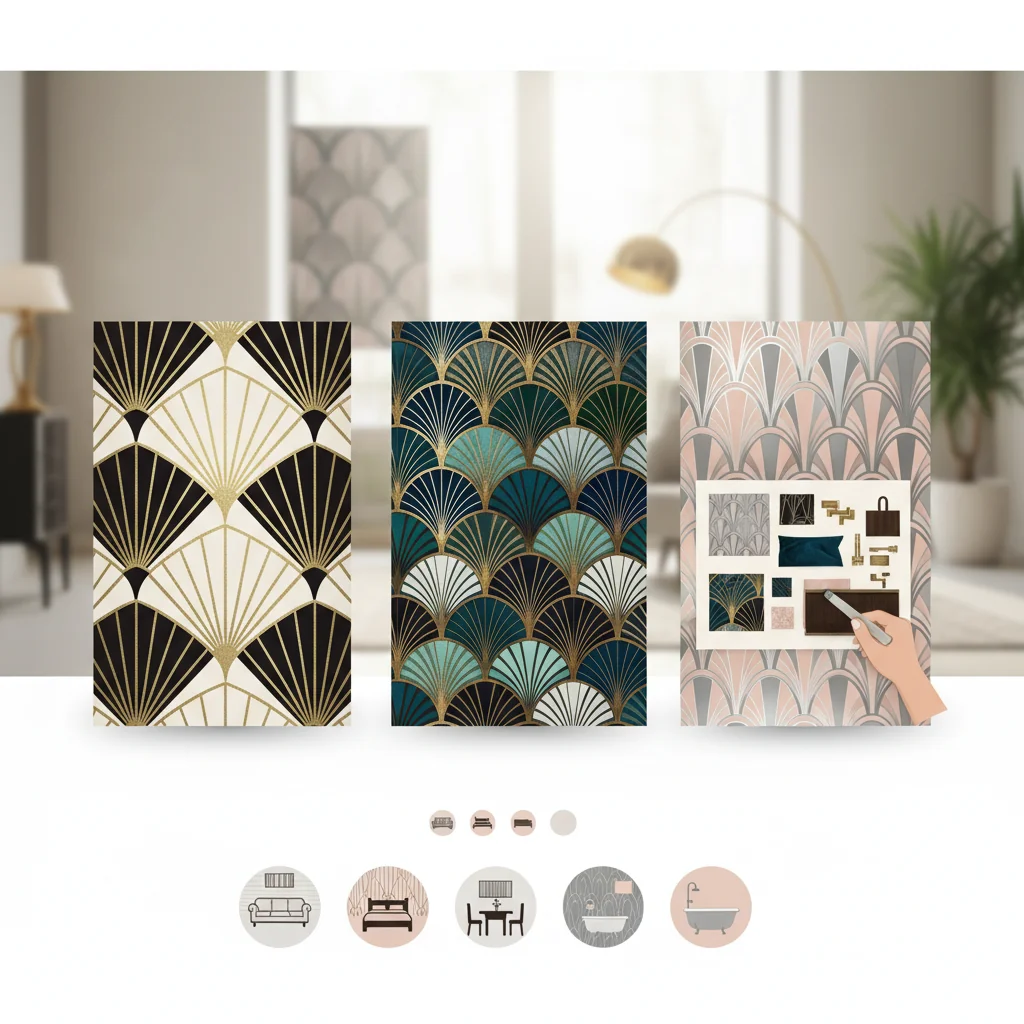
Choosing Your Art Deco Wallpaper: A Starhouse Guide
Selecting the ideal Art Deco wallpaper involves a thoughtful consideration of your room’s specific characteristics, including its size, existing decor, natural light, and your personal aesthetic preferences, to ensure a harmonious and impactful design outcome. The right choice will not only enhance your space but also reflect the sophisticated and precise nature of the Art Deco era. Starhouse advocates for a methodical approach that balances visual appeal with practical application.
Assessing Room Suitability and Function
Before committing to a specific Art Deco wallpaper, evaluate the room’s primary function and how much visual impact you desire. For a formal dining room or a sophisticated living area, a bold, metallic geometric pattern can create a dramatic focal point and elevate the room’s elegance. In a bedroom, softer, more subdued Art Deco patterns, perhaps with a subtle shimmer or a stylized botanical motif, might promote a more serene atmosphere. For high-traffic areas like hallways or powder rooms, consider more durable and washable materials like vinyl or non-woven wallpaper, ensuring the design withstands daily wear and tear while maintaining its luxurious appeal.
Consider the architectural features of the room as well. High ceilings can accommodate larger, more expansive patterns, while intricate detailing around windows or fireplaces might call for a pattern that complements rather than competes with these features. The goal is to enhance the room’s character, not overwhelm it.
Considering Pattern Scale and Repeat
The scale of the Art Deco pattern is paramount in determining its effect on a room. Large-scale patterns with significant repeats are best suited for spacious rooms with ample wall space, where they can be fully appreciated without feeling cramped. These patterns create a grand, impactful statement. Conversely, small-scale, intricate geometric patterns or subtle repeating motifs are more appropriate for smaller rooms or as an accent on a single wall, preventing the space from feeling overwhelmed. A pattern repeat refers to the vertical distance at which the design repeats itself on the wallpaper roll; a larger repeat means more waste during installation to ensure pattern alignment, which is a critical factor in budget and material calculation.
When selecting, hold samples against your wall to visualize the pattern’s scale in situ. Observe how the pattern interacts with existing furniture and architectural elements. A well-chosen scale ensures the Art Deco design enhances the room’s proportions rather than detracting from them.
Color Palette and Light Interaction
Art Deco wallpaper offers a rich spectrum of color palettes, from high-contrast black and white to deep jewel tones and shimmering metallics. The chosen colors should harmonize with your existing furniture, textiles, and overall color scheme. Lighter colors and metallic finishes, such as silver or gold, are excellent for small rooms or spaces with limited natural light, as they reflect light and create an illusion of openness and brightness. Darker, more saturated colors, like emerald green or sapphire blue, create a dramatic, intimate, and luxurious ambiance, ideal for larger rooms or spaces where a bold statement is desired.
The interaction of light with the wallpaper is also crucial. Consider how natural light changes throughout the day and how artificial lighting will affect the pattern and color. Metallic accents in Art Deco wallpaper, for instance, can shimmer beautifully under direct light, adding a dynamic quality that enhances the room’s glamour. Always view wallpaper samples in the actual room and under various lighting conditions to accurately assess their appearance.
Balancing with Existing Decor and Furniture
Art Deco wallpaper should complement, not clash with, your existing decor and furniture. If your room already features strong patterns or bold colors, opt for a more subdued Art Deco wallpaper with a smaller scale pattern or a monochromatic scheme. Conversely, if your furniture is minimalist or neutral, a dramatic Art Deco wallpaper can serve as the room’s primary artistic element. Consider the materials and finishes of your furniture; highly polished woods, lacquered surfaces, chrome, and glass naturally align with the Art Deco aesthetic. Textiles like velvet, silk, and geometric-patterned fabrics will also enhance the overall Art Deco theme.
The goal is to create a cohesive and curated space where every element feels intentionally placed. Art Deco wallpaper provides an excellent foundation for building a truly sophisticated and historically resonant interior, but thoughtful integration is key to achieving a balanced and elegant result.
Sizing and Measuring for Art Deco Wallpaper
Accurate sizing and meticulous measuring are indispensable steps for a successful Art Deco wallpaper installation, ensuring a seamless pattern match and minimizing waste. Precise measurements directly impact the number of rolls required and the overall aesthetic outcome, preventing costly errors and ensuring the intricate Art Deco patterns align perfectly across your walls. Starhouse emphasizes that careful planning at this stage is foundational to achieving a professional-looking finish.
Understanding Wallpaper Roll Dimensions
Wallpaper rolls are not standardized globally, but in the U.S., common dimensions are typically 20.5 inches or 27 inches wide, and between 16.5 feet and 33 feet long. It is imperative to verify the exact dimensions of the specific Art Deco wallpaper you intend to purchase, as these figures are critical for accurate calculations. Manufacturers clearly list the width and length, usually in square footage, on the product packaging or specifications. Additionally, pay close attention to the pattern repeat, which is the vertical distance before the design repeats. A larger pattern repeat means more wallpaper will be needed to ensure proper alignment between strips.
Step-by-Step Measuring Guide
Follow these precise steps to accurately measure your walls for Art Deco wallpaper:
- Measure Wall Height: Measure the height of each wall from the baseboard to the ceiling. Take several measurements across the wall, especially if your ceiling or floor is uneven, and use the greatest height for your calculations.
- Measure Wall Width: Measure the total width of each wall you plan to wallpaper.
- Calculate Total Square Footage: For each wall, multiply its height by its width to get the square footage. Sum these figures for all walls to get the total square footage to be covered.
- Account for Doors and Windows: While you won’t wallpaper over these, it’s generally recommended to include them in your initial square footage calculation. This provides a buffer for pattern matching and cutting, particularly around openings. For very large openings, you can subtract their area, but always add extra for waste.
- Factor in Pattern Repeat: This is crucial for Art Deco patterns. Add approximately 6-12 inches (or one full pattern repeat, whichever is larger) to each strip’s length to allow for proper pattern matching at the seams. This extra length ensures that when you cut subsequent strips, the pattern aligns seamlessly across the wall.
- Add for Waste and Trimming: Always add an additional 10-15% to your total square footage or roll count to account for trimming, pattern matching, mistakes, and future repairs. For complex Art Deco patterns with large repeats, err on the side of a higher percentage.
Calculating the Number of Rolls Needed
Once you have your measurements, you can calculate the number of rolls:
- Determine Usable Square Footage Per Roll: Multiply the roll’s width by its length to get its total square footage. Then, subtract about 15-20% from this total for pattern repeat and waste, or use the manufacturer’s stated “usable coverage area” if provided.
- Divide Total Wall Square Footage by Usable Roll Square Footage: Take your total calculated wall square footage (including the waste buffer) and divide it by the usable square footage of a single roll. Round up to the nearest whole number.
- Consider Strips Per Roll (Alternative Method):
- Divide the roll’s length by your wall height (plus pattern repeat allowance) to find how many full strips you can get from one roll.
- Divide the total width of your walls by the wallpaper’s width to find how many strips you need in total.
- Divide the total number of strips needed by the number of strips per roll to get your total roll count. Again, round up.
When in doubt, it is always safer to order an extra roll. Dye lots can vary slightly between batches, so having an extra roll from the same dye lot ensures color consistency if you need more later.
Professional Installation Considerations
While many Art Deco wallpapers, especially peel-and-stick, are suitable for DIY installation, complex patterns, delicate materials like fabric-backed wallpaper, or large-scale projects often benefit from professional installation. Experienced wallpaper hangers possess the tools, techniques, and expertise to ensure perfect pattern alignment, smooth seams, and efficient installation, particularly critical for intricate Art Deco designs. They can also advise on proper wall preparation, which is fundamental for a lasting finish. Surface preparation for wallpaper includes cleaning, patching, sanding, and applying a primer. A properly primed wall ensures better adhesion, easier repositioning, and smoother removal in the future.
Styling and Pairing Art Deco Wallpaper
Styling and pairing Art Deco wallpaper effectively involves harmonizing the wallpaper’s bold aesthetic with complementary furnishings, lighting, textiles, and accessories to create a cohesive and authentic environment. The key is to balance the wallpaper’s strong visual presence with other elements that echo its luxurious and geometric sensibility without creating visual clutter. This approach ensures the Art Deco wallpaper truly shines as the centerpiece of your design.
Complementary Furniture and Layout
When styling a room with Art Deco wallpaper, select furniture that complements its sleek lines and luxurious materials. Pieces with geometric forms, rounded edges, and polished finishes are ideal. Consider:
- Materials: Lacquered wood (black, white, or exotic veneers), chrome, brass, polished steel, glass, and mirrors are quintessential Art Deco materials.
- Silhouettes: Look for streamlined sofas and armchairs with clean lines, club chairs, chaises longues, and geometric side tables. Dining tables often feature inlaid patterns or polished stone tops.
- Upholstery: Velvet, silk, and rich leather in jewel tones or classic black and white enhance the Art Deco aesthetic.
The layout should emphasize symmetry and balance, typical of the Art Deco era. Arrange furniture in a way that creates clear sightlines and highlights the wallpaper, rather than obscuring it. For instance, a sofa centered against a wall with a prominent Art Deco pattern can create a powerful focal point.
Lighting Fixtures: Illuminating the Glamour
Lighting is crucial for enhancing the Art Deco aesthetic, as it interacts with the wallpaper’s metallic accents and often reflective surfaces. Choose fixtures that feature geometric shapes, polished metals (chrome, brass, nickel), and frosted or etched glass. Iconic Art Deco lighting includes:
- Chandeliers: Often tiered or with cascading crystal elements, providing dramatic overhead illumination.
- Sconces: Wall-mounted fixtures with fan shapes, stepped designs, or cylindrical glass, casting ambient light and highlighting wall patterns.
- Table and Floor Lamps: Featuring chrome bases, geometric shades, or frosted glass globes, adding task and accent lighting.
The right lighting can make Art Deco wallpaper shimmer and come alive, emphasizing its luxurious qualities and creating a truly glamorous atmosphere. Consider dimmer switches to adjust the mood from bright and lively to soft and intimate.
Textiles and Accessories: Adding Layers of Luxury
Textiles and accessories provide opportunities to layer texture, color, and additional Art Deco motifs into your space. These elements should reinforce the wallpaper’s aesthetic without competing with it:
- Curtains and Drapes: Opt for rich fabrics like velvet, silk, or satin, in solid colors that pick up a hue from the wallpaper, or with subtle geometric embroidery. Consider floor-length drapes for added drama.
- Rugs: Geometric-patterned rugs, often in contrasting colors or with a central medallion design, can anchor a seating area. Plush, solid-colored rugs can provide softness against a bold wallpaper.
- Cushions and Throws: Use cushions in velvet, faux fur, or with small-scale Art Deco patterns. Throws in luxurious fabrics add comfort and visual appeal.
- Decorative Objects: Incorporate objects made from glass, chrome, black lacquer, or polished stone. Sculptures, vases, and decorative boxes with geometric forms or stylized animal motifs are excellent choices.
- Mirrors: Art Deco mirrors often feature ornate, geometric frames in gold, silver, or black, reflecting light and making spaces feel larger.
- Artwork: Choose abstract art, stylized portraits, or pieces with strong graphic elements that complement the wallpaper’s aesthetic.
Creating a Cohesive Color Palette
A cohesive color palette is essential for a well-designed Art Deco interior. If your wallpaper features bold colors, select one or two accent colors from the pattern to repeat in your textiles and accessories. For example, if your wallpaper has gold and black elements, introduce gold accents in lamp bases and black velvet cushions. If the wallpaper is more subdued, use your furniture and accessories to introduce pops of jewel tones like emerald, sapphire, or ruby, or classic high-contrast black and white.
Consider the “80/20 rule”: 80% of your room’s color palette should be neutral or a harmonious background, with 20% dedicated to bold Art Deco accents. This ensures the wallpaper remains a focal point without overwhelming the senses. The sophisticated nature of Art Deco allows for dramatic contrasts, but always with an underlying sense of balance and intentionality.
Starhouse is curating an exquisite collection of home furnishings and decor that perfectly complement the timeless glamour of Art Deco wallpaper. To share your vision and get early access to our exclusive offerings, tell us what you’re looking for in your dream space.
Caring for Your Art Deco Wallpaper
Proper care and maintenance are crucial for preserving the beauty and extending the lifespan of your Art Deco wallpaper, ensuring its intricate patterns and luxurious finishes remain pristine for years. The specific cleaning methods depend entirely on the wallpaper’s material, as different constructions require varying approaches to prevent damage. Adhering to manufacturer guidelines is the most authoritative way to maintain your investment.
Understanding Wallpaper Washability Ratings
Before attempting to clean your Art Deco wallpaper, it is essential to understand its washability rating, typically indicated by symbols on the roll’s label. These ratings dictate how much moisture and cleaning agents the material can withstand:
- Wipeable: Can be gently wiped with a slightly damp, clean cloth to remove light dust or smudges. Avoid excessive moisture. Often applies to traditional paper wallpapers.
- Washable: Can be cleaned with a damp sponge or cloth using mild soap and water. Suitable for most vinyl and some non-woven wallpapers.
- Scrubbable: Withstands more vigorous cleaning with a brush and mild detergent, ideal for high-traffic areas. Typically applies to heavy-duty vinyl wallpapers.
- Extra Scrubbable: Designed for very tough stains and can be scrubbed aggressively. Common in commercial-grade vinyl.
Always perform a patch test in an inconspicuous area first, regardless of the rating, to ensure the cleaning solution does not affect the color or finish of your specific Art Deco pattern.
General Cleaning and Maintenance Tips
Regular, gentle cleaning is the best defense against grime buildup and helps maintain the wallpaper’s vibrancy. Follow these general guidelines:
- Dust Regularly: Use a soft, dry cloth, a feather duster, or the brush attachment of your vacuum cleaner on a low setting to gently remove dust and cobwebs. This prevents dirt from becoming ingrained.
- Address Stains Promptly: For washable wallpapers, blot spills immediately with a clean, dry cloth. For tougher stains, use a damp cloth with a small amount of mild, non-abrasive soap (like dish soap). Work from the outside of the stain inwards to prevent spreading.
- Avoid Harsh Chemicals: Never use abrasive cleaners, bleach, or solvent-based products, as these can strip the pattern, fade colors, or damage the wallpaper material, especially metallic or delicate finishes common in Art Deco designs.
- Control Humidity: High humidity can cause wallpaper seams to lift or even promote mold growth, particularly in bathrooms. Ensure adequate ventilation in moisture-prone areas.
- Protect from Direct Sunlight: Prolonged exposure to direct sunlight can cause wallpaper colors to fade over time. Consider using UV-protective window treatments in rooms with strong sun exposure.
Specific Care for Different Material Types
The material of your Art Deco wallpaper dictates its specific care requirements:
- Traditional Paper: Extremely delicate. Dust only with a dry, soft cloth. Avoid any moisture. For stains, professional cleaning might be required, but often removal is the only solution for significant damage.
- Vinyl Wallpaper: Highly durable and easy to clean. Can be wiped down with a damp sponge and mild soap solution. Rinse with a clean, damp cloth and dry thoroughly.
- Non-Woven Wallpaper: Generally washable. Use a damp cloth with mild soap for cleaning. It is more robust than paper but still benefits from gentle handling.
- Fabric-Backed Wallpaper: Requires specialized care. Dust gently. For stains, consult a professional cleaner or follow manufacturer’s specific instructions, as some fabrics may water stain. Avoid excessive rubbing.
- Peel-and-Stick Wallpaper: Typically made from vinyl or similar materials, making it washable with a damp cloth and mild soap. Its removability means damage can often be rectified by replacing a single panel if necessary.
By understanding the specific needs of your Art Deco wallpaper material and adhering to these care guidelines, you can ensure your walls continue to exude their intended glamour and sophistication for many years.
Common Mistakes to Avoid When Using Art Deco Wallpaper
Avoiding common pitfalls when integrating Art Deco wallpaper ensures a polished, sophisticated outcome that truly honors the style, rather than undermining its inherent elegance. Many errors stem from underestimating the wallpaper’s visual impact or neglecting crucial preparation steps. Starhouse advises careful consideration at every stage to prevent common missteps that can diminish the overall aesthetic.
Underestimating Pattern Scale and Room Size
One of the most frequent mistakes is choosing an Art Deco pattern with a scale inappropriate for the room’s size. A large, bold geometric pattern can overwhelm a small room, making it feel cramped and busy, while a delicate, small-scale pattern might get lost in a vast space. It is crucial to visualize how the pattern will repeat and fill the wall. Always obtain a large sample and view it on the wall at different times of the day to assess its impact. For smaller rooms, consider using a large-scale pattern on a single accent wall to create a focal point without overwhelming the entire space, or opt for a smaller, more subtle Art Deco motif throughout.
Neglecting Wall Preparation
Proper wall preparation is non-negotiable for a flawless wallpaper installation, especially with intricate Art Deco designs where imperfections will be magnified. Failing to adequately prepare your walls can lead to bubbling, peeling, visible seams, and an unprofessional finish. Common preparation mistakes include:
- Not Cleaning Walls: Dust, grease, and grime prevent proper adhesion. Walls must be clean and dry.
- Ignoring Imperfections: Bumps, holes, and uneven surfaces will show through the wallpaper. Patch and sand walls smooth before application.
- Skipping Primer: A high-quality wallpaper primer (like a “sizing” primer) creates a consistent surface for adhesion, makes the wallpaper easier to slide into place for pattern matching, and facilitates easier removal in the future. This is particularly important for porous surfaces or walls with existing paint that might react with paste.
- Not Removing Old Wallpaper: Applying new wallpaper over old can lead to uneven surfaces, trapped moisture, and eventual peeling of both layers.
A perfectly prepared surface is the foundation for an exquisite Art Deco wallpaper installation.
Over-Decorating or Clashing Styles
Art Deco wallpaper is often a strong design statement, and over-decorating a room already featuring a bold pattern can lead to visual chaos. A common mistake is to introduce too many competing patterns, textures, or colors in furniture, textiles, and accessories. Instead, aim for balance: if your wallpaper is busy, choose furniture with clean lines and solid colors. If the wallpaper features metallic accents, echo those metals in your lighting and hardware, but don’t introduce a multitude of different metallic finishes. Avoid mixing Art Deco with highly rustic, shabby chic, or overly minimalist styles without careful consideration, as the contrast can be jarring rather than harmonious. The key is to let the wallpaper be the star, with other elements playing a supporting role.
Incorrect Pattern Matching and Seam Alignment
Art Deco patterns, especially geometric ones, demand precise pattern matching and nearly invisible seams to achieve their intended sophisticated effect. Incorrect alignment is a glaring mistake that detracts significantly from the wallpaper’s beauty. This often happens when:
- Not Accounting for Pattern Repeat: Failing to add enough extra length to each strip for proper alignment.
- Rushing the Installation: Wallpapering requires patience and precision, especially when working with intricate designs.
- Improper Trimming: Not using a sharp blade and a straight edge for clean cuts at seams and edges.
For complex Art Deco designs, consider professional installation to ensure impeccable pattern alignment and seamless transitions between panels. Even a slight misalignment can disrupt the geometric harmony that defines the style, compromising the entire aesthetic.
The Cooper Hewitt, Smithsonian Design Library emphasizes the precision and attention to detail inherent in Art Deco design, a principle that extends directly to the meticulous installation required for its wallpaper patterns.
Sources
- Art Deco: Designers at the Cooper Hewitt, Smithsonian Design Library – Smithsonian Libraries and Archives / Unbound
- Smithsonian Libraries | Wallpaper Image Gallery
- Art Deco | Architect of the Capitol
Frequently Asked Questions About Art Deco Wallpaper
What is Art Deco wallpaper?
Art Deco wallpaper is a decorative wall covering characterized by bold geometric patterns, symmetrical designs, metallic accents, and stylized motifs inspired by the Art Deco movement of the 1920s and 1930s. It embodies luxury, modernity, and precise craftsmanship, often featuring sunbursts, chevrons, and stepped patterns.
Can I use Art Deco wallpaper in a modern home?
Yes, Art Deco wallpaper seamlessly integrates into modern homes, providing a sophisticated contrast or a focal point that adds historical depth and glamour. Its clean lines and geometric forms complement contemporary furnishings, creating a visually rich and timeless interior when paired thoughtfully.
Is Art Deco wallpaper suitable for small rooms?
Art Deco wallpaper can be suitable for small rooms, but careful consideration of pattern scale is essential. Opt for smaller, more subtle patterns, or use a bold, large-scale design on a single accent wall to prevent overwhelming the space. Lighter colors and metallic finishes can also help to reflect light and make the room feel more expansive.
What materials are Art Deco wallpapers typically made from?
Art Deco wallpapers are available in various materials, including traditional paper for a classic look, durable vinyl for high-traffic areas, versatile non-woven for easy installation, luxurious fabric-backed options for texture, and convenient peel-and-stick for temporary applications. Each material offers distinct advantages in terms of durability and maintenance.
How do I properly measure for Art Deco wallpaper, especially with pattern repeats?
To measure accurately, first determine the height and width of each wall. Calculate the total square footage and then add 10-15% for waste. Crucially, when calculating strips, add one full pattern repeat (typically 6-12 inches) to each strip’s length to ensure precise alignment of the Art Deco design across seams, then divide by the usable coverage per roll.
How do I care for and clean Art Deco wallpaper?
Care for Art Deco wallpaper depends on its material; always check the washability rating. Generally, dust regularly with a soft, dry cloth. For washable types (vinyl, non-woven), use a damp cloth with mild soap for stains, avoiding harsh chemicals. Delicate paper or fabric-backed options may require dry dusting or professional cleaning to preserve their finish.
What kind of furniture pairs well with Art Deco wallpaper?
Furniture with sleek lines, geometric shapes, and luxurious materials like lacquered wood, chrome, brass, and glass pairs exceptionally well with Art Deco wallpaper. Upholstered pieces in velvet or silk, along with mirrored accents and streamlined silhouettes, enhance the sophisticated and glamorous aesthetic of the era.
Conclusion: Embrace the Glamour of Art Deco
Art Deco wallpaper offers an unparalleled opportunity to infuse your home with a sense of historical grandeur, sophisticated drama, and timeless elegance. From its precise geometric patterns and luxurious metallic finishes to its diverse material options, this iconic design movement provides a versatile foundation for creating truly aspirational interiors. By understanding its characteristics, carefully considering room suitability, meticulously measuring, and thoughtfully styling, you can transform any space into a testament to refined taste and enduring glamour.
The allure of Art Deco lies in its ability to marry opulence with order, tradition with modernity, creating environments that are both striking and inviting. Whether you opt for a bold statement wall or a subtle backdrop, Art Deco wallpaper elevates the design narrative of your home, reflecting a discerning eye for quality and style that transcends fleeting trends. It’s an investment in an aesthetic that continues to inspire and captivate, promising a home that feels both historically rich and vibrantly current.
As Starhouse curates its premier collection of home furnishings and décor, we are eager to understand what inspires your vision for a beautifully appointed home. Share your desires and design aspirations with us to gain early access to exclusive Art Deco-inspired pieces and more. Tell us what you’re looking for to begin your journey toward a truly glamorous living space.
Art Deco wallpaper represents a distinctive and influential design movement from the early 20th century, characterized by its opulent, geometric, and streamlined aesthetic that continues to captivate designers and homeowners today. This guide from Starhouse provides a comprehensive exploration of Art Deco wallpaper, detailing its origins, diverse styles, material considerations, and practical applications, ensuring you can confidently integrate this iconic look into your living spaces with precision and flair. Understanding the nuances of Art Deco wallpaper, from its historical context to contemporary installation techniques like peel-and-stick options, is essential for achieving an authentic and sophisticated interior design.
Key takeaways
- Art Deco wallpaper is defined by geometric patterns, metallic accents, and a sense of luxury, originating from the 1920s and 1930s.
- Choosing the right Art Deco wallpaper involves considering material type (e.g., vinyl, non-woven, peel-and-stick), pattern scale, and color palette to complement your room’s function and existing decor.
- Accurate measurement is critical for successful wallpaper installation; factor in pattern repeat and additional waste for optimal results.
- Styling Art Deco wallpaper effectively requires pairing it with complementary furnishings, lighting, and accessories that echo the era’s sophisticated elegance.
- Proper care and maintenance, specific to the wallpaper material, ensure the longevity and pristine appearance of your Art Deco wall treatment.
- Avoid common pitfalls such as overwhelming small spaces with large patterns or neglecting surface preparation for a flawless application.
What Is Art Deco Wallpaper? A Definitive Introduction
Art Deco wallpaper embodies the distinctive aesthetic of the Art Deco movement, a globally influential design style that emerged in the 1920s and flourished through the 1930s, characterized by its celebration of modernity, luxury, and geometric precision. This wallpaper style integrates bold lines, opulent materials, and symmetrical patterns, reflecting the optimism and technological advancements of its era. It represents a departure from the organic forms of Art Nouveau, embracing instead a sleek, machine-age elegance that remains highly sought after in contemporary interiors.
The term “Art Deco” itself derives from the 1925 Exposition Internationale des Arts Décoratifs et Industriels Modernes in Paris, where the style gained widespread recognition. Designers of the period sought to combine traditional craftsmanship with the machine age, resulting in a look that was both sophisticated and progressive. Art Deco wallpaper is not merely a decorative element; it is a statement piece that infuses a space with historical grandeur and a timeless sense of glamour.
Historical Context and Origins
Art Deco emerged in post-World War I France, a period marked by profound social and technological change, offering a refreshing antidote to the austerity of wartime and the previous century’s ornate styles. It quickly spread across the globe, influencing architecture, fashion, industrial design, and interior décor. The style drew inspiration from diverse sources, including ancient Egyptian and Mesoamerican art, Cubism, Fauvism, and the Ballet Russes, synthesizing them into a coherent, luxurious aesthetic.
Key to its development was the increasing availability of new materials and manufacturing techniques. The rise of skyscrapers, luxury liners, and grand theaters provided the perfect canvases for Art Deco’s dramatic and sophisticated expressions. Wallpaper, as an accessible form of decorative art, played a significant role in bringing this high-end aesthetic into residential and commercial interiors alike.
Defining Characteristics of Art Deco Design
Art Deco design is immediately recognizable through several core characteristics that are consistently translated into its wallpaper patterns. These elements combine to create a cohesive and impactful visual language:
- Geometric Precision: Sharp angles, chevrons, zigzags, sunbursts, fan shapes, and stepped patterns are hallmarks. These geometric motifs often create a sense of order, movement, and dynamism.
- Symmetry and Repetition: Many Art Deco patterns are perfectly symmetrical, contributing to a feeling of balance and sophisticated order. Repetitive motifs create a rhythmic visual flow.
- Rich Color Palettes: While some Art Deco designs employ muted tones, the style is renowned for its bold and luxurious color schemes. Common palettes include deep jewel tones (emerald, sapphire, ruby), contrasting with metallics like gold, silver, and bronze, as well as high-contrast black and white.
- Opulent Materials and Finishes: Although wallpaper cannot replicate solid brass or polished lacquer, Art Deco patterns often mimic these luxurious textures through clever use of metallic inks, reflective surfaces, and trompe l’oeil effects.
- Streamlined Forms: A focus on sleek, elongated forms and aerodynamic curves, particularly in the later phase known as Streamline Moderne, suggests speed and efficiency, reflecting the era’s fascination with machines and progress.
- Exotic Motifs: Elements inspired by ancient cultures, particularly Egyptian and Mayan art, as well as Asian and African influences, were often stylized and integrated into patterns, adding an element of the exotic and sophisticated.
Understanding these foundational characteristics allows for a discerning eye when selecting Art Deco wallpaper, ensuring the chosen design authentically represents the period’s grandeur and distinctive appeal.
The Enduring Allure: Why Choose Art Deco Wallpaper?
Choosing Art Deco wallpaper offers a distinctive way to infuse a space with timeless elegance, sophisticated drama, and a tangible connection to a glamorous historical era. Its unique blend of modernity and classic luxury provides an aesthetic that is both striking and enduring, unlike transient trends. The precise geometric patterns and often opulent colorways create a powerful visual statement that can transform an ordinary room into an extraordinary design showcase.
Making a Statement with Style and Sophistication
Art Deco wallpaper is inherently a statement piece. Its bold patterns and luxurious finishes command attention, immediately elevating the perceived value and design integrity of a room. Whether it’s a dramatic geometric print in a dining room or a subtle metallic fan pattern in a powder room, the wallpaper acts as the focal point, around which other design elements can be harmoniously arranged. This style conveys a sense of deliberate design and attention to detail, reflecting a homeowner’s sophisticated taste. It speaks to an appreciation for history, art, and refined living.
Versatility Across Rooms and Design Schemes
Despite its distinctive aesthetic, Art Deco wallpaper exhibits remarkable versatility, adapting to various rooms and complementing diverse design schemes. In a living room, a large-scale geometric pattern can define a feature wall, while a more subtle, repeating motif can add texture and depth to an entire space. For bedrooms, softer metallic patterns or botanical Art Deco interpretations can create a serene yet luxurious retreat. Even in kitchens or bathrooms, appropriate material choices allow for the integration of Art Deco flair, perhaps through a stylized tile-effect pattern or a bold geometric splashback.
The adaptability extends to pairing with other styles. Art Deco wallpaper can seamlessly integrate with contemporary minimalist furniture, adding warmth and character, or complement traditional pieces by introducing a dynamic contrast. It acts as a bridge between historical grandeur and modern living, proving that true style transcends specific eras.
Creating Depth and Dimension
The intricate patterns and often metallic or reflective elements inherent in Art Deco wallpaper are exceptionally effective at creating visual depth and dimension within a space. Geometric designs, especially those with an optical illusion or a stepped motif, can make walls appear to recede or advance, manipulating the perception of room size. Metallic accents catch and reflect light, adding a shimmering quality that changes throughout the day, imparting a dynamic and luxurious feel. This play of light and shadow, pattern and sheen, gives rooms a layered complexity that flat paint simply cannot achieve, contributing to a more engaging and visually rich environment.
Types of Art Deco Wallpaper: Materials and Construction
Art Deco wallpaper is available in a variety of material constructions, each offering distinct advantages in terms of durability, ease of installation, and aesthetic finish, making the choice dependent on the specific application and desired longevity. Understanding these material types—from traditional paper to modern peel-and-stick options—is crucial for selecting the most appropriate wallpaper for any given space. The manufacturing process and base materials directly impact the wallpaper’s texture, washability, and overall performance.
Traditional Paper Wallpaper
Traditional paper wallpaper consists of a decorative paper layer printed with Art Deco patterns, often with a paper backing. This type is generally more breathable and offers a classic, matte finish that can be ideal for a historically authentic look. However, paper wallpaper is typically less durable than other options, more susceptible to moisture damage, and can be challenging to install as it requires paste application and precise handling to avoid tearing. It is generally recommended for low-traffic areas or spaces where a delicate, traditional aesthetic is prioritized, such as formal living rooms or bedrooms.
Vinyl Wallpaper
Vinyl wallpaper features a paper or fabric backing coated with a layer of vinyl, which makes it exceptionally durable, washable, and resistant to moisture and stains. This resilience makes vinyl an excellent choice for high-traffic areas like hallways, family rooms, and even bathrooms or kitchens, where an Art Deco pattern can introduce glamour without compromising practicality. Vinyl options can mimic a wide range of textures, from subtle fabric weaves to embossed metallic finishes, allowing for a luxurious Art Deco appearance that is also highly functional. Its robust nature contributes to its longevity, often outperforming other types in busy environments.
Non-Woven Wallpaper
Non-woven wallpaper is a modern innovation made from a blend of natural and synthetic fibers, offering a balance of durability, breathability, and ease of use. It is distinguished by its “paste the wall” application method, where adhesive is applied directly to the wall rather than the wallpaper, simplifying installation and making it easier to remove without damage. Non-woven Art Deco wallpapers are often washable, tear-resistant, and dimensionally stable, meaning they won’t expand or contract when wet. This makes them a versatile and popular choice for various rooms, providing a sophisticated look with practical benefits.
Fabric-Backed Wallpaper
Fabric-backed wallpaper, often referred to as textile wallpaper, features a fabric substrate (like linen, silk, or polyester) laminated onto a paper or non-woven backing. This construction offers a luxurious, tactile finish that adds significant texture and warmth to a room. Art Deco patterns printed on fabric-backed wallpaper often achieve a richer, more nuanced appearance, with the fabric weave adding depth to metallic or geometric designs. While generally more expensive and requiring professional installation due to its weight and delicate nature, it is highly durable and provides exceptional acoustic properties, making it ideal for creating opulent and quiet spaces like master bedrooms or formal studies.
Peel-and-Stick Wallpaper
Peel-and-stick wallpaper, also known as removable wallpaper or self-adhesive wallpaper, is a revolutionary option for temporary or low-commitment decorating. It features an adhesive backing protected by a removable liner, allowing for easy application and repositioning without the need for traditional paste. This type of wallpaper is often made from vinyl or non-woven materials, offering washability and durability, combined with the significant advantage of being fully removable without damaging the wall surface. It is perfect for renters, DIY enthusiasts, or those who enjoy frequently updating their decor. Art Deco peel-and-stick options provide the same iconic patterns with unparalleled flexibility, making luxury design accessible and adaptable.
Comparison of Wallpaper Material Types
Selecting the right material for your Art Deco wallpaper is a crucial decision that impacts both the aesthetic outcome and the practical longevity of your installation. This table provides a concise comparison of common wallpaper types:
| Material Type | Durability | Ease of Installation | Care & Maintenance | Ideal Use Cases | Typical Cost Range (per roll) |
|---|---|---|---|---|---|
| Traditional Paper | Low to Medium; prone to tears and moisture damage. | Challenging; requires paste, can be delicate when wet. | Wipe clean with a dry cloth; not generally washable. | Low-traffic areas, formal living rooms, bedrooms, historic restorations. | $20 – $80 USD |
| Vinyl | High; very resistant to moisture, stains, and abrasion. | Medium; requires paste, heavier than paper, but forgiving. | Easily washable with mild soap and water. | High-traffic areas, kitchens, bathrooms, commercial spaces. | $30 – $150 USD |
| Non-Woven | Medium to High; tear-resistant, dimensionally stable. | Easy; “paste the wall” method, often strippable. | Washable with a damp cloth. | Versatile for most rooms, DIY projects, living areas, bedrooms. | $40 – $200 USD |
| Fabric-Backed | High; very durable, good acoustic properties. | Challenging; often requires professional installation due to weight and precision. | Varies by fabric; typically spot clean or professional cleaning. | Luxury interiors, formal dining rooms, master bedrooms, studies. | $100 – $500+ USD |
| Peel-and-Stick | Medium; durable for temporary use, less robust than permanent vinyl. | Very Easy; self-adhesive, repositionable, temporary. | Wipe clean with a damp cloth. | Rentals, accent walls, DIY projects, nurseries, frequent decor updates. | $30 – $120 USD |
Iconic Art Deco Styles and Patterns
Iconic Art Deco wallpaper styles are characterized by a diverse yet cohesive range of geometric motifs, stylized natural elements, and luxurious patterns that reflect the era’s fascination with modernity, exoticism, and opulence. These patterns are not merely decorative; they are integral to defining the Art Deco aesthetic, offering distinct visual narratives that transform interiors. Understanding these key styles allows for a precise selection that aligns with the desired mood and historical accuracy of a space.
Geometric Patterns: The Cornerstone of Art Deco
Geometric patterns are the quintessential expression of Art Deco wallpaper, forming the backbone of its visual language. These designs are marked by their precision, symmetry, and often repetitive nature, creating a sense of order and sophisticated dynamism. The shapes employed are diverse, ranging from simple lines and squares to complex interlocking forms. Common motifs include:
- Chevrons and Zigzags: These V-shaped patterns create a sense of movement and energy, often used in bold, contrasting colors to enhance their visual impact.
- Sunbursts and Fan Motifs: Radiating lines emanating from a central point, symbolizing optimism and the dawn of a new era, frequently appear in metallic finishes.
- Stepped Patterns: Inspired by the ziggurats of ancient Mesopotamia and the stepped profiles of skyscrapers, these patterns add architectural grandeur and depth.
- Interlocking Rectangles and Squares: Creating intricate, grid-like compositions that evoke a sense of structured elegance and modernism.
- Diamond and Trellis Designs: Often incorporating metallic accents, these patterns add a refined sparkle and geometric complexity.
These geometric designs are often rendered with metallic inks—gold, silver, bronze—or in high-contrast color palettes like black and white, amplifying their luxurious and striking appeal. The precision of these patterns was a direct reflection of the machine age, celebrating industrial progress and sleek, manufactured forms.
Stylized Botanical and Animal Motifs
While known for its geometry, Art Deco also embraced natural forms, but always in a highly stylized, symmetrical, and often simplified manner, distinct from the flowing curves of Art Nouveau. Botanical and animal motifs are reinterpreted through an Art Deco lens, transforming organic shapes into elegant, decorative patterns. Examples include:
- Palm Fronds and Tropical Foliage: Often depicted in symmetrical arrangements or as repeating, simplified silhouettes, evoking exotic locales and luxury travel.
- Feathers: Particularly peacock feathers, stylized and arranged in fan-like or radial patterns, symbolizing opulence and beauty.
- Gazelles and Exotic Birds: Rendered in graceful, elongated forms, often in profile, adding a touch of the wild and the refined.
- Floral Designs: Simplified and geometricized flowers, often arranged in repeating, structured patterns rather than naturalistic depictions.
These motifs often appear in conjunction with geometric elements, creating a harmonious blend of the natural and the structured, further enhancing the style’s unique charm.
Streamline Moderne and Nautical Influences
A later development within the Art Deco movement, Streamline Moderne, emerged in the 1930s, emphasizing aerodynamic forms, long horizontal lines, and curved surfaces, reflecting the design of ocean liners, trains, and automobiles. This sub-style brought a softer, more fluid geometry to Art Deco wallpaper, often incorporating:
- Horizontal Bands and Stripes: Creating a sense of speed and forward motion.
- Rounded Corners and Curved Lines: Softening the sharp angles of earlier Art Deco, suggesting efficiency and sleekness.
- Porthole Motifs: Circular elements reminiscent of ship windows, adding a nautical touch.
- Wave Patterns: Stylized representations of water, reinforcing the connection to ocean travel and fluidity.
Streamline Moderne patterns often feature more subdued color palettes, focusing on chrome, silver, and muted blues or grays, maintaining elegance while introducing a sense of technological progress. This particular style is a testament to Art Deco’s adaptability and its ability to evolve with changing tastes and technological advancements.
The Architect of the Capitol notes how Art Deco, with its emphasis on “geometric motifs, smooth lines, and stylized natural forms,” was utilized in public buildings, showcasing its monumental appeal and ability to convey progress and sophistication.
Exoticism: Egyptian Revival and Chinoiserie
The discovery of Tutankhamun’s tomb in 1922 sparked a significant fascination with ancient Egypt, leading to the “Egyptian Revival” within Art Deco. This influence translated into wallpaper through:
- Hieroglyphic-inspired patterns: Stylized symbols and figures from Egyptian art.
- Lotus and Papyrus motifs: Geometric interpretations of these ancient floral symbols.
- Pharaoh and Sphinx imagery: Often simplified and symmetrical, adding an exotic and historical grandeur.
Similarly, Chinoiserie, a European interpretation of Chinese and East Asian artistic traditions, found its way into Art Deco, but with a more stylized and geometric approach than its Rococo predecessor. This included:
- Pagoda and temple designs: Simplified and often repeated.
- Cherry blossom and bamboo motifs: Rendered with clean lines and symmetrical arrangements.
- Dragon and phoenix imagery: Highly stylized and often integrated into geometric frameworks.
These exotic influences provided designers with a rich vocabulary of symbols and patterns to imbue spaces with a sense of adventure, luxury, and cultural sophistication, perfectly aligning with the Art Deco ethos of glamorous escapism.
Choosing Your Art Deco Wallpaper: A Starhouse Guide
Selecting the ideal Art Deco wallpaper involves a thoughtful consideration of your room’s specific characteristics, including its size, existing decor, natural light, and your personal aesthetic preferences, to ensure a harmonious and impactful design outcome. The right choice will not only enhance your space but also reflect the sophisticated and precise nature of the Art Deco era. Starhouse advocates for a methodical approach that balances visual appeal with practical application.
Assessing Room Suitability and Function
Before committing to a specific Art Deco wallpaper, evaluate the room’s primary function and how much visual impact you desire. For a formal dining room or a sophisticated living area, a bold, metallic geometric pattern can create a dramatic focal point and elevate the room’s elegance. In a bedroom, softer, more subdued Art Deco patterns, perhaps with a subtle shimmer or a stylized botanical motif, might promote a more serene atmosphere. For high-traffic areas like hallways or powder rooms, consider more durable and washable materials like vinyl or non-woven wallpaper, ensuring the design withstands daily wear and tear while maintaining its luxurious appeal.
Consider the architectural features of the room as well. High ceilings can accommodate larger, more expansive patterns, while intricate detailing around windows or fireplaces might call for a pattern that complements rather than competes with these features. The goal is to enhance the room’s character, not overwhelm it.
Considering Pattern Scale and Repeat
The scale of the Art Deco pattern is paramount in determining its effect on a room. Large-scale patterns with significant repeats are best suited for spacious rooms with ample wall space, where they can be fully appreciated without feeling cramped. These patterns create a grand, impactful statement. Conversely, small-scale, intricate geometric patterns or subtle repeating motifs are more appropriate for smaller rooms or as an accent on a single wall, preventing the space from feeling overwhelmed. A pattern repeat refers to the vertical distance at which the design repeats itself on the wallpaper roll; a larger repeat means more waste during installation to ensure pattern alignment, which is a critical factor in budget and material calculation.
When selecting, hold samples against your wall to visualize the pattern’s scale in situ. Observe how the pattern interacts with existing furniture and architectural elements. A well-chosen scale ensures the Art Deco design enhances the room’s proportions rather than detracting from them.
Color Palette and Light Interaction
Art Deco wallpaper offers a rich spectrum of color palettes, from high-contrast black and white to deep jewel tones and shimmering metallics. The chosen colors should harmonize with your existing furniture, textiles, and overall color scheme. Lighter colors and metallic finishes, such as silver or gold, are excellent for small rooms or spaces with limited natural light, as they reflect light and create an illusion of openness and brightness. Darker, more saturated colors, like emerald green or sapphire blue, create a dramatic, intimate, and luxurious ambiance, ideal for larger rooms or spaces where a bold statement is desired.
The interaction of light with the wallpaper is also crucial. Consider how natural light changes throughout the day and how artificial lighting will affect the pattern and color. Metallic accents in Art Deco wallpaper, for instance, can shimmer beautifully under direct light, adding a dynamic quality that enhances the room’s glamour. Always view wallpaper samples in the actual room and under various lighting conditions to accurately assess their appearance.
Balancing with Existing Decor and Furniture
Art Deco wallpaper should complement, not clash with, your existing decor and furniture. If your room already features strong patterns or bold colors, opt for a more subdued Art Deco wallpaper with a smaller scale pattern or a monochromatic scheme. Conversely, if your furniture is minimalist or neutral, a dramatic Art Deco wallpaper can serve as the room’s primary artistic element. Consider the materials and finishes of your furniture; highly polished woods, lacquered surfaces, chrome, and glass naturally align with the Art Deco aesthetic. Textiles like velvet, silk, and geometric-patterned fabrics will also enhance the overall Art Deco theme.
The goal is to create a cohesive and curated space where every element feels intentionally placed. Art Deco wallpaper provides an excellent foundation for building a truly sophisticated and historically resonant interior, but thoughtful integration is key to achieving a balanced and elegant result.
Starhouse is curating an exquisite collection of home furnishings and decor that perfectly complement the timeless glamour of Art Deco wallpaper. To share your vision and get early access to our exclusive offerings, tell us what you’re looking for in your dream space.
Sizing and Measuring for Art Deco Wallpaper
Accurate sizing and meticulous measuring are indispensable steps for a successful Art Deco wallpaper installation, ensuring a seamless pattern match and minimizing waste. Precise measurements directly impact the number of rolls required and the overall aesthetic outcome, preventing costly errors and ensuring the intricate Art Deco patterns align perfectly across your walls. Starhouse emphasizes that careful planning at this stage is foundational to achieving a professional-looking finish.
Understanding Wallpaper Roll Dimensions
Wallpaper rolls are not standardized globally, but in the U.S., common dimensions are typically 20.5 inches or 27 inches wide, and between 16.5 feet and 33 feet long. It is imperative to verify the exact dimensions of the specific Art Deco wallpaper you intend to purchase, as these figures are critical for accurate calculations. Manufacturers clearly list the width and length, usually in square footage, on the product packaging or specifications. Additionally, pay close attention to the pattern repeat, which is the vertical distance before the design repeats. A larger pattern repeat means more wallpaper will be needed to ensure proper alignment between strips.
Step-by-Step Measuring Guide
Follow these precise steps to accurately measure your walls for Art Deco wallpaper:
- Measure Wall Height: Measure the height of each wall from the baseboard to the ceiling. Take several measurements across the wall, especially if your ceiling or floor is uneven, and use the greatest height for your calculations.
- Measure Wall Width: Measure the total width of each wall you plan to wallpaper.
- Calculate Total Square Footage: For each wall, multiply its height by its width to get the square footage. Sum these figures for all walls to get the total square footage to be covered.
- Account for Doors and Windows: While you won’t wallpaper over these, it’s generally recommended to include them in your initial square footage calculation. This provides a buffer for pattern matching and cutting, particularly around openings. For very large openings, you can subtract their area, but always add extra for waste.
- Factor in Pattern Repeat: This is crucial for Art Deco patterns. Add approximately 6-12 inches (or one full pattern repeat, whichever is larger) to each strip’s length to allow for proper pattern matching at the seams. This extra length ensures that when you cut subsequent strips, the pattern aligns seamlessly across the wall.
- Add for Waste and Trimming: Always add an additional 10-15% to your total square footage or roll count to account for trimming, pattern matching, mistakes, and future repairs. For complex Art Deco patterns with large repeats, err on the side of a higher percentage.
Calculating the Number of Rolls Needed
Once you have your measurements, you can calculate the number of rolls:
- Determine Usable Square Footage Per Roll: Multiply the roll’s width by its length to get its total square footage. Then, subtract about 15-20% from this total for pattern repeat and waste, or use the manufacturer’s stated “usable coverage area” if provided.
- Divide Total Wall Square Footage by Usable Roll Square Footage: Take your total calculated wall square footage (including the waste buffer) and divide it by the usable square footage of a single roll. Round up to the nearest whole number.
- Consider Strips Per Roll (Alternative Method):
- Divide the roll’s length by your wall height (plus pattern repeat allowance) to find how many full strips you can get from one roll.
- Divide the total width of your walls by the wallpaper’s width to find how many strips you need in total.
- Divide the total number of strips needed by the number of strips per roll to get your total roll count. Again, round up.
When in doubt, it is always safer to order an extra roll. Dye lots can vary slightly between batches, so having an extra roll from the same dye lot ensures color consistency if you need more later.
Professional Installation Considerations
While many Art Deco wallpapers, especially peel-and-stick, are suitable for DIY installation, complex patterns, delicate materials like fabric-backed wallpaper, or large-scale projects often benefit from professional installation. Experienced wallpaper hangers possess the tools, techniques, and expertise to ensure perfect pattern alignment, smooth seams, and efficient installation, particularly critical for intricate Art Deco designs. They can also advise on proper wall preparation, which is fundamental for a lasting finish. Surface preparation for wallpaper includes cleaning, patching, sanding, and applying a primer. A properly primed wall ensures better adhesion, easier repositioning, and smoother removal in the future.
Styling and Pairing Art Deco Wallpaper
Styling and pairing Art Deco wallpaper effectively involves harmonizing the wallpaper’s bold aesthetic with complementary furnishings, lighting, textiles, and accessories to create a cohesive and authentic environment. The key is to balance the wallpaper’s strong visual presence with other elements that echo its luxurious and geometric sensibility without creating visual clutter. This approach ensures the Art Deco wallpaper truly shines as the centerpiece of your design.
Complementary Furniture and Layout
When styling a room with Art Deco wallpaper, select furniture that complements its sleek lines and luxurious materials. Pieces with geometric forms, rounded edges, and polished finishes are ideal. Consider:
- Materials: Lacquered wood (black, white, or exotic veneers), chrome, brass, polished steel, glass, and mirrors are quintessential Art Deco materials.
- Silhouettes: Look for streamlined sofas and armchairs with clean lines, club chairs, chaises longues, and geometric side tables. Dining tables often feature inlaid patterns or polished stone tops.
- Upholstery: Velvet, silk, and rich leather in jewel tones or classic black and white enhance the Art Deco aesthetic.
The layout should emphasize symmetry and balance, typical of the Art Deco era. Arrange furniture in a way that creates clear sightlines and highlights the wallpaper, rather than obscuring it. For instance, a sofa centered against a wall with a prominent Art Deco pattern can create a powerful focal point.
Lighting Fixtures: Illuminating the Glamour
Lighting is crucial for enhancing the Art Deco aesthetic, as it interacts with the wallpaper’s metallic accents and often reflective surfaces. Choose fixtures that feature geometric shapes, polished metals (chrome, brass, nickel), and frosted or etched glass. Iconic Art Deco lighting includes:
- Chandeliers: Often tiered or with cascading crystal elements, providing dramatic overhead illumination.
- Sconces: Wall-mounted fixtures with fan shapes, stepped designs, or cylindrical glass, casting ambient light and highlighting wall patterns.
- Table and Floor Lamps: Featuring chrome bases, geometric shades, or frosted glass globes, adding task and accent lighting.
The right lighting can make Art Deco wallpaper shimmer and come alive, emphasizing its luxurious qualities and creating a truly glamorous atmosphere. Consider dimmer switches to adjust the mood from bright and lively to soft and intimate.
Textiles and Accessories: Adding Layers of Luxury
Textiles and accessories provide opportunities to layer texture, color, and additional Art Deco motifs into your space. These elements should reinforce the wallpaper’s aesthetic without competing with it:
- Curtains and Drapes: Opt for rich fabrics like velvet, silk, or satin, in solid colors that pick up a hue from the wallpaper, or with subtle geometric embroidery. Consider floor-length drapes for added drama.
- Rugs: Geometric-patterned rugs, often in contrasting colors or with a central medallion design, can anchor a seating area. Plush, solid-colored rugs can provide softness against a bold wallpaper.
- Cushions and Throws: Use cushions in velvet, faux fur, or with small-scale Art Deco patterns. Throws in luxurious fabrics add comfort and visual appeal.
- Decorative Objects: Incorporate objects made from glass, chrome, black lacquer, or polished stone. Sculptures, vases, and decorative boxes with geometric forms or stylized animal motifs are excellent choices.
- Mirrors: Art Deco mirrors often feature ornate, geometric frames in gold, silver, or black, reflecting light and making spaces feel larger.
- Artwork: Choose abstract art, stylized portraits, or pieces with strong graphic elements that complement the wallpaper’s aesthetic.
Creating a Cohesive Color Palette
A cohesive color palette is essential for a well-designed Art Deco interior. If your wallpaper features bold colors, select one or two accent colors from the pattern to repeat in your textiles and accessories. For example, if your wallpaper has gold and black elements, introduce gold accents in lamp bases and black velvet cushions. If the wallpaper is more subdued, use your furniture and accessories to introduce pops of jewel tones like emerald, sapphire, or ruby, or classic high-contrast black and white.
Consider the “80/20 rule”: 80% of your room’s color palette should be neutral or a harmonious background, with 20% dedicated to bold Art Deco accents. This ensures the wallpaper remains a focal point without overwhelming the senses. The sophisticated nature of Art Deco allows for dramatic contrasts, but always with an underlying sense of balance and intentionality.
Caring for Your Art Deco Wallpaper
Proper care and maintenance are crucial for preserving the beauty and extending the lifespan of your Art Deco wallpaper, ensuring its intricate patterns and luxurious finishes remain pristine for years. The specific cleaning methods depend entirely on the wallpaper’s material, as different constructions require varying approaches to prevent damage. Adhering to manufacturer guidelines is the most authoritative way to maintain your investment.
Understanding Wallpaper Washability Ratings
Before attempting to clean your Art Deco wallpaper, it is essential to understand its washability rating, typically indicated by symbols on the roll’s label. These ratings dictate how much moisture and cleaning agents the material can withstand:
- Wipeable: Can be gently wiped with a slightly damp, clean cloth to remove light dust or smudges. Avoid excessive moisture. Often applies to traditional paper wallpapers.
- Washable: Can be cleaned with a damp sponge or cloth using mild soap and water. Suitable for most vinyl and some non-woven wallpapers.
- Scrubbable: Withstands more vigorous cleaning with a brush and mild detergent, ideal for high-traffic areas. Typically applies to heavy-duty vinyl wallpapers.
- Extra Scrubbable: Designed for very tough stains and can be scrubbed aggressively. Common in commercial-grade vinyl.
Always perform a patch test in an inconspicuous area first, regardless of the rating, to ensure the cleaning solution does not affect the color or finish of your specific Art Deco pattern.
General Cleaning and Maintenance Tips
Regular, gentle cleaning is the best defense against grime buildup and helps maintain the wallpaper’s vibrancy. Follow these general guidelines:
- Dust Regularly: Use a soft, dry cloth, a feather duster, or the brush attachment of your vacuum cleaner on a low setting to gently remove dust and cobwebs. This prevents dirt from becoming ingrained.
- Address Stains Promptly: For washable wallpapers, blot spills immediately with a clean, dry cloth. For tougher stains, use a damp cloth with a small amount of mild, non-abrasive soap (like dish soap). Work from the outside of the stain inwards to prevent spreading.
- Avoid Harsh Chemicals: Never use abrasive cleaners, bleach, or solvent-based products, as these can strip the pattern, fade colors, or damage the wallpaper material, especially metallic or delicate finishes common in Art Deco designs.
- Control Humidity: High humidity can cause wallpaper seams to lift or even promote mold growth, particularly in bathrooms. Ensure adequate ventilation in moisture-prone areas.
- Protect from Direct Sunlight: Prolonged exposure to direct sunlight can cause wallpaper colors to fade over time. Consider using UV-protective window treatments in rooms with strong sun exposure.
Specific Care for Different Material Types
The material of your Art Deco wallpaper dictates its specific care requirements:
- Traditional Paper: Extremely delicate. Dust only with a dry, soft cloth. Avoid any moisture. For stains, professional cleaning might be required, but often removal is the only solution for significant damage.
- Vinyl Wallpaper: Highly durable and easy to clean. Can be wiped down with a damp sponge and mild soap solution. Rinse with a clean, damp cloth and dry thoroughly.
- Non-Woven Wallpaper: Generally washable. Use a damp cloth with mild soap for cleaning. It is more robust than paper but still benefits from gentle handling.
- Fabric-Backed Wallpaper: Requires specialized care. Dust gently. For stains, consult a professional cleaner or follow manufacturer’s specific instructions, as some fabrics may water stain. Avoid excessive rubbing.
- Peel-and-Stick Wallpaper: Typically made from vinyl or similar materials, making it washable with a damp cloth and mild soap. Its removability means damage can often be rectified by replacing a single panel if necessary.
By understanding the specific needs of your Art Deco wallpaper material and adhering to these care guidelines, you can ensure your walls continue to exude their intended glamour and sophistication for many years.
Common Mistakes to Avoid When Using Art Deco Wallpaper
Avoiding common pitfalls when integrating Art Deco wallpaper ensures a polished, sophisticated outcome that truly honors the style, rather than undermining its inherent elegance. Many errors stem from underestimating the wallpaper’s visual impact or neglecting crucial preparation steps. Starhouse advises careful consideration at every stage to prevent common missteps that can diminish the overall aesthetic.
Underestimating Pattern Scale and Room Size
One of the most frequent mistakes is choosing an Art Deco pattern with a scale inappropriate for the room’s size. A large, bold geometric pattern can overwhelm a small room, making it feel cramped and busy, while a delicate, small-scale pattern might get lost in a vast space. It is crucial to visualize how the pattern will repeat and fill the wall. Always obtain a large sample and view it on the wall at different times of the day to assess its impact. For smaller rooms, consider using a large-scale pattern on a single accent wall to create a focal point without overwhelming the entire space, or opt for a smaller, more subtle Art Deco motif throughout.
Neglecting Wall Preparation
Proper wall preparation is non-negotiable for a flawless wallpaper installation, especially with intricate Art Deco designs where imperfections will be magnified. Failing to adequately prepare your walls can lead to bubbling, peeling, visible seams, and an unprofessional finish. Common preparation mistakes include:
- Not Cleaning Walls: Dust, grease, and grime prevent proper adhesion. Walls must be clean and dry.
- Ignoring Imperfections: Bumps, holes, and uneven surfaces will show through the wallpaper. Patch and sand walls smooth before application.
- Skipping Primer: A high-quality wallpaper primer (like a “sizing” primer) creates a consistent surface for adhesion, makes the wallpaper easier to slide into place for pattern matching, and facilitates easier removal in the future. This is particularly important for porous surfaces or walls with existing paint that might react with paste.
- Not Removing Old Wallpaper: Applying new wallpaper over old can lead to uneven surfaces, trapped moisture, and eventual peeling of both layers.
A perfectly prepared surface is the foundation for an exquisite Art Deco wallpaper installation.
Over-Decorating or Clashing Styles
Art Deco wallpaper is often a strong design statement, and over-decorating a room already featuring a bold pattern can lead to visual chaos. A common mistake is to introduce too many competing patterns, textures, or colors in furniture, textiles, and accessories. Instead, aim for balance: if your wallpaper is busy, choose furniture with clean lines and solid colors. If the wallpaper features metallic accents, echo those metals in your lighting and hardware, but don’t introduce a multitude of different metallic finishes. Avoid mixing Art Deco with highly rustic, shabby chic, or overly minimalist styles without careful consideration, as the contrast can be jarring rather than harmonious. The key is to let the wallpaper be the star, with other elements playing a supporting role.
Incorrect Pattern Matching and Seam Alignment
Art Deco patterns, especially geometric ones, demand precise pattern matching and nearly invisible seams to achieve their intended sophisticated effect. Incorrect alignment is a glaring mistake that detracts significantly from the wallpaper’s beauty. This often happens when:
- Not Accounting for Pattern Repeat: Failing to add enough extra length to each strip for proper alignment.
- Rushing the Installation: Wallpapering requires patience and precision, especially when working with intricate designs.
- Improper Trimming: Not using a sharp blade and a straight edge for clean cuts at seams and edges.
For complex Art Deco designs, consider professional installation to ensure impeccable pattern alignment and seamless transitions between panels. Even a slight misalignment can disrupt the geometric harmony that defines the style, compromising the entire aesthetic.
The Cooper Hewitt, Smithsonian Design Library emphasizes the precision and attention to detail inherent in Art Deco design, a principle that extends directly to the meticulous installation required for its wallpaper patterns.
Sources
- Art Deco: Designers at the Cooper Hewitt, Smithsonian Design Library – Smithsonian Libraries and Archives / Unbound
- Smithsonian Libraries | Wallpaper Image Gallery
- Art Deco | Architect of the Capitol
Frequently Asked Questions About Art Deco Wallpaper
What is Art Deco wallpaper?
Art Deco wallpaper is a decorative wall covering characterized by bold geometric patterns, symmetrical designs, metallic accents, and stylized motifs inspired by the Art Deco movement of the 1920s and 1930s. It embodies luxury, modernity, and precise craftsmanship, often featuring sunbursts, chevrons, and stepped patterns.
Can I use Art Deco wallpaper in a modern home?
Yes, Art Deco wallpaper seamlessly integrates into modern homes, providing a sophisticated contrast or a focal point that adds historical depth and glamour. Its clean lines and geometric forms complement contemporary furnishings, creating a visually rich and timeless interior when paired thoughtfully.
Is Art Deco wallpaper suitable for small rooms?
Art Deco wallpaper can be suitable for small rooms, but careful consideration of pattern scale is essential. Opt for smaller, more subtle patterns, or use a bold, large-scale design on a single accent wall to prevent overwhelming the space. Lighter colors and metallic finishes can also help to reflect light and make the room feel more expansive.
What materials are Art Deco wallpapers typically made from?
Art Deco wallpapers are available in various materials, including traditional paper for a classic look, durable vinyl for high-traffic areas, versatile non-woven for easy installation, luxurious fabric-backed options for texture, and convenient peel-and-stick for temporary applications. Each material offers distinct advantages in terms of durability and maintenance.
How do I properly measure for Art Deco wallpaper, especially with pattern repeats?
To measure accurately, first determine the height and width of each wall. Calculate the total square footage and then add 10-15% for waste. Crucially, when calculating strips, add one full pattern repeat (typically 6-12 inches) to each strip’s length to ensure precise alignment of the Art Deco design across seams, then divide by the usable coverage per roll.
How do I care for and clean Art Deco wallpaper?
Care for Art Deco wallpaper depends on its material; always check the washability rating. Generally, dust regularly with a soft, dry cloth. For washable types (vinyl, non-woven), use a damp cloth with mild soap for stains, avoiding harsh chemicals. Delicate paper or fabric-backed options may require dry dusting or professional cleaning to preserve their finish.
What kind of furniture pairs well with Art Deco wallpaper?
Furniture with sleek lines, geometric shapes, and luxurious materials like lacquered wood, chrome, brass, and glass pairs exceptionally well with Art Deco wallpaper. Upholstered pieces in velvet or silk, along with mirrored accents and streamlined silhouettes, enhance the sophisticated and glamorous aesthetic of the era.
Conclusion: Embrace the Glamour of Art Deco
Art Deco