Damask wallpaper for walls offers a sophisticated and timeless design solution, instantly elevating any interior with its distinctive woven patterns and luxurious aesthetic. As a cornerstone of elegant home décor, damask wallpaper transforms spaces by adding depth, texture, and a touch of historical grandeur, making it a powerful choice for those seeking to infuse their homes with refined style. Starhouse curates an extensive range of wall décor options, and damask patterns stand out for their versatility and enduring appeal, providing homeowners across the United States with diverse choices to define their personal style. This comprehensive guide, updated June 2026, delves into every aspect of selecting, installing, and styling damask wallpaper, ensuring that your design choices are both informed and inspiring.
Key takeaways
- Damask wallpaper features intricate, reversible patterns, traditionally woven but now widely available in printed formats, offering both classic elegance and modern interpretations.
- Selecting the appropriate wallpaper material—such as non-woven, vinyl, or peel-and-stick—is crucial for durability, ease of installation, and suitability for the room’s environment.
- Accurate measurement and precise pattern matching are essential for a professional damask wallpaper installation, requiring careful calculation of wall dimensions and pattern repeat.
- Damask patterns are highly versatile, capable of creating dramatic accent walls, defining entire rooms, or adding subtle texture, adaptable to various interior design styles from traditional to contemporary.
- Proper care, dictated by the wallpaper’s material, ensures the longevity and pristine appearance of damask wallcoverings, protecting your investment in sophisticated design.
- Current trends in damask design embrace metallic finishes, large-scale motifs, and textured surfaces, allowing for fresh takes on this classic pattern while maintaining its inherent elegance.
The Enduring Allure of Damask Wallpaper
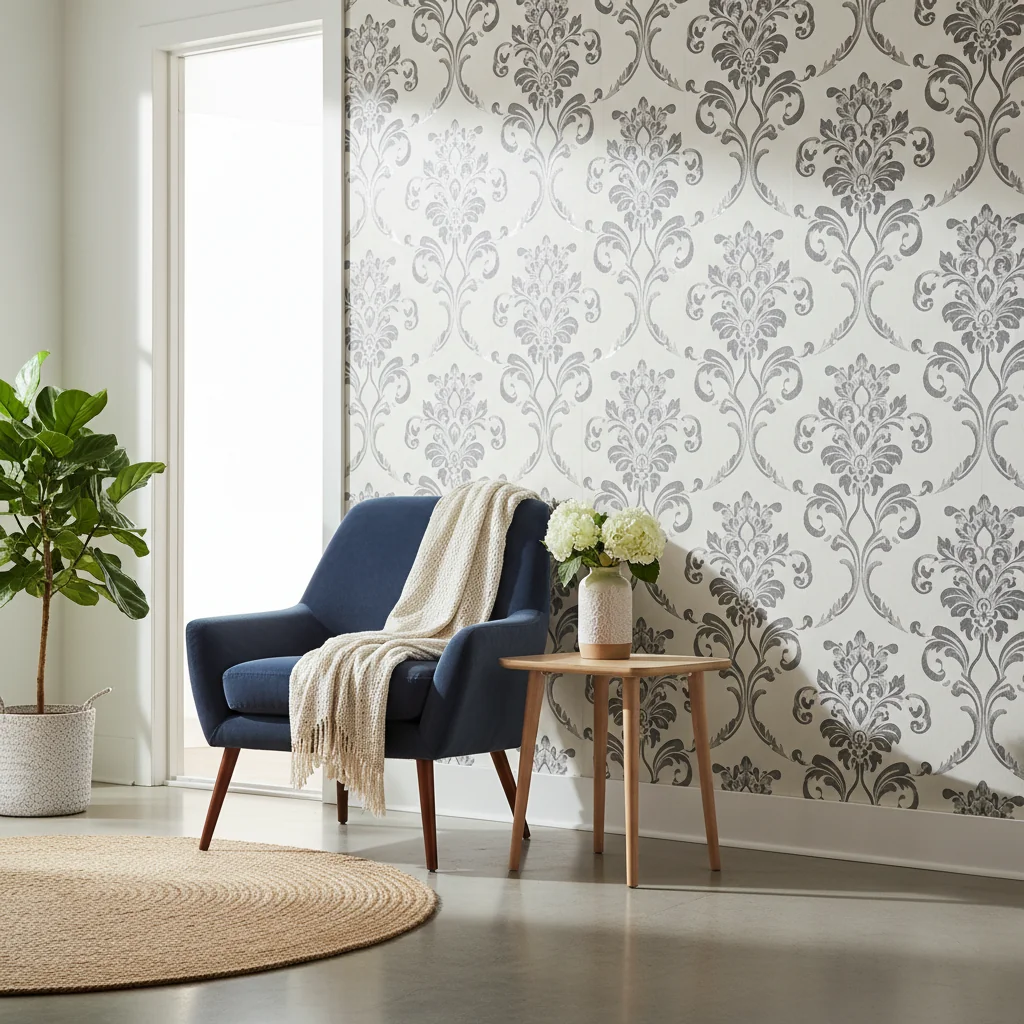
Damask wallpaper for walls offers a unique blend of historical richness and contemporary relevance, instantly transforming any room into a space of refined elegance and visual interest. Its distinctive patterns, characterized by intricate, often floral or geometric motifs, provide a luxurious backdrop that enhances both traditional and modern décor schemes. At Starhouse, we recognize damask’s unparalleled ability to infuse a home with a sense of sophistication and timeless beauty, making it a preferred choice for discerning homeowners seeking to make a definitive design statement.
The appeal of damask lies in its inherent versatility and the depth it adds to an interior. Unlike flat painted surfaces, damask wallpaper introduces a dynamic interplay of light and shadow, highlighting its raised or contrasting patterns to create an engaging visual experience. This textural quality contributes significantly to the ambiance of a room, fostering an atmosphere that can range from grand and formal to intimately inviting. Whether applied to an entire room or used to create a striking accent wall, damask wallpaper serves as a powerful design element, capable of anchoring a space and defining its character.
For centuries, damask has been synonymous with luxury and status, originally gracing the walls of palaces and aristocratic homes. Today, advancements in manufacturing and printing technology have made this opulent style accessible to a broader audience, without compromising its intrinsic elegance. Homeowners now have a vast selection of damask patterns, colors, and materials, allowing for personalized expressions that reflect individual taste while leveraging the pattern’s historical gravitas. This accessibility, coupled with its enduring aesthetic, ensures damask wallpaper remains a cherished and impactful choice for interior design.
Choosing damask wallpaper signifies an appreciation for craftsmanship and a desire to create a home that feels both established and exceptionally stylish. It provides a foundation upon which other design elements—from furnishings to lighting—can be layered, enhancing their presence and contributing to a cohesive, well-considered interior. The careful selection of a damask pattern can dictate the mood of a room, from serene and subtle to bold and dramatic, consistently delivering a high-end finish that stands the test of time.
Understanding Damask: Definition, History, and Evolution
Damask is a reversible figured fabric, typically silk, linen, or wool, characterized by a pattern formed by weaving, where the design is created through contrasting satin and twill weaves, resulting in a matte background and glossy pattern, or vice-versa. When applied to wallpaper, the term “damask” refers to this distinctive pattern style, often featuring large, ornate floral, fruit, or geometric motifs arranged in a repetitive, symmetrical design. This intricate pattern has a rich history rooted in ancient weaving traditions and has evolved significantly to become a staple in modern interior design.
The Historical Roots of Damask
The name “damask” originates from Damascus, Syria, a city renowned for its exquisite silk weaving during the Middle Ages. This complex weaving technique, which allowed for the creation of intricate patterns on both sides of the fabric, flourished along the Silk Road, spreading from the Middle East to Europe. By the 14th century, Italian weavers in cities like Venice and Genoa had mastered damask production, adapting the technique and introducing patterns that would become iconic. These early European damasks often featured heraldic motifs, religious symbols, and classical floral designs, reflecting the tastes and cultural influences of the era.
Historically, damask was a luxury item, accessible only to royalty, aristocracy, and the church due to the labor-intensive nature of its production. The weaving process required specialized looms, such as the draw loom, which allowed for the intricate manipulation of warp and weft threads to create the characteristic contrasting textures. This exclusivity cemented damask’s status as a symbol of wealth, power, and refined taste, gracing tapestries, upholstery, and garments in the most opulent settings.
Evolution into Wallcoverings
The transition of damask patterns from woven fabrics to wallcoverings marked a significant development in interior design, making its distinctive aesthetic more widely available. As wallpaper production became more industrialized in the 18th and 19th centuries, the intricate designs of damask fabrics were adapted for printing on paper. This innovation allowed for the replication of luxurious textile patterns at a more accessible price point, bringing the grandeur of damask into a broader range of homes. Early damask wallpapers often mimicked the texture and sheen of woven silk, using flocking techniques to create a raised, velvety pattern that further enhanced the illusion of fabric.
Modern damask wallpaper continues this tradition, utilizing advanced printing technologies to reproduce the classic patterns with exceptional fidelity. Contemporary interpretations also introduce new materials, colors, and scales, pushing the boundaries of traditional design while retaining the pattern’s inherent elegance. The enduring appeal of damask lies in its ability to evoke a sense of history and luxury, while simultaneously adapting to current design sensibilities. It is a pattern that communicates sophistication and a timeless sense of style, making it a perennial favorite in home décor.
The historical significance and intricate design of damask patterns are well-documented, with many wallpaper manufacturers continuing to draw inspiration from these rich traditions. For instance, York Wallcoverings, a prominent U.S. brand, highlights the enduring legacy and diverse interpretations of damask in their collections, showcasing its adaptability from classic to contemporary settings.
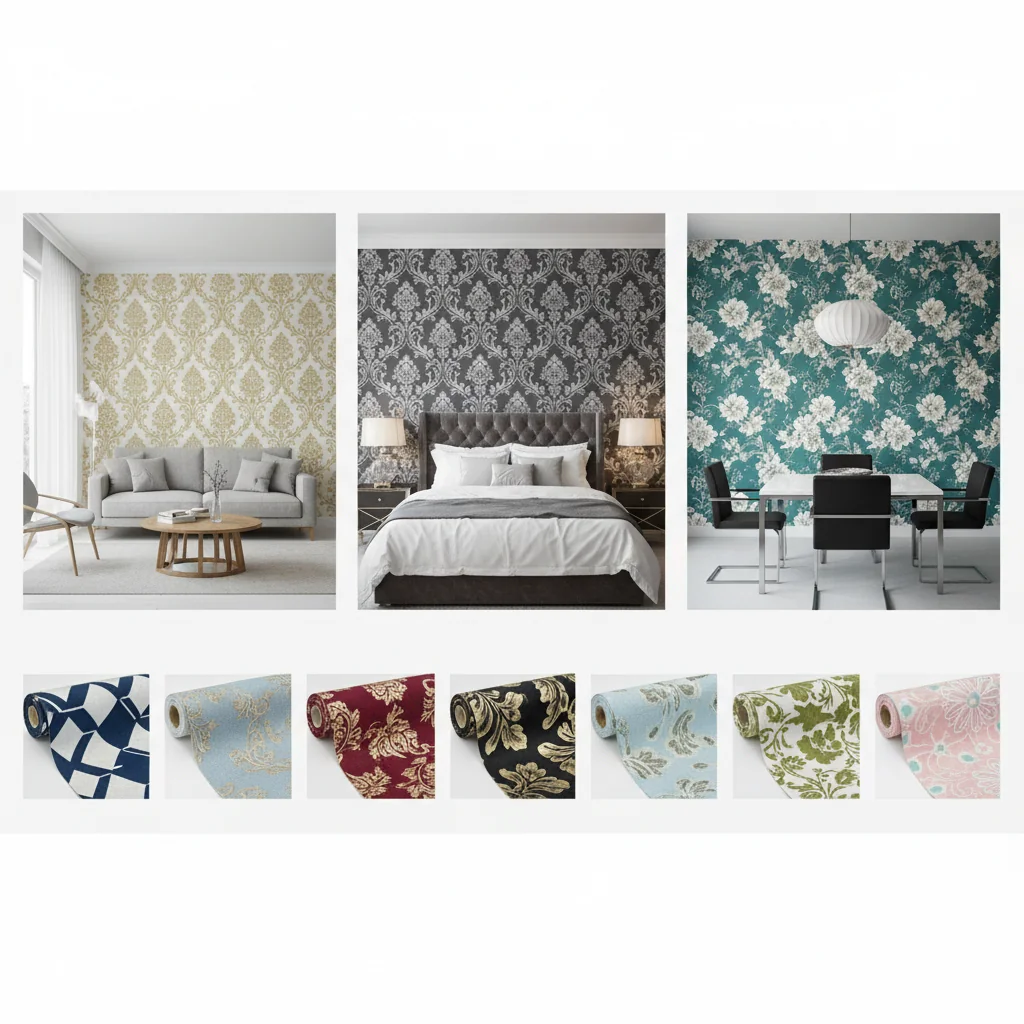
Exploring the Diverse Types and Styles of Damask Wallpaper
Damask wallpaper encompasses a broad spectrum of designs, ranging from deeply traditional motifs that harken back to its historical origins to contemporary interpretations that infuse modern aesthetics with classic elegance. Understanding these diverse types and styles is crucial for selecting a damask pattern that perfectly complements your home’s existing décor and achieves your desired ambiance. The versatility of damask allows it to adapt to various design philosophies, offering options for every taste and setting.
Traditional Damask Styles
Traditional damask patterns are characterized by their ornate, often symmetrical designs, drawing heavily from historical European and Middle Eastern textile artistry. These styles typically feature large, flowing motifs such as acanthus leaves, fleurs-de-lis, pomegranates, and stylized floral arrangements.
- Baroque Damask: Emerging in the 17th century, Baroque damask is known for its dramatic flair, grand scale, and opulent curvilinear forms. These patterns often feature intricate scrolls, elaborate foliage, and sometimes heraldic elements, conveying a sense of majesty and extravagance. Ideal for formal dining rooms, grand entryways, or master bedrooms, Baroque damask creates an atmosphere of historical luxury and lavishness.
- Rococo Damask: A lighter, more playful evolution of Baroque, Rococo damask (18th century) features smaller, more delicate motifs, often asymmetrical, with shell-like curves, naturalistic flowers, and pastoral elements. Its elegance is less imposing and more whimsical, making it suitable for spaces that aim for sophisticated charm and grace, such as boudoirs, powder rooms, or drawing rooms.
- Neoclassical Damask: Influenced by classical antiquity, Neoclassical damask (late 18th to early 19th century) presents a more refined and structured appearance. Patterns are often symmetrical and balanced, incorporating classical urns, medallions, laurel wreaths, and architectural elements. This style offers a sense of dignified elegance and order, perfect for traditional living rooms, studies, or libraries that seek a timeless, intellectual aesthetic.
- Victorian Damask: Reflecting the elaborate tastes of the 19th century, Victorian damask often combines elements from earlier styles with a tendency towards dense, rich patterns and deep, jewel-toned colors. These patterns can be quite complex, featuring intricate floral arrangements, trellises, and sometimes even birds or animals. Victorian damask is ideal for creating a warm, cozy, and luxurious atmosphere in traditional settings.
Modern and Contemporary Damask Styles
Modern damask patterns reinterpret the classic motifs, often simplifying forms, experimenting with scale, and incorporating contemporary color palettes and textures. These styles offer a fresh take on damask, allowing it to seamlessly integrate into minimalist, industrial, or eclectic interiors.
- Geometric Damask: This contemporary approach abstracts the traditional damask motifs into cleaner, more angular, or stylized geometric forms. The patterns maintain the repetitive structure of damask but with a distinctly modern edge. Geometric damask works well in urban apartments, modern offices, or any space desiring a sophisticated yet crisp aesthetic.
- Abstract Damask: Moving further from literal representation, abstract damask patterns retain the essence of the classic motif but with fluid lines, deconstructed elements, or painterly effects. These designs are often more artistic and expressive, creating a focal point that is both elegant and avant-garde. They are excellent for creative spaces, contemporary living areas, or accent walls.
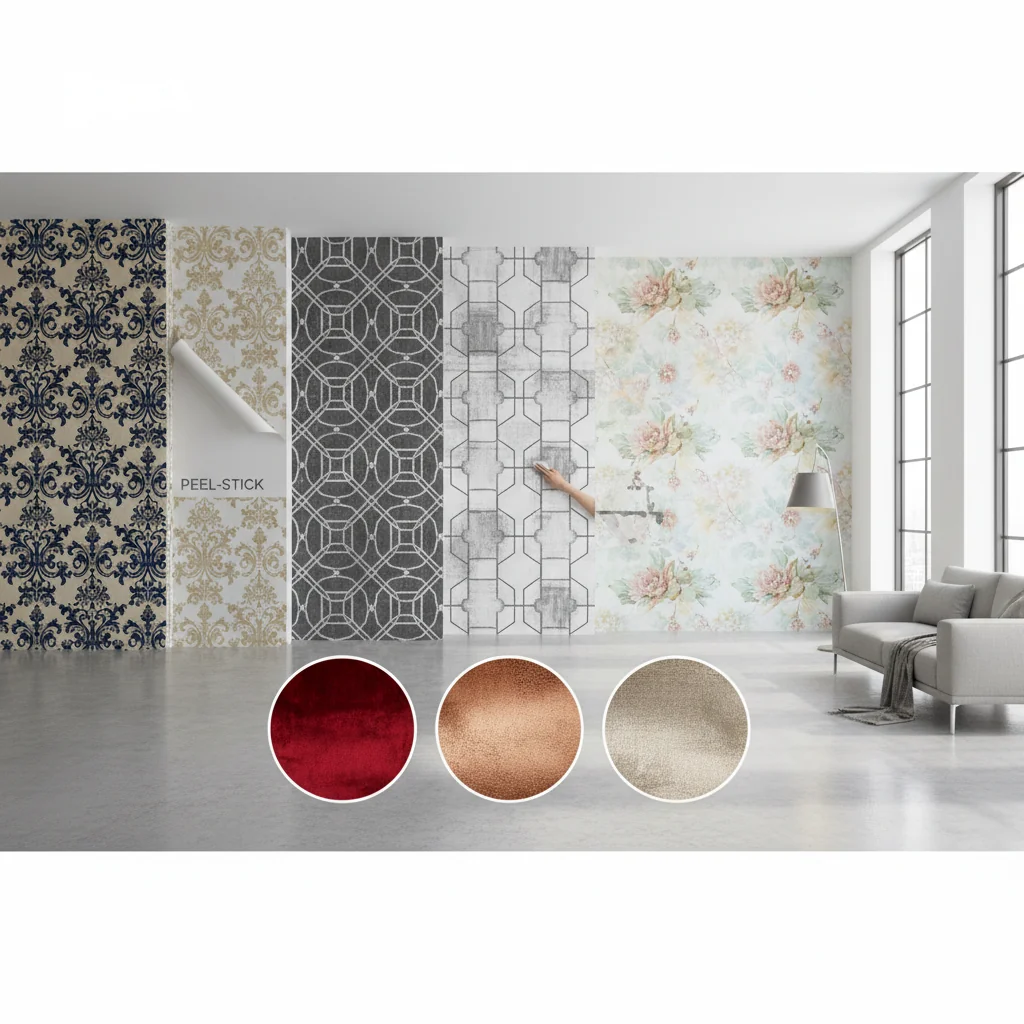
- Metallic Damask: Incorporating metallic inks or finishes (gold, silver, copper, bronze) into traditional or modern damask patterns adds a luxurious shimmer and depth. The metallic sheen catches the light, highlighting the pattern and creating a dynamic visual effect. Metallic damask is perfect for adding glamour to dining rooms, bedrooms, or powder rooms, especially in spaces with modern or Art Deco influences.
- Large-Scale Damask: Modern design often favors bold statements, and large-scale damask patterns deliver precisely that. These patterns feature significantly oversized motifs that can dramatically alter the perception of space. A large-scale damask can make a small room feel grander or add a striking focal point to a spacious area. It is particularly effective on accent walls.
- Subtle or Tonal Damask: For those who appreciate the texture and sophistication of damask but prefer a less overt statement, tonal or subtle damask patterns are ideal. These designs use variations in sheen, texture, or very slight color differences within the same hue to create the pattern, offering a sophisticated background that doesn’t overwhelm the space. They are perfect for bedrooms, studies, or any area seeking understated elegance.
Color Palettes and Their Impact
The color palette of damask wallpaper plays a critical role in defining its style and impact.
- Monochromatic: Using shades of a single color (e.g., beige on beige, gray on gray) creates a subtle, sophisticated effect, emphasizing texture over pattern. This approach is highly versatile and fits well in minimalist or contemporary settings.
- Contrasting: Bold combinations, such as black and white, navy and gold, or deep red and cream, create a dramatic and impactful statement. These palettes highlight the intricate details of the damask pattern and are often used in formal or theatrical spaces.
- Jewel Tones: Rich hues like emerald green, sapphire blue, ruby red, or amethyst purple, often paired with metallic accents, evoke a sense of opulence and luxury. These colors are particularly effective in creating a warm, inviting, and grand atmosphere.
- Pastel and Muted Tones: Soft blues, greens, pinks, and creams offer a more delicate and serene interpretation of damask, suitable for bedrooms, nurseries, or spaces aiming for a light, airy, and romantic feel.
By carefully considering the historical context, scale, color, and specific style of damask wallpaper, you can choose a design that perfectly articulates your vision for your home, creating a space that is both beautiful and uniquely yours.
Material Matters: Choosing the Right Substrate for Your Damask
The material, or substrate, of damask wallpaper is a critical factor influencing its durability, ease of installation, maintenance requirements, and overall aesthetic appeal. Selecting the correct material ensures your wallpaper performs as expected in its intended environment, whether it’s a high-traffic area, a moisture-prone bathroom, or a quiet bedroom. Each type of wallpaper material offers distinct advantages and considerations that directly impact the longevity and appearance of your damask design.
Common Wallpaper Substrates
Wallpaper materials have evolved significantly, offering a range of options beyond traditional paper. Understanding the characteristics of each will guide your selection process.
- Non-Woven Wallpaper: Non-woven wallpaper is composed of natural and synthetic fibers, making it one of the most popular and versatile options available today. This material is highly breathable, preventing mold and mildew growth, and is exceptionally durable and tear-resistant. Non-woven wallpaper is also renowned for its “paste-the-wall” application method, where adhesive is applied directly to the wall rather than the paper, simplifying installation. Furthermore, it is typically strippable, meaning it can be removed in full sheets without damaging the wall, making it an excellent choice for temporary designs or for homeowners who anticipate redecorating in the future. It is often washable or wipeable, depending on its finish, offering good maintenance properties.
- Vinyl Wallpaper: Vinyl wallpaper is highly durable and moisture-resistant, making it an ideal choice for high-traffic areas, kitchens, and bathrooms. It features a paper or fabric backing coated with a layer of vinyl, which can be embossed or printed with various textures and patterns, including damask. Solid vinyl wallpaper is the most robust, offering excellent washability and resistance to stains and scuffs. Vinyl-coated paper or fabric wallpapers provide a balance of durability and aesthetic appeal. While highly practical, some vinyl wallpapers may not be as breathable as non-woven options, and installation can sometimes be more challenging due to its weight and less forgiving nature. However, its superior performance in demanding environments makes it a top contender for practical elegance.
- Paper Wallpaper: Traditional paper wallpaper consists of a printed design directly on a paper substrate, sometimes with a protective coating. This material offers a classic, authentic feel and often showcases intricate damask patterns with a rich, matte finish. Paper wallpaper is generally more delicate than non-woven or vinyl options and is typically not washable, requiring careful handling during installation and cleaning. It is also more susceptible to humidity and tearing. While it provides a beautiful, traditional aesthetic, it is best suited for low-traffic areas or formal rooms where its delicate nature can be preserved. Installation usually involves pre-pasting the paper, which can be more labor-intensive.
- Fabric-Backed Wallpaper: Fabric-backed wallpaper features a textile base (such as cotton, linen, or polyester) laminated with a paper or vinyl layer on which the damask pattern is printed. This material offers a luxurious, tactile surface that adds significant depth and warmth to a room. Fabric-backed wallpapers are highly durable and often more forgiving during installation than traditional paper, as the fabric provides stability. They can also offer sound-absorbing qualities and insulation benefits. Due to their premium materials and complex manufacturing process, they are typically more expensive. Care instructions vary, but many are wipeable. They are an excellent choice for creating a high-end, sophisticated ambiance in living rooms, dining rooms, or master suites.
- Peel-and-Stick Wallpaper (Self-Adhesive): Peel-and-stick wallpaper is a self-adhesive option, often made from vinyl or non-woven materials, designed for easy, temporary application and removal. It features a backing that is peeled away to expose an adhesive layer, allowing the wallpaper to be pressed directly onto the wall without the need for additional paste. This material is ideal for renters, DIY enthusiasts, or those who enjoy frequently changing their décor, as it can be removed cleanly without damaging the underlying surface. While convenient, the adhesive may not be as long-lasting as traditional wallpaper pastes, and careful surface preparation is crucial for optimal adhesion. Peel-and-stick damask patterns offer a flexible way to experiment with this classic design.
Comparison of Damask Wallpaper Materials
To aid in your decision, the table below provides a concise comparison of the most common damask wallpaper materials, highlighting their key features and ideal applications.
| Material Type | Durability | Installation | Removal | Maintenance | Ideal Use |
|---|---|---|---|---|---|
| Non-Woven | Excellent (tear-resistant) | Easy (paste-the-wall) | Strippable (clean removal) | Washable/Wipeable | All rooms, high-traffic areas, bedrooms, living rooms |
| Vinyl | Superior (stain/scuff resistant) | Moderate (can be heavy) | Peelable/Strippable | Highly Washable | Kitchens, bathrooms, hallways, kids’ rooms |
| Paper | Moderate (can tear easily) | Traditional (paste-the-paper) | Difficult (may damage walls) | Not Washable (wipe with dry cloth) | Low-traffic areas, formal living rooms, studies |
| Fabric-Backed | Very Good (robust, textured) | Moderate (requires careful handling) | Strippable (usually clean) | Wipeable/Vacuumable | Luxury spaces, formal rooms, master bedrooms |
| Peel-and-Stick | Good (can be repositioned) | Very Easy (self-adhesive) | Cleanly Removable | Wipeable | Temporary décor, rentals, accent walls, DIY projects |
When selecting your damask wallpaper, consider the specific demands of the room, your DIY comfort level, and your long-term design plans. A vinyl damask might be perfect for a busy family kitchen, while a delicate paper damask could bring unparalleled elegance to a formal sitting room. Starhouse offers a curated selection across these material types, ensuring you find the ideal damask wallpaper to meet both your aesthetic and practical requirements.
Precision Planning: Sizing, Measuring, and Estimating for Damask Wallpaper
Accurate sizing, meticulous measuring, and precise estimation are foundational steps for a successful damask wallpaper installation, preventing costly errors and ensuring a seamless, professional finish. Unlike plain wallpapers, damask patterns require careful consideration of pattern repeat, which dictates how much extra material you need to purchase to ensure motifs align perfectly across seams. Thorough planning at this stage guarantees that you have enough material and that the intricate damask design flows harmoniously across your walls.
Understanding Wallpaper Roll Dimensions
Wallpaper rolls come in various standard dimensions, primarily differing between North American and European/Metric sizes. It is crucial to verify the exact specifications of the damask wallpaper you intend to purchase, as these dimensions directly impact your estimation.
- North American Standard: Typically, a single roll measures about 20.5 inches wide by 33 feet long, covering approximately 56 square feet. Double rolls, which are often sold as a single unit, measure 20.5 inches wide by 66 feet long, covering around 112 square feet. Always confirm whether the listed coverage is for a single or double roll.
- European/Metric Standard: Common metric rolls are approximately 20.8 inches (53 cm) wide by 33 feet (10 meters) long, covering about 56 square feet. Wider rolls, often around 27 inches (68.5 cm) wide, are also available, providing greater coverage per strip.
Always check the manufacturer’s specified dimensions and square footage coverage per roll, as variations exist. This information is usually printed on the wallpaper label.
Measuring Your Walls Accurately
Before calculating the number of rolls, you must accurately measure the dimensions of the walls you plan to wallpaper.
- Measure Wall Height: Measure from the top of the baseboard to the ceiling line (or crown molding) in several spots around the room. Use the tallest measurement as your standard height to ensure all strips are long enough. For walls without baseboards or crown molding, measure from floor to ceiling.
- Measure Wall Width: Measure the total width of each wall you intend to cover. If you have multiple walls, sum their widths to get the total linear footage.
- Calculate Total Square Footage: Multiply the total linear width of the walls by the standard height you determined. For example, if your walls are 8 feet high and the total width is 40 feet, your total square footage is 320 sq ft (40 ft * 8 ft).
- Account for Obstacles: Doors and windows reduce the wallpaperable area. While some installers subtract these areas, it is generally recommended to subtract only very large openings (e.g., sliding glass doors) and to treat smaller windows and standard doors as if they are part of the wall. This approach allows for ample cutting and trimming around these features, providing necessary buffer for pattern matching and reducing the risk of running short. For a standard door (approximately 21 sq ft) or window (approximately 15 sq ft), you typically do not subtract them from the total area calculation for ordering purposes, as the waste generated by pattern matching usually offsets these cutouts.
Understanding Pattern Repeat
Pattern repeat is the distance between one point in a pattern and the next identical point, both horizontally and vertically. For damask wallpaper, which features intricate and often large repeating motifs, understanding and accounting for pattern repeat is paramount.
- Drop Match: This is the most common type for damask. The pattern matches across the seams, but each subsequent strip must be dropped by a certain distance (half the pattern repeat) to align the design. This creates the most waste.
- Straight Match: The pattern matches straight across the seams at the same height on each strip. Less waste than drop match.
- Random Match: No pattern matching is required, meaning strips can be hung side-by-side without alignment. This generates the least waste and is rare for damask patterns.
The pattern repeat measurement (e.g., 21 inches, 25.2 inches) is always listed on the wallpaper label. For drop match patterns, you must factor in this repeat length for every strip you cut.
Estimating the Number of Rolls
This calculation requires careful attention to detail, especially with damask patterns.
-
Determine Number of Strips per Roll: Divide the total length of a roll (e.g., 33 feet or 396 inches) by the height of your wall (e.g., 8 feet or 96 inches) PLUS the pattern repeat (e.g., 21 inches).
For example: If wall height is 96 inches and pattern repeat is 21 inches, each strip needs to be at least 96 + 21 = 117 inches long to allow for alignment and trimming.
Number of strips per roll = Total roll length / (Wall Height + Pattern Repeat)
Example: 396 inches / 117 inches ≈ 3.38 strips. You can only get 3 full, usable strips per roll. -
Determine Number of Strips Needed for the Room: Divide the total linear width of your walls (e.g., 40 feet or 480 inches) by the width of one wallpaper strip (e.g., 20.5 inches).
Number of strips needed = Total wall width / Wallpaper width
Example: 480 inches / 20.5 inches ≈ 23.4 strips. You need 24 strips. -
Calculate Total Rolls: Divide the total number of strips needed for the room by the number of usable strips per roll.
Total rolls = Number of strips needed / Usable strips per roll
Example: 24 strips / 3 usable strips per roll = 8 rolls. - Add for Waste and Future Repairs: Always add an extra roll or 10-15% to your final calculation, especially for intricate damask patterns with large repeats. This accounts for cutting errors, misalignments, or future repairs. It is far better to have an extra roll with the same dye lot than to run short and be unable to find a match later.
For a room with an 8-foot ceiling and 40 linear feet of wall, using a 20.5-inch wide damask wallpaper with a 21-inch pattern repeat, you would typically need to purchase 9 rolls (8 calculated + 1 extra for waste/repairs).
By meticulously following these steps, you can confidently order the correct amount of damask wallpaper, ensuring a stunning and precise installation that showcases the pattern’s full beauty. Starhouse recommends double-checking all measurements and calculations before finalizing your purchase.
Installation Essentials: A Step-by-Step Guide for Damask Wallpaper
Proper installation is paramount for achieving a flawless and lasting finish with damask wallpaper, particularly given its intricate patterns that demand precise alignment. A methodical approach, beginning with thorough surface preparation and extending through careful hanging techniques, ensures the damask design flows seamlessly across your walls, creating the sophisticated effect it is known for. Even for experienced DIY enthusiasts, the specific requirements of pattern matching with damask necessitate extra attention to detail at every stage.
Tools and Materials You Will Need
Having the right tools on hand streamlines the installation process and contributes to a professional outcome.
- Measuring Tape: For accurate wall and strip measurements.
- Pencil: For marking plumb lines and cutting guides.
- Level or Plumb Bob: Essential for ensuring the first strip is perfectly vertical, which is critical for pattern alignment.
- Utility Knife with Snap-Off Blades: For sharp, clean cuts. Keep extra blades on hand.
- Smoothing Tool (Wallpaper Smoother or Brush): To remove air bubbles and ensure firm adhesion.
- Seam Roller: To secure seams without damaging the paper.
- Wallpaper Paste (if not pre-pasted or peel-and-stick): Choose a high-quality, appropriate adhesive for your wallpaper type.
- Paste Brush or Roller: For applying adhesive evenly.
- Large Work Surface: A clean, flat table for cutting and pasting.
- Bucket and Sponge: For cleaning excess paste.
- Drop Cloths: To protect floors and furniture.
- Stepladder: For reaching high areas.
Step 1: Surface Preparation is Key
The quality of your wall preparation directly impacts the final appearance and longevity of your wallpaper.
- Clean Walls: Ensure walls are clean, dry, and free of dust, grease, and grime. Wash with a mild detergent solution, rinse thoroughly, and allow to dry completely.
- Repair Imperfections: Fill any holes, cracks, or dents with spackle or joint compound. Sand smooth once dry. Wallpaper will highlight, not hide, wall imperfections.
- Prime Walls: Apply a high-quality wallpaper primer (like a “sizing” or “wall-prep” primer). Primer seals porous surfaces, promotes better adhesion, and makes future removal easier. It also creates a uniform surface for the wallpaper to adhere to, which is particularly important for thinner damask papers where wall color might show through. Allow primer to dry completely according to manufacturer instructions, typically 2-4 hours.
- Remove Outlet Covers: Turn off power at the circuit breaker and remove all switch plates and outlet covers.
Step 2: Cutting and Preparing Your Strips
This is where pattern repeat becomes critical for damask wallpaper.
- Establish a Starting Point: For damask, it’s often best to start in an inconspicuous corner or near a door frame, working outwards. Alternatively, for a focal wall, start in the center of the wall to ensure symmetry.
- Measure and Cut First Strip: Measure your wall height (from baseboard to ceiling) and add 4-6 inches for trimming at the top and bottom. Cut your first strip to this length.
- Match and Cut Subsequent Strips: Lay the first cut strip on your work surface. Unroll the next section of wallpaper alongside it, aligning the damask pattern precisely. Once the pattern matches perfectly, mark and cut the second strip, again adding 4-6 inches for trim. Repeat this process for all strips, always matching the pattern to the previous strip to ensure continuity. This method accounts for the pattern repeat automatically.
- Number Strips: Lightly number the back of each strip in the order they will be hung (e.g., 1, 2, 3…) and mark the top direction with an arrow. This prevents confusion during installation.
Step 3: Hanging the Wallpaper
Precision is key during the hanging process.
- Draw a Plumb Line: Using your level or plumb bob, draw a perfectly vertical line on the wall, about 1/2 inch less than the width of your first strip from your starting corner. This ensures your first strip is straight, which is essential for all subsequent strips to align correctly.
-
Apply Paste (if applicable):
- Pre-pasted: Briefly submerge the cut strip in a water tray according to manufacturer instructions.
- Unpasted: Apply a thin, even layer of wallpaper paste to the back of the strip using a paste brush or roller. “Book” the paper by folding both ends towards the center (paste-to-paste) without creasing, and let it rest for the recommended “booking time” (usually 5-10 minutes) to allow the paste to activate and the paper to relax.
- Peel-and-Stick: Simply peel back a few inches of the backing paper from the top.
- Hang the First Strip: Align the edge of your first strip with the plumb line, leaving 2-3 inches of excess at the ceiling and baseboard for trimming. Press the top portion to the wall.
- Smooth Out Bubbles: Working from the center outwards, use your smoothing tool or brush to remove air bubbles and ensure firm adhesion. Work from the top down.
- Trim Excess: Once the strip is smoothed, use your utility knife and a straightedge (like a wide putty knife or metal ruler) to carefully trim the excess paper at the ceiling and baseboard. Change blades frequently for crisp cuts.
- Hang Subsequent Strips and Match Pattern: For the second strip, align its edge precisely with the first strip, carefully matching the damask pattern. Do not overlap unless specified by the manufacturer (some specialty papers require a slight overlap and double-cut). Smooth, trim, and roll seams as before. Continue around the room.
- Work Around Obstacles: For windows and doors, hang the paper over the opening. Once adhered, make a diagonal cut from the corner of the opening towards the center of the paper. Then, carefully trim around the frame, leaving a small overlap that can be trimmed precisely after smoothing.
- Clean Up: Immediately wipe away any excess paste from the wallpaper surface and seams with a clean, damp sponge before it dries.
By adhering to these detailed steps, you can confidently install your damask wallpaper, achieving a professional and elegant finish that enhances your home’s aesthetic. If you are uncertain about any step, consulting a professional wallpaper installer is always a wise decision to protect your investment in beautiful damask wallcoverings.
Mastering the Art of Styling Damask Wallpaper
Styling damask wallpaper effectively involves understanding how its intricate patterns and inherent grandeur can enhance a room’s aesthetic, whether creating a bold focal point or a subtle, luxurious backdrop. The key to mastering damask styling lies in balancing its visual weight with other elements in the room, ensuring a cohesive and sophisticated design. As a versatile pattern, damask can be adapted to numerous interior design styles, from traditional opulence to contemporary chic, provided it is thoughtfully integrated.
Accent Walls vs. Entire Rooms
The decision to apply damask wallpaper to an accent wall or an entire room significantly impacts the overall mood and perception of space.
- Accent Wall: Applying damask to a single wall creates a dramatic focal point, drawing the eye and adding depth without overwhelming the space. This approach is ideal for large-scale or high-contrast damask patterns, allowing their intricate details to shine. An accent wall works exceptionally well behind a bed in a master bedroom, behind a sofa in a living room, or on the longest wall in a dining area. It’s a strategic way to introduce luxury and pattern in smaller rooms or for those hesitant to commit to a full room of bold design. The remaining walls can be painted in a coordinating solid color, often pulled from one of the damask pattern’s subtle hues.
- Entire Room: Covering all walls with damask wallpaper creates an immersive, enveloping experience of luxury and grandeur. This approach is best suited for larger rooms, or when using more subtle, monochromatic, or small-scale damask patterns that add texture rather than overwhelming visual information. Formal living rooms, dining rooms, libraries, or spacious master bedrooms benefit greatly from a full damask treatment, creating a cohesive and historically rich ambiance. In smaller spaces, a tonal or muted damask can add sophistication without making the room feel cramped, allowing the texture to be the primary design element.
Pairing with Furniture Styles
Damask wallpaper can complement a wide range of furniture styles, from antique pieces to sleek modern designs.
- Traditional and Antique Furniture: Classic damask patterns, especially those in rich jewel tones or with metallic accents, naturally harmonize with antique, Victorian, or French Provincial furniture. Dark wood finishes, ornate carvings, and velvet upholstery resonate with the historical elegance of damask, creating a cohesive and opulent traditional interior. Ensure the scale of the damask pattern is appropriate for the room and furniture, preventing a cluttered look.
- Contemporary and Modern Furniture: For modern interiors, opt for damask patterns with simplified motifs, geometric interpretations, or tonal variations. Metallic damasks in silver or gold can add a glamorous edge that complements minimalist furniture with clean lines and reflective surfaces. Pair a bold, large-scale damask accent wall with sleek, upholstered pieces in solid colors to create a striking contrast that feels both sophisticated and current. Abstract damasks also work well, bridging the gap between classic pattern and modern art.
- Transitional Furniture: Transitional styles, which blend traditional and contemporary elements, are perfectly suited for damask. Choose patterns that are a modern take on classic damask, perhaps in a neutral palette like gray, beige, or soft blue. This allows the wallpaper to serve as an elegant backdrop that ties together diverse furniture pieces, from classic Chesterfield sofas to contemporary glass coffee tables.
Color Coordination with Textiles and Paint
Effective color coordination is essential for a harmonious interior.
- Pull Colors from the Damask: The most straightforward approach is to select accent colors for textiles (curtains, pillows, rugs) and paint for adjacent walls directly from the damask pattern itself. This creates an instant sense of cohesion. For example, if your damask wallpaper has a subtle cream pattern on a navy background, use cream for trim or secondary walls, and introduce navy and cream in your soft furnishings.
- Complementary Colors: For a more dynamic scheme, consider complementary colors. A damask in deep red could be paired with accents of emerald green, creating a rich and vibrant contrast. Use these complementary colors sparingly to avoid overwhelming the space.
- Neutralizing Bold Damask: If your damask wallpaper is particularly bold or colorful, balance it with neutral textiles and paint colors to allow the wallpaper to be the star. Whites, grays, and creams provide a calming counterpoint.
Lighting Considerations to Highlight Texture
Lighting plays a crucial role in enhancing the visual impact of damask wallpaper, especially those with textural or metallic finishes.
- Layered Lighting: Combine ambient (general room light), task (for specific activities), and accent lighting (to highlight features).
- Wall Sconces: Placing wall sconces on a damask accent wall creates dramatic shadows and highlights, emphasizing the pattern’s texture and sheen. The light grazing the surface will reveal the intricate details.
- Dimmers: Install dimmers on all light fixtures to adjust the intensity, allowing you to control the mood and how the damask pattern is perceived at different times of day.
- Natural Light: Consider how natural light hits the wallpaper throughout the day. Metallic damasks will shimmer beautifully in direct sunlight, while matte damasks might appear richer in softer, diffused light.
Mixing Patterns (Subtly)
While damask is a strong pattern, it can be successfully mixed with other patterns if done thoughtfully.
- Vary Scale: Pair a large-scale damask with smaller, more delicate patterns like stripes, small geometrics, or subtle florals in coordinating colors.
- Vary Type: Mix damask with patterns of a different nature. For instance, a classic damask wallpaper could be complemented by striped throw pillows or a geometric rug, as long as the color palette remains harmonious.
- Use Solids as Breathers: Introduce solid-colored textiles and furniture to break up the patterns and give the eye a place to rest.
Styling damask wallpaper is an art that blends historical grandeur with personal expression. By carefully considering its placement, pairing it with complementary furniture and colors, and using lighting to its best advantage, you can create a truly captivating and luxurious interior. Starhouse encourages you to experiment with these principles to define a space that is uniquely yours.
Care and Maintenance for Lasting Damask Beauty
Proper care and regular maintenance are essential for preserving the beauty and extending the lifespan of your damask wallpaper, ensuring its intricate patterns remain vibrant and its luxurious aesthetic endures. The specific cleaning and care instructions for damask wallpaper depend heavily on its material composition, as different substrates exhibit varying degrees of durability and moisture resistance. Adhering to the manufacturer’s guidelines is crucial to avoid damage and maintain the wallcovering’s pristine condition.
General Maintenance Practices
Consistent, gentle care forms the foundation of wallpaper maintenance, regardless of material.
- Regular Dusting: Dust your wallpaper regularly using a soft, dry cloth, a feather duster, or a vacuum cleaner with a brush attachment. This prevents dust and cobwebs from accumulating and dulling the surface.
- Avoid Harsh Cleaners: Never use abrasive cleaners, solvents, or harsh chemicals on any wallpaper, as these can strip finishes, fade colors, or damage the material.
- Test in an Inconspicuous Area: Before applying any cleaning solution to a visible area, always test it on a small, hidden section of the wallpaper (e.g., behind a piece of furniture or near the baseboard). This allows you to observe any adverse reactions without risking the overall appearance.
- Address Stains Promptly: The faster a stain is addressed, the higher the chance of successful removal.
Material-Specific Care Instructions
Care instructions vary significantly based on the wallpaper’s material.
-
Non-Woven and Vinyl Wallpaper: These materials are generally the most durable and easiest to clean. Many non-woven and vinyl damask wallpapers are labeled as “washable” or “scrubbable.”
- Washable: Use a soft sponge or cloth dampened with lukewarm water and a mild, non-abrasive soap (like dish soap). Gently wipe the stained area. Rinse the sponge frequently and wipe with clean water to remove soap residue. Pat dry with a clean, soft cloth.
- Scrubbable: These can withstand more vigorous cleaning. You can use a soft brush or a more concentrated mild soap solution for tougher stains. Always rinse thoroughly and dry.
- For stubborn grease stains, a diluted solution of white vinegar and water can sometimes be effective, but always test first.
-
Paper Wallpaper: Traditional paper damask wallpaper is the most delicate and is typically NOT washable.
- Dry Cleaning Only: For dust or light smudges, use a clean, dry, soft cloth, a soft art gum eraser (gently), or a kneaded eraser.
- Avoid Moisture: Do not use water or liquid cleaners, as they can cause the paper to warp, stain, or tear.
- For significant stains on paper wallpaper, professional restoration may be required, or replacement of the affected strip might be the only option.
-
Fabric-Backed Wallpaper: Care depends on the specific fabric blend and top coating.
- Most are “wipeable” with a damp cloth and mild soap, similar to washable vinyl.
- Some may be vacuumed with a brush attachment to remove dust.
- For deeper cleaning, professional wallpaper cleaners specializing in fabric wallcoverings are recommended.
- Avoid saturating the fabric, as this can lead to watermarks or damage to the backing.
-
Peel-and-Stick Wallpaper: Often made of vinyl or coated non-woven material, peel-and-stick damask wallpaper is generally wipeable.
- Clean with a damp cloth and mild soap. Avoid excessive scrubbing, especially near seams, to prevent lifting.
- Ensure the adhesive is fully cured (typically 2-4 weeks after installation) before any wet cleaning.
Addressing Common Issues
Even with proper care, minor issues can arise.
- Bubbles: Small air bubbles can sometimes appear after installation. For minor bubbles, use a clean utility knife to make a tiny incision in the center of the bubble, then gently press out the air with a smoothing tool. For larger bubbles, carefully lift the seam or edge, reapply a small amount of paste with a syringe or fine brush, and smooth down.
- Lifting Seams: If seams start to lift, apply a small amount of seam adhesive (available at hardware stores) directly under the lifting edge. Press firmly with a seam roller or clean cloth until adhered.
- Fading: Direct, prolonged exposure to sunlight can cause wallpaper colors to fade over time. Consider using UV-protective window films or blinds/curtains in rooms with strong sun exposure to minimize this effect.
- Mold or Mildew: While rare with breathable non-woven wallpapers, mold can occur in high-humidity environments if proper ventilation is lacking or if the wall was not adequately prepped. Address the humidity source first. For minor surface mold on washable wallpaper, a diluted bleach solution (1 part bleach to 10 parts water) can be used, but always test first and rinse thoroughly. If mold penetrates the wall, professional remediation may be necessary.
Volatile Organic Compounds (VOCs) are chemicals that can be released into the air from various products, including some paints and adhesives. The US EPA provides guidelines and regulations concerning VOCs to protect indoor air quality. Starhouse prioritizes offering products that adhere to stringent environmental standards, and modern wallpaper pastes and many wallpapers themselves are formulated to be low-VOC, contributing to healthier indoor environments. Always look for low-VOC certifications when selecting wallpaper and adhesives.
By following these comprehensive care and maintenance guidelines, your damask wallpaper will continue to be a source of elegance and beauty in your home for many years to come.
Current Trends and Future Horizons in Damask Design
Damask wallpaper, while rooted in centuries of tradition, consistently reinvents itself to remain at the forefront of interior design, adapting to contemporary tastes and technological advancements. Current trends in damask design showcase a dynamic interplay between its classic grandeur and modern aesthetics, offering fresh perspectives on this enduring pattern. These evolving styles ensure that damask continues to be a relevant and impactful choice for homeowners seeking both timeless elegance and contemporary flair.
Embracing Metallic Finishes
One of the most prominent trends in modern damask wallpaper is the widespread integration of metallic finishes. Gold, silver, bronze, and copper accents are used to highlight the intricate damask motifs, adding a luxurious shimmer and reflective quality to the walls.
- Subtle Sheen: Metallic threads or inks are often woven into or printed onto the pattern, creating a subtle, sophisticated sheen that catches the light and adds depth without being overtly flashy. This approach is particularly effective in monochromatic damasks, where the metallic element provides texture and visual interest.
- High-Contrast Glamour: For a more dramatic statement, metallic damasks are paired with deep, rich background colors like navy, charcoal, or emerald green. The contrast amplifies the metallic gleam, creating a glamorous and opulent effect suitable for formal dining rooms, powder rooms, or statement entryways.
- Modern Metallics: Beyond traditional gold and silver, contemporary damasks explore rose gold, pewter, and iridescent finishes, offering a fresh, modern twist on classic luxury. These can complement industrial chic or eclectic interiors.
Large-Scale and Oversized Motifs
Breaking away from smaller, more intricate repeats, current damask trends favor large-scale and oversized motifs that make a bold statement.
- Dramatic Impact: Large damask patterns, where a single motif might span several feet, create a dramatic visual impact, particularly on accent walls. This scale can make a room feel grander and more architectural, turning the wallpaper into a piece of art.
- Simplified Forms: Often, these oversized damasks feature simplified or abstracted versions of traditional motifs, giving them a contemporary edge. The focus shifts from intricate detail to the powerful silhouette and rhythm of the pattern.
- Space Perception: Counterintuitively, a large-scale pattern can sometimes make a smaller room feel more expansive by reducing the number of visible repeats and creating a sense of depth.
Textural and Embossed Surfaces
Beyond printed patterns, texture is a key element in contemporary damask design, adding a tactile dimension that enhances its luxurious appeal.
- Embossed Damask: Embossed wallpapers feature raised patterns that create a three-dimensional effect, mimicking the woven texture of traditional damask fabrics. This adds significant depth and sophistication, especially in tonal or monochromatic designs where the texture becomes the primary visual interest.
- Flocked Damask: Flocked wallpaper, which uses tiny fibers to create a velvety, raised pattern, continues to be popular for its rich, tactile quality and ability to evoke classic luxury. Modern flocking techniques offer more durable and precise finishes.
- Faux Finishes: Some damask wallpapers incorporate faux finishes such as linen, silk, grasscloth, or even concrete textures as their background, providing a unique blend of classic pattern and modern material sensibility.
Evolving Color Palettes
While classic damask often features deep, rich colors, current trends embrace a broader and often softer spectrum.
- Neutral and Monochromatic: Damask in shades of gray, beige, cream, and white remains incredibly popular. These tonal patterns offer a sophisticated backdrop that adds texture and subtle elegance without overwhelming the space, perfect for minimalist or Scandinavian-inspired interiors.
- Soft Pastels: Muted blues, greens, blush pinks, and lavenders bring a delicate and romantic feel to damask, suitable for bedrooms, nurseries, or spaces aiming for a serene ambiance.
- Bold and Unexpected Hues: Designers are also experimenting with damask in unexpected, vibrant colors like deep teal, mustard yellow, or burnt orange, often paired with metallic accents for a maximalist or eclectic look.
Sustainable and Eco-Friendly Options
As environmental consciousness grows, the demand for sustainable home décor is influencing wallpaper manufacturing.
- Recycled Materials: Manufacturers are increasingly using recycled content in their wallpaper substrates.
- Water-Based Inks: The shift towards water-based, low-VOC inks reduces environmental impact and improves indoor air quality.
- FSC-Certified Paper: Damask wallpapers made from paper sourced from responsibly managed forests are gaining traction.
- Biodegradable Options: Innovations in materials are leading to wallpapers that are more easily biodegradable at the end of their lifecycle.
Future Horizons: Digital Printing and Customization
The future of damask wallpaper will likely see further advancements in digital printing, allowing for unprecedented customization and personalization.
- Bespoke Designs: Digital printing enables designers and homeowners to create truly bespoke damask patterns, adjusting scale, color, and motif to precise specifications.
- Photorealistic Textures: The ability to print highly realistic textures will further blur the lines between wallpaper and actual fabric or architectural finishes.
- Interactive Elements: We may see damask wallpapers with subtle interactive elements, such as glow-in-the-dark features or temperature-sensitive patterns, adding a playful and innovative dimension.
The evolution of damask wallpaper reflects a continuous dialogue between tradition and innovation. By staying attuned to these current trends and future possibilities, homeowners can leverage damask to create interiors that are both deeply rooted in design history and vibrantly contemporary. Starhouse is committed to curating collections that embody these exciting developments, bringing you the finest and most current damask designs for your home.
Common Mistakes to Avoid When Choosing and Installing Damask
Choosing and installing damask wallpaper requires careful consideration to avoid common pitfalls that can undermine its sophisticated appeal and lead to unsatisfactory results. Given the intricate nature of damask patterns and their visual impact, certain errors can be particularly noticeable, diminishing the luxurious effect you aim to achieve. By being aware of these frequent mistakes, you can approach your damask wallpaper project with greater confidence and ensure a professional, stunning outcome.
1. Underestimating Pattern Repeat and Quantity
One of the most frequent and costly mistakes with damask wallpaper is underestimating the amount of material needed, primarily due to neglecting the pattern repeat.
- The Mistake: Calculating wallpaper based solely on square footage without adding extra length for pattern matching. For damask, especially drop-match patterns, significant waste is generated when aligning motifs across strips. Running short on wallpaper means purchasing additional rolls, which might come from a different dye lot, resulting in visible color discrepancies.
- The Solution: Always add 10-15% extra to your calculated roll count, or even an entire extra roll, particularly for large damask patterns. When cutting strips, ensure you account for the pattern repeat by aligning each new strip against the previous one before cutting. Purchase all rolls from the same dye lot to ensure consistent color.
2. Improper Surface Preparation
The foundation of any successful wallpaper installation is a perfectly prepared wall, a step often rushed or overlooked.
- The Mistake: Applying damask wallpaper to dirty, uneven, porous, or unprimed walls. Dust, grease, old adhesive, cracks, and bumps will show through the wallpaper, especially with lighter or thinner materials. Unprimed walls can absorb paste unevenly, leading to poor adhesion or making future removal difficult and damaging.
- The Solution: Thoroughly clean, repair, and smooth all wall surfaces. Apply a high-quality wallpaper primer (sizing) to create a uniform, sealed surface for optimal adhesion and easier future removal. Allow the primer to dry completely before installation.
3. Ignoring Scale in Relation to Room Size
The scale of the damask pattern profoundly impacts how a room feels, and misjudging it can lead to an unbalanced aesthetic.
- The Mistake: Using an excessively large damask pattern in a small room can make the space feel cramped and overwhelming. Conversely, a tiny, intricate damask in a vast room might get lost and fail to make the desired impact.
- The Solution: For smaller rooms or those with many architectural features (windows, doors), consider smaller-scale damasks or tonal patterns that add texture subtly. For larger rooms or accent walls, embrace large-scale or oversized damask motifs to create a dramatic focal point. Always visualize the pattern in the space, perhaps by taping up a large sample.
4. Poor Pattern Matching at Seams
The beauty of damask lies in its intricate, continuous pattern, which can be ruined by misalignment at the seams.
- The Mistake: Rushing the pattern matching process, leading to misaligned motifs across adjacent strips. This creates a disjointed look that is immediately noticeable and detracts from the wallpaper’s elegance.
- The Solution: Take ample time to precisely align each strip, ensuring the damask pattern flows seamlessly from one piece to the next. Use a plumb line for the first strip to ensure a perfectly vertical start, which is critical for subsequent alignment. Use a seam roller gently to secure seams without flattening the pattern or pushing out too much paste.
5. Choosing the Wrong Material for the Environment
The durability and maintenance needs of wallpaper vary significantly by material, and selecting an unsuitable type for a given room is a common error.
- The Mistake: Installing delicate paper damask in high-humidity areas like bathrooms or high-traffic zones like hallways, where it is prone to damage, moisture, and staining. Conversely, using a heavy-duty, highly washable vinyl in a formal living room might feel less luxurious than a fabric-backed option.
- The Solution: Match the wallpaper material to the room’s function and conditions. For bathrooms and kitchens, choose vinyl or highly washable non-woven damasks. For formal living areas or bedrooms, paper, non-woven, or fabric-backed options offer a more refined aesthetic. For temporary solutions or renters, peel-and-stick is ideal.
6. Overlooking Lighting’s Impact
How light interacts with damask wallpaper can dramatically alter its appearance, a factor often overlooked during selection.
- The Mistake: Not considering how natural and artificial lighting will affect the wallpaper’s color, sheen, and texture. A metallic damask might look stunning in a well-lit showroom but appear dull in a dimly lit room.
- The Solution: Observe wallpaper samples in your home under various lighting conditions—daylight, evening lamps, overhead lights. Pay attention to how metallic or textured damasks reflect light and how colors shift throughout the day. Plan your lighting scheme to enhance the wallpaper’s features, using sconces or spotlights to highlight texture.
7. Neglecting Proper Acclimation
Wallpaper, especially those with paper components, needs time to adjust to a room’s environment before installation.
- The Mistake: Installing wallpaper immediately after delivery, without allowing it to acclimate to the room’s temperature and humidity. This can lead to shrinkage, expansion, or bubbling after installation.
- The Solution: Store wallpaper rolls in the room where they will be installed for at least 24-48 hours prior to hanging. This allows the material to adjust to the ambient temperature and humidity, minimizing post-installation issues.
By consciously avoiding these common errors, you can ensure your damask wallpaper project is a resounding success, culminating in a beautifully adorned space that reflects Starhouse’s commitment to sophisticated design.
At Starhouse, we are curating a collection of wall décor that embodies elegance and quality. We invite you to be part of our journey as we build our catalog. If you have specific design needs or preferences, tell us what you’re looking for in your space and gain early access to our exclusive offerings.
Sources
- York Wallcoverings. Damask Wallpaper | York Wallcoverings
- Complete List of VOC Exemption Rules | US EPA
Frequently Asked Questions
What is the difference between damask and toile wallpaper?
Damask wallpaper features a large, ornate, often symmetrical pattern, typically in a single color or two contrasting tones, characterized by its woven appearance that creates a matte background and glossy pattern (or vice versa). Toile wallpaper, conversely, showcases a repeating pastoral scene or narrative design, usually in a single color (like blue or red) on a white or cream background, depicting rural life, mythological events, or historical scenes rather than an abstract motif.
Can damask wallpaper be used in modern homes?
Yes, damask wallpaper can be effectively used in modern homes by selecting contemporary interpretations such as large-scale motifs, geometric abstractions, metallic finishes, or subtle tonal patterns. These modern damasks add sophistication and texture without clashing with minimalist or contemporary furniture, creating a dynamic balance between classic elegance and modern design principles.
Is damask wallpaper difficult to install for DIYers?
Damask wallpaper can be more challenging for DIYers than plain wallpaper due to the necessity of precise pattern matching across seams, which requires careful measuring and cutting to ensure motifs align perfectly. However, with thorough preparation, accurate measurements, and patience, especially with modern peel-and-stick or non-woven (paste-the-wall) materials, a skilled DIYer can achieve excellent results.
How do I choose the right color damask wallpaper?
To choose the right color damask wallpaper, consider the room’s existing color scheme, the amount of natural light, and the desired mood. Lighter, monochromatic damasks (e.g., beige, gray) create a subtle, elegant backdrop, while bold, contrasting colors (e.g., black and gold) make a dramatic statement. Jewel tones evoke luxury, and soft pastels offer a serene feel. Always test samples in your space under different lighting conditions before committing.
Can I use damask wallpaper in a bathroom or kitchen?
Yes, you can use damask wallpaper in a bathroom or kitchen, but it is crucial to select a material specifically designed for high-humidity and high-traffic environments, such as solid vinyl or scrubbable non-woven wallpaper. These materials are moisture-resistant and washable, ensuring durability and easy maintenance in areas prone to splashes and steam, unlike delicate paper-based options.
What is pattern repeat, and why is it important for damask wallpaper?
Pattern repeat is the vertical distance between identical points in a repeating wallpaper design, typically measured in inches. It is crucial for damask wallpaper because it dictates how much extra material must be purchased and how each strip is cut and aligned to ensure the intricate pattern flows continuously and seamlessly across the wall, preventing a disjointed appearance.
How do I clean damask wallpaper?
The cleaning method for damask wallpaper depends on its material. For washable non-woven or vinyl damasks, use a soft sponge or cloth with lukewarm water and mild soap, then rinse with clean water and pat dry. For delicate paper damasks, only dry cleaning with a soft cloth or art gum eraser is recommended. Always test any cleaning solution in an inconspicuous area first and follow manufacturer guidelines to prevent damage.
Conclusion: Define Your Space with Starhouse
Damask wallpaper for walls remains an iconic and influential element in interior design, offering a unique blend of historical grandeur and contemporary versatility that can transform any space into a testament to sophisticated style. From its intricate patterns and diverse material options to its profound impact on a room’s ambiance, damask provides an unparalleled opportunity to infuse your home with character, depth, and luxurious texture. Understanding the nuances of its types, the precision required for installation, and the art of its styling empowers you to make informed decisions that culminate in a truly captivating interior.
At Starhouse, we believe that your home should be a reflection of your distinct taste and aspirations. Our mission is to curate an exceptional collection of home and décor elements, including a wide array of damask wallcoverings, that meet the highest standards of design and quality. We are dedicated to providing you with the inspiration and resources needed to create spaces that are not only beautiful but also deeply personal and functional.
As we continue to build our curated collection to serve homes across the United States, we are eager to understand what truly resonates with you. We invite you to share your vision and design preferences. Tell us what you envision for your ideal space, and be among the first to explore our forthcoming selections. Your insights are invaluable as we shape an offering that truly meets the desires of discerning homeowners.
Define your space with elegance and confidence. Tell us what you’re looking for and get early access to the Starhouse collection, where timeless design meets modern living.