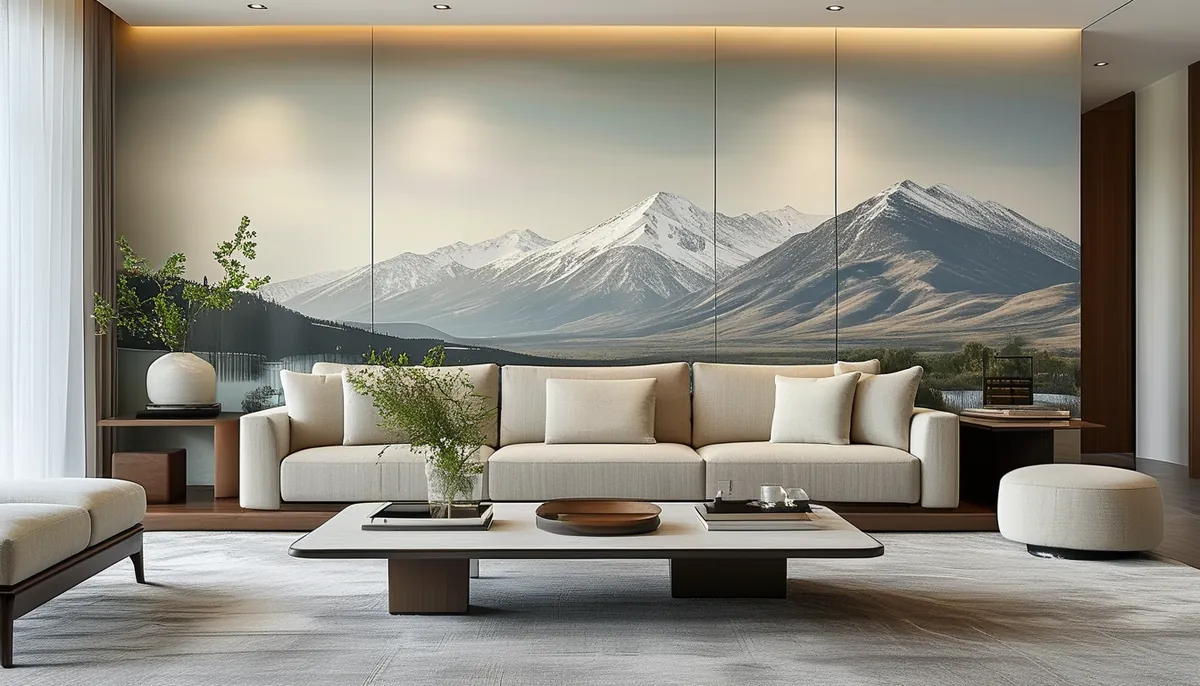
The biggest decision with wall murals is the design itself. Think about the room’s purpose and the mood you want to create. For a calming bedroom, consider a serene landscape or a subtle botanical pattern. A busy living room might benefit from a bold, abstract design or a city skyline. For kids’ rooms, playful characters or whimsical scenes work well. Don’t shy away from dark colors or dramatic imagery if that’s the aesthetic you’re aiming for; murals can handle it.
Understanding mural materials and their impact
Murals come in various materials, each affecting durability, installation, and appearance. The most common are:
- Peel-and-stick vinyl: This is the most DIY-friendly option. It adheres directly to the wall without extra paste, making it easy to apply and remove. It’s generally durable and scrubbable, good for high-traffic areas or children’s rooms. Thickness varies, but a good quality peel-and-stick mural will be at least 10-15 mil (0.25-0.38 mm).
- Traditional paste-the-wall: These murals are made from paper or a vinyl-coated paper. You apply wallpaper paste to the wall, then hang the mural panels. They offer a matte finish and can be very detailed. While slightly more involved to install, they are often more cost-effective and can create a premium look.
- Textured materials: Some high-end murals incorporate textures like fabric or embossed patterns. These add a tactile dimension but can be more expensive and require professional installation.
The material choice impacts how the mural will look under different lighting conditions and how it holds up over time. Vinyl tends to have a slight sheen, while paper offers a more traditional matte finish.
Sizing and scale: Getting it right
Murals are typically custom-sized to fit your wall dimensions precisely. When ordering, you’ll provide the width and height of the wall you intend to cover. Most manufacturers will add a few extra inches to both width and height to allow for trimming during installation. Always double-check the final dimensions provided by the manufacturer to ensure they account for your specific wall space. Scale is also crucial: a small repeating pattern might get lost on a large wall, while a large-scale graphic can overwhelm a small space. Consider the focal point of your room and how the mural’s scale will interact with existing furniture and decor.
Installation methods: DIY vs. professional
For peel-and-stick murals, DIY installation is usually straightforward. Ensure your wall surface is smooth, clean, and dry. Start at one edge, peel back the backing a few inches at a time, and carefully smooth the mural onto the wall, working out air bubbles with a squeegee. For paste-the-wall murals, you’ll need wallpaper paste, a pasting brush or roller, a sharp utility knife, and a level. You’ll paste the wall, not the paper, and then apply the panels, ensuring edges align perfectly. Mistakes with alignment are difficult to fix once the paste sets.
If you’re not confident in your DIY skills, or if the mural is particularly large or complex, hiring a professional wallpaper installer is recommended. They have the tools and experience to ensure a flawless finish. Expect professional installation costs to range from $1 to $3 per square foot, depending on your location and the complexity of the job.
Common installation mistakes to avoid
The most common pitfall is improper wall preparation. Walls must be clean, dry, and free of imperfections like dust, grease, or old wallpaper residue. If you’re applying over existing paint, ensure it’s well-adhered. For peel-and-stick, applying to a glossy or semi-gloss surface can sometimes lead to adhesion issues over time; a matte finish is often best. Another mistake is rushing the alignment of panels. Take your time, use a level, and ensure each panel sits flush against the previous one. Cutting incorrectly at edges or around outlets can also be a costly error. Measure twice, cut once, and use a very sharp blade.
Trade & wholesale accounts
For designers, contractors, and businesses looking to purchase murals in bulk or for resale, many manufacturers offer trade and wholesale accounts. These accounts typically provide discounted pricing, dedicated support, and early access to new collections. To qualify, you’ll usually need to provide a business license or Resale Certificate (often a ST-5 in New York, or similar state-specific forms). These programs are designed to foster partnerships and support industry professionals in bringing high-quality wall coverings to their clients.
Choosing mural designs for different rooms
Living Room
The living room is a prime space for making a statement. Consider a large-scale landscape, an abstract art piece, or a bold geometric pattern. A mural can serve as the focal point, complementing your existing furniture and decor. For inspiration, explore coastal designs if you love the sea, or Yellowstone-inspired scenes for a touch of nature’s grandeur.
Bedroom
Bedrooms are sanctuaries, so opt for designs that promote relaxation. Soft, muted tones, nature scenes, or subtle patterns work best. Think of a serene forest, a cloudy sky, or a delicate floral motif. A mural can add depth and tranquility without being overwhelming. For example, a subtle, large-scale botanical print can be incredibly calming.
Kitchen & Dining Room
In kitchens and dining rooms, durability and ease of cleaning are key. Vinyl or washable paper murals are ideal. You can choose something food-themed, a city view for a metropolitan feel, or a botanical design to brighten the space. Ensure the design complements your cabinetry and dining set. Consider our vibrant peacock wallpaper for a pop of color and elegance.
Home Office
For a home office, the mural should inspire productivity and focus. A world map, a cityscape, or an abstract pattern can create a sophisticated and stimulating environment. Avoid overly busy or distracting designs that might pull your attention away from work.
Beyond traditional murals: Contemporary options
While classic wallpaper murals are popular, don’t overlook other options. Large-format photographic prints mounted on the wall can achieve a similar effect. Textured wall panels, often made from plaster or composite materials, can create dimensional art pieces. Even large-scale painted murals by an artist can be an option, though typically the most expensive.
Durability and maintenance
The longevity of your mural depends on its material and installation. Vinyl murals are generally the most durable and easiest to maintain. Most can be wiped clean with a damp cloth and mild soap. Paper-based murals may be more susceptible to moisture and fading over time, especially if exposed to direct sunlight. Check the manufacturer’s specifications for cleaning and care instructions. For example, a mural designed for a bathroom or kitchen will have different requirements than one for a dry living room.
Schedule a callback
If you’re overwhelmed by the choices or need personalized advice for your specific project, taking advantage of a schedule a callback service can be invaluable. Our experts can discuss your space, design preferences, and budget to help guide you toward the perfect mural solution. This direct consultation ensures you get tailored recommendations, avoiding costly mistakes and ensuring your chosen mural perfectly fits your vision.