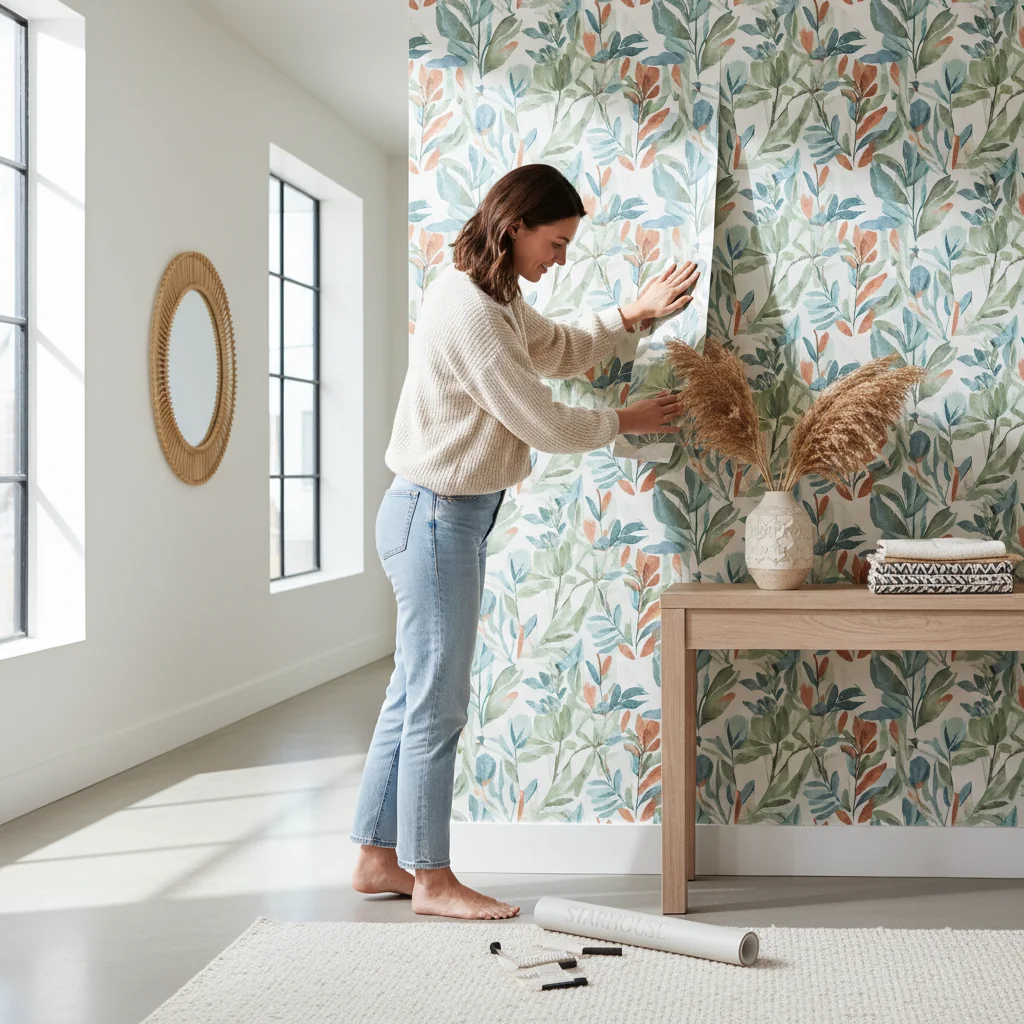
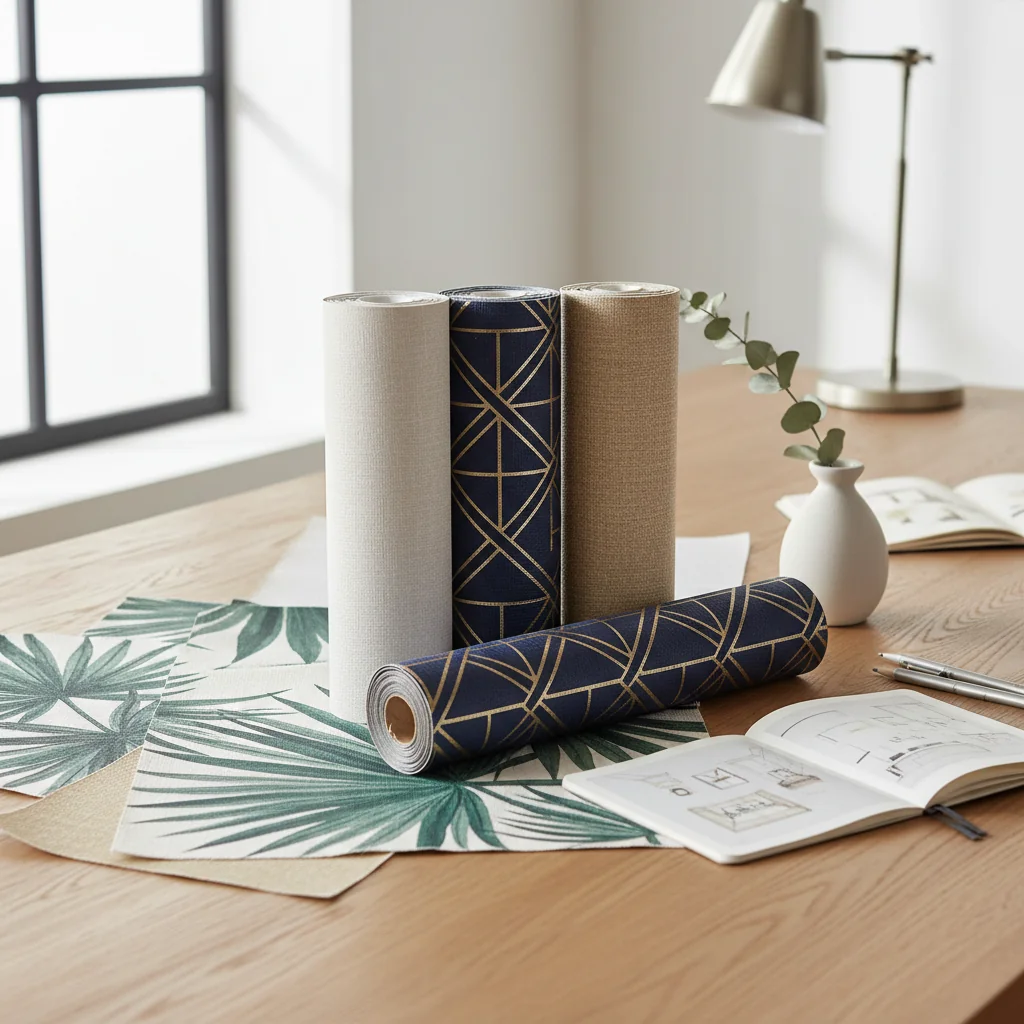
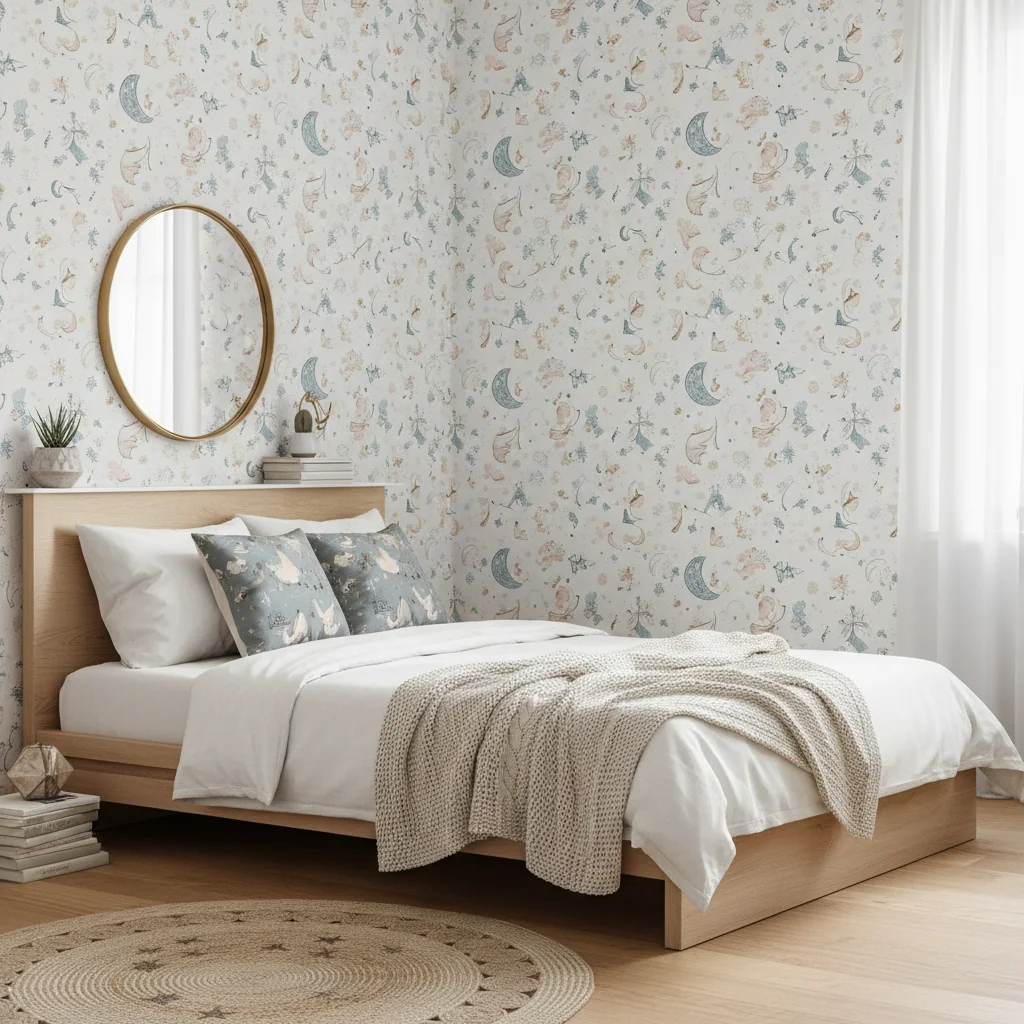
Mural wallpaper is a large-format wall covering designed to create a single, continuous image or scene across an entire wall, fundamentally transforming a space with immersive visual storytelling. Unlike traditional wallpaper with repeating patterns, mural wallpaper offers a grand, uninterrupted artistic statement, often featuring landscapes, abstract art, cityscapes, or custom designs printed on durable substrates like non-woven fabric or vinyl. At Starhouse, we understand that a wall is not merely a boundary but a canvas awaiting transformation, and mural wallpaper provides an unparalleled opportunity to infuse a room with unique character and depth, elevating interior design from functional to truly aspirational.
Key Takeaways
- Mural wallpaper creates a single, large-scale image across a wall, offering an immersive visual experience distinct from repeating patterns.
- Key types include peel-and-stick for easy DIY, pre-pasted for water activation, and unpasted for traditional application, each offering specific benefits.
- Common materials like non-woven, vinyl, and fabric-backed vinyl provide varied durability, texture, and ease of maintenance, impacting suitability for different rooms.
- Precise wall measurement, accounting for height, width, and potential obstructions, is critical for seamless installation and proper panel alignment.
- Choosing a mural involves considering room function, size, existing décor, and desired mood, with sampling recommended to ensure color and texture accuracy.
- Proper surface preparation, including cleaning and priming, is essential for successful adhesion and long-term durability of any mural wallpaper.
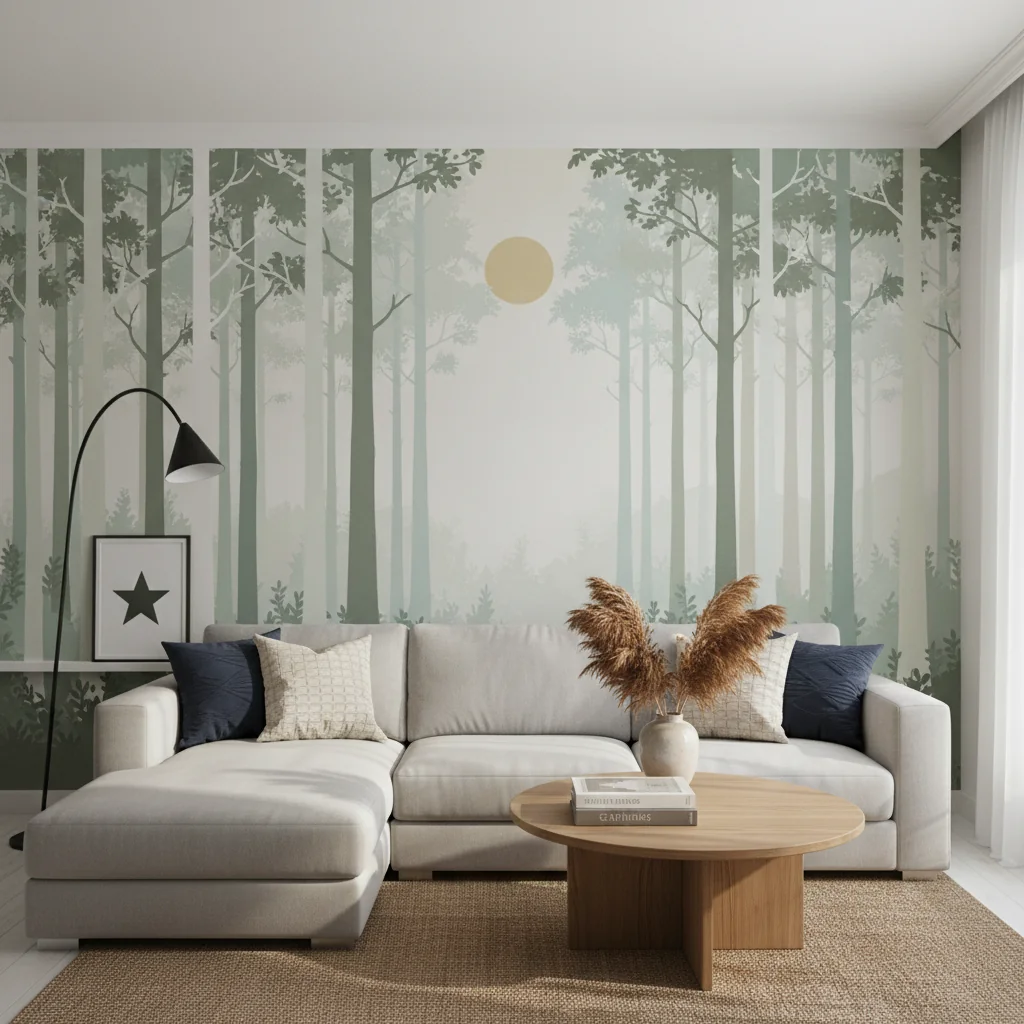
What Exactly Is Mural Wallpaper?
Mural wallpaper is a specialized form of wallcovering designed to display a single, large-scale image or artistic composition across an entire wall or a significant portion of it, effectively transforming a surface into a captivating visual narrative. Unlike traditional wallpaper, which relies on repeating patterns to create visual interest, mural wallpaper presents a unified, expansive artwork that can range from photorealistic landscapes to abstract designs, offering an immersive design experience. This distinction allows for a dramatic focal point in any room, providing depth, character, and a unique atmosphere that cannot be achieved with conventional wall treatments.
The concept of decorating walls with large-scale imagery is not new; ancient frescoes and painted murals served a similar purpose, telling stories and depicting grand scenes. Modern mural wallpaper, however, leverages advanced printing technologies to reproduce high-resolution images on various durable substrates, making these expansive artistic statements accessible for contemporary interiors. This evolution has democratized the art of the mural, allowing homeowners and designers to bring intricate designs, breathtaking natural vistas, or bespoke artistic expressions into their living spaces without the need for a custom painter.
At its core, a mural wallpaper is composed of several panels, each precisely cut to align seamlessly with its neighbors, forming the complete image when installed. These panels are typically numbered and designed to fit together like a puzzle, ensuring that the final artwork is coherent and visually striking. The printing process often involves large-format digital printers that can reproduce intricate details and a vast spectrum of colors, resulting in a product that often mimics the texture and depth of an original painting or photograph.
The primary function of mural wallpaper extends beyond mere decoration; it serves as a powerful design tool to define the mood, enhance the spatial perception, and reflect the personality of a space. A serene forest mural can create a tranquil retreat in a bedroom, while a vibrant cityscape can inject energy into a living room. Furthermore, intelligently chosen murals can visually expand a small room, introduce natural elements where none exist, or even subtly guide the eye through an open-concept layout. The strategic application of mural wallpaper transforms a plain wall into a dynamic centerpiece, dictating the overall aesthetic and emotional resonance of the interior environment.
The technical precision involved in producing mural wallpaper ensures that each panel aligns perfectly, creating an illusion of a single, continuous surface. Manufacturers pay meticulous attention to color calibration and image resolution, guaranteeing that the final product maintains its clarity and vibrancy once installed. This commitment to detail is what allows a digital image to translate into a breathtaking physical presence on a wall, offering a sophisticated and impactful design solution for any interior.
Exploring the Diverse Types of Mural Wallpaper
Mural wallpaper is categorized primarily by its application method and the type of adhesive used, offering distinct advantages for various installation scenarios and skill levels. Understanding these types—peel-and-stick, pre-pasted, and unpasted—is crucial for selecting the most suitable option for your project, ensuring both ease of installation and long-term durability. Each type caters to different preferences, from temporary solutions to permanent fixtures, allowing for flexibility in design choices.
Peel-and-Stick Murals: The Modern Convenience
Peel-and-stick mural wallpaper, also known as self-adhesive or removable wallpaper, features an adhesive backing protected by a removable liner. This type of mural is celebrated for its remarkable ease of installation and removal, making it an ideal choice for renters, those who frequently redecorate, or DIY enthusiasts seeking a low-commitment design solution. The adhesive is typically pressure-sensitive, allowing for repositioning during installation to achieve perfect alignment without damaging the wall surface or the mural itself.
- Advantages:
- Effortless Installation: No paste or water is required; simply peel off the backing and apply to the wall.
- Damage-Free Removal: Designed to come off cleanly without leaving residue or stripping paint, making it suitable for temporary applications.
- Repositionable: Allows for adjustments during application, reducing the stress of achieving perfect alignment.
- Versatility: Can be applied to a variety of smooth, clean surfaces beyond just walls, such as furniture, doors, or even ceilings.
- Ideal Use: Apartments, rental properties, children’s rooms, accent walls, and DIY projects where flexibility and ease of change are prioritized. It’s also excellent for staging homes or for those who enjoy updating their decor seasonally.
- Considerations: Requires a very smooth wall surface for optimal adhesion and appearance. Textured walls can compromise the adhesive bond and show through the material.
Pre-Pasted Murals: Water-Activated Simplicity
Pre-pasted mural wallpaper comes with a dry adhesive already applied to its backing, which is activated by simply dipping the panels in water or misting them with a spray bottle. This method eliminates the need for separate paste application, streamlining the installation process compared to traditional unpasted options. The pre-applied adhesive ensures an even coat, contributing to a smoother finish and reducing the likelihood of air bubbles or uneven adhesion.
- Advantages:
- Convenient: Eliminates the mess and complexity of mixing and applying separate wallpaper paste.
- Strong Adhesion: Once activated, the adhesive provides a reliable and durable bond to the wall.
- Easier Cleanup: Excess paste is minimal, simplifying the post-installation cleaning process.
- Moderate Repositioning: While not as flexible as peel-and-stick, panels can often be adjusted slightly once on the wall before the adhesive fully sets.
- Ideal Use: Homeowners seeking a more permanent yet manageable installation than unpasted murals, suitable for most rooms where a lasting design is desired. It’s a good middle-ground option for those comfortable with a bit more involvement than peel-and-stick.
- Considerations: Requires careful handling of wet panels to prevent tearing and ensures the adhesive is fully activated. Proper wall preparation is still crucial.
Unpasted/Traditional Murals: The Professional Standard
Unpasted mural wallpaper requires the application of a separate adhesive (wallpaper paste) to the back of each panel before installation. This traditional method offers the most control over the adhesive type and application, often resulting in the most durable and professional finish. It is typically favored by professional installers and those seeking a long-term, high-quality wallcovering solution, as the choice of paste can be tailored to specific wall conditions and desired longevity.
- Advantages:
- Superior Adhesion: Allows for the use of high-quality, heavy-duty pastes that provide an exceptionally strong and long-lasting bond.
- Durability: Often made from thicker, more robust materials, contributing to a more resilient finish.
- Professional Finish: Provides the most control over installation, allowing for precise alignment and a flawless, seamless appearance.
- Longevity: When installed correctly with appropriate paste, unpasted murals offer the longest lifespan among all types.
- Ideal Use: High-traffic areas, commercial spaces, and residential applications where maximum durability and a permanent, high-end finish are paramount. Preferred by interior designers for bespoke projects.
- Considerations: Requires more skill, time, and specialized tools for installation, including paste application, making it less suitable for novice DIYers.
Custom vs. Ready-Made Murals
Beyond application methods, mural wallpapers also differ in their design origin:
- Ready-Made Murals: These are pre-designed and pre-sized murals available in standard dimensions. They offer convenience, immediate availability, and a vast array of popular themes and styles. Ideal for quick decisions and common wall sizes.
- Custom Murals: These murals are printed to specific dimensions provided by the customer, often allowing for personalized imagery, color adjustments, or unique graphic designs. Custom murals ensure a perfect fit for any wall, regardless of its size or architectural features, and offer unparalleled personalization. They are perfect for creating a truly unique statement piece.
The choice between these types hinges on your project’s specific requirements, your comfort level with installation, and your long-term design goals. Starhouse curates options across all these categories, ensuring that you find the perfect mural wallpaper to realize your vision.
| Feature | Peel-and-Stick | Pre-Pasted | Unpasted/Traditional |
|---|---|---|---|
| Adhesive | Self-adhesive backing | Water-activated dry adhesive | Requires separate paste |
| Installation Difficulty | Easy (DIY-friendly) | Moderate (DIY-friendly with care) | Advanced (Professional recommended) |
| Removal | Easy, damage-free, residue-free | Generally removable, may require steaming | More challenging, often requires steaming/stripping |
| Repositioning | Highly repositionable during installation | Slightly repositionable when wet | Limited repositioning once paste sets |
| Durability/Longevity | Good for temporary to medium-term | Excellent for medium to long-term | Superior for long-term, permanent installations |
| Wall Prep Needs | Very smooth, clean, primed wall | Smooth, clean, primed wall | Smooth, clean, properly sized/primed wall |
| Ideal Use Cases | Rentals, accent walls, frequent redecoration | Residential, moderate traffic areas, lasting design | High-traffic, commercial, bespoke, permanent installations |
Materials Matter: Understanding Mural Wallpaper Substrates
The substrate, or base material, of mural wallpaper significantly influences its durability, texture, ease of installation, and suitability for specific environments, making its selection a critical decision in any design project. Different materials offer varying levels of resistance to moisture, wear, and fading, directly impacting the mural’s longevity and maintenance requirements. Understanding these material properties ensures that the chosen mural not only looks stunning but also performs optimally in its intended setting.
Non-Woven Murals: The Eco-Conscious Choice
Non-woven mural wallpaper is a highly popular and environmentally conscious option, crafted from a blend of natural and synthetic fibers, often cellulose and polyester. This composition grants it exceptional breathability, strength, and dimensional stability, making it resistant to tearing and shrinking during installation. Non-woven materials are renowned for their “paste-the-wall” application method, where adhesive is applied directly to the wall rather than the wallpaper panels, simplifying the process and reducing mess.
- Benefits:
- Breathability: Resists mold and mildew growth, making it suitable for slightly humid environments, though not direct water contact.
- Dimensional Stability: Panels maintain their size and shape when wet, ensuring seamless alignment without gaps.
- Easy Installation: The paste-the-wall method is often faster and cleaner than traditional paste-the-paper techniques.
- Strippable Removal: Generally removes in full sheets without damaging the wall, facilitating future redecoration.
- Environmental Considerations: Often PVC-free and made with sustainable fibers, aligning with eco-friendly design principles.
- Ideal Use: Living rooms, bedrooms, dining areas, and offices where a high-quality, durable, and relatively easy-to-remove option is desired.
Vinyl (PVC-Coated) Murals: Durability and Cleanability
Vinyl mural wallpaper features a paper or fabric backing coated with a layer of polyvinyl chloride (PVC), which provides exceptional durability, washability, and resistance to moisture. This robust construction makes vinyl murals an excellent choice for high-traffic areas and environments where frequent cleaning is necessary. The vinyl layer can be embossed or textured to mimic other materials, adding tactile depth to the visual design.
- Benefits:
- High Durability: Resists scratches, scuffs, and abrasions, making it long-lasting in busy environments.
- Washable: Can be easily cleaned with a damp cloth and mild detergent, ideal for homes with children or pets.
- Moisture Resistance: The vinyl surface repels water, offering protection against splashes and humidity, though not recommended for direct water exposure.
- Fade Resistance: Often treated to resist UV fading, maintaining vibrant colors over time.
- Ideal Use: Kitchens, bathrooms (away from direct water spray), hallways, playrooms, commercial spaces, and any area requiring a highly resilient and easy-to-maintain wall covering.
- Considerations: Can be less breathable than non-woven materials. Some older vinyl products may contain higher levels of Volatile Organic Compounds (VOCs), though modern manufacturing often focuses on low-VOC options.
Fabric-Backed Vinyl Murals: Enhanced Strength and Commercial Grade
Fabric-backed vinyl mural wallpaper is a heavier-duty version of vinyl, featuring a woven fabric (typically cotton or polyester) laminated to the vinyl surface. This construction provides superior tear strength and dimensional stability, making it exceptionally robust and ideal for demanding commercial applications. The fabric backing also adds a subtle texture and can make the material easier to handle during installation compared to some pure vinyl options.
- Benefits:
- Exceptional Strength: Highly resistant to tearing and punctures, suitable for very high-traffic areas.
- Dimensional Stability: Maintains shape and size well, even on large installations.
- Sound Absorption: The thicker material can offer slight acoustic benefits, reducing echo.
- Longevity: Designed for extended wear in rigorous environments.
- Ideal Use: Hotels, restaurants, retail spaces, healthcare facilities, and residential areas requiring the utmost in durability and performance.
Paper-Based Murals: Traditional Aesthetics and Texture
Traditional paper-based mural wallpaper consists primarily of paper, often with a protective coating. While generally less durable and washable than non-woven or vinyl options, paper murals offer a classic aesthetic and can provide unique textures and finishes. They are often chosen for their delicate feel and ability to reproduce fine art details, providing a more traditional wallpaper experience.
- Benefits:
- Traditional Look: Offers a classic, often matte, finish that can enhance historical or vintage-inspired interiors.
- Print Quality: Can provide excellent print detail and color fidelity, particularly for artistic designs.
- Breathability: Allows walls to breathe more than impermeable vinyl options.
- Ideal Use: Low-traffic areas like formal living rooms, dining rooms, or bedrooms where a delicate, traditional, or highly artistic aesthetic is paramount and durability is not the primary concern.
- Considerations: Less resistant to moisture, tearing, and stains; typically requires more careful handling during installation and cleaning.
Sustainable Options: Prioritizing Health and Environment
With increasing awareness of environmental impact and indoor air quality, sustainable mural wallpaper options are gaining prominence. These include non-woven materials made from recycled content, FSC-certified paper, or those printed with water-based, low-VOC inks.
Volatile Organic Compounds (VOCs) are gases emitted from certain solids or liquids that can have adverse health effects and contribute to indoor air pollution. Selecting low-VOC or VOC-free products significantly improves indoor air quality, which is a crucial consideration for health-conscious homeowners. At Starhouse, we prioritize curating options that meet stringent environmental and health standards. For more information on indoor air quality, the US EPA provides comprehensive guidance.
The choice of mural wallpaper substrate is as critical as the design itself. It determines not only the visual and tactile experience but also the functional performance and longevity of your investment. By carefully considering the material, you can ensure your mural wallpaper perfectly complements both your aesthetic vision and the practical demands of your space.
Aesthetic Horizons: Popular Styles and Themes in Mural Wallpaper
Mural wallpaper offers an unparalleled breadth of artistic expression, allowing homeowners to define the aesthetic of a room with a single, impactful visual statement, ranging from serene natural scenes to bold abstract compositions. The vast array of available styles and themes ensures that there is a perfect mural to complement any interior design scheme, personal preference, or desired mood, making it a versatile tool for creating truly personalized spaces. Understanding these popular categories helps in navigating the options and selecting a design that resonates deeply with your vision.
Nature & Landscapes: Bringing the Outdoors In
Nature-inspired murals are perennially popular, offering a sense of tranquility, expansiveness, and connection to the natural world. These themes are ideal for creating serene retreats or infusing spaces with organic beauty.
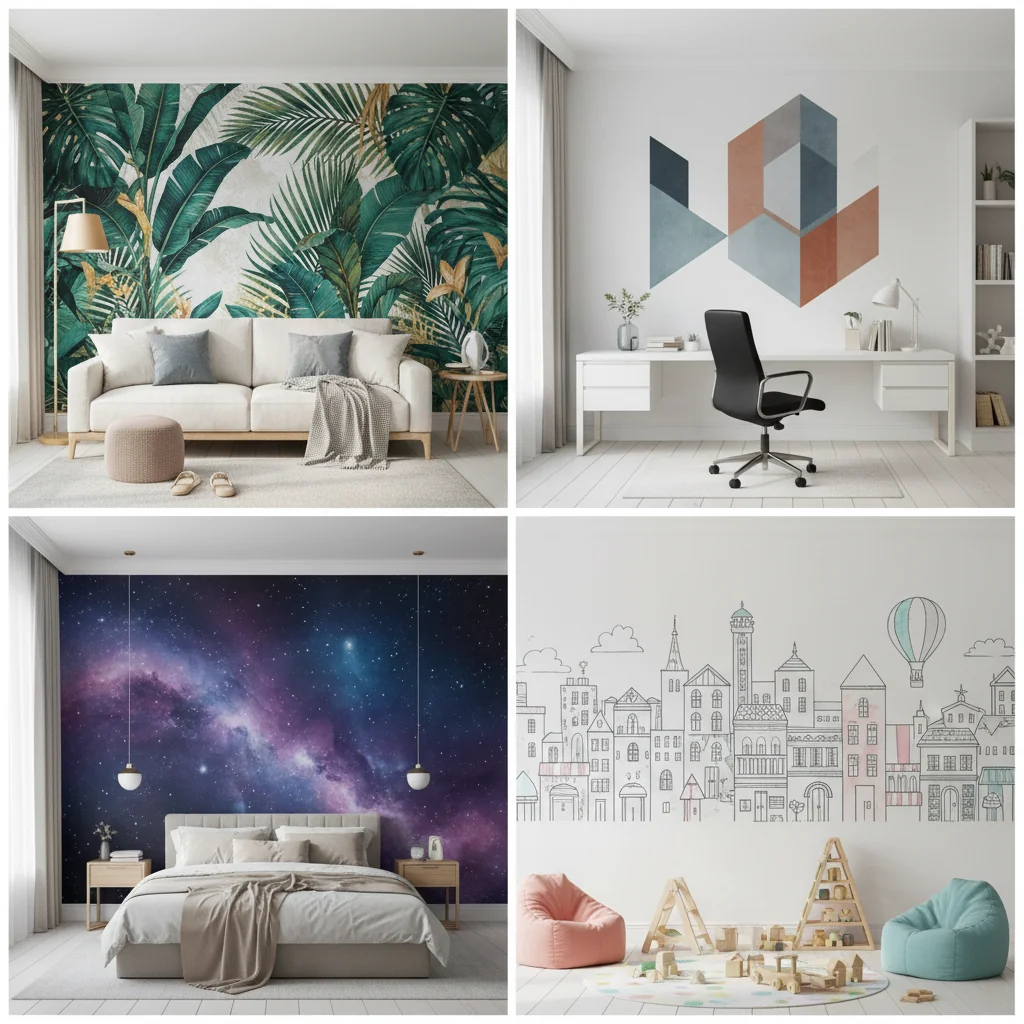
- Botanical & Floral: Features lush foliage, oversized blossoms, delicate wildflowers, or intricate leaf patterns. These designs can create a vibrant, energetic feel or a soft, romantic atmosphere, depending on the color palette and artistic style. They are particularly effective in bedrooms, dining rooms, or powder rooms.
- Forest & Woodland: Depicts dense forests, misty woods, or sun-dappled groves, often in muted greens, browns, and grays. These murals evoke a sense of calm and depth, making rooms feel larger and more connected to nature. Perfect for creating a peaceful sanctuary in a bedroom or a dramatic accent in a living area.
- Mountain & Seascape: Showcases majestic mountain ranges, serene lakes, crashing ocean waves, or vast desert landscapes. These themes add grandeur and a sense of adventure, often with panoramic views that visually expand the space. Ideal for offices, living rooms, or any area seeking a breathtaking focal point.
- Tropical & Jungle: Characterized by vibrant greens, exotic plants, and sometimes wildlife. These murals bring an energetic, playful, and luxurious feel, transforming a room into a lush, escapist paradise. Excellent for guest rooms, sunrooms, or bathrooms to evoke a resort-like ambiance.
Abstract & Geometric: Modern and Dynamic Statements
Abstract and geometric murals cater to contemporary tastes, introducing dynamic patterns, bold forms, and sophisticated color palettes that can define a modern aesthetic. These designs are often non-representational, allowing for personal interpretation and creating a sense of movement or structure.
- Abstract Art: Features painterly strokes, color washes, fluid shapes, or textured compositions. These murals can range from minimalist and subtle to vibrant and expressive, acting as a large-scale piece of art that sets a sophisticated tone. Suitable for modern living rooms, art studios, or creative workspaces.
- Geometric Patterns: Incorporates repeating or interlocking shapes such as hexagons, triangles, circles, or chevrons. These designs bring a sense of order, rhythm, and contemporary elegance, often playing with scale and optical illusions. Effective in creating a sleek, architectural feel in offices, hallways, or urban residences.
- Minimalist & Ombre: Characterized by simplicity, clean lines, and often a gradient of color (ombre). These styles provide a subtle yet impactful backdrop, promoting a sense of calm and spaciousness without overwhelming the eye. Ideal for bedrooms, meditation spaces, or minimalist living areas.
Cityscapes & Architecture: Urban Sophistication and Cultural Flair
Cityscape and architectural murals celebrate the built environment, bringing the energy of urban life or the grandeur of historical structures into a space. These themes are powerful for creating a sophisticated, worldly, or dramatic atmosphere.
- Urban Skylines: Features iconic city skylines, bustling streets, or historic landmarks. These murals can evoke a sense of adventure, aspiration, or nostalgia, connecting the interior with global metropolises. Perfect for home offices, entertainment rooms, or urban apartments.
- Architectural Details: Depicts intricate architectural elements such as arches, columns, windows, or facades, often in a monochromatic or sepia tone. These designs add depth, structure, and a sense of history or grandeur, creating an illusion of additional space or an architectural feature. Great for dining rooms, studies, or elegant living areas.
Artistic & Illustrative: Unique Expressions and Whimsy
This category encompasses a broad range of artistic styles, from classical reproductions to whimsical illustrations, offering truly unique and personalized wall art.
- Classical Art & Fresco Style: Reproduces famous paintings, classical sculptures, or fresco-like designs, bringing a touch of timeless elegance and cultural sophistication. Ideal for formal dining rooms, libraries, or grand entryways.
- Watercolor & Sketch: Features soft, fluid watercolor effects or delicate line drawings. These murals create a gentle, artistic, and often ethereal atmosphere, perfect for adding a subtle touch of creativity. Well-suited for bedrooms, nurseries, or light-filled living spaces.
- Whimsical & Children’s Themes: Bright, playful designs featuring cartoon characters, fantastical creatures, maps, or educational motifs. These murals transform children’s rooms into imaginative playgrounds, fostering creativity and joy.
Custom Imagery: Personalization at its Peak
The ability to use custom imagery allows for unparalleled personalization. Homeowners can transform their own photographs, commissioned artwork, or even brand logos into large-scale murals. This option ensures a truly unique and meaningful design statement that reflects personal memories, passions, or corporate identity.
Current Trends in Mural Wallpaper
The world of interior design is dynamic, and mural wallpaper trends evolve to reflect broader aesthetic movements:
- Biophilic Design: A strong emphasis on natural elements, lush botanicals, and serene landscapes to enhance well-being and connection to nature.
- Maximalism & Bold Colors: Moving away from minimalist restraint, maximalist murals embrace rich patterns, vibrant hues, and layered textures to create visually stimulating and opulent spaces.
- Muted & Earthy Palettes: Soft greens, warm beiges, terracotta tones, and dusty blues provide a calming, sophisticated backdrop that feels grounded and timeless.
- Textural Illusions: Murals that mimic the look and feel of concrete, plaster, wood grain, or woven fabrics add tactile interest and depth without the practical challenges of actual materials.
- Vintage & Heritage Styles: Rediscovering classic motifs, art deco glamor, and historical patterns, often with a modern twist, to create a sense of nostalgia and elegance.
- Large-Scale Abstractions: Oversized, impactful abstract art that serves as a modern focal point, often featuring fluid shapes and a limited, sophisticated color palette.
By exploring these diverse styles and themes, you can pinpoint the mural wallpaper that not only complements your home’s architecture and existing décor but also profoundly expresses your unique design narrative.
Choosing the Perfect Mural Wallpaper for Your Space
Selecting the ideal mural wallpaper involves a thoughtful process of evaluating your room’s characteristics, understanding your personal aesthetic, and considering the practical implications of different designs and materials. The right mural can dramatically enhance a space, creating a focal point, setting a mood, or even visually altering the room’s dimensions. A methodical approach ensures that your choice perfectly aligns with both your design aspirations and the functional needs of the area.
Consider Room Function and Traffic
The primary use of the room should heavily influence your mural choice, particularly regarding material durability and design theme.
- Living Rooms & Dining Rooms: These are often public-facing areas where a statement mural can create a sophisticated atmosphere or a conversation starter. Consider grand landscapes, abstract art, or elegant architectural themes. Durability is important but perhaps less critical than in high-traffic zones.
- Bedrooms: Focus on themes that promote relaxation and tranquility. Soft botanicals, serene landscapes, or minimalist abstractions in calming color palettes are excellent choices. Non-woven materials are often preferred for their breathability and less aggressive adhesives.
- Children’s Rooms & Playrooms: Opt for vibrant, engaging, and often whimsical themes like cartoon characters, maps, or fantastical scenes. Durability and washability are paramount here, making vinyl or fabric-backed vinyl ideal to withstand spills and wear.
- Kitchens & Bathrooms: These areas experience higher humidity and potential splashes. Choose moisture-resistant and washable materials like vinyl to ensure longevity and ease of cleaning. Avoid paper-based murals. Themes can range from subtle textures to vibrant tropical designs, depending on the desired mood.
- Home Offices & Studies: Murals that inspire focus, creativity, or a sense of professionalism are suitable. Cityscapes, geometric patterns, or abstract designs can enhance the workspace. Consider designs that are not overly distracting but provide an engaging backdrop for video calls.
- Hallways & Entryways: High-traffic areas require highly durable and washable materials. A captivating mural here can set the tone for your entire home, offering a grand welcome or a visually interesting transition.
Evaluate Room Size and Light
The dimensions and natural light of your room significantly impact how a mural will appear and feel.
- Small Rooms: Light-colored murals with expansive scenes (e.g., distant landscapes, open skies) can visually expand a small space, creating an illusion of depth and openness. Avoid overly dark or busy patterns, which can make the room feel smaller and more enclosed.
- Large Rooms: Large rooms can accommodate bolder, more detailed, or darker murals without feeling overwhelmed. These spaces can handle intricate patterns, large-scale abstract art, or dramatic landscapes that might overpower a smaller area.
- Natural Light: Rooms with abundant natural light can handle darker or more saturated colors without feeling dim. In poorly lit rooms, opt for murals with lighter backgrounds and reflective finishes to maximize brightness. Consider how a mural’s colors will change throughout the day with varying light conditions.
Harmonize with Existing Décor and Color Palette
The mural should seamlessly integrate with your current furniture, textiles, and existing color scheme, acting as a cohesive element rather than an isolated piece.
- Color Coordination: Identify dominant and accent colors in your room. The mural should either incorporate these colors or introduce complementary hues that enhance the overall palette. Use a color wheel to understand relationships between colors.
- Furniture Style: A modern abstract mural might clash with traditional, ornate furniture. Conversely, a classical landscape mural might feel out of place in a minimalist setting. Strive for a harmonious blend of styles.
- Scale and Proportion: Ensure the scale of the mural’s imagery is appropriate for the room and its furnishings. An oversized floral pattern might look stunning on a large wall behind a low sofa, but overwhelming on a small wall with tall furniture.
Define Your Desired Mood or Atmosphere
Mural wallpaper is a powerful tool for establishing the emotional tone of a room.
- Serene & Calm: Soft pastels, muted landscapes, or subtle abstract patterns in cool tones.
- Energetic & Vibrant: Bold colors, dynamic cityscapes, or tropical themes.
- Sophisticated & Elegant: Architectural details, classical art, or abstract designs in rich, deep hues.
- Playful & Whimsical: Bright colors, cartoon illustrations, or imaginative scenes.
Sample Acquisition: The Importance of Testing
Always obtain samples of your preferred mural wallpaper before making a final purchase.
- Color Accuracy: Colors can appear differently online than in person, and they will vary under your room’s specific lighting conditions.
- Texture & Finish: Samples allow you to feel the material’s texture (e.g., smooth vinyl, woven non-woven) and assess its finish (matte, satin, metallic) to ensure it meets your expectations.
- Integration: Place samples on your wall for several days, observing them at different times of day and night, next to your furniture and existing decor, to confirm they blend harmoniously.
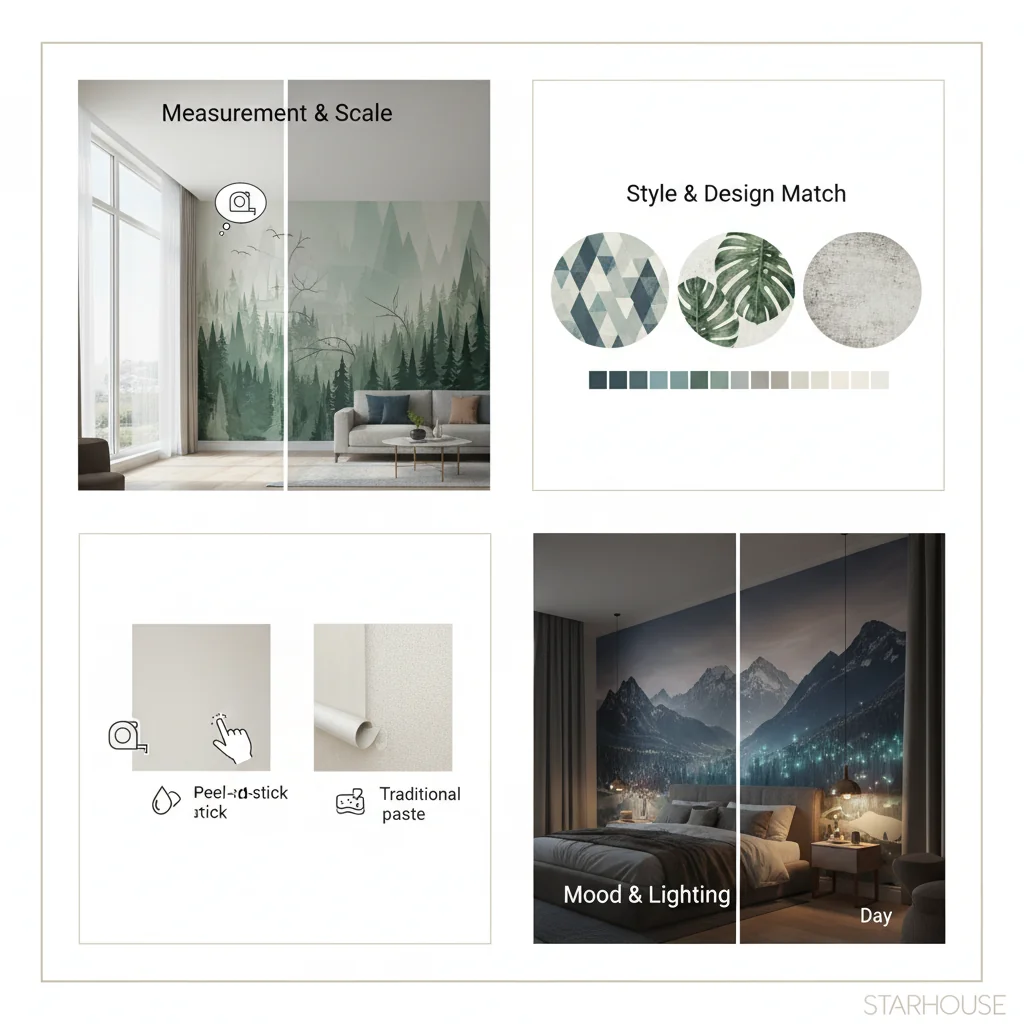
By meticulously considering these factors, you can confidently select a mural wallpaper that not only transforms your space visually but also enhances its functionality and emotional appeal, creating an environment that truly reflects your style and personality.
- Key Considerations for Choosing a Mural:
- Room’s Purpose: Match durability and theme to the room’s function (e.g., washable vinyl for kitchens, calming botanicals for bedrooms).
- Room Dimensions & Light: Use light, expansive designs for small, dark rooms; embrace bold patterns for large, bright spaces.
- Existing Decor: Ensure the mural’s colors, style, and scale complement furniture, textiles, and overall aesthetic.
- Desired Mood: Select themes and palettes that evoke the intended atmosphere (e.g., serene, energetic, sophisticated).
- Material Type: Choose non-woven for breathability, vinyl for washability, or traditional for specific textures.
- Sampling: Always test physical samples on your wall to assess color, texture, and light interaction before committing.
Precise Planning: Sizing and Measuring for Mural Wallpaper Installation
Accurate measurement is the single most critical step in mural wallpaper installation, ensuring a seamless, professional finish and preventing costly errors in ordering. Unlike traditional wallpaper, where pattern repeat allows for more flexibility, mural wallpaper relies on precise panel alignment to form a coherent image, demanding meticulous attention to wall dimensions. Proper planning accounts for every detail, from basic height and width to potential obstructions and necessary trimming allowances.
Accurate Measurement Techniques: Wall Height and Width
Before ordering any mural, measure your wall thoroughly and methodically. Do not rely on architectural drawings, as actual wall dimensions can vary.
- Measure Wall Height: Measure the height of the wall in at least three different places (left, center, right) from the baseboard to the ceiling. Walls are rarely perfectly uniform. Record the tallest measurement.
- Measure Wall Width: Measure the width of the wall in at least three different places (top, middle, bottom) from corner to corner. Record the widest measurement.
- Account for Irregularities: If your ceiling or floor is uneven, or if the wall is not perfectly plumb, these variations must be considered. Always use the largest measurements for both height and width to ensure complete coverage.
- Add Overlap/Buffer: It is standard practice to add an extra 2 to 4 inches to both the total height and total width measurements. This buffer provides crucial leeway for trimming, especially if walls are not perfectly straight or plumb, and allows for slight adjustments during installation. For example, if your wall is 96 inches high and 144 inches wide, you should order a mural sized at least 100 inches high by 148 inches wide.
- Measure Around Obstructions: Carefully measure around any permanent fixtures such as windows, doors, built-in shelving, or large air vents. While you’ll trim around these later, you still need to ensure the mural image covers the entire area, including what will be cut out. Some custom mural providers may ask for specific measurements for these obstructions to ensure key design elements are not cut off.
Understanding Panel Overlap and Trim
Mural wallpaper typically comes in multiple panels that are designed to be installed side-by-side, creating the full image.
- Overlap: Many mural wallpapers are designed with a slight overlap (usually 0.5 to 1 inch) between panels. This overlap ensures a seamless match, allowing for minor adjustments and preventing gaps as the material settles. The printed design on one panel will extend slightly beyond its edge, aligning perfectly with the design on the adjacent panel. This overlap is then cut through both layers (a double-cut method) to create an invisible seam.
- No Overlap (Butt Joint): Some murals are designed for a “butt joint” installation, where panels are precisely aligned edge-to-edge without overlapping. This method requires extreme precision during installation, as there is no room for error. Always check the manufacturer’s instructions regarding overlap or butt joint requirements.
- Trimming: Excess material at the ceiling, baseboard, and corners will be trimmed after installation for a clean, custom fit. This is why adding a buffer to your measurements is essential. Use a sharp utility knife and a straight edge for precise trimming.
Ordering Considerations: Extra Material for Mistakes or Future Repairs
Beyond the initial buffer, consider ordering a little extra material, especially for custom designs or large projects.
- Contingency: Accidents happen during installation—a panel might tear, crease, or be misaligned beyond repair. Having an extra panel or two can save you from reordering an entire mural and facing potential color variations between print batches.
- Future Repairs: Over time, parts of the mural might get damaged, scuffed, or stained. A small leftover piece can be invaluable for patching or repairing a section without replacing the entire wall.
- Color Consistency: Different print runs can sometimes result in subtle color variations. Ordering everything at once ensures color consistency across all panels. If you need to reorder a single panel later, there’s a slight chance of a minor color shift.
Professional vs. DIY Installation: When to Hire, What to Expect
While peel-and-stick murals are often marketed as DIY-friendly, the scale and precision required for mural wallpaper installation can be challenging for novices.
- DIY Installation: Suitable for smaller murals, accent walls, and those comfortable with detailed, precise work. Peel-and-stick and pre-pasted murals are generally more forgiving for DIYers. Ensure you have the right tools and sufficient time.
- Professional Installation: Recommended for large, complex murals; unpasted murals; walls with numerous obstructions; or if you simply want a flawless, stress-free result. Professionals have the experience, tools, and techniques to handle intricate alignments, difficult corners, and ensure a smooth, lasting finish. They can also often advise on wall preparation and potential issues. Expect to pay for their expertise, but consider it an investment in the longevity and aesthetic quality of your mural.
By approaching the sizing and measuring process with meticulous care and attention to detail, you lay the foundation for a stunning and enduring mural wallpaper installation that perfectly transforms your space.
Installation Insights: A Step-by-Step Overview
Successful mural wallpaper installation hinges on meticulous preparation and a systematic approach, regardless of whether you choose a peel-and-stick, pre-pasted, or unpasted option. Proper surface readiness ensures optimal adhesion and a flawless finish, while a clear understanding of the application steps minimizes errors and maximizes the visual impact of your chosen design. Even for professional installations, familiarity with the process guarantees a smooth project execution.
Surface Preparation: The Foundation of Success
The quality of your wall surface directly impacts the mural’s adhesion, appearance, and longevity. Do not skip or rush this crucial step.
- Clean the Wall: Ensure the wall is free from dust, dirt, grease, and grime. Use a mild detergent solution (e.g., sugar soap) and a sponge, then rinse thoroughly with clean water. Allow the wall to dry completely, typically 24-48 hours.
- Patch and Smooth: Fill any holes, cracks, or imperfections with spackling paste. Sand smooth once dry. Even minor bumps can show through the mural, especially on smoother materials.
- Remove Obstructions: Temporarily remove switch plates, outlet covers, light fixtures, and any wall-mounted hardware. This allows for seamless application and trimming.
- Prime the Wall: Applying a high-quality primer (often referred to as a “wallpaper primer” or “sizing”) is essential. Primer seals porous surfaces, prevents paste absorption, promotes better adhesion, and makes future removal easier. It also creates a uniform surface color, preventing old paint or wall repairs from showing through lighter murals. For peel-and-stick murals, a smooth, semi-gloss paint finish is often recommended, ensuring the wall is fully cured (at least 3-4 weeks after painting) before application.
- Ensure Proper Conditions: The room temperature should be moderate (65-75°F or 18-24°C) and humidity levels stable. Avoid drafts during installation.
Tools Required: Equipping for Precision
Having the right tools on hand streamlines the installation process and helps achieve professional results.
- Measuring Tape: For accurate wall dimensions and panel placement.
- Level or Plumb Bob: Essential for drawing a straight vertical guide line to start your first panel, ensuring all subsequent panels are plumb.
- Pencil: For marking guide lines and trimming points.
- Sharp Utility Knife or Snap-Off Blade Knife: Crucial for precise trimming along edges and around obstructions. Keep extra blades handy as dull blades can tear wallpaper.
- Straight Edge or Smoothing Tool: A 2-foot metal ruler, a plastic smoother, or a wallpaper brush/roller to smooth out bubbles and wrinkles.
- Seam Roller (for unpasted/pre-pasted): To firmly press seams for a tight bond.
- Large Sponge and Bucket of Water: For cleaning excess paste (unpasted/pre-pasted) or for activating pre-pasted murals.
- Step Ladder: For reaching high areas safely.
- Clean Cloths: For wiping away excess paste or cleaning tools.
- Drop Cloths: To protect flooring from paste or water.
Application Steps (General for Peel-and-Stick/Pre-Pasted)
While specific instructions vary by manufacturer and type, a general sequence applies to most mural wallpaper installations. Always refer to your mural’s specific guide.
- Layout and Inspect: Unroll all panels and lay them out to ensure they are correct, free of defects, and that the image aligns perfectly. Number them if not already done.
- Draw Your Guide Line: Using your level or plumb bob, draw a perfectly vertical line on the wall where the first panel will begin. This is paramount for ensuring all panels are straight. Start from the left or right, depending on the mural design and manufacturer’s recommendation.
- Apply First Panel:
- Peel-and-Stick: Peel back a few inches of the liner from the top. Align the panel’s edge with your guide line and press lightly. Slowly peel down the liner while smoothing the panel onto the wall from the center outwards, working downwards.
- Pre-Pasted: Submerge or mist the back of the panel according to instructions. “Book” the panel (fold it loosely, adhesive side to adhesive side) for the recommended time to allow the adhesive to activate. Then, align the top edge with your guide line and smooth onto the wall.
- Smooth Out Bubbles: Use your smoothing tool to gently push out any air bubbles or wrinkles towards the edges of the panel. Work systematically to prevent trapping air.
- Trim Excess: Once the first panel is securely in place, use your utility knife and straight edge to carefully trim any excess material at the ceiling, baseboard, and corner.
- Apply Subsequent Panels: Repeat the process for each subsequent panel, carefully aligning the design. For overlap designs, ensure the overlap is consistent. For butt joints, align edges precisely. Work your way across the wall, ensuring each panel is plumb and the image flows seamlessly.
- Double-Cut Seams (if applicable): For overlapping panels, once two panels are installed and overlapped, use a sharp utility knife and a straight edge to cut through both layers of wallpaper at the center of the overlap. Carefully remove the trimmed excess from both the top and bottom layers, then press the seam flat with a seam roller for a virtually invisible joint.
- Final Inspection and Cleanup: Once all panels are installed, stand back and inspect the entire mural for any missed bubbles, misalignments, or visible seams. Gently clean any excess paste with a damp sponge (for unpasted/pre-pasted). Replace switch plates and fixtures.
Troubleshooting Common Issues
- Bubbles: Small bubbles can often be smoothed out with a wallpaper smoother. Larger, stubborn bubbles might require a small pinprick to release trapped air, then smoothing.
- Misalignment: If a panel is significantly crooked, it’s best to gently peel it back (especially with peel-and-stick) and reposition it. For pre-pasted, you have a short window while the paste is wet. For unpasted, it’s more challenging and might require starting over with a fresh panel if badly misaligned.
- Visible Seams: This often indicates improper trimming, insufficient overlap, or panels not being butted closely enough. For overlapping designs, a proper double-cut should eliminate visible seams. For butt joints, ensure walls are perfectly primed and the adhesive provides a strong bond to prevent edges from lifting.
- Lifting Edges: This can be due to insufficient paste (for unpasted), improper surface prep, or excessive moisture/humidity. A small amount of seam adhesive can often re-secure lifting edges.
By following these detailed steps and preparing thoroughly, you can achieve a stunning and durable mural wallpaper installation that transforms your space into a work of art.
Caring for Your Investment: Maintenance and Longevity of Mural Wallpaper
Proper care and maintenance are essential for preserving the beauty and extending the lifespan of your mural wallpaper, ensuring it remains a vibrant focal point in your home for years to come. Different material types require specific cleaning and protection strategies, making it crucial to understand the manufacturer’s recommendations for your particular mural. Proactive measures against environmental factors and prompt attention to minor issues will safeguard your investment.
Regular Cleaning: Dusting and Gentle Wiping
Most mural wallpapers benefit from routine cleaning to prevent dust and grime buildup, which can dull their appearance over time.
- Dusting: Regularly dust your mural wallpaper with a soft, dry cloth, a microfiber duster, or a vacuum cleaner brush attachment on a low setting. This prevents particulate matter from settling into the texture or surface.
- Gentle Wiping (for washable materials): For vinyl or fabric-backed vinyl murals, which are typically washable, use a clean, soft sponge or cloth lightly dampened with plain water or a very mild, non-abrasive detergent solution. Always test any cleaning solution on an inconspicuous area first to ensure it does not affect the color or finish. Wipe gently, avoiding harsh scrubbing, and then lightly wipe with a clean, damp cloth to remove any residue. Finish by patting dry with a clean, dry cloth.
- Non-Washable Materials: For delicate paper-based or non-woven murals that are not explicitly labeled as washable, strictly limit cleaning to dry dusting. Avoid any liquid, as it can stain, warp, or damage the material.
Stain Removal: Specific Guidance for Different Materials
Address stains immediately to maximize the chances of successful removal.
- Fresh Stains on Washable Murals (Vinyl, Fabric-Backed Vinyl): For common household stains like food splatters or crayon marks, gently blot the stain with a clean cloth dampened with a mild detergent solution. Work from the outside of the stain inwards to prevent spreading. Rinse with a clean, damp cloth and pat dry. Avoid using abrasive cleaners, bleach, or harsh chemicals, which can damage the print or surface.
- Grease Stains: For grease, a small amount of rubbing alcohol on a cotton swab can sometimes lift the stain from vinyl surfaces, but test in an inconspicuous area first. Alternatively, a paste of baking soda and water can be applied, allowed to dry, and then gently brushed off.
- Permanent Markers/Ink: These are very difficult to remove from any wallpaper type. On washable vinyl, a small amount of isopropyl alcohol or a specialized graffiti remover (again, test first) might work, but success is not guaranteed and can affect the finish. For non-washable materials, these stains are usually permanent.
- Stains on Non-Washable Murals (Paper, Some Non-Woven): For these delicate materials, most liquid stains are permanent. For dry dirt or smudges, a clean art gum eraser can sometimes gently lift marks without damaging the surface, but proceed with extreme caution.
Preventative Measures: Avoiding Direct Sunlight and Humidity Control
Environmental factors play a significant role in the longevity of your mural.
- Protect from Direct Sunlight: Prolonged exposure to direct sunlight can cause colors to fade over time, especially in vibrant murals. Consider using UV-protective window films, blinds, or curtains on windows that receive intense direct sun. This will significantly extend the color vibrancy of your mural.
- Control Humidity: Excessive humidity can lead to wallpaper seams lifting, adhesive failure, and even mold or mildew growth, particularly on less breathable materials. Maintain consistent indoor humidity levels, ideally between 30-50%. In high-humidity areas like bathrooms, ensure adequate ventilation (e.g., exhaust fans) to remove moisture. For more information on maintaining healthy indoor air quality and preventing mold, the US EPA offers valuable resources.
- Avoid Abrasion: Position furniture and décor items so they do not constantly rub against the mural, which can cause scuffs or damage.
Repairs: Addressing Minor Damage
Small imperfections or damage can often be repaired without replacing an entire panel.
- Lifting Seams or Edges: For minor lifting, apply a small amount of seam adhesive (available at hardware stores) underneath the edge, press firmly, and wipe away any excess. Use a seam roller to ensure a strong bond.
- Small Tears or Punctures: If you have leftover mural material, carefully cut a patch slightly larger than the damaged area. Align the pattern precisely over the damage, tape it in place, and then use a sharp utility knife to cut through both the patch and the damaged section simultaneously. Remove the damaged piece and adhere the new patch, carefully aligning the pattern.
- Bubbles: For persistent bubbles, use a syringe to inject a small amount of wallpaper adhesive into the bubble, then gently smooth it out. Wipe away excess adhesive.
By adhering to these care guidelines, your mural wallpaper will continue to be a source of aesthetic pleasure and a defining feature of your interior design for many years.
Styling and Pairing: Integrating Mural Wallpaper into Your Design Scheme
Integrating mural wallpaper effectively into your interior design scheme requires thoughtful consideration of how it interacts with other elements in the room, from furniture to lighting. A well-styled mural acts as a cohesive component of the overall design, enhancing the room’s aesthetic and functional appeal rather than overpowering it. Strategic pairing ensures that the mural elevates the space, creating a harmonious and aspirational environment.
Furniture Placement: Complementing the Mural
The placement of furniture is crucial to allow your mural to shine while maintaining functionality.
- Focal Point Enhancement: If the mural is the intended focal point, arrange key furniture pieces (e.g., sofa, bed, console table) to face or sit prominently against the mural wall. This draws the eye to the artwork.
- Minimalist Approach: Avoid overcrowding the mural wall with too much furniture or decor. Let the mural speak for itself. Opt for simpler, lower-profile furniture that doesn’t obscure key elements of the design.
- Layering: For large, expansive murals, consider placing a slender console table or a low-profile credenza against the wall. This allows for styling with complementary accessories without blocking the mural’s imagery. Ensure any art or mirrors hung on a mural wall are chosen carefully to enhance, not detract from, the mural.
- Creating Depth: In rooms with a deep landscape or architectural mural, positioning furniture in the foreground can enhance the illusion of depth, making the space feel more expansive.
Color Palette Coordination: Selecting Accent Colors
A mural introduces a primary color palette to your room. Leveraging these colors in your accessories and textiles creates a unified and sophisticated look.
- Extract Hues: Identify the dominant and subtle colors present in your mural. Use these as a guide for selecting accent pillows, throws, curtains, rugs, and decorative objects.
- Complementary or Contrasting: Choose accent colors that either complement the mural’s existing palette (e.g., picking up a soft green from a botanical mural) or provide a tasteful contrast that adds visual interest without clashing.
- Balance: Distribute these accent colors throughout the room to create balance. Don’t concentrate all the color on one side; spread it evenly to guide the eye around the space.
- Neutral Base: If your mural is very bold or colorful, keep larger furniture pieces (sofa, bed frame) in neutral tones (grays, whites, creams, natural wood) to provide a calming anchor and prevent the room from feeling too busy.
Lighting Considerations: Enhancing the Mural’s Visual Impact
Thoughtful lighting can dramatically enhance the mood and details of your mural.
- Accent Lighting: Use recessed spotlights, track lighting, or picture lights to illuminate the mural directly. This highlights its textures, colors, and intricate details, making it a true focal point.
- Ambient Light: Ensure overall room lighting is sufficient and balanced. Avoid harsh, direct overhead lights that can create glare or shadows.
- Natural Light: Observe how natural light interacts with your mural throughout the day. A mural with metallic accents might shimmer beautifully in morning sun, while a dark, moody landscape might benefit from soft evening lamplight.
- Dimmer Switches: Install dimmer switches to control the intensity of light, allowing you to adjust the ambiance to suit different times of day or activities.
Textiles and Accessories: Adding Layers of Texture and Interest
Textiles and accessories are the finishing touches that bring personality and warmth to a room with a mural.
- Texture Play: Introduce a variety of textures to add depth. If your mural is smooth, consider plush rugs, velvet cushions, knitted throws, or raw wood furniture. If the mural has a textured look (e.g., concrete effect), balance it with softer, inviting fabrics.
- Metallic Accents: Gold, brass, silver, or matte black metallic accents (e.g., in lighting fixtures, picture frames, decorative bowls) can add a touch of sophistication and glamour, especially when paired with modern or abstract murals.
- Greenery: Live plants or high-quality artificial plants can complement nature-themed murals, blurring the lines between the artwork and the real environment, enhancing the biophilic connection.
- Curated Objects: Select decorative objects that resonate with the mural’s theme or color palette. For a travel-inspired cityscape mural, consider global artifacts. For an abstract mural, choose sculptural pieces.
Creating Focal Points vs. Immersive Environments
Consider whether your mural is meant to be a singular statement or part of a larger, enveloping design.
- Focal Point: A single wall mural in a room often serves as the primary focal point. In this case, keep the other walls neutral or subtly textured to avoid competition.
- Immersive Environment: For a more immersive experience, a mural can wrap around multiple walls or feature a continuous design. This works particularly well for expansive landscapes, celestial themes, or abstract patterns that create a sense of being enveloped in the artwork. In such cases, furniture and accessories should be chosen to support the overall theme rather than compete with it.
- Styling Principles for Mural Wallpaper:
- Define the Focal Point: Position key furniture to highlight the mural without obstructing its design.
- Echo Colors: Incorporate hues from the mural into textiles and accessories for a cohesive palette.
- Layer Textures: Combine varied textures (soft fabrics, polished metals, natural wood) to add depth and tactile interest.
- Strategic Lighting: Use accent lighting to emphasize the mural and dimmer switches to control ambiance.
- Balance Scale: Ensure the scale of furniture and accessories complements the mural’s imagery, avoiding visual clutter.
- Add Greenery: Integrate plants to enhance biophilic or nature-themed murals, blurring indoor-outdoor boundaries.
By carefully orchestrating these elements, your mural wallpaper will not just be a wall covering; it will be an integral part of a meticulously designed, sophisticated, and inviting space.
At Starhouse, we are curating a collection that will inspire and equip you to bring these design principles to life. We invite you to tell us what you’re looking for in your space and get early access to our upcoming launch.
Common Mistakes to Avoid When Using Mural Wallpaper
While mural wallpaper offers transformative design potential, several common pitfalls can compromise its impact and longevity. Avoiding these mistakes is crucial for a successful installation and a truly elevated aesthetic. Awareness of these errors ensures that your investment yields the desired sophisticated and impactful result, rather than a disappointing outcome.
1. Ignoring Wall Preparation
One of the most frequent and impactful mistakes is inadequate wall preparation. Applying mural wallpaper to dirty, dusty, textured, or improperly primed walls will lead to poor adhesion, visible imperfections, and ultimately, peeling or bubbling.
- Consequence: Bubbles, lifting seams, visible wall imperfections, poor adhesion, and premature failure of the mural.
- Solution: Thoroughly clean, patch, sand smooth, and prime your walls. For peel-and-stick, ensure the paint is fully cured (at least 3-4 weeks) and has a smooth finish.
2. Inaccurate Measurements
Underestimating or mismeasuring your wall dimensions is a critical error that can result in a mural that is too small, too large, or poorly aligned.
- Consequence: Gaps between panels, incomplete coverage, key design elements being cut off, or unnecessary waste if too large.
- Solution: Measure the wall’s height and width in multiple places (at least three each) and use the largest dimensions. Always add a 2-4 inch buffer to both height and width for trimming.
3. Choosing the Wrong Material for the Room
Selecting a mural material that is unsuitable for the room’s function and environmental conditions will lead to accelerated wear and damage.
- Consequence: Mold growth in humid areas, difficulty cleaning in high-traffic zones, premature wear, or damage from moisture or abrasion.
- Solution: Opt for washable, moisture-resistant vinyl in kitchens and bathrooms. Choose durable, scuff-resistant materials for hallways and children’s rooms. Use breathable non-woven for bedrooms and living areas.
4. Overlooking Scale and Proportion
A mural’s design must be in proportion to the room’s size and the furniture within it. An overly busy or large-scale pattern in a small room can feel overwhelming, while a tiny, intricate pattern in a vast space might get lost.
- Consequence: The room feeling cramped, visually unbalanced, or the mural losing its intended impact.
- Solution: Consider the overall scale. In smaller rooms, opt for designs with open vistas or simple, expansive patterns. In larger rooms, you have more freedom with bold, detailed imagery. Ensure furniture doesn’t obscure critical parts of the mural’s design.
5. Fear of Bold Choices (or Being Too Timid)
Mural wallpaper is inherently a statement piece. Being overly cautious can result in a bland outcome that doesn’t fully leverage the mural’s potential. Conversely, choosing a design that clashes with your aesthetic can be overwhelming.
- Consequence: A mural that fails to make an impact, or one that quickly feels dated or jarring.
- Solution: Embrace the “statement” aspect of a mural. Choose a design you genuinely love and that reflects your personality. Trust your instincts, but balance boldness with careful consideration of color, style, and room function. Use samples to confirm your choice.
6. Poor Lighting
Inadequate or inappropriate lighting can diminish the visual appeal of even the most stunning mural. Shadows, glare, or insufficient light can obscure details and alter colors.
- Consequence: The mural appearing dull, distorted, or losing its intended vibrant effect.
- Solution: Plan your lighting. Use accent lighting (e.g., picture lights, track lights) to highlight the mural. Ensure overall room lighting is balanced and avoids harsh shadows. Consider how natural light affects the mural throughout the day.
7. Rushing Installation
Attempting to install mural wallpaper quickly without patience or precision is a recipe for misalignment, bubbles, and frustration.
- Consequence: Crooked panels, visible seams, trapped air bubbles, tears, and a generally unprofessional finish.
- Solution: Allocate ample time for the installation, especially if it’s your first time. Read the instructions thoroughly, watch tutorials, and enlist help if needed. Take breaks, and remember that patience is key to a flawless result.
By being mindful of these common mistakes, you can navigate the process of selecting and installing mural wallpaper with confidence, culminating in a beautiful and enduring design transformation for your home.
Sources
Frequently Asked Questions About Mural Wallpaper
What is the difference between mural wallpaper and traditional wallpaper?
Mural wallpaper features a single, large-scale image or scene that spans an entire wall, creating an immersive visual statement. Traditional wallpaper, by contrast, typically displays a repeating pattern designed to cover surfaces with a consistent, recurring motif, lacking the continuous artistic narrative of a mural.
Can mural wallpaper be removed easily?
The ease of removal for mural wallpaper depends primarily on its type. Peel-and-stick murals are designed for easy, damage-free removal, often coming off in full sheets without residue. Pre-pasted murals are generally strippable, meaning they can be peeled off in sheets, sometimes requiring a little steaming. Traditional unpasted murals, however, typically require more effort, often involving steaming or chemical solutions to strip them from the wall.
Is mural wallpaper suitable for high-humidity areas like bathrooms?
Mural wallpaper can be suitable for bathrooms, provided you select a moisture-resistant material like vinyl or fabric-backed vinyl. These materials are designed to withstand humidity and are typically washable, making them ideal for areas prone to splashes. However, even with moisture-resistant options, adequate ventilation is crucial to prevent excessive moisture buildup and ensure longevity.
How do I measure my wall for mural wallpaper?
To accurately measure for mural wallpaper, measure the height of your wall in at least three different places and use the tallest measurement. Similarly, measure the width of your wall in at least three places and use the widest measurement. Always add an extra 2 to 4 inches to both the total height and width to provide a buffer for trimming and ensure complete coverage, as walls are rarely perfectly straight or plumb.
Can I install mural wallpaper myself?
Yes, many homeowners successfully install mural wallpaper themselves, especially peel-and-stick or pre-pasted varieties, which are generally more forgiving for DIYers. However, for large, complex murals, unpasted types, or walls with many obstructions, professional installation is often recommended to ensure a flawless, seamless, and long-lasting finish.
What is the lifespan of mural wallpaper?
The lifespan of mural wallpaper typically ranges from 5 to 15 years or more, depending on the material quality, installation method, environmental conditions, and maintenance. High-quality vinyl or fabric-backed vinyl murals installed professionally in a stable environment can last well over a decade, while less durable paper-based options or murals in high-traffic/high-humidity areas may have a shorter lifespan.
Are mural wallpapers eco-friendly?
Many modern mural wallpapers are designed with eco-friendliness in mind. Look for options made from non-woven materials (often cellulose and polyester), FSC-certified paper, or those printed with water-based, low-VOC (Volatile Organic Compound) inks. These choices reduce environmental impact and contribute to healthier indoor air quality compared to traditional materials that might contain higher levels of synthetic compounds.
Conclusion
Mural wallpaper offers an unparalleled opportunity to transcend conventional interior design, transforming ordinary walls into extraordinary canvases that reflect personal style and evoke profound emotions. From the serene vistas of a mountain landscape to the vibrant energy of an abstract masterpiece, the versatility in types, materials, and themes ensures a perfect fit for every vision and every room. By understanding the nuances of selection, mastering the art of precise measurement, and committing to diligent care, you can unlock the full potential of this powerful design element, creating spaces that are not merely decorated but truly curated.
At Starhouse, we are dedicated to bringing you the finest selection of home décor, including an exquisite range of mural wallpapers that embody sophistication and quality. As we meticulously curate our collection to inspire and elevate your living spaces, we invite you to be part of our journey. Share your design aspirations and tell us what you’re looking for in your dream home; by doing so, you’ll gain early access to our forthcoming collection and be among the first to discover pieces that resonate with your unique aesthetic. Let us help you transform your house into a Starhouse, a true reflection of your refined taste and aspirational living.