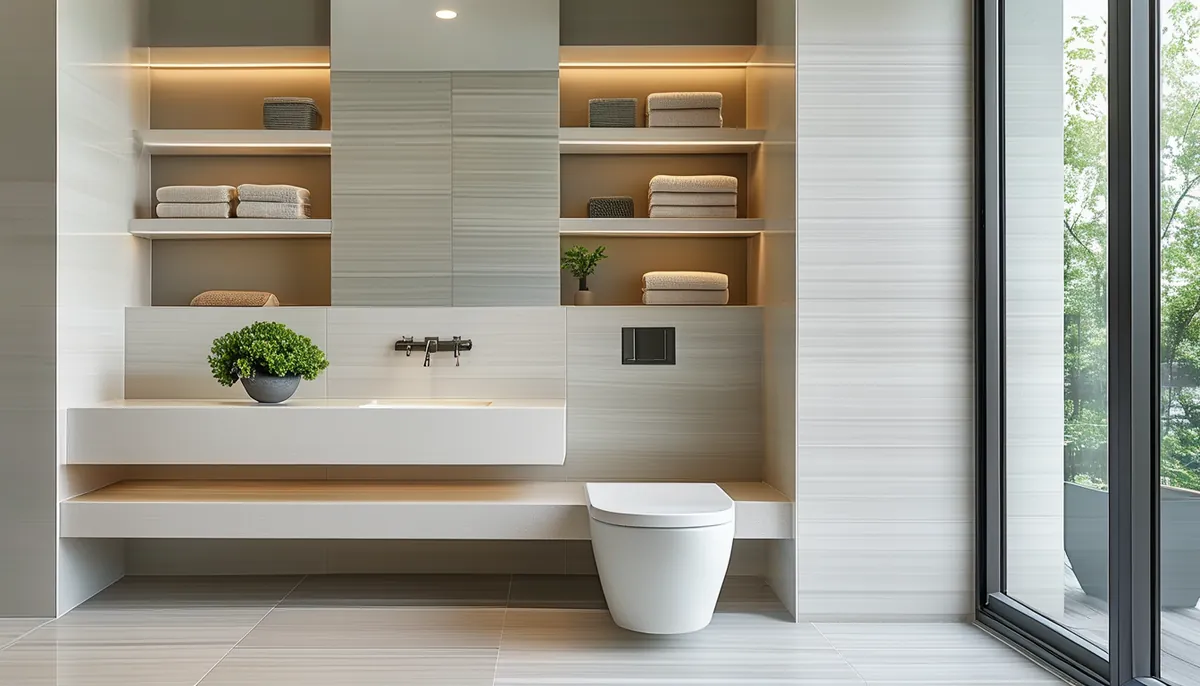
You need to decide on the dimensions and style of an over the toilet vanity before you buy. Measure the space above your toilet, considering the height from the tank lid to the ceiling and the width available between walls or other fixtures. Standard toilet tanks are about 30-32 inches high from the floor, so ensure there’s enough clearance for the vanity’s storage shelves or cabinet doors to open without hitting the tank or interfering with the flush handle. Aim for at least 6 inches of clearance above the tank lid for most units, but some designs require more.
Consider the depth of the unit as well. A vanity that’s too deep can make the bathroom feel cramped. Most over-the-toilet vanities are designed to be shallow, typically 8 to 12 inches deep, to avoid this issue. Check the product specifications carefully for precise measurements, including the overall width, height, and depth, as well as the internal shelf dimensions if applicable.
Material and construction options
The primary material of your over the toilet vanity will affect its durability, appearance, and cost. MDF (medium-density fiberboard) and particleboard are common, often covered with a laminate or veneer. These are budget-friendly but can be susceptible to moisture damage if not properly sealed or if the finish is compromised.
For better moisture resistance, look for vanities made from solid wood, engineered wood with a good quality laminate, or PVC. PVC is exceptionally water-resistant and a good choice for humid bathroom environments, though it might not offer the same aesthetic appeal as wood. Some higher-end options might incorporate metal frames for added stability and a modern look.
Pay attention to the hardware – hinges, drawer slides, and handles. Cheaper units might use flimsy metal or plastic components that can break or corrode over time. Stainless steel or solid metal hardware will last longer and provide a better user experience. Also, check how the unit is finished. A smooth, sealed finish will resist water spots and make cleaning easier.
Types of over the toilet vanity designs
Over the toilet vanities come in several configurations to suit different storage needs and aesthetic preferences.
Open shelving units: These typically consist of a frame with one or more open shelves. They offer easy access to frequently used items like towels, toiletries, or decorative objects. They tend to feel less bulky and can make a small bathroom appear more open. However, items on open shelves can collect dust and may not be suitable for storing personal items you want to keep out of sight.
Cabinet units: These feature doors that conceal storage space. They are ideal for hiding clutter, storing cleaning supplies, or keeping toiletries private. Cabinet units can help maintain a tidier appearance in your bathroom. Look for doors with soft-close hinges to prevent slamming.
Combination units: Some vanities offer a mix of open shelving and closed cabinets, providing versatile storage options. This allows you to display some items while keeping others hidden.
Units with integrated features: You might find vanities with built-in towel bars, toilet paper holders, or even small drawers. These can be very practical in space-limited bathrooms.
Installation considerations
Most over the toilet vanities are designed for DIY installation, but proper anchoring is crucial for safety and stability. They usually attach to the wall using brackets or screws. Follow the manufacturer’s instructions precisely. You’ll typically need a drill, a level, a stud finder, and appropriate screws for your wall type (drywall, plaster, tile).
Wall anchoring: It’s essential to anchor the unit securely to wall studs whenever possible. If studs aren’t accessible in the desired location, use heavy-duty drywall anchors designed to support significant weight. A wobbly unit is not only an eyesore but also a potential safety hazard, especially if it holds heavy items.
Plumbing clearance: Ensure the unit doesn’t interfere with the toilet’s water supply line or the tank lid mechanism. Some units have cutouts or adjustable components to accommodate standard plumbing. If you’re installing a cabinet unit, make sure the doors can open fully without hitting the wall or tank.
Assembly: Take inventory of all parts before starting. Read through the assembly instructions completely. Many units require attaching shelves, doors, and back panels. Some back panels are thin and may need to be tacked or screwed into place for stability. If the unit comes with optional wall anchors, use them.
Maximizing storage and style
An over the toilet vanity is a smart solution for small bathrooms, but how you organize it matters. Use baskets, bins, and drawer organizers to keep items tidy within shelves and cabinets. Roll towels instead of folding them to save space and create a neat appearance.
Consider the aesthetic. Many over the toilet vanities come in finishes like white, espresso, or gray, which are versatile. If you want to add personality, think about the decorative items you place on open shelves. You can also update the hardware – knobs and pulls – to match your bathroom’s style. For a more cohesive look, coordinate the vanity’s finish with other bathroom furniture or fixtures. You can also explore wall treatments; discover the timeless elegance of York Wallcoverings or the natural beauty of grass cloth wallpaper to complement your new vanity.
If you’re looking for a complete refresh, consider pairing your new vanity with a stylish peel and stick wallpaper. It’s an easy way to add color, pattern, or texture to your bathroom walls without a major renovation. Whether you choose a bold geometric print or a subtle linen-like texture, wallpaper can dramatically alter the feel of your space and tie your over the toilet vanity into the overall design scheme. For a classic touch, toile wallpaper can add a sophisticated charm.
Common mistakes to avoid
One common mistake is not measuring accurately. Double-check your measurements for height, width, and depth, including the clearance needed for opening doors and the toilet tank. Another error is underestimating the importance of secure wall anchoring. A vanity that isn’t properly secured can be dangerous.
Don’t overlook the weight capacity of the shelves or the unit itself. Overloading an over the toilet vanity can lead to structural failure. Also, be mindful of the material’s susceptibility to moisture. Avoid placing items that can leak or spill directly onto less water-resistant surfaces, and ensure adequate ventilation in the bathroom to prevent long-term moisture damage.
Finally, consider the overall visual balance. A massive, dark vanity can overwhelm a tiny bathroom, while a flimsy, small unit might look lost in a larger space. Choose a size and style that complements the scale and existing decor of your bathroom.