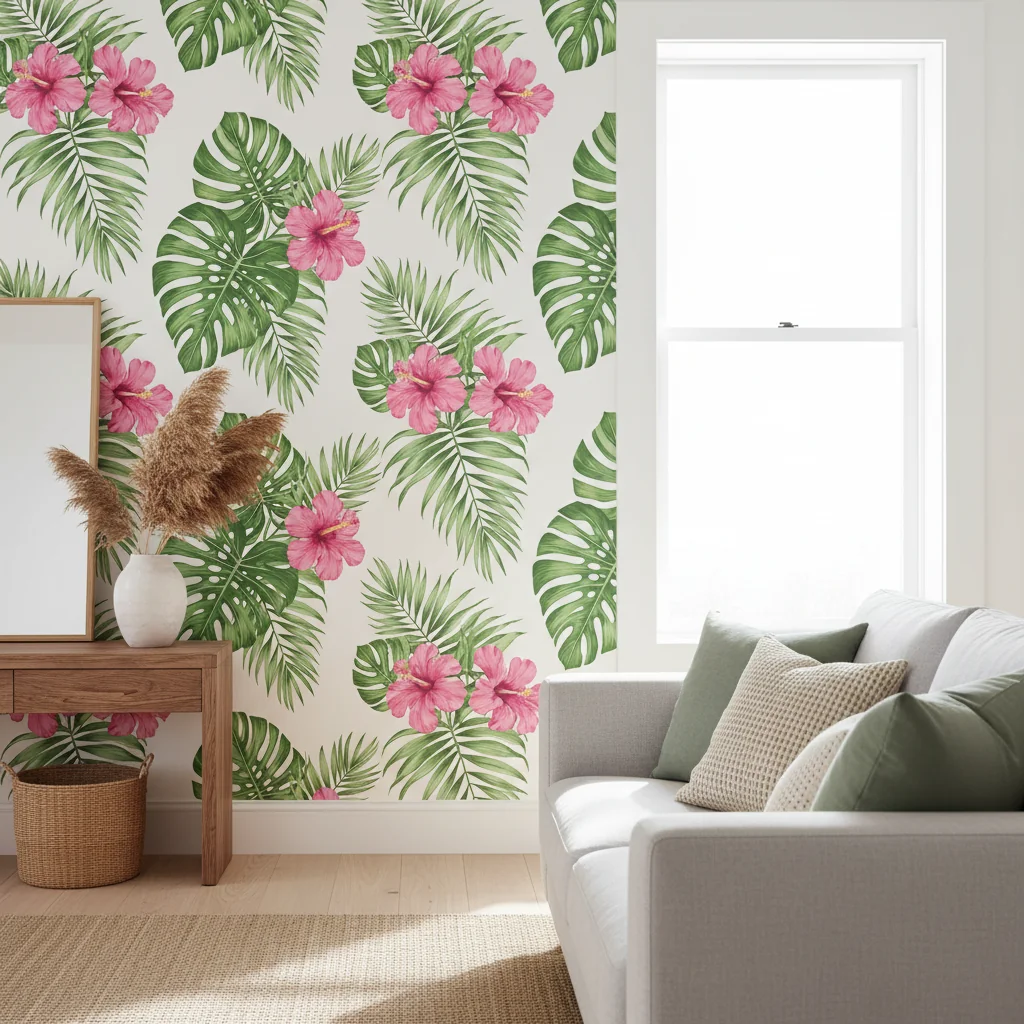
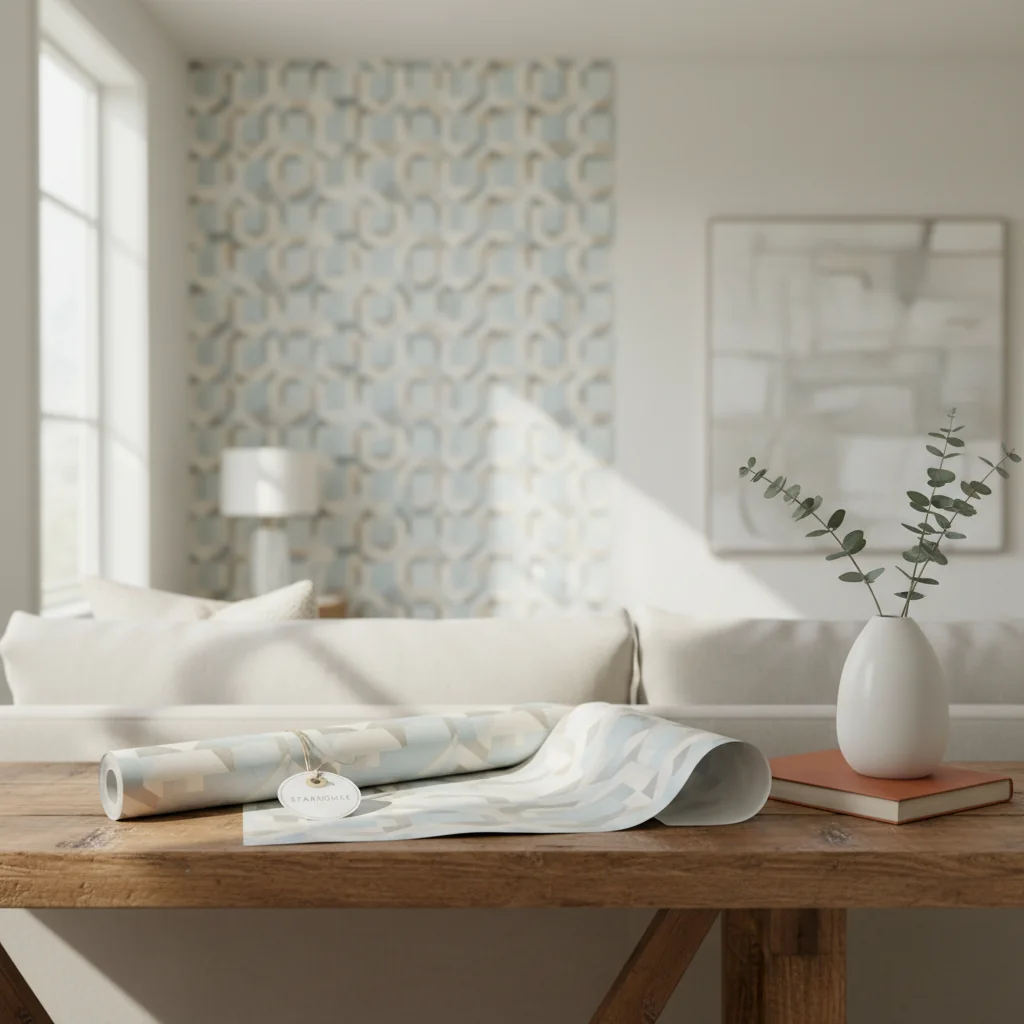
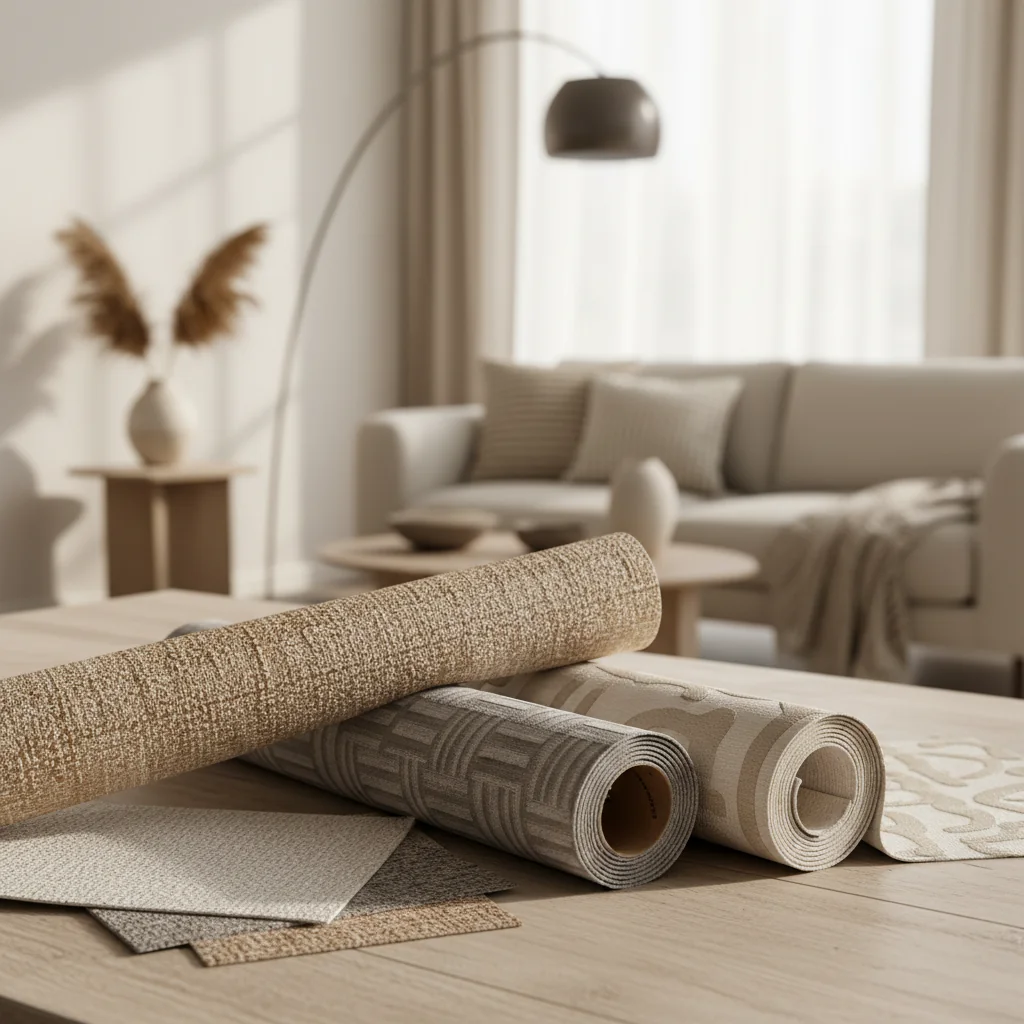
Wallpaper samples are indispensable miniature representations of larger wallpaper designs, typically measuring 8×10 inches or 12×12 inches, that allow homeowners and designers to meticulously evaluate a pattern’s color, texture, and scale within their specific interior environment before committing to a full purchase. These tangible swatches provide a critical opportunity to assess how a design interacts with existing light, furnishings, and architectural elements, ensuring the final selection perfectly aligns with the desired aesthetic and functional requirements of a space. At Starhouse, we understand that an informed decision is the cornerstone of exceptional interior design, and wallpaper samples are the first, most crucial step in that journey toward a truly personalized home.
Key Takeaways
- Wallpaper samples are essential tools for validating design choices, offering a tangible preview of color, texture, and scale in your home’s unique lighting and environment.
- Different sample types exist, including traditional, peel-and-stick, and mural sections, each serving specific evaluation needs for various wallpaper formats.
- Proper evaluation involves observing samples in diverse lighting conditions, pairing them with existing décor, and assessing material quality and pattern repeat.
- Material composition, such as vinyl or non-woven, directly impacts durability and care requirements, which samples help you discern firsthand.
- Ignoring pattern repeat, rushing the decision, or not ordering enough samples are common pitfalls that can be avoided through diligent sample use.
- Starhouse champions the use of samples to empower confident design decisions, ensuring your selected wallpaper seamlessly enhances your living space.
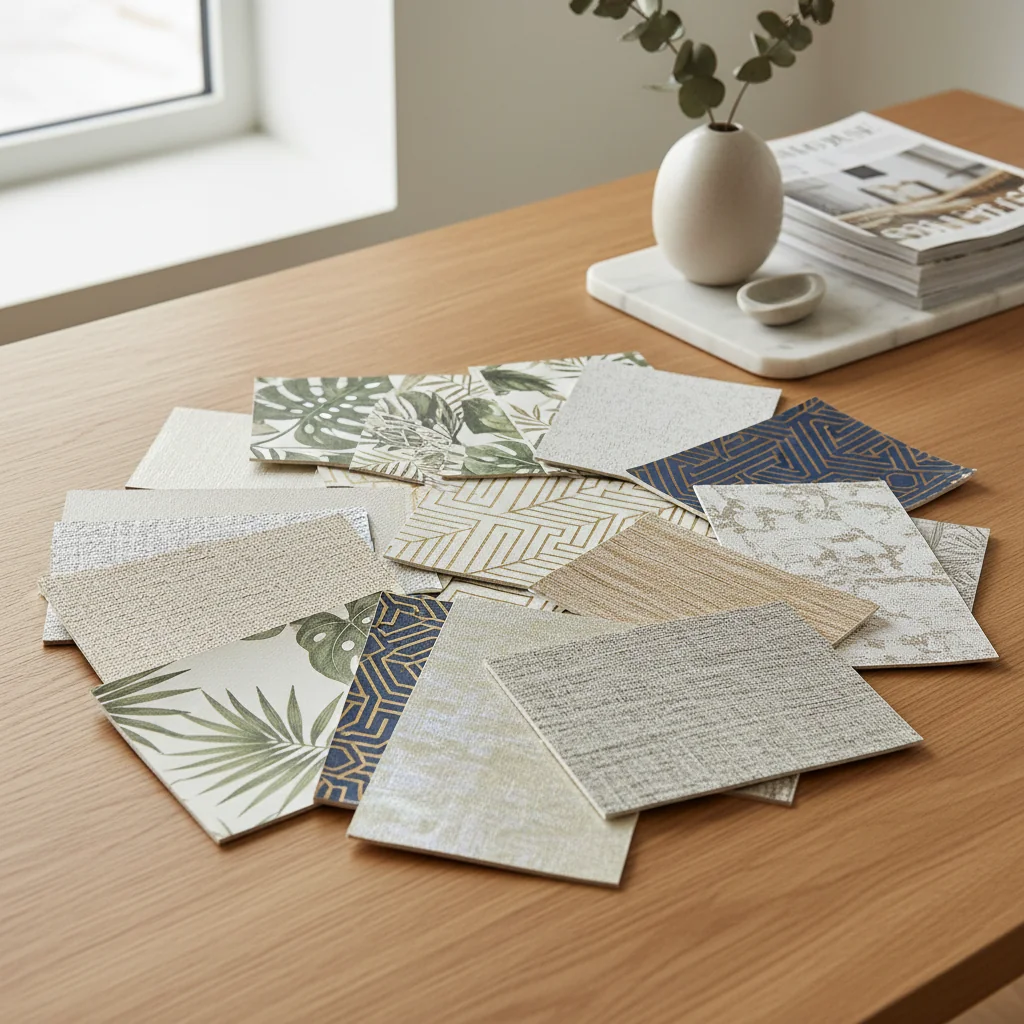
Why Wallpaper Samples Are Indispensable for Design Confidence
Wallpaper samples are critical tools for any well-executed design project because they eliminate guesswork, allowing you to experience a pattern’s true characteristics within your home’s unique environment. They provide a tangible, tactile, and visual assessment that digital images simply cannot replicate, safeguarding against costly errors and ensuring satisfaction with your final selection. This meticulous process is fundamental to achieving a cohesive and harmonious interior.
The decision to invest in wallpaper for your home is significant, transforming the ambiance and character of a room. While online galleries offer boundless inspiration, the digital representation of a wallpaper often falls short of conveying its full impact. Colors can appear differently across screens, textures are lost, and the true scale of a pattern can be deceiving. Wallpaper samples bridge this gap, providing a physical piece of the design that you can interact with directly.
Consider the nuanced interplay of light throughout your space. A color that appears vibrant on a screen might look muted or entirely different under your home’s specific natural and artificial lighting conditions. A sample allows you to observe these shifts, ensuring the chosen hue maintains its intended effect from dawn to dusk.
Testing Light Conditions
The quality and direction of light in a room profoundly influence how colors and finishes are perceived. A wallpaper sample enables you to test how a pattern reacts to direct sunlight, indirect natural light, and various artificial light sources (e.g., warm LEDs, cool fluorescents). This dynamic evaluation is crucial because a design might appear brilliant in a well-lit showroom but fall flat or clash in a dimly lit hallway. We recommend observing samples at different times of day to capture the full spectrum of light interaction.
Coordinating with Existing Décor
Seamless integration is paramount in interior design. Wallpaper samples allow you to physically place prospective designs alongside your existing paint colors, furniture upholstery, window treatments, and flooring. This direct comparison reveals how well the patterns, colors, and textures harmonize or contrast with your current elements. It helps you confirm whether a bold geometric print complements your mid-century modern sofa or if a subtle botanical pattern enhances your traditional dining room.
Assessing Material Quality and Texture
The tactile experience of wallpaper is as important as its visual appeal. Samples provide an opportunity to feel the material’s weight, thickness, and surface finish. You can discern whether it’s smooth vinyl, embossed non-woven, delicate grasscloth, or a fabric-backed texture. This haptic assessment informs you about the product’s perceived quality, durability, and how it will perform in a given environment. For instance, a washable vinyl sample indicates suitability for high-traffic areas, while a delicate paper sample suggests a more formal, low-impact space.
Visualizing Scale and Repeat
One of the most common misjudgments in wallpaper selection is the scale of the pattern repeat. A small swatch on a screen can make a large motif appear modest, or conversely, a dense pattern seem overwhelming. A physical sample, especially one that includes a full pattern repeat or a significant portion of it, clarifies how the design will look across an entire wall. This helps you determine if the pattern is too busy, too sparse, or just right for the room’s dimensions and desired visual impact.
Preventing Costly Mistakes
The primary benefit of wallpaper samples is their role as a preventative measure against expensive errors. Committing to multiple rolls of wallpaper without prior evaluation can lead to significant financial loss and frustration if the final product does not meet expectations. By investing a small amount in samples, you gain invaluable insight, ensuring that your larger purchase is a confident and well-informed decision that you will appreciate for years to come. This prudent step saves both time and resources, affirming the adage that careful planning yields superior results.
Understanding the Different Types of Wallpaper Samples
Wallpaper samples come in various forms, each tailored to represent the specific characteristics of different wallpaper products, from traditional rolls to peel-and-stick options and large-scale murals. Selecting the correct type of sample ensures you accurately assess the material, adhesive method, and visual impact relevant to your chosen wallpaper. This understanding is crucial for a precise evaluation.
Traditional Wallpaper Samples
Traditional wallpaper samples typically represent designs found in pre-pasted or unpasted rolls. These samples are cut from full rolls and showcase the exact texture, color, and finish of the final product. They are ideal for evaluating classic patterns, embossed designs, and materials like non-woven or paper-backed vinyl. While they don’t come with adhesive, they are perfect for taping to walls and observing how the material drapes and reflects light.
Peel-and-Stick Wallpaper Samples
Peel-and-stick wallpaper samples are specifically designed to replicate the self-adhesive nature of the full product. These samples feature a removable backing that allows you to temporarily apply and reposition the swatch on your wall. This functionality is invaluable for testing ease of application, adhesion quality on your specific wall surface, and how the material handles corners or textured walls, in addition to assessing its visual attributes.
What is peel-and-stick wallpaper?
Peel-and-stick wallpaper is a self-adhesive wall covering that features a pre-applied adhesive layer, protected by a removable backing, making it easy to apply, reposition, and remove without damaging walls, ideal for temporary decor or DIY enthusiasts.
Mural Samples (Scaled Sections)
Mural samples are distinct because they typically represent a scaled-down section of a much larger, continuous image or scenic design. Unlike repeating patterns, murals are single, expansive artworks. A mural sample provides a snapshot of a specific detail or color palette from the overall design, helping you visualize the intricacy and tonal range. It is crucial to understand that the sample represents only a portion of the complete mural, and you should consider the full image for scale and composition.
Textured Samples (Grasscloth, Fabric-Backed)
Samples for textured wallpapers, such as grasscloth, linen, or other natural fiber wallcoverings, are particularly vital. These samples allow you to feel the unique dimensionality and organic variations that are characteristic of these materials. Grasscloth, for example, often exhibits subtle color variations and visible seams that are part of its inherent beauty, which a sample clearly demonstrates. Fabric-backed vinyls offer a soft, tactile finish that digital images cannot convey.
Digital Print Samples (for Custom Designs)
For custom-printed or highly detailed digital designs, samples are essential for verifying color accuracy and print quality. These samples ensure that the digital file translates correctly onto the physical medium, confirming that hues are true to expectation and intricate details are rendered sharply. This is especially important for bespoke projects where precise color matching is critical.
| Sample Type | Adhesive Method | Key Evaluation Benefit | Ideal For |
|---|---|---|---|
| Traditional (Unpasted/Pre-pasted) | None (requires paste for installation) | Assessing texture, finish, and color fidelity of classic designs. | Permanent installations, textured papers, embossed patterns. |
| Peel-and-Stick | Self-adhesive (removable backing) | Testing temporary application, repositionability, and wall adhesion. | Rentals, DIY projects, accent walls, frequent design changes. |
| Mural (Scaled Section) | Varies (traditional or peel-and-stick) | Gauging color, detail, and specific elements of a large-scale image. | Scenic designs, custom wall art, full-wall graphic treatments. |
| Textured (e.g., Grasscloth) | Varies (traditional) | Feeling natural variations, depth, and unique tactile qualities. | Natural fibers, fabric-backed vinyls, highly tactile wallcoverings. |
Choosing the Right Wallpaper Sample Size
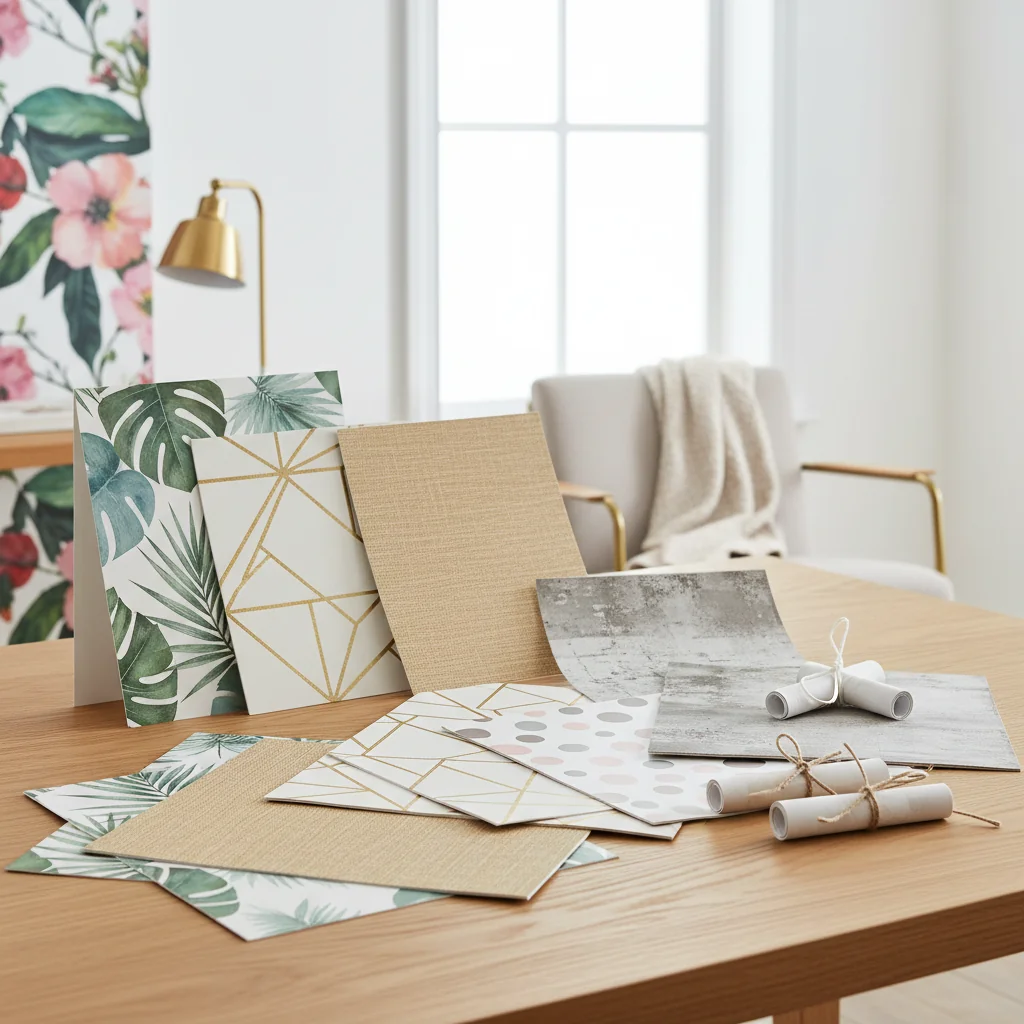
Selecting an appropriately sized wallpaper sample is crucial for an accurate assessment, as larger samples provide a more comprehensive view of the pattern repeat, color variations, and overall visual impact than smaller swatches. Standard sample dimensions, such as 8×10 inches or 12×12 inches, offer sufficient area to make informed decisions. The larger the pattern, the larger the sample should be to capture its full essence.
Standard Sample Dimensions
Most reputable wallpaper brands, including those curated by Starhouse, offer samples in standard dimensions ranging from approximately 8×10 inches to 12×12 inches. These sizes are generally sufficient for evaluating color, texture, and a portion of the pattern. For smaller, dense patterns, an 8×10 inch sample can often display multiple repeats, giving a good indication of the overall effect.
Why Size Matters for Pattern Repeat and Color Fidelity
The size of a wallpaper sample directly impacts your ability to visualize the full pattern repeat and appreciate subtle color shifts across a larger area. A pattern repeat is the vertical distance at which the design repeats itself on a roll of wallpaper. If a sample is too small to show at least one full repeat, it becomes challenging to anticipate how the pattern will flow across an entire wall. Larger samples are particularly important for designs with substantial motifs or intricate, sprawling patterns, ensuring you capture the true scale and visual rhythm.
What is pattern repeat in wallpaper?
Pattern repeat in wallpaper refers to the vertical distance between one point on a pattern and the identical point directly below it, indicating how frequently the design repeats itself along the length of the roll.
Furthermore, color fidelity can be better assessed with a larger sample. Subtle undertones or variations in hue might only become apparent when viewed over a wider area, especially with designs that feature gradients or watercolor effects. A larger sample provides more surface area to interact with light, revealing the full depth and richness of the color palette.
Ordering Multiple Samples
We strongly recommend ordering multiple samples, even of the same design, if you are considering different areas of a room or have varying light conditions. For instance, a sample viewed on a north-facing wall might appear different from one on a south-facing wall. Ordering two or three samples allows you to place them strategically around the room, providing a more comprehensive understanding of their performance. Additionally, if you are torn between several designs, ordering samples of each is the only definitive way to make a side-by-side comparison. Companies like York Wallcoverings often provide samples to facilitate this crucial decision-making process.
The Art of Evaluating Your Wallpaper Samples
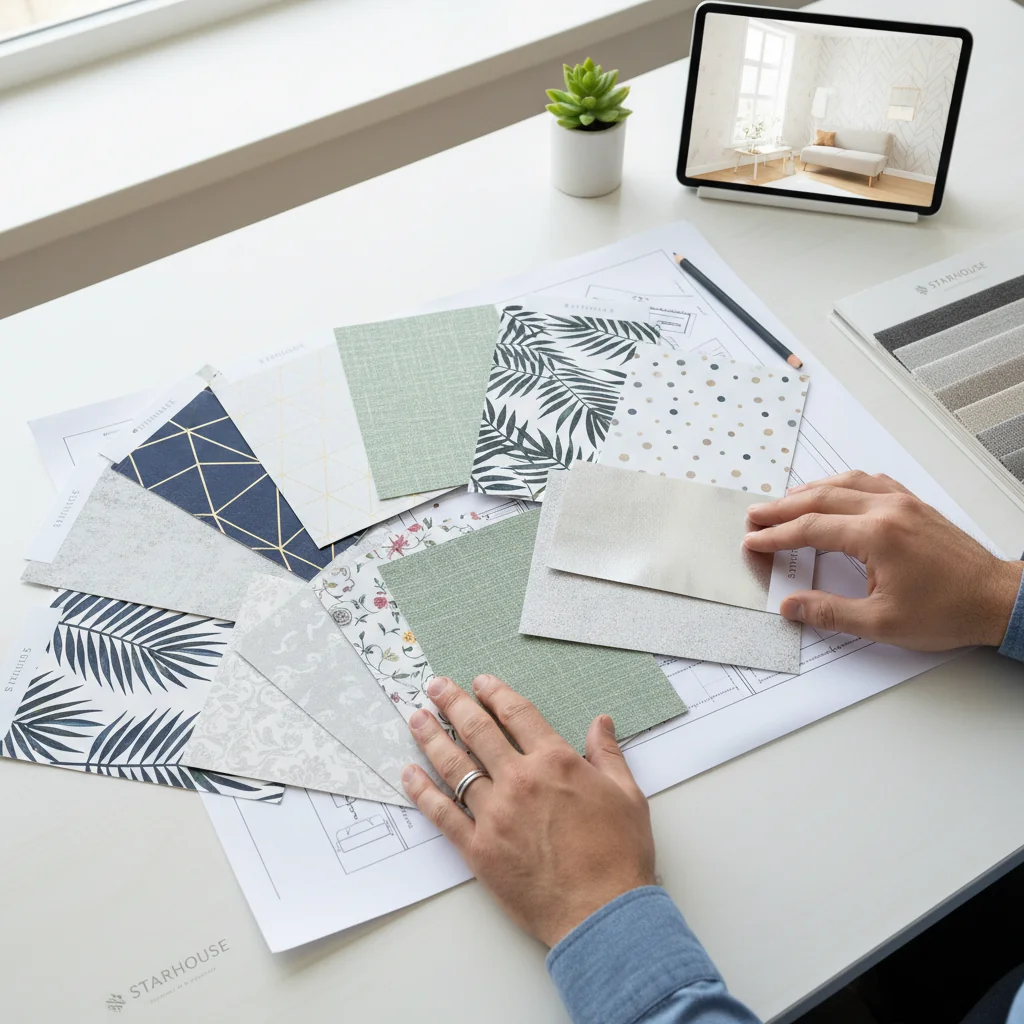
Effectively evaluating wallpaper samples involves a methodical approach, encompassing observation under varied lighting, comparison with existing décor, and critical assessment of texture and pattern repeat over several days. This comprehensive process allows for a nuanced understanding of how the design will perform in your specific space, moving beyond initial impressions to ensure a truly harmonious selection. Precision in evaluation prevents future dissatisfaction.
Step-by-Step Guide to Sample Evaluation:
- Viewing in Different Lighting: Tape your samples to the wall in the area you intend to wallpaper. Observe them throughout the day, from morning light to afternoon sun, and under artificial evening lighting. Pay attention to how colors change, how metallic accents shimmer, or how matte finishes absorb light. A design that looks perfect in bright daylight might appear dull or too intense under your evening lamps.
- Placing Against Existing Elements: Move the sample around the room, placing it next to your sofa, curtains, rug, and paint swatches. This direct comparison is essential for confirming color harmony and style compatibility. Does the pattern compete with your existing textiles, or does it enhance them? Does the color palette complement your furniture finishes?
- Observing Texture and Finish: Run your hand over the sample. Does it feel smooth, raised, or fibrous? Consider the finish: is it matte, satin, metallic, or glossy? These tactile and reflective qualities significantly contribute to the room’s overall feel and how light interacts with the wall surface. An embossed texture, for instance, adds depth that a flat print cannot.
- Considering the Room’s Function and Mood: Think about the purpose of the room. A vibrant, bold pattern might be invigorating for a powder room but overwhelming for a bedroom. A serene, subtle texture could be ideal for a living area. The sample helps you determine if the design evokes the desired mood – playful, sophisticated, calming, or dramatic.
- Living with the Sample for a Few Days: Do not rush your decision. Leave the samples on the wall for at least 2-3 days, allowing yourself to passively observe them as you go about your daily routine. This sustained exposure helps you move past initial excitement or apprehension and gain a more objective perspective on the design’s long-term appeal.
This systematic approach ensures that you consider all critical factors before making a final decision, leading to a wallpaper choice that truly enhances your home.
Popular Wallpaper Styles and How Samples Help
Wallpaper styles are diverse, ranging from classic geometrics to intricate botanicals and modern abstracts, each offering a distinct aesthetic that samples are crucial for accurately assessing. Samples allow you to discern how a specific style’s scale, color, and detail translate from a small image to a potential full wall, ensuring the chosen pattern aligns with your design vision and the room’s architectural context. This direct interaction prevents misinterpretation of style impact.
Geometric
Geometric wallpapers feature repeating patterns of shapes like circles, squares, triangles, or lines. They can range from subtle, understated designs to bold, graphic statements. Samples are vital for geometrics to accurately assess the scale of the pattern and its visual rhythm. A geometric that appears balanced on a small screen might feel overwhelming or too sparse when viewed as a larger sample on a wall. It also helps to see how the lines and shapes interact with the room’s existing angles and furniture.
Botanical/Floral
Botanical and floral wallpapers draw inspiration from nature, showcasing everything from delicate blossoms and sprawling vines to lush jungle scenes. Samples are indispensable here for evaluating the intricacy of the artwork, the vibrancy of the colors, and the overall mood it conveys. A sample reveals the true artistry of the illustration and how the organic forms will flow across a surface, ensuring the natural motif feels authentic and not artificial in your space.
Damask
Damask is a classic, often ornate, pattern characterized by reversible, often monochromatic, designs woven into fabrics or printed on wallpaper. These typically feature large, symmetrical motifs, often with a regal or traditional feel. Samples are crucial for damask patterns to appreciate the intricate details, the subtle sheen or texture, and the true scale of the medallion-like repeats. A small sample might not convey the grandeur of a large damask, while a larger one will reveal its true elegance.
Textural (Faux Grasscloth, Linen)
Textural wallpapers mimic the look and feel of natural materials like grasscloth, linen, concrete, or wood grain, often with embossed finishes. Samples for these styles are perhaps the most critical because the tactile quality is paramount. Feeling the raised texture and observing how light plays across the simulated fibers or surfaces allows you to verify the authenticity of the imitation. A good sample will convince you that a faux grasscloth is nearly indistinguishable from the real thing in terms of visual depth and touch.
Abstract
Abstract wallpapers feature non-representational designs, often characterized by fluid forms, painterly strokes, or expressive compositions. These styles can be highly subjective. Samples are essential for abstract patterns to gauge the emotional impact and the energy they bring to a room. They help you determine if the abstract design feels harmonious or chaotic, and if its colors and forms resonate with your personal aesthetic when viewed in a larger context.
Toile
Toile de Jouy, commonly shortened to Toile, is a classic pattern featuring detailed pastoral scenes, historical events, or floral motifs, typically in a single color (often blue, red, or black) on a light background. Samples for Toile are important for appreciating the fine detail of the narrative scenes and ensuring the scale of the illustrations is appropriate for your walls. A sample allows you to see the story unfold and verify that the intricate elements are clearly visible and not lost from a distance.
Children’s/Novelty
Children’s and novelty wallpapers feature playful, whimsical, or themed designs, ranging from cartoon characters to imaginative landscapes. Samples for these styles are crucial for confirming the vibrancy of colors, the clarity of illustrations, and the overall charm of the pattern. They help parents ensure the design will genuinely delight a child and create the desired imaginative environment, while also assessing durability for a child’s room.
Mural/Scenic
Mural or scenic wallpapers transform an entire wall into a continuous artwork, often depicting landscapes, cityscapes, or grand illustrative scenes. As discussed, samples for murals are typically scaled sections of the larger image. They are invaluable for assessing the color palette, the artistic style, and the level of detail within a specific segment. You must remember to visualize how this segment contributes to the broader, immersive scene that will dominate the wall.
By carefully evaluating samples across these diverse styles, you gain the confidence that your selected wallpaper will not only look stunning but also contribute meaningfully to the desired atmosphere of your home.
At Starhouse, we are curating a collection that embodies these diverse styles, offering options that cater to every design sensibility. We invite you to tell us what you’re looking for in your space, helping us shape an unparalleled selection of wallcoverings and home décor.
Materials Matter: What Your Sample Reveals About Durability and Care
The material composition of wallpaper significantly dictates its durability, washability, and overall longevity, and a physical sample provides essential insight into these practical attributes. By examining a sample, you can directly assess whether the material is suitable for its intended environment, such as a high-traffic area or a moisture-prone bathroom, ensuring both aesthetic appeal and functional resilience. This tangible evaluation is critical for long-term satisfaction.
Vinyl (Solid, Fabric-Backed)
Vinyl wallpapers are highly durable and easy to clean, making them excellent choices for high-traffic areas like hallways, kitchens, and bathrooms. Solid vinyl samples will feel thick and robust, often with a slight sheen. Fabric-backed vinyl, which is even more durable, will exhibit a textile backing when you examine the reverse side of the sample, indicating superior tear resistance and dimensional stability. A sample allows you to test its wipeability and confirm its resilience.
Non-Woven
Non-woven wallpaper is a popular choice due to its breathability, durability, and ease of installation and removal. Samples of non-woven wallpaper will feel soft yet strong, often with a matte finish. They are known for being “paste the wall” applications, meaning adhesive is applied directly to the wall, not the paper. This material is resistant to tearing and often strippable, making future redecoration simpler. Its stability means it won’t expand or contract significantly when wet.
What is non-woven wallpaper?
Non-woven wallpaper is a modern wallcovering material made from a blend of natural and synthetic fibers, known for its durability, breathability, ease of installation (paste-the-wall method), and simple removal without damaging the underlying surface.
Paper
Traditional paper wallpaper samples will feel thinner and lighter than vinyl or non-woven options. While beautiful and often featuring intricate prints, paper wallpapers are less durable and generally not washable. They are best suited for low-traffic areas and rooms where moisture is not a concern, such as bedrooms or formal living rooms. A sample allows you to appreciate the delicate print quality and confirm its suitability for a protected environment.
Grasscloth/Natural Fibers
Grasscloth and other natural fiber wallpapers (like jute, sisal, or hemp) offer unparalleled texture and an organic aesthetic. Samples of these materials are crucial for feeling the unique weave, noting the subtle variations in color and thickness, and observing the inherent irregularities that define their character. Natural fibers are generally delicate, not washable, and require careful installation. The sample reveals these characteristics, preparing you for the specific care and handling required.
Fabric
Fabric wallpaper, often backed with paper or non-woven material, provides a luxurious, soft, and warm tactile experience. Samples will clearly convey the textile’s weave, sheen, and texture. These wallpapers typically offer excellent sound absorption and are ideal for creating an opulent or cozy atmosphere in bedrooms, studies, or formal dining rooms. However, they are generally not washable and require professional installation and specialized care.
Metallic/Mylar
Metallic and Mylar wallpapers feature reflective surfaces that can dramatically enhance light and add glamour to a space. Samples are essential for these materials to observe how they interact with light sources, reflecting and amplifying illumination. You can assess the intensity of the shine, the color of the metallic finish (gold, silver, bronze), and how it affects the perceived brightness and spaciousness of a room. These are often washable, depending on the top coating.
Washability Ratings and Suitability for Different Rooms
Wallpaper samples, combined with product specifications, provide critical information about washability. Manufacturers typically rate wallpapers based on their resistance to moisture and cleaning:
- Spongeable: Can be lightly wiped with a damp sponge. Suitable for low-traffic areas.
- Washable: Can withstand more thorough cleaning with a damp cloth and mild soap. Good for living rooms and bedrooms.
- Scrubbable: Highly durable and can be scrubbed with a brush and detergent. Ideal for kitchens, bathrooms, and children’s rooms.
- Highly Scrubbable: Designed for commercial use or extremely high-traffic residential areas, offering maximum durability and cleanability.
A sample allows you to physically feel the robustness of the material, giving you confidence that your choice will not only look stunning but also withstand the demands of its environment. Graham & Brown, for example, emphasizes the importance of samples for verifying color and texture, which are intrinsically linked to material properties and their practical performance.
Sizing and Measuring for Your Project: From Sample to Scale
Accurate sizing and measuring are paramount to a successful wallpaper installation, directly impacting the quantity of rolls required and minimizing waste. This process involves understanding standard roll dimensions, meticulously calculating the total square footage of your walls, and accounting for pattern repeat and trimming allowances to ensure a seamless and cost-effective application. Precision at this stage prevents both shortages and excessive material.
Understanding Roll Dimensions
Wallpaper is typically sold in rolls, and standard dimensions vary. In the U.S., common single roll sizes are often around 20.5 inches to 27 inches wide and 16.5 feet long, or double rolls measuring approximately 20.5 inches to 27 inches wide and 33 feet long. Metric rolls are usually 53 cm (about 20.8 inches) wide and 10 meters (about 33 feet) long. Always verify the exact dimensions specified by the manufacturer for your chosen wallpaper, as these figures are critical for accurate calculations.
Calculating Square Footage
To determine how much wallpaper you need, calculate the total square footage of the walls you intend to cover.
- Measure each wall: Use a tape measure to find the height and width of each wall in feet.
- Calculate individual wall area: Multiply the height by the width for each wall (e.g., 8 feet high x 12 feet wide = 96 sq ft).
- Sum total area: Add the square footage of all walls together to get the total area to be covered.
- Subtract openings: Deduct the area of large windows, doors, and other significant openings from your total. For smaller elements like switch plates, it’s generally best to leave them in the calculation for a buffer.
For example, a room with four walls, each 8 feet high, with two walls 12 feet wide and two walls 10 feet wide, has a total perimeter of (12+10+12+10) = 44 feet. The total wall area is 44 feet x 8 feet = 352 sq ft. If there’s a door (7 ft x 3 ft = 21 sq ft) and a window (4 ft x 5 ft = 20 sq ft), subtract 41 sq ft, resulting in 311 sq ft of wall to cover.
Accounting for Waste (Pattern Match, Trimming)
This is a crucial step often overlooked. Wallpaper rolls do not provide exactly their stated square footage in usable material due to pattern matching and trimming.
- Pattern Match: If your wallpaper has a repeating pattern (straight match, drop match, or random match), you will need extra material to ensure the pattern aligns seamlessly across strips. The larger the pattern repeat, the more waste you will incur. A good rule of thumb is to add 15-20% extra to your total square footage for pattern matching. For very large or complex repeats, this percentage might need to be higher.
- Trimming: You will always cut excess material from the top and bottom of each strip to achieve a clean edge at the ceiling and baseboard. Factor in an additional 4-6 inches per strip for trimming.
A common method is to determine how many full strips you can get from one roll, considering the pattern repeat. Divide the roll length by (wall height + pattern repeat + trimming allowance) to find the number of strips per roll. Then, divide the total number of strips needed for the room by the number of strips per roll to get the total number of rolls to order. Always round up to the nearest whole roll.
Measuring Walls Accurately
Accuracy is paramount. Use a steel tape measure for reliability. Measure the height of the wall in several places, especially if your home is older, as ceilings can sometimes be uneven. Record the highest measurement. Measure the width of each wall precisely. Double-check all measurements to prevent errors.
Professional vs. DIY Considerations
If you plan to hire a professional installer, they will typically perform their own measurements and calculate the quantity needed. However, it is always beneficial for you to have an understanding of the process. If you are undertaking a DIY project, meticulous measuring is non-negotiable. Over-ordering by one roll is always preferable to under-ordering, as dye lots can vary between batches, making it difficult to get a perfect match if you need to order more later.
Current Trends in Wallpaper Design and Sample Exploration
Current wallpaper trends emphasize sustainability, tactile textures, and designs that bring the outdoors in, reflecting a desire for personalized and environmentally conscious interiors. Exploring these trends through samples is essential, as it allows you to evaluate how cutting-edge patterns and materials integrate with your space’s existing aesthetic and lighting, ensuring your home remains both stylish and cohesive. Samples provide a low-commitment way to test avant-garde design concepts.
Biophilic Designs
Biophilic design, which integrates natural elements into the built environment, is a dominant trend. This includes wallpapers featuring lush botanical prints, realistic forest scenes, subtle leaf motifs, and even patterns inspired by geological formations. Samples are crucial for biophilic designs to assess the authenticity of the natural imagery and the calming or invigorating effect of the colors. A sample allows you to see how the “natural” elements interact with your actual indoor plants and natural light.
Maximalism
In contrast to minimalist aesthetics, maximalism embraces bold patterns, rich colors, and an abundance of curated items. Maximalist wallpapers often feature large-scale florals, intricate chinoiserie, or vibrant geometric patterns. Samples for maximalist designs are indispensable for gauging the intensity and scale of the pattern. You need to ensure the design feels intentionally opulent, not overwhelming, and that its complexity enhances rather than detracts from your décor.
Textural Illusions
Advancements in printing technology allow wallpapers to convincingly mimic the look and feel of other materials, creating textural illusions. This trend includes faux concrete, wood panels, exposed brick, woven fabrics, and even plaster effects. As previously noted, samples are critical here for the tactile experience. Feeling the embossed texture and seeing how light plays across the simulated surface confirms the realism of the illusion. A good sample will make you question if it’s truly wallpaper.
Archival Re-interpretations
Designers are frequently drawing inspiration from historical archives, re-interpreting classic patterns with modern color palettes or innovative printing techniques. This trend brings timeless elegance with a contemporary twist. Samples for archival re-interpretations allow you to appreciate the historical authenticity of the pattern while confirming that the updated colors or finishes suit a modern interior. You can see how a classic damask, for example, feels fresh in a new metallic hue.
Sustainable Options
As environmental consciousness grows, sustainable wallpaper options made from recycled materials, responsibly sourced paper, or non-toxic inks are gaining popularity. While a sample primarily shows the aesthetic, it also allows you to physically confirm the material quality of these eco-friendly choices. You can assess whether a recycled paper wallpaper feels as robust and looks as vibrant as its traditional counterparts, ensuring your sustainable choice doesn’t compromise on style or durability.
How Samples Allow You to Test These Trends Without Commitment
The beauty of wallpaper samples lies in their ability to facilitate trend exploration without the significant financial or logistical commitment of a full roll purchase. Trends evolve rapidly, and what feels cutting-edge today might be outdated tomorrow. By ordering samples of trending designs, you can experiment with new aesthetics, see how they integrate with your personal style, and live with them for a few days to gauge their long-term appeal. This low-risk approach empowers you to confidently embrace or politely decline a trend, ensuring your home reflects your evolving taste in a thoughtful and deliberate manner.
Common Mistakes to Avoid When Using Wallpaper Samples
While wallpaper samples are invaluable, several common missteps can undermine their utility, leading to suboptimal design choices. The most frequent errors include evaluating samples under insufficient lighting, neglecting the pattern repeat, and failing to consider the room’s function. Avoiding these pitfalls ensures that your sample evaluation is comprehensive and truly representative of the final installed product.
Not Ordering Enough Samples
A single small sample provides only a limited view. Relying on just one swatch, especially for a large pattern or a room with varied lighting, is a critical error. You risk misjudging the scale, color, or overall impact. Always order multiple samples, particularly if you are considering several designs or need to evaluate a single design in different areas of a room. This allows for side-by-side comparison and a more holistic assessment.
Evaluating in Only One Light Condition
Colors and textures behave dramatically differently under various lighting. Assessing a sample only in daylight, or solely under artificial light, will provide an incomplete and potentially misleading impression. The wallpaper might look perfect in the morning sun but appear dull or change hue under evening lamps. Ensure you observe samples at different times of day and under all light sources present in the room.
Ignoring Pattern Repeat
The pattern repeat dictates how the design will look across an entire wall. If your sample is too small to show at least one full repeat, you cannot accurately visualize the rhythm and flow of the pattern. This can lead to unexpected results where a seemingly subtle pattern becomes overwhelming, or a bold motif loses its impact due to improper scale perception. Always verify the pattern repeat and, if possible, select a sample large enough to illustrate it.
Forgetting to Consider Room Function
The aesthetic appeal of a wallpaper is only one part of the equation; its practical suitability for the room’s function is equally important. Selecting a delicate, non-washable paper for a high-traffic kitchen or a moisture-prone bathroom is a common oversight. Use samples to assess the material’s durability and cleanability in relation to the room’s specific demands, ensuring longevity and ease of maintenance.
Rushing the Decision
Choosing wallpaper is an investment, both financially and aesthetically. Rushing the decision based on an initial impression is a recipe for regret. Live with your samples for a few days, allowing your eyes to adjust and your subconscious to process the design. This extended evaluation period often reveals subtle nuances or potential issues that were not immediately apparent, leading to a more confident and satisfying final choice.
Not Feeling the Material
The tactile quality of wallpaper significantly contributes to the sensory experience of a room. Neglecting to physically touch and feel the sample means you miss out on assessing its texture, weight, and finish. This is particularly critical for textured wallpapers like grasscloth or embossed vinyls, where the haptic experience is a major part of their appeal. Always engage your sense of touch in the evaluation process.
By consciously avoiding these common errors, you elevate the effectiveness of your wallpaper sample evaluation, ensuring a choice that brings lasting beauty and satisfaction to your home.
Styling and Pairing Wallpaper: Extending Your Sample’s Vision
Styling and pairing wallpaper effectively involves more than just selecting a pattern; it requires a holistic approach to integrate the chosen design with paint colors, furniture, and art to create a cohesive and visually compelling space. Your wallpaper sample serves as the foundational element, allowing you to experiment with complementary textures and hues before committing to a full room transformation. This strategic pairing ensures a harmonious and intentional design scheme.
Accent Walls vs. Full Room
Decide whether the wallpaper will cover all four walls or serve as a striking accent. An accent wall, often the focal point of a room (e.g., behind a bed or sofa), allows for bolder patterns or textures without overwhelming the space. A sample helps you visualize the intensity of the pattern in a smaller application versus its impact across an entire room. For full room coverage, you might gravitate towards more subtle textures or smaller, less visually demanding repeats.
Coordinating with Paint Colors
The interaction between wallpaper and paint is crucial. Use your wallpaper sample to select complementary paint colors for adjacent walls or trim. Pull subtle tones directly from the wallpaper pattern for a harmonious look, or choose a contrasting color for a more dramatic effect. Paint large swatches of your chosen colors on the wall next to the wallpaper sample to see how they interact in different lighting conditions. This layering of color creates depth and cohesion.
Harmonizing with Furniture and Art
Your wallpaper should enhance, not compete with, your existing furniture and artwork. Place the sample near key pieces of furniture to assess color, style, and scale compatibility. Does a modern geometric wallpaper complement your minimalist sofa, or does it clash? Does a busy floral pattern detract from your artwork, or does it provide a beautiful backdrop? The sample helps you ensure that all elements in the room work together in concert.
Layering Textures
Successful interior design often involves layering various textures to add visual interest and warmth. Your wallpaper sample, especially if it has a tactile quality (e.g., grasscloth, embossed vinyl), can be the starting point for this. Consider how the wallpaper’s texture will combine with the softness of textiles (rugs, throws, cushions), the smoothness of wood or metal, and the roughness of stone or ceramic. The sample helps you build a rich, multi-dimensional sensory experience.
Creating Focal Points
Wallpaper is an excellent tool for establishing a focal point in a room. A particularly captivating pattern or a large-scale mural can draw the eye and define a specific area. Use your sample to visualize how the chosen design will command attention. Consider placing a bold pattern behind a bed, in a niche, or on the wall opposite the room’s entrance to create a dramatic first impression. The sample helps you confirm that the design has the desired visual weight and impact.
By thoughtfully styling and pairing your wallpaper with other elements of your décor, guided by the insights gained from your samples, you transform a simple wall covering into an integral part of a sophisticated and personalized interior design statement.
Care and Maintenance: What Your Sample Implies for Longevity
The care and maintenance requirements of wallpaper are directly determined by its material composition, and a physical sample provides the first tangible indication of these essential practicalities. By understanding the material, you can anticipate its washability, durability, and specific cleaning protocols, ensuring your investment retains its aesthetic appeal and structural integrity for years to come. Proper care extends the lifespan and beauty of your chosen wallcovering.
General Cleaning Guidelines Based on Material
Different wallpaper materials demand varying levels of care. Your sample allows you to physically assess the robustness of the material, giving you a clearer picture of its cleanability.
- Vinyl Wallpapers: These are generally the most durable and easiest to clean. Solid vinyl and fabric-backed vinyl samples will feel robust. They can typically be wiped down with a damp cloth and mild household detergent, making them suitable for high-traffic or moisture-prone areas like kitchens, bathrooms, and children’s rooms.
- Non-Woven Wallpapers: Samples of non-woven material will feel strong yet flexible. They are often designated as “washable” or “scrubbable,” meaning they can withstand gentle cleaning with a damp sponge and mild soap. Their breathability also makes them resistant to mold and mildew.
- Paper Wallpapers: Paper samples will feel delicate and are generally the least resilient. Most paper wallpapers are “spongeable” at best, meaning they can only tolerate very light wiping with a barely damp cloth. They are prone to staining and damage from excessive moisture, making them best for low-traffic, dry areas.
- Natural Fiber Wallpapers (e.g., Grasscloth): Samples of grasscloth or other natural fibers are inherently delicate. They are typically not washable and require specialized care. Dusting with a soft brush or vacuum with a brush attachment is usually the recommended cleaning method. Any liquid spills must be blotted immediately and carefully to avoid permanent staining or damage.
- Fabric Wallpapers: Similar to natural fibers, fabric wallpaper samples will convey their delicate nature. These are usually not washable and require dry cleaning methods, such as gentle vacuuming or professional cleaning.
Specific Instructions for Delicate Materials
For delicate materials like natural fibers or fine silks, the sample implicitly warns you of their vulnerability. These materials require a “less is more” approach to cleaning. Avoid harsh chemicals, abrasive tools, and excessive moisture. Always test any cleaning method on an inconspicuous area first, or on a leftover sample piece, to ensure it does not damage the material or fade the color.
Understanding Durability Ratings
Manufacturers often provide durability ratings, which your sample helps you interpret in a tangible way. These ratings indicate the wallpaper’s resistance to wear, tear, and moisture. For instance, a “highly scrubbable” rating, often associated with heavy-duty vinyls, translates to a sample that feels thick, resilient, and virtually impervious to damage from wiping. Conversely, a “spongeable” rating for a paper sample indicates its comparative fragility. Understanding these ratings in conjunction with the physical sample ensures you select a wallcovering that meets both your aesthetic desires and practical needs for upkeep.
By carefully considering what your wallpaper sample reveals about its material and inherent care requirements, you can make an informed choice that promises lasting beauty and manageable maintenance, enhancing your home for years to come.
Sources
Frequently Asked Questions About Wallpaper Samples
How many wallpaper samples should I order?
We recommend ordering at least 2-3 samples of each design you are seriously considering, especially if you plan to evaluate them in different rooms or under varying lighting conditions to ensure a comprehensive assessment.
What size are standard wallpaper samples?
Standard wallpaper samples typically range from 8×10 inches to 12×12 inches, providing sufficient area to evaluate color, texture, and a portion of the pattern repeat for most designs.
Can I get peel-and-stick wallpaper samples?
Yes, peel-and-stick wallpaper samples are widely available and include a removable adhesive backing, allowing you to temporarily apply and reposition the swatch on your wall to test adhesion and visual impact.
How long should I keep wallpaper samples before deciding?
You should keep wallpaper samples for at least 2-3 days, observing them at different times of day and night to fully understand how they interact with natural and artificial light within your space before making a final decision.
Do wallpaper samples show the full pattern repeat?
Some wallpaper samples, especially larger ones, may show a full pattern repeat, but smaller samples often only display a portion of the design. Always check the pattern repeat dimensions and consider ordering a larger sample if the motif is significant.
Why is feeling the wallpaper sample important?
Feeling the wallpaper sample is crucial because it allows you to assess the material’s texture, weight, and finish, which significantly impact the room’s tactile experience, durability, and care requirements, aspects that cannot be conveyed digitally.
Are wallpaper samples expensive?
Wallpaper samples are generally affordable, often priced between $1 and $5 per sample, with some brands offering a limited number of free samples or free shipping, representing a small but vital investment to prevent costly mistakes on a full wallpaper purchase.
Conclusion: Your Vision, Realized with Confidence
Wallpaper samples are undeniably the cornerstone of informed and confident design decisions, transforming the abstract vision of a space into a tangible reality. They empower you to meticulously evaluate every facet of a potential wallcovering—from its nuanced color shifts under varying light to its tactile texture and the true scale of its pattern repeat—all within the unique context of your home. This diligent process eliminates uncertainty, allowing you to invest in a design that not only meets but exceeds your expectations, ensuring lasting satisfaction and a truly personalized environment.
At Starhouse, we champion this meticulous approach to home design. We believe that every element you introduce into your space should resonate with your personal style and contribute to an atmosphere of refined comfort. The careful consideration afforded by wallpaper samples is a testament to this philosophy, enabling you to curate a home that is both beautiful and authentically yours. As we meticulously build our collection to inspire and equip you, we invite you to be a part of our journey.
Share your aspirations and design preferences with us. We are eager to understand what you envision for your walls and every corner of your home, ensuring our forthcoming collection perfectly aligns with your sophisticated taste.
Tell us what you’re looking for in your dream space and get early access to Starhouse’s curated collection, designed to elevate your home with unparalleled style and quality.