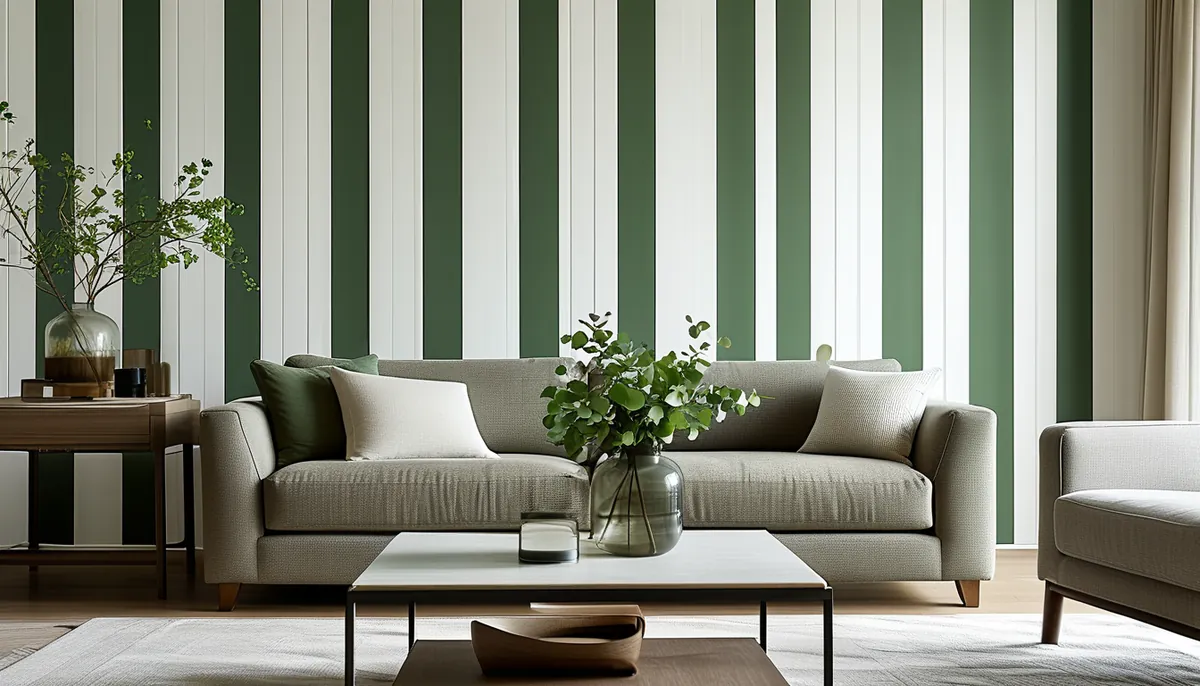
When selecting striped green wallpaper, the first decision is the shade of green. Consider the mood and light of the room. Light green striped wallpaper, like mint or sage, can make a space feel airy and expansive, ideal for smaller rooms or areas with limited natural light. Dark green striped wallpaper, such as emerald or forest green, creates a more dramatic, cozy, and sophisticated atmosphere. This works well in larger rooms, dining areas, or bedrooms where you want to evoke a sense of depth and luxury.
The width and spacing of the stripes also significantly impact the visual effect. Narrower stripes tend to create a more subtle pattern and can make ceilings appear higher. Wider stripes offer a bolder statement and can be used to define a space or create a specific design aesthetic. For instance, a green striped wallpaper with equal, balanced stripes offers a timeless look, while uneven or varied stripe widths can add a modern twist.
Understanding different types of striped green wallpaper
The material of your striped green wallpaper is crucial for durability, application, and finish. You’ll encounter several common types:
- Peel-and-stick wallpaper: This is the most DIY-friendly option. It features an adhesive backing, allowing for easy application and removal without damaging drywall. It’s perfect for renters or for those who like to change their decor frequently. Ensure your walls are clean and smooth for best adhesion. These typically come in vinyl or PVC materials.
- Traditional (paste-the-wall/paste-the-paper) wallpaper: This requires wallpaper paste, either applied to the wall or the back of the paper. It’s generally more durable and offers a wider range of textures and finishes than peel-and-stick. Materials can include paper, vinyl-coated paper, or even fabric-backed options. This is a more permanent solution and requires careful application to avoid air bubbles and ensure proper alignment of seams.
- Vinyl wallpaper: This is a popular choice for high-moisture areas like bathrooms and kitchens due to its water resistance and scrubbability. It’s durable and can withstand frequent cleaning.
- Textured wallpaper: Some striped green wallpapers incorporate textures like grasscloth, linen, or embossed patterns, adding tactile interest and depth to your walls. These often require more care during installation to maintain the integrity of the texture.
Choosing the right stripe pattern
Beyond the shade of green and stripe width, consider the stripe’s design. A classic green and white striped wallpaper offers a clean, crisp look that complements many decor styles, from coastal to traditional. A darker palette, like dark green striped wallpaper with black or deep navy stripes, can create a more dramatic and moody effect. For a softer ambiance, light green striped wallpaper with white or cream stripes provides a gentle, serene backdrop.
The orientation of stripes matters too. Vertical stripes draw the eye upward, making rooms feel taller and more spacious. This is particularly effective in rooms with lower ceilings. Horizontal stripes can make a room feel wider and can be used to visually balance a narrow space, though they are less common in wallpaper than vertical or chevron patterns.
Installation considerations for striped green wallpaper
Proper installation is key to achieving a professional look. For peel-and-stick, start by cleaning the wall thoroughly and ensuring it’s dry. Measure and cut your panels, allowing for a slight overlap at the seams and a bit extra at the ceiling and baseboard for trimming. Apply the wallpaper from top to bottom, smoothing out air bubbles with a squeegee as you go. For traditional wallpaper, follow the manufacturer’s instructions for paste application and hanging. Always use a level to ensure your first strip is perfectly vertical, as this will guide the alignment of subsequent strips.
Misaligned stripes are the most common and costly mistake. Take your time with the first panel and subsequent panels, ensuring the stripes connect seamlessly. If you’re using a pattern with a significant repeat, pay close attention to matching the pattern at the seams. This often requires more paper than a non-repeating pattern, so order accordingly. Cutting around outlets and light switches needs precision; use a sharp utility knife and carefully trim away excess material.
Perfectly partnered products for your green striped wallpaper
To truly enhance your striped green wallpaper, consider complementary products. For a classic look, pair green white striped wallpaper with crisp white trim and baseboards. This contrast will make the stripes pop and create a fresh, clean aesthetic. If you’re using a darker green, consider metallic accents like gold or brass hardware for light fixtures, drawer pulls, or decorative items. These add a touch of glamour and sophistication.
Neutral-colored furniture and decor often work best with bold striped wallpaper, allowing the walls to be the focal point. Think about cream-colored sofas, light wood furniture, or natural fiber rugs. For a more adventurous approach, you can introduce a secondary pattern in your soft furnishings, such as a floral or geometric print that incorporates shades of green found in your wallpaper. This requires a good eye for color and scale, but can create a dynamic and layered look.
Maintaining your striped green wallpaper
The maintenance required depends on the wallpaper material. Vinyl and vinyl-coated wallpapers are generally the easiest to clean. You can usually wipe them down with a damp cloth and mild soap. Avoid abrasive cleaners or excessive moisture, as this can damage the paper or its adhesive. For textured wallpapers, dusting with a soft brush or vacuum cleaner attachment is often sufficient. Always test any cleaning method in an inconspicuous area first.
Common pitfalls to avoid
Beyond misaligned stripes, other issues can arise. Applying wallpaper over unprimed or glossy paint can lead to poor adhesion and difficulty in removal. Ensure walls are properly prepared—cleaned, sanded if necessary, and primed—before you start. Rushing the process is another common mistake. Take your time with measuring, cutting, and applying each strip. For complex patterns or intricate rooms, it might be worth hiring a professional installer, especially if you’re opting for traditional wallpaper types.
Understanding the repeat and the total square footage needed is crucial. Running short on wallpaper mid-project due to miscalculation can be problematic, as dye lots can vary slightly between batches, making it difficult to get an exact color match later on. Always buy at least 10-15% extra to account for errors, pattern matching, and future repairs.