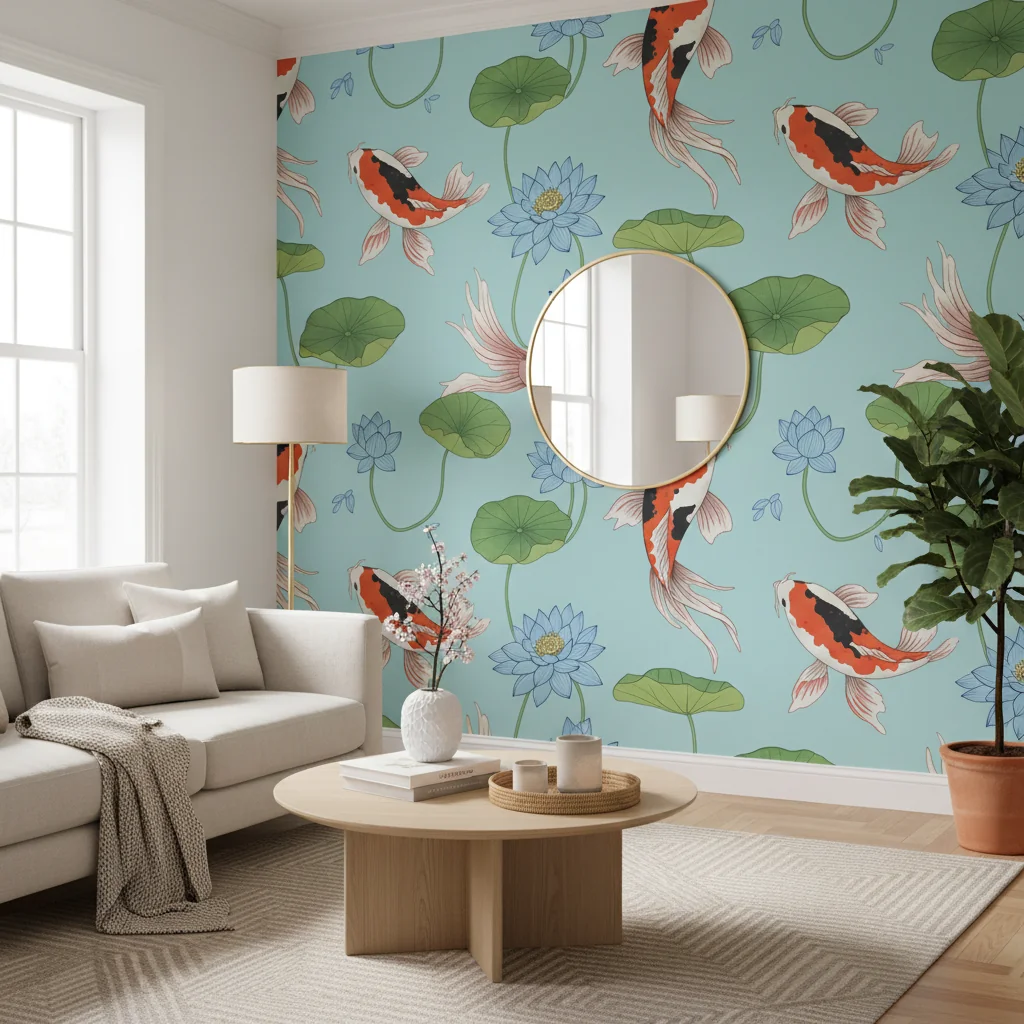
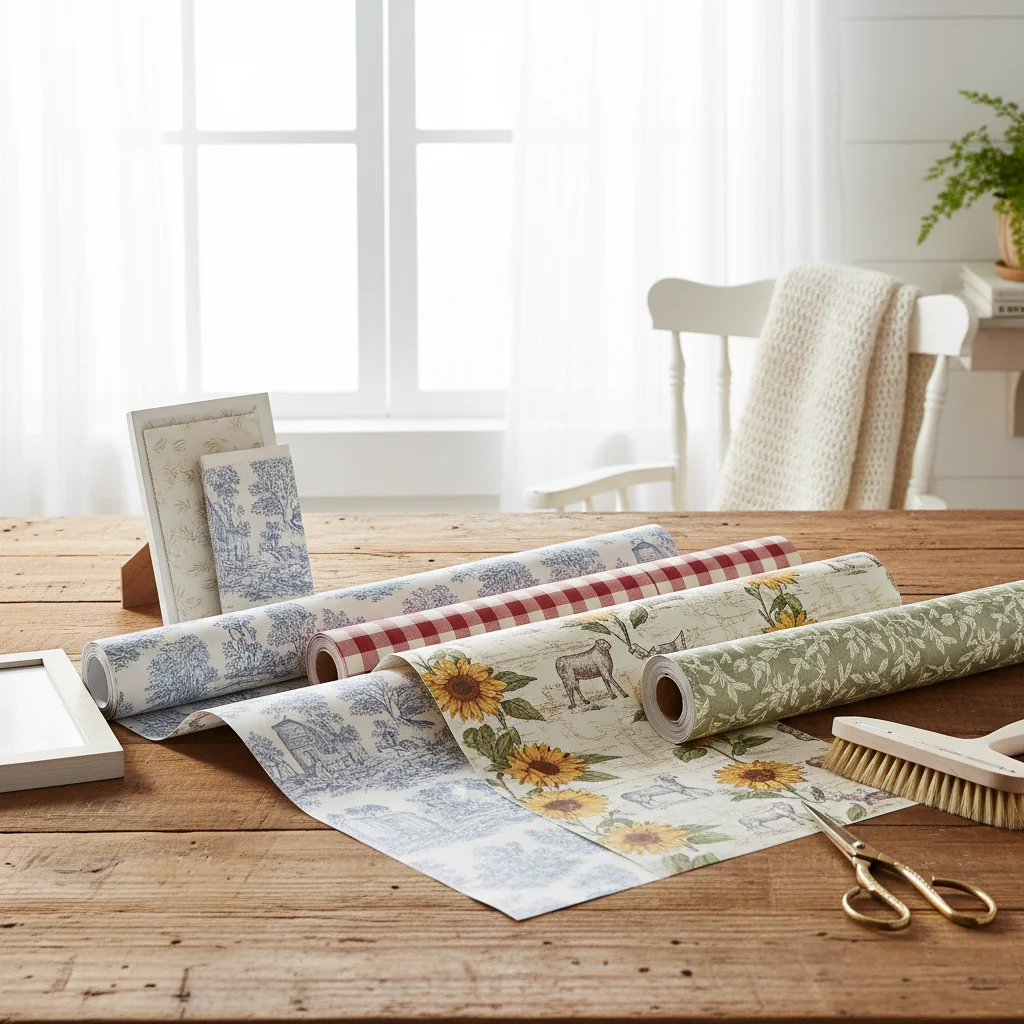
A wall mural is an expansive piece of art or design applied directly to a wall, transforming an ordinary surface into a focal point that defines the aesthetic and atmosphere of a room. Unlike traditional wallpaper, which often features repeating patterns, murals present a single, continuous image or design across multiple panels, offering a bespoke visual narrative for interior spaces. At Starhouse, we understand that a well-chosen wall mural can elevate a room from functional to truly extraordinary, serving as an anchor for your design vision.
Key Takeaways
- Wall murals are large-scale, continuous designs that transform walls into artistic focal points, distinct from repeating wallpaper patterns.
- Key types include peel-and-stick for easy DIY, traditional paste for durability, and custom options for unique design visions.
- Material choices like vinyl, non-woven, and fabric dictate durability, texture, and ease of maintenance, impacting suitability for various environments.
- Accurate measurement and meticulous wall preparation are crucial for flawless installation and long-term mural integrity.
- Styling a mural involves harmonizing it with furnishings, textiles, and lighting to create a cohesive and impactful interior design.
- Prioritize murals with low-VOC (Volatile Organic Compound) inks and materials for healthier indoor air quality, a critical consideration for any home.
What is a Wall Mural?
A wall mural is a large-scale artistic or decorative image printed onto a material that is then affixed to a wall, creating a singular, immersive visual experience. Unlike repeating wallpaper patterns, which are designed for continuous coverage with a uniform motif, a mural presents a complete, often panoramic, scene or design across its entire surface, making it a distinct feature in any room. Murals serve as powerful design elements, capable of defining a room’s atmosphere, conveying a specific theme, or providing a dramatic focal point that draws the eye and sparks conversation.
The concept of wall art dates back millennia, from ancient cave paintings to Renaissance frescoes, all serving to tell stories, depict landscapes, or inspire awe. Modern wall murals, facilitated by advanced printing technologies, bring this rich tradition into contemporary homes, offering unparalleled versatility in design and application. They allow homeowners to introduce complex imagery, intricate textures, or vast landscapes into their interiors without the commitment or cost of hand-painted art. A wall mural fundamentally transforms a flat surface into a dynamic canvas, adding depth, character, and a personalized touch to your living environment.
Distinction from Traditional Wallpaper
While both wall murals and traditional wallpaper are wall coverings, their fundamental design philosophies differ significantly. Traditional wallpaper relies on a repeating pattern that is meticulously aligned across seams to create a continuous, often textural, background. Its primary function is to add a consistent decorative layer or subtle pattern to an entire room. In contrast, a wall mural is designed as a singular, cohesive image that unfolds across the wall, much like a large painting. The panels of a mural are printed to align perfectly to form one complete picture, rather than a repetitive motif. This distinction means that a mural typically functions as a focal point, a statement piece that dictates the room’s narrative, whereas wallpaper often complements other design elements without dominating the space.
The Power of a Focal Point
A well-chosen wall mural acts as an immediate focal point, anchoring the room’s design and guiding the viewer’s eye. This powerful visual element can influence the perceived size and shape of a room, create a sense of depth, or introduce a specific mood. For instance, a mural depicting a serene forest can bring tranquility to a bedroom, while a vibrant cityscape can energize a living area. The deliberate placement of a mural allows for strategic design interventions, such as making a narrow room feel wider or a low ceiling appear higher, simply through the illusion created by the chosen imagery. This ability to instantly establish a room’s character and direct its aesthetic flow is a primary reason for the enduring appeal and growing popularity of wall murals in modern interior design.
Types of Wall Murals
Wall murals come in several primary types, distinguished by their installation method and material composition, each offering unique benefits for various applications and skill levels. Understanding these types is crucial for selecting the mural that best suits your project’s requirements, aesthetic goals, and desired ease of application or removal. The main categories include peel-and-stick, traditional paste-the-wall or paste-the-paper, and custom-printed murals, each providing distinct advantages in terms of durability, flexibility, and design potential.
Peel-and-Stick Wall Murals
Peel-and-stick wall murals, also known as self-adhesive or removable murals, are highly popular for their user-friendly installation and flexibility. These murals feature an adhesive backing that is protected by a removable liner; to install, you simply peel off the liner and press the mural onto the wall. This design makes them ideal for DIY enthusiasts, renters, or those who enjoy frequently updating their decor. They are typically made from durable vinyl or fabric materials, which are often repositionable during installation and fully removable without damaging the underlying wall surface or leaving sticky residue. The ease of removal also means they are an excellent choice for temporary installations or for spaces where design changes are anticipated. While generally less permanent than traditional murals, their convenience and versatility are unmatched, making them a go-to for children’s rooms, accent walls, or office spaces where flexibility is key.
Traditional Paste Wall Murals
Traditional paste wall murals require a separate adhesive (paste) to be applied either to the back of the mural panels (paste-the-paper) or directly to the wall surface (paste-the-wall) before installation. This method generally results in a more permanent and durable finish, making them suitable for long-term installations in high-traffic areas or for designs intended to be a lasting fixture in a home. Traditional murals are available in a wider range of materials, including non-woven fabrics, paper-backed vinyl, and even natural fibers, often offering richer textures and a more luxurious feel. The installation process is more involved than with peel-and-stick, typically requiring specific tools and a greater degree of precision to ensure seamless alignment and prevent bubbles or wrinkles. However, the secure adhesion ensures excellent longevity and resistance to humidity and wear, making them a preferred choice for bathrooms, kitchens, and other demanding environments. The choice between paste-the-paper and paste-the-wall often depends on the specific material of the mural and the manufacturer’s recommendations.
Custom Wall Murals
Custom wall murals offer unparalleled personalization, allowing homeowners to transform their unique vision into a large-scale wall covering. With a custom mural, you can utilize your own high-resolution photographs, commissioned artwork, or specific graphic designs to create a truly one-of-a-kind statement. This option is ideal for those seeking to incorporate a deeply personal narrative, a specific color palette, or an exact thematic element that off-the-shelf designs cannot provide. Custom murals can be printed on various materials, including peel-and-stick vinyl, traditional non-woven, or even specialized textured fabrics, depending on the desired finish and permanence. The process typically involves submitting your artwork to a professional printer who will then scale it, prepare it for printing across multiple panels, and ensure color accuracy. While custom murals often represent a higher investment, their ability to perfectly match an individual’s aesthetic and functional requirements makes them an invaluable tool for bespoke interior design projects. This level of customization ensures that your wall mural is not just a decoration, but an integral part of your home’s unique identity.
Pre-Designed or Stock Wall Murals
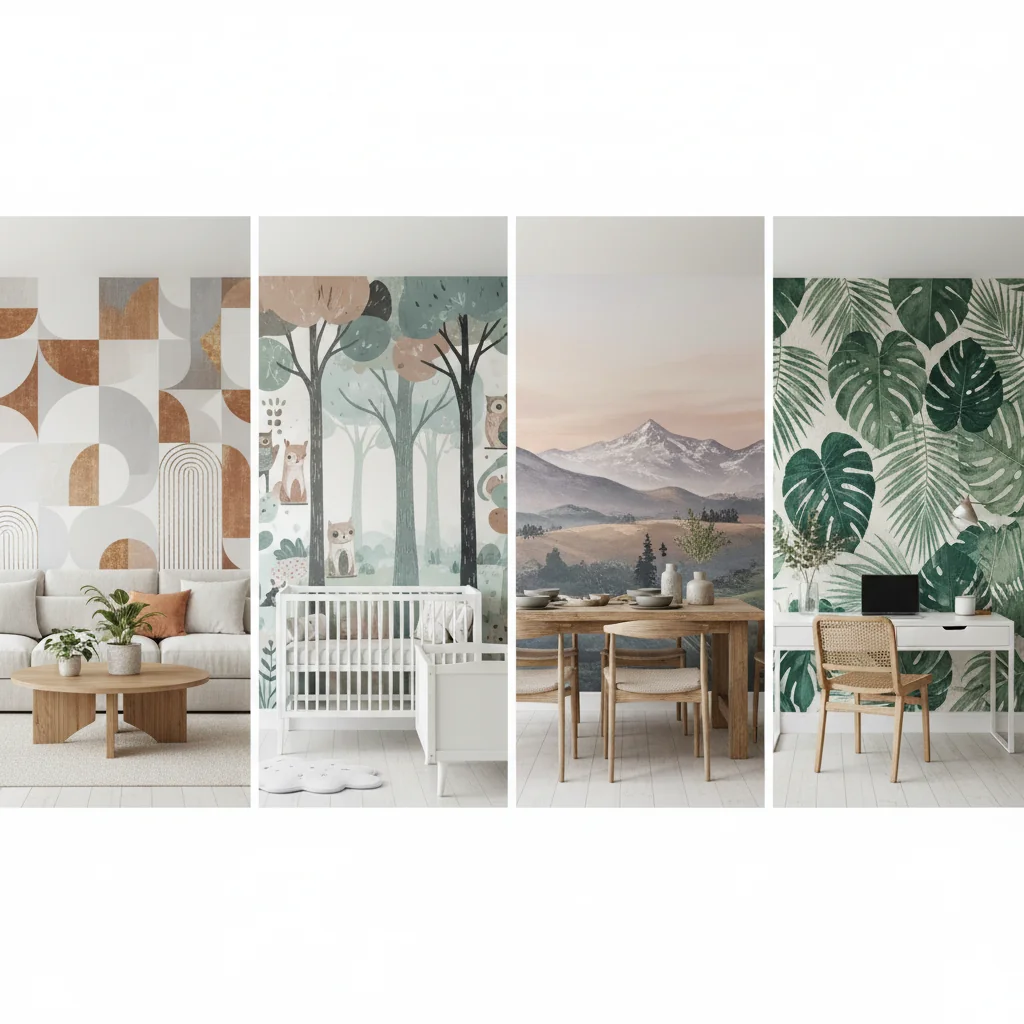
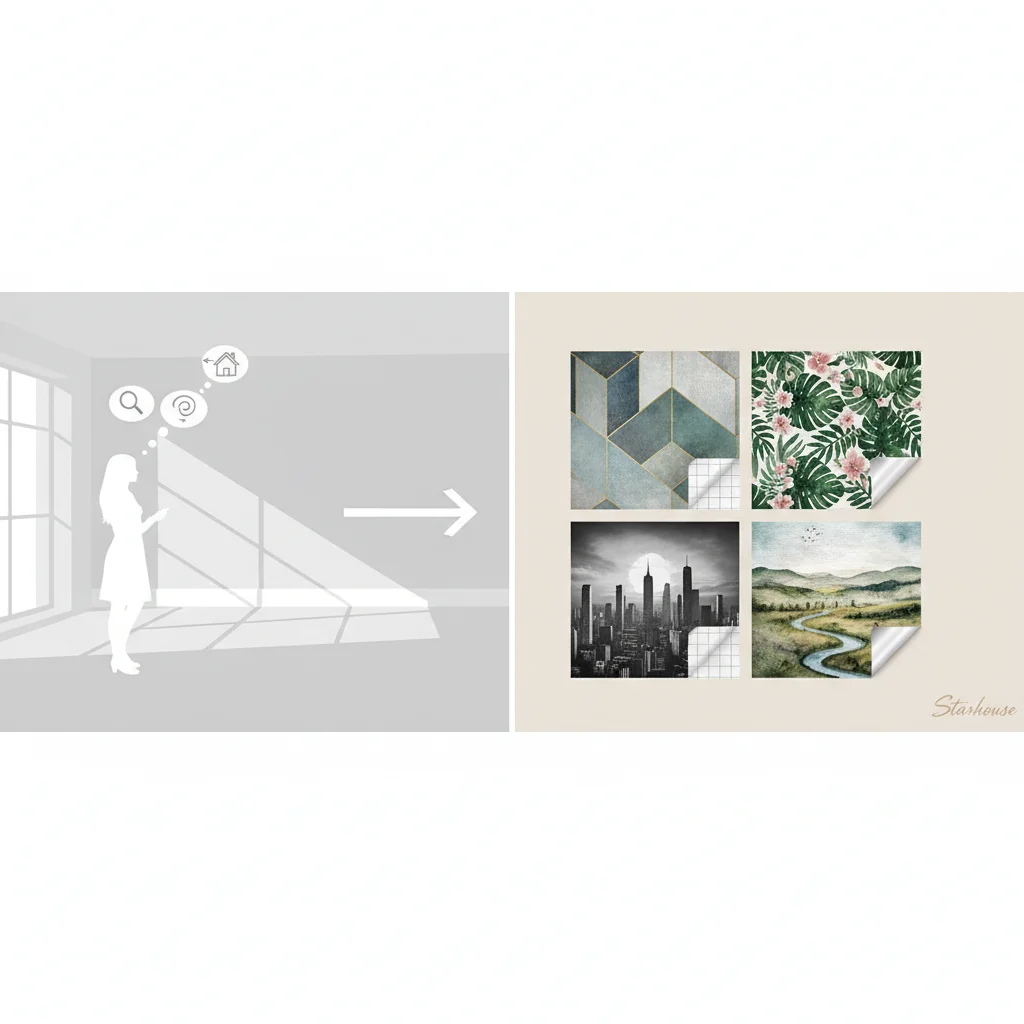
Pre-designed wall murals, often referred to as stock murals, are readily available designs offered by manufacturers in various sizes and themes. These murals provide a convenient and accessible option for homeowners who desire a striking visual impact without the lead time or cost associated with custom artwork. Stock murals encompass an extensive array of styles, from sweeping landscapes and abstract geometries to vibrant botanicals and historical cityscapes, ensuring there is a design to complement virtually any interior aesthetic. They are typically printed on standard materials such as peel-and-stick vinyl or traditional non-woven paper and are engineered for straightforward installation, often accompanied by detailed instructions. The primary advantage of pre-designed murals is their immediate availability and proven design appeal, having been curated to meet broad consumer preferences. While they may not offer the absolute uniqueness of a custom piece, their quality, variety, and affordability make them an excellent choice for achieving a professional, stylish look efficiently. At Starhouse, we curate a diverse collection of pre-designed murals, ensuring a broad spectrum of choices for every design sensibility and room function.
Popular Styles and Themes
The vast array of styles and themes available for wall murals allows for precise aesthetic alignment with any interior design vision, enabling homeowners to create specific moods and narratives within their spaces. From serene natural vistas to dynamic abstract compositions, the chosen theme significantly impacts the overall ambiance and character of a room. Understanding the prevalent styles helps in selecting a mural that not only complements existing decor but also elevates the room’s narrative.
Nature and Landscape Murals
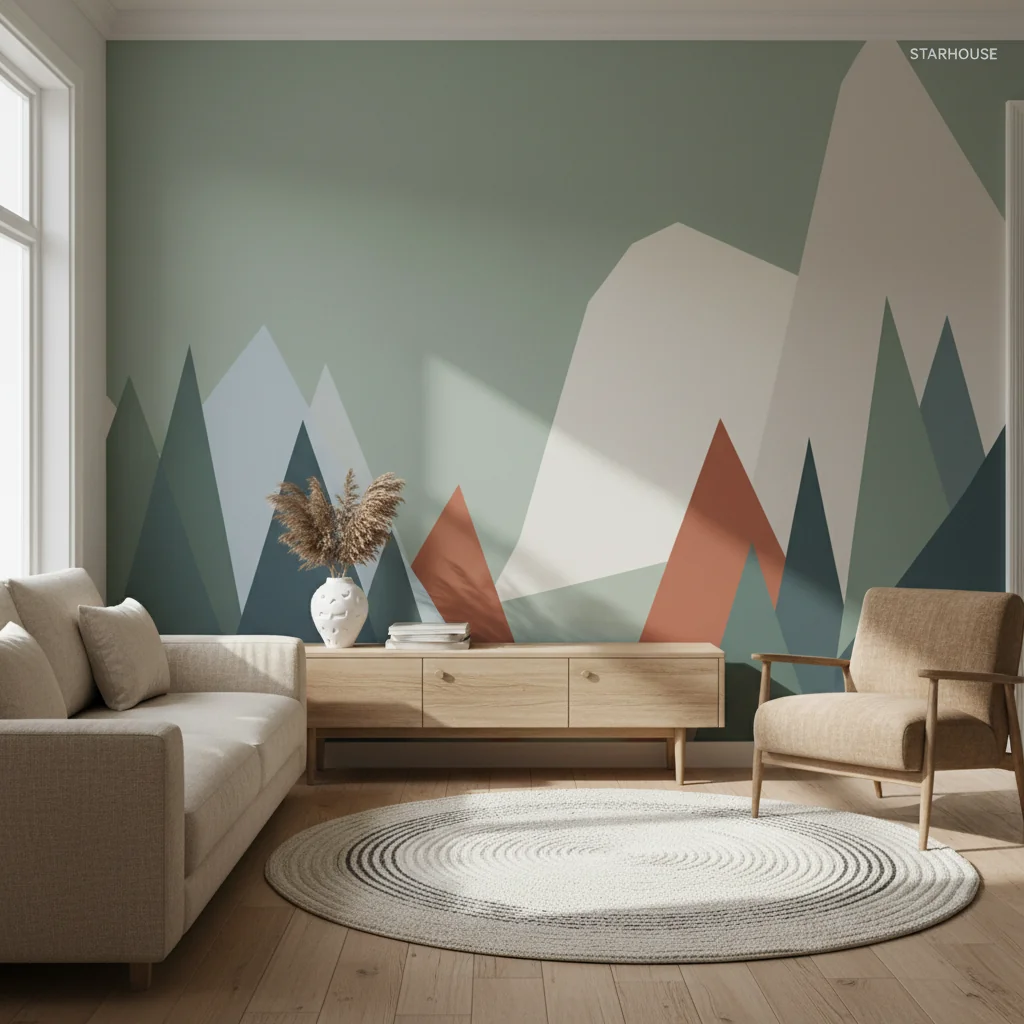
Nature and landscape murals are perennially popular, offering a serene escape or a dramatic vista that connects indoor spaces with the tranquility or grandeur of the outdoors. These themes encompass a broad spectrum, including lush forests, towering mountains, tranquil seascapes, exotic jungles, and expansive desert scenes. A mural depicting a misty forest can instill a sense of calm in a bedroom, promoting relaxation, while a vibrant tropical scene can inject energy and warmth into a living area. The intricate details and natural color palettes found in these murals have a profound psychological effect, often reducing stress and fostering a sense of well-being. This aligns with biophilic design principles, which advocate for incorporating natural elements into built environments to enhance human health and productivity. The immersive quality of a large-scale landscape mural can also visually expand a room, making smaller spaces feel more open and connected to the wider world.
Abstract and Geometric Murals
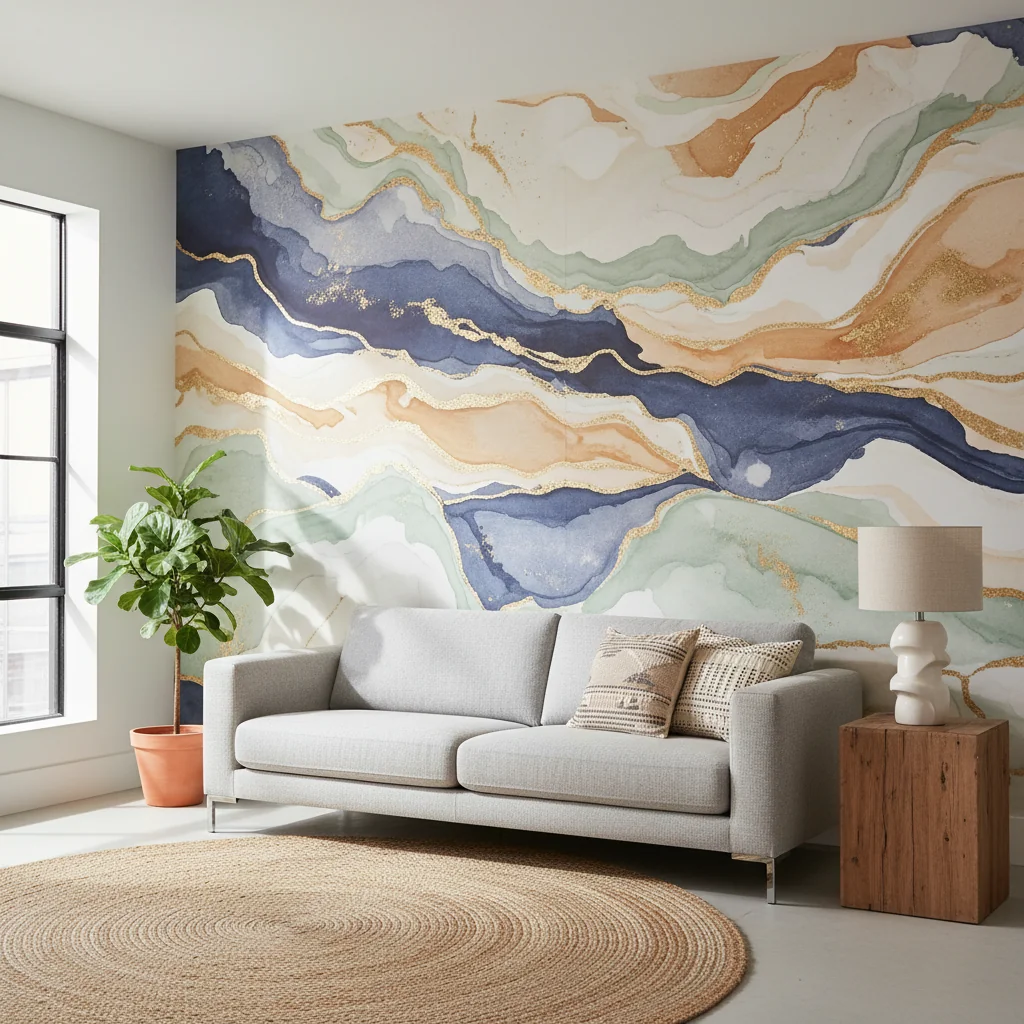
Abstract and geometric murals introduce contemporary sophistication and artistic intrigue through form, line, and color rather than representational imagery. Abstract designs can range from fluid, organic shapes to bold, expressive brushstrokes, often evoking emotions or creating a sense of movement. Geometric murals, on the other hand, feature precise patterns, interlocking shapes, and optical illusions that add structure, rhythm, and a modern edge to a space. These styles are particularly effective in contemporary or minimalist interiors, where they can serve as a striking visual anchor without overwhelming the space with explicit imagery. They allow for creative interpretations and can be used to introduce specific color schemes or to break up monotonous wall expanses. For instance, a mural with interlocking triangles in varying shades of gray and white can add dynamic texture to a home office, stimulating creativity, while a soft, flowing abstract design can bring a sense of fluidity to a dining room.
Botanical and Floral Murals
Botanical and floral murals celebrate the beauty and diversity of plant life, bringing elements of gardens, meadows, and lush foliage indoors. These themes can range from delicate, vintage-inspired floral patterns to bold, oversized tropical leaves, offering versatility for various design aesthetics. A mural featuring soft, watercolor-style blossoms can create a romantic and airy atmosphere in a bedroom, while a dramatic display of dark, exotic flowers against a rich background can infuse a dining room with opulent drama. Beyond their aesthetic appeal, botanical motifs contribute to a sense of freshness and vitality, echoing the positive psychological effects of nature. They are particularly effective in creating a vibrant focal point in a living room or adding a touch of natural elegance to a bathroom. The scale of the botanical elements can also be manipulated to suit the room; smaller, intricate patterns provide a delicate backdrop, while large-scale leaves or flowers create a more impactful, immersive experience.
Cityscapes and Architectural Murals
Cityscapes and architectural murals offer a sophisticated and dynamic visual narrative, transporting the viewer to iconic urban environments or showcasing intricate structural forms. These themes are particularly well-suited for modern, industrial, or eclectic interiors, where they can add a sense of worldly flair and architectural grandeur. A mural depicting a bustling New York City skyline at dusk can infuse an office or living room with energy and sophistication, while a vintage European street scene can evoke a sense of history and charm in a dining area. Architectural murals can highlight elements like grand arches, detailed facades, or industrial textures, adding depth and structural interest to a flat wall. They are excellent for creating a sense of scale and perspective, making a room feel more expansive or offering a window into another environment. These murals often resonate with individuals who appreciate urban aesthetics, travel, or a contemporary, cultured ambiance, serving as a powerful statement piece that reflects a cosmopolitan sensibility.
Children’s and Whimsical Murals
Children’s and whimsical murals are designed to ignite imagination and create playful, engaging environments for younger occupants. These themes typically feature vibrant colors, fantastical creatures, storybook scenes, or educational motifs that are both visually stimulating and conducive to creative play. A mural depicting a magical forest filled with friendly animals can transform a child’s bedroom into an enchanted wonderland, fostering imaginative adventures. Similarly, a mural showcasing a solar system or a world map can serve as both decoration and an educational tool, sparking curiosity and learning. The designs in this category are often characterized by their bright palettes, charming illustrations, and ability to transport children into their favorite stories or dream worlds. These murals are crafted to be durable and easy to clean, accommodating the realities of children’s spaces, and are frequently chosen in peel-and-stick formats for easy updates as a child’s interests evolve. They are instrumental in creating a personalized and inspiring sanctuary for children, reflecting their unique personalities and dreams.
Materials and Finishes
The choice of material and finish for a wall mural significantly impacts its appearance, durability, ease of installation, and suitability for various environments within your home. Different materials offer distinct textures, light reflection properties, and levels of resistance to moisture and wear, making this decision as crucial as the design itself. Understanding the characteristics of common mural materials—such as vinyl, non-woven, and fabric—and their available finishes allows for an informed selection that ensures both aesthetic appeal and long-term performance.
Vinyl Murals
Vinyl is a highly versatile and popular material for wall murals due to its exceptional durability, ease of cleaning, and resistance to moisture. Vinyl murals are typically composed of a PVC (polyvinyl chloride) layer printed with the design, backed by paper or fabric. This composition makes them incredibly robust, able to withstand scuffs, scratches, and frequent wiping, which is why they are often recommended for high-traffic areas like hallways, children’s rooms, kitchens, and bathrooms. The vinyl surface also makes them highly resistant to humidity, preventing warping or peeling in moist environments. They are available in various thicknesses and can mimic textures, offering a range of visual effects. While generally durable, it is important to consider the environmental impact of PVC, though many manufacturers now offer phthalate-free and low-VOC vinyl options. The inherent strength and washability of vinyl make it a practical and long-lasting choice for dynamic household environments.
Non-Woven Murals
Non-woven materials represent a modern advancement in wall covering technology, offering a balance of durability, breathability, and environmental consideration. These murals are made from a blend of natural and synthetic fibers, often cellulose and polyester, which are bonded together without weaving. This unique construction results in a material that is dimensionally stable, meaning it resists shrinking or expanding when wet, simplifying installation and ensuring seamless panel alignment. Non-woven murals are also highly breathable, which helps prevent mold and mildew growth, making them a healthier choice for indoor environments. They are known for their tear resistance and are often easier to remove in full sheets compared to traditional paper-backed options, making future redecoration less arduous. Many non-woven murals are also designed to be eco-friendlier, often being PVC-free and printed with water-based inks. Their smooth, matte finish typically provides excellent color reproduction, making them ideal for intricate designs and detailed artwork where clarity is paramount.
Fabric Murals
Fabric wall murals offer a luxurious and tactile alternative, providing a soft, textile-like appearance that adds warmth and sophistication to a space. These murals are typically printed on polyester-based fabrics, which can range from a smooth, matte finish to a subtle woven texture. The inherent flexibility and drape of fabric make these murals less prone to creasing during installation and provide a seamless, high-end look. Fabric murals are often favored for bedrooms, living rooms, and other areas where comfort and a refined aesthetic are desired. Many fabric murals are also designed to be breathable and, in some cases, acoustically absorbent, contributing to a quieter and more comfortable room environment. They are generally installed using a paste-the-wall method, ensuring strong adhesion while allowing for removal without significant damage. While potentially more delicate than vinyl in terms of heavy-duty cleaning, their sophisticated texture and ability to absorb light rather than reflect it contribute to a soft, inviting ambiance that is difficult to achieve with other materials. The tactile quality of fabric adds an additional layer of sensory engagement to the visual impact of the mural.
Paper-Backed Murals
Paper-backed murals, while less common than vinyl or non-woven options in modern production, still exist and offer a classic approach to wall coverings. These murals feature a printed paper layer backed by another paper layer, requiring traditional wallpaper paste for application. They are known for their vibrant print quality, often excelling in reproducing intricate details and rich colors. However, paper-backed murals are generally less durable than their vinyl or non-woven counterparts, being more susceptible to tearing during installation and less resistant to moisture and scuffs. They are typically not washable and are best suited for low-traffic areas or spaces where a traditional, delicate aesthetic is desired. Removal can also be more challenging, often requiring steaming or soaking to fully detach from the wall. While they offer a certain aesthetic purity, their practical limitations mean they are often chosen for specific artistic effects rather than for their resilience.
Finishes: Matte, Satin, and Gloss
The finish of a wall mural plays a critical role in its final appearance and how it interacts with light within a room. Choosing the right finish can enhance the mural’s design, influence the room’s atmosphere, and impact perceived durability.
- Matte Finish: A matte finish absorbs light rather than reflecting it, resulting in a non-shiny, flat appearance. This finish minimizes glare and provides a soft, sophisticated look, making it excellent for reproducing detailed artwork, photographs, or murals with a painterly quality. Matte finishes tend to hide minor wall imperfections better and offer a more natural, subtle aesthetic. However, they can be slightly less durable and harder to clean than glossier options, as they lack the protective, smooth topcoat. They are ideal for creating a calm, understated elegance and ensuring the mural’s colors appear rich and deep without distraction from reflections.
- Satin Finish: A satin finish offers a subtle sheen that is softer than gloss but more reflective than matte. It strikes an excellent balance between durability and aesthetic appeal, providing a gentle luminosity that enhances colors and adds a touch of sophistication without excessive glare. Satin finishes are generally easier to clean than matte and offer good resistance to wear, making them a versatile choice for most rooms, including those with moderate traffic. This finish is a popular compromise, offering the advantages of both matte and gloss in a balanced manner, providing a pleasant visual texture and a practical level of maintenance.
- Gloss Finish: A gloss finish is highly reflective, creating a bright, shiny surface that makes colors appear vibrant and saturated. This finish can add a sense of drama and modernity to a mural, making it stand out significantly. However, its high reflectivity means it can highlight wall imperfections and create glare in brightly lit rooms, potentially detracting from the mural’s details. Gloss finishes are typically the most durable and easiest to clean, as their smooth surface repels dirt and moisture effectively. They are often chosen for commercial spaces, accent walls, or areas where a bold, high-impact statement is desired, but careful consideration of lighting conditions is essential to avoid unwanted reflections.
| Material Type | Key Characteristics | Durability & Maintenance | Installation Ease | Typical Best Use |
|---|---|---|---|---|
| **Vinyl (Peel-and-Stick)** | Self-adhesive, repositionable, often PVC-based. | High durability, very easy to clean, water-resistant. | Very easy (DIY-friendly), no paste needed. | Rentals, children’s rooms, temporary decor, accent walls. |
| **Vinyl (Traditional)** | PVC surface, paper or fabric backing, requires paste. | Excellent durability, very easy to clean, highly water-resistant. | Moderate difficulty, requires paste application. | High-traffic areas, kitchens, bathrooms, long-term installations. |
| **Non-Woven** | Blend of natural/synthetic fibers, breathable, dimensionally stable. | Good durability, tear-resistant, breathable (prevents mold), easy to remove. | Moderate difficulty (paste-the-wall often), good for DIY. | Bedrooms, living rooms, health-conscious spaces, general long-term use. |
| **Fabric** | Polyester-based, soft, tactile texture, often breathable. | Moderate durability, less prone to creasing, good for acoustics. | Moderate difficulty (paste-the-wall), requires careful handling. | Bedrooms, living rooms, sophisticated aesthetics, low-traffic areas. |
| **Paper-Backed** | Printed paper on paper backing, requires paste. | Lower durability, susceptible to tearing and moisture, not washable. | Moderate difficulty, requires paste application. | Low-traffic areas, traditional aesthetics, specific artistic effects. |
Choosing the Right Wall Mural for Your Space
Selecting the ideal wall mural requires a thoughtful consideration of your room’s function, existing decor, natural lighting, and personal aesthetic preferences to ensure a cohesive and impactful design. The right mural seamlessly integrates with your home’s narrative, enhancing its atmosphere and reflecting your unique style, while a mismatched choice can disrupt the room’s harmony. This comprehensive approach ensures that your chosen mural not only looks stunning but also serves its purpose effectively within the context of your living environment.
Consider the Room’s Function
The primary function of a room is a paramount consideration when selecting a wall mural, as it dictates the appropriate mood, color palette, and imagery. For a bedroom, where relaxation and tranquility are key, opt for murals with calming landscapes, soft botanical prints, or soothing abstract forms in muted tones. In contrast, a living room, often a hub for social activity, can accommodate more vibrant, dynamic, or engaging themes such as cityscapes, bold geometric patterns, or dramatic nature scenes that invite conversation. For a home office, a mural depicting an inspiring vista, a subtle textured pattern, or an architectural design can foster focus and creativity without being overly distracting. Children’s rooms benefit from whimsical, imaginative, or educational themes that spark curiosity and playfulness. The mural should reinforce the room’s intended purpose, contributing to an environment that supports the activities performed within it.
Harmonize with Existing Decor and Color Scheme
A wall mural should complement, rather than clash with, your existing furniture, textiles, and overall color scheme. Begin by analyzing the dominant colors and undertones already present in your room. If your decor features warm wood tones and earthy hues, a mural with autumnal landscapes or botanical prints in similar warm shades would create a harmonious flow. Conversely, a room with cool-toned grays, blues, and crisp whites might benefit from a mural depicting icy mountain peaks, abstract designs with cool color gradients, or serene seascapes. Consider the style of your furniture—modern, traditional, bohemian, or minimalist—and choose a mural that aligns with that aesthetic. For example, a minimalist space thrives with abstract or geometric murals, while a traditional room might be enhanced by classic European landscapes or delicate floral patterns. The goal is to ensure the mural feels like an integrated element of the design, not an afterthought. If your room is already rich in pattern or texture, a mural with a simpler design or a subtle texture might be more appropriate to maintain balance.
Evaluate Natural and Artificial Lighting
Lighting profoundly affects how a wall mural appears throughout the day and night, influencing its perceived colors, depth, and overall impact. A room with abundant natural light can handle darker, more saturated mural designs without feeling heavy, as the light will illuminate the details and prevent the mural from appearing too dim. Conversely, in rooms with limited natural light, lighter-colored murals or those with a high-contrast design can help brighten the space and create an illusion of openness. Consider the direction of natural light; a south-facing room receives bright, warm light, while a north-facing room gets cooler, softer light. The mural’s finish also interacts with light differently: matte finishes absorb light and minimize glare, ideal for areas with direct sun, while satin or gloss finishes reflect light, potentially brightening a dim room but also risking glare. Assess your artificial lighting fixtures as well; warm-toned bulbs can enhance rich, earthy mural colors, while cool-toned LED lights might bring out the blues and greens in a serene landscape. Test samples under various lighting conditions if possible to ensure the mural’s colors and details are consistently appealing.
Scale and Proportion
The scale and proportion of a wall mural relative to the room’s size and other furnishings are critical for achieving a balanced and aesthetically pleasing result. In a small room, an oversized, detailed mural can paradoxically make the space feel larger by creating depth and drawing the eye into the scene. However, an overly busy or highly detailed mural in a cramped space might feel overwhelming. For larger rooms, a grand, expansive mural can fill a significant wall without being dwarfed by the surroundings, becoming a true statement piece. Consider the scale of the elements within the mural itself; large-scale botanical prints or abstract forms tend to work well in spacious areas, while intricate patterns might be better suited for an accent wall or a more contained space. Always measure your wall precisely and visualize how the mural’s image will fit, paying attention to how the main elements of the design will align with furniture or architectural features like windows and doors. The goal is for the mural to feel proportionate and intentional, not squeezed or lost within the space.
Personal Style and Aesthetic Preference
Ultimately, the most successful wall mural is one that genuinely resonates with your personal style and aesthetic preferences, reflecting your individuality and creating a space you love. Do you gravitate towards minimalist design, bohemian eclecticism, classic elegance, or modern industrial? Your mural should align with these inherent tastes. If you are drawn to serene, calming environments, a muted nature scene or a soft abstract pattern might be ideal. For those who prefer vibrant, energetic spaces, a bold geometric design or a colorful cityscape could be more fitting. Consider themes that evoke positive emotions, memories, or aspirations. A mural depicting a favorite travel destination, a beloved natural setting, or an abstract piece that speaks to your artistic sensibilities will transform your house into a personalized home. Do not be afraid to trust your instincts; the mural is a significant investment in your home’s character, and it should bring you joy every time you enter the room. This personal connection ensures the mural feels authentic and timeless for you.
Color Psychology
Understanding color psychology is an invaluable tool when selecting a wall mural, as colors have a profound impact on mood, emotion, and perception within a space. For instance, blues and greens are often associated with tranquility, peace, and nature, making them ideal for bedrooms, bathrooms, or spaces where a calming atmosphere is desired. Yellows and oranges evoke warmth, energy, and happiness, perfect for kitchens, dining rooms, or children’s play areas that benefit from a vibrant and stimulating environment. Reds can signify passion, excitement, or drama, often used sparingly as an accent or in areas where a bold statement is appropriate, such as a dining room or an entryway. Neutrals like grays, whites, and beiges provide a sophisticated, versatile backdrop that can create a sense of spaciousness and allow other design elements to shine. Consider how the dominant colors in your chosen mural will influence the emotional landscape of the room. A soft, pastel palette can create an airy, delicate feel, while deep, saturated tones can add drama and intimacy. By intentionally applying color psychology, you can ensure your mural not only looks beautiful but also contributes positively to the desired emotional experience of your home.
We invite you to explore the possibilities and tell us what you’re looking for to help curate our upcoming collection at Starhouse. Share your vision with us and get early access to designs that truly speak to your unique style.
Sizing & Measuring for a Flawless Installation
Accurate sizing and meticulous measurement are the foundational steps for a flawless wall mural installation, ensuring the design fits perfectly and achieves its intended visual impact. Incorrect measurements can lead to misaligned patterns, visible gaps, or an ill-proportioned mural that detracts from the room’s aesthetic. Precise preparation guarantees that your mural will be a stunning focal point, seamlessly integrated into your space.
Essential Tools for Measurement
Before you begin measuring, gather the correct tools to ensure accuracy. You will need a reliable tape measure, preferably a metal one that is at least 25 feet long for ease of use across larger wall expanses. A pencil and notepad are essential for recording measurements clearly, and a step ladder or stepladder will help you reach higher points on the wall safely. For ensuring straight lines and checking wall plumb, a level (either a traditional spirit level or a laser level) is highly recommended. These tools collectively enable you to obtain precise dimensions and assess the readiness of your wall for mural application, minimizing the risk of errors during the crucial measurement phase.
Measuring Wall Dimensions
To accurately measure your wall, begin by measuring the width of the wall at three different points: the top, middle, and bottom. Record all three measurements. Then, measure the height of the wall at three different points: the left side, middle, and right side. Again, record all three measurements. This practice helps identify any inconsistencies or irregularities in your wall, such as it not being perfectly square or plumb. Always use the largest recorded width and height measurements when ordering your mural. This ensures you have enough material to cover the entire surface, accounting for any slight variations. It is crucial to measure from the baseboard to the ceiling and from corner to corner, ensuring you capture the full dimensions of the area intended for the mural. For walls with architectural features like windows or doors, measure the full wall first, then measure the dimensions of these obstructions. While you might cut around them during installation, having the full wall dimensions ensures the mural’s pattern repeat and overall scale are correctly accounted for.
Adding Bleed or Overlap
It is standard practice to add a “bleed” or “overlap” to your final wall measurements before ordering a mural. We recommend adding at least 2 to 4 inches to both the total width and total height of your largest measurements. For example, if your wall measures 120 inches wide and 96 inches high, order a mural that is at least 124 inches wide and 100 inches high. This extra material provides a crucial margin for error during installation, allowing for slight variations in wall straightness, ceiling lines, and floor levels. This excess can then be precisely trimmed away after the mural is installed, using a sharp utility knife and a straight edge, resulting in clean, crisp edges that fit perfectly to your wall. Without this bleed, even minor misalignments or uneven wall surfaces can lead to unsightly gaps between the mural and the ceiling, floor, or adjacent walls, compromising the professional finish.
Considering Obstructions (Windows, Doors, Outlets)
When measuring for a wall mural, carefully account for any obstructions such as windows, doors, electrical outlets, or built-in shelving. While you will order the mural to cover the entire wall (including these areas, with the added bleed), it is beneficial to note their precise locations and dimensions. This information helps in visualizing how the mural’s design will interact with these elements and ensures that critical parts of the image are not obscured or awkwardly cut. During installation, you will apply the mural panels over these obstructions and then carefully trim around them with a sharp utility knife after the adhesive has set. For electrical outlets, turn off the power at the breaker before removing the cover plates, installing the mural over the opening, and then cutting out the mural material before replacing the cover plate. Taking these obstructions into account during the planning phase prevents surprises and allows for a smoother, more precise installation process, preserving the integrity of the mural’s design.
Pattern Repeat and Alignment
For murals that feature a repeating pattern or a continuous scene across multiple panels, understanding pattern repeat and ensuring proper alignment is paramount. Each panel of a mural is typically numbered to guide the installation sequence. Before applying any paste or removing any backing, lay out all the panels on a clean, flat surface in the correct order. This dry-fit allows you to visualize the complete image, check for any printing imperfections, and confirm that the pattern aligns seamlessly across panel edges. Pay close attention to any specific pattern match instructions provided by the manufacturer, as some murals require a straight match, while others may have a drop match. During installation, align the first panel plumb (perfectly vertical) using a level, as this sets the foundation for all subsequent panels. Then, carefully align each subsequent panel to the edge of the previous one, ensuring the pattern or image flows continuously. Overlapping seams are common in some mural types, which are then double-cut for a seamless appearance. Precise alignment is the key to achieving a professional, uninterrupted visual effect.
Installation Methods: DIY vs. Professional
The choice between a do-it-yourself (DIY) or professional installation depends largely on the mural type, your comfort level with home improvement projects, and the complexity of your chosen design. While DIY offers cost savings and a sense of accomplishment, professional installation guarantees precision and often a superior, long-lasting finish, especially for intricate or traditional paste murals. Understanding the nuances of each approach empowers you to make an informed decision for your specific project.
Preparing Your Wall for Mural Installation
Thorough wall preparation is universally critical for any mural installation, regardless of whether you choose DIY or professional application. A clean, smooth, and properly primed surface is essential for optimal adhesion and a flawless finish. Begin by cleaning the wall thoroughly with a mild detergent and water to remove any dirt, grease, or grime; allow it to dry completely. Patch any holes or cracks with spackle, sand them smooth, and then wipe away any dust. For best results, especially with traditional murals, apply a high-quality primer specifically designed for wallpaper or wall coverings. Primer creates a uniform surface, enhances adhesion, and prevents the wall from absorbing too much adhesive, which can lead to bubbling or peeling. For dark walls, consider a white primer to prevent the underlying color from showing through lighter mural areas. Ensure the wall is completely dry and smooth before proceeding with installation. Neglecting this crucial step can compromise the mural’s adhesion and overall appearance, leading to frustrating issues like bubbles, wrinkles, or peeling edges.
DIY Installation: Peel-and-Stick Murals
Peel-and-stick murals are the most DIY-friendly option, designed for straightforward application without the need for messy adhesives. Begin by cleaning and priming your wall as described above. Measure and mark a vertical plumb line on your wall where the first panel will begin, using a level, as this line will guide your entire installation. Carefully peel a few inches of the backing paper from the top of the first panel and align the mural with your plumb line and ceiling. Slowly and steadily, peel away the rest of the backing paper while simultaneously smoothing the mural onto the wall using a plastic smoothing tool or a clean cloth, working from the top down and from the center outwards to push out any air bubbles. Overlap the subsequent panels according to the manufacturer’s instructions, typically by about 1/2 to 1 inch, ensuring the pattern matches perfectly. Once all panels are applied, use a sharp utility knife and a straight edge to trim any excess material along the ceiling, baseboards, and around obstructions. While generally forgiving, patience and careful alignment are key to achieving a professional-looking result with peel-and-stick murals.
DIY Installation: Traditional Paste Murals
Traditional paste murals, whether paste-the-wall or paste-the-paper, require more skill and precision than peel-and-stick, but are still achievable for experienced DIYers. After thorough wall preparation, lay out all mural panels on a clean floor to confirm the sequence and pattern match. For paste-the-paper murals, apply a thin, even layer of wallpaper paste to the back of the first panel, ensuring full coverage without oversaturation, then “book” the paper (fold it adhesive-to-adhesive) and let it rest for the recommended time (typically 5-10 minutes) for the paste to activate. For paste-the-wall murals, apply the paste directly to the wall section where the first panel will go. Next, hang the first panel using a plumb line as your guide, smoothing it onto the wall with a wallpaper brush or plastic smoother to eliminate air bubbles and wrinkles. Trim excess material at the top and bottom. Repeat this process for subsequent panels, carefully aligning each edge for a seamless pattern match. Use a seam roller to gently press down seams, ensuring good adhesion. Clean any excess paste immediately with a damp sponge. This method demands precision and attention to detail, but yields a highly durable and professional finish.
When to Hire a Professional Installer
Hiring a professional installer is highly recommended for complex mural projects, large-scale installations, or if you lack confidence in your DIY skills. Professionals possess the specialized tools, extensive experience, and meticulous technique required to handle challenging wall conditions, intricate patterns, and delicate materials like certain fabrics or custom prints. They are adept at precise measurement, flawless pattern matching, and expert seam concealment, ensuring a truly seamless and durable finish. A professional installer can also advise on wall preparation, address any underlying issues, and often work more efficiently, saving you time and potential frustration. While the initial cost is higher than DIY, the investment often pays off in terms of a superior aesthetic outcome, reduced risk of costly errors, and greater longevity of your mural. For high-value murals or those in prominent areas of your home, professional installation ensures your design vision is executed to perfection.
When selecting a professional, seek out installers with specific experience in hanging large-format murals, rather than just general wallpaper. Ask for references, view their portfolio, and ensure they are insured. Discuss the type of mural material you have chosen, as different materials require specific handling and adhesives. A reputable professional will also provide a clear quote, outline their preparation requirements, and offer a guarantee on their work. This due diligence ensures that your investment in a beautiful wall mural is protected by expert application.
Care and Maintenance for Your Wall Mural
Proper care and maintenance are essential for preserving the vibrancy, integrity, and longevity of your wall mural, ensuring it remains a stunning focal point for years to come. The specific cleaning and repair methods depend largely on the mural’s material and finish, underscoring the importance of understanding manufacturer guidelines. Consistent, gentle maintenance prevents premature wear and keeps your mural looking its best.
General Cleaning Guidelines by Material
The cleaning regimen for your wall mural is dictated by its material composition. For most vinyl murals, which are highly durable and water-resistant, a gentle wipe-down with a soft, damp cloth and a mild, non-abrasive soap (such as dish soap diluted in water) is effective. Avoid harsh chemicals or abrasive scrubbers, which can damage the printed surface or protective coating. For non-woven and fabric murals, which are often more delicate, dusting with a soft, dry cloth or a microfiber duster is usually sufficient for routine cleaning. If a spot clean is necessary, use a slightly damp cloth with minimal pressure, testing on an inconspicuous area first to ensure no color lifting occurs. Paper-backed murals are generally not washable and should only be gently dusted. Always refer to the mural manufacturer’s specific cleaning instructions, as variations exist even within material types. Promptly addressing spills or marks prevents them from setting, making cleaning easier and more effective.
Protecting Your Mural from Damage
Protecting your wall mural from damage involves both preventative measures and careful handling. Avoid placing furniture directly against the mural where it could rub or scratch the surface; leave a small gap if possible. In high-traffic areas, consider installing clear protective panels over the mural up to a certain height, especially in children’s rooms or play areas. Keep pets from scratching or chewing on the mural. Minimize direct, prolonged exposure to harsh sunlight, which can cause colors to fade over time; consider UV-protective window films or blinds for windows facing the mural wall. Ensure the room’s humidity levels are stable, as extreme fluctuations can affect adhesion, particularly for traditional paste murals. For areas prone to splashes, such as behind a sink, opt for a highly durable, water-resistant vinyl mural. By implementing these protective strategies, you significantly extend the life and aesthetic appeal of your mural.
Repairing Minor Damages
Minor damages to a wall mural, such as small tears, scuffs, or lifted seams, can often be repaired with careful attention. For small tears or punctures, use a small amount of appropriate adhesive (wallpaper paste for traditional murals, or a suitable craft adhesive for others) applied with a toothpick or fine brush to carefully re-adhere the damaged section. For lifted seams, re-apply adhesive beneath the lifting edge and firmly press it back down with a seam roller or clean cloth, wiping away any excess. If you have leftover mural material, small patches can be cut to precisely fit over damaged areas, aligning the pattern carefully. For scuffs or marks that don’t wipe away, a very gentle touch-up with a matching paint color (if you can find an exact match) might be possible, but proceed with extreme caution and test in an inconspicuous area first. Always ensure the repair blends seamlessly to maintain the mural’s continuous image. Addressing minor damages promptly prevents them from worsening and helps maintain the mural’s overall flawless appearance.
Addressing Humidity and Environmental Factors
Humidity and other environmental factors play a crucial role in the long-term performance of wall murals. High humidity can cause traditional paste murals to lift or bubble, while extremely dry conditions can lead to shrinking and cracking. Maintaining a consistent indoor humidity level, ideally between 30% and 50%, is beneficial for all wall coverings. Use a dehumidifier in overly humid environments like basements or bathrooms, and a humidifier in excessively dry climates. Ensure adequate ventilation, especially in kitchens and bathrooms, to dissipate moisture. For murals installed in areas subject to significant temperature fluctuations, such as near fireplaces or large windows, choose materials known for their dimensional stability, like non-woven or thicker vinyl. Protecting your mural from direct, intense sunlight is also important, as UV rays can cause colors to fade over time. By managing these environmental factors, you can significantly prolong the life and vibrancy of your wall mural, ensuring its adhesive integrity and visual appeal remain intact for years.
When considering any interior finishes, including wall murals and their adhesives, it’s prudent to be aware of indoor air quality. The U.S. Environmental Protection Agency (EPA) emphasizes the importance of good ventilation during and after painting or applying adhesives to minimize exposure to Volatile Organic Compounds (VOCs) that can be released. The EPA provides extensive resources on healthy indoor painting practices, which are equally applicable to mural installation, recommending the use of low-VOC products. Additionally, their guidance on healthy indoor painting practices under the TSCA further reinforces the benefits of selecting low-VOC and low-odor materials for interior projects to maintain optimal air quality.
Styling & Pairing Your Mural with Interior Elements
Effectively styling a wall mural involves harmonizing it with the surrounding interior elements—furniture, textiles, lighting, and accessories—to create a cohesive and impactful design narrative. A well-integrated mural acts as the anchor of a room, influencing the placement and selection of every other item, ensuring the space feels balanced, intentional, and aesthetically pleasing. The goal is to make the mural feel like an intrinsic part of the room’s design, rather than an isolated piece of art.
Furniture Placement and Balance
Strategic furniture placement is crucial for enhancing your wall mural, ensuring it remains the focal point without being overwhelmed or obscured. Avoid placing large, bulky furniture directly in front of the most captivating parts of the mural’s design. Instead, position key pieces like sofas or beds slightly away from the wall, allowing the mural to breathe and its full imagery to be appreciated. Consider using furniture with lower profiles or open designs to maintain visual flow. If the mural depicts a landscape, orienting your seating area to “face” the scene can create an immersive experience. Balance the visual weight of the mural with your furniture; a bold, dark mural might be balanced by lighter, more minimalist furniture, while a delicate, airy mural can support more substantial pieces. The furniture should frame the mural, guiding the eye towards it, rather than competing for attention. For instance, a long, low console table beneath a panoramic mural can ground the space without blocking the view.
Coordinating Textiles and Soft Furnishings
Textiles and soft furnishings—such as curtains, rugs, throw pillows, and upholstery—offer an excellent opportunity to echo colors, textures, and themes found within your wall mural. Pull accent colors directly from the mural’s palette and incorporate them into your cushions or throws to create a harmonious visual link. If your mural features a subtle texture, select textiles with a similar tactile quality, like a textured rug or linen curtains, to reinforce the theme. For a nature-themed mural, introduce organic textures like wool, cotton, or jute. If the mural is vibrant and busy, opt for solid-colored textiles in complementary or neutral tones to provide visual rest and prevent the room from feeling too chaotic. Conversely, a minimalist mural can be paired with patterned textiles to add interest. The interplay of soft furnishings with the mural creates layers of depth and comfort, making the room feel thoughtfully designed and inviting.
Lighting to Enhance the Mural
Thoughtful lighting can dramatically enhance the impact and mood of your wall mural, highlighting its details and colors while minimizing glare. Ambient lighting, such as recessed lights or a central ceiling fixture, provides general illumination, but accent lighting is key for murals. Consider installing track lighting or picture lights directly above the mural to wash it with light, bringing out its textures and colors. Wall-mounted sconces placed on either side of the mural can create a dramatic, framed effect. For murals with a matte finish, which absorbs light, brighter or more direct lighting may be necessary to ensure its details are visible. For glossier finishes, indirect lighting or carefully angled spotlights can prevent harsh reflections. Experiment with different light temperatures; warm white light (2700K-3000K) often enhances rich, earthy tones, while cool white light (3500K-4000K) can make blues and greens pop. Strategic lighting transforms a mural from a flat image into a dynamic, engaging art piece, making it a focal point even after sunset.
Accessorizing with Purpose
Accessories should complement your wall mural without competing for attention, serving to reinforce the room’s theme and add layers of personality. Choose decorative objects that subtly pick up on colors, shapes, or themes present in the mural. For a botanical mural, consider incorporating real or faux plants, natural wood elements, or ceramic vases with organic forms. If your mural is a cityscape, metallic accents, sleek geometric sculptures, or travel-related curios can enhance the urban vibe. Avoid over-accessorizing the wall itself; if the mural is the star, keep other wall decor minimal or non-existent on that particular wall. On adjacent walls or shelves, select items that echo the mural’s style but do not distract from it. Mirrors can be strategically placed to reflect parts of the mural, expanding its visual presence. The key is to select a few meaningful accessories that tie the room together, ensuring the mural remains the undisputed focal point while the accessories enrich the overall design narrative.
Current Trends in Wall Murals
The world of interior design is dynamic, and wall murals are continually evolving, reflecting shifts in aesthetic preferences, technological advancements, and a growing emphasis on personalized, impactful spaces. Current trends in wall murals lean towards immersive experiences, textural richness, and designs that foster a connection to nature and art, offering diverse options for contemporary homes. These trends allow homeowners to infuse their spaces with modern sensibilities while maintaining a timeless appeal.
Biophilic Designs and Nature Immersion
Biophilic design, which emphasizes connecting indoor spaces with nature, continues to be a dominant trend in wall murals. This manifests as large-scale murals depicting lush forests, serene landscapes, dramatic mountain ranges, or intricate botanical illustrations. Homeowners are increasingly seeking to bring the calming and revitalizing effects of the natural world into their living environments. This trend is not just about pretty pictures; it’s about creating an immersive experience that promotes well-being and reduces stress. Think floor-to-ceiling murals of misty redwood forests, vibrant tropical jungles, or expansive desert vistas that transform a wall into a window to nature. The colors often lean towards earthy greens, blues, and browns, creating a soothing and organic palette. This trend perfectly aligns with a desire for more mindful living and a retreat from urban overstimulation, making nature-inspired murals a cornerstone of contemporary design.
Maximalism and Bold Statements
Moving away from years of minimalist dominance, maximalism is making a bold comeback, and wall murals are at the forefront of this trend. Maximalist murals embrace rich colors, intricate patterns, and a “more is more” philosophy, creating spaces that are vibrant, eclectic, and deeply personal. This can involve dramatic, oversized floral patterns with dark, moody backgrounds, intricate Chinoiserie scenes, or collages of diverse artistic elements. The goal is to create a visually stimulating environment that tells a story and showcases personality without apology. These murals often feature a blend of historical references, exotic motifs, and contemporary artistry. When adopting this trend, the key is intentionality; while it embraces abundance, a maximalist mural should still feel curated and cohesive, not chaotic. It’s about creating a sense of luxury, drama, and unexpected beauty that makes a powerful, unforgettable statement.
Textural and Tactile Illusions
A significant trend in wall murals is the creation of textural and tactile illusions, where flat surfaces are transformed to appear as if they possess depth, relief, or a physical texture. This includes murals that mimic the look of exposed brick, raw concrete, aged plaster, woven fabrics, or even natural wood grains. These designs add a sophisticated layer of visual interest and sensory appeal without the practical challenges or expense of installing actual textured materials. The realism achieved through advanced printing techniques can be astonishing, making a wall feel like a rustic brick façade or a smooth, polished concrete surface. This trend is particularly popular in industrial, contemporary, and minimalist interiors, where it introduces warmth and character through visual texture. It allows for the subtle interplay of light and shadow, adding depth and dimension to a room, and can be used to create an accent wall that is both understated and profoundly impactful.
Abstract Art and Large-Scale Graphics
Abstract art and large-scale graphic murals are gaining immense popularity for their ability to inject modern artistry and dynamic energy into a space. These murals feature non-representational forms, fluid lines, geometric shapes, and expressive color fields that evoke emotion and intellectual engagement rather than depicting a specific scene. From soft, watercolor-inspired washes to bold, angular compositions, abstract murals offer endless possibilities for personalization. They are particularly effective in contemporary and transitional interiors, where they can serve as a sophisticated focal point, adding visual intrigue and a sense of movement. Large-scale graphics, such as oversized typography, stylized patterns, or minimalist lines, also fall into this category, providing a clean, modern edge. These murals often use a curated color palette to create a cohesive yet striking effect, making them ideal for spaces that aim for a gallery-like feel or a strong artistic statement. They are excellent for defining zones within an open-plan living area or adding an artistic touch to a home office or creative studio.
Vintage and Archival Photography
The trend of using vintage and archival photography in wall murals offers a nostalgic and sophisticated way to add character and a sense of history to a space. This can range from sepia-toned cityscapes of bygone eras, historical maps, or iconic black-and-white images to personal family archives scaled up to grand proportions. These murals create a powerful sense of place and time, inviting viewers to reflect and explore. They are particularly effective in creating a unique narrative in a library, study, or a sophisticated living room. The muted tones of vintage photography can also provide a calming backdrop while still offering rich visual detail. This trend taps into a desire for authenticity and storytelling within home decor, allowing homeowners to connect with history, travel, or personal memories on a grand scale. It’s a way to infuse a space with soul and a distinctive, curated aesthetic that stands apart from mass-produced designs.
Common Mistakes to Avoid
Avoiding common pitfalls during the selection and installation of a wall mural is crucial for achieving a professional, long-lasting, and aesthetically pleasing result. Many issues can be preempted with careful planning and attention to detail, ensuring your mural enhances your home rather than becoming a source of frustration. Understanding these potential missteps allows for a smoother process and a more satisfying outcome.
Overlooking Wall Preparation
One of the most frequent and impactful mistakes is underestimating or neglecting thorough wall preparation. A wall that is dirty, uneven, or improperly primed will inevitably lead to issues with mural adhesion and appearance. Dust, grease, or grime can prevent the adhesive from bonding properly, causing peeling. Unpatched holes, cracks, or textured surfaces will show through the mural, creating an unprofessional and unsightly finish. Skipping primer, especially on new drywall or dark-colored walls, can result in inconsistent adhesion, bubbles, or the underlying wall color bleeding through the mural. The time invested in cleaning, patching, sanding, and priming your wall is non-negotiable; it is the foundation for a flawless installation and ensures the mural adheres securely and looks smooth and vibrant for years. Proper wall preparation is arguably the single most important step for any wall covering project.
Incorrect Measurements and Sizing
Incorrect measurements are a critical error that can render a mural unusable or result in an ill-fitting, awkward appearance. Ordering a mural that is too small will leave unsightly gaps around the edges, while one that is significantly too large can lead to excessive waste and make installation more cumbersome. Failing to account for architectural features like windows, doors, or built-in elements can result in key parts of the mural’s design being cut off or obscured. Similarly, not adding a sufficient bleed (extra material) to your measurements eliminates the crucial margin for error needed to trim to a perfect fit. Always measure the wall at multiple points for both height and width, using the largest measurements, and remember to add a few inches to each dimension for trimming. Double-check all measurements before placing your order. Precision in measurement is paramount to ensuring your mural fits seamlessly and achieves its intended visual impact.
Poor Pattern Alignment
Poor pattern alignment, particularly with murals composed of multiple panels, is a common mistake that severely compromises the visual integrity of the design. Misaligned panels can create noticeable breaks in the image, distort patterns, or result in visible seams that detract from the mural’s continuous flow. This issue often stems from not dry-fitting the panels before installation, failing to use a plumb line for the first panel, or rushing the alignment of subsequent panels. Even a slight deviation in the first panel can compound errors across the entire mural. Take your time to lay out all panels, confirm the sequence, and ensure the pattern matches perfectly from edge to edge. Use a level to establish a perfectly vertical starting point for the first panel. During installation, work slowly and meticulously, aligning each new panel precisely with the previous one, paying close attention to the design elements at the seam. Patience and careful attention to detail are essential for achieving a seamless, professional-looking mural.
Ignoring Material Suitability
Ignoring the suitability of the mural material for its intended environment can lead to premature wear, damage, or an unsatisfactory aesthetic. For instance, installing a delicate paper-backed mural in a high-humidity bathroom or a high-traffic hallway is a recipe for disaster, as it will quickly degrade or tear. Similarly, using a highly textured fabric mural in a kitchen where frequent cleaning is required might prove impractical. Not considering the finish is also a mistake; a glossy mural in a room with direct, harsh sunlight can create excessive glare, while a matte finish in a very dim room might appear flat and lifeless. Always match the material’s properties—such as durability, washability, breathability, and light reflectivity—to the specific demands and conditions of the room. Review the manufacturer’s recommendations for best use. Selecting the right material ensures your mural performs well and maintains its beauty over time.
Over-Complicating the Design
A common design mistake is over-complicating the mural choice or its integration into the room, leading to a cluttered or overwhelming aesthetic. While murals are meant to be statement pieces, a design that is too busy, too many colors, or clashes with existing decor can create visual chaos rather than a harmonious focal point. For example, pairing an intricately detailed mural with highly patterned furniture or multiple bold accessories can result in a room that feels overwhelming and lacks visual rest. Similarly, choosing a mural that fights with the room’s primary function or mood—like a highly stimulating design in a bedroom—can be counterproductive. The mural should enhance the room, not dominate it aggressively. When in doubt, lean towards simplicity or allow the mural to be the undisputed star, keeping other elements more subdued. Consider the “less is more” principle even within a maximalist context; thoughtful curation is always key to a sophisticated design, ensuring the mural elevates the space without creating visual fatigue.
Sources
- Healthy Indoor Painting Practices | U.S. Environmental Protection Agency (EPA)
- Healthy Indoor Painting Practices | Predictive Models and Tools for Assessing Chemicals under the Toxic Substances Control Act (TSCA) | U.S. Environmental Protection Agency (EPA)
Frequently Asked Questions About Wall Murals
What is the main difference between a wall mural and wallpaper?
A wall mural features a single, continuous image or design that spans across multiple panels to create one large picture, functioning as a focal point. In contrast, traditional wallpaper typically consists of repeating patterns designed for continuous coverage across an entire room, serving as a decorative background rather than a singular artwork.
Are wall murals difficult to install for a DIY beginner?
Peel-and-stick wall murals are generally very beginner-friendly to install due to their self-adhesive backing and repositionable nature, making them ideal for DIY enthusiasts. Traditional paste murals, however, require more precision, specialized tools, and experience, making professional installation often advisable for novices to ensure a flawless finish.
How do I choose the right size mural for my wall?
To choose the right size, measure the width and height of your wall at multiple points (top, middle, bottom for width; left, middle, right for height) and use the largest of these measurements. Always add an extra 2 to 4 inches to both the width and height as a “bleed” for trimming, ensuring full coverage and accounting for wall irregularities. This precision is critical for a seamless fit.
Can wall murals be removed without damaging the wall?
Many modern wall murals, particularly peel-and-stick options made from vinyl or fabric, are designed for easy and clean removal without damaging properly prepared walls or leaving residue. Traditional paste murals can also be removed, but often require more effort, sometimes involving steaming or soaking, and their ease of removal depends on the type of paste and wall preparation.
What materials are commonly used for wall murals?
Common materials for wall murals include durable vinyl (often used for peel-and-stick and traditional options due to its washability), breathable non-woven materials (known for dimensional stability and easy removal), and elegant fabric-based options (offering a soft, tactile finish). Each material offers distinct advantages in terms of durability, texture, and ease of maintenance.
How do I clean and maintain my wall mural?
Cleaning and maintenance depend on the mural’s material. Most vinyl murals can be gently wiped with a soft, damp cloth and mild soap. Non-woven and fabric murals typically require dusting with a dry cloth, with spot cleaning for marks. Always avoid harsh chemicals or abrasive cleaners, and refer to the manufacturer’s specific care instructions for your mural type to ensure its longevity and preserve its aesthetic.
Are there eco-friendly wall mural options available?
Yes, many manufacturers now offer eco-friendly wall mural options, often utilizing PVC-free non-woven materials, recycled content, and printing with water-based, low-VOC (Volatile Organic Compound) inks. These choices minimize environmental impact and contribute to healthier indoor air quality, aligning with growing consumer demand for sustainable home décor solutions.
Conclusion
Wall murals offer an unparalleled opportunity to transform any room into a distinctive, personalized sanctuary, serving as powerful artistic statements that define aesthetic and mood. From the effortless application of peel-and-stick designs to the enduring elegance of traditional paste murals, the options for materials, styles, and themes are as vast as your imagination. By carefully considering your room’s function, harmonizing with existing decor, and meticulously executing sizing and installation, you can create a truly impactful space. Proper care and maintenance ensure your mural remains a vibrant focal point, reflecting your unique taste and enhancing your home for years to come.
At Starhouse, we are dedicated to curating a collection that empowers you to express your individual style and elevate your living spaces. We believe that every home tells a story, and a thoughtfully chosen wall mural can be its most compelling chapter. As we prepare to launch our full catalog, we are eager to understand what truly inspires you. We invite you to tell us what you’re looking for and get early access to designs that promise to redefine your perception of home décor. Share your vision and help us shape a collection that meets your highest aspirations for beauty and functionality.
A wall mural is an expansive piece of art or design applied directly to a wall, transforming an ordinary surface into a focal point that defines the aesthetic and atmosphere of a room. Unlike traditional wallpaper, which often features repeating patterns, murals present a single, continuous image or design across multiple panels, offering a bespoke visual narrative for interior spaces. At Starhouse, we understand that a well-chosen wall mural can elevate a room from functional to truly extraordinary, serving as an anchor for your design vision.
Key Takeaways
- Wall murals are large-scale, continuous designs that transform walls into artistic focal points, distinct from repeating wallpaper patterns.
- Key types include peel-and-stick for easy DIY, traditional paste for durability, and custom options for unique design visions.
- Material choices like vinyl, non-woven, and fabric dictate durability, texture, and ease of maintenance, impacting suitability for various environments.
- Accurate measurement and meticulous wall preparation are crucial for flawless installation and long-term mural integrity.
- Styling a mural involves harmonizing it with furnishings, textiles, and lighting to create a cohesive and impactful interior design.
- Prioritize murals with low-VOC (Volatile Organic Compound) inks and materials for healthier indoor air quality, a critical consideration for any home.
What is a Wall Mural?
A wall mural is a large-scale artistic or decorative image printed onto a material that is then affixed to a wall, creating a singular, immersive visual experience. Unlike repeating wallpaper patterns, which are designed for continuous coverage with a uniform motif, a mural presents a complete, often panoramic, scene or design across its entire surface, making it a distinct feature in any room. Murals serve as powerful design elements, capable of defining a room’s atmosphere, conveying a specific theme, or providing a dramatic focal point that draws the eye and sparks conversation.
The concept of wall art dates back millennia, from ancient cave paintings to Renaissance frescoes, all serving to tell stories, depict landscapes, or inspire awe. Modern wall murals, facilitated by advanced printing technologies, bring this rich tradition into contemporary homes, offering unparalleled versatility in design and application. They allow homeowners to introduce complex imagery, intricate textures, or vast landscapes into their interiors without the commitment or cost of hand-painted art. A wall mural fundamentally transforms a flat surface into a dynamic canvas, adding depth, character, and a personalized touch to your living environment.
Distinction from Traditional Wallpaper
While both wall murals and traditional wallpaper are wall coverings, their fundamental design philosophies differ significantly. Traditional wallpaper relies on a repeating pattern that is meticulously aligned across seams to create a continuous, often textural, background. Its primary function is to add a consistent decorative layer or subtle pattern to an entire room. In contrast, a wall mural is designed as a singular, cohesive image that unfolds across the wall, much like a large painting. The panels of a mural are printed to align perfectly to form one complete picture, rather than a repetitive motif. This distinction means that a mural typically functions as a focal point, a statement piece that dictates the room’s narrative, whereas wallpaper often complements other design elements without dominating the space.
The Power of a Focal Point
A well-chosen wall mural acts as an immediate focal point, anchoring the room’s design and guiding the viewer’s eye. This powerful visual element can influence the perceived size and shape of a room, create a sense of depth, or introduce a specific mood. For instance, a mural depicting a serene forest can bring tranquility to a bedroom, promoting relaxation, while a vibrant cityscape can energize a living area. The deliberate placement of a mural allows for strategic design interventions, such as making a narrow room feel wider or a low ceiling appear higher, simply through the illusion created by the chosen imagery. This ability to instantly establish a room’s character and direct its aesthetic flow is a primary reason for the enduring appeal and growing popularity of wall murals in modern interior design.
Types of Wall Murals
Wall murals come in several primary types, distinguished by their installation method and material composition, each offering unique benefits for various applications and skill levels. Understanding these types is crucial for selecting the mural that best suits your project’s requirements, aesthetic goals, and desired ease of application or removal. The main categories include peel-and-stick, traditional paste-the-wall or paste-the-paper, and custom-printed murals, each providing distinct advantages in terms of durability, flexibility, and design potential.
Peel-and-Stick Wall Murals
Peel-and-stick wall murals, also known as self-adhesive or removable murals, are highly popular for their user-friendly installation and flexibility. These murals feature an adhesive backing that is protected by a removable liner; to install, you simply peel off the liner and press the mural onto the wall. This design makes them ideal for DIY enthusiasts, renters, or those who enjoy frequently updating their decor. They are typically made from durable vinyl or fabric materials, which are often repositionable during installation and fully removable without damaging the underlying wall surface or leaving sticky residue. The ease of removal also means they are an excellent choice for temporary installations or for spaces where design changes are anticipated. While generally less permanent than traditional murals, their convenience and versatility are unmatched, making them a go-to for children’s rooms, accent walls, or office spaces where flexibility is key.
Traditional Paste Wall Murals
Traditional paste wall murals require a separate adhesive (paste) to be applied either to the back of the mural panels (paste-the-paper) or directly to the wall surface (paste-the-wall) before installation. This method generally results in a more permanent and durable finish, making them suitable for long-term installations in high-traffic areas or for designs intended to be a lasting fixture in a home. Traditional murals are available in a wider range of materials, including non-woven fabrics, paper-backed vinyl, and even natural fibers, often offering richer textures and a more luxurious feel. The installation process is more involved than with peel-and-stick, typically requiring specific tools and a greater degree of precision to ensure seamless alignment and prevent bubbles or wrinkles. However, the secure adhesion ensures excellent longevity and resistance to humidity and wear, making them a preferred choice for bathrooms, kitchens, and other demanding environments. The choice between paste-the-paper and paste-the-wall often depends on the specific material of the mural and the manufacturer’s recommendations.
Custom Wall Murals
Custom wall murals offer unparalleled personalization, allowing homeowners to transform their unique vision into a large-scale wall covering. With a custom mural, you can utilize your own high-resolution photographs, commissioned artwork, or specific graphic designs to create a truly one-of-a-kind statement. This option is ideal for those seeking to incorporate a deeply personal narrative, a specific color palette, or an exact thematic element that off-the-shelf designs cannot provide. Custom murals can be printed on various materials, including peel-and-stick vinyl, traditional non-woven, or even specialized textured fabrics, depending on the desired finish and permanence. The process typically involves submitting your artwork to a professional printer who will then scale it, prepare it for printing across multiple panels, and ensure color accuracy. While custom murals often represent a higher investment, their ability to perfectly match an individual’s aesthetic and functional requirements makes them an invaluable tool for bespoke interior design projects. This level of customization ensures that your wall mural is not just a decoration, but an integral part of your home’s unique identity.
Pre-Designed or Stock Wall Murals
Pre-designed wall murals, often referred to as stock murals, are readily available designs offered by manufacturers in various sizes and themes. These murals provide a convenient and accessible option for homeowners who desire a striking visual impact without the lead time or cost associated with custom artwork. Stock murals encompass an extensive array of styles, from sweeping landscapes and abstract geometries to vibrant botanicals and historical cityscapes, ensuring there is a design to complement virtually any interior aesthetic. They are typically printed on standard materials such as peel-and-stick vinyl or traditional non-woven paper and are engineered for straightforward installation, often accompanied by detailed instructions. The primary advantage of pre-designed murals is their immediate availability and proven design appeal, having been curated to meet broad consumer preferences. While they may not offer the absolute uniqueness of a custom piece, their quality, variety, and affordability make them an excellent choice for achieving a professional, stylish look efficiently. At Starhouse, we curate a diverse collection of pre-designed murals, ensuring a broad spectrum of choices for every design sensibility and room function.
Popular Styles and Themes
The vast array of styles and themes available for wall murals allows for precise aesthetic alignment with any interior design vision, enabling homeowners to create specific moods and narratives within their spaces. From serene natural vistas to dynamic abstract compositions, the chosen theme significantly impacts the overall ambiance and character of a room. Understanding the prevalent styles helps in selecting a mural that not only complements existing decor but also elevates the room’s narrative.
Nature and Landscape Murals
Nature and landscape murals are perennially popular, offering a serene escape or a dramatic vista that connects indoor spaces with the tranquility or grandeur of the outdoors. These themes encompass a broad spectrum, including lush forests, towering mountains, tranquil seascapes, exotic jungles, and expansive desert scenes. A mural depicting a misty forest can instill a sense of calm in a bedroom, promoting relaxation, while a vibrant tropical scene can inject energy and warmth into a living area. The intricate details and natural color palettes found in these murals have a profound psychological effect, often reducing stress and fostering a sense of well-being. This aligns with biophilic design principles, which advocate for incorporating natural elements into built environments to enhance human health and productivity. The immersive quality of a large-scale landscape mural can also visually expand a room, making smaller spaces feel more open and connected to the wider world.
Abstract and Geometric Murals
Abstract and geometric murals introduce contemporary sophistication and artistic intrigue through form, line, and color rather than representational imagery. Abstract designs can range from fluid, organic shapes to bold, expressive brushstrokes, often evoking emotions or creating a sense of movement. Geometric murals, on the other hand, feature precise patterns, interlocking shapes, and optical illusions that add structure, rhythm, and a modern edge to a space. These styles are particularly effective in contemporary or minimalist interiors, where they can serve as a striking visual anchor without overwhelming the space with explicit imagery. They allow for creative interpretations and can be used to introduce specific color schemes or to break up monotonous wall expanses. For instance, a mural with interlocking triangles in varying shades of gray and white can add dynamic texture to a home office, stimulating creativity, while a soft, flowing abstract design can bring a sense of fluidity to a dining room.
Botanical and Floral Murals
Botanical and floral murals celebrate the beauty and diversity of plant life, bringing elements of gardens, meadows, and lush foliage indoors. These themes can range from delicate, vintage-inspired floral patterns to bold, oversized tropical leaves, offering versatility for various design aesthetics. A mural featuring soft, watercolor-style blossoms can create a romantic and airy atmosphere in a bedroom, while a dramatic display of dark, exotic flowers against a rich background can infuse a dining room with opulent drama. Beyond their aesthetic appeal, botanical motifs contribute to a sense of freshness and vitality, echoing the positive psychological effects of nature. They are particularly effective in creating a vibrant focal point in a living room or adding a touch of natural elegance to a bathroom. The scale of the botanical elements can also be manipulated to suit the room; smaller, intricate patterns provide a delicate backdrop, while large-scale leaves or flowers create a more impactful, immersive experience.
Cityscapes and Architectural Murals
Cityscapes and architectural murals offer a sophisticated and dynamic visual narrative, transporting the viewer to iconic urban environments or showcasing intricate structural forms. These themes are particularly well-suited for modern, industrial, or eclectic interiors, where they can add a sense of worldly flair and architectural grandeur. A mural depicting a bustling New York City skyline at dusk can infuse an office or living room with energy and sophistication, while a vintage European street scene can evoke a sense of history and charm in a dining area. Architectural murals can highlight elements like grand arches, detailed facades, or industrial textures, adding depth and structural interest to a flat wall. They are excellent for creating a sense of scale and perspective, making a room feel more expansive or offering a window into another environment. These murals often resonate with individuals who appreciate urban aesthetics, travel, or a contemporary, cultured ambiance, serving as a powerful statement piece that reflects a cosmopolitan sensibility.
Children’s and Whimsical Murals
Children’s and whimsical murals are designed to ignite imagination and create playful, engaging environments for younger occupants. These themes typically feature vibrant colors, fantastical creatures, storybook scenes, or educational motifs that are both visually stimulating and conducive to creative play. A mural depicting a magical forest filled with friendly animals can transform a child’s bedroom into an enchanted wonderland, fostering imaginative adventures. Similarly, a mural showcasing a solar system or a world map can serve as both decoration and an educational tool, sparking curiosity and learning. The designs in this category are often characterized by their bright palettes, charming illustrations, and ability to transport children into their favorite stories or dream worlds. These murals are crafted to be durable and easy to clean, accommodating the realities of children’s spaces, and are frequently chosen in peel-and-stick formats for easy updates as a child’s interests evolve. They are instrumental in creating a personalized and inspiring sanctuary for children, reflecting their unique personalities and dreams.
Materials and Finishes
The choice of material and finish for a wall mural significantly impacts its appearance, durability, ease of installation, and suitability for various environments within your home. Different materials offer distinct textures, light reflection properties, and levels of resistance to moisture and wear, making this decision as crucial as the design itself. Understanding the characteristics of common mural materials—such as vinyl, non-woven, and fabric—and their available finishes allows for an informed selection that ensures both aesthetic appeal and long-term performance.
Vinyl Murals
Vinyl is a highly versatile and popular material for wall murals due to its exceptional durability, ease of cleaning, and resistance to moisture. Vinyl murals are typically composed of a PVC (polyvinyl chloride) layer printed with the design, backed by paper or fabric. This composition makes them incredibly robust, able to withstand scuffs, scratches, and frequent wiping, which is why they are often recommended for high-traffic areas like hallways, children’s rooms, kitchens, and bathrooms. The vinyl surface also makes them highly resistant to humidity, preventing warping or peeling in moist environments. They are available in various thicknesses and can mimic textures, offering a range of visual effects. While generally durable, it is important to consider the environmental impact of PVC, though many manufacturers now offer phthalate-free and low-VOC vinyl options. The inherent strength and washability of vinyl make it a practical and long-lasting choice for dynamic household environments.
Non-Woven Murals
Non-woven materials represent a modern advancement in wall covering technology, offering a balance of durability, breathability, and environmental consideration. These murals are made from a blend of natural and synthetic fibers, often cellulose and polyester, which are bonded together without weaving. This unique construction results in a material that is dimensionally stable, meaning it resists shrinking or expanding when wet, simplifying installation and ensuring seamless panel alignment. Non-woven murals are also highly breathable, which helps prevent mold and mildew growth, making them a healthier choice for indoor environments. They are known for their tear resistance and are often easier to remove in full sheets compared to traditional paper-backed options, making future redecoration less arduous. Many non-woven murals are also designed to be eco-friendlier, often being PVC-free and printed with water-based inks. Their smooth, matte finish typically provides excellent color reproduction, making them ideal for intricate designs and detailed artwork where clarity is paramount.
Fabric Murals
Fabric wall murals offer a luxurious and tactile alternative, providing a soft, textile-like appearance that adds warmth and sophistication to a space. These murals are typically printed on polyester-based fabrics, which can range from a smooth, matte finish to a subtle woven texture. The inherent flexibility and drape of fabric make these murals less prone to creasing during installation and provide a seamless, high-end look. Fabric murals are often favored for bedrooms, living rooms, and other areas where comfort and a refined aesthetic are desired. Many fabric murals are also designed to be breathable and, in some cases, acoustically absorbent, contributing to a quieter and more comfortable room environment. They are generally installed using a paste-the-wall method, ensuring strong adhesion while allowing for removal without significant damage. While potentially more delicate than vinyl in terms of heavy-duty cleaning, their sophisticated texture and ability to absorb light rather than reflect it contribute to a soft, inviting ambiance that is difficult to achieve with other materials. The tactile quality of fabric adds an additional layer of sensory engagement to the visual impact of the mural.
Paper-Backed Murals
Paper-backed murals, while less common than vinyl or non-woven options in modern production, still exist and offer a classic approach to wall coverings. These murals feature a printed paper layer backed by another paper layer, requiring traditional wallpaper paste for application. They are known for their vibrant print quality, often excelling in reproducing intricate details and rich colors. However, paper-backed murals are generally less durable than their vinyl or non-woven counterparts, being more susceptible to tearing during installation and less resistant to moisture and scuffs. They are typically not washable and are best suited for low-traffic areas or spaces where a traditional, delicate aesthetic is desired. Removal can also be more challenging, often requiring steaming or soaking to fully detach from the wall. While they offer a certain aesthetic purity, their practical limitations mean they are often chosen for specific artistic effects rather than for their resilience.
Finishes: Matte, Satin, and Gloss
The finish of a wall mural plays a critical role in its final appearance and how it interacts with light within a room. Choosing the right finish can enhance the mural’s design, influence the room’s atmosphere, and impact perceived durability.
- Matte Finish: A matte finish absorbs light rather than reflecting it, resulting in a non-shiny, flat appearance. This finish minimizes glare and provides a soft, sophisticated look, making it excellent for reproducing detailed artwork, photographs, or murals with a painterly quality. Matte finishes tend to hide minor wall imperfections better and offer a more natural, subtle aesthetic. However, they can be slightly less durable and harder to clean than glossier options, as they lack the protective, smooth topcoat. They are ideal for creating a calm, understated elegance and ensuring the mural’s colors appear rich and deep without distraction from reflections.
- Satin Finish: A satin finish offers a subtle sheen that is softer than gloss but more reflective than matte. It strikes an excellent balance between durability and aesthetic appeal, providing a gentle luminosity that enhances colors and adds a touch of sophistication without excessive glare. Satin finishes are generally easier to clean than matte and offer good resistance to wear, making them a versatile choice for most rooms, including those with moderate traffic. This finish is a popular compromise, offering the advantages of both matte and gloss in a balanced manner, providing a pleasant visual texture and a practical level of maintenance.
- Gloss Finish: A gloss finish is highly reflective, creating a bright, shiny surface that makes colors appear vibrant and saturated. This finish can add a sense of drama and modernity to a mural, making it stand out significantly. However, its high reflectivity means it can highlight wall imperfections and create glare in brightly lit rooms, potentially detracting from the mural’s details. Gloss finishes are typically the most durable and easiest to clean, as their smooth surface repels dirt and moisture effectively. They are often chosen for commercial spaces, accent walls, or areas where a bold, high-impact statement is desired, but careful consideration of lighting conditions is essential to avoid unwanted reflections.
| Material Type | Key Characteristics | Durability & Maintenance | Installation Ease | Typical Best Use |
|---|---|---|---|---|
| **Vinyl (Peel-and-Stick)** | Self-adhesive, repositionable, often PVC-based. | High durability, very easy to clean, water-resistant. | Very easy (DIY-friendly), no paste needed. | Rentals, children’s rooms, temporary decor, accent walls. |
| **Vinyl (Traditional)** | PVC surface, paper or fabric backing, requires paste. | Excellent durability, very easy to clean, highly water-resistant. | Moderate difficulty, requires paste application. | High-traffic areas, kitchens, bathrooms, long-term installations. |
| **Non-Woven** | Blend of natural/synthetic fibers, breathable, dimensionally stable. | Good durability, tear-resistant, breathable (prevents mold), easy to remove. | Moderate difficulty (paste-the-wall often), good for DIY. | Bedrooms, living rooms, health-conscious spaces, general long-term use. |
| **Fabric** | Polyester-based, soft, tactile texture, often breathable. | Moderate durability, less prone to creasing, good for acoustics. | Moderate difficulty (paste-the-wall), requires careful handling. | Bedrooms, living rooms, sophisticated aesthetics, low-traffic areas. |
| **Paper-Backed** | Printed paper on paper backing, requires paste. | Lower durability, susceptible to tearing and moisture, not washable. | Moderate difficulty, requires paste application. | Low-traffic areas, traditional aesthetics, specific artistic effects. |
Choosing the Right Wall Mural for Your Space
Selecting the ideal wall mural requires a thoughtful consideration of your room’s function, existing decor, natural lighting, and personal aesthetic preferences to ensure a cohesive and impactful design. The right mural seamlessly integrates with your home’s narrative, enhancing its atmosphere and reflecting your unique style, while a mismatched choice can disrupt the room’s harmony. This comprehensive approach ensures that your chosen mural not only looks stunning but also serves its purpose effectively within the context of your living environment.
Consider the Room’s Function
The primary function of a room is a paramount consideration when selecting a wall mural, as it dictates the appropriate mood, color palette, and imagery. For a bedroom, where relaxation and tranquility are key, opt for murals with calming landscapes, soft botanical prints, or soothing abstract forms in muted tones. In contrast, a living room, often a hub for social activity, can accommodate more vibrant, dynamic, or engaging themes such as cityscapes, bold geometric patterns, or dramatic nature scenes that invite conversation. For a home office, a mural depicting an inspiring vista, a subtle textured pattern, or an architectural design can foster focus and creativity without being overly distracting. Children’s rooms benefit from whimsical, imaginative, or educational themes that spark curiosity and playfulness. The mural should reinforce the room’s intended purpose, contributing to an environment that supports the activities performed within it.
Harmonize with Existing Decor and Color Scheme
A wall mural should complement, rather than clash with, your existing furniture, textiles, and overall color scheme. Begin by analyzing the dominant colors and undertones already present in your room. If your decor features warm wood tones and earthy hues, a mural with autumnal landscapes or botanical prints in similar warm shades would create a harmonious flow. Conversely, a room with cool-toned grays, blues, and crisp whites might benefit from a mural depicting icy mountain peaks, abstract designs with cool color gradients, or serene seascapes. Consider the style of your furniture—modern, traditional, bohemian, or minimalist—and choose a mural that aligns with that aesthetic. For example, a minimalist space thrives with abstract or geometric murals, while a traditional room might be enhanced by classic European landscapes or delicate floral patterns. The goal is to ensure the mural feels like an integrated element of the design, not an afterthought. If your room is already rich in pattern or texture, a mural with a simpler design or a subtle texture might be more appropriate to maintain balance.
Evaluate Natural and Artificial Lighting
Lighting profoundly affects how a wall mural appears throughout the day and night, influencing its perceived colors, depth, and overall impact. A room with abundant natural light can handle darker, more saturated mural designs without feeling heavy, as the light will illuminate the details and prevent the mural from appearing too dim. Conversely, in rooms with limited natural light, lighter-colored murals or those with a high-contrast design can help brighten the space and create an illusion of openness. Consider the direction of natural light; a south-facing room receives bright, warm light, while a north-facing room gets cooler, softer light. The mural’s finish also interacts with light differently: matte finishes absorb light and minimize glare, ideal for areas with direct sun, while satin or gloss finishes reflect light, potentially brightening a dim room but also risking glare. Assess your artificial lighting fixtures as well; warm-toned bulbs can enhance rich, earthy mural colors, while cool-toned LED lights might bring out the blues and greens in a serene landscape. Test samples under various lighting conditions if possible to ensure the mural’s colors and details are consistently appealing.
Scale and Proportion
The scale and proportion of a wall mural relative to the room’s size and other furnishings are critical for achieving a balanced and aesthetically pleasing result. In a small room, an oversized, detailed mural can paradoxically make the space feel larger by creating depth and drawing the eye into the scene. However, an overly busy or highly detailed mural in a cramped space might feel overwhelming. For larger rooms, a grand, expansive mural can fill a significant wall without being dwarfed by the surroundings, becoming a true statement piece. Consider the scale of the elements within the mural itself; large-scale botanical prints or abstract forms tend to work well in spacious areas, while intricate patterns might be better suited for an accent wall or a more contained space. Always measure your wall precisely and visualize how the mural’s image will fit, paying attention to how the main elements of the design will align with furniture or architectural features like windows and doors. The goal is for the mural to feel proportionate and intentional, not squeezed or lost within the space.
Personal Style and Aesthetic Preference
Ultimately, the most successful wall mural is one that genuinely resonates with your personal style and aesthetic preferences, reflecting your individuality and creating a space you love. Do you gravitate towards minimalist design, bohemian eclecticism, classic elegance, or modern industrial? Your mural should align with these inherent tastes. If you are drawn to serene, calming environments, a muted nature scene or a soft abstract pattern might be ideal. For those who prefer vibrant, energetic spaces, a bold geometric design or a colorful cityscape could be more fitting. Consider themes that evoke positive emotions, memories, or aspirations. A mural depicting a favorite travel destination, a beloved natural setting, or an abstract piece that speaks to your artistic sensibilities will transform your house into a personalized home. Do not be afraid to trust your instincts; the mural is a significant investment in your home’s character, and it should bring you joy every time you enter the room. This personal connection ensures the mural feels authentic and timeless for you.
Color Psychology
Understanding color psychology is an invaluable tool when selecting a wall mural, as colors have a profound impact on mood, emotion, and perception within a space. For instance, blues and greens are often associated with tranquility, peace, and nature, making them ideal for bedrooms, bathrooms, or spaces where a calming atmosphere is desired. Yellows and oranges evoke warmth, energy, and happiness, perfect for kitchens, dining rooms, or children’s play areas that benefit from a vibrant and stimulating environment. Reds can signify passion, excitement, or drama, often used sparingly as an accent or in areas where a bold statement is appropriate, such as a dining room or an entryway. Neutrals like grays, whites, and beiges provide a sophisticated, versatile backdrop that can create a sense of spaciousness and allow other design elements to shine. Consider how the dominant colors in your chosen mural will influence the emotional landscape of the room. A soft, pastel palette can create an airy, delicate feel, while deep, saturated tones can add drama and intimacy. By intentionally applying color psychology, you can ensure your mural not only looks beautiful but also contributes positively to the desired emotional experience of your home.
We invite you to explore the possibilities and tell us what you’re looking for to help curate our upcoming collection at Starhouse. Share your vision with us and get early access to designs that truly speak to your unique style.
Sizing & Measuring for a Flawless Installation
Accurate sizing and meticulous measurement are the foundational steps for a flawless wall mural installation, ensuring the design fits perfectly