Flowery wallpaper is a timeless and versatile design element that injects natural beauty, character, and a profound sense of artistry into any interior space, serving as both a subtle backdrop and a dramatic focal point. Its enduring appeal lies in its unparalleled ability to transform a room’s aesthetic, offering a rich tapestry of patterns, colors, and textures that can evoke a spectrum of moods, from serene tranquility to vibrant exuberance. From delicate botanical prints that whisper sophistication to bold, oversized murals that command attention, flowery wallpaper remains a cornerstone of thoughtful interior design, consistently reinterpreted to align with contemporary tastes while honoring its historical roots.
Key Takeaways
- Flowery wallpaper offers immense versatility, capable of creating diverse moods and styles, from classic elegance to modern maximalism, adapting to any design aesthetic.
- Material choice is critical for durability and maintenance; non-woven and vinyl options provide enhanced resilience and ease of care compared to traditional paper.
- Accurate measurement, accounting for pattern repeat, is essential for a seamless installation and to prevent material shortages or excessive waste.
- Current trends in flowery wallpaper emphasize large-scale murals, biophilic designs, and sophisticated dark backgrounds, blending historical motifs with contemporary palettes.
- Proper styling integrates floral patterns with furniture, textiles, and lighting to create a cohesive and harmonious interior, balancing boldness with complementary elements.
- Choosing samples and understanding your room’s light and scale are crucial steps to avoid common design mistakes and ensure a successful wallpaper application.
The Enduring Allure of Flowery Wallpaper: A Timeless Design Element
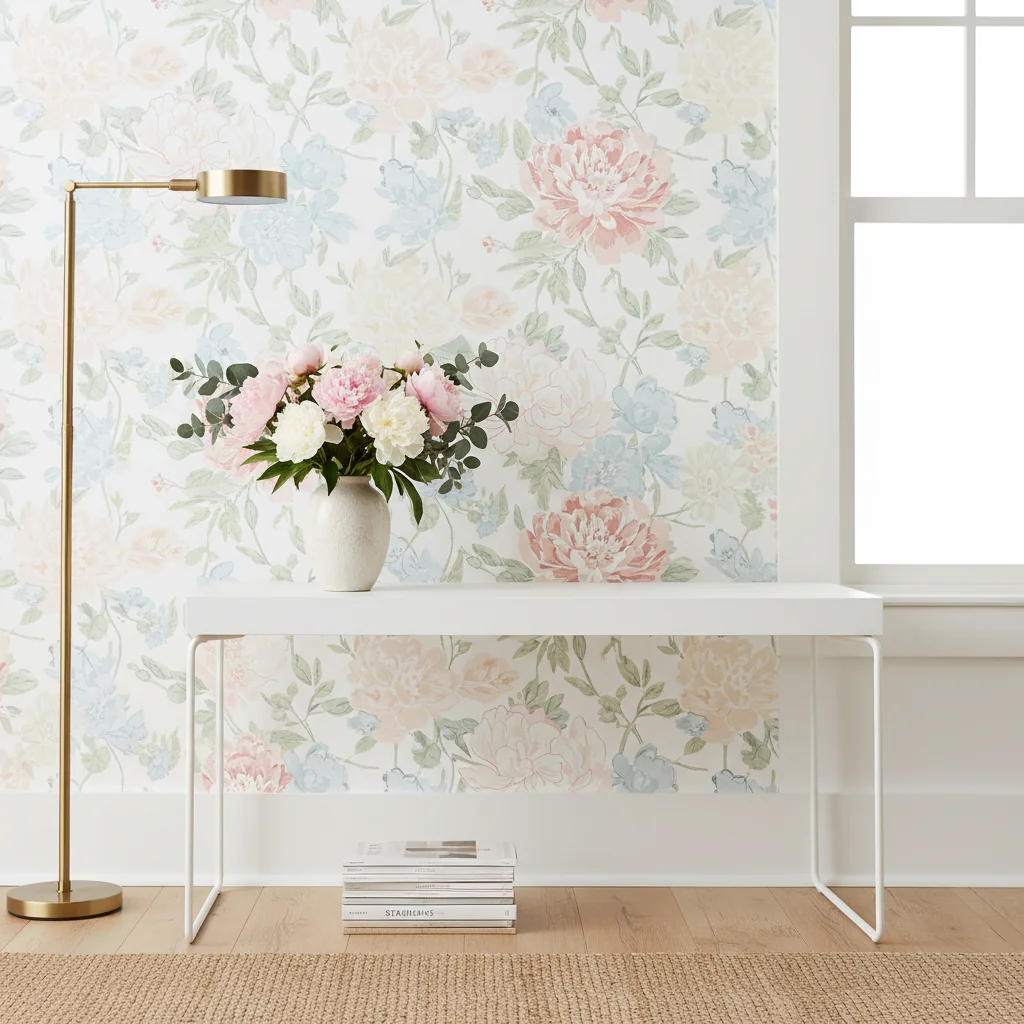
Flowery wallpaper is a classic design choice that imbues spaces with natural beauty, character, and a sense of history, evolving through centuries of interior design to remain perpetually relevant. Its timeless appeal stems from humanity’s innate connection to nature, offering a way to bring the calming and invigorating elements of the outdoors into our personal sanctuaries. From the intricate tapestries of medieval Europe to the botanical illustrations of the Victorian era and the bold graphics of mid-century modernism, floral patterns have consistently adapted, reflecting the prevailing artistic and cultural sensibilities of each period.
The psychological impact of floral patterns on an interior environment is profound. Studies in environmental psychology suggest that exposure to natural elements, even through imagery, can reduce stress, improve mood, and enhance overall well-being. Flowery wallpaper leverages this biophilic principle, creating spaces that feel more inviting, serene, or vibrant depending on the specific pattern and color scheme. A delicate, muted floral can create a tranquil bedroom retreat, while a large-scale, vibrant botanical print can energize a living room or dining area, sparking conversation and serving as a powerful artistic statement.
Moreover, the versatility of flowery wallpaper allows it to serve multiple design functions within a room. It can act as a sophisticated backdrop, providing texture and subtle visual interest without overwhelming the space, or it can become the undisputed focal point, drawing the eye and defining the room’s character. This adaptability makes it a favored tool for interior designers seeking to introduce depth, personality, and a sense of curated elegance. At Starhouse, we understand that the right flowery wallpaper can elevate a room from merely functional to truly transformative, crafting an atmosphere that resonates deeply with its inhabitants.
The resurgence of flowery wallpaper in contemporary design is not merely a nostalgic trend; it is a testament to its inherent ability to transcend fleeting fads. Modern interpretations often blend classic motifs with fresh color palettes, innovative materials, and unexpected scales, ensuring that floral patterns continue to feel current and sophisticated. Whether aiming for a maximalist aesthetic, a minimalist touch with a single accent wall, or a full immersion in a botanical theme, flowery wallpaper offers an unparalleled medium for personal expression and refined style.
Its capacity to evoke different periods and moods means that flowery wallpaper can seamlessly integrate into a wide array of interior design styles. A traditional English rose pattern brings classic charm, while a stylized Art Deco floral introduces geometric sophistication. Tropical botanicals transport inhabitants to exotic locales, and abstract floral forms offer a contemporary edge. This breadth of expression ensures that there is a flowery wallpaper design perfectly suited for every home and every individual’s vision for their space, continuing its legacy as a truly timeless design element.
Decoding the Diversity: Types of Flowery Wallpaper
Flowery wallpaper encompasses a broad spectrum of designs, categorized primarily by pattern style, scale, and artistic interpretation, each offering a distinct aesthetic and mood for a space. Understanding these classifications is crucial for selecting a design that harmonizes with your home’s existing décor and achieves your desired ambiance. The sheer variety ensures that a floral pattern exists for every taste, from understated elegance to bold, dramatic statements.
Botanical & Realistic Florals
Botanical and realistic floral wallpapers feature highly detailed, true-to-life illustrations of plants, flowers, and foliage. These designs often mimic scientific drawings or fine art paintings, emphasizing accuracy in color, form, and texture. They bring a serene, educational, and sophisticated natural element into a room. Ideal for studies, sunrooms, or bedrooms, they create a calm and contemplative atmosphere, often appearing in muted greens, soft blues, and natural earth tones. The precision in these patterns ensures a refined aesthetic.
Abstract & Impressionistic Florals
Abstract and impressionistic floral wallpapers offer artistic interpretations of flowers, where the forms are less literal and more suggestive. These designs prioritize color, brushstrokes, and overall mood over precise botanical accuracy. They can range from soft, watercolor-like blurs to bold, graphic representations that hint at floral shapes. This style is perfect for contemporary or transitional spaces, introducing an artistic flair and a sense of movement. They often feature vibrant or unexpected color combinations, allowing for creative expression and a modern edge.
Chinoiserie & Exotic Florals
Chinoiserie and exotic floral wallpapers are characterized by stylized, often large-scale, Asian-inspired patterns featuring fantastical flora, birds, and sometimes pagodas or figures. Originating from European interpretations of East Asian art, these designs exude luxury, elegance, and a sense of worldly sophistication. They are frequently hand-painted or digitally printed to mimic this artisanal quality, often on silk or metallic backgrounds. Chinoiserie is particularly effective in dining rooms, formal living areas, or grand entryways, creating a dramatic and opulent statement that transports observers to a different realm.
Toile de Jouy with Floral Elements
Toile de Jouy, traditionally a monochrome pattern depicting pastoral scenes, often incorporates significant floral and botanical elements within its intricate narratives. While not exclusively floral, the vines, blossoms, and natural settings are integral to its charm. These wallpapers evoke a classic, romantic, and often rustic European aesthetic. Available in various single-color palettes (blue and white, red and cream, green and white), Toile de Jouy is well-suited for bedrooms, nurseries, or country-style kitchens, adding a touch of nostalgic elegance and storytelling to a space.
Art Nouveau & Art Deco Florals
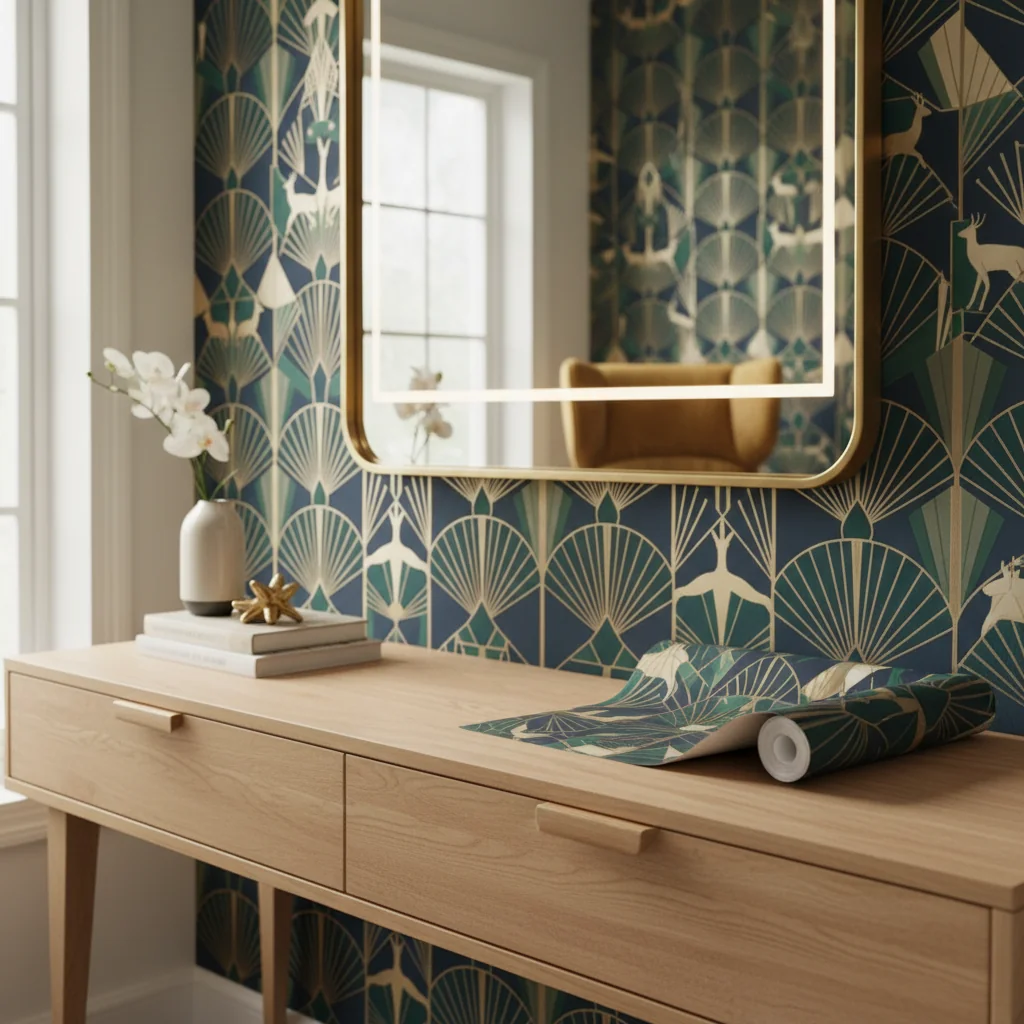
Art Nouveau and Art Deco florals represent distinct historical styles with unique interpretations of botanical forms. Art Nouveau (late 19th to early 20th century) features organic, curvilinear lines, naturalistic motifs, and flowing, often asymmetrical designs inspired by plants, insects, and female forms. These patterns are graceful and ethereal. Art Deco (1920s-1930s), in contrast, embraces geometric symmetry, bold outlines, and stylized, often angular floral motifs. Art Deco florals are luxurious and glamorous, frequently incorporating metallic accents. Both styles bring a strong sense of period authenticity and sophisticated design history to an interior.
Contemporary & Geometric Florals
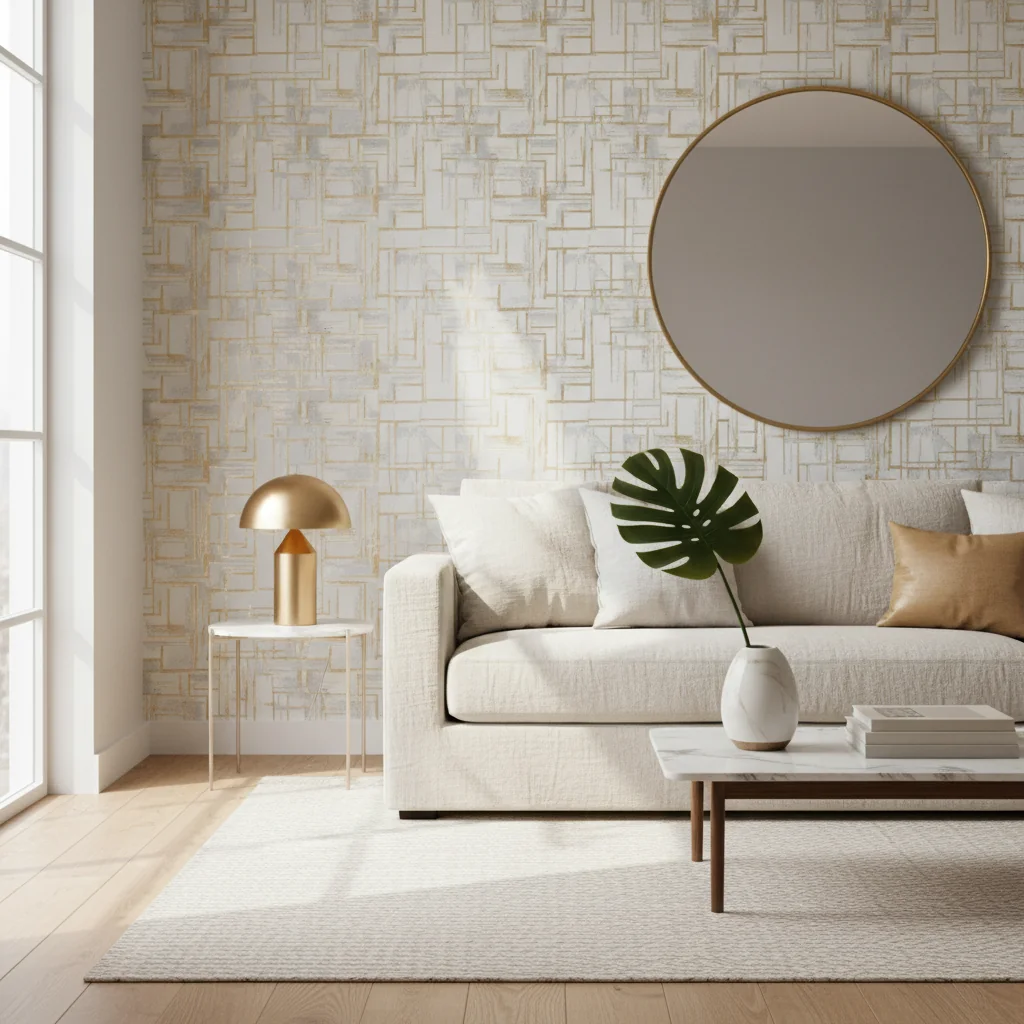
Contemporary and geometric floral wallpapers blend traditional floral motifs with modern design principles. This can involve simplifying floral shapes into geometric forms, repeating patterns in a structured grid, or using bold, graphic interpretations. These designs often feature clean lines, minimalist color palettes, and a fresh, updated feel. They are ideal for modern homes seeking to incorporate nature’s beauty without leaning into traditional aesthetics. Geometric florals can add visual interest and a sophisticated edge, making them suitable for living rooms, hallways, or home offices.
Vintage & Retro Florals
Vintage and retro floral wallpapers draw inspiration from specific past decades, reimagining historical patterns with a modern twist or faithfully reproducing classic designs. This category includes everything from the vibrant, psychedelic florals of the 1960s and 70s to the delicate chintz patterns of the mid-20th century. These wallpapers evoke nostalgia and personality, perfect for creating themed rooms or adding a playful, eclectic touch. They often feature bold color combinations and distinctive graphic styles that immediately transport a space to a different era.
Whimsical & Playful Florals
Whimsical and playful floral wallpapers often feature exaggerated, cartoonish, or imaginative interpretations of flowers and plants. These designs are characterized by bright colors, unconventional shapes, and a lighthearted, cheerful mood. They are particularly popular for children’s rooms, nurseries, or creative spaces where a sense of fun and imagination is desired. These patterns often incorporate other playful elements like animals or fantastical creatures, creating an enchanting and inspiring environment.
Each of these types offers a unique narrative and visual impact, allowing designers and homeowners to precisely tailor the mood and style of any room. Selecting the right type involves considering the overall architectural style of the home, the function of the room, and the desired emotional response, ensuring that the flowery wallpaper truly enhances the living experience.
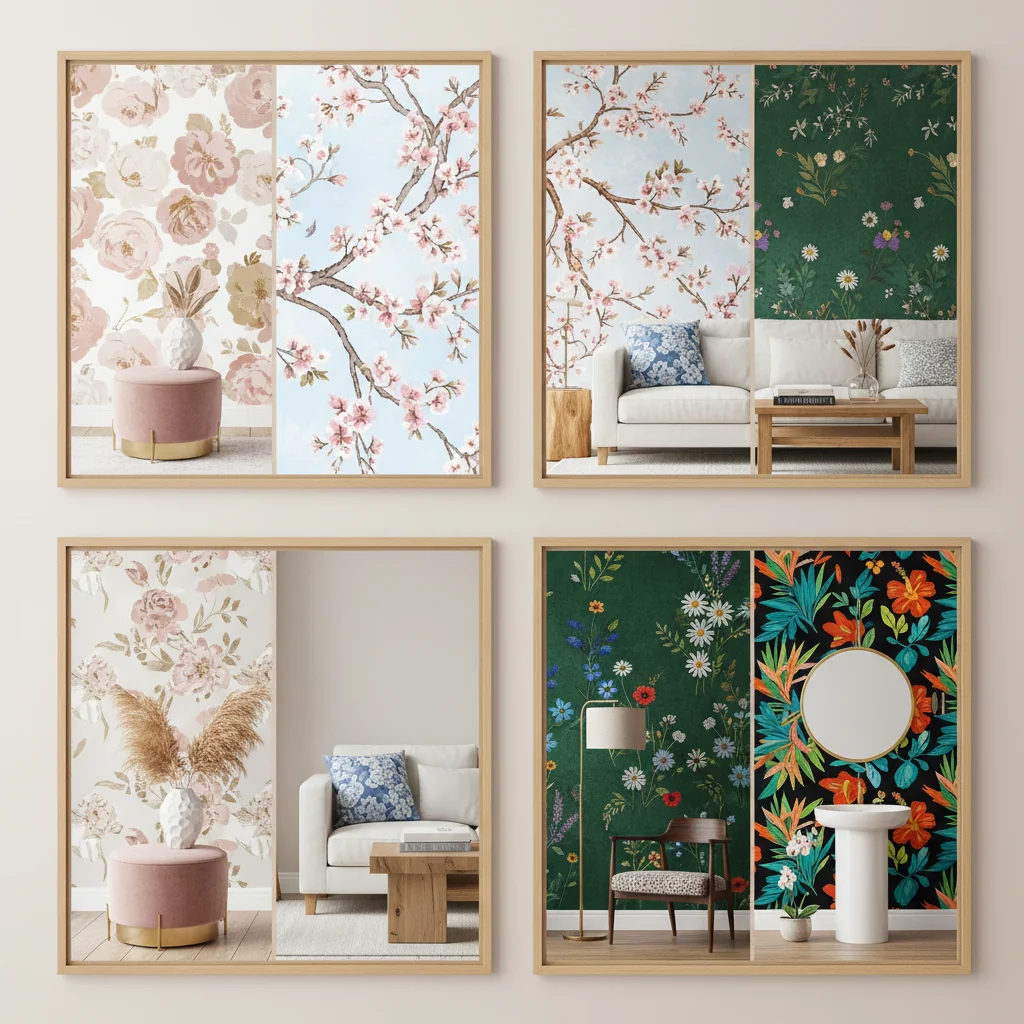
Materials and Construction: Understanding Wallpaper Durability and Finish
The material and construction of flowery wallpaper dictate its durability, texture, ease of installation, and overall finish, significantly impacting its long-term performance and aesthetic. Selecting the appropriate material is as crucial as choosing the pattern itself, as it determines how the wallpaper will withstand daily wear, moisture, and sunlight, as well as the ease of future removal or repositioning.
Non-Woven Wallpaper
Non-woven wallpaper is a highly popular modern choice, constructed from a blend of natural and synthetic fibers, making it breathable, durable, and exceptionally easy to work with. It is known for its “paste-the-wall” application method, where adhesive is applied directly to the wall rather than the wallpaper itself, simplifying installation and reducing mess. Non-woven wallpapers are tear-resistant, dimensionally stable (meaning they don’t expand or contract when wet), and often strippable, allowing for clean removal without damaging the underlying wall surface. This material offers good washability and is an excellent option for most rooms, including bedrooms, living areas, and even well-ventilated bathrooms.
Vinyl Wallpaper (Solid Vinyl, Vinyl Coated, Fabric-Backed Vinyl)
Vinyl wallpapers are renowned for their superior durability, washability, and resistance to moisture, making them ideal for high-traffic areas and environments prone to splashes or humidity. There are several types:
- Solid Vinyl: Features a thick, solid layer of vinyl with a paper or fabric backing. It is extremely durable, scrubbable, and resistant to grease and moisture, making it perfect for kitchens, bathrooms, and commercial spaces.
- Vinyl Coated Paper: A more common and economical option, this consists of a paper base coated with a thin layer of liquid vinyl. It offers enhanced durability and washability compared to pure paper, making it suitable for many residential applications where moderate wear and tear are expected.
- Fabric-Backed Vinyl: The heaviest and most robust vinyl wallpaper, designed for extreme durability in commercial settings or very high-traffic residential areas. Its fabric backing provides immense strength and tear resistance.
Vinyl wallpapers are highly practical for homes with children or pets due to their ease of cleaning and robust nature. They maintain their appearance over time, resisting fading and scuffing effectively.
Paper Wallpaper (Traditional)
Traditional paper wallpaper consists of a printed paper base, often with a protective coating. While it offers a classic aesthetic and can be very affordable, it is generally the least durable and most challenging to install among modern options. Paper wallpaper is prone to tearing when wet, can expand and contract with moisture, and is typically not washable, only gently wipeable. Its delicate nature requires careful handling during installation and meticulous care post-installation. However, it provides a beautiful, matte finish and can showcase intricate patterns with exceptional clarity. It is best suited for low-traffic areas like formal dining rooms or guest bedrooms where moisture and wear are minimal.
Grasscloth & Natural Fiber Wallpaper
Grasscloth and other natural fiber wallpapers are crafted from woven natural materials such as grass, jute, sisal, or bamboo, adhered to a paper backing. These materials introduce significant texture, warmth, and an organic, artisanal feel to a space. They are inherently eco-friendly and add a sophisticated, tactile dimension that synthetic materials cannot replicate. However, natural fiber wallpapers are typically more delicate, difficult to clean (often only vacuumable or dry-wipeable), and can be susceptible to moisture damage. They often exhibit natural variations in color and texture, which is part of their charm. Installation requires expertise due to their fragility and the need for seamless pattern alignment, as pattern repeats are often not present. They are ideal for creating a luxurious, serene atmosphere in living rooms, dining rooms, or master bedrooms.
Peel-and-Stick Wallpaper (Self-Adhesive)
Peel-and-stick wallpaper is a self-adhesive wallcovering that eliminates the need for messy paste, making it a popular choice for renters and DIY enthusiasts. Often made from vinyl or fabric-based materials, it features an adhesive backing protected by a removable liner. This type of wallpaper is designed for easy application and, crucially, easy removal without damaging the wall surface or leaving sticky residue. Its repositionable nature allows for adjustments during installation, forgiving minor errors. While generally less durable than traditional pasted wallpapers, advancements in material science have significantly improved its quality and longevity. It is perfect for temporary décor updates, accent walls, or for those who enjoy frequent style changes.
Wallpaper Murals
Wallpaper murals are large-scale, often custom-printed designs that cover an entire wall or a significant portion of it, creating a singular, expansive image rather than a repeating pattern. Flowery murals can depict lush gardens, sprawling botanical scenes, or abstract floral compositions, transforming a wall into a work of art. These are typically printed on non-woven or vinyl materials, allowing for robust durability and relatively straightforward installation. Murals are excellent for creating a dramatic focal point in living rooms, bedrooms, or commercial spaces, offering an immersive visual experience that traditional repeating patterns cannot achieve. The scale demands careful consideration of room size and existing furniture.
Finishes and Textures
Beyond the material, the finish of flowery wallpaper significantly impacts its appearance and tactile quality:
- Matte: A non-reflective finish that absorbs light, providing a sophisticated, understated look. It hides minor wall imperfections well and offers a soft, elegant aesthetic.
- Satin/Eggshell: A subtle sheen that reflects a small amount of light, adding a touch of elegance and making the surface slightly more durable and easier to clean than matte.
- Gloss/Semi-Gloss: A highly reflective finish that brightens a room and makes colors pop. It is very durable and easy to clean but can highlight wall imperfections.
- Textured: Embossed or raised patterns add a tactile dimension to the wallpaper, creating depth and visual interest. Textures can mimic fabric, plaster, or other natural surfaces, enhancing the overall sensory experience of the floral design.
Understanding these material and finish distinctions empowers you to make an informed decision, ensuring your chosen flowery wallpaper not only looks stunning but also performs optimally for its intended application and lifestyle.
Selecting Your Floral Statement: A Comprehensive Guide to Choosing Flowery Wallpaper
Choosing the right flowery wallpaper involves a careful consideration of your room’s function, existing décor, natural light, and personal style, ensuring the pattern harmonizes with the space and achieves your desired aesthetic impact. This process moves beyond merely liking a pattern; it requires a strategic approach to integrate the wallpaper seamlessly into your home’s narrative.
Assess the Room’s Function and Mood
The primary function of the room is a critical determinant. For a serene bedroom, delicate, muted floral patterns in soft blues, greens, or pastels create a calming sanctuary. In a vibrant living room or dining area, a bolder, larger-scale floral with a dynamic color palette can inject energy and serve as a conversation starter. For a bathroom or kitchen, where moisture and durability are concerns, opt for washable vinyl or non-woven options with patterns that evoke freshness, such as tropical botanicals or crisp, clean floral prints. A child’s room might benefit from whimsical, colorful florals that inspire imagination.
Consider the Scale of the Pattern
The scale of the floral motif profoundly impacts the perceived size and atmosphere of a room. Large-scale patterns with expansive blooms and generous spacing make a dramatic statement and work exceptionally well in larger rooms or on accent walls, creating a focal point without overwhelming the space. In contrast, small-scale, ditsy floral prints or tightly packed patterns are excellent for smaller rooms, adding intricate detail and texture without making the walls feel like they are closing in. A common mistake is to use a large, busy pattern in a small room, which can make the space feel cramped and visually chaotic. Conversely, a tiny pattern in a vast room might get lost, failing to make the desired impact.
Evaluate the Color Palette
The color scheme of your flowery wallpaper should complement or strategically contrast with your existing furnishings, textiles, and overall room palette. Warm floral colors like reds, oranges, and yellows can create an inviting, energetic, and cozy atmosphere, while cool colors such as blues, greens, and purples tend to evoke tranquility and spaciousness. Monochromatic floral patterns (different shades of the same color) offer sophistication and subtlety, allowing texture and form to take precedence. Bold, multi-colored florals can be highly impactful, but require careful pairing with solid-colored furniture and accessories to maintain balance. Always consider how the wallpaper’s colors will interact with the natural and artificial light in the room throughout the day.
Analyze Natural Light and Room Orientation
Natural light significantly influences how wallpaper colors and patterns appear. In dimly lit rooms, or those facing north, lighter floral patterns with reflective finishes (satin or gloss) can help brighten the space and make it feel more expansive. Darker, moodier florals can add depth and drama to well-lit rooms, creating a sophisticated and intimate ambiance. Patterns with metallic accents will shimmer and change appearance as light shifts, adding dynamic interest. Always test samples in your actual room, observing them at different times of day to see how light transforms the pattern and colors.
Harmonize with Existing Furniture and Décor
Your flowery wallpaper should seamlessly integrate with your current furniture and decorative items. If your furniture is traditional, a classic Chinoiserie or a vintage botanical print might be a perfect match. For modern or minimalist interiors, consider abstract florals, large-scale graphic botanicals, or contemporary interpretations with clean lines and limited color palettes. Ensure that the style of the floral pattern complements the existing architectural features and the overall design language of your home. The goal is a cohesive look, not a clash of disparate elements.
Define Your Overall Style and Desired Mood
Before selecting, clarify the overarching style you wish to achieve – traditional, bohemian, modern, transitional, farmhouse, eclectic, or minimalist. Flowery wallpaper is a powerful tool to reinforce this style. Do you want the room to feel relaxing, energizing, sophisticated, playful, or dramatic? A delicate, sparse floral might create a relaxing vibe, while a dense, vibrant tropical print could energize. The choice of pattern, scale, and color should consistently align with this desired mood and style. Samples are indispensable here; they allow you to experience the pattern in your actual space before committing to a full purchase.
Consider the “Pattern Repeat” and Installation
When selecting a pattern, especially for larger walls, understand the “pattern repeat.” A pattern repeat is the vertical distance between one point on a pattern and the identical point directly above or below it, crucial for calculating wallpaper quantities. A larger repeat means more waste during installation to align the design seamlessly across strips, so factor this into your budget and material quantity calculations. Also, consider the installation method: peel-and-stick offers DIY flexibility, while traditional pasted wallpapers or complex patterns might benefit from professional installation, especially for murals or intricate designs.
By systematically addressing these considerations, you can confidently select a flowery wallpaper that not only captivates visually but also enhances the functionality and emotional resonance of your living space.
Precision Planning: Measuring and Sizing for Flawless Installation
Accurate measurement and precise sizing calculations are fundamental for a flawless flowery wallpaper installation, minimizing waste and ensuring a seamless, professional finish. Underestimating the required quantity or miscalculating dimensions can lead to costly delays, visible seams, or a mismatched pattern, compromising the entire aesthetic of your project.
Step-by-Step Measuring Guide
- Measure Wall Height: Measure the height of each wall from the baseboard to the ceiling, or from the top of the baseboard to the bottom of the crown molding. Take measurements at several points across the wall, as walls are rarely perfectly uniform. Use the tallest measurement for your calculations to ensure full coverage.
- Measure Wall Width: Measure the width of each wall horizontally. Again, take measurements at multiple points and use the widest measurement.
- Calculate Total Square Footage: For each wall, multiply its height by its width to get the square footage. Sum these values for all walls you plan to wallpaper to find the total square footage of the area to be covered.
Example: Wall 1: 8 feet (height) x 10 feet (width) = 80 sq ft
Wall 2: 8 feet (height) x 12 feet (width) = 96 sq ft
Total: 176 sq ft
- Account for Doors, Windows, and Architectural Features: While you won’t wallpaper over these, it’s generally recommended to include their square footage in your initial total calculation. This provides a buffer for pattern matching, trimming, and potential mistakes, ensuring you have enough material. Only for very large openings (e.g., a wall that is 50% window) should you subtract the area, and even then, add a significant buffer.
- Understand Roll Dimensions: Wallpaper is typically sold in rolls with specified widths and lengths. Common widths in the U.S. are around 20.5 inches (approx. 1.7 feet), 27 inches (approx. 2.25 feet), or 36 inches (3 feet). Common lengths are 16.5 feet, 33 feet, or 45 feet. Convert all measurements to the same unit (e.g., feet) for consistency.
Example: A roll of 20.5 inches wide x 33 feet long:
Width in feet: 20.5 in / 12 in/ft = 1.708 ft
Area per roll: 1.708 ft x 33 ft = 56.36 sq ft
- Factor in Pattern Repeat: This is arguably the most critical step for flowery wallpaper, especially for designs with a distinct, non-random repeat. A pattern repeat is the vertical distance between one point on a pattern and the identical point directly above or below it, crucial for calculating wallpaper quantities. The pattern repeat measurement (usually in inches) is provided by the manufacturer.
For each “drop” (a single strip of wallpaper cut to the wall height), you must ensure the pattern matches the previous strip. This often means cutting off excess at the top or bottom of a roll to align the pattern, leading to waste. To account for this, add the pattern repeat length to your wall height when calculating how many drops you can get from a single roll.
Example: Wall height 8 ft (96 inches). Pattern repeat 21 inches.
Each drop needs to be at least 96 inches + 21 inches (for matching) = 117 inches. This is a conservative approach to ensure enough material for matching.
- Calculate Number of Drops per Roll: Divide the total length of one roll (in inches) by the adjusted drop length (wall height + pattern repeat, in inches). Round down to the nearest whole number to get the number of usable drops per roll.
Example: Roll length 33 ft = 396 inches. Adjusted drop length 117 inches.
Drops per roll: 396 in / 117 in/drop = 3.38 drops. Round down to 3 usable drops per roll.
- Calculate Total Number of Drops Needed: Divide the total width of the area to be wallpapered by the width of one wallpaper strip (roll width). Round up to the nearest whole number.
Example: Total wall width 22 feet (264 inches). Roll width 20.5 inches.
Drops needed: 264 in / 20.5 in/drop = 12.87 drops. Round up to 13 drops needed.
- Calculate Total Rolls Needed: Divide the total number of drops needed by the number of usable drops per roll. Round up to the nearest whole number.
Example: 13 drops needed / 3 usable drops per roll = 4.33 rolls. Round up to 5 rolls needed.
- Add a Buffer: Always add an extra roll (or 15-20% extra, especially for large projects or complex patterns). This buffer accounts for cutting errors, future repairs, or unexpected pattern alignment challenges. It is far better to have a little extra than to run short, especially since dye lots can vary between batches, making it difficult to match if you need to reorder.
Wallpaper Roll Calculation Guide (Illustrative Example)
| Parameter | Value (Example) | Notes for Calculation |
|---|---|---|
| Total Wall Height (H) | 8 feet (96 inches) | Measure from floor to ceiling, use tallest point. |
| Total Wall Width (W) | 22 feet (264 inches) | Sum of all walls to be covered. |
| Wallpaper Roll Width | 20.5 inches | Standard roll width (check manufacturer). |
| Wallpaper Roll Length | 33 feet (396 inches) | Standard roll length (check manufacturer). |
| Pattern Repeat (R) | 21 inches | Critical for matching; provided by manufacturer. |
| Adjusted Drop Length (H + R) | 96 in + 21 in = 117 inches | This is the length needed for each strip including matching allowance. |
| Usable Drops Per Roll (Roll Length / Adjusted Drop Length) | 396 in / 117 in ≈ 3.38 → 3 drops | Round down to whole number of usable strips. |
| Total Drops Needed (Total Wall Width / Roll Width) | 264 in / 20.5 in ≈ 12.87 → 13 drops | Round up to nearest whole number of strips. |
| Estimated Rolls (Total Drops Needed / Usable Drops Per Roll) | 13 drops / 3 drops/roll ≈ 4.33 → 5 rolls | Round up to nearest whole number of rolls. |
| Recommended Buffer | +1 additional roll | Always add 15-20% or at least one extra roll for safety. |
| Final Rolls to Order | 6 rolls | Ensures sufficient material for matching and potential errors. |
A wallpaper drop is a single strip of wallpaper cut to the height of the wall, allowing for pattern matching and trimming. By meticulously following these steps and understanding the implications of pattern repeat, you ensure a seamless, professional-looking flowery wallpaper installation that enhances your home’s aesthetic for years to come. Do not hesitate to consult a professional installer for complex patterns or large projects, as their expertise can prevent costly mistakes.
Current Trends in Flowery Wallpaper Design (Updated: June 2026)
Contemporary flowery wallpaper trends for June 2026 emphasize large-scale, painterly murals, biophilic designs, and sophisticated color palettes that blend classic motifs with modern sensibilities. The current landscape celebrates both bold expression and a deep connection to the natural world, moving beyond traditional small repeats to embrace more expansive and artistic interpretations of flora.
Maximalist Florals & Grand Murals
The maximalist aesthetic continues its strong presence, with flowery wallpaper at its forefront. This trend leans into dramatic, oversized floral patterns that cover entire walls, transforming them into immersive botanical landscapes. Instead of repetitive motifs, designers are opting for grand-scale murals that depict sprawling gardens, exotic foliage, or abstract floral compositions. These designs are often custom-printed to fit specific wall dimensions, creating a unique and impactful statement that serves as the room’s central artistic feature. The goal is to create a visually rich and engaging environment that feels curated and luxurious.
Dark and Moody Backgrounds
A significant trend is the pairing of vibrant or detailed floral patterns with deep, saturated backgrounds such as charcoal gray, navy blue, emerald green, or even black. These dark backdrops allow the floral elements to pop with intense clarity and richness, creating a sense of drama, sophistication, and intimacy. This approach moves away from light, airy florals, offering a luxurious and often masculine interpretation of botanical design. It is particularly effective in dining rooms, powder rooms, or bedrooms where a cozy and enveloping atmosphere is desired.
Biophilic and Nature-Inspired Designs
The biophilic design movement, which seeks to connect occupants with nature, is profoundly influencing flowery wallpaper. This trend goes beyond just flowers, incorporating detailed illustrations of leaves, vines, branches, and even subtle animal motifs within lush botanical settings. The aim is to bring the restorative qualities of the outdoors inside, fostering a sense of calm and well-being. Patterns often feature naturalistic color palettes, sometimes with subtle textures that mimic organic surfaces. This trend aligns with a broader desire for sustainable living and a deeper appreciation for environmental harmony.
Artistic and Painterly Effects
Flowery wallpaper is increasingly being treated as fine art. Trends include designs that mimic hand-painted watercolors, oil paintings, or expressive brushstrokes, giving the patterns an artisanal, bespoke quality. These painterly florals often have a soft, ethereal quality or a bold, expressive energy, depending on the artistic style. The imperfections and nuances of hand-rendered art are celebrated, adding depth and unique character to the walls. This approach elevates wallpaper from a simple decorative covering to a significant piece of art within the interior.
Abstracted Florals and Geometric Interpretations
For those who prefer a modern aesthetic, abstracted florals are gaining traction. These designs take the essence of flowers and simplify them into stylized shapes, geometric forms, or fragmented compositions. The result is a sophisticated, contemporary look that hints at nature without being overtly literal. These patterns often feature clean lines, bold graphic elements, and a more restricted color palette, making them suitable for minimalist or industrial-chic interiors where a touch of organic softness is desired without compromising modern sensibilities.
Vintage Revival: Chinoiserie and Art Nouveau Reimagined
Classic historical floral styles are experiencing a significant revival, but with contemporary updates. Chinoiserie patterns are being reinterpreted with fresh color combinations or presented as large-scale murals that feel less traditional and more artistic. Similarly, Art Nouveau’s organic, flowing lines and naturalistic motifs are appearing in updated palettes and simplified forms, appealing to a new generation. This trend celebrates the rich heritage of floral design while ensuring its relevance in modern homes, often blending antique charm with contemporary elegance.
Sustainable and Eco-Friendly Materials
As environmental consciousness grows, the demand for sustainable and eco-friendly flowery wallpaper is increasing. Manufacturers are focusing on materials made from recycled content, sustainably sourced fibers, and non-toxic, water-based inks. Breathable non-woven options and peel-and-stick wallpapers made from recycled PET are becoming more prevalent. This trend reflects a commitment to creating beautiful interiors that are also responsible and healthy for both occupants and the planet.
These trends demonstrate that flowery wallpaper in June 2026 is far from a static design element. It is a dynamic and evolving medium, offering endless possibilities for personal expression and sophisticated interior design, allowing homeowners to cultivate spaces that truly reflect their style and connection to the natural world.
Installation Best Practices: Ensuring a Professional Finish
Achieving a professional finish with flowery wallpaper installation requires meticulous surface preparation, precise cutting, proper paste application (for traditional types), and careful pattern matching. These steps are critical to prevent common issues such as bubbling, peeling, or misaligned patterns, ensuring your floral walls look impeccable and last for years.
1. Thorough Surface Preparation
This is the most crucial step for any wallpaper installation. The wall surface must be clean, smooth, dry, and properly primed. Remove any old wallpaper, loose paint, or debris. Fill any holes or cracks with spackle and sand smooth. For optimal adhesion and ease of future removal, apply a high-quality wallpaper primer (often called a “sizing” or “prep coat”). This seals the wall, creates a uniform surface, and allows the wallpaper to slide into place for easier positioning. For dark walls, consider a white or light-colored primer to prevent the underlying color from showing through light wallpaper.
2. Gather the Right Tools
Having the correct tools readily available streamlines the installation process and ensures a better outcome. Essential tools include:
- Measuring tape and a long straightedge
- Sharp utility knife with plenty of fresh blades
- Level or plumb bob for straight vertical lines
- Wallpaper smoother (plastic or felt)
- Seam roller (for traditional wallpaper)
- Wallpaper paste (for traditional types) and a paste brush/roller
- Water bucket and sponges
- Drop cloths to protect floors
- Step stool or ladder
3. Precise Cutting and Layout
Before cutting, unroll your wallpaper and identify the pattern repeat. Measure your wall height and add 4-6 inches for trimming at the top and bottom. Cut your first strip, ensuring the pattern is oriented correctly. For subsequent strips, align the pattern repeat carefully before cutting. It is advisable to number the back of each cut strip in the order it will be hung to maintain continuity. For patterned wallpaper, always cut strips from the same roll or dye lot to avoid subtle color variations.
4. Proper Paste Application (for Traditional Wallpaper)
For pre-pasted wallpaper, activate the adhesive by submerging the strip in water according to manufacturer instructions. For unpasted wallpaper, apply a thin, even layer of wallpaper paste to the back of the strip (booking method) or directly to the wall (paste-the-wall non-woven). Ensure full coverage, especially at the edges. Booking involves folding the pasted strip back on itself, paste-to-paste, allowing it to relax and the adhesive to activate for 5-10 minutes before hanging. This prevents stretching and bubbling.
5. Hanging the First Strip and Leveling
The first strip is the most critical as it sets the vertical alignment for the entire wall. Use a level or plumb bob to draw a perfectly vertical line on your wall, one roll width from a corner or door frame. Align the edge of your first strip precisely with this line, leaving a 2-3 inch overlap at the top for trimming. Smooth the wallpaper onto the wall using a wallpaper smoother, working from the center outwards to push out air bubbles. Overlap the ceiling and baseboard slightly for later trimming.
6. Seamless Pattern Matching
This step is crucial for flowery wallpaper with distinct patterns. As you hang each subsequent strip, carefully align the pattern with the previously hung strip. Slide the new strip into position, matching the design at eye level first, then smoothing it down. For traditional wallpaper, a seam roller can be used gently along the seams to ensure they lay flat, but avoid excessive pressure, especially on delicate materials. With peel-and-stick, carefully reposition until the pattern aligns perfectly.
7. Trimming and Finishing
Once each strip is smoothed, use a sharp utility knife and a straightedge (like a wide putty knife or metal ruler) to trim excess wallpaper at the ceiling, baseboard, and around windows or doors. Always use a fresh, sharp blade for clean cuts. Wipe away any excess paste immediately with a clean, damp sponge, ensuring no residue is left on the wallpaper surface or seams, as dried paste can be difficult to remove and attract dirt.
8. Troubleshooting Common Issues
- Bubbles: Small bubbles often disappear as the wallpaper dries. Larger bubbles can be carefully pricked with a pin and smoothed out.
- Lifting Seams: Apply a small amount of seam adhesive with a fine brush and press down with a seam roller.
- Wrinkles: Gently peel back the section and re-smooth, or use a smoothing tool to work them out.
By adhering to these best practices, you ensure your flowery wallpaper installation is not only visually stunning but also durable and long-lasting, providing a professional and polished aesthetic to your home.
Care and Maintenance: Preserving the Beauty of Your Floral Walls
Proper care and maintenance are crucial for preserving the vibrancy and longevity of flowery wallpaper, typically involving gentle cleaning methods tailored to the material type. Neglecting these practices can lead to premature fading, staining, or damage, diminishing the aesthetic appeal of your carefully chosen design.
General Care for All Wallpaper Types
Regular, gentle dusting is the most fundamental step in wallpaper maintenance. Use a soft, dry cloth, a feather duster, or a soft-bristled brush attachment on your vacuum cleaner to remove accumulated dust and cobwebs. This prevents dirt from embedding into the surface and maintains the fresh appearance of your floral patterns. Avoid harsh rubbing or abrasive tools, which can scratch or dull the finish.
Cleaning Based on Material Type
The cleaning method must always align with the specific material of your wallpaper. Check the manufacturer’s care instructions, as they provide the most accurate guidance for your particular product. Common classifications include:
1. Vinyl and Vinyl-Coated Wallpaper
These are the most durable and easiest to clean. They are typically classified as “scrubbable” or “washable.”
- Method: Use a soft, damp sponge or cloth with a mild, non-abrasive household detergent diluted in warm water. Gently wipe the surface in small sections.
- Rinsing: Follow with a clean, damp sponge or cloth to remove any soap residue.
- Drying: Pat dry with a soft, clean towel to prevent water spots.
- Avoid: Harsh chemical cleaners, abrasive scrubbers, or excessive saturation, which can damage the vinyl coating.
2. Non-Woven Wallpaper
Often labeled “washable” or “wipeable,” non-woven wallpapers are quite resilient but require a gentler touch than vinyl.
- Method: Use a soft, slightly damp cloth or sponge with plain water or a very mild, diluted soap solution. Gently wipe the affected area.
- Drying: Pat dry immediately with a clean, soft cloth.
- Avoid: Scrubbing, harsh detergents, or over-wetting, as this can compromise the paper fibers or affect the ink.
3. Traditional Paper Wallpaper
Paper wallpaper is the most delicate and is usually only “dry-wipeable” or “fragile.” It is highly susceptible to moisture damage.
- Method: Strictly limit cleaning to dry dusting with a soft cloth or a very light touch with a clean, dry sponge.
- Stains: For minor, dry marks, a clean art gum eraser can sometimes be used very gently.
- Avoid: Any liquid cleaners, damp cloths, or aggressive rubbing, which will almost certainly cause damage, discoloration, or tearing.
4. Grasscloth & Natural Fiber Wallpaper
These textured wallpapers are delicate and require specific care to maintain their natural beauty.
- Method: Use a vacuum cleaner with a soft brush attachment to gently remove dust and debris. For very light, dry surface marks, a clean art gum eraser may be used with extreme caution.
- Avoid: Any liquids, damp cloths, or chemical cleaners, as these can cause staining, discoloration, or damage to the natural fibers.
- Special Note: Natural variations and slight imperfections are inherent to these materials and contribute to their unique charm.
Stain Removal Tips
Act quickly when spills or stains occur. For most washable wallpapers, a fresh stain can often be blotted (not rubbed) with a clean, white cloth. For more stubborn stains on vinyl or non-woven types, a small amount of mild, diluted dish soap on a clean cloth can be effective. Always test any cleaning solution on an inconspicuous area first (e.g., behind furniture or a leftover scrap) to ensure it does not cause discoloration or damage.
Avoiding Damage and Preserving Longevity
- Direct Sunlight: Prolonged exposure to direct sunlight can cause wallpaper colors to fade over time. Consider using UV-protective window treatments like blinds, shades, or sheer curtains in rooms with intense sun exposure.
- Humidity: High humidity can cause wallpaper to peel, bubble, or develop mildew. Ensure proper ventilation in bathrooms and kitchens. Use exhaust fans during showers or cooking, and consider a dehumidifier in consistently humid environments.
- Sharp Objects: Be mindful of furniture, artwork, or decorations that might rub against or scratch the wallpaper surface.
By consistently applying these care and maintenance guidelines, your flowery wallpaper will retain its fresh appearance and continue to enhance your home’s aesthetic for many years, proving to be a worthwhile investment in your interior design.
Styling and Pairing: Integrating Flowery Wallpaper into Your Decor
Effectively styling flowery wallpaper involves thoughtful integration with furniture, textiles, lighting, and accessories to create a cohesive and visually appealing interior design scheme. The goal is to ensure the floral pattern complements the existing elements of your room, enhancing its overall aesthetic rather than overwhelming it. This strategic approach transforms a patterned wall into an integral part of a harmonious design narrative.
Harmonizing with Furniture Styles
The style of your furniture should inform your choice of floral wallpaper and vice-versa. For traditional furniture (e.g., classic wood pieces, upholstered sofas with rolled arms), a vintage-inspired floral, a delicate botanical, or a sophisticated Chinoiserie pattern creates a cohesive and elegant look. In contrast, modern, minimalist furniture (clean lines, neutral upholstery) can be dramatically enhanced by a bold, abstract floral or a large-scale graphic botanical, creating an exciting juxtaposition. Bohemian spaces thrive with eclectic, vibrant florals that embrace a mix-and-match aesthetic, while farmhouse styles might opt for softer, more rustic floral prints or subtle Toile de Jouy. Ensure the scale of the furniture aligns with the scale of the pattern; a large sofa can anchor a bold floral, while smaller pieces might be swallowed by an oversized print.
Integrating with Textiles and Fabrics
Textiles—curtains, rugs, throw pillows, upholstery—play a crucial role in tying the room together. When working with flowery wallpaper, it is generally recommended to balance the visual complexity of the walls with simpler textile patterns or solid colors. Pull out one or two colors from the wallpaper’s palette and use them in your textiles for a cohesive feel. For example, if your floral wallpaper features deep blues and hints of gold, introduce solid blue cushions or a rug with subtle gold accents. Alternatively, a small-scale geometric or stripe pattern can complement a large-scale floral without competing, provided the colors are coordinated. Avoid introducing too many competing patterns, as this can lead to a chaotic and visually jarring environment. The key is to create rhythm and balance.
Enhancing with Lighting
Lighting can dramatically alter the perception of flowery wallpaper, highlighting its textures, colors, and patterns. Strategically placed lighting can turn a floral wall into a true focal point. Uplighting or picture lights can accentuate a mural or a particularly intricate pattern, drawing the eye and emphasizing its artistic qualities. Soft, ambient lighting from lamps can create a warm, inviting glow that enhances the depth and richness of darker floral patterns. In rooms with lighter, reflective floral wallpapers, natural light will make the space feel brighter and more expansive. Consider how the light interacts with any metallic elements or textured finishes in your wallpaper, as these will shimmer and change throughout the day, adding dynamic interest.
Accessorizing Thoughtfully
Accessories should complement the flowery wallpaper without competing for attention. Mirrors with elegant frames can reflect the beautiful pattern, making a room feel larger and brighter. Artwork can be hung over wallpaper, but choose pieces that either pick up colors from the floral pattern or offer a strong contrast in a complementary style. For instance, a modern abstract piece can look striking against a traditional floral. Plants and fresh flowers naturally echo the botanical theme, reinforcing the connection to nature. Minimalist accessories allow a bold floral to shine, while more ornate accessories might suit a subtle, traditional floral. The goal is to add layers of interest, not clutter, ensuring that the wallpaper remains a star player in the design.
Mixing Patterns: Rules for Success
Mixing patterns successfully requires adherence to a few key principles:
- Vary Scale: Combine patterns of different scales (e.g., a large floral with a small geometric or stripe). This creates visual interest without competition.
- Coordinate Colors: Ensure all patterns share at least one common color or belong to the same overarching color palette. This creates cohesion despite differing motifs.
- Introduce Solids: Use solid-colored elements (furniture, textiles) to provide visual resting points and break up the pattern intensity, preventing the room from feeling overwhelming.
- Vary Texture: Introduce different textures (e.g., velvet, linen, wood) to add depth and tactile interest, balancing the visual patterns.
Flowery Wallpaper as a Focal Point vs. Backdrop
Decide early whether your flowery wallpaper will be the room’s undisputed focal point or a sophisticated backdrop. A bold, large-scale mural or a vibrant, high-contrast floral is best used as a focal point, perhaps on a single accent wall, behind a bed, or in an entryway. When it’s a focal point, keep other elements in the room relatively subdued to allow the wallpaper to command attention. If the floral pattern is more delicate, small-scale, or monochromatic, it can serve as an elegant backdrop throughout an entire room, providing subtle texture and warmth without dominating. This allows other design elements, such as artwork or distinctive furniture, to take center stage.
Room-by-Room Styling Examples:
- Bedroom: A soft, romantic floral in muted tones creates a serene escape. Pair with linen bedding and natural wood furniture for a calming effect.
- Living Room: A bold, artistic floral mural can define the space. Balance with solid-colored sofas and metallic accents for sophistication.
- Dining Room: A Chinoiserie or vintage-inspired floral adds elegance and a sense of occasion. Complement with classic dining furniture and a striking chandelier.
- Bathroom: Tropical botanicals or fresh, crisp florals can transform a small bathroom into a vibrant oasis. Pair with white fixtures and natural wood elements.
- Nursery/Child’s Room: Whimsical, colorful florals inspire imagination. Use with simple, light-colored furniture and playful accessories.
By applying these styling principles, you can confidently integrate flowery wallpaper into your decor, creating a space that is not only beautiful but also uniquely reflective of your personal style and design aspirations.
Common Mistakes to Avoid When Choosing and Installing Flowery Wallpaper
Avoiding common pitfalls such as incorrect pattern scale, insufficient quantity, or inadequate surface preparation is essential for a successful and aesthetically pleasing flowery wallpaper project. Awareness of these frequent errors can save significant time, money, and frustration, ensuring your floral walls achieve their intended impact.
1. Underestimating Pattern Repeat and Quantity
A frequent and costly mistake is failing to correctly calculate the pattern repeat and ordering an insufficient number of rolls. Flowery wallpapers, especially those with large or intricate designs, require extra material for matching the pattern seamlessly across strips. If you do not factor in the pattern repeat when calculating drops per roll and total rolls needed, you will likely run short, leading to delays and potential issues with dye lot variations if reordering. Always add a 15-20% buffer or at least one extra roll to your final calculation.
2. Ignoring Room Size and Natural Light
Choosing a pattern without considering the dimensions and lighting of the room can lead to a visually unbalanced space. A large, busy floral pattern in a small, dimly lit room can make it feel cramped and overwhelming. Conversely, a tiny, delicate pattern in a vast, open space might get lost and fail to make any impact. Always assess how natural light interacts with the pattern and colors at different times of day. Darker rooms generally benefit from lighter, perhaps reflective, patterns, while well-lit rooms can support bolder, more dramatic designs.
3. Inadequate Surface Preparation
Wallpaper adheres best to a clean, smooth, and properly primed surface. Skipping steps like filling holes, sanding rough patches, or applying a quality wallpaper primer (sizing) is a critical error. Imperfections on the wall will show through the wallpaper, creating bumps, ridges, or an uneven finish. Moreover, an unprimed or improperly prepared wall can lead to poor adhesion, causing bubbles, peeling, or difficulty during future removal. Proper prep work ensures longevity and a professional appearance.
4. Choosing the Wrong Material for the Room’s Function
Different wallpaper materials offer varying levels of durability and washability. Installing delicate paper wallpaper in a high-traffic area like a hallway or a moisture-prone environment like a bathroom is a mistake. These areas demand robust, washable options like vinyl or non-woven wallpapers. Always match the wallpaper’s material properties to the room’s specific functional requirements and anticipated wear and tear to ensure its beauty endures.
5. Overwhelming the Space with Too Much Pattern
While flowery wallpaper is beautiful, using too many bold patterns or covering every wall in a busy floral can overwhelm a room, making it feel chaotic rather than cohesive. Sometimes, an accent wall is sufficient to introduce a dramatic floral statement, allowing other walls to remain neutral, providing visual relief. When mixing patterns, ensure variety in scale and a cohesive color palette. The goal is balance and harmony, not sensory overload.
6. Neglecting to Order Samples
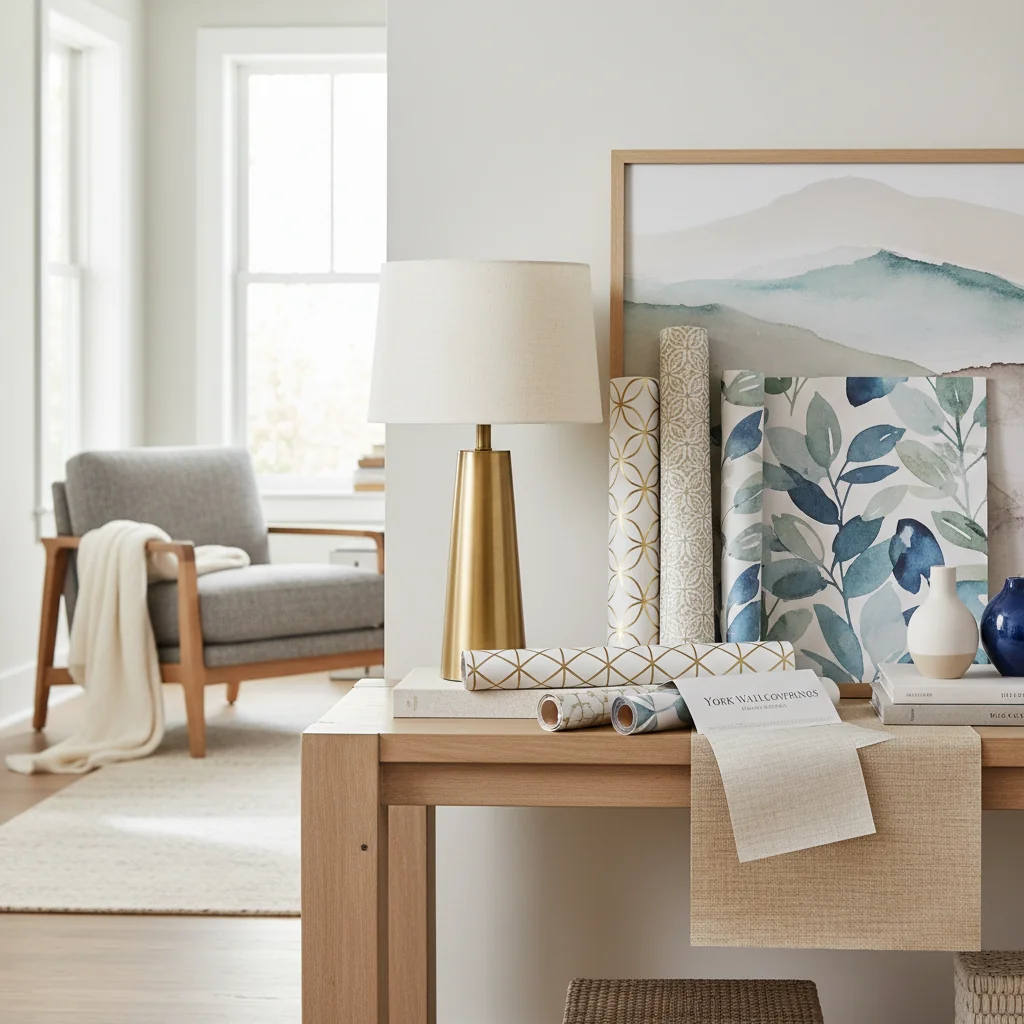
A small image on a screen or a swatch in a catalog can be deceptive. Colors, textures, and the overall feel of a floral pattern can look significantly different in your actual home environment, under your specific lighting conditions. Always order samples and tape them to your wall for several days, observing them at various times of day and night. This crucial step prevents disappointment and ensures the chosen wallpaper truly aligns with your vision.
7. Improper Installation Techniques (for DIY)
Attempting to install complex flowery wallpaper (large repeat, delicate material) without prior experience or adequate research can lead to frustration and a subpar finish. Common DIY errors include crooked strips, visible seams, bubbles, tears, or misaligned patterns. If you are unsure, consider hiring a professional installer. For simpler peel-and-stick options, meticulous measurement and starting with a plumb line are still essential.
8. Inconsistent Lighting Considerations
The way light falls on flowery wallpaper can drastically change its appearance. Forgetting to consider how artificial lighting (lamps, overhead fixtures) will impact the pattern at night is a common oversight. A pattern that looks beautiful in natural daylight might appear dull or too intense under specific artificial light. Plan your lighting scheme to enhance, rather than detract from, your floral walls.
9. Forgetting Future Maintenance and Care
Neglecting to understand the care requirements of your chosen flowery wallpaper can lead to premature damage. If you choose a delicate paper wallpaper but live in a busy household prone to spills, you will likely face challenges. Always consider the long-term maintenance implications of your material choice and commit to the recommended cleaning practices to preserve your investment.
By being mindful of these common mistakes, homeowners can approach their flowery wallpaper projects with greater confidence and achieve stunning, long-lasting results that elevate their interiors.
Sources
Frequently Asked Questions About Flowery Wallpaper
Is flowery wallpaper suitable for small rooms?
Yes, flowery wallpaper can be highly suitable for small rooms, provided the pattern scale and color palette are chosen strategically. Small-scale, delicate floral prints or subtle botanical patterns in light, airy colors can add charm and texture without overwhelming the space. Conversely, a single accent wall with a large-scale, dramatic floral can create a captivating focal point, making the room feel intentional and sophisticated rather than cramped.
Can I use peel-and-stick flowery wallpaper in a bathroom?
Yes, peel-and-stick flowery wallpaper can be used in a bathroom, particularly if it is made from a vinyl or fabric-based material designed for moisture resistance. Ensure the bathroom is well-ventilated to prevent excessive humidity buildup, which can compromise the adhesive over time. Opt for peel-and-stick options specifically labeled as “washable” or “water-resistant” for best performance in humid environments.
How do I match patterns seamlessly with flowery wallpaper?
To match patterns seamlessly, identify the pattern repeat measurement provided by the manufacturer before cutting your strips. When hanging, align the pattern of each new strip precisely with the design on the previously hung strip, working from top to bottom. Cut excess material at the top and bottom, ensuring an exact vertical match. Using a plumb line for the first strip is crucial for maintaining overall vertical alignment.
What’s the difference between a floral wallpaper and a botanical one?
While often used interchangeably, “floral wallpaper” is a broad term referring to any pattern featuring flowers. “Botanical wallpaper” is a more specific subset that typically features highly realistic, scientifically accurate illustrations of plants, leaves, and flowers, often with a focus on their natural forms rather than stylized interpretations. Botanical designs tend to be more detailed and naturalistic, aiming for an educational or archival aesthetic.
How long does flowery wallpaper typically last?
The lifespan of flowery wallpaper varies significantly based on its material, quality, installation, and environmental conditions, but a well-installed, high-quality wallpaper can last anywhere from 10 to 15 years, and sometimes even longer. Vinyl and non-woven options generally offer greater durability and longevity compared to traditional paper wallpapers, especially in high-traffic areas.
Can I paint over flowery wallpaper?
While technically possible to paint over flowery wallpaper, it is generally not recommended for optimal results, as the underlying pattern and texture will often show through the paint. For best results, wallpaper should be removed, and the wall properly prepped before painting. If removal is not feasible, ensure the wallpaper is securely adhered, clean, and prime it thoroughly with an oil-based primer to seal the paper and prevent moisture from loosening the adhesive.
Is flowery wallpaper going out of style?
Flowery wallpaper is a timeless design element that consistently reinvents itself, making it perpetually relevant rather than going out of style. While specific floral patterns or color palettes may trend, the overarching concept of incorporating botanical motifs into interiors remains a fundamental and enduring aspect of design. Current trends, like large-scale murals and biophilic designs, demonstrate its continued evolution and popularity.
Conclusion: Cultivating Your Space with Floral Grandeur
Flowery wallpaper, in its myriad forms, offers an unparalleled opportunity to infuse your home with beauty, character, and a profound connection to the natural world. From the subtle elegance of a delicate botanical print to the dramatic statement of an oversized mural, these designs possess a unique power to transform ordinary walls into captivating canvases. Understanding the diverse types, materials, and meticulous planning required for installation ensures that your chosen floral pattern not only looks stunning but also performs impeccably for years to come.
At Starhouse, we believe that every home deserves a story, and flowery wallpaper is a compelling chapter waiting to be written. It is a testament to enduring style, a celebration of artistry, and a strategic tool for creating spaces that resonate with personal comfort and sophisticated taste. As you consider the transformative potential of floral designs for your own sanctuary, envision the moods you wish to evoke and the narratives you want your walls to tell.
We are meticulously curating a collection that embodies this philosophy, bringing together the finest wall décor, furnishings, textiles, and accessories to help you cultivate your ideal living environment. We invite you to share what you’re looking for in your space and get early access to our forthcoming collection, designed to inspire and elevate every room. Visit StarhouseUSA.online to tell us what you’re looking for.