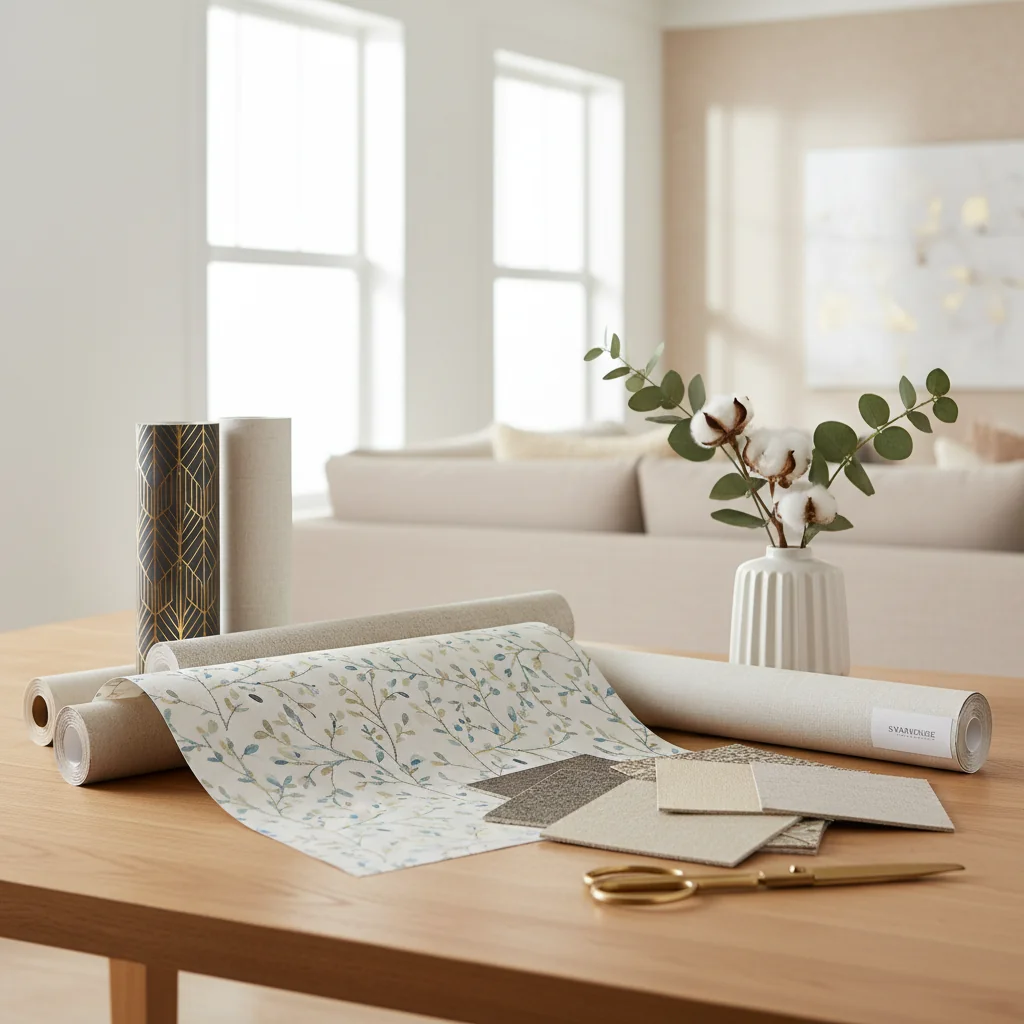
Plaid wallpaper, a versatile and enduring design element, introduces a distinctive graphic quality and a sense of tailored sophistication to any interior, characterized by its iconic pattern of intersecting horizontal and vertical bands of varying widths and colors. This classic motif, historically rooted in textile design, translates seamlessly to wallcoverings, offering a broad spectrum of aesthetic expressions from rustic charm to modern minimalism through its myriad variations like tartan, gingham, and buffalo check. Integrating plaid wallpaper requires careful consideration of pattern scale, color palette, and material to ensure it complements the room’s architecture and existing décor, establishing a focal point or a subtle backdrop that enhances the overall design narrative.
The inherent geometric structure of plaid patterns provides a foundational element for interior design, anchoring a space with visual order and depth. Whether opting for a bold, large-scale tartan in a study or a delicate gingham in a nursery, the choice of plaid wallpaper fundamentally influences the room’s perceived warmth, formality, and character. Modern manufacturing techniques have expanded the availability of plaid wallpaper in diverse materials, including durable vinyl and user-friendly peel-and-stick options, making this sophisticated design accessible for various applications and skill levels. Starhouse curates an extensive collection that honors the heritage of plaid while embracing contemporary design demands, offering solutions that cater to both traditional sensibilities and cutting-edge aesthetic preferences across the United States.
Key takeaways
- Plaid wallpaper provides a distinct graphic quality and tailored sophistication, derived from its intersecting horizontal and vertical band patterns.
- The pattern’s versatility allows for diverse aesthetic applications, ranging from traditional and rustic to modern and eclectic interior styles.
- Key plaid variations include Tartan, Gingham, Buffalo Check, Argyle, Glen Plaid, Tattersall, Madras, and Windowpane, each with unique visual characteristics.
- Selection criteria for plaid wallpaper encompass pattern scale, color palette, material type (e.g., traditional, peel-and-stick, vinyl), and room function.
- Accurate measurement and understanding pattern repeat are critical for seamless installation and achieving a professional finish with plaid wallpaper.
- Styling plaid wallpaper involves balancing its inherent busyness with complementary furnishings, textiles, and lighting to create a cohesive and inviting space.
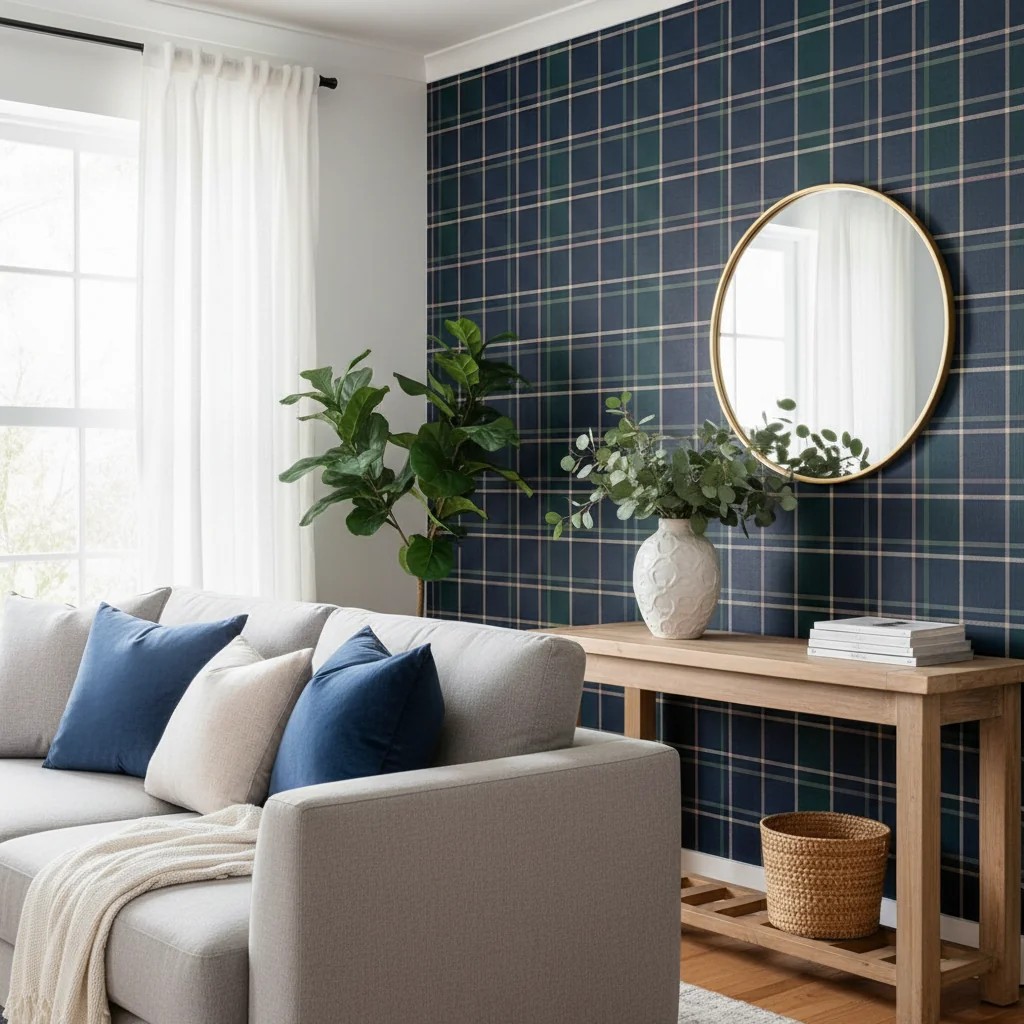
What is Plaid Wallpaper? Decoding a Timeless Pattern
Plaid wallpaper is a wallcovering featuring the distinctive pattern of intersecting horizontal and vertical bands of varying widths and colors, creating a grid-like design. This pattern, originally derived from woven textiles, brings a sense of structure, warmth, and traditional elegance to interior spaces while also adapting to contemporary aesthetics through modern interpretations. The complexity and color composition of plaid patterns can significantly alter the mood and perceived size of a room, making it a powerful decorative tool.
The term “plaid” itself is often used broadly in the United States to describe any pattern of crisscrossing lines, though its origins are deeply rooted in Scottish tartan. Tartan, a specific type of plaid, is historically associated with clans and regions, each having a unique pattern or “sett” registered with the Scottish Register of Tartans. While all tartans are plaids, not all plaids are tartans. Plaid wallpaper captures this rich heritage, offering designers and homeowners a chance to infuse a space with history, character, and a touch of the countryside or urban sophistication, depending on the chosen style and colorway.
Plaid wallpaper functions as a dynamic design element, capable of serving as a bold statement wall or a subtle background texture. Its inherent geometric nature provides visual stability, making it an excellent choice for rooms that benefit from a sense of order. The interplay of colors and line weights within a plaid pattern can create an illusion of depth, adding dimension to flat walls. For instance, a large-scale plaid can make a small room feel grander, while a finely detailed pattern offers intricate visual interest without overwhelming the space.
Modern advancements in wallpaper technology have expanded the possibilities for plaid patterns. Digital printing allows for high-fidelity reproduction of intricate designs and a vast spectrum of colors, while materials like non-woven backings and vinyl surfaces enhance durability and ease of installation. Peel-and-stick options have democratized the use of plaid wallpaper, enabling temporary transformations or DIY projects with minimal commitment. Starhouse offers a curated selection that respects the traditional integrity of plaid while embracing innovative materials and contemporary design needs, ensuring a perfect fit for any home across the U.S.
Understanding the distinction between various plaid types is crucial for effective design. A bold buffalo check, for example, evokes a rustic, cozy cabin feel, whereas a refined Glen Plaid suggests tailored elegance for a home office or formal living area. The ability of plaid wallpaper to evoke such diverse sentiments underscores its enduring appeal and versatility in interior design. Its presence can ground a room, add a layer of texture, or introduce a vibrant pop of color, making it a foundational choice for designers aiming to create spaces with personality and depth.
Exploring Plaid Wallpaper Patterns: From Classic Tartan to Modern Gingham
Plaid wallpaper encompasses a rich variety of patterns, each distinguished by its unique arrangement of intersecting lines, color palettes, and historical context, offering diverse aesthetic impacts suitable for any design vision. These distinct patterns, including Tartan, Gingham, Buffalo Check, Argyle, Glen Plaid, Tattersall, Madras, and Windowpane, provide specific visual characteristics that can define the mood and style of a room. Understanding these variations is crucial for selecting the plaid that best complements a space’s architectural features and desired ambiance.
Tartan
Tartan is a specific type of plaid pattern characterized by a symmetrical arrangement of colored lines and bands, typically associated with Scottish clans and regions. Each tartan has a unique “sett,” or pattern repeat, historically signifying lineage and affiliation. Tartan wallpaper often features rich, deep colors like forest green, navy blue, crimson, and gold, evoking a sense of heritage, tradition, and warmth. It is frequently utilized in libraries, studies, formal dining rooms, or cozy bedrooms to create a sophisticated and classic atmosphere. The intricate detail of tartan can serve as a powerful focal point, lending an air of established elegance and historical depth to an interior.
Gingham
Gingham is a simple, balanced plaid pattern typically formed by intersecting white and colored horizontal and vertical lines of the same width, creating a checkerboard effect where the colors overlap. This pattern is often associated with a fresh, casual, and somewhat rustic or farmhouse aesthetic. Gingham wallpaper commonly appears in lighter, brighter colors such as red and white, blue and white, or yellow and white, making it ideal for kitchens, nurseries, children’s rooms, or informal dining areas. Its straightforward design offers a cheerful and approachable feel, capable of brightening a space without overwhelming it with complexity. The uniform nature of gingham makes it highly versatile for various design schemes.
Buffalo Check
Buffalo Check is a bold, large-scale plaid pattern typically featuring two colors, most commonly red and black, with blocks of solid color intersecting to form larger squares. This pattern is characterized by its significant scale and high contrast, which creates an immediate visual impact. Buffalo check wallpaper is synonymous with a rustic, lodge, or modern farmhouse aesthetic, bringing a sense of coziness, ruggedness, and warmth. It is particularly effective in cabins, dens, game rooms, or accent walls in living rooms, providing a strong, graphic statement that is both inviting and distinctly styled. Its simplicity and dramatic scale make it a favorite for impactful design.
Argyle
Argyle is a distinctive plaid pattern featuring overlapping diamonds or lozenges, often with an overlay of diagonal lines, creating a three-dimensional effect. This pattern is historically linked to the Argyll region in Scotland and gained significant popularity in knitwear, particularly socks and sweaters. Argyle wallpaper typically employs a preppy, sophisticated, and slightly retro aesthetic, often seen in colors like navy, burgundy, cream, and forest green. It is an excellent choice for studies, home offices, or bedrooms where a touch of refined, academic charm is desired. The geometric complexity of argyle adds a dynamic visual texture that can elevate a room’s perceived formality and character.
Glen Plaid (Prince of Wales Check)
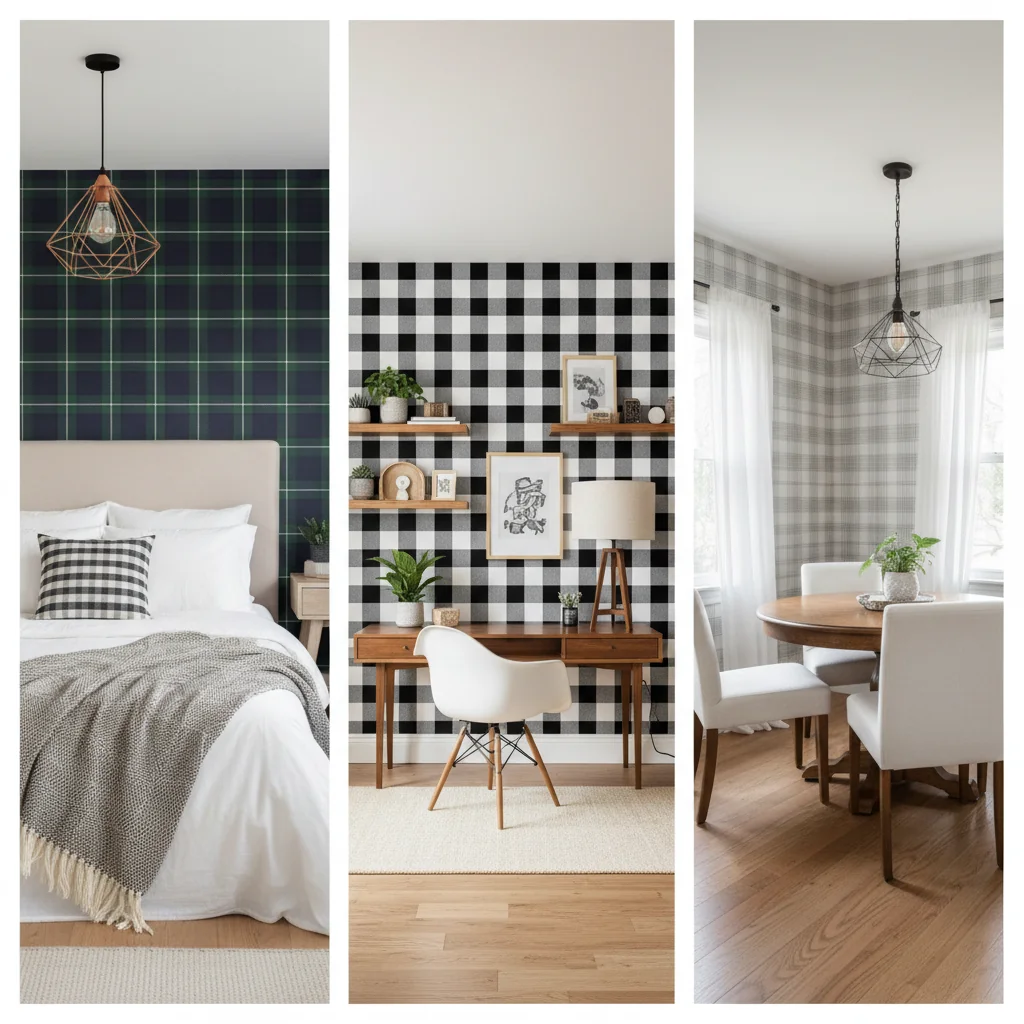
Glen Plaid, also known as Prince of Wales Check, is a complex woven twill pattern composed of small and large checks, typically in muted colors like black, white, and gray, with an occasional subtle colored line. This sophisticated pattern originated in Scotland and is closely associated with tailored menswear, exuding an air of understated elegance and classic refinement. Glen plaid wallpaper is perfect for creating a chic, polished, and somewhat masculine atmosphere in home offices, formal living areas, or bedrooms. Its intricate yet subtle design provides textural depth and a sense of quiet luxury, making it a favorite for those seeking a sophisticated backdrop that does not dominate the space.
Tattersall
Tattersall is a simple, evenly spaced plaid pattern formed by regular, thin, vertical and horizontal lines, usually in two contrasting colors on a lighter background. This pattern is named after Tattersall’s horse market in London, where horse blankets with this design were popular. Tattersall wallpaper offers a clean, crisp, and understated elegance, often seen in preppy or traditional country-style interiors. It is well-suited for bedrooms, bathrooms, or informal living spaces where a subtle pattern is desired to add texture and a touch of classic charm without overwhelming the décor. Its refined simplicity makes it highly versatile.
Madras
Madras is a lightweight cotton fabric pattern originating from Madras (now Chennai), India, characterized by its vibrant, irregularly patterned, and often asymmetrical plaids. Madras wallpaper typically features bright, often clashing colors and a soft, woven texture aesthetic, evoking a relaxed, preppy, and summery feel. It is an excellent choice for sunrooms, casual living areas, or children’s rooms where a playful and colorful atmosphere is desired. The unpredictable nature of Madras plaids adds an element of visual interest and spontaneity, making it a unique option for those seeking a less formal, more vibrant patterned wallcovering.
Windowpane
Windowpane is a minimalist plaid pattern defined by widely spaced, thin, intersecting lines, typically forming large, open squares resembling windowpanes. This pattern is known for its clean, modern, and spacious aesthetic. Windowpane wallpaper often features a single contrasting color for the lines against a solid background, such as black lines on white or navy lines on beige. It is ideal for contemporary, minimalist, or Scandinavian-inspired interiors, providing subtle geometric interest without adding visual clutter. Windowpane plaid can make a room feel larger and more open, offering a sophisticated graphic element that is both understated and impactful.
Materials and Finishes: Selecting the Right Plaid Wallpaper for Durability and Aesthetics
Selecting the appropriate material and finish for plaid wallpaper is as crucial as choosing the pattern itself, as these factors directly influence the wallpaper’s durability, ease of maintenance, installation process, and overall aesthetic impact in a room. The primary material types include traditional paper, non-woven, vinyl, and peel-and-stick, each offering distinct advantages for various applications and environments. The finish, whether matte, satin, or textured, further refines the visual and tactile experience of the wallcovering.
Wallpaper Material Types
Understanding the characteristics of different wallpaper materials is essential for making an informed decision. Starhouse curates options designed for longevity and aesthetic appeal, suitable for diverse home environments across the U.S.
-
Traditional Paper Wallpaper:
Traditional paper wallpaper is typically composed of a paper base, often printed with a design and then coated for protection. It requires paste application to the back of the paper or the wall for installation. While offering a classic look and often a wide range of intricate designs, paper wallpaper can be less durable than other materials, especially in high-traffic areas or moisture-prone environments. It is generally not washable and can be more challenging to remove without damaging the wall. Paper wallpaper provides a soft, natural texture and excellent breathability, making it suitable for bedrooms and living rooms where durability is not the primary concern.
-
Non-Woven Wallpaper:
Non-woven wallpaper is a popular choice due to its durability, breathability, and ease of installation and removal. Made from a blend of natural and synthetic fibers, it is tear-resistant and does not expand or contract when wet, allowing for a “paste the wall” application method which simplifies the process significantly. Non-woven materials are often washable, making them suitable for kitchens, bathrooms, and high-traffic areas. They offer a smooth, matte finish that beautifully renders plaid patterns, providing a sophisticated yet practical wallcovering solution. Its environmental benefits, being often PVC-free and recyclable, add to its appeal.
-
Vinyl Wallpaper:
Vinyl wallpaper is highly durable, water-resistant, and easy to clean, making it an excellent choice for areas exposed to moisture, grease, or heavy use, such as bathrooms, kitchens, and hallways. It consists of a PVC (polyvinyl chloride) layer laminated to a paper or fabric backing. Vinyl wallpaper is exceptionally robust and resistant to fading, scratching, and mildew. While offering superior practicality, some vinyl wallpapers may lack the breathability of paper or non-woven options. It comes in various weights and textures, including embossed patterns that can mimic fabric or other materials, adding a tactile dimension to plaid designs.
-
Fabric-Backed Wallpaper:
Fabric-backed wallpaper, often composed of natural fibers like linen, silk, or grasscloth bonded to a paper or non-woven backing, offers a luxurious and tactile finish. While less common for intricate plaid patterns due to the inherent texture of the fabric, some woven plaids can be found in this category. This material provides exceptional durability and often has sound-absorbing qualities, making it ideal for creating an opulent and quiet atmosphere in formal living rooms, master bedrooms, or dining areas. Installation can be more involved, and cleaning requires specific care, but the aesthetic payoff is significant.
-
Peel-and-Stick Wallpaper:
Peel-and-stick wallpaper, also known as self-adhesive or removable wallpaper, features a printed vinyl or fabric-based material with an adhesive backing that is protected by a liner. It is designed for easy application and, crucially, easy removal without damaging the underlying wall surface, making it perfect for renters, temporary installations, or those who frequently update their décor. Peel-and-stick plaid wallpaper is often washable and durable, offering a convenient way to experiment with bold patterns or add a quick refresh to a room. While generally suitable for most smooth, clean surfaces, its adhesive strength can vary, and it may not adhere well to heavily textured walls.
Wallpaper Finishes
The finish of plaid wallpaper plays a significant role in its visual appearance and how it interacts with light.
-
Matte Finish:
A matte finish absorbs light rather than reflecting it, resulting in a soft, non-glossy appearance. This finish is excellent for hiding minor wall imperfections and creating a sophisticated, understated look. Matte plaid wallpaper often enhances the texture and depth of the pattern, making it feel more authentic and tactile. It is a popular choice for bedrooms, living rooms, and areas where a warm, inviting, and less reflective surface is desired.
-
Satin/Semi-Gloss Finish:
Satin or semi-gloss finishes have a subtle sheen that reflects some light, adding a touch of elegance and making the surface easier to clean. This finish can make colors appear more vibrant and bring a slight luminosity to the plaid pattern. Satin plaid wallpaper is a practical choice for kitchens, bathrooms, and hallways, where durability and ease of maintenance are priorities, while still offering a refined aesthetic.
-
Textured Finish:
Textured finishes add a three-dimensional quality to wallpaper, mimicking the feel of fabric, stucco, or other surfaces. For plaid wallpaper, a textured finish can enhance the woven appearance of the pattern, adding depth and a tactile element. This can be particularly effective for creating a cozy, rustic, or luxurious feel, depending on the specific texture. Textured plaid wallpaper can also help to mask wall imperfections more effectively than smooth finishes.
When selecting plaid wallpaper, consider the room’s function, desired aesthetic, and the level of maintenance required. A vinyl plaid in a bathroom offers practicality and style, while a non-woven matte tartan in a study provides a sophisticated, breathable surface. Starhouse provides comprehensive details on material and finish for each of its curated wallcoverings, ensuring customers can make informed choices tailored to their specific needs.
How to Choose Plaid Wallpaper: Guiding Your Selection for Optimal Impact
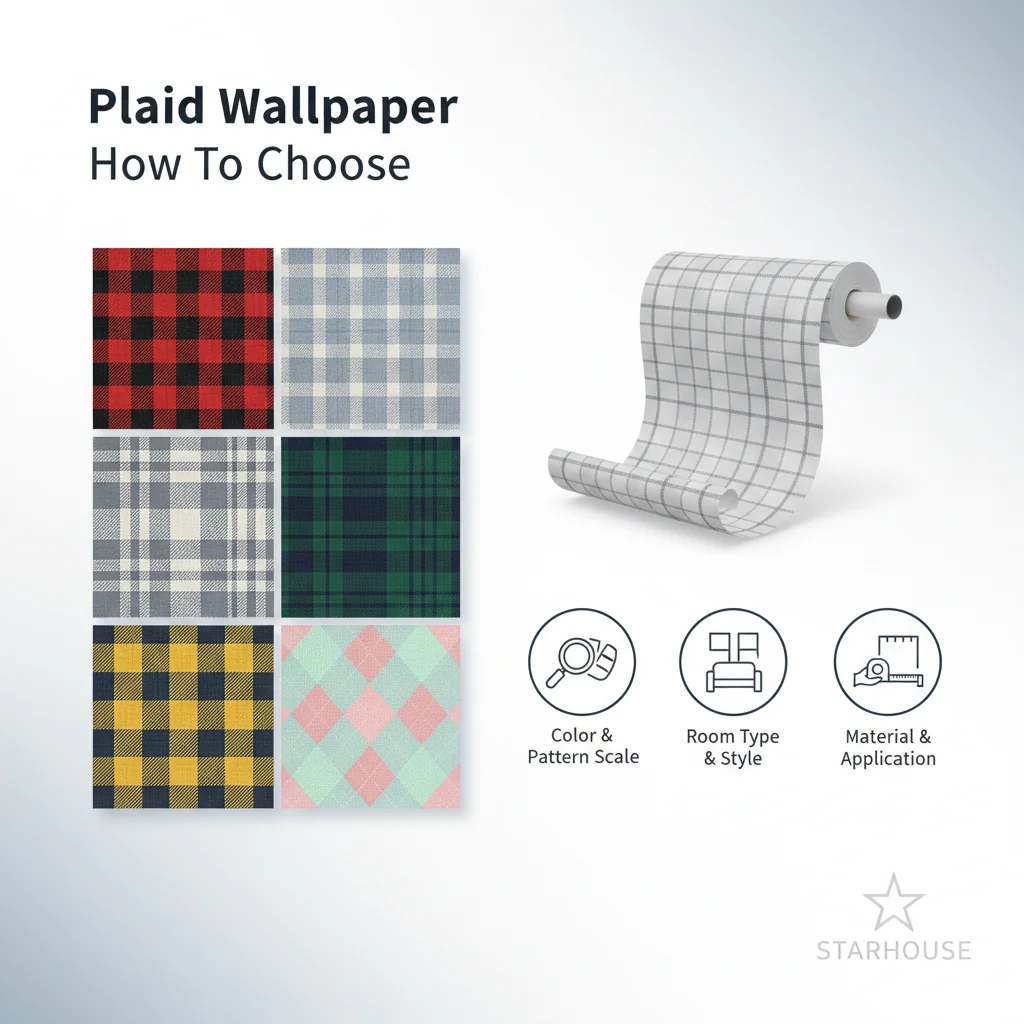
Choosing the right plaid wallpaper involves a strategic consideration of pattern scale, color palette, material, and the specific function and existing décor of the room to ensure a harmonious and impactful design. A well-chosen plaid wallpaper can define the character of a space, from a rustic retreat to a modern, tailored environment, so precision in selection is paramount. This guide provides a framework for making informed decisions, ensuring the plaid enhances your home’s aesthetic.
Consider the Room’s Function and Ambiance
The purpose of the room dictates many design choices, including wallpaper. For high-traffic areas like hallways or children’s rooms, prioritize durable, washable materials like vinyl or non-woven. In a formal living room or study, a sophisticated tartan or Glen Plaid in a traditional material might be more appropriate. For a cozy bedroom, a soft, muted plaid in a matte finish can create a serene atmosphere. A cheerful gingham can brighten a kitchen or nursery, while a bold buffalo check can ground a rustic den.
Evaluate Pattern Scale and Room Size
The scale of the plaid pattern significantly impacts the perceived size and visual energy of a room.
- Large-Scale Plaids: A large-scale plaid, like a bold buffalo check or an expansive windowpane, works best in larger rooms or as an accent wall in smaller spaces. These patterns make a strong statement, adding drama and a sense of grandeur. In a small room, a large pattern on all walls can feel overwhelming, but on one wall, it can create depth and a focal point.
- Small-Scale Plaids: Smaller, more intricate plaids such as gingham, Tattersall, or a fine tartan, are ideal for smaller rooms, bathrooms, or as an all-over pattern where subtlety is preferred. These patterns add texture and detail without visually shrinking the space. They can create a cozy, intimate feel or a crisp, tailored look, depending on the pattern type and color.
- Medium-Scale Plaids: These are versatile and can work in many rooms. A medium-sized tartan or Glen Plaid can offer a balance of visual interest and sophistication without dominating the space.
Always consider the overall dimensions of the room and the height of the ceilings. A vertical plaid pattern can visually elongate walls, while a horizontal emphasis can make a room feel wider.
Harmonize with Your Color Palette
Color is perhaps the most impactful element in selecting plaid wallpaper.
- Existing Colors: Take cues from your existing furniture, textiles, and artwork. Choose a plaid that incorporates or complements at least one or two colors already present in the room. This creates a cohesive and intentional look.
- Desired Mood: Warm colors (reds, oranges, yellows) in a plaid will create a cozy and energetic atmosphere, while cool colors (blues, greens, purples) will evoke calm and serenity. Neutrals (grays, beiges, whites) offer a sophisticated, timeless backdrop.
- Color Saturation: Highly saturated, vibrant plaids make a bold statement and work well in energetic spaces or as accent walls. Muted, desaturated plaids are more subtle and can be used on all walls for a softer, more traditional feel.
- Monochromatic Plaids: Plaids in varying shades of a single color (e.g., different grays or blues) offer a sophisticated, textural effect without introducing too much visual complexity, ideal for modern or minimalist spaces.
Material and Finish Considerations
Refer back to the “Materials and Finishes” section. A matte finish will reduce glare and create a softer look, while a satin finish will add a subtle sheen and enhance cleanability. For humid environments like bathrooms, vinyl or non-woven options are essential for moisture resistance. For DIY enthusiasts or renters, peel-and-stick plaid offers flexibility and ease of application.
Sample Before Committing
Always order samples of your preferred plaid wallpapers. Adhere them to different walls in the room and observe them throughout the day and night under various lighting conditions. This allows you to see how the pattern, colors, and finish truly appear in your space, preventing costly mistakes. The scale of the pattern can look very different on a small sample versus a large wall.
Coordinate with Other Patterns and Textures
Plaid can be successfully mixed with other patterns, but balance is key. Pair a bold plaid with smaller, simpler patterns like stripes or polka dots, or with natural textures like wood, linen, or wool. Avoid combining too many large, competing patterns, which can make a room feel chaotic. The goal is to create visual interest without overwhelming the eye.
Consider Architectural Features
If your room has architectural features like wainscoting, crown molding, or built-in shelving, consider how the plaid wallpaper will interact with these elements. You might choose to wallpaper above the wainscoting, or use a smaller plaid in a niche to highlight it. The pattern should complement, not detract from, the room’s inherent structure.
By systematically evaluating these factors, you can confidently select a plaid wallpaper that not only looks stunning but also functions perfectly within your home. Starhouse is dedicated to providing high-quality options and expert guidance to help you make these choices, ensuring your interior design vision comes to life.
Precision Planning: Sizing and Measuring for Flawless Plaid Wallpaper Installation
Accurate sizing and precise measurement are fundamental steps for achieving a flawless and professional installation of plaid wallpaper, ensuring minimal waste and seamless pattern matching across seams. Unlike plain wallpapers, plaid patterns have a distinct repeat that requires careful alignment, making meticulous measurement even more critical to avoid misaligned lines and distorted designs. This section outlines the essential calculations and considerations for preparing your walls and determining the correct quantity of wallpaper rolls.
Understanding Wallpaper Roll Dimensions
Wallpaper rolls are typically sold in standard sizes, though these can vary. Common dimensions for residential wallpaper rolls in the U.S. include:
- Single Roll: Approximately 20.5 inches to 27 inches wide, and 16.5 feet long (providing about 28 sq ft to 37 sq ft of usable paper).
- Double Roll: Often sold as one continuous roll but priced as two single rolls, approximately 20.5 inches to 27 inches wide, and 33 feet long (providing about 56 sq ft to 74 sq ft of usable paper). Always verify the specific dimensions and square footage yield listed by the manufacturer.
Manufacturers usually list the total square footage a roll covers. However, this is a gross measurement and does not account for pattern repeat or waste.
The Importance of Pattern Repeat
Pattern repeat refers to the vertical distance between one point in a pattern and the identical point directly above or below it, indicating where the design starts over. For plaid wallpaper, this is an exceptionally critical measurement.
- No Match / Random Match: The pattern can be matched regardless of how the strips are aligned. This is rare for plaid but common for textured or solid wallpapers.
- Straight Match: The pattern matches across strips at the same height. This is common for many geometric patterns, including some simple plaids.
- Drop Match: The pattern matches across strips, but the adjacent strip must be dropped or raised by a specific distance (e.g., half the pattern repeat) to align the design. This is common for more complex plaids like tartans or argyle, and requires more paper.
The pattern repeat directly impacts how much wallpaper you need. A larger pattern repeat means more waste per strip, as you need to cut each strip to align perfectly with the previous one. Always add extra to your calculations for this.
Step-by-Step Measuring Guide
Follow these steps to accurately measure your room for plaid wallpaper:
- Measure Wall Heights: Measure the height of each wall from the baseboard to the ceiling. If heights vary, use the tallest measurement for all strips to ensure consistency. Add 4-6 inches to this height for trimming at the top and bottom of each strip. For example, if a wall is 8 feet high, plan for each strip to be 8 feet 6 inches.
- Measure Wall Widths: Measure the total width of each wall. Sum these widths to get the total perimeter of the room.
-
Calculate Number of Strips: Divide the total perimeter width by the width of one roll of wallpaper (e.g., 20.5 inches or 27 inches). Round up to the nearest whole number. This gives you the total number of full-width strips required.
Example: Room perimeter is 40 feet (480 inches). Wallpaper roll is 20.5 inches wide. 480 inches / 20.5 inches/strip = 23.4 strips. Round up to 24 strips.
-
Calculate Total Linear Footage Needed: Multiply the number of strips by the adjusted height per strip (including trim allowance).
Example: 24 strips * 8.5 feet/strip = 204 linear feet.
-
Account for Pattern Repeat: This is where plaid gets tricky. For each strip, you need to ensure the pattern aligns.
-
For Straight Match: Add one full pattern repeat length to the height of each strip. So, if your pattern repeat is 24 inches (2 feet) and your strip height is 8.5 feet, you should consider each strip to effectively consume 10.5 feet of wallpaper from the roll to allow for matching.
Revised Example: 24 strips * (8.5 feet + 2 feet pattern repeat) = 24 strips * 10.5 feet/strip = 252 linear feet.
- For Drop Match: This can be even more complex. A common rule of thumb is to add 1.5 to 2 times the pattern repeat for each strip, or effectively, consider each strip to be one pattern repeat longer than its actual cut length to facilitate alignment. It’s often safer to round up significantly or consult a professional for complex drop matches.
-
For Straight Match: Add one full pattern repeat length to the height of each strip. So, if your pattern repeat is 24 inches (2 feet) and your strip height is 8.5 feet, you should consider each strip to effectively consume 10.5 feet of wallpaper from the roll to allow for matching.
-
Calculate Number of Rolls: Divide the total linear footage needed (including pattern repeat allowance) by the linear footage per roll (e.g., 16.5 feet for a single roll, 33 feet for a double roll). Round up to the next whole number.
Revised Example (using double rolls of 33 feet): 252 linear feet / 33 feet/double roll = 7.63 rolls. Round up to 8 double rolls.
-
Account for Doors, Windows, and Obstacles:
Do NOT subtract the area of doors and windows from your total square footage calculation. While these areas won’t be wallpapered, the surrounding cuts and pattern matching typically consume the same amount of material, if not more, due to the need for careful alignment around openings. It is always better to over-order slightly than to run short.
- Add an Extra Roll: Always purchase one extra roll, especially for plaid wallpaper. This accounts for mistakes during cutting or installation, future repairs, or slight color variations between dye lots if you need to reorder later. Running out of a specific dye lot can be a significant issue for patterned wallpapers.
Essential Tools for Measuring and Installation
Ensure you have the right tools for precision:
- Steel Tape Measure: For accurate wall dimensions.
- Laser Level or Plumb Bob: Crucial for ensuring vertical lines are perfectly straight, especially with linear plaid patterns.
- Sharp Utility Knife with Fresh Blades: For clean, precise cuts.
- Smoothing Tool/Brush: To eliminate air bubbles.
- Seam Roller: To secure seams.
- Wallpaper Paste (if not pre-pasted or peel-and-stick): Specific to your wallpaper type.
Precision in measuring and understanding pattern repeat is the cornerstone of a successful plaid wallpaper installation. By following these guidelines, you can ensure your project looks professionally finished, with every line and square aligning perfectly. Starhouse recommends taking your time with these initial steps to guarantee a stunning final result.
Styling Plaid Wallpaper: Integrating Patterns, Furniture, and Décor for Cohesive Spaces
Styling plaid wallpaper effectively involves harmonizing its inherent graphic strength with complementary furniture, textiles, lighting, and decorative elements to create a cohesive and inviting space. The key lies in balancing the pattern’s visual energy with other design components, preventing the room from feeling overwhelmed while maximizing plaid’s ability to infuse character and depth. This approach ensures the plaid wallpaper acts as a foundational design element rather than a distracting feature.
Defining the Room’s Aesthetic with Plaid
Plaid wallpaper is incredibly versatile, capable of anchoring a wide range of design aesthetics:
- Traditional/Classic: A deep, rich tartan or a subtle Glen Plaid in a study or formal living room pairs beautifully with classic wood furniture, leather upholstery, and antique accents. Think dark wood bookshelves, Chesterfield sofas, and brass lighting fixtures. The plaid enhances a sense of history and gravitas.
- Modern/Contemporary: Opt for large-scale, minimalist plaids like a windowpane or a monochromatic buffalo check. Pair with sleek, clean-lined furniture in neutral tones, metallic accents, and abstract art. The plaid provides geometric interest without sacrificing modern simplicity. Consider a large-scale plaid in a muted gray or charcoal.
- Rustic/Farmhouse: A bold buffalo check or a warm, earthy-toned plaid instantly evokes a cozy, rustic feel. Complement with natural wood furniture (e.g., reclaimed wood tables), distressed finishes, wrought iron, and soft, natural textiles like linen and wool. Add elements like woven baskets, ceramic pottery, and warm lighting.
- Eclectic: Plaid can be a fantastic grounding pattern in an eclectic space. Mix a classic tartan with unexpected elements like mid-century modern furniture, global textiles, and vibrant artwork. The plaid provides a sense of continuity amidst diverse styles, unifying disparate pieces.
- Preppy/Coastal: A crisp gingham or Tattersall in blue and white can establish a preppy or coastal vibe. Pair with white painted furniture, wicker or rattan accents, and light-colored textiles. Nautical-themed décor or vibrant floral patterns can be introduced sparingly.
Balancing Plaid with Furniture
When styling with plaid wallpaper, consider the visual weight and style of your furniture.
- Solid Colors: To prevent visual clutter, select furniture upholstered in solid colors that pick up one of the hues from the plaid. For example, if your tartan wallpaper has navy, green, and red, a navy sofa or green accent chairs will look sophisticated.
- Minimalist Forms: If your plaid is busy, choose furniture with clean lines and simple silhouettes. Overly ornate or bulky furniture can compete with the wallpaper, making the room feel heavy.
- Wood Tones: The type and finish of wood furniture greatly influence the overall aesthetic. Dark, rich woods complement traditional plaids, while lighter woods or painted finishes suit modern or farmhouse styles.
Integrating Textiles and Soft Furnishings
Textiles are crucial for softening the geometric lines of plaid and adding comfort.
- Complementary Patterns: Mix and match patterns carefully. Pair a large-scale plaid on the walls with smaller, less dominant patterns on throw pillows or curtains, such as thin stripes, subtle florals, or small-scale geometrics. Ensure there’s a clear difference in scale between the patterns.
- Solid Textures: Incorporate solid-colored textiles with varying textures. Chunky knit throws, velvet cushions, linen drapes, or wool rugs can add depth and tactile interest without competing visually with the plaid.
- Color Repetition: Use textiles to echo colors found in the plaid wallpaper, creating a cohesive color story throughout the room.
Lighting and Accessories
Lighting and decorative accessories play a vital role in completing the look.
- Layered Lighting: Use a combination of ambient (ceiling fixtures), task (table lamps, floor lamps), and accent lighting (picture lights, wall sconces) to highlight areas and create warmth. The right lighting can emphasize the colors and patterns of the plaid.
- Metallic Accents: Brass, bronze, or polished nickel can add a touch of sophistication and sparkle, especially against richer plaids.
- Mirrors: Strategically placed mirrors can reflect light and the plaid pattern, making a room feel larger and brighter.
- Artwork and Photography: Choose artwork that complements the plaid’s color scheme. If the plaid is very busy, opt for simpler, larger pieces of art or framed photography to avoid a cluttered look. Mats and frames should be neutral or pick up a subtle color from the wallpaper.
- Greenery: Houseplants add life and a natural element, providing a refreshing contrast to the structured lines of plaid.
When styling plaid wallpaper, remember that balance is key. Allow the plaid to be a star, but ensure it has a supporting cast of furniture and décor that enhances, rather than detracts from, its charm. By thoughtfully integrating these elements, you can create a space that is both stylish and uniquely yours. Starhouse is committed to helping you achieve this balance, curating pieces that perfectly complement a plaid aesthetic.
Are you envisioning the perfect plaid wallpaper for your home and seeking complementary furnishings, textiles, or lighting to complete the look? Starhouse is currently curating its collection to bring you the finest in home décor. Tell us what you’re looking for, and get early access to our exclusive offerings at https://starhouseusa.online/.
Plaid Wallpaper Trends: Contemporary Adaptations of a Classic Motif
Plaid wallpaper, while inherently classic, continuously evolves with contemporary design trends, reflecting shifts in color palettes, pattern scales, and material innovations to remain a relevant and sought-after wallcovering. Current trends demonstrate a movement towards both bolder statements and subtle integrations, adapting this timeless motif to modern living spaces with fresh perspectives. These adaptations ensure plaid wallpaper remains a dynamic and stylish choice for discerning homeowners.
Large-Scale and Oversized Plaids
A prominent trend is the use of large-scale and oversized plaid patterns, particularly buffalo check and windowpane designs. These exaggerated scales make a significant visual impact, transforming plaid from a traditional background element into a bold focal point. Large plaids work especially well in minimalist or contemporary settings, providing graphic interest without feeling cluttered. They can make a dramatic statement in an entryway, a living room accent wall, or even an entire room, creating a sense of grandeur and modern sophistication.
Neutral and Monochromatic Color Palettes
While traditional plaids often feature vibrant, contrasting colors, a strong current trend leans towards neutral and monochromatic color schemes. Plaids in shades of gray, beige, cream, white, or soft blues and greens offer a sophisticated, understated elegance. These muted palettes allow the texture and geometric complexity of the plaid to shine without overwhelming the space. Monochromatic plaids are particularly popular in Scandinavian, minimalist, and contemporary farmhouse designs, providing warmth and pattern in a subtle, refined manner.
Textural Plaids and Material Innovation
Advancements in wallpaper manufacturing are leading to plaids with enhanced tactile qualities. Textured vinyl, embossed non-woven, and even fabric-backed wallpapers are introducing a new dimension to plaid patterns, mimicking the feel of actual woven textiles. These textural variations add depth and richness, making the walls feel more substantial and luxurious. This trend is particularly appealing for creating cozy, inviting spaces, where the visual pattern is complemented by a pleasant tactile experience. Peel-and-stick options are also expanding to include more sophisticated textures, offering temporary solutions with high-end finishes.
Plaid as a Complementary Accent
Instead of wallpapering an entire room, many designers are using plaid wallpaper as a strategic accent. This includes covering a single wall, the back of a bookshelf, or inside a recessed niche. This approach allows for the introduction of a bold plaid pattern without dominating the entire space, creating a focal point or a subtle layer of visual interest. It’s an excellent way to experiment with more vibrant or intricate plaids in smaller doses, adding character to specific areas of a room.
Heritage Plaids in Modern Contexts
Classic patterns like Tartan and Glen Plaid are being reinterpreted with modern sensibilities. This often means using them in unexpected ways or with updated color combinations. For instance, a traditional tartan might appear in an unusual colorway like teal and mustard, or a Glen Plaid might be paired with sleek, industrial furniture. This trend celebrates the heritage of plaid while integrating it into contemporary design narratives, creating spaces that feel both timeless and current.
Sustainable and Eco-Friendly Options
As environmental consciousness grows, there’s an increasing demand for sustainable wallpaper options. This includes plaid wallpapers made from recycled materials, PVC-free vinyl, or natural fibers, and those printed with water-based inks. Brands like Starhouse are responding by curating collections that prioritize both aesthetic appeal and environmental responsibility, offering beautiful plaid patterns that align with eco-conscious values.
Dark and Moody Plaids
Following broader trends in interior design, dark and moody plaid wallpapers are gaining popularity. Deep greens, charcoals, navies, and even black plaids create dramatic and intimate spaces. These rich tones are often paired with metallic accents, luxurious textures, and warm lighting to create sophisticated and enveloping environments, perfect for studies, master bedrooms, or formal dining rooms.
The enduring appeal of plaid wallpaper lies in its ability to adapt and reinvent itself while retaining its classic charm. By incorporating these contemporary trends, designers and homeowners can leverage plaid to create spaces that are both current and timeless, reflecting personal style with sophistication. Starhouse remains at the forefront of these trends, offering a curated selection that brings the best of plaid wallpaper to homes across the U.S.
Maintaining Your Plaid Wallpaper: Essential Care for Lasting Beauty
Proper care and maintenance are essential for preserving the beauty and longevity of your plaid wallpaper, ensuring its vibrant patterns and pristine finish endure for years. The specific cleaning and repair methods depend significantly on the wallpaper’s material and finish, underscoring the importance of understanding its composition before undertaking any maintenance tasks. Adhering to manufacturer guidelines for cleaning is always the most authoritative approach.
General Care Guidelines
Regardless of the material, some general practices will help maintain your plaid wallpaper:
- Regular Dusting: Dust your wallpaper regularly with a soft, dry cloth, a feather duster, or a vacuum cleaner with a brush attachment. This prevents dust and cobwebs from accumulating and dulling the pattern.
- Avoid Direct Sunlight: Prolonged exposure to direct sunlight can cause wallpaper colors to fade over time. Use curtains, blinds, or UV-filtering window films in rooms with strong sun exposure to protect your plaid wallpaper.
- Maintain Stable Room Conditions: Extreme fluctuations in temperature and humidity can affect wallpaper adhesion and appearance. Maintain consistent indoor temperatures and moderate humidity levels to prevent peeling or bubbling, especially in rooms like bathrooms and kitchens.
Cleaning Specific Wallpaper Materials
The cleaning method for plaid wallpaper is dictated by its material:
| Material Type | Cleanability | Recommended Cleaning Method | Notes |
|---|---|---|---|
| Traditional Paper Wallpaper | Not washable (or very limited) |
Gently blot with a clean, dry, lint-free cloth or a kneaded eraser for light marks. Avoid liquids. |
Highly susceptible to water damage; test in an inconspicuous area first. Best for low-traffic, dry areas. |
| Non-Woven Wallpaper | Washable / Scrubbable |
Wipe with a damp, soft sponge or cloth using mild soap (e.g., dish soap) and warm water. Rinse with a clean, damp cloth and dry immediately. |
Durable and breathable; excellent for general living areas. Avoid abrasive cleaners. |
| Vinyl Wallpaper | Highly washable / Scrubbable |
Clean with a soft sponge or cloth using a solution of mild detergent and warm water. For tougher stains, a diluted all-purpose cleaner may be used. Rinse thoroughly and dry. |
Most durable and water-resistant; ideal for kitchens, bathrooms, high-traffic zones. Can withstand more vigorous cleaning. |
| Peel-and-Stick Wallpaper | Washable (typically) |
Gently wipe with a damp cloth and mild soap. Avoid excessive moisture or harsh scrubbing, which can damage the adhesive or print. |
Check manufacturer’s instructions, as cleanability can vary. Easy to remove and replace if damaged. |
Addressing Common Issues and Repairs
Even with the best care, minor issues can arise. Here’s how to address them:
-
Loose Seams:
If a seam begins to lift, apply a small amount of wallpaper seam adhesive (available at hardware stores) directly to the underside of the loose edge. Press firmly with a seam roller or a clean, dry cloth until it adheres. Wipe away any excess adhesive immediately with a damp cloth. For plaid patterns, precise alignment is critical, so work carefully.
-
Bubbles:
Small air bubbles can sometimes appear after installation. For paper-backed wallpapers, you can often flatten them by gently pressing outwards with a smoothing tool. For more persistent bubbles, especially on vinyl or non-woven, use a sharp utility knife to make a small slit in the center of the bubble. Release the air, then inject a small amount of wallpaper adhesive into the slit using a syringe. Press the area flat and wipe away excess.
-
Scratches or Tears:
For minor scratches, a matching colored pencil or touch-up paint can help camouflage the damage, especially on solid color areas of the plaid. For small tears, carefully apply wallpaper adhesive to the underside of the torn piece and press it back into place. For larger tears or significant damage, patching may be necessary. Use a leftover piece of the original wallpaper (ideally from the same dye lot) and carefully cut a piece that matches the pattern. Apply paste to the patch and align it perfectly over the damaged area, trimming edges as needed.
-
Stains:
Address stains immediately. For washable wallpapers, follow the cleaning instructions above. For non-washable paper, a dry method like a kneaded eraser might lift some marks. For grease stains, cornstarch or talcum powder can sometimes absorb the oil if applied promptly. Always test any cleaning agent in an inconspicuous area first.
By adopting a proactive approach to cleaning and being prepared for minor repairs, you can ensure your plaid wallpaper remains a beautiful and enduring feature of your home. Starhouse recommends consulting the specific care instructions provided with your wallpaper for the most accurate guidance, ensuring the longevity of your chosen design.
Avoiding Common Pitfalls: Expert Advice for Plaid Wallpaper Application and Design
Successfully incorporating plaid wallpaper into your home design requires careful attention to detail and an awareness of common pitfalls, particularly given the pattern’s distinct geometric nature. Avoiding these mistakes ensures a polished, professional result that enhances your space rather than overwhelming it. This expert advice focuses on critical areas from selection to installation, safeguarding your design vision.
1. Underestimating Pattern Repeat and Measuring Incorrectly
Mistake: Not accounting for the pattern repeat when calculating the number of rolls needed, or measuring wall dimensions inaccurately. This leads to running out of wallpaper mid-project, mismatched patterns, or excessive waste.
Solution: Always add one full pattern repeat length (and often more for complex drop matches) to the height of each strip during your calculations. Measure wall heights and widths meticulously, rounding up to the nearest whole foot or inch for safety. Purchase at least one extra roll to compensate for errors or future repairs. Refer to the “Precision Planning: Sizing and Measuring” section for a detailed guide.
2. Ignoring Scale in Relation to Room Size
Mistake: Choosing a plaid pattern that is too large for a small room or too small for a vast space, leading to a visually overwhelming or underwhelming effect.
Solution: For smaller rooms or areas with many architectural details, opt for smaller, more subtle plaids like gingham or Tattersall. In larger rooms or on accent walls, bold, large-scale plaids such as buffalo check or windowpane can make a dramatic statement. Always consider how the pattern scale will translate from a small sample to an entire wall.
3. Overlooking Color Palette Harmony
Mistake: Selecting plaid wallpaper with colors that clash with existing furniture, flooring, or other décor elements, creating a disjointed and uncomfortable aesthetic.
Solution: Choose a plaid that incorporates or complements at least two existing colors in the room. If the plaid is multicolored, balance it with solid-colored furnishings. Use color theory to your advantage: warm plaids for cozy spaces, cool plaids for serene areas. Always get samples and observe them in your room under different lighting conditions before making a final decision.
4. Neglecting Wall Preparation
Mistake: Applying wallpaper over unprepared surfaces, such as dirty, uneven, or unprimed walls. This results in poor adhesion, visible imperfections, and potential peeling.
Solution: Thoroughly clean walls, ensuring they are free of dust, grease, and debris. Repair any holes or cracks and sand smooth. Apply a high-quality wallpaper primer (often called a “sizing” or “wall-covering primer”) to create a uniform, absorbent surface that promotes adhesion and allows for easier future removal. This step is non-negotiable for a professional finish.
5. Inaccurate Pattern Matching at Seams
Mistake: Failing to precisely align the plaid pattern at the seams between wallpaper strips, resulting in noticeable breaks in the design and a unprofessional appearance.
Solution: Use a plumb line or laser level to ensure your first strip is perfectly vertical, as this sets the standard for all subsequent strips. Carefully align each new strip, matching the pattern repeat exactly before smoothing it down. Take your time, and don’t be afraid to gently peel back and re-adjust if necessary, especially with non-woven or peel-and-stick options.
6. Over-Patterning or Under-Patterning the Room
Mistake: Using too many competing patterns in one room (over-patterning) or, conversely, selecting a plaid that is too subtle to make an impact (under-patterning).
Solution: If using a bold plaid wallpaper, keep other patterns in the room to a minimum, or opt for complementary patterns of a different scale (e.g., a large plaid with a small stripe). If you want the plaid to be a statement, ensure it has enough visual weight. If you prefer subtlety, choose a monochromatic or finely detailed plaid. Balance is key: let the plaid be a star, but give it room to shine without competition.
7. Disregarding the Room’s Natural Light
Mistake: Choosing a dark or heavy plaid for a room with minimal natural light, making the space feel smaller and dimmer.
Solution: In rooms with limited natural light, opt for lighter-colored plaids or those with a higher contrast and brighter hues to help reflect light and open up the space. Darker, moodier plaids are best reserved for rooms with ample natural light or where an intimate, dramatic atmosphere is desired. A satin or semi-gloss finish can also help reflect light.
By being mindful of these common mistakes and applying these expert solutions, you can confidently integrate plaid wallpaper into your home, creating a space that is both stylish and enduring. Starhouse provides quality wallpaper and guidance to support your design journey, ensuring a successful transformation.
Sources
No verified authoritative sources were provided for citation in this article.
Frequently Asked Questions
Is plaid wallpaper suitable for small rooms?
Yes, plaid wallpaper can be suitable for small rooms, but the key is to select a small-scale or subtle pattern to avoid overwhelming the space. Patterns like gingham or Tattersall with lighter colors and thinner lines add texture and interest without visually shrinking the room. For a bolder statement in a small room, consider using a large-scale plaid on a single accent wall to create depth and a focal point.
Can I use plaid wallpaper in a bathroom or kitchen?
Yes, you can use plaid wallpaper in a bathroom or kitchen, but it is crucial to choose a material specifically designed for high-moisture environments. Vinyl wallpaper is highly durable, water-resistant, and easy to clean, making it an excellent choice for these areas. Non-woven wallpapers are also a good option due to their washability and breathability. Always ensure proper ventilation to prevent excessive humidity buildup, which can affect any wallpaper over time.
How do I choose the right color plaid wallpaper?
To choose the right color plaid wallpaper, consider your room’s existing color palette, the amount of natural light, and the desired mood. Select a plaid that incorporates or complements at least one or two colors already present in your furnishings or décor for cohesion. Lighter, brighter plaids are ideal for rooms with less light or to create an airy feel, while darker, richer plaids can add drama and intimacy to well-lit spaces. Always order samples to see how the colors appear in your specific lighting conditions.
Is peel-and-stick plaid wallpaper durable?
Yes, peel-and-stick plaid wallpaper can be quite durable, especially modern vinyl or fabric-based varieties. These options are often washable, resistant to minor scuffs, and designed to last several years when applied correctly to smooth, clean surfaces. Its durability makes it a practical choice for temporary decor updates or for renters, offering both style and resilience without the commitment of traditional wallpaper paste.
How do I match plaid patterns at the seams during installation?
Matching plaid patterns at the seams during installation requires meticulous attention to the pattern repeat and careful alignment of each strip. Begin by ensuring your first strip is perfectly plumb using a level. For subsequent strips, align the pattern exactly with the edge of the previous strip before smoothing it onto the wall. Many plaid wallpapers have a “straight match” or “drop match” where the pattern repeats at specific intervals; understanding this repeat is crucial for seamless alignment. Take your time, and gently adjust as needed to ensure the lines flow continuously across the wall.
Can plaid wallpaper be mixed with other patterns?
Yes, plaid wallpaper can be mixed with other patterns, but successful execution relies on balancing scale and color. Pair a large-scale plaid with smaller, less dominant patterns like thin stripes, subtle florals, or small polka dots. Ensure the patterns share a common color or are in a harmonious color family to create a cohesive look. Introducing solid textures through textiles and furniture can also help break up the patterns and provide visual rest, preventing the room from feeling too busy.
What is the difference between plaid and tartan?
Plaid is a broad term in the U.S. referring to any pattern of intersecting horizontal and vertical bands of varying colors and widths. Tartan is a specific type of plaid pattern, historically associated with Scottish clans, characterized by a symmetrical and precise arrangement of colored lines and bands known as a “sett.” While all tartans are plaids, not all plaids are tartans; patterns like gingham, buffalo check, and windowpane are types of plaid but not specific tartans.
Conclusion: Embracing Plaid for Enduring Style
Plaid wallpaper stands as a testament to enduring style, offering a design solution that is both rich in history and adaptable to contemporary aesthetics. From the timeless elegance of tartan to the rustic charm of buffalo check and the modern simplicity of windowpane, this versatile motif provides a distinctive graphic quality that can dramatically shape the character of any room. Its ability to create visual depth, introduce texture, and define a space’s ambiance makes it a powerful tool in the hands of discerning designers and homeowners alike.
The considerations for selecting and implementing plaid wallpaper are nuanced, encompassing pattern scale, color harmony, material durability, and precise measurement for flawless installation. By understanding the diverse types of plaid, their optimal applications, and the essential maintenance practices, you can confidently integrate this classic pattern into your home, creating interiors that are sophisticated, inviting, and uniquely reflective of your personal style. Whether aiming for a bold statement or a subtle backdrop, plaid wallpaper offers unparalleled potential to elevate your living spaces.
At Starhouse, we are dedicated to curating a collection of wallcoverings and home décor that embodies quality, style, and timeless appeal. We believe your home should be a reflection of your aspirations and taste, and our selection of plaid wallpaper is chosen to inspire and transform. As we prepare to launch our full catalog, we invite you to be part of our journey. Tell us what you’re looking for to craft your perfect space and gain early access to our exclusive offerings. Your vision helps us build a collection that truly resonates with the diverse needs and desires of homes across the United States. Share your inspirations and get exclusive access by visiting https://starhouseusa.online/.