Striped wallpaper, a timeless design element, offers a sophisticated solution for transforming any interior, from traditional to ultra-modern. Its enduring appeal lies in its ability to introduce rhythm, structure, and a distinct visual narrative to a room, effectively altering the perception of space. A well-chosen striped pattern can make a low ceiling appear taller or a narrow room feel wider, demonstrating its inherent design versatility beyond mere aesthetic appeal. This comprehensive guide from Starhouse delves into the nuances of selecting, installing, and styling striped wallpaper, ensuring your design choices are both informed and inspiring. Updated in June 2026, this resource provides authoritative insights into current trends, practical considerations, and expert recommendations for leveraging the power of stripes in your home.
Key takeaways
- Striped wallpaper visually manipulates space, making rooms appear taller, wider, or more expansive, depending on stripe orientation and scale.
- Various stripe types, including vertical, horizontal, pinstripe, and irregular, offer distinct aesthetic and spatial effects suitable for diverse design goals.
- Material choice (e.g., non-woven, vinyl, grasscloth) dictates durability, maintenance, and suitability for specific environments, impacting both longevity and aesthetic.
- Accurate measurement of wall surfaces and precise consideration of pattern repeat are critical for achieving a seamless, professional wallpaper installation.
- Styling striped wallpaper effectively involves balancing pattern, color, and scale with existing furnishings and architectural features to create a cohesive and harmonious design.
- Proper care, tailored to the specific wallpaper material, is essential for preserving its beauty, preventing damage, and ensuring its long-term aesthetic integrity.
Understanding Striped Wallpaper: Types and Patterns
Striped wallpaper encompasses a diverse array of patterns, each designed to evoke a specific mood and manipulate the perception of architectural space within an interior. These patterns range from classic uniform lines to dynamic, multi-directional motifs, offering distinct visual effects that can enhance or define a room’s character. Selecting the appropriate stripe type is fundamental to achieving your desired design outcome, whether you aim to add height, expand width, or simply introduce sophisticated visual interest.
Vertical Stripes: Elevating Perceived Ceiling Height
Vertical stripes are characterized by lines running from floor to ceiling, creating an illusion of height and formality. This pattern draws the eye upwards, making ceilings appear taller and spaces feel more expansive and grand. Vertical stripes are particularly effective in rooms with lower ceiling heights, such as basements or older homes, where they can dramatically alter the room’s perceived proportions.
They also lend themselves well to traditional and formal settings, providing a classic backdrop that complements antique furnishings and structured décor. The consistency of vertical lines introduces a sense of order and calm, making them a favored choice for living rooms, dining rooms, and entryways where an elegant, enduring aesthetic is desired.
Horizontal Stripes: Expanding Perceived Room Width
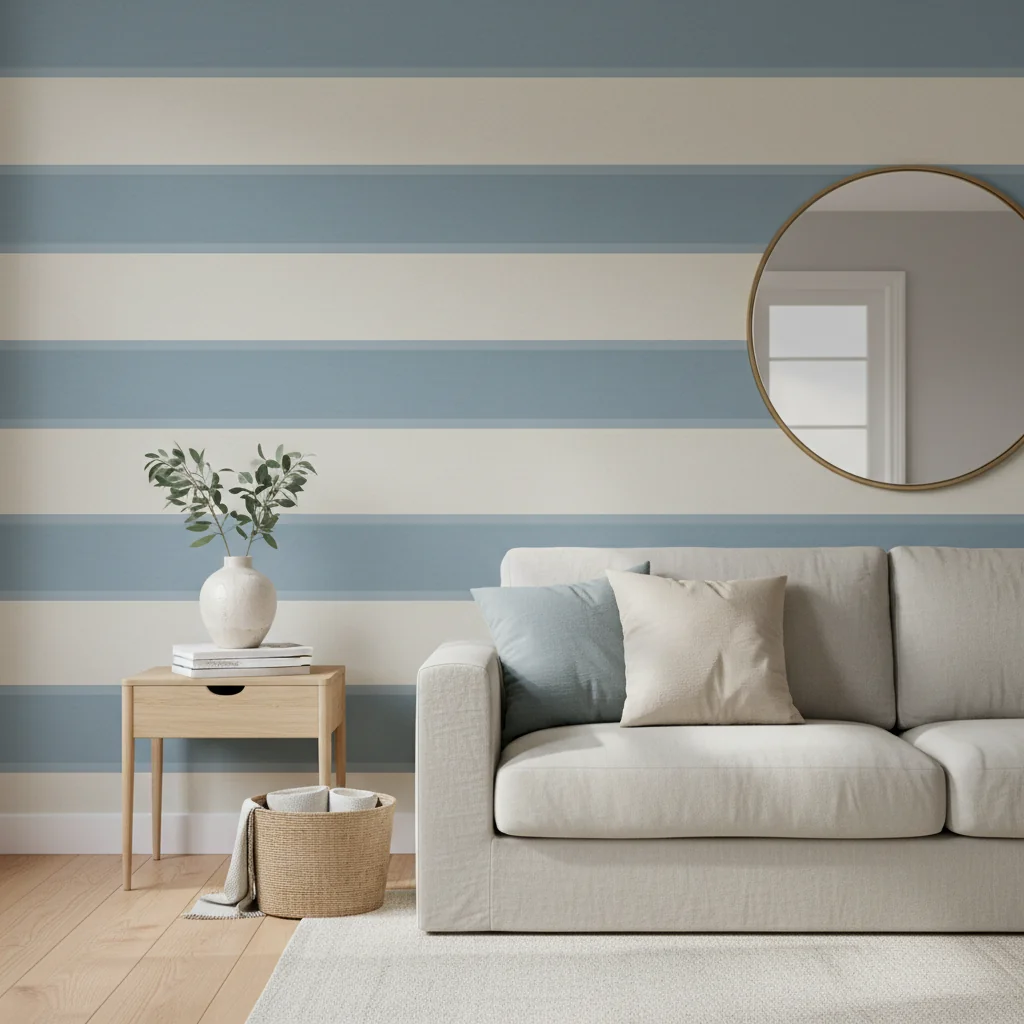
Horizontal stripes run parallel to the floor, visually extending the width of a room and making walls appear longer. This orientation is ideal for narrow spaces, such as hallways, corridors, or small bedrooms, where the goal is to create a more open and less confined atmosphere. Horizontal stripes impart a contemporary and relaxed feel, often associated with coastal or modern design aesthetics.
They can also be used to visually lower a high ceiling, bringing the scale of a room into more comfortable proportion. The effect is less formal than vertical stripes, inviting a more casual and approachable ambiance. When selecting horizontal stripes, consider the scale; wider stripes tend to have a more pronounced widening effect, while narrower ones offer subtle elongation.
Pinstripes: Subtle Elegance and Texture
Pinstripes are extremely fine, closely spaced vertical lines, often in a contrasting but muted color against a solid background. This delicate pattern offers a subtle texture and refined elegance without overwhelming a space. Pinstripes are ideal for those who desire the structure of stripes but prefer a softer, more understated aesthetic. They are particularly effective in bedrooms, home offices, or powder rooms where a quiet sophistication is paramount.
The visual impact of pinstripes is gentle, allowing other design elements, such as artwork or furniture, to take center stage. They can add a tailored, bespoke feel to a room, reminiscent of fine suiting fabric. While typically vertical, pinstripes can also appear horizontally, though this is less common and produces a more textile-like, woven effect.
Candy Stripes: Playful and Vibrant
Candy stripes, also known as awning stripes, feature bold, evenly spaced lines of two or more contrasting colors, often with a significant width. This pattern is inherently playful, vibrant, and energetic, making it an excellent choice for children’s rooms, playrooms, or spaces where a cheerful and lively atmosphere is desired. The high contrast and distinct lines create a strong visual statement.
These stripes are versatile in orientation; vertical candy stripes can create a circus-tent or classic awning feel, while horizontal ones evoke a beach-house or retro diner aesthetic. The boldness of candy stripes requires careful consideration of the overall color palette and existing décor to ensure harmony, preventing the pattern from dominating the space excessively.
Multi-Width Stripes: Dynamic and Modern
Multi-width stripes incorporate lines of varying thicknesses and sometimes varying colors within a single pattern repeat. This dynamic approach to stripes breaks the monotony of uniform lines, creating a more contemporary and artistic feel. Multi-width stripes introduce visual complexity and depth, making them suitable for accent walls or areas where you want to draw significant attention.
They can range from subtle variations in thickness to dramatic contrasts, offering a broad spectrum of design possibilities. The irregular rhythm of multi-width stripes can add a sophisticated, curated look to modern living spaces, studios, or creative offices. When using this style, it is crucial to ensure the varying widths complement the room’s scale and overall design theme.
Irregular or Hand-Painted Stripes: Artistic and Organic
Irregular or hand-painted stripes feature lines that are not perfectly straight, uniform, or evenly spaced, often exhibiting a brushstroke quality or a slight organic wobble. This style introduces a handcrafted, artistic, and less formal aesthetic to a space. It can soften the inherent linearity of stripes, adding a touch of bohemian charm or bespoke artistry.
These stripes are perfect for creating a relaxed, artisanal atmosphere in a farmhouse-style kitchen, a rustic living room, or a creatively inspired bedroom. The slight imperfections in the lines provide character and warmth, making a room feel unique and personal. They work particularly well with natural textures and a less rigid design approach.
Chevron and Herringbone: Angled Dynamics and Texture
While not strictly linear stripes, chevron and herringbone patterns are compelling variations that utilize angled lines to create a striped effect. Chevron stripes form a continuous V-shape pattern, creating a bold, zigzagging dynamic that adds energy and movement to a wall. Herringbone, on the other hand, features a broken zigzag pattern, where rows of parallel lines meet at an angle to form a distinct “V” shape, offering a more textural and woven appearance.
Both chevron and herringbone patterns are excellent for adding architectural interest and a modern, sophisticated edge. Chevron often feels more contemporary and bold, while herringbone carries a classic, tailored elegance. They are ideal for accent walls, entryways, or spaces where a strong graphic statement is desired, introducing both pattern and a sense of direction.
Materials and Durability: What Your Wallpaper is Made Of
The material composition of striped wallpaper fundamentally dictates its durability, ease of installation, maintenance requirements, and suitability for various environments within a home. Understanding these material properties is crucial for selecting a wallcovering that not only meets aesthetic demands but also performs optimally in its intended space. Different materials offer varying levels of resistance to moisture, wear, and fading, directly impacting the longevity and appearance of your chosen design.
Non-Woven Wallpaper: Breathable and Easy to Remove
Non-woven wallpaper is a popular choice due to its durability, breathability, and ease of installation and removal. It is composed of a blend of natural and synthetic fibers, making it resistant to tearing and shrinking. This material allows walls to breathe, which helps prevent mold and mildew growth, especially in moderately humid environments. Non-woven wallpapers are often labeled “paste-the-wall,” meaning adhesive is applied directly to the wall, simplifying the installation process. They are also strippable, allowing for clean removal without damaging the underlying wall surface, making them an excellent option for renters or those who frequently update their décor.
Vinyl Wallpaper: High Durability and Washability
Vinyl wallpaper is renowned for its exceptional durability, washability, and moisture resistance, making it an ideal choice for high-traffic areas and rooms prone to humidity, such as kitchens, bathrooms, and utility rooms. This material typically consists of a paper or fabric backing coated with a layer of vinyl (polyvinyl chloride, PVC). Vinyl wallpapers are highly resistant to stains, grease, and scuffs, and can be easily cleaned with a damp cloth and mild detergent. There are several types:
- Solid Sheet Vinyl: This is the most durable type, with a solid vinyl film laminated to a paper or fabric backing. It is highly resistant to moisture and wear.
- Fabric-Backed Vinyl: Features a woven fabric backing for added strength and dimensional stability, often used in commercial settings but also available for residential.
- Coated Fabric/Paper: A less durable option where a liquid vinyl is applied over paper or fabric. While still more durable than plain paper, it may not withstand heavy scrubbing.
The robust nature of vinyl makes it a practical choice for long-term applications, ensuring your striped design remains pristine for years.
Paper Wallpaper: Classic Aesthetic and Eco-Friendly Options
Traditional paper wallpaper offers a classic aesthetic and a wide range of finishes, from matte to embossed textures. While generally less durable and less resistant to moisture than vinyl or non-woven options, modern paper wallpapers are often treated with protective coatings to enhance their longevity. Paper wallpapers are typically more environmentally friendly, especially those made from recycled content or sustainable forestry practices.
Installation usually involves pre-pasting or applying paste to the paper itself, which can be more challenging for DIY installers due to the paper’s tendency to expand when wet and contract when dry. Removal can also be more complex, often requiring steaming or soaking. Despite these considerations, paper wallpaper remains a popular choice for bedrooms, living rooms, and low-traffic areas where its delicate charm and intricate designs can be appreciated.
Grasscloth Wallpaper: Natural Texture and Organic Appeal
Grasscloth wallpaper is a natural wallcovering made from woven fibers such as sisal, jute, hemp, or seagrass, typically backed with rice paper. This material introduces unique texture, depth, and an organic, earthy feel to a room, making it a luxurious option for adding natural sophistication. Each roll of grasscloth is unique, with slight variations in color and weave, contributing to its artisanal appeal.
Grasscloth is not washable and can be susceptible to moisture and humidity, making it unsuitable for bathrooms or kitchens. It requires careful handling during installation, as it is prone to fraying and can show seams more prominently than other materials. However, its unparalleled texture and natural beauty create a warm, inviting atmosphere, ideal for living rooms, dining rooms, and studies where a touch of refined naturalism is desired.
Peel-and-Stick Wallpaper: Convenience and Flexibility
Peel-and-stick wallpaper, also known as removable or self-adhesive wallpaper, is a modern innovation designed for ease of installation and temporary application. It features an adhesive backing protected by a removable liner, allowing users to simply peel off the backing and stick the wallpaper directly to the wall. This material is typically made from vinyl or a polyester fabric blend, offering varying degrees of durability and washability.
Its primary advantage is its removability; it can be peeled off without damaging the wall surface or leaving residue, making it perfect for renters, accent walls, or those who enjoy frequently changing their décor. While generally less durable than traditional paste-applied wallpapers for very long-term use, peel-and-stick options are increasingly sophisticated, offering a wide array of designs and textures, including many striped patterns, that combine convenience with style.
| Material Type | Key Characteristics | Durability | Maintenance | Ideal Application | Installation Notes |
|---|---|---|---|---|---|
| Non-Woven | Breathable, tear-resistant, dimensionally stable. | High; resistant to shrinking/tearing. | Wipeable, generally easy to clean. | Living rooms, bedrooms, hallways (moderate traffic). | Paste-the-wall, strippable removal. |
| Vinyl (Solid Sheet) | Highly durable, moisture-resistant, robust. | Very High; excellent for high-traffic/humidity. | Fully washable with soap and water. | Kitchens, bathrooms, playrooms, commercial spaces. | Paste-the-paper or pre-pasted options. |
| Paper | Traditional aesthetic, wide range of finishes, eco-friendly options. | Moderate; can be delicate, less moisture-resistant. | Gently wipeable (if coated), not washable. | Bedrooms, living rooms, dining rooms (low traffic). | Paste-the-paper, can be challenging to remove. |
| Grasscloth | Natural fibers, unique texture, organic appeal. | Moderate; delicate, susceptible to moisture/humidity. | Spot clean only, not washable. | Living rooms, dining rooms, studies (dry areas). | Paste-the-paper, professional installation often recommended. |
| Peel-and-Stick | Self-adhesive, fully removable, repositionable. | Moderate to High; depends on base material, good for temporary. | Wipeable or washable (depending on vinyl/fabric type). | Accent walls, renters, temporary décor, DIY projects. | Peel-and-stick, easy DIY installation and removal. |
Selecting the Right Striped Wallpaper for Your Space
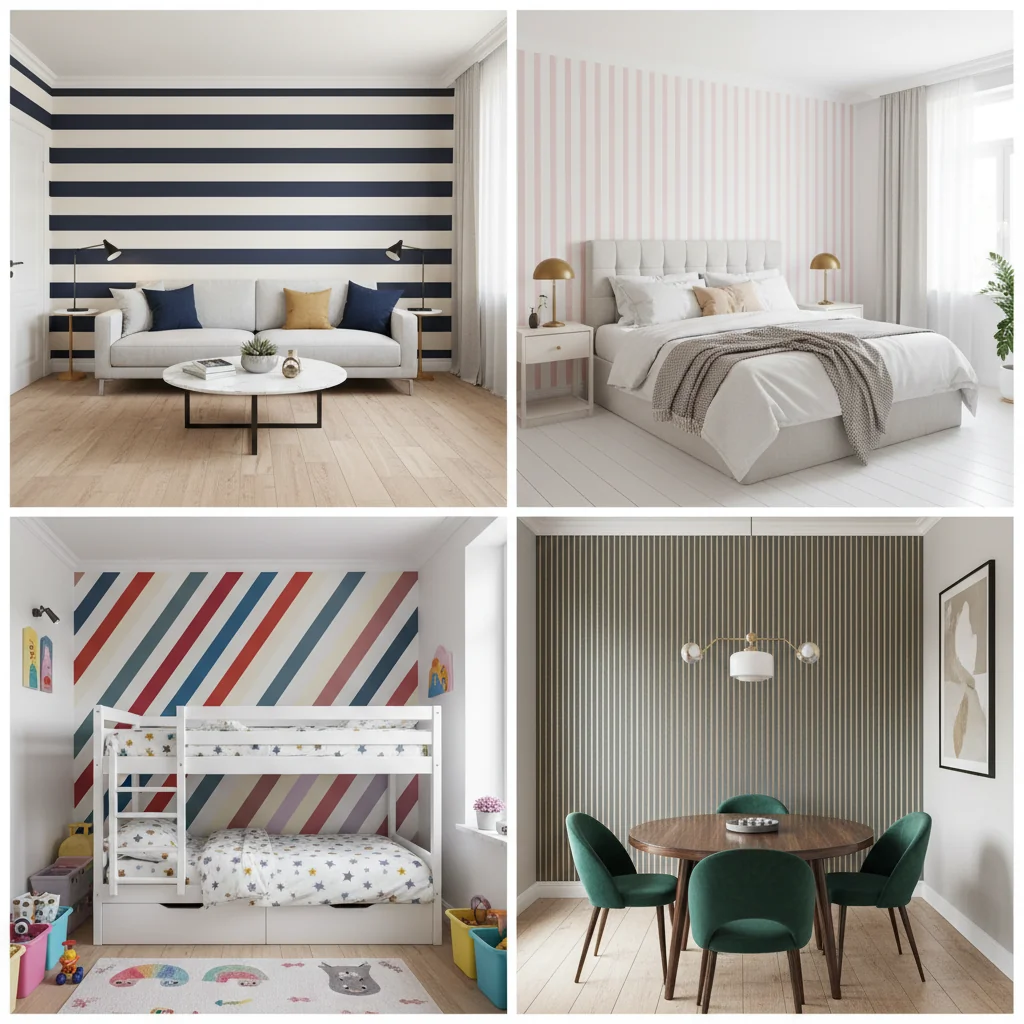
Selecting the right striped wallpaper for your space involves a meticulous consideration of several design elements, including the room’s size, its existing color palette, the amount of natural light it receives, and the overall aesthetic you wish to achieve. A well-chosen striped pattern can harmonize with your existing decor, enhance architectural features, and fundamentally alter the perception of a room’s dimensions. Conversely, an ill-suited choice can overwhelm the space or clash with its intended mood.
Consider Room Size and Ceiling Height
The dimensions of your room are paramount when choosing striped wallpaper. For smaller rooms or those with low ceilings, vertical stripes are an excellent choice as they draw the eye upward, creating an illusion of greater height and an expanded sense of space. Conversely, in long, narrow rooms, horizontal stripes can effectively widen the perceived space, making the room feel less like a corridor and more balanced. In very large rooms, bolder, wider stripes or multi-width patterns can be used to make a statement without overwhelming the area, providing visual interest and scale.
Analyze Existing Color Palette and Lighting
The current color palette of your room refers to the dominant colors present in your furniture, textiles, and existing wall finishes. Your striped wallpaper should complement or subtly contrast with these colors to create a cohesive design. For instance, if your room features warm neutrals, consider striped patterns with similar undertones or a complementary cool accent color. The amount of natural light a room receives also influences color perception; lighter stripes can brighten a dimly lit room, while darker, richer stripes can add depth and coziness to a naturally bright space.
Consider the color temperature of your artificial lighting as well; warm lights can enhance reds and yellows, while cool lights can bring out blues and greens. Test swatches of wallpaper in various lighting conditions throughout the day to ensure the colors appear as desired.
Scale of Stripes: Impact on Visual Effect
The scale of the stripes—meaning their width and the spacing between them—profoundly affects the visual impact on a room. Narrow, delicate stripes (like pinstripes) offer a subtle, textural effect, adding sophistication without dominating the space. They are ideal for smaller rooms or for a more understated backdrop. Wider, bolder stripes create a more dramatic statement and are better suited for larger rooms or as an accent wall where you want to draw attention.
A stripe that is too wide in a small room can feel overwhelming, while a stripe that is too narrow in a large room might get lost. Finding the right balance ensures the pattern enhances, rather than detracts from, the room’s overall design. Multi-width stripes offer a dynamic compromise, providing visual interest through varied scale.
Harmonizing with Existing Décor and Architectural Features
Your striped wallpaper should integrate seamlessly with your existing furniture style, art, and architectural details. For a traditional aesthetic, classic vertical stripes in muted tones or elegant pinstripes often work best. Modern spaces might benefit from bold, graphic stripes, multi-width patterns, or even abstract, irregular stripes. Consider how the stripes will interact with window frames, door casings, and built-in shelving.
Stripes can highlight these features or provide a contrasting backdrop that makes them stand out. For example, a vertical stripe can emphasize tall windows, while a horizontal stripe can draw attention to a long mantelpiece. The goal is to create a unified and balanced environment where every element contributes to the overall design narrative.
Sizing and Measuring: Achieving a Seamless Installation
Accurate sizing and meticulous measurement are critical prerequisites for a successful and seamless striped wallpaper installation, ensuring you purchase the correct quantity of material and minimize waste. Proper measurement accounts not only for the wall dimensions but also for crucial factors like pattern repeat, doors, windows, and potential irregularities, which collectively prevent frustrating shortages or unsightly misalignments. A precise approach to this stage guarantees a professional finish and optimizes your investment in high-quality wallcoverings.
Measuring Your Walls: A Step-by-Step Guide
To accurately determine the amount of wallpaper needed, follow these steps:
- Measure Wall Height: Measure the height of each wall from the baseboard to the ceiling. If there are variations, use the tallest measurement for consistency.
- Measure Wall Width: Measure the width of each wall.
- Calculate Total Square Footage: For each wall, multiply the height by the width (Height × Width = Square Footage). Sum these totals for all walls to get the total area to be covered.
- Account for Openings: Measure the square footage of any doors, windows, or large architectural openings. Subtract these areas from your total square footage. While some installers prefer to wallpaper over these areas and trim later, for cost efficiency, it’s generally better to subtract them.
- Add for Waste and Pattern Repeat: This is crucial for striped wallpaper. You must add extra for trimming, mistakes, and especially for matching the pattern repeat.
Pattern repeat is the vertical distance between one point in the pattern and the identical point directly above or below it. This measurement is vital for ensuring the stripes align perfectly across seams, creating a continuous design. Most wallpaper rolls specify their pattern repeat.
Calculating Rolls Needed: The Formula
Wallpaper is sold in rolls, and each roll has a specific width and length. Standard rolls in the U.S. typically measure 20.5 inches or 27 inches wide, and 33 feet long (approximately 56 square feet or 74.25 square feet, respectively). However, these are gross measurements, and the usable area is reduced by pattern repeat.
Here’s a simplified method for estimating rolls:
- Determine Usable Strips per Roll: Divide the total length of one roll (e.g., 33 feet or 396 inches) by your wall height (e.g., 8 feet or 96 inches) PLUS the pattern repeat length (e.g., 20 inches).
Example: 396 inches / (96 inches wall height + 20 inches pattern repeat) = 396 / 116 = approximately 3.41. Round down to the nearest whole number: 3 usable strips per roll. - Calculate Total Strips Needed: Divide the total perimeter of your room (excluding openings) by the width of one wallpaper strip (e.g., 20.5 inches).
Example: A room with a perimeter of 40 feet (480 inches) / 20.5 inches per strip = approximately 23.4 strips. Round up to 24 strips. - Calculate Total Rolls: Divide the total strips needed by the usable strips per roll.
Example: 24 strips / 3 usable strips per roll = 8 rolls. - Add a Buffer: Always add at least one extra roll, or 10-15% extra, to account for trimming, mistakes, or future repairs. It is far better to have a little too much than not enough, especially since dye lots can vary slightly between batches, making it difficult to match later.
Many wallpaper manufacturers provide online calculators or specific guidance for their products, which can simplify this process. Always refer to the manufacturer’s recommendations for precise calculations, as roll dimensions and pattern repeats can vary. York Wallcoverings, a leader in wallcoverings, provides useful resources for understanding wallpaper properties and measuring for installation, emphasizing the importance of accurate calculations for a successful project York Wallcoverings.
Installation Techniques: From Peel-and-Stick to Traditional
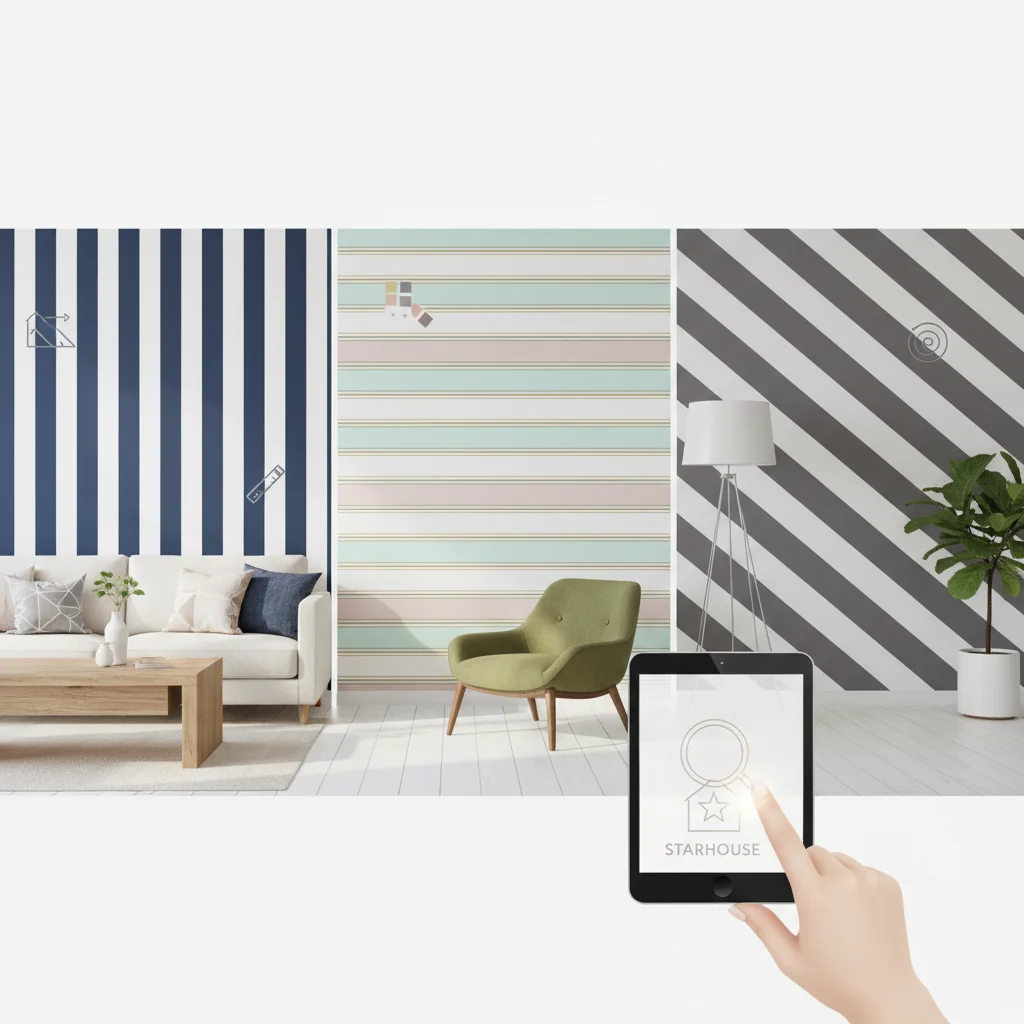
The successful installation of striped wallpaper hinges on understanding the specific technique required for its material type, ensuring optimal adhesion, pattern alignment, and a durable finish. Different wallpapers demand distinct preparation and application methods, ranging from the straightforward peel-and-stick process to the more involved traditional paste-the-paper approach. Mastering these techniques is essential for achieving a professional appearance that maximizes the visual impact of your chosen striped design.
Surface Preparation: The Foundation of Success
Regardless of the wallpaper type, proper surface preparation is the most critical step for a flawless installation. The wall surface must be clean, smooth, dry, and free of any dust, grease, or loose paint. Any imperfections on the wall, such as nail holes or cracks, will likely show through the finished wallpaper, especially with thinner materials or light-colored stripes.
- Clean Walls: Wash walls with a mild detergent solution, rinse thoroughly, and allow to dry completely.
- Repair Imperfections: Fill any holes or cracks with spackle, sand smooth, and prime.
- Prime Walls: Apply a high-quality wallpaper primer (also known as a “sizing” or “wall-prepper”). This seals the wall, promotes adhesion, and makes future removal easier. For dark walls under light wallpaper, a tinted primer may be necessary to prevent show-through.
- Remove Obstructions: Remove light switch covers, outlet covers, and any wall fixtures.
For best results, allow primer to dry for at least 24 hours before wallpapering.
Peel-and-Stick Wallpaper Installation: The DIY-Friendly Option
Peel-and-stick wallpaper is designed for maximum ease and flexibility, making it an excellent choice for DIY enthusiasts and temporary installations. The process involves:
- Measure and Cut: Measure your wall height and cut the first strip of wallpaper, adding a few inches to the top and bottom for trimming.
- Align and Apply: Starting from a plumb line (a perfectly vertical line drawn on the wall to guide your first strip), peel back a few inches of the liner from the top of the strip. Align the wallpaper carefully at the ceiling line and along your plumb line.
- Smooth and Secure: Slowly peel away the backing liner while simultaneously smoothing the wallpaper onto the wall using a plastic smoothing tool or a clean cloth. Work from the center outwards to push out air bubbles.
- Trim Excess: Once the strip is applied, trim the excess wallpaper at the ceiling and baseboard with a sharp utility knife and a straightedge.
- Repeat and Match: For subsequent strips, carefully align the pattern repeat (especially crucial for stripes) before peeling and sticking. Overlap edges slightly if recommended by the manufacturer, or butt seams snugly.
The repositionable nature of peel-and-stick allows for adjustments, reducing installation stress.
Pre-Pasted Wallpaper Installation: Water-Activated Adhesive
Pre-pasted wallpaper comes with a dry adhesive already applied to its backing, which is activated by water. This method eliminates the need for separate glue and a pasting table, simplifying the process compared to traditional unpasted wallpaper.
- Cut Strips: Measure and cut your wallpaper strips, adding extra for trimming and pattern matching.
- Activate Paste: Roll a cut strip loosely with the pasted side facing out. Submerge the rolled strip in a tray of clean water for the time specified by the manufacturer (typically 30 seconds).
- Book the Strip: Remove the strip from the water and “book” it by folding the pasted ends towards the middle, pasted side to pasted side, without creasing the paper. Let it rest for 5-10 minutes. This allows the paste to fully activate and the paper to relax, preventing bubbling and shrinking.
- Apply to Wall: Unfold the top half of the booked strip and align it to your plumb line at the ceiling. Smooth it onto the wall, then unfold the bottom half and continue smoothing.
- Smooth and Trim: Use a smoothing tool to remove air bubbles and ensure firm adhesion. Trim excess at the top and bottom.
- Match Pattern: For subsequent strips, ensure precise pattern alignment at the seams before applying.
Unpasted Wallpaper Installation: Traditional and Durable
Unpasted wallpaper requires the application of a separate adhesive (wallpaper paste) to its backing before installation. This traditional method offers excellent adhesion and durability, often preferred by professionals for more permanent installations.
- Cut Strips: Measure and cut your wallpaper strips, adding extra for trimming and pattern repeat.
- Mix Paste: Prepare your wallpaper paste according to the manufacturer’s instructions.
- Apply Paste: Lay a strip of wallpaper face down on a clean pasting table. Apply an even layer of paste to the back of the strip, ensuring edges are well covered.
- Book the Strip: Book the pasted strip by folding both ends towards the middle, pasted side to pasted side. Allow it to rest for the recommended time (5-15 minutes) to “relax” and absorb the paste. This is crucial for preventing wrinkles and ensuring smooth application.
- Hang the Strip: Unfold the top half of the booked strip and align it to your plumb line at the ceiling. Smooth it onto the wall. Unfold the bottom half and continue smoothing, working out air bubbles.
- Seam Roller and Trim: Use a seam roller to gently press down seams for a tight bond. Trim excess wallpaper at the ceiling and baseboard. Clean any excess paste immediately with a damp sponge.
Professional installation is often recommended for unpasted wallpapers, especially for complex striped patterns or delicate materials like grasscloth, to ensure a flawless finish and prevent costly mistakes.
Styling and Pairing: Integrating Striped Wallpaper into Your Design
Integrating striped wallpaper effectively into your interior design involves a thoughtful approach to styling and pairing, balancing its inherent graphic quality with other elements in the room. The goal is to create a cohesive and visually appealing environment where the stripes enhance, rather than compete with, your furniture, textiles, and accessories. Successful styling ensures the wallpaper acts as a foundational design element, contributing to the overall mood and aesthetic of the space.
Complementing Patterns and Textures
While striped wallpaper creates a strong visual statement, it can be harmoniously paired with other patterns and textures to add depth and interest. The key is to vary the scale and type of patterns. For instance, a bold striped wall can be complemented by smaller, organic patterns in textiles, such as a floral throw pillow or a subtle geometric rug. Avoid pairing stripes with another equally bold, similarly scaled pattern, as this can create visual chaos. Instead, opt for solid colors, subtle textures like linen or wool, or patterns with a much larger or smaller scale to provide visual relief.
Textures play a crucial role in softening the linearity of stripes. Introduce elements like chunky knits, plush velvet, rough-hewn wood, or woven baskets to add tactile interest and create a more inviting atmosphere. These contrasting textures prevent the room from feeling too rigid or one-dimensional.
Furniture and Accessories: Enhancing the Striped Backdrop
When styling furniture and accessories with striped wallpaper, consider how each piece interacts with the background. For prominent stripes, opt for furniture with clean lines and solid colors to avoid visual clutter. A classic sofa in a neutral tone, for example, allows a bold striped wall to be the focal point without overwhelming the space. Conversely, if your striped wallpaper is subtle (like pinstripes), you can introduce more intricately designed furniture or patterned upholstery to add layers of interest.
Accessories should echo or subtly contrast with the colors in your wallpaper. Metallic accents, glass, or ceramic pieces can add sparkle and sophistication. Artwork with a strong focal point or abstract design can break up the pattern, while mirrors can reflect the stripes, expanding the perceived space. The objective is to create a balanced composition where the wallpaper acts as a sophisticated backdrop rather than a standalone feature.
Using Stripes for Accent Walls or Entire Rooms
Striped wallpaper is exceptionally versatile for both accent walls and full-room applications, each offering a distinct design impact. An accent wall is a single wall in a room covered in a different color, pattern, or material to create a focal point. Using stripes on an accent wall is an excellent way to introduce pattern and visual drama without committing to a full room of stripes. This approach works well in living rooms (behind a sofa), bedrooms (behind the headboard), or dining rooms, allowing the striped pattern to draw attention and define a specific area.
For entire rooms, careful consideration of stripe scale and color is paramount. In a small room, subtle vertical pinstripes can make the space feel taller and more open. In a larger room, a bolder, wider stripe can create a cohesive and enveloping design statement, adding architectural interest to all walls. The decision depends on the desired intensity of the pattern and the room’s overall proportions.
Creating Architectural Interest with Stripes
Stripes possess a unique ability to define and enhance architectural features within a room. Vertical stripes can emphasize the height of a fireplace chimney breast or the grandeur of a tall entryway. Horizontal stripes can draw the eye along a long wall, highlighting a series of windows or a built-in shelving unit. They can also be used to visually connect disparate elements or create a sense of continuity in an open-concept space.
Consider running stripes up a staircase wall to create a dynamic visual path, or applying them within recessed panels to add depth and a bespoke look. By strategically placing striped wallpaper, you can manipulate the perception of space, highlight structural elements, and introduce a sophisticated layer of design that goes beyond simple decoration. This thoughtful application transforms walls from mere surfaces into integral components of the room’s architecture.
As Starhouse curates its collection, we invite you to share your vision. What patterns, textures, and moods are you seeking to bring into your home? Tell us what you’re looking for and get early access to our upcoming selections, tailored to your design aspirations.
Care and Maintenance: Preserving Your Striped Wallpaper’s Beauty
Proper care and maintenance are indispensable for preserving the aesthetic integrity and extending the lifespan of your striped wallpaper, protecting your investment and ensuring its beauty endures. The specific cleaning and maintenance regimen directly depends on the wallpaper’s material composition, requiring tailored approaches to avoid damage and effectively address common issues. Adhering to manufacturer guidelines for cleaning is paramount, as improper techniques can lead to discoloration, peeling, or irreversible damage.
General Cleaning Guidelines by Material Type
The washability of wallpaper varies significantly by material. Always refer to the manufacturer’s care instructions, usually indicated by symbols on the wallpaper roll label. These symbols typically denote whether the wallpaper is spongeable, washable, scrubbable, or highly scrubbable.
- Vinyl Wallpaper (Solid Sheet, Fabric-Backed): These are the most durable and washable types. They can generally be cleaned with a damp sponge or soft cloth using a mild, non-abrasive detergent solution (e.g., dish soap and water). Gently wipe in small sections, then rinse with a clean, damp cloth and pat dry. Avoid harsh chemicals or abrasive scrubbers, which can damage the vinyl surface.
- Non-Woven Wallpaper: Often labeled as “washable” or “spongeable.” Use a lightly damp cloth or sponge with plain water, or a very dilute mild soap solution. Gently wipe soiled areas. Do not saturate the wallpaper, as excessive moisture can weaken the adhesive or cause the material to warp.
- Paper Wallpaper: Most traditional paper wallpapers are “delicate” or “spongeable” at best, meaning they can only tolerate very light cleaning with a slightly damp cloth. Some might have a protective coating that makes them more durable, but always test in an inconspicuous area first. Avoid scrubbing or using any liquid detergents, as these can easily damage the paper, cause colors to bleed, or lift seams.
- Grasscloth Wallpaper: This natural material is generally not washable and is highly susceptible to water damage and staining. Cleaning should be limited to very gentle dusting with a soft, dry cloth or a vacuum cleaner with a brush attachment. For spills, blot immediately with a dry cloth; do not rub. Professional cleaning may be an option for significant stains, but it is often challenging to restore grasscloth to its original condition once stained.
- Peel-and-Stick Wallpaper: The care for peel-and-stick depends on its base material, which is often vinyl or a polyester fabric. Most are wipeable or washable with a damp cloth and mild soap. Always test a small, hidden area first, as some inks or coatings might react differently.
For all types, address spills or marks immediately to prevent them from setting. Use gentle, upward strokes to clean, and avoid rubbing aggressively, which can damage the surface or push dirt deeper into the material.
Addressing Common Issues: Seam Lifting and Fading
Even with proper installation and care, certain issues can arise with wallpaper over time. Understanding how to address these can extend the life and beauty of your striped walls.
- Seam Lifting: If wallpaper seams begin to lift, it is often due to insufficient adhesive during installation, changes in humidity, or improper surface preparation. For minor lifts, a small amount of seam adhesive (available at hardware stores) can be carefully applied with a small brush or syringe underneath the lifted edge. Press the seam firmly back into place with a seam roller or clean cloth, wiping away any excess adhesive immediately.
- Fading: Wallpaper, especially those with vibrant colors or certain natural dyes, can fade over time, particularly when exposed to direct sunlight. While some fading is inevitable, it can be minimized by using window treatments like blinds, curtains, or UV-filtering films to block intense sun exposure. Choosing wallpapers with good lightfastness ratings (often indicated by the manufacturer) can also help. Once fading occurs, it is generally irreversible, and the only solution is to replace the wallpaper.
- Bubbling: Small bubbles can appear after installation due to trapped air or uneven paste application. For new installations, small bubbles often disappear as the wallpaper dries and contracts. If persistent, you can gently prick the bubble with a sharp needle and smooth out the air with a wallpaper smoother. For larger bubbles, a utility knife can be used to make a small slit, allowing air to escape, then re-adhere with seam adhesive.
Regular, gentle dusting can prevent the buildup of grime that might require more aggressive cleaning later. Always follow the specific instructions provided by your wallpaper manufacturer to ensure the most effective and safest care for your striped wallcoverings.
Current Trends and Enduring Appeal in Striped Wallpaper
Striped wallpaper, while an enduring classic, continuously evolves with contemporary design sensibilities, reflecting current trends in color, texture, and scale for 2026. Its enduring appeal lies in its fundamental ability to introduce order, rhythm, and visual interest, making it a versatile element that adapts to various aesthetic movements. This year, we observe a fascinating interplay between timeless elegance and innovative interpretations, ensuring stripes remain a relevant and powerful tool in interior design.
Classic vs. Contemporary Interpretations
The dichotomy between classic and contemporary striped wallpaper offers a broad spectrum of design possibilities. Classic interpretations often feature uniform vertical stripes in traditional color palettes—think navy and white, cream and taupe, or muted greens. These designs evoke a sense of heritage, formality, and timeless elegance, perfectly suited for traditional, colonial, or transitional interiors. They provide a sophisticated backdrop that remains relevant through changing trends, embodying a quiet confidence.
Contemporary interpretations, on the other hand, push boundaries with irregular widths, unexpected color combinations, metallic accents, and varied textures. We see stripes in ombre effects, hand-painted styles, or rendered with a three-dimensional quality. These modern stripes are often bolder, more graphic, and less concerned with perfect uniformity, making them ideal for minimalist, industrial, or eclectic spaces seeking a fresh, avant-garde edge.
Popular Colors, Textures, and Stripe Variations for 2026
For 2026, several key trends are emerging in striped wallpaper design:
- Earthy Tones and Naturals: Stripes in muted greens, terracotta, warm grays, and soft blues are gaining popularity, reflecting a desire for connection with nature and a calming home environment. These often pair with subtle textures, such as linen-effect or grasscloth-inspired patterns.
- High-Contrast and Graphic: Bold black and white stripes, or deep navy and crisp white, remain a strong trend, offering a dramatic and sophisticated statement. These are frequently seen in wider widths or multi-width configurations for a powerful visual impact.
- Textural Stripes: Beyond printed lines, stripes are being created through woven textures (like grasscloth or linen), embossed patterns, or even flocking, adding a tactile dimension. These textural stripes soften the linear effect and add a luxurious, sensory experience to the walls.
- Irregular and Abstract Stripes: Moving away from perfect geometry, hand-drawn, watercolor-effect, or abstract stripes offer an artistic, organic feel. These provide a softer, more whimsical take on the classic pattern, ideal for bohemian or creative spaces.
- Metallics and Sheen: Stripes incorporating metallic inks (gold, silver, bronze) or subtle pearlescent sheens add a touch of glamour and sophistication, catching the light and adding depth. These are often used in pinstripes or as an accent within wider stripe patterns.
- Subtle Ombre and Blended Stripes: Stripes that gradually transition in color or intensity, or those where colors softly blend rather than having sharp divisions, create a serene and sophisticated effect, particularly in bedrooms or meditation spaces.
These trends highlight a move towards personalization and a desire for wallcoverings that contribute both aesthetic beauty and a unique character to a space.
The Enduring Appeal: Versatility and Spatial Manipulation
The enduring appeal of striped wallpaper stems from its unparalleled versatility and its fundamental ability to manipulate perceived space. No other pattern can so effectively make a room feel taller, wider, or more intimate with such straightforward elegance. Vertical stripes consistently lift ceilings, while horizontal stripes expand walls, providing powerful visual tools for interior designers and homeowners alike.
Stripes also offer a sense of order and rhythm, bringing structure to a room that might otherwise feel chaotic or undefined. They can serve as a strong focal point or a calming backdrop, adapting to a vast array of interior styles from minimalist to maximalist. This inherent adaptability, combined with continuous innovation in design and material, ensures that striped wallpaper remains a foundational and highly desirable element in home décor, transcending fleeting trends to maintain its status as a sophisticated choice for any interior.
Common Mistakes to Avoid When Using Striped Wallpaper
Avoiding common pitfalls during the selection and installation of striped wallpaper is crucial for achieving a polished and professional result that enhances your home’s aesthetic. Missteps in scale, color pairing, or installation can undermine the transformative power of stripes, leading to a visually jarring or unsatisfactory outcome. By being aware of these frequent errors, you can ensure your striped wallpaper project is a resounding success, delivering the sophisticated impact you envision.
Incorrect Scale for the Room Size
One of the most frequent mistakes is choosing a stripe scale that is disproportionate to the room’s dimensions. Installing very wide, bold stripes in a small powder room can make the space feel cramped and overwhelming, rather than grand. Conversely, using extremely narrow pinstripes in a large, expansive living room might cause the pattern to disappear, failing to make any significant visual impact. The key is balance: larger rooms can accommodate bolder, wider stripes, while smaller rooms benefit from more delicate or medium-width patterns. Always visualize or use samples to assess how the stripe scale will truly interact with your room’s specific dimensions.
Ignoring Pattern Repeat During Measurement and Installation
Failing to account for pattern repeat is a critical error that leads to misaligned stripes and excessive material waste. The pattern repeat dictates how much extra wallpaper you need to cut each strip to ensure the design matches seamlessly across the seams. Ignoring this measurement results in strips that don’t line up, creating an amateurish and disjointed appearance. Always add the pattern repeat measurement to your wall height when calculating strip lengths, and meticulously align the pattern at each seam during installation. This precision is non-negotiable for a professional finish with striped wallpaper.
Poor Color Pairing with Existing Décor
Introducing striped wallpaper without considering the room’s existing color palette can lead to a chaotic or clashing environment. Stripes, especially bold ones, demand attention, and if their colors conflict with your furniture, textiles, or flooring, the room will feel unbalanced and uncomfortable. A common mistake is selecting stripes with too many disparate colors or tones that don’t harmonize with the room’s established scheme. Instead, choose stripes that incorporate one or two dominant colors from your existing décor or select a neutral striped pattern that provides a versatile backdrop. Always test samples against your current furnishings and wall colors in various lighting conditions.
Overwhelming the Space with Too Many Stripes or Patterns
While stripes are versatile, using them excessively or pairing them with too many other dominant patterns can overwhelm a space. A room with striped walls, a striped rug, and striped upholstery often feels busy and visually exhausting. The goal is to create visual interest, not sensory overload. If you opt for bold striped wallpaper on all walls, consider solid or subtly textured fabrics and furniture. If you use stripes on an accent wall, balance it with calmer, solid colors on the other walls and in your furnishings. Introduce other patterns sparingly, ensuring they are of a different scale or type to provide contrast rather than competition.
Inadequate Wall Preparation Leading to Imperfections
Skipping or skimping on wall preparation is a foundational mistake that compromises the entire wallpaper installation. Any bumps, holes, rough patches, or dirt on the wall will show through the wallpaper, especially with thinner materials or light-colored stripes. Not priming the walls properly can also lead to poor adhesion, causing seams to lift or bubbles to form, and making future removal difficult. Always ensure walls are thoroughly cleaned, repaired, sanded smooth, and primed with a high-quality wallpaper primer. This meticulous preparation creates a smooth, uniform surface that is essential for a flawless and long-lasting striped wallpaper application.
Sources
Frequently Asked Questions About Striped Wallpaper
Can striped wallpaper really make a room look bigger or taller?
Yes, striped wallpaper effectively manipulates the perception of space. Vertical stripes draw the eye upwards, making ceilings appear taller, while horizontal stripes visually extend the width of a room, making it feel more expansive. The effect is more pronounced with wider stripes in appropriate scales.
Is peel-and-stick striped wallpaper a good option for beginners?
Yes, peel-and-stick striped wallpaper is an excellent option for beginners due to its self-adhesive backing and repositionable nature. It simplifies the installation process by eliminating the need for separate paste and allows for adjustments, making it more forgiving than traditional wallpaper.
How do I choose the right color combination for striped wallpaper?
To choose the right color combination, consider your room’s existing color palette, natural light, and desired mood. Select stripe colors that complement or subtly contrast with your furniture and textiles. Lighter colors can brighten a room, while darker, richer tones add depth. Always test samples in your space.
How much extra wallpaper should I buy to account for pattern repeat?
When calculating wallpaper quantity, you should always add at least one extra roll, or 10-15% extra, beyond your calculated needs. This buffer accounts for trimming, mistakes, and crucial pattern matching, ensuring you have enough material from the same dye lot for a seamless finish.
Can I use striped wallpaper in a bathroom or kitchen?
Yes, you can use striped wallpaper in bathrooms and kitchens, provided you select a material specifically designed for high-humidity and high-traffic areas. Vinyl wallpaper (solid sheet or fabric-backed) is highly recommended due to its exceptional durability, moisture resistance, and washability, making it ideal for these environments.
What is the difference between pinstripes and candy stripes?
Pinstripes are very fine, closely spaced lines, offering a subtle, elegant, and textural effect, often in muted contrasts. Candy stripes (or awning stripes) feature bold, wide, evenly spaced lines, typically in two or more contrasting, vibrant colors, creating a playful and energetic visual statement.
How do I clean striped wallpaper without damaging it?
The cleaning method depends on the wallpaper material. Vinyl wallpapers are fully washable with mild soap and water. Non-woven types are typically wipeable with a damp cloth. Delicate paper or grasscloth wallpapers usually require only dry dusting or very gentle spot cleaning. Always consult the manufacturer’s specific care instructions and test in an inconspicuous area.
Conclusion
Striped wallpaper is far more than a simple decorative choice; it is a sophisticated design tool capable of transforming the perception and aesthetic of any interior. From the classic elegance of vertical pinstripes that elevate ceilings to the playful dynamism of horizontal candy stripes that expand narrow rooms, the versatility of this pattern is unmatched. Understanding the nuances of material, scale, color, and installation technique empowers you to make informed decisions that culminate in a truly refined and impactful space.
At Starhouse, we believe that every home deserves thoughtfully curated elements that speak to its unique character and your individual aspirations. As we diligently curate our forthcoming collection, we are deeply committed to bringing you the finest in home décor, including an exquisite range of striped wallcoverings designed to inspire and elevate. We invite you to be part of this journey. Tell us what you’re looking for in your next design project, share your vision, and secure early access to our meticulously selected offerings. Your dream space begins with a single, confident stripe.