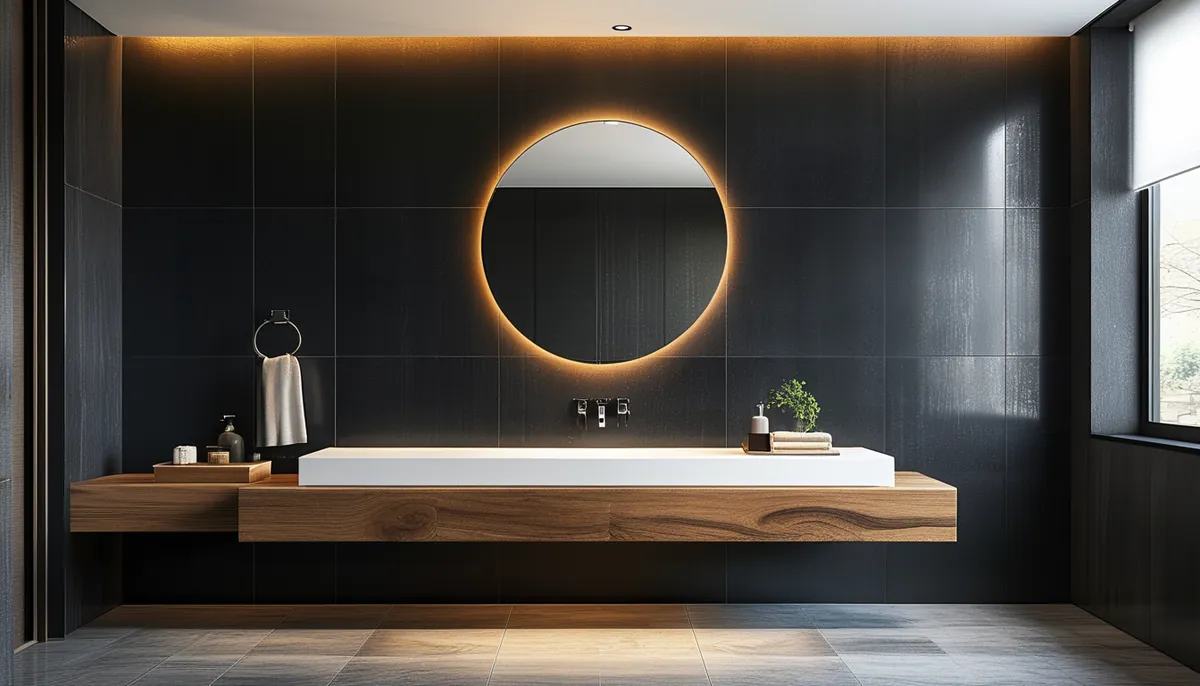
Dark walls in a bathroom aren’t just a trend; they’re a sophisticated design choice that can make your space feel more intimate and luxurious. But how do you achieve that perfect black wall look without creating a cave or dealing with moisture issues? Let’s break down your options, from paint to more durable finishes.
Paint is your simplest option, but consider its limitations
When you think of black bathroom walls, paint is often the first material that comes to mind. It’s accessible, relatively inexpensive, and offers a vast spectrum of black shades, from deep matte charcoals to high-gloss ebony. However, for a bathroom, paint requires careful consideration.
Types of paint:
- Matte/Flat: Offers a velvety finish that hides imperfections well. However, it’s the least durable and can be difficult to clean, especially in a high-moisture environment like a bathroom. Stains and splashes can be hard to remove without damaging the finish.
- Eggshell/Satin: These offer a slight sheen, improving durability and washability compared to matte. They are a better compromise for bathrooms, providing a balance between aesthetics and practicality.
- Semi-Gloss/Gloss: With a higher sheen, these paints are highly durable, moisture-resistant, and easy to clean. They reflect light, which can help make a small bathroom feel brighter. The downside is that the shine will highlight every imperfection on the wall surface.
Choosing the right black: Not all blacks are created equal. Consider the undertones. A black with a blue undertone can feel cool and modern, while one with a red or brown undertone might feel warmer and richer. Test paint samples on your wall under different lighting conditions before committing.
Installation considerations: Proper surface preparation is crucial. Walls must be clean, dry, and free of any grease or mildew. For bathrooms, using a primer specifically designed for high-moisture areas is recommended. Apply at least two coats for even coverage, allowing adequate drying time between coats as per the manufacturer’s instructions. Ventilation is key during and after painting to ensure proper drying and to remove fumes.
Durability concerns: Even with high-quality paint, black walls in a bathroom can show water spots, soap scum, and toothpaste splatters more readily than lighter colors. Regular cleaning with a soft, damp cloth and mild soap is essential. Avoid abrasive cleaners, which can damage the paint finish.
Tile offers superior durability and a high-end look
For a bathroom where durability and water resistance are paramount, tile is an excellent choice for black walls. It’s significantly more robust than paint and can withstand direct water exposure, making it ideal for shower surrounds and splash zones.
Types of black tile:
- Ceramic and Porcelain: These are the most common and versatile. Porcelain is denser and less porous than ceramic, making it more durable and water-resistant. They come in a huge variety of finishes, from matte to high gloss, and can mimic the look of natural stone, wood, or even concrete.
- Natural Stone: Black marble, slate, or granite tiles offer a luxurious, natural aesthetic. They are beautiful but can be more expensive, require sealing to prevent staining, and may be more porous than porcelain.
- Glass Tile: Available in glossy black finishes, glass tiles can add a sleek, modern, and reflective quality to your bathroom walls. They are great for accents or backsplashes but can be more prone to chipping than porcelain.
- Mosaic Tile: Small tiles, often in a mesh backing, can create intricate patterns or solid black surfaces. They offer flexibility in design but can be more labor-intensive to install and grout.
Size and shape matters: Large format tiles (12×24 inches or larger) can create a seamless, modern look with fewer grout lines, making cleaning easier. Subway tiles (typically 3×6 inches) are classic and versatile. Hexagon or penny tiles add a decorative touch.
Installation considerations: Proper substrate preparation is critical. Walls must be structurally sound and free of moisture. A cement board or a waterproof tile backer board is essential, especially in wet areas like shower enclosures. Use a high-quality thin-set mortar specifically rated for the type of tile and bathroom conditions. Grouting is a key step; choose a grout color that complements or contrasts with your black tile. Black grout can help hide discoloration, while white or gray grout can highlight the tile pattern. For shower walls, using an epoxy grout or a high-performance cementitious grout with a sealer is highly recommended for maximum water and stain resistance.
Maintenance: Most ceramic and porcelain tiles are low maintenance. Regular cleaning with water and a mild detergent is usually sufficient. Natural stone tiles require periodic sealing to maintain their appearance and prevent stains. Ensure grout lines are sealed and cleaned regularly to prevent mildew growth.
Wallpaper offers design flexibility but needs careful selection
Wallpaper can be a fantastic way to achieve black walls with intricate patterns, textures, or a sophisticated matte finish that paint can’t always replicate. However, not all wallpapers are suited for a bathroom environment due to humidity.
Best wallpaper types for bathrooms:
- Vinyl Wallpaper: This is the most robust option for bathrooms. The vinyl layer makes it highly resistant to moisture, easy to clean, and durable. It can be wiped down easily, making it practical for splashes and steam.
- Slightly Textured or Textured Vinyl: Many vinyl wallpapers offer subtle textures that add depth and can mask minor wall imperfections.
- High-Quality Paper with a Protective Coating: Some non-vinyl papers, if they have a durable, washable coating, can perform adequately in powder rooms or bathrooms with excellent ventilation. However, they are generally less forgiving than vinyl.
- Paintable Wallpaper: If you want a textured black finish, you can use a paintable wallpaper and then paint it your desired shade of black. This allows for a custom look with added durability from the paint. Learn more about paintable wallpaper here.
- Peel and Stick Wallpaper: While convenient for renters or DIYers, the adhesive on peel-and-stick wallpapers can sometimes be compromised by high humidity and steam over time, potentially leading to peeling at the edges. Look for high-quality vinyl-based peel-and-stick options specifically rated for kitchens and bathrooms if considering this route.
What to avoid: Traditional paper wallpapers, fabric-backed wallpapers without a vinyl coating, and delicate embossed papers are generally not suitable for bathrooms as they can absorb moisture, peel, warp, or develop mold and mildew.
Installation: Ensure walls are clean, smooth, and primed. For high-moisture areas, using a wallpaper liner first can provide a stable, moisture-resistant base and make future removal easier. This is particularly useful for renters or if you plan to update your design often. You can learn more about wallpaper liners here. Follow the manufacturer’s instructions for paste application (if not pre-pasted) and hanging. Proper trimming and smoothing are essential for a clean finish.
Maintenance: Vinyl wallpapers can typically be cleaned with a damp cloth and mild soap. Avoid harsh chemicals or abrasive scrubbers. Ensure good ventilation to minimize steam buildup, which is the primary enemy of wallpaper in bathrooms.
Other considerations for black bathroom walls
Beyond the primary wall finish, several other factors contribute to the success of black walls in a bathroom.
Lighting is non-negotiable
Black walls absorb light. To prevent your bathroom from feeling like a dark closet, you need ample, well-placed lighting. Layer your lighting with ambient (general), task (vanity lights), and accent (shower niche) lighting. Consider warmer light temperatures (around 2700K-3000K) to avoid a sterile feel. Dimmers allow you to control the mood.
Contrast and texture
Too much of any one dark color can be overwhelming. Introduce contrast through lighter elements like white or natural wood vanities, countertops, or fixtures. Textured materials – think natural wood grain, woven baskets, or even a subtly textured black wall finish – can add depth and prevent the space from feeling flat.
Scale and proportion
In a very small bathroom, an entire wall of glossy black might feel oppressive. Consider using black as an accent wall, or opt for a matte finish. In larger bathrooms, you have more freedom to experiment with different black finishes and patterns.
Moisture management
This is paramount for any bathroom, but especially critical with dark walls that can hide mildew growth. Ensure excellent ventilation with an exhaust fan that is properly sized for the room. Use moisture-resistant materials in wet areas. Consider a wall liner as an extra layer of protection behind your chosen finish.
Complementary colors
Black is incredibly versatile. It pairs well with:
- Whites and Creams: For a classic, high-contrast look.
- Grays: For a sophisticated, monochromatic scheme.
- Metallics (Brass, Gold, Chrome, Black Nickel): To add shine, warmth, or a sleek finish.
- Wood Tones: To bring warmth and natural texture into the space.
- Jewel Tones (Emerald Green, Sapphire Blue, Ruby Red): For a dramatic and opulent feel.
Maintenance routine
Whatever finish you choose, establish a regular cleaning routine. For black walls, this means wiping down surfaces frequently to address water spots, dust, and any splashes. This proactive approach will keep your black walls looking sharp and prevent the buildup of grime that can be more noticeable on dark surfaces.
When to consider wallpaper over paint or tile
Wallpaper, especially vinyl, is a great option if you want a specific pattern or texture that paint cannot provide, or if you are looking for a more budget-friendly or temporary solution than tile. Designs like black ink wallpaper designs can offer a unique artistic touch. For those who love the idea of dark walls but want the option to change them easily, high-quality peel-and-stick wallpaper designed for bathrooms can be a viable choice, provided ventilation is excellent.
Using black tile for a statement
If you’re aiming for ultimate durability and a spa-like feel, black tile is the way to go. Consider large format porcelain tiles for a modern, minimalist look, or intricate mosaics for a more decorative effect. Black tile in a shower enclosure is a popular choice for a reason – it’s practical and visually stunning. Remember that the grout choice significantly impacts the final look and ease of maintenance.
Paint is still viable with precautions
Don’t dismiss paint entirely. For powder rooms or bathrooms with excellent exhaust fans and minimal direct water exposure, a high-quality satin or semi-gloss paint in a deep black can be a cost-effective and stylish choice. Ensure you use a primer and paint specifically formulated for bathrooms, which often include mildew resistance.