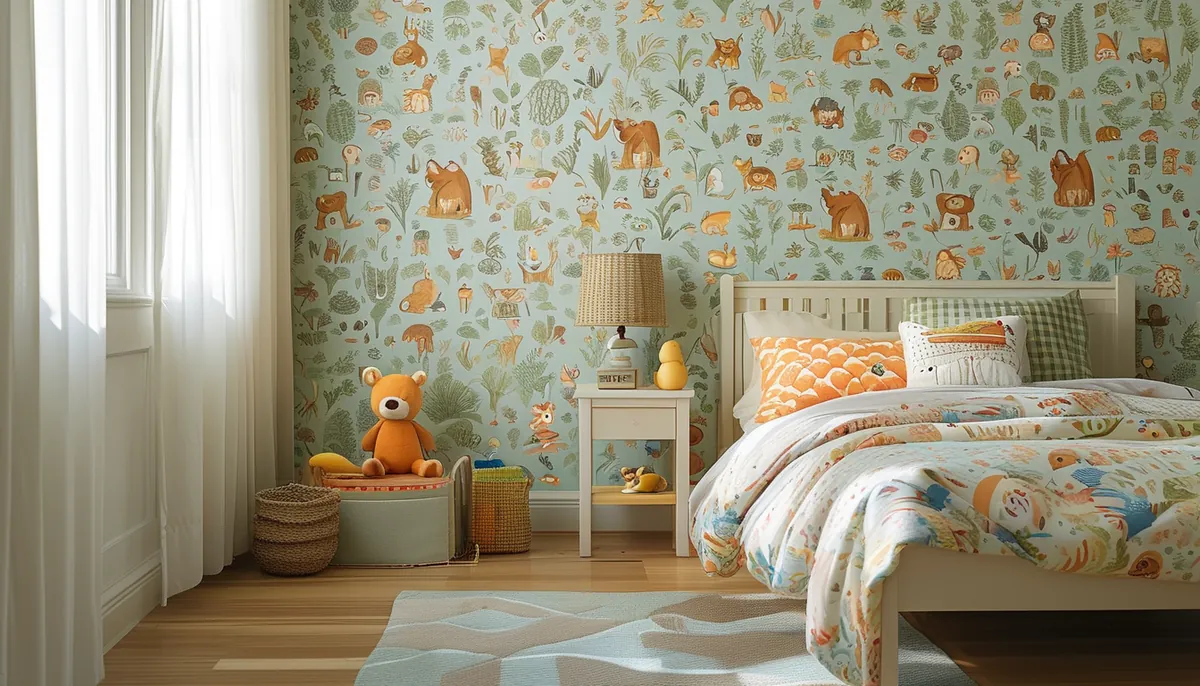
When choosing childrens room wallpaper, focus first on the material and its durability. Vinyl-coated wallpapers are a popular choice for kids’ rooms because they resist moisture, are easy to wipe clean of crayon marks or spills, and generally hold up well to wear and tear. Look for wallpapers with a scrubbable finish, which means you can clean them with soap and water without damaging the print.
Durable materials for busy spaces
For high-traffic areas or very active children, consider thicker, more robust vinyl options, sometimes referred to as heavy-duty vinyl. These can withstand more abuse than standard residential wallpapers. If you’re concerned about VOCs (Volatile Organic Compounds), opt for wallpapers certified by organizations like GreenGuard, which ensures lower chemical emissions. This is particularly important for nurseries and young children’s rooms where air quality is a priority.
Another excellent option is fabric-backed vinyl. The fabric layer adds strength and can help conceal minor imperfections on the wall surface beneath. Some of these are also peel-and-stick, offering easier installation and removal, which we’ll discuss later.
Paper-based wallpapers: beauty and breathability
Traditional paper-based wallpapers are less durable and harder to clean than vinyl. They are best suited for older children’s rooms where the risk of spills and heavy wear is lower, or for accent walls rather than full room coverage. However, they often offer more intricate designs and a matte finish that can feel more sophisticated. Ensure the paper is thick enough to avoid tearing during application.
Consider peel-and-stick for flexibility
Removable kids wallpaper, especially the peel-and-stick variety, is a fantastic solution for several reasons. Firstly, installation is significantly easier. You simply peel off the backing and apply the paper directly to the wall, often without needing paste. This makes it a DIY-friendly project. Secondly, removal is typically clean and simple, leaving minimal residue or damage to the underlying drywall. This is a huge advantage for renters or families who like to redecorate frequently as their child grows.
When selecting peel-and-stick, check reviews regarding adhesion. Some cheaper options may lose their stickiness over time or be difficult to reposition if you make a mistake during application. Look for brands known for quality adhesive that holds firm but releases cleanly. The thickness of the material also matters; thinner peel-and-stick can sometimes show wall imperfections.
Sizing and scale of patterns
The scale of the pattern on your childrens room wallpaper should be appropriate for the room size and the furniture. Small, intricate patterns can make a small room feel even smaller, while very large, bold patterns might overwhelm a tiny space. For larger rooms, a bolder or larger-scale pattern can add personality and visual interest. Consider how the pattern will repeat; a poorly matched repeat can be very noticeable and detract from the overall look.
If you’re using wallpaper on an accent wall, you have more freedom with bolder or larger patterns. For a whole room, a more subtle or medium-scale pattern might be more practical for long-term enjoyment. Think about the visual impact – will it be too busy for a child trying to sleep or focus?
Color palettes and design themes
Color plays a huge role in a child’s room. Bright, bold colors can be stimulating and fun, but consider using them as accents or on one wall, especially if the room is small. Softer, more muted tones are often better for creating a calming atmosphere, ideal for nurseries or bedrooms where sleep is a priority. Pastel shades are excellent for this; you can explore pastel bedroom wallpaper for inspiration that can translate well to a child’s space.
Themes can range from animals, space, and dinosaurs to abstract shapes and subtle geometric patterns. It’s often wise to choose a theme that has longevity, or one that can easily be updated with accessories as the child’s interests change. Avoid overly trendy characters that might be out of favor in a year or two.
Safety and regulatory considerations
Ensure the wallpaper you choose is printed with water-based or non-toxic inks. Many manufacturers now specify this for children’s products. Check for certifications like Oeko-Tex, which guarantees the textile is free from harmful substances. Avoid wallpapers with glitter or other embellishments that could potentially detach and become a choking hazard for very young children.
When installing, use wallpaper paste that is low in VOCs. If you’re using removable wallpaper, the adhesive is built-in, so ensure the product itself meets safety standards. Always follow the manufacturer’s instructions for application and removal to ensure a safe and successful outcome.
Installation tips for a flawless finish
Proper wall preparation is key. The wall must be clean, dry, smooth, and free of any old wallpaper, grease, or cracks. Use a primer specifically designed for wallpapering. This helps the paper adhere properly and makes future removal easier. If you’re using traditional paste-the-wall wallpaper, ensure your paste is mixed to the correct consistency. For peel-and-stick, align the edges carefully; repositioning is possible but can be tricky if the material is very sticky.
When hanging panels, use a smoothing tool (like a plastic smoother or a brush) to push out air bubbles from the center outwards. Overlap seams slightly if recommended by the manufacturer, or butt them together for a seamless look, depending on the wallpaper type. Cut excess paper at the ceiling and baseboard with a sharp utility knife and a steady hand. A seam roller can help press down edges for a clean finish.
Wallpapering other rooms in the house
While this guide focuses on children’s rooms, the principles of choosing durable and easy-to-clean materials apply to other areas as well. For bathrooms, moisture resistance is paramount, making vinyl or specific bathroom wallpapers like those found in our gray wallpaper for bathrooms guide essential. Kitchens also benefit from washable surfaces.
For living areas or bedrooms, you might opt for a more sophisticated look. Consider accent walls to add drama or texture, as detailed in guides on master bedroom wallpaper accent wall or general wallpaper design ideas for every room. Even adult bedrooms can benefit from the warmth and character wallpaper provides, as explored in our guide to adult wallpaper for bedroom choices.
Common mistakes to avoid
One common mistake is not preparing the walls properly. Skipping the cleaning and priming steps can lead to poor adhesion and bubbles. Another error is trying to rush the process. Wallpapering takes patience. Rushing can result in misaligned patterns, uneven seams, and unsightly tears. Also, be mindful of the pattern repeat; buying insufficient paper to account for the repeat is a costly mistake that leads to gaps or mismatched designs.
For removable wallpaper, don’t assume it will work on all surfaces. Textured walls, freshly painted walls (wait at least 3-4 weeks for paint to cure), or dirty surfaces can prevent proper adhesion. Always test a small, inconspicuous area first if you’re unsure. Finally, resist the temptation to use old, dried-out paste. Fresh paste ensures the best adhesion and longevity for traditional wallpapers.