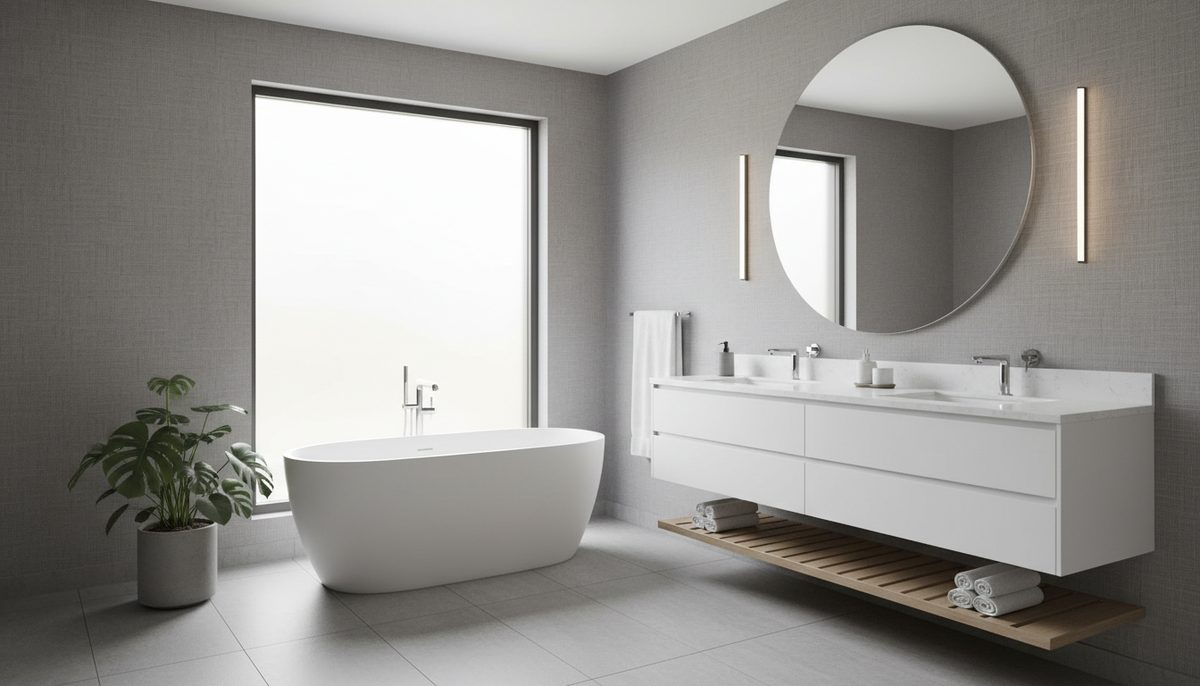
Deciding on the right wallpaper for a bathroom hinges on one critical factor: moisture resistance. Standard paper-backed wallpapers will warp, bubble, and peel almost immediately when exposed to the humidity and occasional splashes common in bathrooms. You need materials specifically designed to withstand these conditions.
Choosing water-resistant wallpaper materials
Not all wallpapers are created equal, especially for bathrooms. Look for these types:
- Vinyl wallpaper: This is your safest bet for bathrooms. It has a plastic coating that makes it highly resistant to moisture and easy to clean. It’s durable and can even mimic the look of other textures like fabric or grasscloth. For bathrooms, opt for heavy-duty vinyl.
- Satin or semi-gloss painted wallpaper: Some manufacturers offer wallpapers with a satin or semi-gloss finish. These offer a degree of water resistance and can be wiped down. Check the manufacturer’s specifications for bathroom suitability.
- Fiberglass wallpaper: This is a premium option, often used in commercial spaces but excellent for residential bathrooms. It’s completely waterproof, breathable, and very durable. It often comes unpainted, requiring you to add a topcoat of paint for color and extra protection.
- Textured or embossed wallpapers (with caution): Some textured wallpapers, particularly those with a vinyl or washable coating, can work. However, the deeper the texture, the harder it is to clean and the more likely moisture can seep into the crevices. Always verify it’s washable and suitable for high-humidity areas.
Avoid standard paper, non-woven (unless specifically rated for bathrooms), and fabric wallpapers. They simply won’t hold up to bathroom conditions.
Understanding wallpaper finishes and their role in bathrooms
The finish of your wallpaper impacts its performance in a humid environment. Matte finishes absorb moisture more readily than glossier ones.
- Matte: Generally not recommended for bathrooms due to poor moisture resistance.
- Satin/Eggshell: Offers some washability and a slight sheen, making it a potential option if the wallpaper is specifically rated for bathrooms.
- Semi-Gloss/Gloss: These finishes are much more water-repellent and easier to wipe clean. They are ideal for bathrooms, especially around sinks and shower areas.
Gray wallpaper patterns and styles for bathrooms
Gray offers a versatile backdrop for any bathroom style. The shade and pattern you choose will set the mood.
Subtle and serene
For a spa-like feel, opt for light grays with subtle textures or minimal patterns. Think soft, washed-out grays, or those with a faint damask or linen-like texture. These create a calming atmosphere.
Bold and modern
Darker grays, charcoal, or even deep slate can make a dramatic statement. Pair these with geometric patterns, abstract designs, or even a faux concrete look for a contemporary edge. These work well in larger bathrooms or powder rooms where a bold impact is desired.
Patterned options
- Subtle geometrics: Think thin lines, small hexagons, or chevrons in a slightly darker or lighter shade of gray.
- Abstract and painterly: Soft, watercolor-like effects or abstract splatters in various gray tones can add artistic flair.
- Faux finishes: Look for wallpapers that mimic natural materials like stone, concrete, marble, or even wood grain in gray tones.
- Botanical or floral (with gray): Many floral or botanical designs incorporate gray as a primary or accent color, offering a softer, more traditional look. If you’re drawn to nature, consider flowers on wallpaper designs that feature gray elements.
Preparing your bathroom walls for wallpaper
Proper wall preparation is crucial for any wallpaper installation, but especially in a bathroom where moisture can compromise adhesion.
- Clean thoroughly: Wash walls with a mild detergent to remove soap scum, grease, and any residue. Rinse well and let them dry completely.
- Repair imperfections: Fill any holes or cracks with spackling paste. Sand smooth once dry.
- Prime the walls: Use a high-quality wallpaper primer. This seals the surface, prevents the old paint or drywall from absorbing too much adhesive, and ensures the wallpaper adheres properly. For bathrooms, use a mold- and mildew-resistant primer.
- Ensure proper ventilation: If your bathroom doesn’t have an exhaust fan, consider installing one. Good ventilation helps manage humidity and prevents mold growth behind the wallpaper.
Installation tips for gray bathroom wallpaper
Installing wallpaper in a bathroom requires attention to detail, particularly around fixtures and in damp areas.
Measure and cut carefully
Always measure twice and cut once. Account for pattern repeat, especially with busy designs. Leave a little extra length at the top and bottom to trim later.
Applying adhesive
Follow the manufacturer’s instructions. Some wallpapers require paste applied to the back (paste-the-back), while others have pre-applied adhesive and need water activation (paste-the-wall, often found in easy peel and stick wallpaper). Vinyl wallpapers are typically heavy, so ensure you use a strong, high-quality adhesive recommended for vinyl.
Smoothing and trimming
Use a smoothing tool to work out air bubbles, starting from the center and moving outwards. For corners and around fixtures like faucets or toilets, carefully cut relief slits in the wallpaper to help it lie flat. Use a sharp utility knife and a straight edge for precise trimming.
Sealing edges
Once the wallpaper is installed and dry, consider applying a clear, water-resistant sealant along the edges, especially in high-moisture areas like around the tub or shower. This adds an extra layer of protection against moisture seeping underneath.
Maintaining your gray bathroom wallpaper
Keeping your gray wallpaper looking fresh in a bathroom is straightforward if you’ve chosen the right material.
- Wipe down regularly: Use a soft, damp cloth to wipe away any water spots or light smudges. Avoid abrasive cleaners, which can damage the finish.
- Address spills immediately: Blot up any spills with a clean cloth. Don’t let water sit on the wallpaper.
- Monitor for mold: While water-resistant wallpapers are less prone to mold, it’s still good practice to check corners and edges periodically, especially if you notice persistent condensation. Ensure good ventilation.
- Be cautious with harsh chemicals: Stick to mild soaps or specialized wallpaper cleaners if needed. Avoid bleach or strong solvents.
Gray wallpaper in other rooms
While bathrooms are a key area, gray wallpaper can enhance many other spaces. In living rooms, it can provide a sophisticated backdrop for art or furniture. Bedrooms can become tranquil retreats with muted gray tones. Kitchens, especially those with a modern aesthetic, can benefit from a sleek gray pattern. For a cohesive look throughout your home, explore different applications for gray wallpaper design ideas. Remember to select materials appropriate for the specific room’s humidity levels, just as you would for a bathroom.