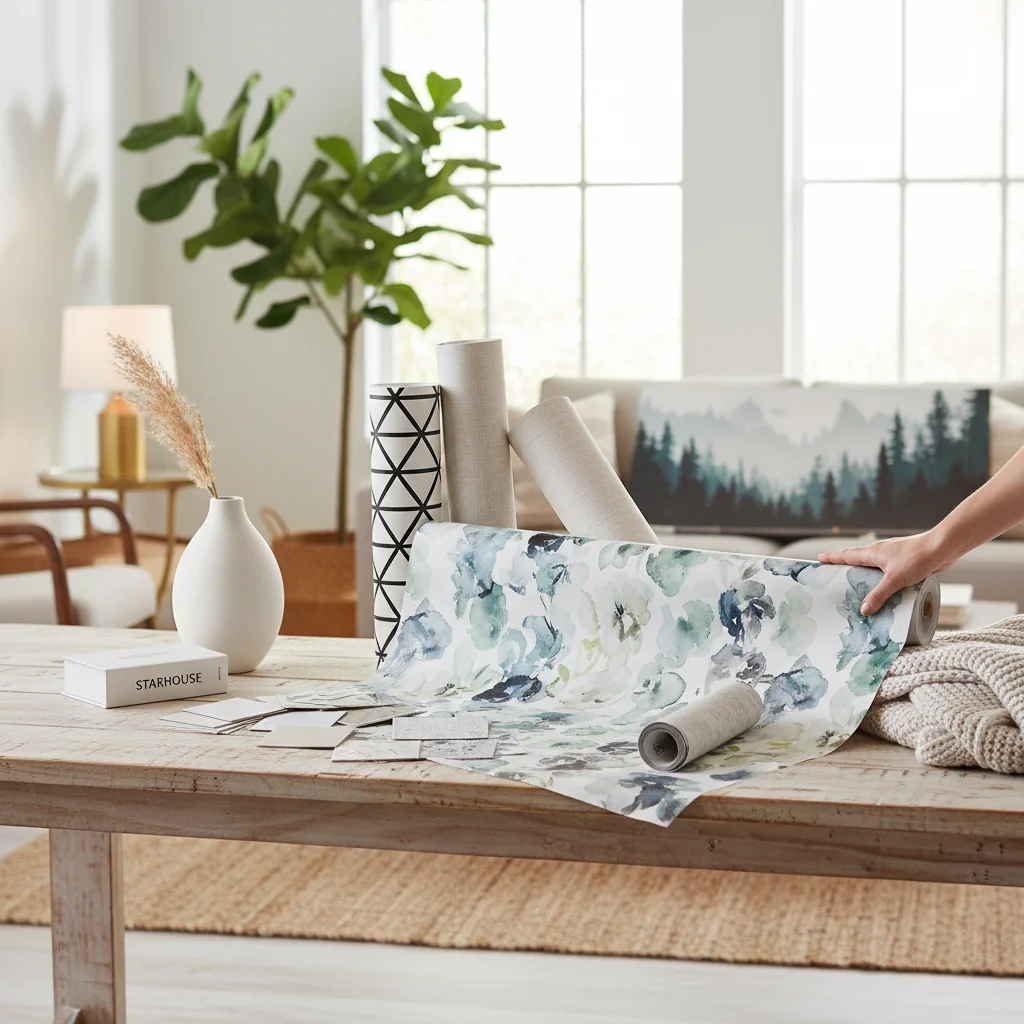
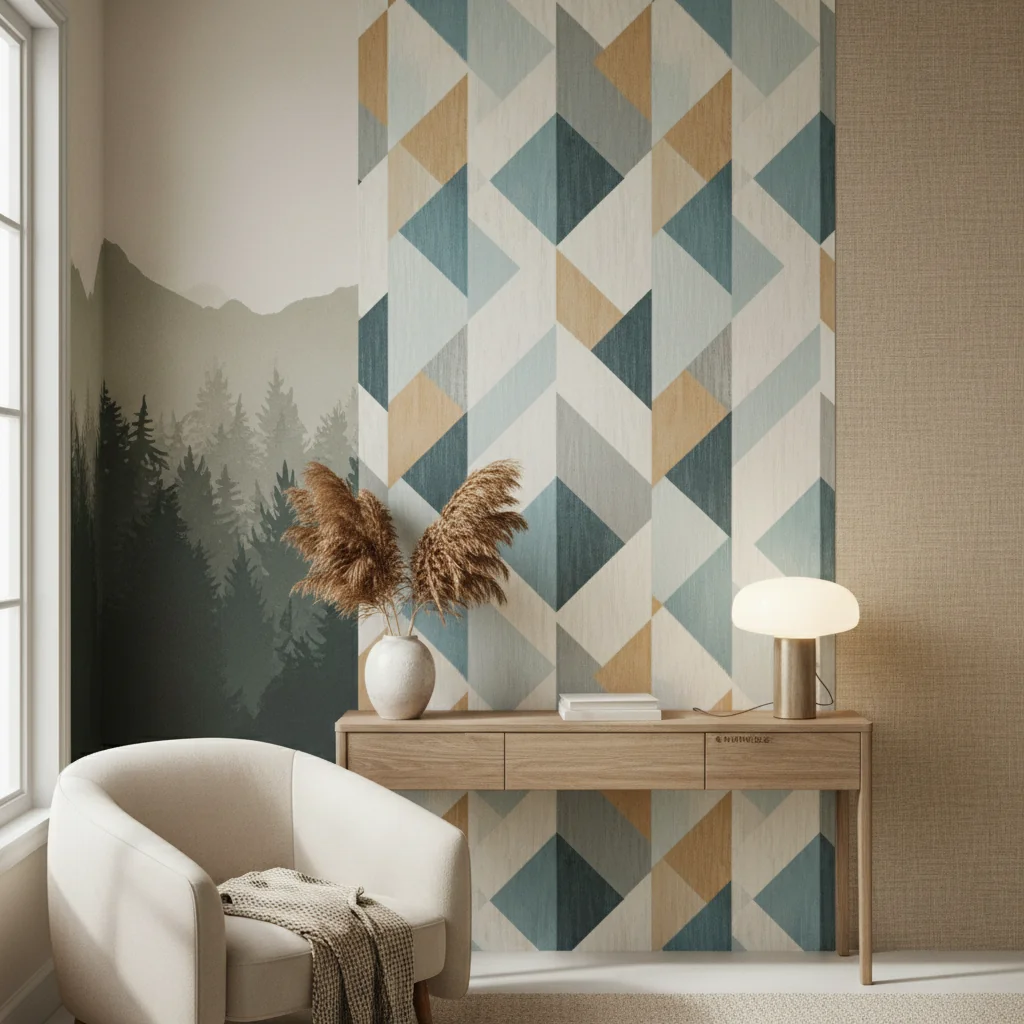
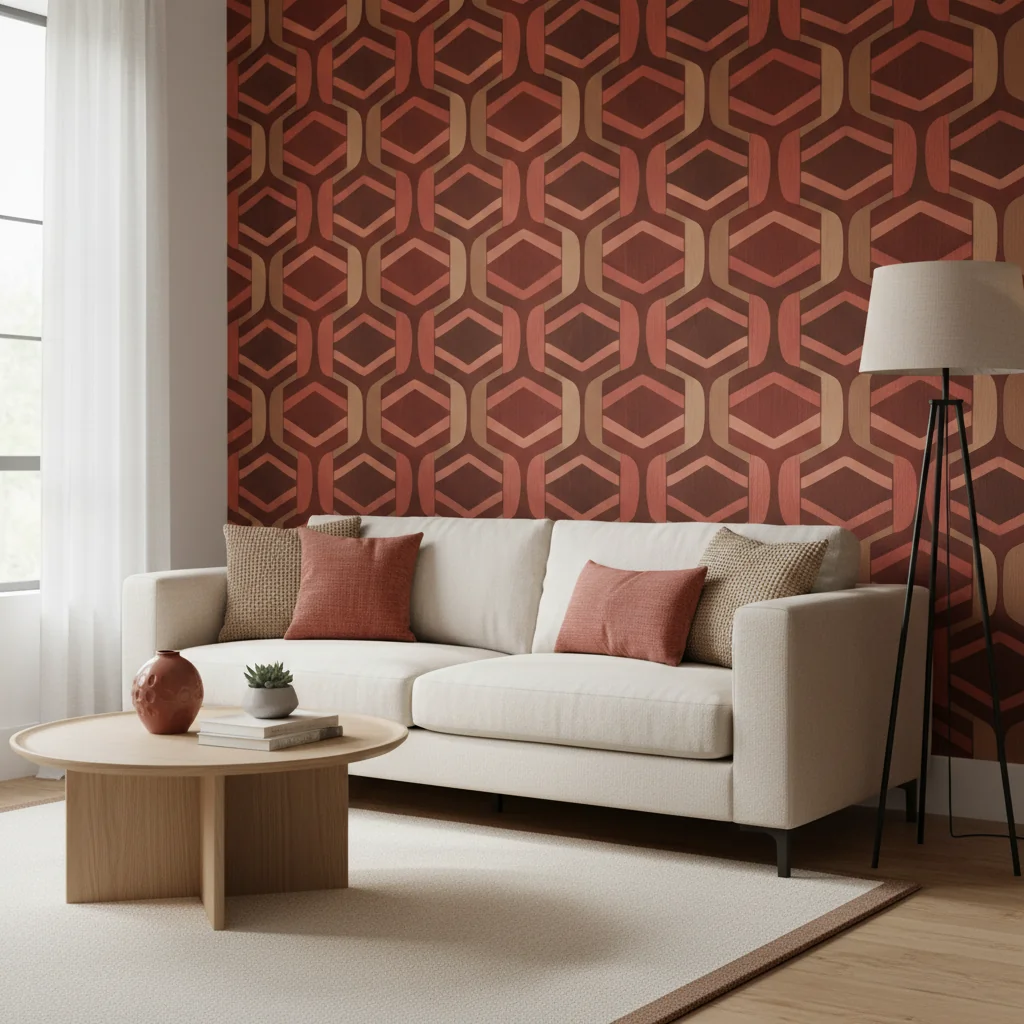
Constellation wallpaper transforms an ordinary wall into a captivating celestial canvas, bringing the wonder of the night sky directly into your home. This specialized wall covering features intricate designs depicting star formations, nebulae, galaxies, and mythological figures associated with the cosmos, offering a sophisticated and deeply personal touch to interior design. It serves not merely as decoration but as a narrative element, inviting contemplation, inspiring dreams, and establishing a unique atmospheric quality in any space, from a serene bedroom to an inspiring home office.
Key Takeaways
- Constellation wallpaper elevates interior design by creating a captivating, narrative-rich celestial ambiance, suitable for diverse aesthetic preferences and room functions.
- Available in types ranging from scientifically accurate star charts to artistic interpretations and glow-in-the-dark options, these wallpapers cater to various design goals and age groups.
- Material choices like non-woven, paper-backed vinyl, and solid vinyl determine durability, ease of installation, and maintenance requirements, with non-woven offering superior breathability and removal ease.
- Successful selection hinges on considering the room’s purpose, natural and artificial lighting conditions, desired color palette, and the scale of the pattern to harmonize with existing decor.
- Accurate measurement, accounting for pattern repeat and a 10-15% waste buffer, is crucial for seamless installation, with U.S. standard rolls typically measuring 20.5 inches wide by 33 feet long.
- Proper wall preparation, including cleaning and priming, is paramount for optimal adhesion and a professional finish, regardless of whether you choose peel-and-stick or traditional paste application.
- Styling constellation wallpaper involves thoughtful pairing with complementary furniture, textiles, and lighting to enhance the cosmic theme, creating a cohesive and immersive experience.
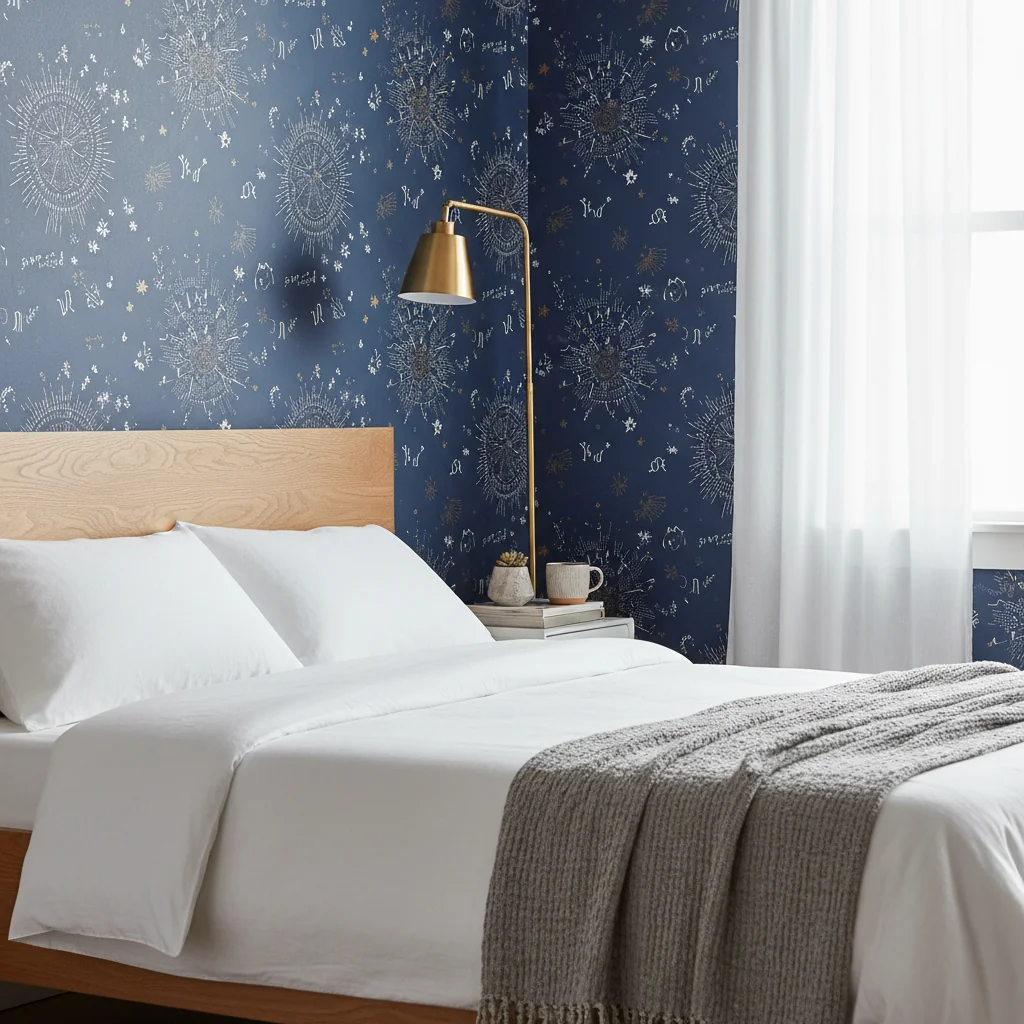
Understanding Constellation Wallpaper: A Celestial Overview
Constellation wallpaper is a specialized wall covering featuring astronomical patterns, often depicting star formations, celestial bodies, and cosmic narratives, designed to create a sense of wonder and depth in an interior space. Unlike digital backgrounds for screens, this physical wall décor is meticulously crafted to transform entire rooms, offering a permanent or semi-permanent artistic installation that engages with the architecture of a home. Its enduring appeal lies in humanity’s ancient fascination with the night sky, translating this universal curiosity into a tangible design element that can evoke tranquility, inspire curiosity, or simply add a dramatic focal point.
The history of celestial motifs in decor stretches back millennia, from ancient cave paintings depicting star clusters to elaborate Renaissance tapestries showcasing mythological constellations. Constellation wallpaper, in its modern iteration, continues this tradition, utilizing contemporary printing techniques and materials to achieve breathtaking detail and durability. It moves beyond simple star patterns, often integrating accurate astronomical charts, nebula formations, or artistic interpretations of zodiac signs, making each design a unique celestial narrative. This rich heritage contributes to the wallpaper’s profound psychological impact, fostering environments that promote relaxation, intellectual engagement, and a connection to the vastness of the universe.
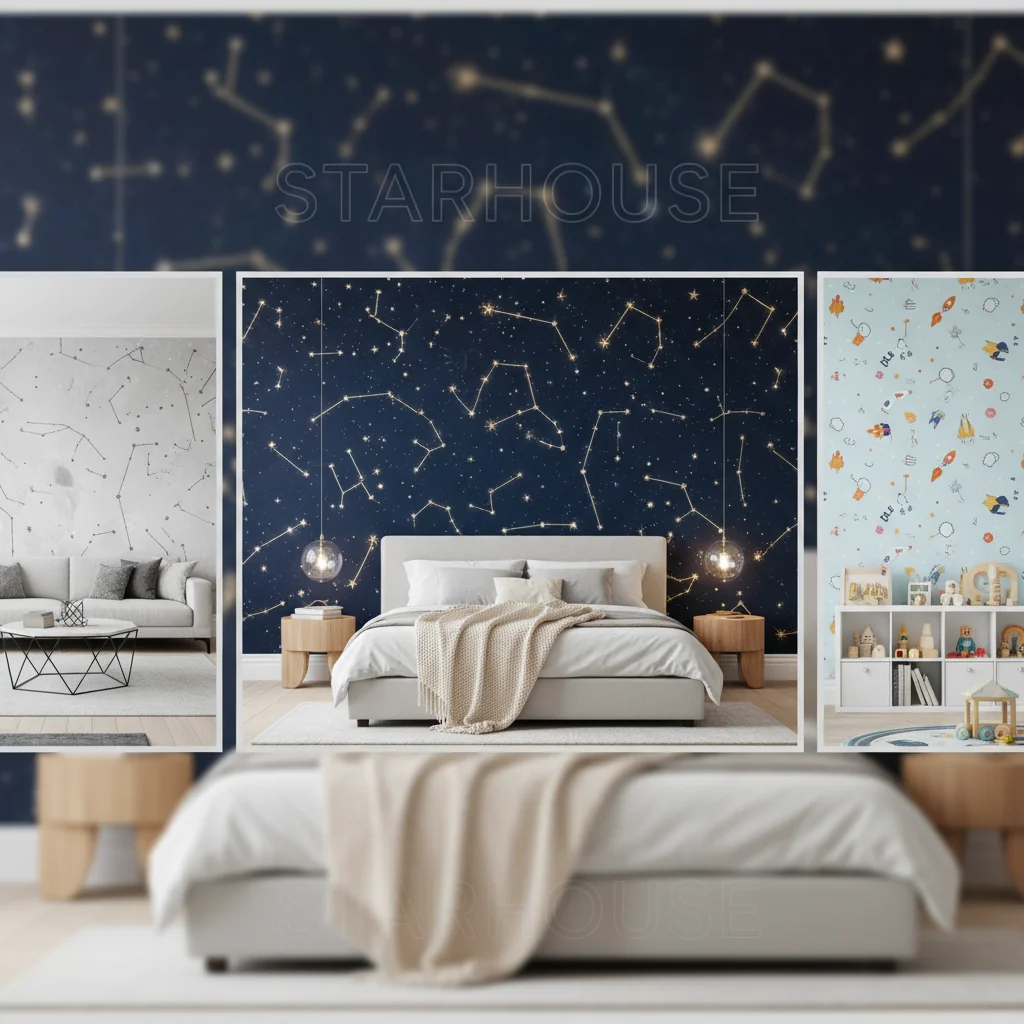
The versatility of constellation wallpaper allows it to transcend specific design aesthetics. Whether integrated into a minimalist setting to provide a singular dramatic statement or layered within an eclectic scheme to complement other worldly curiosities, its presence is always commanding. The specific choice of design—from a subtle, ethereal glow to a bold, graphic representation of the Milky Way—dictates the mood and energy of the room. It offers an innovative alternative to traditional art pieces, enveloping a space in an immersive experience rather than merely adorning a wall. This immersive quality is what sets it apart, turning a room into an observatory, a dreamscape, or a personal sanctuary under the stars.
At Starhouse, we understand that a home is more than just a structure; it’s a personal universe. Constellation wallpaper allows homeowners to literally bring a piece of that boundless universe indoors, reflecting personal interests in astronomy, mythology, or simply a desire for a visually stunning and thought-provoking environment. It’s an investment in atmosphere, creating a backdrop for life’s moments that is both profoundly beautiful and endlessly inspiring.
Types of Constellation Wallpaper: From Subtle to Striking
Constellation wallpaper encompasses a broad spectrum of designs, each offering a distinct aesthetic and thematic focus, allowing homeowners to select an option that perfectly aligns with their vision for a space. These types range from scientifically precise representations of the cosmos to highly artistic and whimsical interpretations, ensuring there is a style to suit every preference and room function. Understanding these distinctions is crucial for making an informed decision that will achieve the desired impact.
Realistic and Astronomical Designs
Realistic constellation wallpapers meticulously depict accurate star charts, nebulae, and galaxies, often based on actual astronomical data. These designs are ideal for enthusiasts of space science, offering an educational and awe-inspiring backdrop. They typically feature deep blues, blacks, and purples with crisp, detailed stars, sometimes highlighting specific constellations like Ursa Major or Orion. The visual effect is one of profound depth and scientific accuracy, transforming a room into a sophisticated planetarium. These are particularly popular in home offices, studies, or bedrooms where a sense of calm and intellectual stimulation is desired.
Artistic and Illustrative Interpretations
Artistic and illustrative constellation wallpapers take a more interpretive approach, featuring stylized drawings, watercolor effects, or hand-drawn motifs of stars and celestial bodies. These designs prioritize aesthetic beauty and artistic expression over scientific precision, often incorporating softer color palettes or more whimsical imagery. They can range from abstract representations of cosmic energy to charming, storybook-like depictions suitable for children’s rooms or creative studios. The brushstrokes, textures, and unique artistic styles in these wallpapers add a layer of warmth and personality that realistic designs might not convey.
Mythological and Zodiacal Themes
Mythological and zodiacal constellation wallpapers intertwine astronomy with ancient lore, depicting the figures and symbols traditionally associated with each constellation or zodiac sign. These designs often draw from Greek, Roman, or other cultural mythologies, showcasing heroes, beasts, and deities amidst the stars. They offer a rich narrative element, inviting viewers to explore the stories embedded within the night sky. Such wallpapers are perfect for spaces where a sense of history, mysticism, or personal connection to astrology is desired, adding a unique conversational piece to living areas or personal sanctuaries.
Glow-in-the-Dark Constellations
Glow-in-the-dark constellation wallpapers offer a playful and interactive element, with specific stars or celestial features treated with luminescent pigments that absorb light during the day and emit a soft glow at night. This type is overwhelmingly popular for children’s bedrooms and nurseries, creating a magical and comforting nighttime environment. The effect is enchanting, allowing the room to transform as daylight fades, revealing a hidden cosmic landscape. While primarily used in children’s spaces, sophisticated versions can also add a subtle, unexpected charm to adult bedrooms or entertainment areas.
Minimalist and Abstract Patterns
Minimalist and abstract constellation wallpapers distill the essence of the cosmos into simpler forms, often using geometric patterns, subtle star clusters, or abstract representations of cosmic phenomena. These designs appeal to those who prefer understated elegance and modern aesthetics. They might feature sparse arrangements of metallic dots on a dark background or faint, interconnected lines suggesting constellations without explicit detail. The focus is on creating atmosphere and texture rather than literal depiction, making them suitable for contemporary interiors where clean lines and sophisticated simplicity are paramount.
Murals versus Repeating Patterns
The choice between a constellation mural and a repeating pattern significantly impacts the visual narrative and scale of the design. Constellation murals are large, singular images that cover an entire wall or a substantial section, creating a dramatic, immersive scene without visible seams or repeats. They are designed to be a focal point, offering a panoramic view of the cosmos. Repeating patterns, on the other hand, feature a smaller, repeating motif that covers the wall continuously. These are more traditional wallpaper applications, providing a consistent texture or background element. Murals offer grandeur and a unique artistic statement, while repeating patterns provide a more subtle, enveloping effect.
Peel-and-Stick versus Traditional Wallpaper
Constellation wallpapers are available in both peel-and-stick (removable) and traditional (paste-required) formats, each with distinct advantages for installation and permanence.
- Peel-and-Stick (Removable) Wallpaper: This type features an adhesive backing protected by a liner, which is peeled away during installation. It is designed for easy, mess-free application and, crucially, effortless removal without damaging the wall surface. This makes it an excellent choice for renters, those who enjoy frequent decor changes, or for temporary installations. Peel-and-stick options are typically thicker and more forgiving during application, allowing for repositioning.
- Traditional Wallpaper: This requires the application of a separate wallpaper paste to the back of the paper or directly to the wall. Traditional wallpapers, particularly non-woven varieties, offer enhanced durability and a wider range of textures and finishes. They are generally considered a more permanent solution, providing a classic, long-lasting finish. While installation can be more involved, the result is often a seamless, high-end appearance.
The choice between these formats depends on your commitment to the design, your DIY comfort level, and whether you need the flexibility of removability. Both options can deliver stunning constellation motifs, but the installation and long-term commitment differ significantly.
Materials and Finishes: Durability Meets Design
The material and finish of constellation wallpaper are pivotal in determining its durability, ease of maintenance, and overall aesthetic impact, directly influencing how the celestial design interacts with light and texture in a room. Selecting the right material ensures not only longevity but also that the wallpaper performs optimally in its intended environment, whether it’s a high-traffic area or a serene private space. Starhouse curates materials that balance visual appeal with practical performance, ensuring your cosmic vision endures.
Paper-Backed Vinyl
Paper-backed vinyl wallpaper combines a decorative vinyl surface with a paper backing, offering a robust and versatile option for many interiors. The vinyl layer provides excellent durability, making it resistant to minor scuffs, tears, and moisture, which means it can be gently wiped clean. This characteristic makes it suitable for areas that might experience more wear, such as hallways or children’s playrooms. The vinyl surface also allows for vibrant color reproduction and intricate detailing, which is ideal for capturing the fine points of constellations and nebulae. Installation typically involves applying paste to the paper backing, allowing for some flexibility during hanging.
Non-Woven Wallpaper
Non-woven wallpaper is a modern wallcovering material composed of natural and synthetic fibers, making it breathable, dimensionally stable, and easier to install and remove compared to traditional paper-backed options. This material is highly regarded for its “paste the wall” application method, where adhesive is applied directly to the wall, simplifying the hanging process and reducing mess. Non-woven wallpapers are tear-resistant, do not expand or contract when wet, and are often fully strippable when it’s time for a change, leaving minimal residue. Their breathable nature also makes them resistant to mold and mildew, a significant advantage in certain climates. They offer a smooth, matte finish that beautifully renders cosmic designs, from subtle star dust to vibrant nebulae.
Solid Vinyl
Solid vinyl wallpaper consists of a thick, durable layer of vinyl, making it one of the most robust and moisture-resistant wallpaper types available. It is exceptionally well-suited for high-humidity environments like bathrooms (though proper ventilation is still crucial) and high-traffic commercial spaces. Solid vinyl is highly washable and resistant to stains and abrasion, ensuring its celestial patterns remain pristine for years. While it may not offer the same breathability as non-woven options, its superior resilience makes it a practical choice for demanding applications. The thickness of solid vinyl can also help to conceal minor wall imperfections, providing a smooth finish for intricate constellation designs.
Textured and Specialty Finishes
Beyond the core materials, various finishes can add depth and unique characteristics to constellation wallpaper:
- Metallic Finishes: Incorporating gold, silver, or copper leafing or metallic inks can make stars glimmer and constellations shine. These finishes catch and reflect light, adding a luxurious and dynamic quality to the celestial scene, mimicking the actual sparkle of distant stars.
- Embossed/Textured: Embossed wallpapers feature raised patterns that add a tactile dimension to the design. For constellation themes, this can mean slightly raised stars or textured representations of cosmic dust, adding a subtle three-dimensional effect that enhances realism and sensory engagement.
- Mica or Glitter Finishes: For a more dramatic sparkle, some constellation wallpapers integrate mica flakes or fine glitter into the design, providing an overt shimmering effect that truly evokes the magic of a starry night. This is often used in more whimsical or playful designs.
- Matte Finishes: A matte finish absorbs light rather than reflecting it, resulting in a sophisticated, understated appearance. This is excellent for designs that aim for a deep, velvety night sky effect, where the focus is on the intricate details of the stars and nebulae without glare.
- Gloss/Satin Finishes: These finishes offer a subtle sheen that can make colors pop and add a touch of modern elegance. A slight gloss can enhance the luminosity of celestial bodies, giving them a more vibrant, almost wet appearance.
Each material and finish contributes distinctly to the final aesthetic and functional performance of the constellation wallpaper. Thoughtful consideration of these factors ensures that the chosen design not only looks stunning but also meets the practical demands of your home environment. At Starhouse, we emphasize that the tactile experience and longevity of your wallcovering are just as important as its visual appeal.
| Material Type | Key Characteristics | Durability | Ease of Installation | Best Use Cases | Approx. Price Range (per single roll) |
|---|---|---|---|---|---|
| Paper-Backed Vinyl | Vinyl surface, paper backing; washable, good color vibrancy. | High (Resistant to scuffs, tears, some moisture). | Moderate (Paste required, some repositioning). | Living rooms, hallways, children’s rooms. | $30 – $70 USD |
| Non-Woven | Blend of natural/synthetic fibers; breathable, tear-resistant, “paste the wall.” | High (Dimensionally stable, resistant to mold). | Easy (Paste the wall, strippable). | Bedrooms, nurseries, home offices, general living areas. | $40 – $100 USD |
| Solid Vinyl | Thick vinyl layer; highly washable, moisture-resistant, hides imperfections. | Very High (Excellent for high-wear areas, moisture). | Moderate to Difficult (Thicker, less forgiving during repositioning). | Bathrooms, kitchens, high-traffic commercial spaces. | $50 – $120 USD |
| Textured/Embossed | Raised patterns; adds tactile dimension, often on paper or non-woven base. | Varies by base material; generally good. | Moderate (Can be trickier to match patterns seamlessly). | Feature walls, spaces needing added depth and interest. | $60 – $150 USD |
| Metallic/Mica | Incorporates reflective elements; adds shimmer and luxury. | Varies by base material; can be delicate. | Moderate (Requires careful handling to avoid creasing). | Accent walls, luxurious bedrooms, dining rooms. | $70 – $200 USD |
Choosing Your Constellation Wallpaper: A Guiding Star
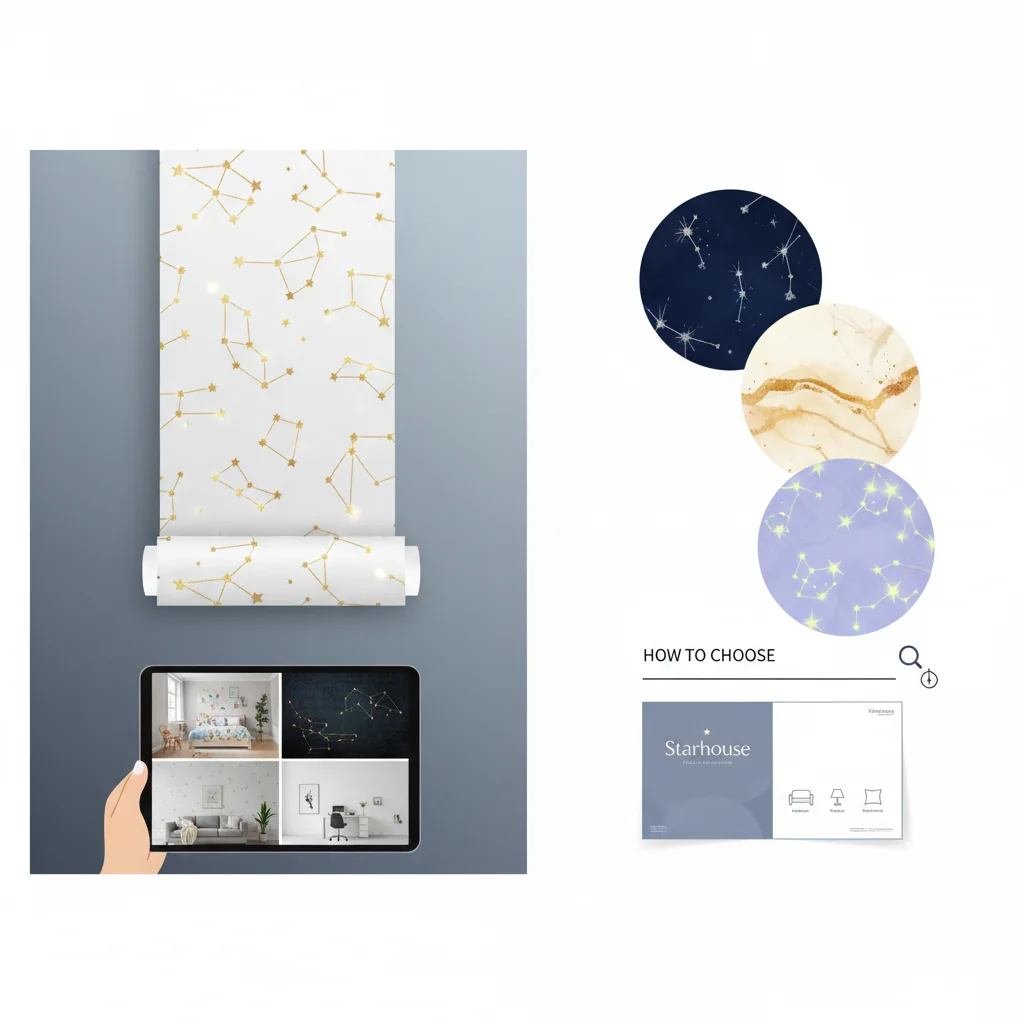
Selecting the ideal constellation wallpaper involves a deliberate process that considers the room’s function, existing decor, lighting conditions, and your personal aesthetic, ensuring the chosen design harmonizes with and enhances your living space. This decision is not merely about visual appeal but about creating an atmosphere that resonates with the room’s purpose and your individual style. At Starhouse, we guide our clients through this selection process, emphasizing careful consideration of each variable to achieve a truly impactful design.
Room Function and Purpose
The primary function of the room is a critical determinant in wallpaper selection. For a bedroom, especially a primary bedroom or a nursery, calming and ethereal constellation patterns are often preferred. Soft blues, muted purples, or gentle glow-in-the-dark options can foster a serene and dream-like atmosphere conducive to relaxation and sleep. In a home office or study, a more scientifically accurate or illustrative star chart can inspire contemplation and intellectual curiosity. For a dining room or living area, a dramatic celestial mural or a bold, artistic interpretation can serve as a captivating conversation starter and a sophisticated focal point. A child’s playroom might benefit from whimsical, colorful, or interactive glow-in-the-dark designs that spark imagination.
Natural and Artificial Lighting
Lighting profoundly impacts how a constellation wallpaper appears throughout the day and night. Rooms with abundant natural light can accommodate darker, more intricate patterns, as the daylight will prevent the space from feeling too enclosed. Conversely, in rooms with limited natural light or smaller dimensions, lighter-colored constellation wallpapers with metallic accents or subtle patterns will help to brighten and expand the space. Consider the artificial lighting as well: warm, ambient lighting can enhance the cozy, intimate feel of a dark celestial design, while cooler, brighter lights might highlight the crisp details of a scientific star map. Spotlights can be used to emphasize specific constellations or metallic elements, creating a dynamic interplay of light and shadow.
Color Palette and Mood
Constellation wallpapers typically feature deep blues, midnight blacks, and rich purples, often accented with gold, silver, or white for the stars and celestial bodies. However, variations exist, including softer pastel palettes for a more ethereal or whimsical look. The chosen color scheme should complement the existing furniture, textiles, and overall decor of the room. A dramatic dark background can create a sense of depth and luxury, while a lighter background with subtle star patterns can offer a more airy and understated elegance. Consider the mood you wish to evoke: deep, rich colors create intimacy and drama, while lighter, brighter hues promote openness and tranquility.
Scale of Pattern
The scale of the constellation pattern is paramount for visual balance. Large-scale murals featuring expansive nebulae or grand star fields are best suited for accent walls or spacious rooms where they can be fully appreciated without overwhelming the space. These designs create a breathtaking focal point. For smaller rooms or for covering all four walls, a smaller, repeating constellation pattern or a more abstract star motif is often more appropriate. These provide a consistent, enveloping texture without making the room feel cluttered or busy. A good rule of thumb is that the larger the room, the larger the pattern it can comfortably accommodate; conversely, smaller rooms benefit from more delicate or less dense patterns.
Existing Decor and Style Integration
Your constellation wallpaper should seamlessly integrate with your home’s existing interior design style. For a modern or minimalist aesthetic, choose wallpapers with clean lines, abstract star patterns, or sophisticated metallic accents. In an eclectic space, a vintage-inspired star chart or a mythological constellation design can add character and intrigue. Traditional homes might benefit from classic astronomical maps with muted tones and intricate detailing. Ensure that the furniture, textiles, and accessories in the room complement the wallpaper’s theme, creating a cohesive and harmonious celestial environment.
Personal Aesthetic and Narrative
Ultimately, the most important factor is your personal connection to the design. What story do you want your walls to tell? Do you seek inspiration, tranquility, a sense of adventure, or a connection to the cosmos? A constellation wallpaper is a powerful tool for self-expression, allowing you to imbue your space with meaning and personality. Explore various designs and visualize how they would feel in your home. Consider how the specific constellations or cosmic elements resonate with you, transforming your room into a truly unique reflection of your inner world.
If you’re envisioning a celestial transformation for your home but aren’t sure where to begin, Starhouse is here to help. We are curating a collection that promises to redefine luxury and comfort, and we want your input. Tell us what you’re looking for in your ideal constellation wallpaper and other home décor elements to get early access to our exclusive offerings. Share your vision and help us shape the future of sophisticated home design at https://starhouseusa.online/.
Sizing and Measuring for Flawless Application
Accurate sizing and meticulous measuring are foundational to a successful wallpaper installation, preventing costly errors, ensuring seamless pattern matching, and minimizing waste. This crucial preparatory step dictates how many rolls of constellation wallpaper you will need and ensures that your celestial design flows uninterrupted across your walls. Precise measurements are non-negotiable for achieving a professional and aesthetically pleasing result.
Essential Tools for Measurement
Before you begin, gather the necessary tools for accurate measurement:
- Steel Measuring Tape: A retractable steel tape measure, at least 25 feet long, is essential for measuring wall dimensions accurately.
- Pencil: For marking measurements directly on the wall or on your diagram.
- Notepad and Calculator: To record measurements and perform calculations for roll quantity.
- Step Ladder: To safely reach the top of your walls for accurate height measurements.
Measuring Your Walls
The process begins by accurately measuring each wall you intend to cover. For each wall:
- Measure Height: Measure the height from the top of the baseboard to the ceiling line. Take at least three measurements across the width of the wall (left, center, right) as walls can vary slightly in height. Use the tallest measurement for your calculations to ensure you have enough length for each strip.
- Measure Width: Measure the total width of the wall. Again, take measurements at the top, middle, and bottom to account for any irregularities.
- Account for Openings: Measure the height and width of all doors, windows, and other architectural features (e.g., built-in shelves, large vents). These areas will be cut out, reducing the amount of wallpaper needed for that section, but it’s crucial to calculate full wall coverage first before deducting for openings to ensure enough material for pattern repeats.
Record all measurements clearly on a diagram of your room, noting each wall’s dimensions separately.
Calculating the Number of Rolls
Calculating the correct number of rolls requires understanding your chosen wallpaper’s dimensions and pattern repeat. Standard U.S. wallpaper rolls typically measure 20.5 inches wide by 33 feet long (approximately 56 square feet per single roll, though double rolls are often sold as one unit). Mural panels have specific dimensions.
Here’s a step-by-step approach for repeating pattern wallpaper:
- Calculate Total Wall Area: Multiply the total height of your walls (using the tallest measurement) by the total width of all walls combined. For example, if your walls are 8 feet high and the total width of all walls is 40 feet, your total area is 320 sq ft.
- Determine Number of Strips per Roll: Divide the length of one roll (e.g., 33 feet) by the height of your wall (e.g., 8 feet). This tells you how many full strips you can get from one roll. For an 8-foot wall, a 33-foot roll yields 4 strips (33 / 8 = 4.125, rounded down to 4).
- Calculate Total Number of Strips Needed: Divide the total width of your walls (e.g., 40 feet = 480 inches) by the width of one wallpaper strip (e.g., 20.5 inches). This gives you the total number of strips required. For example, 480 inches / 20.5 inches ≈ 23.4 strips, so you need 24 strips.
- Divide Total Strips by Strips per Roll: Divide the total number of strips needed (e.g., 24) by the number of strips you can get from one roll (e.g., 4). This gives you the raw number of rolls: 24 / 4 = 6 rolls.
- Factor in Pattern Repeat and Waste: This is crucial for constellation wallpaper, which often has intricate patterns.
- Pattern Repeat: This is the distance (in inches) before the pattern repeats itself. A larger repeat means more waste per strip to ensure alignment. Add the pattern repeat distance to your wall height for each strip calculation. For example, if your wall is 8 feet (96 inches) and the pattern repeat is 21 inches, each strip needs to be cut to 96 + 21 = 117 inches (9.75 feet).
- Waste Buffer: Always add a 10-15% buffer to your calculated roll quantity to account for trimming, pattern matching, and potential errors. For our example of 6 rolls, adding 15% would mean ordering approximately 7 rolls (6 * 1.15 = 6.9, rounded up to 7).
For murals, the process is simpler: measure the width and height of the wall where the mural will be placed. Murals are sold in specific dimensions or as a set of panels designed to fit a certain area. Ensure your wall dimensions are within the mural’s specifications, or consult with Starhouse for custom sizing options.
Understanding Pattern Match
The type of pattern match affects both installation and the amount of wallpaper needed:
- Straight Match: The pattern matches straight across the adjacent strip at the same height. This is the easiest to install and typically results in the least waste.
- Drop Match: A drop match pattern on wallpaper requires aligning the design both horizontally and vertically, with each subsequent strip dropping a specific distance to create a continuous, staggered motif. This type requires more careful planning and often results in more waste due to the need for precise vertical and horizontal alignment. There are half-drop and multiple-drop matches.
- Random Match: There is no specific pattern to match, allowing strips to be hung side-by-side without concern for alignment. This results in minimal waste and is the easiest to install. Constellation wallpapers are rarely random match, as the celestial designs typically require careful alignment.
Always check the pattern match information provided with your specific constellation wallpaper. Over-ordering by one or two rolls is a small price to pay for ensuring a flawless, continuous celestial scene, as dye lots can vary between batches, making it difficult to match later if you run short.
Installation Insights: Professional Results at Home
Achieving a professional-quality installation of constellation wallpaper requires meticulous preparation, the right tools, and careful execution, whether you choose a DIY approach or enlist expert help. Proper installation is critical not only for the aesthetic outcome but also for the longevity and durability of your celestial wall covering. Starhouse emphasizes that attention to detail during this phase will yield a truly transformative result.
Surface Preparation: The Foundation of Flawless Walls
The condition of your walls is the single most important factor for a successful wallpaper installation. A clean, smooth, and properly primed surface ensures optimal adhesion and a seamless finish, preventing common issues like bubbling, peeling, or visible imperfections. Neglecting this step can compromise even the most exquisite constellation design.
- Clean the Walls: Thoroughly wash walls with a mild detergent solution (like TSP substitute) and warm water to remove dirt, grease, and grime. Rinse thoroughly with clean water and allow the walls to dry completely, typically 24 hours.
- Repair Imperfections: Fill any holes, cracks, or dents with spackle or joint compound. Sand these areas smooth once dry. Even minor imperfections can show through wallpaper, especially thinner materials or those with reflective finishes.
- Remove Loose Paint or Old Wallpaper: Ensure all loose paint is scraped off and any old wallpaper or adhesive residue is completely removed. Walls must be smooth and free of debris.
- Prime the Walls: Apply a high-quality wallpaper primer (often called a “sizing” or “wall-prep”) designed for wallpaper application. This serves several critical functions:
- It creates a consistent, slightly porous surface for the adhesive to bond to.
- It seals the wall, preventing the paste from being absorbed too quickly, which can lead to premature drying and poor adhesion.
- It makes future wallpaper removal easier by creating a barrier between the wall surface and the adhesive.
Allow the primer to dry completely according to the manufacturer’s instructions, often 24 hours.
Essential Tools for Installation
Having the right tools on hand streamlines the process and helps ensure a professional finish:
- Smoothing Tool/Wallpaper Smoother: A plastic smoother or brush to eliminate air bubbles and ensure firm adhesion.
- Utility Knife with Snap-Off Blades: Essential for precise, clean cuts at the ceiling, baseboards, and around openings. Keep blades sharp.
- Level and Plumb Line: Crucial for hanging the first strip perfectly straight, which sets the alignment for all subsequent strips.
- Measuring Tape and Pencil: For marking cuts and alignments.
- Seam Roller: To press down seams for a tight, invisible finish.
- Wallpaper Paste (for traditional wallpaper): High-quality, appropriate adhesive for your wallpaper type.
- Large Work Surface: A pasting table or clean, protected floor space for cutting and pasting.
- Clean Sponges and Buckets of Water: For wiping away excess paste and cleaning tools.
- Step Ladder: For safe access to higher wall sections.
Installation Process: Peel-and-Stick vs. Traditional
Peel-and-Stick Constellation Wallpaper:
Peel-and-stick is favored for its ease and removability, making it ideal for DIY enthusiasts.
- Cut to Size: Measure and cut your first strip, adding a few inches to the top and bottom for trimming.
- Start with a Plumb Line: Use a level and pencil to draw a perfectly vertical line on your wall, about an inch less than the width of your first strip from a corner. This ensures your first strip is straight.
- Peel and Stick: Peel back a few inches of the backing paper from the top of the first strip. Align the edge of the wallpaper with your plumb line and press it onto the wall.
- Smooth Down: Gradually peel more of the backing paper while simultaneously smoothing the wallpaper down the wall with your smoothing tool, working from the center outwards to push out air bubbles.
- Trim Excess: Once the strip is fully applied, use your utility knife and a straight edge to carefully trim the excess at the ceiling and baseboard.
- Repeat: For subsequent strips, align the edges tightly with the previous strip, matching the constellation pattern precisely. Overlap slightly if recommended by the manufacturer, then trim.
- Repositioning: One of the key benefits of peel-and-stick is its ability to be repositioned if you don’t get it right the first time.
Traditional Paste-Required Constellation Wallpaper:
Traditional wallpaper offers a classic finish and is often more durable, though installation is more involved.
- Cut and Book: Measure and cut your first strip, adding 4-6 inches for trimming. If using traditional paste-the-paper wallpaper, apply an even coat of paste to the back of the strip. “Book” the paper by folding both ends towards the middle, paste-to-paste, without creasing. Let it rest for 5-10 minutes (booking time) to allow the paper to relax and absorb the paste. For paste-the-wall non-woven wallpaper, apply paste directly to the wall section where the strip will go.
- Hang the First Strip: Similar to peel-and-stick, use a plumb line to ensure your first strip is perfectly vertical. Align the top edge, leaving excess for trimming, and press it onto the wall.
- Smooth and Trim: Use your smoothing tool to work out air bubbles from the center outwards. Trim excess at the ceiling and baseboard with a sharp utility knife.
- Hang Subsequent Strips: Carefully butt the edges of subsequent strips against the previous one, meticulously matching the constellation pattern. Use a seam roller to gently flatten the seams for a smooth, almost invisible transition.
- Clean Up: Immediately wipe away any excess paste from the wallpaper surface or seams with a damp sponge to prevent it from drying and leaving a shine.
Hiring a Professional
While many homeowners successfully install wallpaper themselves, hiring a professional installer is often a wise investment, especially for complex constellation murals, expensive materials, or intricate pattern repeats. Professionals possess the experience, specialized tools, and techniques to ensure a flawless finish, save you time, and prevent costly errors. “Selecting wallpaper can be daunting for homeowners, but the payoff can be huge if it’s done correctly,” states interior designer Andrew Howard, emphasizing the transformative power of wallpaper when applied thoughtfully (Veranda.com). A professional guarantees that your celestial vision will be realized with precision and lasting beauty, ensuring every star aligns perfectly.
Styling and Pairing Constellation Wallpaper: Harmonizing Your Cosmos
Styling constellation wallpaper effectively involves thoughtful pairing with complementary furniture, textiles, lighting, and accessories to create a cohesive and immersive cosmic theme that resonates throughout the entire room. The goal is to extend the celestial narrative beyond the walls, enveloping the space in a harmonious atmosphere that enhances the wallpaper’s captivating design. At Starhouse, we advocate for a holistic design approach where every element contributes to the overarching vision.
Furniture Selection: Anchoring Your Universe
The furniture chosen to accompany constellation wallpaper should either complement its intricate details or provide a serene counterpoint. For a dramatic, deep-toned constellation mural, minimalist furniture with clean lines in dark woods, black, or metallic finishes can provide a sophisticated contrast, allowing the walls to be the undisputed focal point. Think sleek, low-profile sofas or beds that don’t obstruct the celestial view. Alternatively, antique or vintage pieces with ornate details can beautifully echo the historical and mythological aspects of certain constellation designs, particularly those with a vintage star chart aesthetic. Consider velvet upholstery in deep jewel tones like sapphire blue, emerald green, or amethyst purple to add a luxurious, cosmic texture.
Textiles: Softening the Celestial Edge
Textiles play a crucial role in adding warmth, texture, and comfort to a room with constellation wallpaper. Rich fabrics like velvet, silk, or faux fur in complementary colors (deep blues, purples, grays, or metallic golds/silvers) can enhance the luxurious feel. Introduce throw pillows featuring subtle star motifs, geometric patterns, or solid colors that pick up hues from the wallpaper. Drapery can be understated, in a solid color that matches the wallpaper’s background, or more dramatic, with a slight sheen or textured weave that mimics cosmic dust. Consider plush rugs in dark, grounding colors to anchor the space and provide a soft landing underfoot, balancing the expansive feel of the celestial walls.
Lighting: Illuminating the Night Sky
Lighting is paramount when styling constellation wallpaper, as it can dramatically alter the perception of the celestial scene from day to night. Ambient lighting is key:
- Hidden LED Strips: Install LED strip lights along crown molding or behind furniture to cast a soft, ethereal glow that highlights the wallpaper without creating harsh shadows.
- Pendant Lights and Chandeliers: Choose fixtures that evoke celestial bodies, such as spherical pendants resembling planets or starburst chandeliers that scatter light like distant galaxies.
- Star Projectors: For children’s rooms or entertainment spaces, a subtle star projector can add an interactive, dynamic element, casting moving stars onto the ceiling or an adjacent wall.
- Dimmable Switches: Essential for controlling the mood, allowing you to transition from a brightly lit space to a cozy, starlit sanctuary.
- Metallic Lamps: Table or floor lamps with metallic bases or shades can reflect light and echo the metallic accents within the wallpaper, adding to the cohesive theme.
Strategic lighting can make metallic elements in the wallpaper sparkle, deepen the background colors, and enhance the overall immersive experience.
Accessories: Curating Your Cosmic Collection
Thoughtful accessories reinforce the constellation theme without overwhelming the space. Consider:
- Telescopes and Celestial Globes: A decorative telescope or an antique celestial globe adds an authentic touch of astronomical exploration.
- Framed Star Maps: Complement the wallpaper with framed reproductions of historical star charts or modern astrophotography.
- Metallic Accents: Introduce gold, silver, or brass decorative objects, vases, or picture frames to pick up on the metallic elements in the wallpaper.
- Crystals and Geodes: Natural crystals and geodes can evoke the raw beauty of cosmic formations and add an earthly touch.
- Abstract Art: If the wallpaper is a mural, abstract art on an adjacent wall can provide a contemporary contrast, drawing the eye without competing.
- Books on Astronomy/Mythology: Displaying relevant literature on shelves or coffee tables can deepen the narrative.
Color Schemes: Harmonizing Hues
When pairing, consider a dominant color palette. If your constellation wallpaper features deep blues and silvers, extend these hues into your textiles and smaller decor items. Introduce a complementary accent color, such as a rich gold or a soft cream, to add warmth and visual interest. For wallpapers with warmer tones (e.g., rusty reds of a nebula), balance with earthy browns, deep oranges, or even subtle greens to ground the space. The key is to create a sense of flow, where colors from the wallpaper are subtly echoed throughout the room, creating a seamless, enveloping cosmic experience.
Layering with Other Wall Treatments
Constellation wallpaper doesn’t have to cover every wall. Consider using it as a dramatic accent wall, then painting the remaining walls in a complementary solid color pulled directly from the wallpaper’s palette. Combining it with wainscoting can add architectural interest and a touch of traditional elegance, grounding the celestial design in a classic framework. The lower wainscoting can be painted a darker color to mimic the horizon, allowing the constellation wallpaper to expand upwards like the night sky. This layering creates depth and prevents the room from feeling completely engulfed by the pattern, offering a sophisticated balance.
Current Trends and Future Horizons in Constellation Wallpaper
The realm of constellation wallpaper is continuously evolving, driven by technological advancements and shifting design philosophies, moving beyond traditional star patterns to embrace personalization, sustainable practices, and interactive elements. These trends reflect a broader desire for home environments that are not only beautiful but also meaningful, functional, and environmentally conscious. Starhouse actively monitors these developments to curate a collection that remains at the forefront of innovative design.
Personalization and Customization
One of the most significant trends is the demand for highly personalized constellation wallpaper. Homeowners are increasingly seeking custom star charts that depict the night sky on a specific date and location—perhaps a birthdate, an anniversary, or a significant life event. This allows for a deeply personal connection to the decor, turning a wall into a unique astronomical snapshot of a cherished memory. Advanced digital printing capabilities make it possible to reproduce these bespoke celestial maps with stunning accuracy and detail. This trend extends to custom color palettes, allowing clients to match the cosmic design perfectly with their existing interior scheme.
Sustainable Materials and Eco-Conscious Design
As environmental awareness grows, sustainable and eco-friendly materials are becoming a priority in wallpaper manufacturing. This includes constellation wallpapers made from recycled content, non-woven materials derived from responsibly sourced fibers, and those printed with water-based, non-toxic inks. Manufacturers are also focusing on reducing VOC (Volatile Organic Compound) emissions, ensuring healthier indoor air quality. Starhouse is committed to offering options that align with these values, providing beautiful designs that also support environmental stewardship. This trend reflects a desire for products that are both aesthetically pleasing and ethically produced.
Interactive and Augmented Reality (AR) Elements
The future of constellation wallpaper is poised to include interactive elements, leveraging smart technology to enhance the user experience. Imagine wallpaper with subtle, embedded LED lighting that can be controlled via an app, allowing specific constellations to twinkle or nebulae to glow on demand. Augmented Reality (AR) integration is also emerging, where a smartphone or tablet camera can be pointed at the wallpaper to reveal animated constellations, provide educational information about stars, or even project mythological figures onto the wall. These innovations transform passive decor into dynamic, educational, and entertaining features, blurring the lines between art and technology.
Blurring Lines with Abstract Art and Geometric Patterns
Contemporary constellation wallpaper designs are increasingly blending with abstract art and geometric patterns. This trend moves away from purely literal depictions of the night sky, instead offering stylized, fragmented, or deconstructed cosmic motifs. Geometric shapes might represent star clusters, or abstract brushstrokes could evoke the swirling motion of galaxies. This approach allows constellation wallpaper to integrate more seamlessly into modern and contemporary minimalist interiors, providing a sense of cosmic wonder through artistic interpretation rather than strict astronomical accuracy. The focus is on mood and artistic expression, creating a sophisticated backdrop that hints at the universe rather than explicitly illustrating it.
Biophilic Design Integration
Biophilic design, which seeks to connect occupants with the natural environment, is finding its way into constellation wallpaper. While traditional biophilic elements focus on plants and natural light, the cosmos represents the ultimate natural environment. Constellation wallpapers contribute to biophilic principles by fostering a sense of connection to the vastness of nature, promoting calm, reducing stress, and inspiring wonder. Designs that combine celestial elements with subtle earthy tones, natural textures, or even subtle representations of terrestrial landscapes transitioning into the night sky are gaining traction, creating a holistic connection between the indoors and the entire natural world, from earth to stars.
Large-Scale Murals with Depth and Dimension
The popularity of large-scale constellation murals continues to grow, with a focus on designs that create an illusion of immense depth and dimension. Advanced printing techniques allow for incredibly high-resolution images of nebulae and galaxies, making walls feel like expansive windows into deep space. These murals often utilize photographic quality imagery or hyper-realistic artistic renderings to achieve a truly immersive effect. The trend is towards designs that make the room feel larger and more open, providing a breathtaking, enveloping experience that makes the wall disappear into the cosmos.
Care and Maintenance for Lasting Brilliance
Proper care and routine maintenance are essential for preserving the beauty and integrity of your constellation wallpaper, ensuring its celestial charm endures for years to come. While wallpapers are designed for durability, consistent attention to cleaning and protection prevents premature wear and fading, keeping your cosmic design as vibrant as the day it was installed. Starhouse advises that a small investment of time in maintenance yields significant returns in longevity and aesthetic appeal.
Routine Cleaning: Keeping the Stars Shining
The frequency and method of cleaning depend largely on the material of your constellation wallpaper and its location. Most modern wallpapers, especially non-woven and vinyl types, are designed to be washable or wipeable.
- Dusting: For all types of wallpaper, regular dusting with a soft, dry cloth or a feather duster is recommended to prevent dust buildup, which can dull the surface over time. This should be done at least once a month.
- Spot Cleaning (Washable Wallpaper): For washable vinyl or non-woven wallpapers, minor marks or smudges can be gently spot cleaned. Use a soft, clean sponge or cloth lightly dampened with lukewarm water and a very small amount of mild, non-abrasive soap (like dish soap). Gently wipe the affected area, then immediately wipe with a clean, damp cloth to remove any soap residue, and finally, dry with a soft, clean towel. Avoid excessive scrubbing or saturating the paper, as this can damage the adhesive or the surface.
- Non-Washable Wallpaper: For delicate paper-based or textured wallpapers that are labeled “non-washable” or “wipeable only,” avoid using any liquids. Instead, use a dry sponge or a dough-type wallpaper cleaner (available at hardware stores) to gently lift surface dirt. Always test an inconspicuous area first.
Always refer to the manufacturer’s specific cleaning instructions, as these can vary significantly by material and finish. Harsh chemicals, abrasive cleaners, or stiff brushes should never be used, as they can permanently damage the wallpaper’s surface, fade colors, or compromise the integrity of the design.
Avoiding Damage: Protecting Your Cosmic Canvas
Preventative measures are key to extending the life of your constellation wallpaper.
- Direct Sunlight: Prolonged exposure to direct sunlight can cause wallpaper colors to fade over time, particularly darker hues or vibrant nebulae. Consider using UV-protective window films, blinds, or curtains in rooms that receive intense direct sunlight to minimize fading.
- Humidity and Moisture: While vinyl and some non-woven wallpapers are moisture-resistant, excessive humidity or direct water exposure (e.g., in an unventilated bathroom) can still cause issues like peeling seams or mold growth. Ensure adequate ventilation in high-humidity areas.
- Sharp Objects and Abrasion: Be mindful of furniture, pets, or sharp objects that could scuff, scratch, or tear the wallpaper. Position furniture slightly away from walls, or use protective coverings if necessary.
- Heat Sources: Avoid placing wallpaper directly behind or too close to intense heat sources like radiators, space heaters, or stovetops, as prolonged heat can dry out the adhesive and cause the paper to peel or become brittle.
Addressing Minor Repairs: Restoring Brilliance
Small imperfections or damages can often be repaired without needing to replace entire sections.
- Lifting Seams: If a seam begins to lift, gently reapply a small amount of wallpaper seam adhesive (available at hardware stores) using a small brush or syringe. Press the seam firmly back into place with a seam roller and wipe away any excess adhesive immediately.
- Small Tears or Bubbles: For small tears, carefully apply a tiny amount of wallpaper paste under the torn edge with a toothpick and press it down. For small air bubbles, a hypodermic needle can be used to inject a small amount of adhesive and then smooth the area flat.
- Matching Patches: For larger damage, if you have leftover wallpaper from the original installation, you can cut a matching patch. Ensure the pattern aligns perfectly, then carefully cut out the damaged section and replace it with the new patch, applying paste to the back.
Longevity: An Investment in Atmosphere
With proper installation and consistent care, high-quality constellation wallpaper can last anywhere from 10 to 20 years or even longer. The durability of the material (vinyl typically outlasts paper), the quality of the adhesive, and environmental factors all contribute to its lifespan. Investing in a premium wallpaper and adhering to these maintenance guidelines ensures that your celestial backdrop remains a captivating and inspiring feature of your home for decades.
Common Mistakes to Avoid When Choosing and Installing Constellation Wallpaper
Navigating the selection and installation of constellation wallpaper can be complex, and certain common errors can diminish the final aesthetic and functional outcome. Being aware of these pitfalls allows homeowners to make more informed decisions and achieve a truly professional and satisfying result. Starhouse aims to equip you with the knowledge to avoid these common missteps, ensuring your cosmic vision is realized without compromise.
1. Inadequate Wall Preparation
Mistake: Skipping cleaning, repairing, or priming walls before installation. This is arguably the most critical error.
Consequence: Wallpaper will not adhere properly, leading to bubbles, peeling seams, visible wall imperfections (e.g., old nail holes, drywall patches showing through), and potential mold growth if walls aren’t sealed.
Solution: Always clean walls thoroughly, fill and sand all imperfections smooth, and apply a high-quality wallpaper primer (sizing) to ensure a consistent, stable, and sealed surface for optimal adhesion and easier future removal.
2. Underestimating Pattern Repeat and Roll Quantity
Mistake: Not accounting for the pattern repeat when calculating the number of rolls needed, or simply purchasing the exact minimum.
Consequence: Running out of wallpaper mid-project, especially problematic if subsequent batches have slight dye lot variations. This leads to delays, mismatched patterns, and frustration. Constellation patterns often have large, intricate repeats.
Solution: Always add the pattern repeat to your wall height for each strip calculation and then order an additional 10-15% buffer (at least one extra roll) beyond the calculated minimum. This ensures you have enough material for cuts, trimmings, and potential errors, all from the same dye lot.
3. Ignoring Room Scale and Overpowering the Space
Mistake: Choosing a large, busy, or dark constellation pattern for a small room, or applying a dramatic mural to all four walls of an already compact space.
Consequence: The room can feel visually cluttered, smaller, darker, and overwhelming, losing the intended sense of wonder and becoming oppressive.
Solution: For smaller rooms, opt for lighter backgrounds, more subtle patterns, or use a bold design only on a single accent wall. In larger spaces, a grand mural or a more intricate repeating pattern on multiple walls can be effective, but always consider the overall balance and the amount of natural light.
4. Neglecting the First Strip’s Alignment
Mistake: Hanging the first strip of wallpaper without using a plumb line or level, relying instead on the corner of the wall.
Consequence: Walls are rarely perfectly straight or plumb. A crooked first strip will cause all subsequent strips to be off-kilter, resulting in noticeable misalignment, especially with linear constellation patterns or repeating designs.
Solution: Always use a level and a plumb line (or a laser level) to draw a perfectly vertical guide for your first strip. This foundational step is crucial for ensuring all subsequent strips hang straight and true.
5. Rushing the Installation Process
Mistake: Attempting to wallpaper quickly without patience, especially for traditional paste-required papers that need booking time or for intricate pattern matching.
Consequence: Bubbles, wrinkles, misaligned patterns, torn paper, visible seams, and overall poor finish. Rushing leads to frustration and mistakes that are difficult to correct.
Solution: Allocate ample time for the project. Read all instructions carefully, gather all tools, and work methodically. For traditional wallpaper, respect the booking time. For all types, take your time to smooth out bubbles, align patterns, and trim precisely. Patience is a virtue in wallpapering.
6. Inconsistent Adhesive Application (Traditional Wallpaper)
Mistake: Applying too much, too little, or uneven amounts of paste to traditional wallpaper.
Consequence: Too much paste can squeeze out at seams, creating a messy finish and potentially staining the wallpaper. Too little paste leads to poor adhesion, resulting in lifting seams and bubbles. Uneven application causes inconsistent adhesion and an uneven surface.
Solution: Apply a thin, even coat of high-quality wallpaper paste specifically designed for your wallpaper type. Use a roller or brush to ensure full coverage without globs. Immediately wipe away any excess paste from the surface of the paper with a clean, damp sponge.
7. Ignoring Lighting Conditions
Mistake: Failing to consider how natural and artificial light will interact with the constellation wallpaper’s colors and finishes.
Consequence: A dark pattern in a poorly lit room can make the space feel gloomy. Metallic finishes might create unwanted glare if positioned opposite a strong light source.
Solution: Observe the room’s lighting throughout the day. Consider how artificial lighting will be used. Lighter, reflective, or metallic constellation wallpapers can brighten darker rooms, while matte, deep-toned designs thrive in well-lit spaces or those where a cozy, intimate ambiance is desired.
8. Not Testing the Wallpaper
Mistake: Not testing a sample of the wallpaper in your home environment before committing to a full purchase.
Consequence: The color, texture, and pattern can look significantly different in your home’s lighting and with your existing decor than they did in a showroom or online.
Solution: Always order a sample. Hang it on the wall where you intend to install it and observe it at different times of day and night. This ensures the constellation wallpaper truly complements your space and meets your expectations.
Is constellation wallpaper suitable for a child’s room?
Yes, constellation wallpaper is highly suitable for a child’s room, offering both aesthetic appeal and educational value. Designs often range from whimsical, illustrative stars to glow-in-the-dark options that create a magical nighttime environment, fostering imagination and a sense of wonder. It can also serve as an engaging backdrop for learning about astronomy.
Can I use peel-and-stick constellation wallpaper in a bathroom?
Peel-and-stick constellation wallpaper can be used in a bathroom, but it is best suited for powder rooms or bathrooms with excellent ventilation and minimal direct water exposure. While many peel-and-stick products offer some moisture resistance, they are generally less durable in high-humidity environments compared to solid vinyl wallpapers, which are specifically designed for moisture-prone areas.
How do I remove constellation wallpaper without damaging my walls?
Removing constellation wallpaper without damage depends on its type. Peel-and-stick wallpaper is designed for easy, residue-free removal by simply peeling it off the wall. Non-woven traditional wallpapers are typically “strippable,” meaning they can be pulled off in full sheets when dry. Paper-backed vinyl or older paper wallpapers often require scoring, wetting with a wallpaper remover solution, and scraping to remove, which can be more labor-intensive and may require minor wall repairs afterward.
What’s the difference between a constellation wallpaper and a star map mural?
A constellation wallpaper typically features repeating patterns of stars or stylized constellations across the entire roll, offering a continuous design. A star map mural, conversely, is a large, single image designed to cover an entire wall or a specific section, often depicting a highly detailed, non-repeating astronomical scene like a specific galaxy or a scientifically accurate star chart from a particular date and location, functioning as a singular focal point.
How much does constellation wallpaper typically cost?
The cost of constellation wallpaper varies significantly based on material, design complexity, brand, and whether it’s a repeating pattern or a custom mural. Standard repeating patterns can range from $30 to $150 USD per single roll (approximately 56 sq ft), while high-end, textured, or custom-designed murals can cost several hundred dollars or more for a complete wall panel set. Peel-and-stick options often fall in the mid-range.
Can I paint over constellation wallpaper?
Painting over constellation wallpaper is generally not recommended, especially for designs with texture, metallic finishes, or intricate patterns, as the paint will obscure the original design and texture. While some plain, smooth wallpapers can be painted, it is usually preferable to remove the wallpaper first to ensure a smooth, lasting paint finish. Painting over wallpaper can also make future removal more difficult.
How long does constellation wallpaper last?
High-quality constellation wallpaper, when properly installed and maintained, can last between 10 to 20 years or even longer. The lifespan is influenced by the wallpaper’s material (vinyl and non-woven types are generally more durable), the quality of the wall preparation and adhesive, and environmental factors such as direct sunlight exposure and humidity levels.
Sources
Conclusion: Charting Your Course with Celestial Style
Constellation wallpaper offers a profound opportunity to infuse your home with unparalleled wonder, sophistication, and personal narrative. It transcends mere decoration, inviting the cosmic expanse into your daily life and transforming mundane walls into captivating celestial landscapes. From the scientific precision of astronomical charts to the whimsical charm of glow-in-the-dark stars, the versatility of constellation wallpaper allows for an extraordinary breadth of design possibilities. By carefully considering types, materials, sizing, and styling, you can create a truly immersive environment that reflects your unique vision and inspires contemplation.
The journey to selecting and installing the perfect constellation wallpaper is an exciting one, culminating in a space that feels both deeply personal and universally connected. It’s about crafting an atmosphere that fosters dreams, ignites curiosity, and provides a serene backdrop for your life’s moments. At Starhouse, we believe your home should be a reflection of your highest aspirations, a place where design and emotion intertwine seamlessly.
As Starhouse curates its definitive collection of home & décor essentials, including the most exquisite constellation wallpapers, we are deeply invested in understanding what truly resonates with you. Your insights are invaluable as we build a collection that inspires and delights. We invite you to share your vision, tell us what you’re looking for to complete your celestial or other design dreams, and gain early access to our meticulously selected offerings. Chart your course with us and help shape the future of sophisticated home design: tell us what you’re looking for.