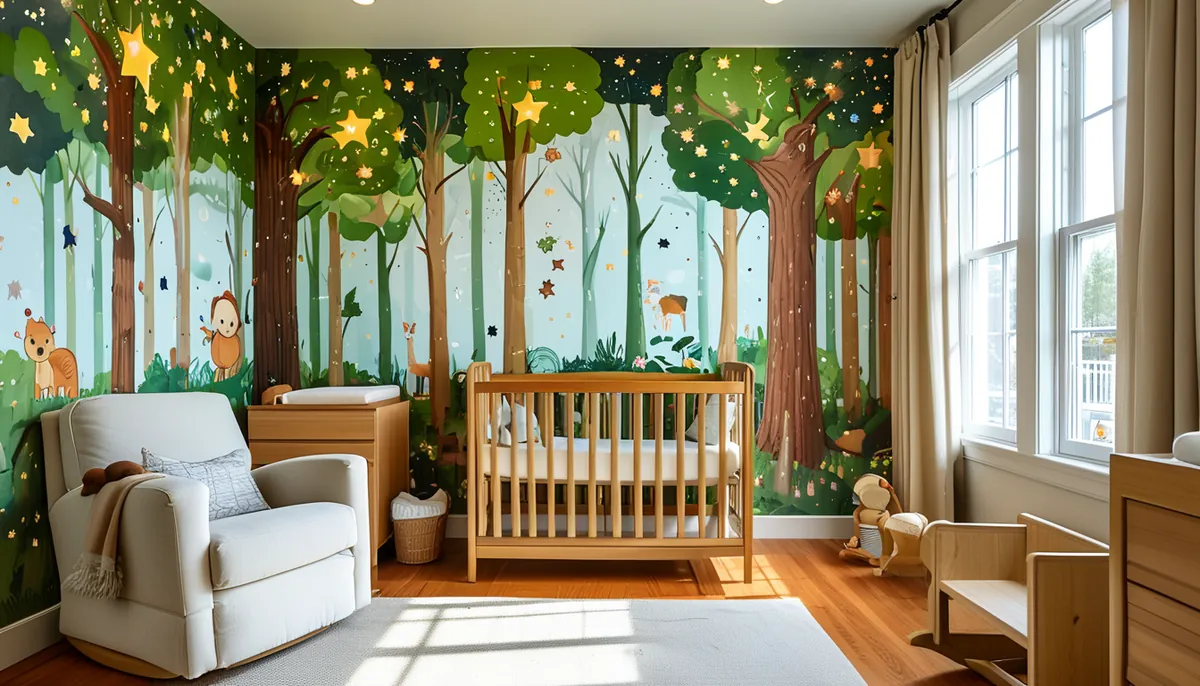
A nursery mural is a focal point that can make a blank room feel whimsical, educational, or calming for your baby. Before you buy, consider the material, design, and installation process to ensure it’s the right choice for your family.
Deciding on the right nursery mural design
The design of your nursery mural should complement the room’s overall theme and color palette. For a calming atmosphere, opt for soft pastels, nature scenes, or abstract patterns. If you want a more stimulating environment, consider brighter colors, playful characters, or educational themes like alphabets or maps. Think about the mural’s longevity; a design that appeals to your child as they grow might be a wise investment.
Consider the scale of the mural. A large, bold design can dominate a small room, while a smaller, more intricate pattern might get lost in a larger space. Measure your wall carefully and visualize how the mural will fit. Many companies offer custom sizing or the ability to scale designs to fit your specific wall dimensions. Don’t be afraid to request samples to see the colors and texture in your room’s lighting.
Understanding nursery mural materials
Nursery murals come in various materials, each with pros and cons. The most common options include:
- Vinyl murals: These are durable, wipeable, and often come with a strong adhesive backing, making installation easier. They are a good choice for high-traffic areas or if you anticipate occasional spills or messes. However, some vinyls can off-gas VOCs, so look for low-VOC or zero-VOC options for a nursery.
- Paper murals: Traditional and often more affordable, paper murals offer a wide range of designs and finishes. They can be less durable than vinyl and may require a separate wallpaper paste for installation. They are also more susceptible to moisture damage, so consider placement carefully.
- Fabric murals: These offer a softer, more tactile feel and can contribute to acoustic dampening. They are often peel-and-stick, simplifying installation. Ensure the fabric is breathable and free from harmful chemicals.
- Non-woven murals: A hybrid of paper and fabric, these are breathable, durable, and easier to remove than traditional wallpaper. They are often used for peel-and-stick applications.
When choosing a material for a nursery, prioritize safety. Look for murals printed with water-based or eco-friendly inks and certified by organizations like GREENGUARD for low chemical emissions. This is crucial for maintaining healthy air quality in your baby’s room.
Installation options for your nursery mural
The installation method significantly impacts the ease and permanence of your mural. The two primary types are:
- Peel-and-stick murals: These are the easiest to install, especially for DIYers. They have a self-adhesive backing that allows you to simply peel off the protective layer and apply the mural directly to a clean, smooth wall. They are also generally removable without damaging the wall, making them ideal for renters or those who like to redecorate frequently. Ensure the wall surface is properly prepped – clean, dry, and free of dust and grease. For larger murals, it’s often easier with two people to align the panels and avoid bubbles.
- Paste-the-wall murals: These require wallpaper paste applied directly to the wall before hanging the panels. This method can be more forgiving for alignment and repositioning during installation. However, removal can be more challenging, potentially requiring steaming or scraping. Always follow the manufacturer’s instructions for paste type and application.
Regardless of the type, proper wall preparation is key. Walls should be smooth, clean, and dry. Fill any holes, sand down imperfections, and consider applying a primer if recommended by the manufacturer. This ensures the mural adheres properly and looks its best.
For those who prefer professional assistance or have complex wall layouts, consider hiring a professional wallpaper installer. Their expertise can save you time and ensure a flawless finish, especially with intricate designs or challenging wall surfaces.
Trade & wholesale accounts
If you’re a professional designer, contractor, or retailer looking to source nursery murals for multiple projects or clients, exploring trade and wholesale accounts can be highly beneficial. Many manufacturers and distributors offer special pricing, dedicated support, and early access to new collections for their trade partners. Setting up an account typically requires verification of your business credentials. This ensures you receive the best possible rates and service for your wholesale purchases.
Maintaining and cleaning your nursery mural
Keeping your nursery mural looking its best involves regular, gentle cleaning. For most vinyl and non-woven murals, a soft, damp cloth is usually sufficient for wiping away dust or minor smudges. Avoid abrasive cleaners or excessive moisture, which can damage the print or material. For paper murals, spot cleaning with a very lightly dampened cloth might be possible, but it’s best to consult the manufacturer’s guidelines. Always test any cleaning method on an inconspicuous area first.
If you’re looking for inspiration on how to use wall coverings to create stunning visuals, you might find our guide on wall mural wallpaper helpful. For more specific design aesthetics, explore options like chinoiserie mural wallpaper.
Avoiding common nursery mural mistakes
Several pitfalls can occur when choosing and installing a nursery mural. One common mistake is not properly measuring the wall space, leading to a mural that is too large or too small. Always measure width and height, accounting for any architectural features like windows or doors.
Another error is inadequate wall preparation. A mural applied over a dirty, uneven, or glossy surface is likely to peel, bubble, or have a poor finish. Ensure the wall is clean, dry, and ideally primed with a suitable primer for wallpaper adhesion.
Choosing a design that is too busy or overwhelming for the room’s size can also be a mistake. Scale is crucial; a mural should enhance the space, not overpower it. Conversely, a mural that is too small or lacks visual interest can fail to make an impact.
Finally, neglecting the material’s suitability for a nursery environment is a significant oversight. Always prioritize low-VOC, eco-friendly materials to ensure the air quality in your baby’s room is safe and healthy. Understanding the installation process and whether it’s a DIY-friendly peel-and-stick or requires professional paste application is also vital to avoid costly errors.
To understand the broader impact of wall treatments, you can learn more about what are wall murals and how they can impact your space. For a specific type of wall covering, consider our guide on wallpaper murals.
Schedule a callback
If you have specific questions about selecting the right nursery mural for your project or need personalized advice on design, materials, or installation, don’t hesitate to schedule a callback. Our experts are available to discuss your needs and provide tailored recommendations to help you create the perfect nursery environment.