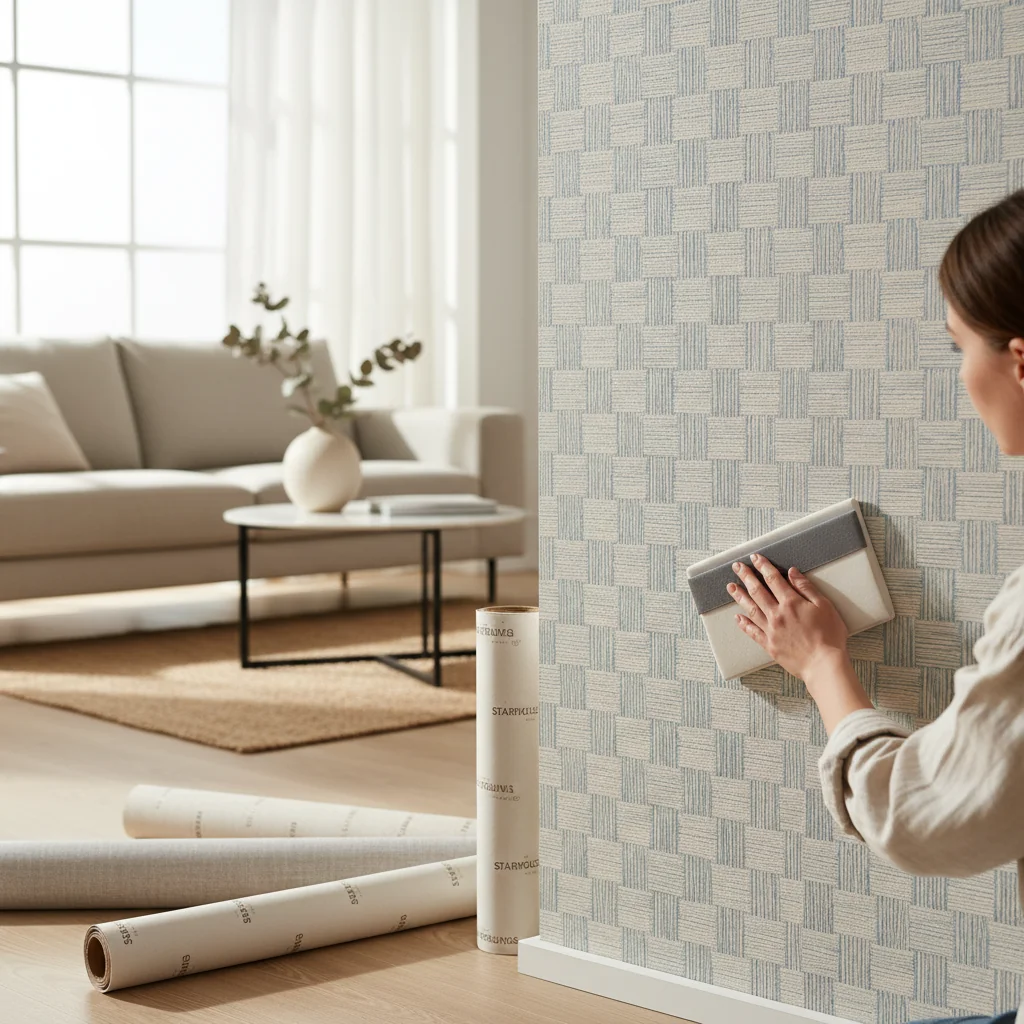
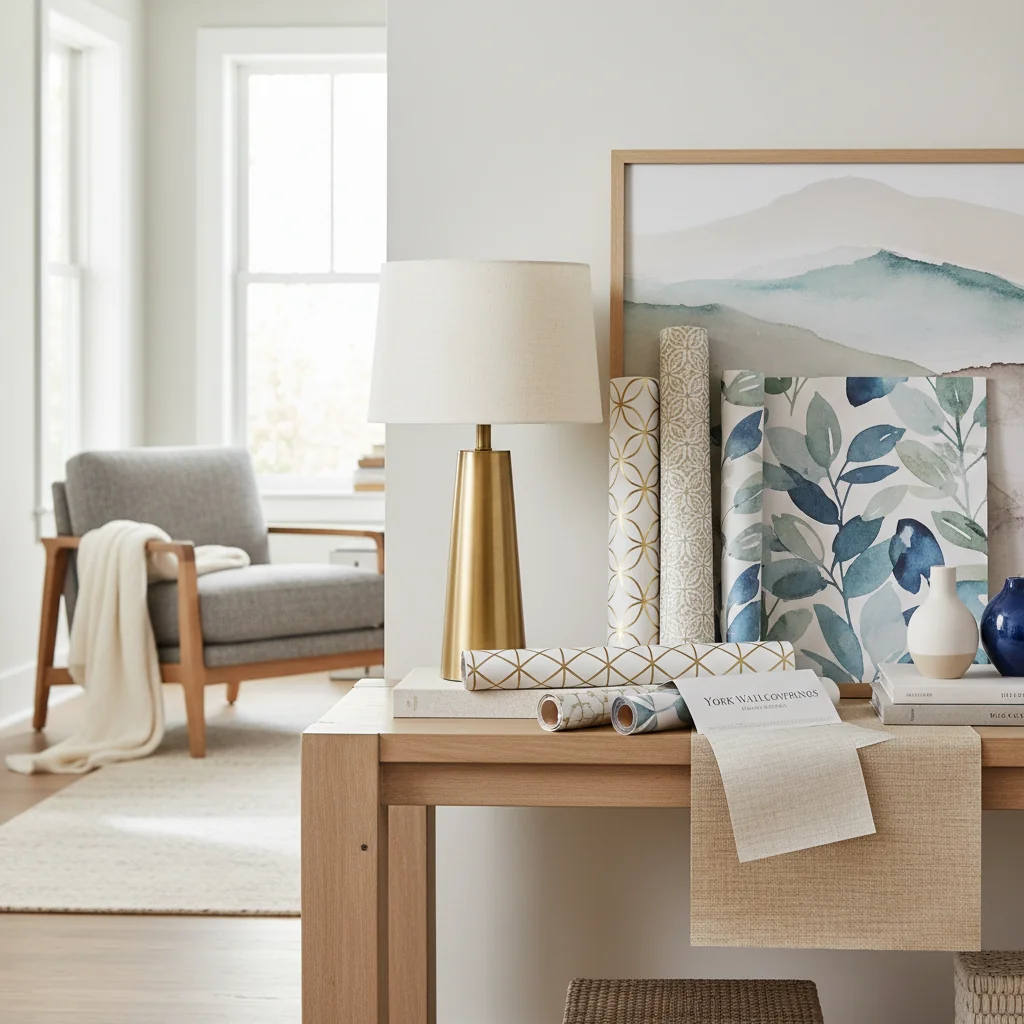
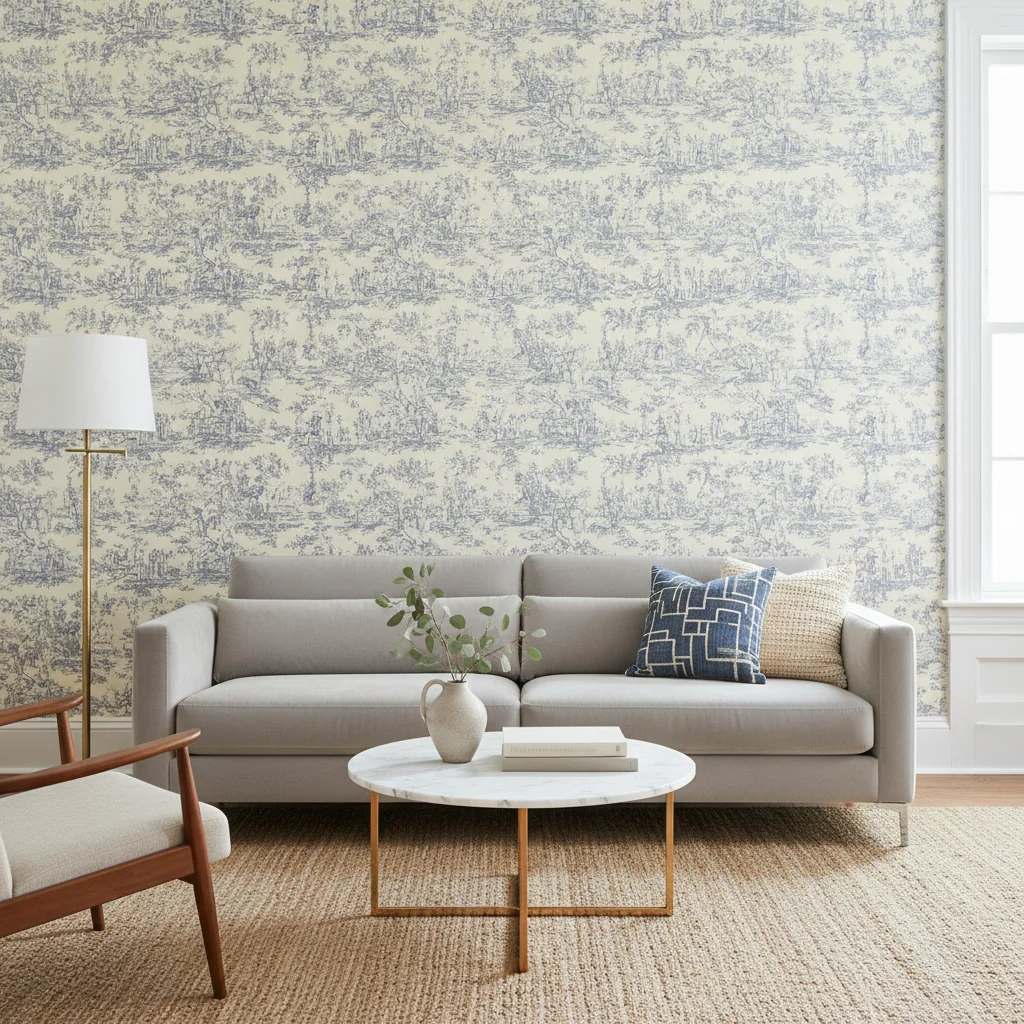
Damask wallpaper is a timeless design element characterized by its intricate, often floral or geometric, patterns woven into a fabric-like texture, typically featuring a monochromatic or tone-on-tone color scheme that creates a subtle play of light and shadow. This enduring decorative choice brings a sophisticated depth and historical elegance to any interior, evolving from its ancient origins as a luxurious silk weaving technique into a versatile wallcovering for contemporary homes. At Starhouse, we understand that selecting the right damask wallpaper involves appreciating its rich history, understanding its diverse material compositions, and mastering the art of its application and styling to achieve a truly bespoke aesthetic.
Key Takeaways
- Damask wallpaper is defined by its reversible, monochromatic woven pattern, historically originating from silk weaving techniques in Damascus, lending it an inherent sense of luxury and tradition.
- Modern damask patterns encompass a wide range of styles, from classic ornate motifs to contemporary geometric interpretations and distressed finishes, offering versatility for diverse interior design schemes.
- Material choices for damask wallpaper, such as vinyl, non-woven, and fabric-backed options, significantly influence its durability, ease of installation, and textural appearance, impacting its suitability for different rooms and lifestyles.
- Accurate measurement, including careful consideration of pattern repeat, is crucial for successful installation and minimizing waste, particularly with large-scale or intricate damask designs.
- Styling damask wallpaper effectively involves balancing its inherent grandeur with complementary furnishings, textiles, and lighting to create a cohesive and sophisticated space without overwhelming the eye.
- Proper care and maintenance, specific to the wallpaper’s material, are essential for preserving the beauty and longevity of your damask investment.
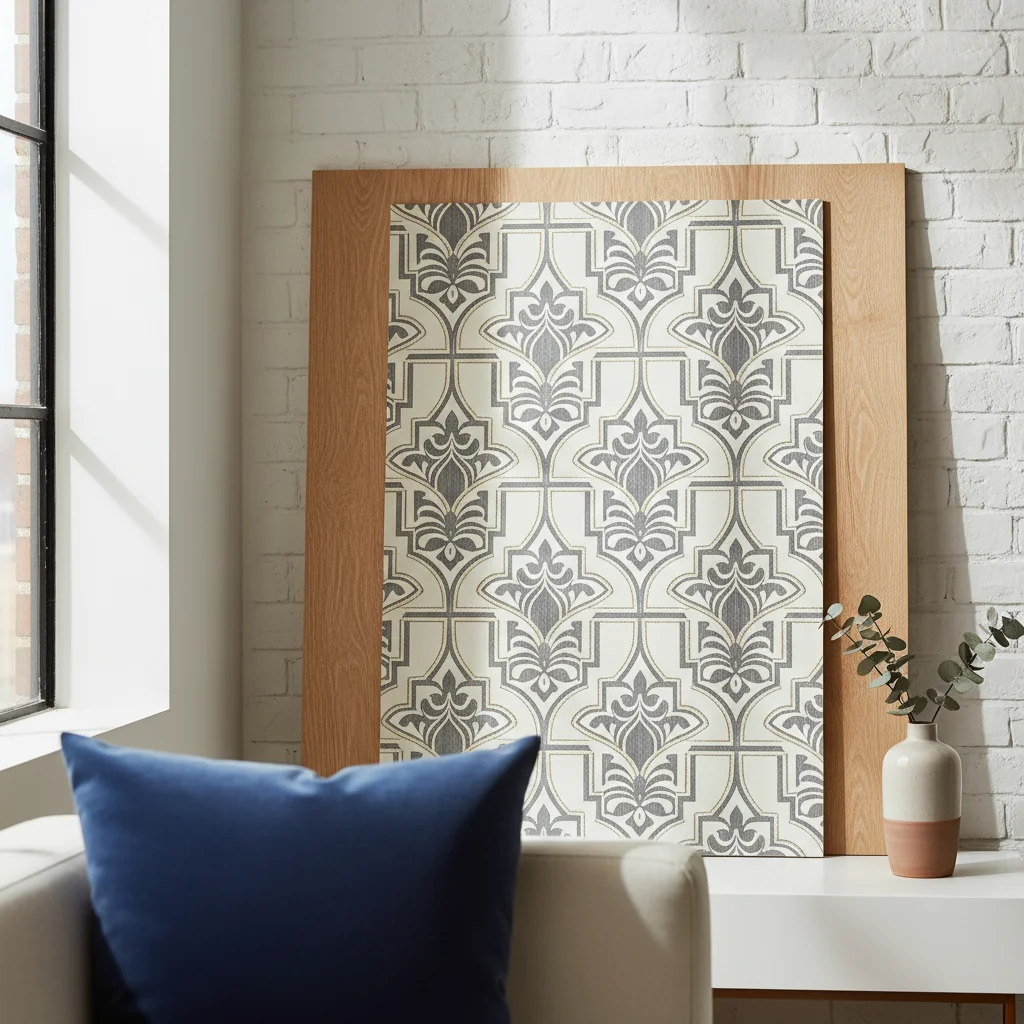
What is Damask Wallpaper? A Deep Dive into its Enduring Appeal
Damask wallpaper is a wallcovering featuring an ornate, often floral or geometric, pattern created by contrasting matte and lustrous threads in a woven textile, historically silk, replicated in wallpaper form to achieve a similar visual depth and sophisticated texture. This distinctive patterning technique originated in Damascus, Syria, around the 9th century, where skilled artisans perfected the art of weaving intricate, reversible patterns into silk fabrics.
The term “damask” itself refers to a specific weaving technique that produces a pattern visible on both sides of the fabric, albeit with reversed colors or textures. In wallpaper, this translates to a pattern that often appears subtly raised or distinguished from its background by differences in sheen, texture, or a slight tonal variation, rather than stark color contrast. This inherent subtlety is a hallmark of damask, allowing it to add richness without overwhelming a space.
Historical Origins and Evolution
The journey of damask from ancient weaving looms to modern wallcoverings is a testament to its enduring aesthetic power. Initially, damask fabrics were a luxury reserved for royalty, nobility, and religious institutions, symbolizing wealth and status due to the complexity of their production and the precious materials used. The Silk Road facilitated its spread across Europe, where Italian and French weavers adopted and refined the technique.
When wallpaper emerged as a more accessible alternative to costly textiles and tapestries in the 17th and 18th centuries, damask patterns were among the first to be reproduced. Early wallpaper manufacturers meticulously mimicked the texture and visual depth of woven damask using printing techniques, making these opulent designs available to a wider audience. This transition allowed the grandeur of damask to adorn walls in homes that previously could not afford silk hangings.
Defining Characteristics of Damask
Several key features define damask wallpaper, ensuring its distinct presence in interior design:
- Ornate Patterns: Damask typically features large, repeating motifs that are often floral (such as the acanthus leaf), fruit-inspired, or geometric, arranged symmetrically. These patterns are generally grand and flowing, evoking a sense of classical elegance.
- Monochromatic or Tonal Color Schemes: While contemporary damasks can incorporate multiple colors, traditional damask patterns are often rendered in a single color or in shades of the same color. This tonal variation creates visual interest through light and shadow, rather than bold color clashes.
- Textural Depth: Even in flat printed wallpapers, damask designs often convey a sense of texture. Embossed damask wallpapers specifically replicate the raised feel of woven fabric, adding another layer of sophistication.
- Reversibility (in fabric, replicated visually in wallpaper): The original damask weaving technique produced a reversible fabric. In wallpaper, this translates to a design that feels cohesive and balanced, often with the pattern appearing to float above or recede into the background.
Understanding these foundational aspects of damask wallpaper is crucial for appreciating its historical significance and for effectively integrating it into both traditional and contemporary design schemes. It is a pattern that speaks of heritage, luxury, and a refined aesthetic sensibility.
Decoding Damask: Types and Patterns
Damask wallpaper, while rooted in a classical weaving technique, has evolved into a broad category encompassing various styles and motifs, ranging from historically accurate reproductions to highly contemporary interpretations. These variations allow damask to adapt to virtually any design aesthetic, from opulent traditional to minimalist modern.
Traditional Damask Patterns
Traditional damask patterns are characterized by their large scale, intricate detailing, and often symmetrical arrangements, drawing direct inspiration from historical textile designs. These patterns typically feature:
- Acanthus Leaf: A ubiquitous motif in classical art and architecture, the acanthus leaf is a common element in traditional damask, symbolizing longevity and immortality. Its curled, spiky form creates flowing, organic patterns.
- Fleur-de-Lis: This stylized lily or iris motif, historically associated with French royalty, frequently appears in damask designs, adding a regal and elegant touch.
- Medallions and Scrolls: Large, central medallions often serve as focal points, surrounded by elaborate scrollwork, garlands, and floral elements, creating a sense of grandeur and formality.
- Candelabras and Urns: Less common but still found, these motifs further emphasize the classical, opulent nature of traditional damask.
These patterns are typically rendered in rich, deep colors such as burgundy, navy, forest green, or gilded tones, enhancing their luxurious appeal. They are ideal for creating formal living rooms, elegant dining areas, or sumptuous bedrooms.
Modern and Contemporary Damask
Contemporary damask designs retain the essence of the original pattern but often simplify motifs, introduce new color palettes, or experiment with scale and texture. This adaptation makes damask relevant for modern interiors. Key characteristics include:
- Simplified Motifs: Modern damask often features cleaner lines, less intricate detailing, and more abstract interpretations of traditional elements. The pattern might be more graphic or stylized.
- Geometric Damask: Some contemporary designs integrate geometric shapes or patterns into the damask structure, offering a sharper, more architectural feel than purely organic forms.
- Distressed or Faded Effects: To create an aged, vintage, or industrial aesthetic, modern damask can feature intentionally distressed, faded, or weathered appearances. This can soften the formality of the pattern.
- Unexpected Color Palettes: Beyond traditional hues, modern damask embraces a wider spectrum of colors, including neutrals (grays, beiges, creams), metallics (silver, gold, rose gold), and even bold, contrasting colors for a dramatic statement.
- Varying Scales: While traditional damask often features large patterns, modern interpretations can range from oversized, dramatic motifs to smaller, more delicate patterns that function almost as a textured background.
These contemporary styles are well-suited for adding a touch of sophistication to modern apartments, creating a chic accent wall, or blending with minimalist decor to introduce texture and visual interest.
Specialty Damask Applications
Beyond style variations, damask patterns can also be found in specific applications or finishes:
- Flocked Damask: This type features a raised, velvet-like texture on the pattern, providing a tactile dimension and enhancing the luxurious feel. Flocked damask is particularly effective in creating a plush, opulent atmosphere.
- Metallic Damask: Incorporating metallic inks or finishes, such as gold, silver, or bronze, metallic damask wallpaper catches and reflects light, adding glamour and a shimmering effect to walls.
- Ombre or Gradient Damask: Some designs feature a damask pattern that gradually shifts in color or intensity, creating a unique visual flow across the wall.
The diversity within damask wallpaper ensures that there is a pattern suitable for every design vision, whether you are aiming for historical grandeur or a subtle contemporary elegance. Exploring these types allows for a highly personalized approach to wall decor.
Your dream home starts with the perfect walls.
What kind of wallpaper and décor elements are you envisioning for your space? Share your design aspirations with Starhouse and get early access to our curated collections.
Materials and Textures: The Foundation of Damask’s Grandeur
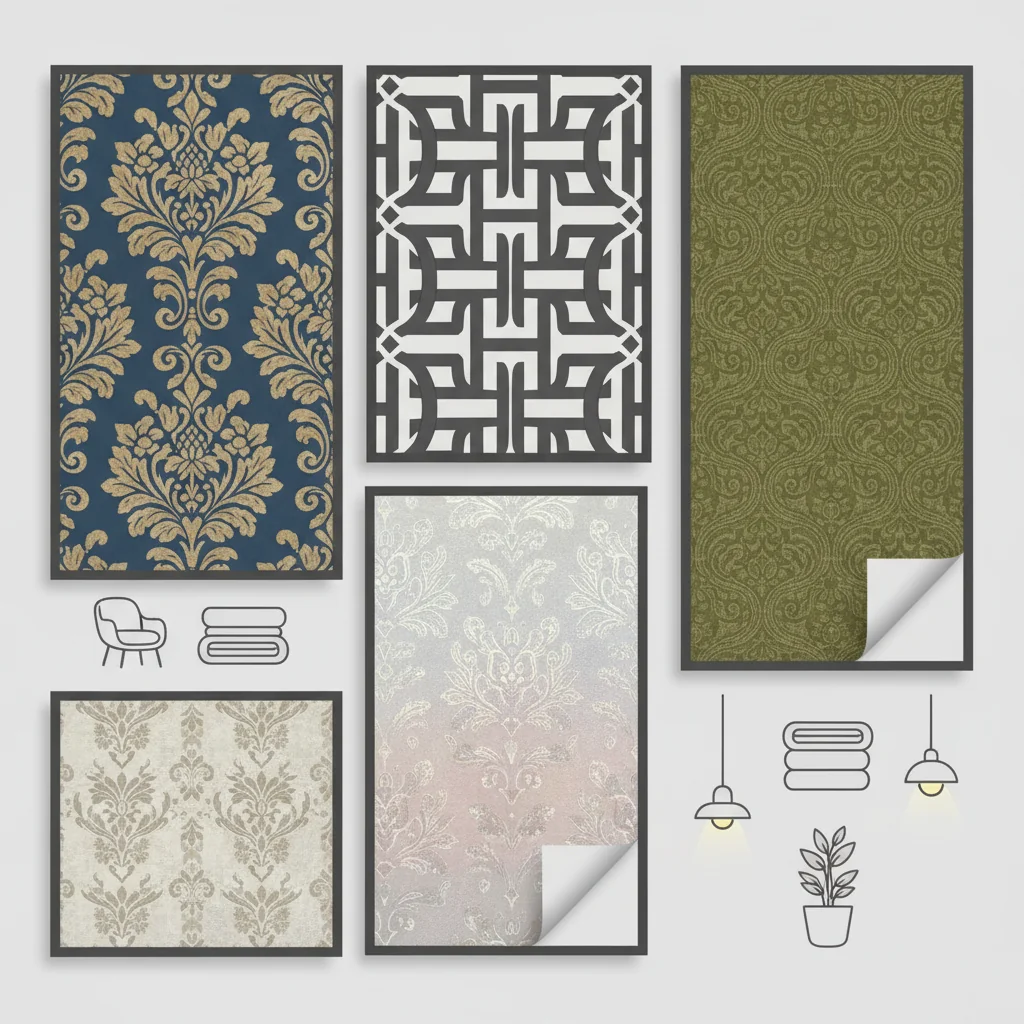
The material composition of damask wallpaper significantly impacts its aesthetic, durability, ease of installation, and suitability for different environments within a home. Understanding these material differences is crucial for making an informed choice that aligns with both your design vision and practical needs.
Common Wallpaper Materials
Wallpaper materials are engineered to offer a range of benefits, from extreme durability to luxurious texture:
- Non-Woven Wallpaper: Non-woven wallpaper is a high-performance material made from a blend of natural and synthetic fibers, making it breathable, tear-resistant, and dimensionally stable. This material is particularly popular for its “paste the wall” application method, which simplifies installation and makes removal significantly easier than traditional paper-backed options, often peeling off in full sheets without damaging the wall. Non-woven damask wallpapers are excellent choices for bedrooms, living rooms, and areas where ease of future redecoration is a priority. They are also often washable, providing good practical benefits.
- Vinyl Wallpaper: Vinyl wallpaper, known for its exceptional durability and moisture resistance, consists of a vinyl layer bonded to a paper or fabric backing. This robust material makes it highly suitable for high-traffic areas, kitchens, bathrooms, and children’s rooms where frequent cleaning or exposure to humidity is expected. Vinyl damask patterns are often embossed, providing a tactile texture that mimics the raised weave of traditional damask fabric, enhancing its luxurious feel. They are typically scrubbable and resistant to stains.
- Traditional Paper Wallpaper: Traditional paper wallpaper is made entirely of paper and offers a classic, matte finish, often chosen for its authentic feel and ability to reproduce fine details. While it provides a timeless aesthetic for damask patterns, it is generally less durable than vinyl or non-woven options and requires careful handling during installation, typically involving “paste the paper” methods. Paper damask is best suited for low-traffic areas like formal dining rooms or guest bedrooms where its delicate nature is less of a concern.
- Fabric-Backed Wallpaper: Fabric-backed wallpapers feature a textile layer (such as cotton or linen) laminated to a paper or non-woven backing, offering superior durability, a luxurious feel, and often improved sound insulation. Damask patterns on fabric-backed materials provide exceptional depth and a truly opulent texture, making them a premium choice. They are ideal for creating a sophisticated and plush atmosphere in master bedrooms, formal living spaces, or home offices. Installation typically requires professional expertise due to the material’s weight and rigidity.
Specialty Textures and Finishes
Beyond the base material, various finishes can elevate the appearance and tactile quality of damask wallpaper:
- Embossed Damask: Embossing creates a raised, three-dimensional texture that mimics the woven nature of original damask fabrics. This adds significant depth and tactile interest, making the pattern stand out subtly through light and shadow. Embossed damask is available across various material types, including vinyl and non-woven.
- Flocked Damask: Flocked wallpaper features a pattern created by applying fine, short fibers (flock) onto the surface, giving it a soft, velvety, and raised texture. Flocked damask patterns are exceptionally luxurious and tactile, ideal for creating a rich, opulent atmosphere, often in formal settings or as a dramatic accent.
- Metallic Damask: Incorporating metallic inks or foils, metallic damask wallpaper adds a subtle shimmer or a bold reflective quality to the pattern. This finish catches light beautifully, adding glamour and sophistication, particularly in contemporary damask designs. Gold, silver, bronze, and copper metallics are common.
- Grasscloth or Natural Fiber Damask: While less common for traditional damask, some contemporary interpretations print damask patterns onto natural fiber wallpapers like grasscloth. This combines the organic texture of natural materials with the classic damask motif, creating a unique blend of rustic elegance and refined pattern.
Choosing the right material and texture for your damask wallpaper is a critical decision that balances aesthetic preference with practical considerations. At Starhouse, we emphasize the importance of understanding these nuances to ensure your selection not only looks stunning but also performs optimally in its intended space.
| Material Type | Durability | Best Use Cases | Texture/Finish | Installation Notes |
|---|---|---|---|---|
| Non-Woven | Good to Excellent (Tear-resistant, dimensionally stable) | Living rooms, bedrooms, hallways, general residential use; high redecoration frequency. | Smooth, matte, or subtly textured; often breathable. | “Paste the wall” method; easy to install and remove in full sheets. |
| Vinyl (Solid Sheet & Fabric-Backed) | Excellent (Highly durable, moisture-resistant, scrubbable) | Kitchens, bathrooms, high-traffic areas, commercial settings, kids’ rooms. | Often embossed, can mimic fabric, leather, or other textures; typically washable. | “Paste the paper” or “paste the wall” depending on backing; can be heavy. |
| Traditional Paper | Moderate (Less durable, can tear easily when wet) | Low-traffic areas, formal dining rooms, guest bedrooms, areas where a classic, matte look is desired. | Smooth, matte finish; can be delicate. | “Paste the paper” method; requires careful handling; more challenging removal. |
| Fabric-Backed | Excellent (Very durable, luxurious, good sound absorption) | Luxury living rooms, master suites, formal studies, high-end commercial spaces. | Soft, tactile, often woven look; can provide insulation. | Requires professional installation; heavy and rigid; “paste the wall” or specific adhesives. |
| Flocked | Good (Velvet texture can be delicate to clean) | Accent walls, formal dining rooms, bedrooms, areas where opulence is key. | Raised, soft, velvety texture; adds significant tactile dimension. | Requires careful handling during installation and cleaning due to flocking. |
| Metallic | Varies by base material (can be vinyl or non-woven) | Accent walls, entryways, powder rooms, contemporary spaces needing glamour. | Reflective, shimmering, catches light; can be smooth or textured. | Installation similar to base material; careful alignment to avoid visible seams. |
Choosing Your Damask: A Strategic Approach to Design
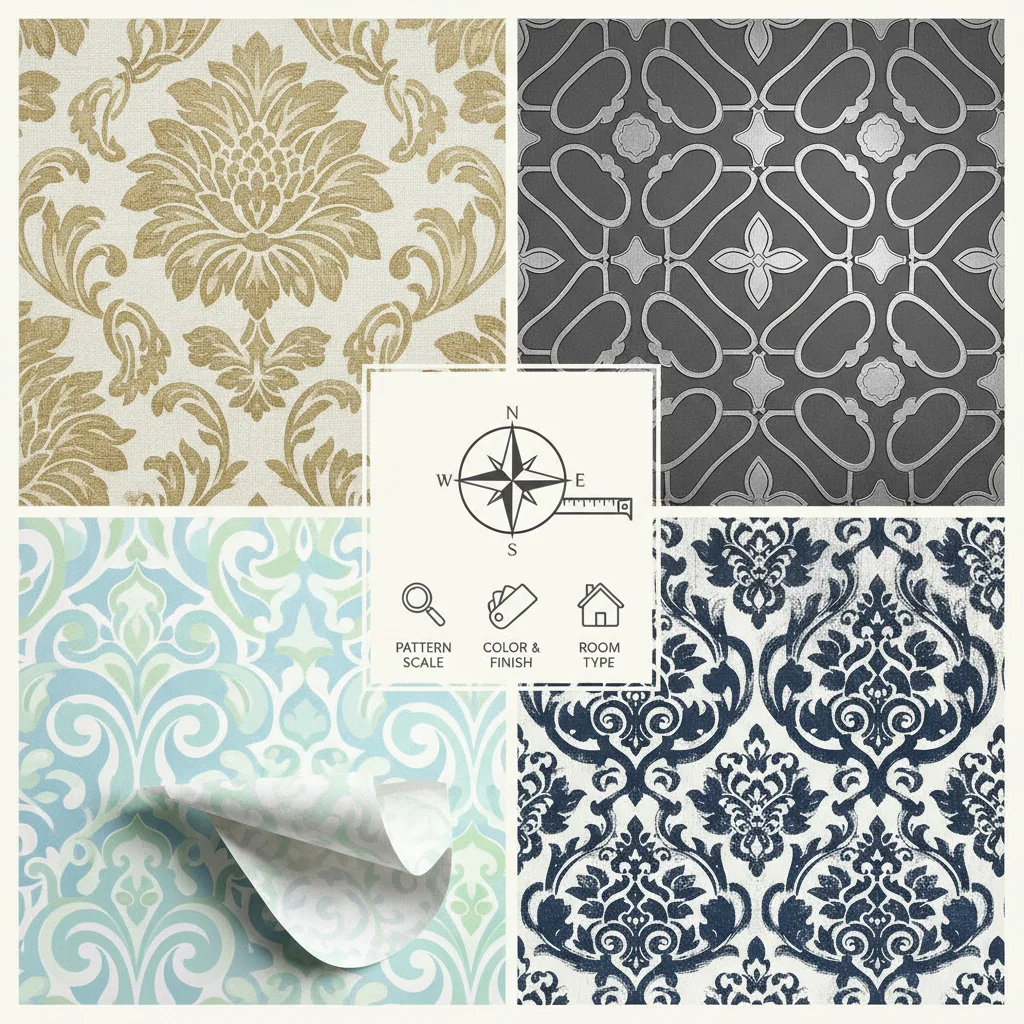
Selecting the ideal damask wallpaper requires careful consideration of several interconnected design factors, ensuring the pattern harmonizes with your space, enhances its existing features, and fulfills your aesthetic goals. A strategic approach prevents common pitfalls and guarantees a cohesive, sophisticated result.
Considering the Room’s Function and Atmosphere
The purpose and desired mood of a room are paramount in damask selection. A formal living room or dining room can embrace grand, traditional damask patterns in rich jewel tones or metallics, fostering an atmosphere of elegance and luxury. For a master bedroom, a softer, monochromatic damask in soothing grays, blues, or creams can create a serene yet sophisticated retreat. In a powder room, a small, enclosed space, a bold, dramatic damask in a striking color or metallic finish can act as a jewel box, offering a powerful design statement without overwhelming a larger area. High-traffic areas like hallways or children’s rooms benefit from more durable, washable materials like vinyl damask, prioritizing practicality alongside style.
Impact of Natural and Artificial Light
Light plays a transformative role in how damask wallpaper appears. In rooms with abundant natural light, patterns with subtle sheen or metallic accents will shimmer and change throughout the day, adding dynamic interest. In dimly lit spaces, a damask with a stronger contrast between pattern and background, or one with a pronounced texture like flocking, can add depth and prevent the wall from appearing flat. Conversely, a very busy, high-contrast damask in a brightly lit room might feel overwhelming. Consider how both daylight and your artificial lighting (lamps, overhead fixtures) will interact with the wallpaper’s colors and finishes.
Harmonizing with Existing Decor and Furnishings
Damask wallpaper should complement, not compete with, your existing furniture, textiles, and artwork. If your furniture is ornate and traditional, a damask with a simpler, larger-scale pattern or a monochromatic color scheme can provide a refined backdrop without creating visual clutter. For modern or minimalist furnishings, a contemporary damask with simplified motifs, a distressed finish, or a subtle metallic sheen can introduce texture and interest while maintaining a cohesive aesthetic. Pay attention to the undertones in your existing fabrics and wood finishes to ensure your chosen damask’s color palette creates harmony rather than discord.
Scale of Pattern vs. Room Size
The scale of the damask pattern is crucial for achieving balance. As York Wallcoverings notes, large-scale damask patterns can make a grand statement in spacious rooms with high ceilings, adding drama and filling expansive walls effectively. In contrast, a large pattern in a small room can feel overwhelming and make the space appear even smaller and more cluttered. For smaller rooms or accent walls, a medium-to-small scale damask, or one with a subtle tonal variation, is generally more appropriate, adding elegance without dominating the space. Consider the visual weight of the pattern in relation to the room’s dimensions.
Color Psychology and Palette Integration
The color of your damask wallpaper profoundly influences the mood of a room. Warm colors like gold, red, or deep burgundy can create a feeling of coziness, luxury, and energy. Cool colors such as blues, greens, or grays evoke calmness, serenity, and sophistication. Neutral damasks (beige, cream, taupe) offer a versatile backdrop that allows other decor elements to shine, providing subtle texture and elegance. When integrating damask into your palette, consider:
- Monochromatic Schemes: Using different shades of the same color for walls, furniture, and accessories creates a sophisticated, cohesive, and calming environment.
- Complementary Colors: Pairing damask with its complementary colors (e.g., blue damask with orange accents) can create vibrant contrast and visual excitement.
- Analogous Colors: Using colors next to each other on the color wheel (e.g., blue damask with green or purple accents) creates a harmonious and serene feel.
Always obtain samples of your chosen damask wallpaper and view them in your room under different lighting conditions before making a final decision. This step is indispensable for ensuring the pattern, color, and texture translate effectively into your home environment.
Precision Matters: Sizing and Measuring for Damask Wallpaper
Accurate measurement and calculation are critical steps when planning for damask wallpaper installation, ensuring you purchase the correct quantity of rolls and minimize waste, especially due to the often intricate and repeating patterns. Underestimating can lead to costly delays and color inconsistencies between batches, while overestimating results in unnecessary expense.
Measuring Wall Dimensions
The first step involves precise measurement of each wall you intend to cover. Use a steel tape measure for accuracy, not a cloth one. Measure the height of the wall from the baseboard to the ceiling at several points, as walls are rarely perfectly uniform. Record the greatest height. Similarly, measure the width of each wall from corner to corner. For walls with doors or windows, measure the full wall dimensions first, then measure the dimensions of the openings separately.
Calculating Square Footage
To determine the total surface area to be covered, calculate the square footage of each wall by multiplying its height by its width. Sum these figures to get the total square footage for all walls. For openings like doors and windows, calculate their square footage and subtract it from the total. While some experts suggest not deducting small openings to account for waste, for larger openings (over 20 sq ft), subtracting them provides a more accurate base figure.
Understanding Pattern Repeat and Its Impact on Roll Quantity
Pattern repeat is a crucial factor for damask wallpaper, which often features large, repeating motifs. Pattern repeat refers to the vertical distance between one point on a pattern and the identical point directly above or below it. This measurement is typically provided on the wallpaper label in inches. For damask, pattern repeats can range from a few inches to over 24 inches (or even more for very large designs).
When hanging wallpaper with a pattern repeat, you must align the pattern from one strip to the next, which often means cutting off excess paper from the top or bottom of each strip to achieve a seamless look. This results in waste. To account for this, add the pattern repeat measurement to the height of each strip when calculating how many strips you can get from a single roll. For example, if your wall is 9 feet (108 inches) high and the pattern repeat is 24 inches, you might need to cut each strip to 132 inches (108 + 24) to ensure proper alignment, effectively reducing the number of usable strips per roll.
Accounting for Waste
Beyond pattern repeat, several other factors contribute to waste:
- Trimming: You will trim excess paper at the ceiling, baseboard, and around doors/windows.
- Mistakes: Even experienced installers make errors; having a buffer roll is prudent.
- Pattern Matching: Complex damask patterns might require more extensive trimming to align perfectly, especially on angled walls or around architectural features.
A general rule of thumb is to add 15-20% to your calculated roll quantity to account for pattern repeat and waste. For very large or intricate damask patterns, or if you are a novice installer, adding up to 25% might be advisable. Always purchase rolls from the same dye lot to ensure color consistency.
Steps for Accurate Wallpaper Measurement:
- Measure the height of each wall from floor to ceiling in multiple places, noting the greatest height.
- Measure the width of each wall.
- Calculate the total square footage of all walls (Height x Width for each wall, then sum).
- Measure and calculate the square footage of any doors or windows. Subtract these from the total wall square footage.
- Locate the pattern repeat measurement on your chosen damask wallpaper’s label.
- Consult the roll coverage information provided by the manufacturer (e.g., a standard single roll covers approximately 28-34 sq ft, but check specific product details).
- Divide your total adjusted square footage by the coverage of one roll to get a preliminary number of rolls.
- Add 15-25% to this number to account for pattern repeat, trimming, and potential errors. Round up to the nearest whole roll.
- Ensure all purchased rolls have the same dye lot number to guarantee color consistency.
Precise measurement is the cornerstone of a successful wallpaper project, particularly with the grand and often intricate designs found in damask patterns. Taking the time to measure meticulously will save both time and resources during installation.
Damask in the Modern Home: Current Trends and Interpretations
Damask, despite its ancient origins, remains a highly relevant and evolving design element in contemporary interiors, continuously adapting through shifts in color, scale, and application. Modern trends showcase damask not just as a traditional statement but as a versatile tool for adding sophisticated texture and pattern to diverse aesthetic schemes.
Color Trends in Damask
While traditional damask often featured rich, deep hues, contemporary interpretations embrace a broader and often softer color palette:
- Monochromatic and Tonal: This trend emphasizes subtle variations of a single color, such as soft grays, warm beiges, or muted blues. The damask pattern emerges through differences in sheen (matte vs. gloss) or slight tonal shifts, creating a sophisticated, understated elegance that is highly versatile.
- Metallic Accents: Damask patterns incorporating metallic inks (gold, silver, bronze, rose gold) are exceptionally popular. These finishes add a touch of glamour and luxury, catching light to create dynamic visual interest without overwhelming the space. Metallic damask pairs well with both modern and transitional decor.
- Deep Jewel Tones with a Modern Twist: Rich emerald green, sapphire blue, or amethyst purple damask patterns are making a comeback, but often with a less ornate, more simplified motif or a distressed finish, bridging the gap between traditional opulence and contemporary chic.
- Black and White/High Contrast: A classic combination, black and white damask offers dramatic impact, creating a bold, graphic statement that is both timeless and strikingly modern.
Scale Shifts and Pattern Innovation
The size and style of damask patterns are also undergoing significant transformation:
- Oversized and Large-Scale Damask: Breaking away from smaller, intricate repeats, oversized damask patterns make a bold, contemporary statement. These large motifs can simplify the visual complexity while maximizing impact, especially in rooms with high ceilings or on accent walls.
- Distressed and Aged Damask: To achieve a vintage, industrial, or shabby-chic aesthetic, damask patterns are often designed with intentionally faded, weathered, or ‘aged’ appearances. This softens the formality of the pattern and adds character.
- Geometric and Abstract Damask: Modern damask sometimes integrates geometric elements or abstracts the traditional motifs, resulting in patterns that are cleaner, more angular, or subtly deconstructed, appealing to minimalist and contemporary tastes.
- Subtle Textured Damask: Rather than overt patterns, some damask wallpapers feature a barely-there design, relying heavily on texture, embossing, or slight sheen variations to create the damask effect, functioning almost as a sophisticated textured solid.
Unexpected Applications and Styling
Damask is no longer confined to formal living rooms; designers are using it in innovative ways:
- Accent Walls: Perhaps the most common modern application, a single wall adorned with a striking damask pattern creates an immediate focal point, adding drama and personality to a room without overwhelming the entire space. This works particularly well behind a bed, sofa, or in an entryway.
- Ceiling Applications: Applying damask wallpaper to the ceiling can create a “fifth wall” effect, adding unexpected grandeur and depth to a room. A subtle, tone-on-tone damask can create an elegant canopy, while a metallic damask can reflect light beautifully.
- Inside Bookcases or Cabinets: Using damask to line the back of built-in bookcases, display cabinets, or open shelving adds a sophisticated pop of pattern and texture, elevating ordinary storage into a design feature.
- Small Spaces with Big Impact: Powder rooms, small entryways, or even closet interiors are ideal canvases for bold damask patterns. In these confined spaces, a dramatic damask can create a jewel-box effect, making a strong statement without being overwhelming.
These trends demonstrate damask’s adaptability and enduring appeal. By embracing new colors, scales, and applications, damask wallpaper continues to be a powerful tool for designers and homeowners seeking to infuse their spaces with elegance, character, and a touch of historical grandeur interpreted for the modern age.
Care and Maintenance: Preserving Your Damask Investment
Proper care and maintenance are essential for preserving the beauty and longevity of your damask wallpaper, ensuring it continues to enhance your home for years to come. The specific cleaning methods depend heavily on the wallpaper’s material type and its washability rating, which is typically indicated by symbols on the wallpaper’s label.
Understanding Washability Ratings
Before cleaning any damask wallpaper, identify its washability rating to avoid damage:
- Spongeable: Can be gently wiped with a damp sponge and mild soap to remove light surface dirt. Avoid excessive moisture.
- Washable: Can withstand more thorough wiping with a damp cloth and mild detergent. Suitable for general cleaning.
- Scrubbable: Highly durable, capable of being scrubbed with a brush and stronger detergent for tougher stains. Often found on vinyl wallpapers.
- Extra Scrubbable: The most durable, designed for heavy-duty cleaning and high-traffic areas.
- Non-Washable: Extremely delicate, typically traditional paper or natural fiber wallpapers. Only light dusting with a dry, soft cloth is recommended. Avoid any moisture.
General Cleaning Practices
For most washable and scrubbable damask wallpapers, follow these steps for routine cleaning:
- Dust Regularly: Use a soft, dry cloth, a feather duster, or a vacuum cleaner with a brush attachment to gently remove dust and cobwebs. This prevents dirt buildup that can become harder to remove later.
- Prepare Cleaning Solution: Mix a small amount of mild dish soap with warm water in a bucket. Avoid harsh chemical cleaners, abrasive sponges, or bleach, as these can damage the wallpaper’s finish, color, or texture.
- Test in an Inconspicuous Area: Always test your cleaning solution and method on a hidden spot (e.g., behind furniture, in a closet) to ensure it does not cause discoloration or damage.
- Wipe Gently: Using a soft sponge or microfiber cloth dampened (not saturated) with the cleaning solution, gently wipe the wallpaper from bottom to top to prevent streaks. For flocked damask, dab gently rather than wiping to avoid damaging the fibers.
- Rinse (if necessary): If using soap, follow with a clean, damp cloth to wipe away any soap residue.
- Dry Thoroughly: Lightly blot the area dry with a clean, dry cloth to prevent water spots or moisture damage. Ensure the wall is completely dry before moving furniture back into place.
Dealing with Specific Issues
- Stains: For specific stains, act quickly. Grease stains might respond to dabbing with a clean cloth and a small amount of cornstarch or talcum powder to absorb the oil, then gently brushing it off. Ink or crayon marks on scrubbable vinyl might be removed with a magic eraser, but always test first.
- Lifting Seams or Bubbles: Small lifting seams or bubbles can often be repaired with wallpaper adhesive. For seams, gently lift the edge, apply a small amount of paste with a fine brush, and press firmly with a seam roller. For bubbles, use a utility knife to make a small slit, inject adhesive, and smooth out with a wallpaper brush or squeegee.
- Fading: Direct, prolonged exposure to sunlight can cause wallpaper colors to fade, especially on traditional paper materials. Consider using UV-protective window films or blinds in rooms with intense sun exposure to prolong the vibrancy of your damask wallpaper.
- Humidity: Excessive humidity can cause wallpaper to peel or warp. Ensure good ventilation in bathrooms and kitchens. A dehumidifier can be beneficial in overly humid climates.
Damask Wallpaper Care Tips:
- Always check the manufacturer’s washability symbols on the wallpaper label.
- Dust regularly with a soft, dry cloth or vacuum with a brush attachment.
- Use only mild soap and warm water for cleaning; avoid harsh chemicals and abrasives.
- Test cleaning methods in an inconspicuous area first.
- Wipe gently, avoiding saturation, and dry thoroughly to prevent water marks.
- Address lifting seams or bubbles promptly with wallpaper adhesive.
- Protect wallpaper from direct sunlight to prevent fading.
- Maintain appropriate humidity levels to prevent peeling or warping.
- For delicate or non-washable damask, professional cleaning may be required for significant issues.
By following these guidelines, you can ensure your damask wallpaper remains a stunning focal point in your home, maintaining its intricate patterns and sophisticated texture for many years.
Styling and Pairing: Integrating Damask Seamlessly into Your Decor
Integrating damask wallpaper seamlessly into your decor involves a thoughtful balance of pattern, texture, and color with your existing furnishings, textiles, and lighting. The goal is to create a cohesive and sophisticated space where the damask enhances, rather than overwhelms, the overall aesthetic.
Balancing Ornate Patterns with Simpler Furnishings
Damask patterns, especially traditional ones, carry an inherent grandeur. To prevent a room from feeling overly busy or cluttered, pair ornate damask wallpaper with furniture that features cleaner lines, simpler silhouettes, and solid colors. For instance, a richly patterned damask wall can be beautifully complemented by a sofa upholstered in a solid linen or velvet, or a minimalist wooden dining table. This contrast allows the damask to be the star, while the furnishings provide a grounding balance. Avoid pairing highly patterned damask with other busy patterns in large quantities; instead, use small patterned accents in throw pillows or rugs that pick up one or two colors from the wallpaper.
Layering Textures for Depth
Texture is a powerful tool for adding depth and interest, especially when working with monochromatic or tonal damask patterns. Introduce a variety of textures through textiles like plush velvet cushions, soft wool throws, silk drapes, or woven jute rugs. Even furniture materials, such as polished wood, wrought iron, or mirrored surfaces, contribute to the tactile experience of the room. These layers of texture create visual richness that complements the subtle textural play within the damask itself, making the space feel more inviting and luxurious.
Complementary Color Schemes
Choosing a complementary color scheme ensures harmony and visual appeal. If your damask wallpaper is a dominant color, select accent colors that either fall within its analogous range (colors next to it on the color wheel) for a serene feel, or its complementary range (colors opposite on the color wheel) for a more dynamic contrast. For example, a blue damask can be paired with cream and silver accents for a calm, elegant look, or with pops of coral or orange for a vibrant, energetic space. Neutral damasks (grays, beiges) offer immense flexibility, allowing you to introduce color through accessories, artwork, and smaller furniture pieces.
Using Lighting to Highlight Damask
Lighting can dramatically enhance the impact of damask wallpaper, particularly those with metallic or embossed finishes. Strategic lighting can highlight the pattern’s texture and sheen, creating a captivating play of light and shadow. Consider:
- Wall Sconces: Placed on either side of an accent wall, sconces can graze the surface of the damask, emphasizing its three-dimensional qualities.
- Picture Lights: If you have artwork on a damask wall, a picture light can draw attention to both the art and the subtle texture of the wallpaper behind it.
- Dimmers: Installing dimmers allows you to adjust the intensity of light, changing the mood and how the damask pattern is perceived throughout the day and evening.
- Natural Light: Maximize natural light to allow metallic or subtly shimmering damask patterns to truly come alive, reflecting sunlight and adding brilliance to the room.
Accessorizing Without Overwhelming
When accessorizing a room with damask wallpaper, restraint is key. The wallpaper itself is a significant decorative element, so avoid over-accessorizing with too many small, cluttered items. Instead, opt for a few impactful pieces that complement the damask without competing with it. Large mirrors with ornate frames can echo the wallpaper’s grandeur, while sleek, contemporary vases or sculptures can provide a modern counterpoint. Artwork should be carefully chosen; consider pieces with simple frames or abstract designs that don’t clash with the damask pattern. The goal is to create a curated look where every element feels intentional and contributes to the overall sophisticated ambiance.
By thoughtfully considering these styling principles, you can transform a room with damask wallpaper into a beautifully balanced and uniquely personal sanctuary, reflecting a refined sense of design.
Common Mistakes to Avoid When Using Damask Wallpaper
While damask wallpaper offers immense potential for elevating a space, certain common mistakes can detract from its intended elegance and impact. Being aware of these pitfalls ensures a more successful and aesthetically pleasing outcome.
Overwhelming a Small Space
One of the most frequent errors is applying a large, busy, or dark damask pattern to all walls in a small room. This can make the space feel cramped, visually heavy, and claustrophobic. The grandeur of damask, particularly traditional large-scale motifs, can dominate rather than enhance. For smaller rooms, such as powder rooms or compact entryways, it is better to opt for a damask with a smaller pattern repeat, a subtle tonal variation, or use it as an accent on a single wall. Alternatively, a lighter color palette can prevent a small room from feeling overwhelmed.
Ignoring Pattern Repeat During Installation
Failing to account for the pattern repeat is a critical installation mistake, especially with damask’s often intricate and symmetrical designs. If the pattern is not correctly aligned from one strip to the next, the result is a disjointed, unprofessional appearance that immediately detracts from the wallpaper’s beauty. Always factor in the pattern repeat when cutting strips, even if it means more waste. This ensures a seamless flow and the intended visual impact of the design.
Skimping on Wall Preparation
Proper wall preparation is non-negotiable for any wallpaper installation, and damask is no exception. Applying damask wallpaper over uneven, dirty, or poorly primed walls will result in imperfections showing through, such as bumps, peeling seams, or poor adhesion. Walls must be clean, smooth, dry, and properly primed with a high-quality wallpaper primer. This creates a uniform surface for the adhesive and ensures optimal bonding, preventing issues like bubbling or lifting.
Mismatching Style with Existing Decor
Introducing a damask pattern that clashes with the existing decor style of a room can create a discordant and aesthetically jarring environment. For instance, a very ornate, traditional damask might look out of place in a minimalist, industrial-style room without careful balancing elements. While mixing styles can be effective, it requires a nuanced approach. Ensure your chosen damask wallpaper complements the overall aesthetic of your home, whether by choosing a modern interpretation for contemporary spaces or a classic design for traditional settings. Consider the scale, color, and formality of the damask in relation to your furniture, lighting, and accessories.
Neglecting Lighting Considerations
The impact of damask wallpaper can be significantly altered by the room’s lighting. Choosing a damask with a high sheen or metallic finish for a room with harsh overhead lighting, for example, might result in excessive glare. Conversely, a subtle, matte damask might appear flat and uninteresting in a dimly lit space. Consider how natural light enters the room and how artificial lighting is used. Test samples under various lighting conditions to ensure the damask’s texture and pattern are beautifully highlighted, not lost or distorted.
Overlooking Material Suitability for the Environment
Selecting a damask wallpaper made from an unsuitable material for its intended environment is a practical mistake. Using delicate paper damask in a high-humidity bathroom or a high-traffic hallway will lead to premature wear, damage, and disappointment. Always match the wallpaper material’s durability and washability to the demands of the room. Vinyl or non-woven damasks are generally better suited for active areas, kitchens, and bathrooms due to their resistance to moisture and ease of cleaning.
By consciously avoiding these common pitfalls, you can ensure your damask wallpaper project is a success, creating a sophisticated and enduring design statement in your home.
Sources
- York Wallcoverings. Damask Wallpaper | York Wallcoverings | https://www.yorkwallcoverings.com/damask-wallpaper-yorkwallcoverings | (yorkwallcoverings.com)
Frequently Asked Questions About Damask Wallpaper
What is the difference between traditional damask and modern damask wallpaper?
Traditional damask wallpaper features large, ornate, and often symmetrical motifs like acanthus leaves or fleur-de-lis, typically in rich, deep colors to evoke historical grandeur. Modern damask, conversely, often simplifies these motifs, introduces distressed finishes, embraces wider color palettes including neutrals and metallics, and experiments with oversized or geometric patterns for a contemporary aesthetic.
Is damask wallpaper still in style?
Yes, damask wallpaper remains very much in style, continuously evolving to fit modern design trends by offering contemporary interpretations, varied scales, and diverse color palettes. Its enduring appeal lies in its ability to add sophisticated texture and pattern, whether in a traditional opulent setting or a sleek modern space as an accent.
What kind of rooms are best for damask wallpaper?
Damask wallpaper is suitable for a wide range of rooms, including formal living rooms and dining areas for a luxurious feel, master bedrooms for a serene yet sophisticated backdrop, and powder rooms or entryways for a dramatic accent. The key is to choose the appropriate scale, color, and material for the room’s function and size.
How do I measure for damask wallpaper, considering pattern repeat?
To measure for damask wallpaper, calculate the total square footage of your walls, then add 15-25% to account for the pattern repeat, trimming, and potential errors. The pattern repeat, a measurement found on the wallpaper label, dictates how much extra paper is needed per strip to align the design seamlessly, significantly impacting the number of rolls required.
Can I use damask wallpaper in a bathroom or kitchen?
Yes, damask wallpaper can be used in bathrooms and kitchens, provided you select a material specifically designed for high-humidity and high-traffic areas, such as scrubbable vinyl or durable non-woven wallpaper. These materials offer superior moisture resistance and ease of cleaning, ensuring longevity in demanding environments.
What’s the best way to clean damask wallpaper?
The best way to clean damask wallpaper depends on its washability rating, indicated on the label. For most types, regular dusting with a soft, dry cloth is recommended. For washable or scrubbable varieties, gently wipe with a damp sponge and a mild soap solution, always testing in an inconspicuous area first to prevent damage or discoloration.
Should I use traditional paste or peel-and-stick for damask?
The choice between traditional paste and peel-and-stick for damask wallpaper depends on the material and your preference. Peel-and-stick options are typically non-woven and offer easier installation and removal, ideal for temporary applications or DIY enthusiasts. Traditional paste methods are often used for more permanent installations and are common for heavier, more luxurious materials like fabric-backed or some vinyl damasks, which may require professional installation.
Conclusion: Your Journey to a Damask-Inspired Home
Damask wallpaper, with its storied past and dynamic present, stands as a testament to enduring design. It is a powerful tool for infusing any space with sophistication, depth, and a touch of aspirational elegance. From the intricate weave of its historical origins to its contemporary interpretations featuring bold scales and metallic sheens, damask offers unparalleled versatility for both traditional and modern interiors. We have explored its diverse types, the critical role of material in its performance, the strategic considerations for choosing the perfect pattern, and the meticulous steps required for precise measurement and care.
At Starhouse, we believe that your home should be a reflection of your unique style and aspirations. The right damask wallpaper can transform a room from ordinary to extraordinary, creating a focal point that speaks volumes about your refined taste. As you embark on your design journey, remember that understanding the nuances of damask empowers you to make choices that are not only beautiful but also perfectly suited to your lifestyle and the demands of your space.
We are meticulously curating a collection of exquisite wall decor and home furnishings designed to inspire and elevate your living environment. We invite you to be a part of this exciting launch. Share your vision, tell us what you’re looking for to complete your dream space, and gain exclusive early access to our upcoming Starhouse collections.