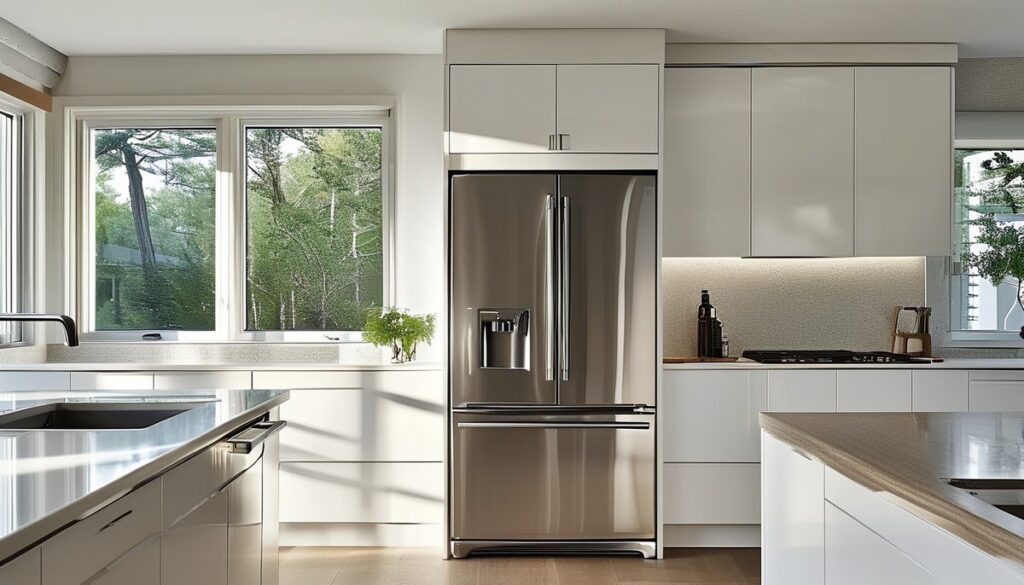
Choosing blue kitchen wallpaper means balancing aesthetics with practicality. Unlike living rooms or bedrooms, kitchens face grease, steam, and potential splashes. Select a wallpaper material designed to withstand these conditions.
Which wallpaper materials are best for kitchens?
For kitchens, you need materials that are washable, scrubbable, and moisture-resistant. Standard paper-backed wallpapers won’t hold up.
- Vinyl wallpaper: This is the workhorse for kitchens. It features a paper or fabric base with a vinyl coating. It’s highly durable, scrubbable, and resistant to moisture and stains. Look for heavyweight vinyl for the best performance.
- Textured vinyl: Offers the same benefits as regular vinyl but adds depth and dimension. Embossed patterns can mimic materials like tin tile or fabric, adding a sophisticated touch.
- Peel and stick wallpaper: Modern peel and stick options, especially those made from vinyl or thick plastic films, can work well. Ensure they are advertised as washable and durable. They are excellent for renters or DIYers as they are easy to remove. Check the manufacturer’s specifications for kitchen suitability.
- Slightly textured or coated paper: Some higher-quality, coated or slightly textured papers might work in low-moisture areas of the kitchen (like a dining nook), but avoid them near sinks or stovetops. Always check if they are washable.
Avoid matte, uncoated paper wallpapers or fabrics like grasscloth. They absorb moisture and grease, making them impossible to clean and leading to mildew.
Understanding wallpaper durability ratings
Manufacturers often provide durability ratings. Look for terms like:
- Washable: Can be wiped gently with a damp cloth and mild soap.
- Scrubbable: Can withstand more vigorous scrubbing with a soft brush or sponge, water, and soap. This is ideal for kitchens.
- Peelable/Strippable: Refers to how easily the wallpaper can be removed. This is important for future renovations.
Always confirm the specific rating with the manufacturer.
Popular blue wallpaper patterns for kitchens
Blue offers a vast palette, from calming pastels to deep navies. The pattern choice significantly impacts the kitchen’s feel.
Shades of blue
- Navy blue: Creates a dramatic, sophisticated look. It works well as an accent wall or for a bold statement. Pair with white or stainless steel for contrast.
- Light blue/Sky blue: Offers a fresh, airy feel, making smaller kitchens appear larger. It’s calming and versatile.
- Teal/Aqua: Adds a vibrant pop of color and energy. These shades can feel modern or coastal, depending on the overall design.
- Royal blue: A rich, deep blue that adds a touch of luxury.
Common blue patterns
- Stripes: Vertical stripes can make ceilings appear higher, while horizontal stripes can make a space feel wider. Pinstripes or broader stripes in various blue shades are classic choices. Consider blue plaid wallpaper for a charming, slightly rustic feel.
- Geometric: Modern and clean, geometric patterns in blue can add visual interest without being overwhelming. Hexagons, chevrons, or abstract designs work well.
- Floral/Botanical: Can bring a touch of nature indoors. Consider a blue floral pattern with white or green accents for a refreshing look.
- Damask/Trellis: These more traditional patterns can add elegance. A navy damask on a cream background, or a light blue trellis pattern, offers a classic appeal. Explore blue and white wallpaper for timeless combinations.
- Subtle textures: Solid blue wallpapers with a subtle texture can provide depth and sophistication without a busy pattern. Discover the power of solid blue wallpaper for a minimalist approach.
- Coastal/Nautical: Think waves, anchors, or subtle shell patterns in shades of blue and white.
Consider the scale of the pattern. Small, busy patterns can make a small kitchen feel cluttered. Large, bold patterns can overwhelm a tiny space but make a statement in larger kitchens.
Where to use blue kitchen wallpaper
You can cover all four walls, use it as an accent wall, or apply it to smaller areas.
- Full coverage: Best for larger kitchens or when you want a strong, cohesive look. Choose a pattern that isn’t too overwhelming.
- Accent wall: Apply wallpaper to the wall behind your stove, a prep area, or the wall opposite the main workspace. This adds a focal point without dominating the room.
- Backsplash alternative: While not a direct replacement for tile, wallpaper can be used in areas not directly exposed to constant water or grease, like behind open shelving or a small section of wall near the dining area. Always seal it if using near potential splash zones.
- Inside cabinets or on cabinet doors: A fun way to add a hidden pop of color or pattern.
- Ceiling: A bold move that can add unexpected charm, especially in smaller kitchens.
Refer to our guide on choosing wallpaper and borders for kitchen spaces for more specific placement ideas.
Installation tips for blue kitchen wallpaper
Proper installation is key to achieving a professional look and ensuring the wallpaper lasts.
Preparation is crucial
- Clean the walls: Ensure walls are clean, dry, and smooth. Remove any grease, dust, or old adhesive. Sand down any rough spots.
- Prime the walls: Use a wallpaper primer. This seals the surface, allows for easier repositioning, and prevents the wallpaper adhesive from soaking into the drywall, which can make removal difficult later.
- Check for damage: Repair any cracks or holes in the drywall before you begin.
- Gather tools: You’ll need a sharp utility knife, a straight edge, a smoothing tool (like a plastic smoother or wallpaper brush), a measuring tape, a level, a seam roller, a drop cloth, and a bucket of water with mild soap. For most vinyl and peel-and-stick wallpapers, you’ll also need a primer.
Hanging the wallpaper
- Measure and cut: Measure the height of your wall and add 4-6 inches for trimming at the top and bottom. Cut your first panel. If your wallpaper has a pattern repeat, pay attention to matching it for subsequent panels.
- Apply adhesive (if needed): Some wallpapers have pre-applied adhesive (peel and stick) and just need water to activate. Others require you to apply adhesive to the back of the paper or directly to the wall. Follow the manufacturer’s instructions precisely.
- Hang the first panel: Start at a corner or a prominent point. Use a level to ensure the first panel is perfectly vertical. This is critical, as all subsequent panels will align with it.
- Smooth out bubbles: Use your smoothing tool to press the wallpaper onto the wall, working from the center outwards to push out air bubbles and excess adhesive.
- Trim excess: Once the panel is in place, use a sharp utility knife and a straight edge to trim the excess wallpaper at the ceiling and baseboard.
- Continue with subsequent panels: Align the next panel, ensuring the pattern matches perfectly. Use a seam roller to press down the seams for a clean finish. Be careful not to over-roll textured or delicate papers.
- Clean up: Wipe away any excess adhesive immediately with a damp sponge.
Common mistakes to avoid:
- Not cleaning or priming walls properly.
- Not using a level for the first panel, resulting in crooked walls.
- Not matching the pattern repeat between panels.
- Using a dull knife, leading to torn edges.
- Applying wallpaper too close to a heat source or high-moisture area without adequate protection or suitability.
Blue wallpaper and kitchen design
Consider the overall style of your kitchen when selecting blue wallpaper. A deep navy geometric might suit a modern kitchen, while a light blue floral could be perfect for a farmhouse or cottage style. Use blue wallpaper to complement your existing cabinetry, countertops, and flooring. For example, navy wallpaper pairs beautifully with white cabinets and a marble backsplash. Light blue can enhance oak cabinets or stainless steel appliances.
If your kitchen is small, opt for lighter shades of blue and smaller, less busy patterns to avoid making the space feel cramped. If you have a large kitchen, you can be more adventurous with bolder patterns and darker shades.
The right blue kitchen wallpaper can add personality, style, and a fresh feel to your cooking space. By choosing a durable, washable material and paying attention to pattern and placement, you can achieve a stunning and long-lasting result.