When you’re planning to update your kitchen with wallpaper and borders, think about practicality first. Kitchens are high-traffic areas prone to grease, steam, and food splatters. This means your chosen wallcovering needs to be more than just attractive; it must withstand a demanding environment. Forget delicate, porous papers. You need something washable, scrubbable, and ideally, moisture-resistant.
Understanding wallpaper materials for kitchens
Not all wallpaper is created equal, especially for a kitchen. The material dictates its durability, how well it cleans, and how long it lasts. Here’s a breakdown of what to look for:
Vinyl wallpaper
This is often your best bet for kitchens. Vinyl wallpaper is coated with a vinyl layer that makes it highly resistant to moisture and stains. It’s also very easy to clean – usually, a damp cloth with mild soap is all you need. Because it’s so durable, it can handle the everyday wear and tear of a kitchen. You can find vinyl wallpaper in a vast range of styles, from realistic textures like brick or wood to intricate patterns and bold colors.
Non-woven wallpaper
Also known as ‘paste-the-wall’ wallpaper, non-woven options are made from a blend of natural and synthetic fibers. They are generally breathable, which can help prevent mold and mildew growth, a plus in humid kitchen environments. Many non-woven wallpapers are also washable and scrubbable, making them a good choice. Their installation is often easier than traditional paper because you apply the paste directly to the wall, not the paper, allowing for easier repositioning.
Textured wallpaper
Textured wallpapers, often made from materials like embossed paper, vinyl, or even fabric, can add depth and visual interest to your kitchen. If the texture is deep enough, it can also help camouflage minor wall imperfections. When selecting textured wallpaper for a kitchen, always check the manufacturer’s recommendations regarding cleaning and moisture resistance. Some textures might trap grease or be harder to wipe clean.
Traditional paper wallpaper
While beautiful, traditional paper wallpaper is generally not recommended for kitchens. It’s porous, meaning it absorbs moisture and stains easily. Grease splatters can become permanent marks, and steam can cause the paper to bubble or peel, especially near the stove or sink. If you absolutely love a traditional paper design, consider using it in a less vulnerable area of the kitchen, like a dining nook, and pair it with a more durable material elsewhere.
Choosing the right wallpaper borders for kitchen walls
Wallpaper borders offer a way to add accent and detail without covering an entire wall. They can define spaces, highlight architectural features, or simply add a decorative stripe. For kitchens, border selection is crucial:
Material matters for borders
Just like full wallpaper rolls, the material of your border is key. Vinyl or vinyl-coated borders are ideal because they can be wiped clean. Borders placed near a backsplash area or above a stove will benefit greatly from this washability. Avoid paper-based borders in these high-moisture zones.
Placement strategies
Where you place a wallpaper border can dramatically change the feel of your kitchen:
- Above cabinets: A border placed just below the ceiling line, above your upper cabinets, can draw the eye upward, making the ceiling appear higher. This is a classic placement for adding a decorative touch.
- Around windows or doors: Framing a window or a doorway with a border can add architectural interest and a finished look.
- As a chair rail: A border placed at chair-rail height (typically about one-third of the way up the wall) can break up a large wall space and add a traditional design element. This works well in a breakfast nook or dining area within the kitchen.
- Below cabinets: Some designers use borders along the top of base cabinets, creating a visual separation. Ensure this area is not prone to excessive splashing.
Border width and pattern
Borders come in various widths, from a subtle 3-inch strip to a bolder 9-inch band. A wider border can make a stronger statement, while a narrower one offers a more delicate accent. Consider the scale of your kitchen. A small kitchen might be overwhelmed by a very wide or busy border. Conversely, a large, open kitchen can handle a more substantial border. Patterns for kitchen borders should complement your cabinets, countertops, and appliances. Stripes, subtle geometric prints, or even small-scale floral or food-themed motifs can work well.
Installation tips for kitchen wallpaper and borders
Proper installation is critical for the longevity and appearance of your kitchen wallpaper and borders. A poorly installed paper can peel, bubble, or look unprofessional, regardless of its quality.
Surface preparation is non-negotiable
Before you even unroll your wallpaper, ensure your walls are clean, dry, and smooth. Wash walls to remove any grease, soap scum, or dirt. Fill any holes or cracks with spackle and sand them smooth. For best results, apply a primer specifically designed for wallpaper. This helps the adhesive bond properly and makes removal easier down the line. If your walls are glossy, a light sanding will help the primer and wallpaper adhere better.
Cutting and measuring
Measure your wall space carefully. Most wallpaper comes in rolls that are 20.5 inches wide and 33 feet long. You’ll need to cut the wallpaper into vertical strips. Always cut your strips longer than the wall height to allow for trimming at the ceiling and baseboard. For example, if your wall is 8 feet tall, cut your strips to 9 feet. Overlap the seams slightly when cutting for a continuous pattern, or butt them together for a seamless look, depending on the wallpaper type and manufacturer’s instructions. For borders, measure the length of the wall section where the border will go, adding a few extra inches for corners and any pattern matching.
Applying the adhesive
If you’re using traditional paste-the-wallpaper, apply an even coat of wallpaper adhesive to the back of the paper. Don’t apply too much, as it can seep through the paper and create a mess. If you’re using paste-the-wall wallpaper, apply the adhesive directly and evenly to the wall. Ensure you cover enough area for one strip of wallpaper or a section of border.
Hanging the wallpaper
Carefully position the first strip of wallpaper, aligning it with a plumb line or the edge of a corner. Gently press the paper onto the wall, starting from the center and smoothing outwards with a wallpaper brush or a plastic smoother to remove air bubbles. Work from top to bottom. Use a sharp utility knife and a straight edge to trim the excess paper at the ceiling and baseboard. For subsequent strips, align the pattern carefully and butt the seams together, or overlap slightly as per instructions. If using peel and stick wallpaper, follow the specific instructions for that product, which usually involves peeling off the backing gradually as you apply the paper.
Installing wallpaper borders
For borders, apply the adhesive to the back of the border strip or to the wall, as directed. Position the border at your desired height, starting in a corner or a discreet location. Use a smoothing tool to press it firmly onto the wall, working from the center outwards to eliminate air bubbles. Carefully trim excess border at corners and edges with a sharp knife.
Common mistakes to avoid with kitchen wallpaper and borders
Even with the best materials and intentions, certain installation mistakes can ruin the look and longevity of your kitchen wallpaper and borders.
- Skipping surface prep: Applying wallpaper over unprimed, uncleaned, or uneven walls is a recipe for disaster. Bubbles, peeling, and poor adhesion are common results.
- Using the wrong material: Choosing a delicate, non-washable wallpaper for a high-moisture, high-grease area like a kitchen is a mistake. It will stain and peel quickly.
- Not matching patterns: When using patterned wallpaper or borders, ensure the patterns align perfectly at the seams. A mismatch is very noticeable and detracts from the overall look. Take your time with pattern matching; it’s worth it.
- Over-handling the adhesive: Too much paste can seep through the wallpaper, creating unsightly marks. Too little, and the paper won’t adhere properly. Follow the manufacturer’s recommended amount.
- Trimming with dull blades: Using a dull utility knife when trimming wallpaper or borders will result in torn, ragged edges rather than clean cuts. Always use a fresh, sharp blade.
- Ignoring moisture: Even washable wallpaper has its limits. Avoid hanging borders directly behind a constantly wet sink or in a steamy shower area (though a shower isn’t typically in a kitchen). Always ensure good ventilation.
- Rushing the process: Wallpapering and border installation require patience and attention to detail. Rushing will lead to errors that are difficult and costly to fix.
Design ideas for wallpaper and borders in your kitchen
Beyond functionality, wallpaper and borders are powerful tools for expressing your style. Here are some design ideas to get you inspired:
Modern and minimalist
For a clean, contemporary look, opt for subtle geometric patterns, solid colors with a slight texture, or minimalist line art. A simple grey, white, or soft blue wallpaper can create a serene backdrop. A thin, metallic border can add a touch of sophistication without being overwhelming. Consider a geometric pattern that repeats sparingly, perhaps only on one accent wall.
Farmhouse charm
Bring the cozy feel of a farmhouse to your kitchen with patterns like gingham, subtle floral prints, or faux wood or brick textures. A plaid border or a border with a rustic motif (like sprigs of herbs or simple farm animals) can enhance the theme. White shiplap-style wallpaper paired with a checkered border is a classic farmhouse combination.
Eclectic and bold
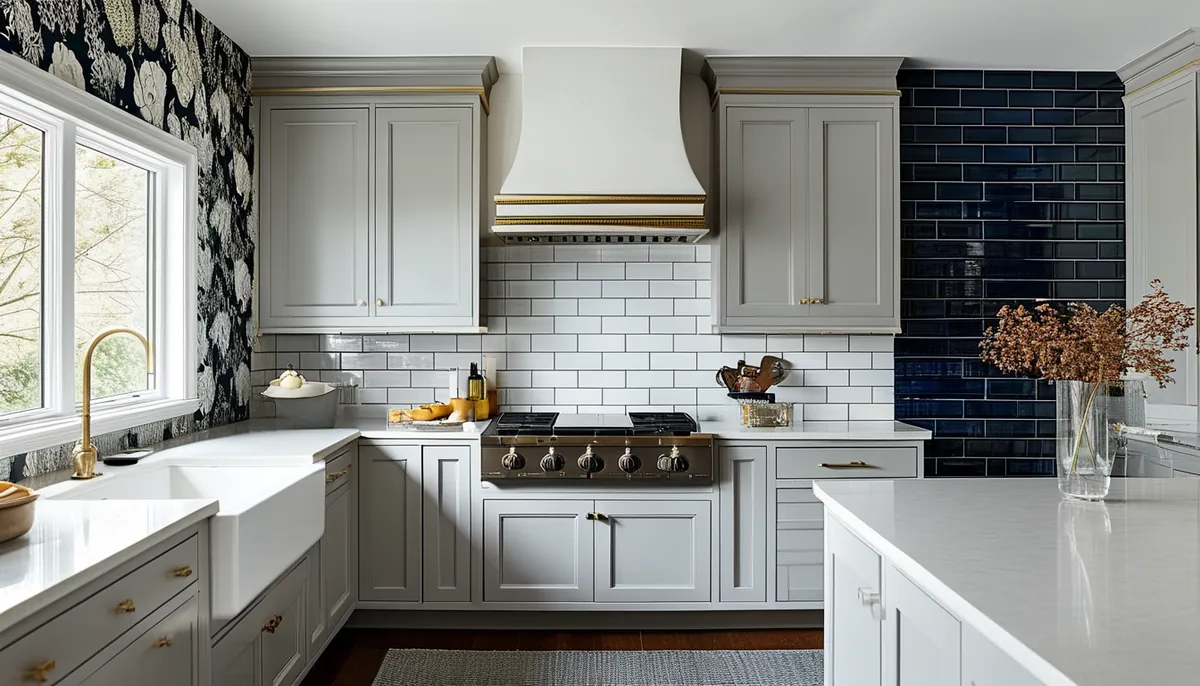
If you love to make a statement, don’t shy away from bold colors and intricate patterns. Large-scale floral designs can transform a kitchen into a vibrant space. For a more artistic feel, consider murals or wallpapers with unique illustrations. A bold patterned wallpaper can be balanced with a simpler, coordinating border, or you can let the wallpaper be the star and skip the border altogether. For bold designs, explore options like Rifle Paper Co. wallpaper for a touch of curated artistry.
Color and pattern coordination
When choosing wallpaper and borders, consider how they will interact with your existing kitchen elements. The color of your cabinets, countertops, backsplash, and appliances should all play a role. For example, a busy patterned wallpaper might pair best with solid-colored cabinets and a neutral backsplash. Conversely, if you have plain cabinets, a vibrant patterned wallpaper can be the focal point. Borders can be used to tie different elements together; a border that incorporates colors from both your cabinets and countertops can create a harmonious look. Explore options for flowers on wallpaper to add a touch of nature, or consider designs inspired by natural landscapes with Yellowstone wallpaper designs.
Creating visual interest
Wallpaper and borders can be used to create visual interest and define zones within an open-plan kitchen or a larger space. A different wallpaper pattern on an island or a pantry door can add a surprising pop of design. A border can visually separate the kitchen work area from a dining space. Even a simple accent wall covered in a striking wallpaper can break up monotony. For kitchens where you want a quick, impactful change, easy peel and stick wallpaper and borders offer a fantastic solution, allowing for easy application and removal. You can find many high-quality peel and stick wallpapers that are perfect for kitchens.
Maintenance and cleaning of kitchen wallpaper
Keeping your kitchen wallpaper looking fresh is essential, especially given its environment. The maintenance routine will depend heavily on the material:
Regular dusting
A light dusting with a soft cloth or a vacuum cleaner with a brush attachment should be done regularly to prevent dust and cobwebs from accumulating. This is especially important for textured wallpapers that might trap dust more easily.
Spot cleaning
For minor spills and splatters, act quickly. For vinyl and washable wallpapers, use a soft cloth or sponge dampened with warm water and a mild, non-abrasive soap (like dish soap). Gently blot the stain; don’t scrub vigorously, as this can damage the surface or spread the stain.
Grease and stubborn stains
Kitchens are notorious for grease. For tougher grease spots on vinyl wallpaper, you might need a slightly stronger solution, but always test it on an inconspicuous area first. A solution of baking soda and water can sometimes lift grease. For very stubborn stains, consult the wallpaper manufacturer’s cleaning recommendations. Avoid harsh chemical cleaners, solvents, or abrasive pads, as these can permanently damage the wallpaper’s finish.
Moisture management
Ensure good ventilation in your kitchen, especially when cooking. Use your range hood to draw out steam and cooking odors. While most kitchen wallpapers are moisture-resistant, prolonged exposure to high humidity can still cause issues, particularly at the seams. Wipe down any condensation that forms on walls near sinks or stovetops.
When to consider replacement
Even the most durable wallpaper won’t last forever. Signs that your kitchen wallpaper might need replacing include significant peeling at the seams, widespread staining that cannot be removed, permanent discoloration from sunlight, or damage from moisture that has compromised the integrity of the paper. If you’ve had it for 10-15 years and it’s showing significant wear, it might be time for a fresh look.