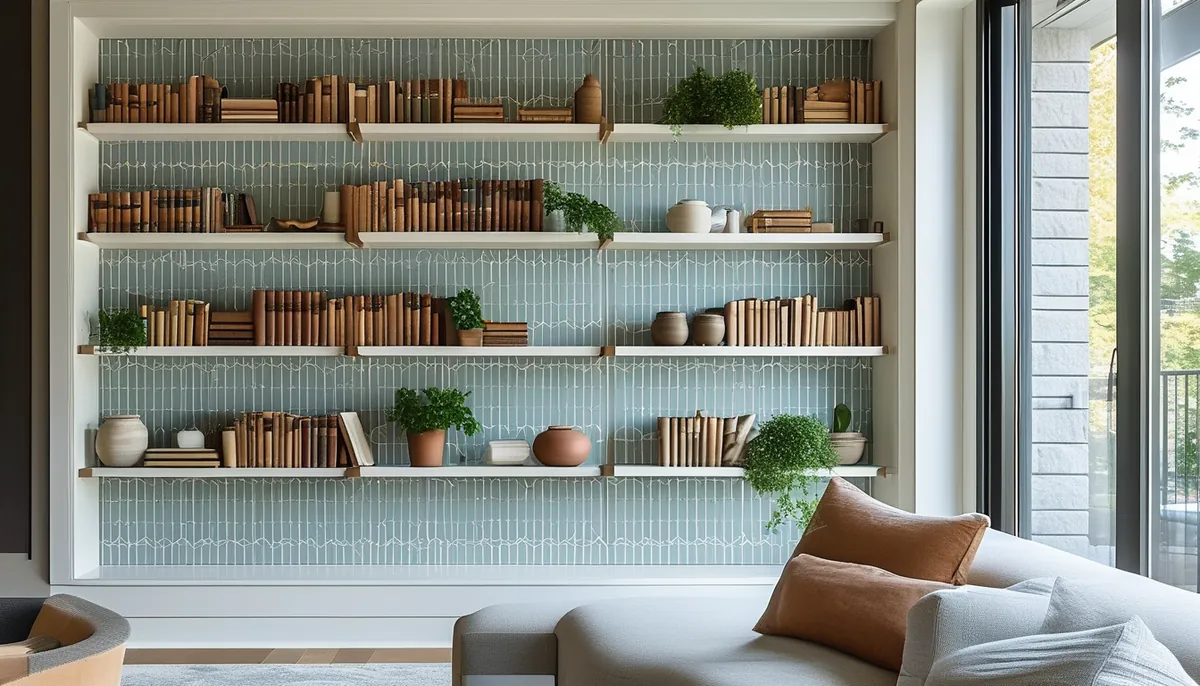
Adding wallpaper to the back of your bookshelves is a simple yet impactful way to elevate your home decor. It transforms a utilitarian space into a design element, adding depth, color, and pattern that can dramatically change the feel of a room. This technique works for built-in shelves, freestanding units, and even bookcases that are part of a larger wall unit.
The key is to choose a wallpaper that complements your existing decor and the items you plan to display. Consider the scale of the pattern and its color. A busy pattern might overwhelm small shelves or delicate items, while a subtle texture can add sophistication without distraction.
Choosing the right wallpaper for your bookshelf backing
When selecting wallpaper for your bookshelf backing, you have a few material types to consider, each with its pros and cons. The most common options are:
Vinyl-backed wallpaper
Vinyl-backed wallpaper is durable and often washable, making it a practical choice, especially if your bookshelves are in a high-traffic area or prone to spills. The vinyl layer provides a good barrier against moisture and is generally forgiving during installation. It’s also relatively easy to clean, which is a plus for areas where dust can accumulate.
Paper-backed wallpaper
Traditional paper-backed wallpaper is more affordable and offers a vast array of designs and textures. However, it can be more delicate to work with and is less resistant to moisture and scrubbing than vinyl. If you choose paper-backed, opt for a design that doesn’t require frequent cleaning of the shelf backs.
Peel and stick wallpaper
This is often the easiest option for DIYers. Peel and stick wallpaper has an adhesive backing, so you don’t need to mix paste. It’s forgiving, allowing you to reposition it during application, and it removes cleanly, making it ideal for renters or those who like to redecorate frequently. For a guide on its installation, check out our easy peel and stick wallpaper guide.
Fabric-backed wallpaper
Fabric-backed wallpaper adds a luxurious texture and depth. It can be more expensive and might require professional installation due to its delicate nature and the need for specific adhesives. However, the visual and tactile appeal can be unmatched.
Design considerations for bookshelf wallpaper
The visual impact of your bookshelf wallpaper depends heavily on your design choices. Think about the overall style you want to achieve:
Adding depth and dimension
Darker, richer patterns or those with a strong vertical or geometric element can make bookshelves appear deeper. This is particularly effective in smaller spaces or when you want to create a sense of coziness. Conversely, lighter, brighter patterns can make shelves feel more open and airy.
Matching or contrasting
You can either match your bookshelf wallpaper to your wall color for a cohesive look or choose a contrasting pattern to make the shelves a distinct feature. For example, if your walls are a neutral color, a bold floral pattern can create a stunning accent. Explore our guide on flowers on wallpaper for inspiration.
Scale of the pattern
A large-scale pattern can make a statement on deep shelves or in larger rooms. However, on shallow shelves or in small nooks, a large pattern can feel overwhelming. Smaller, more intricate patterns might be better suited for these situations. Consider the items you’ll be displaying; a complex wallpaper might compete with the books and decor.
Thematic choices
You can tie your wallpaper choice to a specific theme. For instance, a library-themed wallpaper can enhance the feel of a traditional study. A scenic pattern, like those found in our Yellowstone wallpaper designs collection, can bring the outdoors in. For a touch of elegance, consider designs like those from Rifle Paper Co., which you can learn more about here. Consider peacock wallpaper designs for a bold statement.
How to install wallpaper on bookshelf backs
Installing wallpaper on bookshelf backs is a manageable DIY project. Here’s a step-by-step guide:
Preparation is key
1. Empty the shelves: Remove all books, decorative items, and shelf liners. Clean the shelf backs thoroughly. If there’s any residue, dust, or grease, it needs to be removed for the wallpaper to adhere properly. A mild detergent and water solution usually does the trick, followed by a clean rinse and drying.
2. Measure accurately: Measure the height and width of each shelf back. Add about 2-4 inches to both measurements for trimming. This overlap will ensure you get a clean edge and can handle any slight imperfections in the shelf.
3. Cut the wallpaper: Based on your measurements, cut your wallpaper pieces. It’s often easier to work with one shelf at a time. If your wallpaper has a pattern repeat, ensure you align it correctly when cutting subsequent pieces. For peel and stick, you might be able to cut directly on the shelf after applying, but pre-cutting is generally more precise.
Application
4. Apply the wallpaper: For traditional paste-applied wallpaper, follow the manufacturer’s instructions for paste application (either to the paper or the wall/shelf back). For peel and stick, simply peel off the backing and carefully align the top edge of the wallpaper with the top of the shelf back. Gently press it into place, smoothing out any air bubbles as you go. A smoother or credit card can help push out air pockets.
5. Work out air bubbles: As you apply the wallpaper, use a smoothing tool (a plastic smoother or a clean, dry cloth) to push out any air bubbles or wrinkles. Start from the center and work your way outwards. If you’re using traditional wallpaper, you may need to use a seam roller for a professional finish.
6. Trim the excess: Once the wallpaper is in place, use a sharp utility knife or a craft knife to carefully trim the excess wallpaper around the edges. Cut along the top and bottom edges of the shelf back, and along any side edges if necessary. A steady hand is crucial here for a clean finish.
Finishing touches
7. Repeat for all shelves: Continue this process for each shelf. Ensure consistency in alignment and trimming.
8. Reassemble: Once the wallpaper is fully applied and trimmed, allow it to dry completely if you used paste. Then, carefully place your books and decor items back onto the shelves. Step back and admire your work!
Common mistakes to avoid
While this project is relatively straightforward, a few common mistakes can detract from the final result:
- Improper surface preparation: Applying wallpaper over a dirty, dusty, or greasy surface will lead to poor adhesion and potential peeling. Always clean thoroughly.
- Not accounting for pattern repeat: If your wallpaper has a pattern, failing to align it correctly between panels will result in a noticeable seam mismatch and a less professional look. Measure and cut carefully.
- Using the wrong adhesive or application method: Ensure you’re using the correct type of adhesive for your wallpaper material, or that you’re properly applying peel and stick as per instructions.
- Rushing the application: Take your time, especially when smoothing out bubbles and trimming edges. Patience leads to a much cleaner and more satisfying outcome.
- Ignoring the scale of the pattern: What looks good on a large wall might be overwhelming on a small shelf back. Choose a pattern that fits the scale of your bookshelf.
Beyond traditional books: other uses for bookshelf backing
Don’t limit yourself to just books. Wallpapered bookshelf backs can beautifully display:
- Figurines and collectibles
- Artwork and photographs
- Plants (in appropriate containers)
- Kitchenware or decorative dishes
- Craft supplies
The wallpaper acts as a backdrop, drawing attention to whatever you choose to showcase.
Trade & wholesale accounts
For designers, contractors, or businesses looking to incorporate bookshelf wallpaper into multiple projects or large-scale installations, Starhouse USA offers trade and wholesale accounts. These accounts provide access to special pricing, dedicated support, and exclusive previews of new collections. To learn more about opening a trade account and unlocking these benefits, please contact our sales team.
Schedule a callback
Have specific questions about selecting or installing wallpaper for your bookshelves? Need personalized advice for your project? You can schedule a callback with one of our design experts. Simply provide your contact information and preferred time, and we’ll reach out to discuss your needs. This service ensures you get tailored recommendations and support for your unique home decor goals.
Incorporating wallpaper into your bookshelf design is a creative and accessible way to add a unique touch to your home. Whether you opt for a subtle texture or a bold pattern, the impact can be profound, turning ordinary shelves into a stylish statement piece.