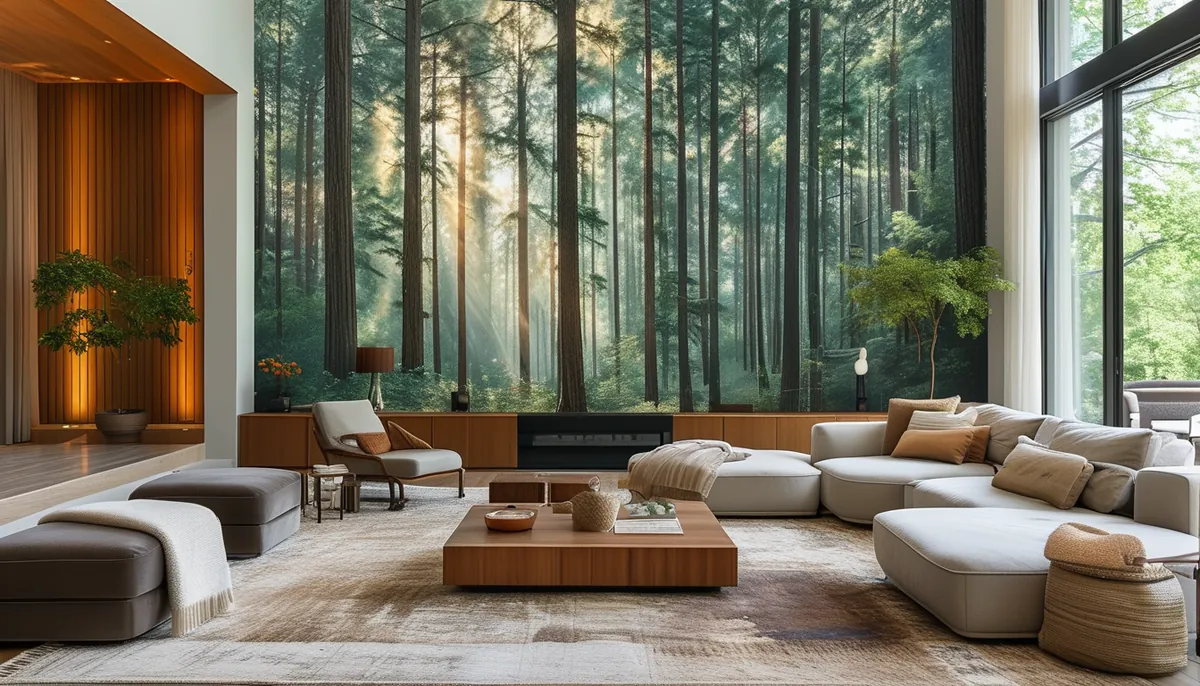
When considering interior wall murals, the first decision you’ll make is the material. This choice impacts durability, application, and the final look. Most murals today are either paper-based or vinyl-based. Paper murals are often the most budget-friendly but can be less forgiving during installation and may not hold up as well in high-moisture areas like bathrooms or kitchens. Vinyl murals, on the other hand, offer greater durability and are often scrubbable, making them a practical choice for busy homes. Some high-end options might incorporate fabric or even textured elements for a more luxurious feel, similar to some texture wallcoverings.
Beyond the base material, look at the print quality and the resolution of the image. A low-resolution image, even on high-quality vinyl, will appear pixelated or blurry when scaled to mural size. Check if the manufacturer provides sample swatches so you can see the color depth and detail yourself. Ensure the design you choose complements the existing decor and the room’s function. A busy, vibrant mural might be perfect for a living room or media room, while a more serene, nature-inspired design could be ideal for a bedroom or nursery.
Understanding mural sizes and scaling
Wall murals come in standard sizes, but many manufacturers offer custom sizing. This is crucial because a mural that looks great on a screen or in a brochure can be entirely wrong for your wall if the scale is off. Measure your wall carefully, noting not just the width and height but also any architectural features like windows, doors, or built-in shelves that might interrupt the design. Many online tools allow you to upload a photo of your room and virtually place the mural to see how it fits. Use this feature to gauge the scale. A mural that’s too small can look like a poster tacked onto the wall, while one that’s too large might overwhelm the space or require awkward cropping.
Consider the focal point of the room. A mural can become the star of the show, so think about where you want eyes to be drawn. If you have a beautiful fireplace or a stunning piece of furniture, ensure the mural placement enhances rather than competes with it. For very large walls, consider murals that offer a sense of depth, like landscapes or cityscapes, which can make the room feel more expansive. Conversely, a mural with a strong foreground element might make a large room feel cozier.
Installation methods and DIY considerations
The installation method for interior wall murals varies significantly and directly impacts whether it’s a viable DIY project. The most common types are peel-and-stick and paste-the-wall. Peel-and-stick murals are applied directly to the wall like a large sticker. They are generally the easiest to install and are forgiving, allowing you to reposition them during application. This makes them an excellent choice for renters or for those who like to change their decor frequently. The adhesive is designed to hold firm but also to be removable without damaging the underlying paint or drywall, although testing in an inconspicuous area is always recommended.
Paste-the-wall murals require you to apply wallpaper paste to the wall itself, rather than to the back of the mural panel. This method can be slightly more challenging for beginners as it requires precise alignment of the panels and can be messier. However, it often results in a more seamless finish and can be more durable than some peel-and-stick options, especially for larger or heavier materials. For paste-the-wall, ensure you have the correct type of adhesive for the mural material and your wall surface. Always follow the manufacturer’s specific instructions regarding paste application, drying times, and panel alignment. If you’re using traditional wallpaper that requires pasting the back, that’s a third, often more difficult, method.
Tools and preparation for mural installation
Regardless of the installation type, proper wall preparation is non-negotiable. Start by thoroughly cleaning the wall surface. Remove any old wallpaper, wallpaper paste residue, dust, grease, and dirt. Use a mild detergent and water, then rinse and allow the wall to dry completely. Fill any holes or cracks with spackle or drywall compound, sand them smooth once dry, and then wipe away the dust. The wall should be smooth, clean, and dry for optimal adhesion. For peel-and-stick murals, a primer might be recommended by some manufacturers to ensure easy removal later, especially on certain paint finishes. Check the specific product details.
Essential tools for mural installation include a measuring tape, a level (a laser level is highly recommended for large murals), a sharp utility knife or razor blade for trimming, a smoothing tool (like a plastic squeegee or wallpaper brush) to remove air bubbles, and potentially a step ladder. If you’re using paste-the-wall, you’ll also need a paste brush or roller and a bucket. Working with a partner can significantly ease the process, especially for larger murals, as it allows for better control and alignment while applying the panels.
Common mistakes to avoid with wall murals
One of the most frequent errors is improper wall preparation. Installing a mural over a dirty, uneven, or damaged surface will inevitably lead to adhesion issues, bubbles, and peeling. Rushing the process is another common pitfall. Take your time, especially when aligning panels. Misaligned seams are very noticeable and detract from the mural’s overall impact. Measure twice, cut once, and ensure each panel is positioned correctly before smoothing it down.
Another mistake is choosing a design that is out of scale or proportion for the room. A mural that is too small can look insignificant, while one that is too large can make a room feel cramped or unbalanced. Always consider the visual weight of the design and how it will interact with the room’s dimensions. Finally, don’t underestimate the importance of lighting. A beautiful mural can be lost in poor lighting, or its colors can appear distorted. Ensure the room has adequate lighting to showcase the mural’s details and vibrancy. The quality of the original image file is also paramount; a low-resolution image will look terrible when enlarged.
Exploring different mural styles and themes
Interior wall murals offer an incredible range of styles and themes to suit any aesthetic. Traditional murals often feature classic art reproductions, historical scenes, or detailed landscapes. These can add a sense of sophistication and timelessness to a room, making them suitable for formal living areas or studies. Think of grand pastoral scenes or intricate city maps.
Contemporary murals lean towards abstract art, geometric patterns, or modern photography. These are perfect for creating a bold statement in a modern or minimalist interior. Bold colors, striking lines, and unexpected imagery are common. For a more natural feel, botanical murals showcasing lush plants, flowers, or trees can bring the outdoors in, creating a tranquil and refreshing atmosphere, especially popular in bedrooms or sunrooms. Consider wallpaper murals that capture the essence of nature.
Themed murals cater to specific interests or rooms. For children’s rooms, you might find whimsical characters, fairy tales, or educational maps. For home offices, inspirational quotes or serene natural vistas can boost productivity and well-being. Even kitchens can benefit from murals, with designs ranging from vintage advertisements to realistic depictions of food or spices. For those who love a specific color, you might find murals that heavily feature shades like those in a plain chocolate brown wallpaper, but in a mural format.
The impact of murals on room perception
Interior wall murals have a profound effect on how a room is perceived. They can dramatically alter the perceived size and shape of a space. A mural with a strong perspective, such as a long, winding road or a deep forest scene, can create an illusion of depth, making a small room feel larger and more open. This technique is particularly effective in narrow hallways or small bedrooms.
Conversely, a mural with a bold, repeating pattern or a large, close-up graphic can make a large room feel more intimate and cozy. Murals can also be used to define different zones within an open-plan living space, acting as a visual anchor for a particular area, like a dining nook or a reading corner. The color palette of the mural plays a significant role as well. Bright, vibrant colors can energize a space, while muted, earthy tones can create a calming and relaxing ambiance. The choice of mural can completely transform the mood and character of a room, from dramatic and sophisticated to playful and whimsical.
Choosing murals for specific rooms
Living rooms and entertainment areas
In living rooms, murals can serve as a dramatic focal point, replacing traditional artwork. Consider a large-scale landscape, a city skyline, or a piece of abstract art that complements your furniture and color scheme. For entertainment areas or media rooms, murals with darker tones or subtle patterns can enhance the viewing experience by reducing glare and creating a more immersive atmosphere. Think of subtle textures or patterns that add depth without being distracting.
Bedrooms and personal sanctuaries
Bedrooms are ideal spaces for murals that promote relaxation and tranquility. Nature scenes, serene abstract designs, or soft, dreamy patterns work well. A mural behind the bed can act as a headboard, adding a unique touch. For children’s bedrooms, choose fun, engaging designs that spark imagination. Ensure the materials are durable and easy to clean, as children’s rooms often see more wear and tear. Look for murals that can grow with the child, perhaps a theme that is not too babyish.
Dining rooms and kitchens
Dining rooms can host murals that stimulate conversation or create a sophisticated dining experience. Vintage-inspired designs, sophisticated patterns, or even artistic representations of food and drink can set the mood. In kitchens, practicality is key. Opt for murals made from durable, moisture-resistant, and easy-to-clean materials like vinyl. Designs featuring culinary themes, botanical prints, or subtle geometric patterns can add personality without overwhelming the space. Ensure there is adequate ventilation if the mural is placed near a cooking area.
Home offices and creative spaces
For home offices, murals can boost productivity and inspiration. Choose designs that promote focus, such as subtle nature scenes, geometric patterns, or motivational quotes. A well-chosen mural can make a home office feel more professional and less like a corner of a living space. In creative studios or hobby rooms, don’t be afraid to be bold. Abstract designs, vibrant colors, or anything that sparks your creativity can turn a functional space into an inspiring one.
Material considerations for longevity and maintenance
The longevity and maintenance of your interior wall mural depend heavily on the material it’s made from. Vinyl murals are generally the most durable and easiest to maintain. They are resistant to moisture, fading, and general wear and tear. Most vinyl murals can be cleaned with a damp cloth and mild soap, making them suitable for high-traffic areas and rooms prone to spills or smudges, like kitchens and hallways. Their scrubbable surface means minor marks can often be wiped away without damage.
Paper-based murals, especially non-woven or ‘easy-clean’ varieties, can offer good durability but are typically less resistant to moisture than vinyl. They may require more careful cleaning, often just a dry cloth or a very lightly dampened cloth. Avoid abrasive cleaners or excessive water. Fabric-backed vinyl or premium textured papers can offer a more luxurious aesthetic but may require professional cleaning or specialized care. Always refer to the manufacturer’s care instructions to ensure you don’t damage the print or the material.
The role of lighting and finishing touches
Lighting is critical in showcasing your interior wall mural. Natural light can enhance the colors and details, but direct sunlight can cause fading over time, especially with less UV-resistant materials. Consider the direction your windows face and the amount of direct sun exposure a mural will receive. For areas with limited natural light, or for evening ambiance, artificial lighting is essential. Spotlights or accent lights can highlight specific features of the mural, creating depth and drama. Avoid harsh, direct lighting that can create glare or wash out the colors.
Finishing touches can elevate the mural experience. Ensure the edges are neatly trimmed and sealed, especially if the mural meets a ceiling, a door frame, or another wall. Consider how the mural interacts with baseboards, crown molding, and electrical outlets. Sometimes, outlets can be strategically incorporated into the design, or a mural can be designed to frame a particular architectural feature. The overall goal is a seamless integration of the mural into the room’s design, making it look intentional and part of the architecture, not just an applied decoration. For more design inspiration, explore the array of options within premier wallpaper brands to find styles that complement murals.