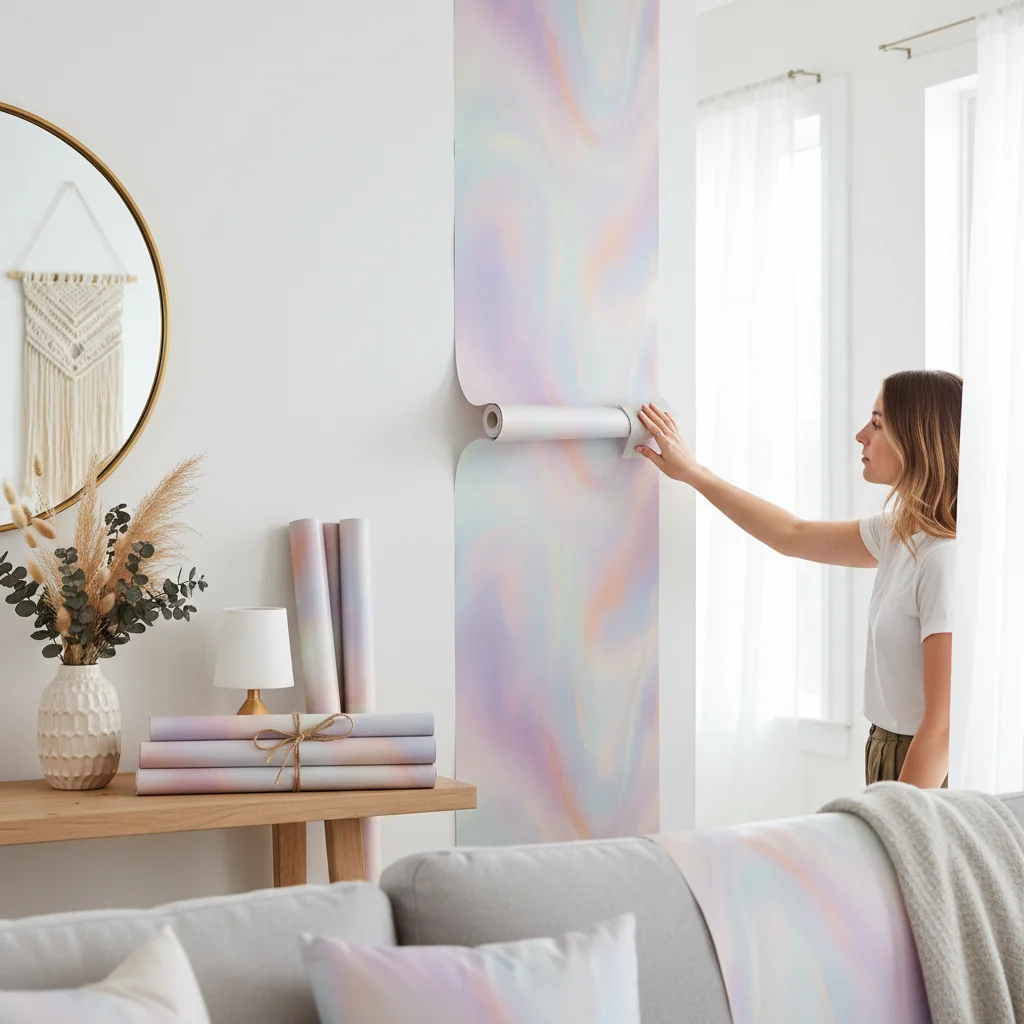
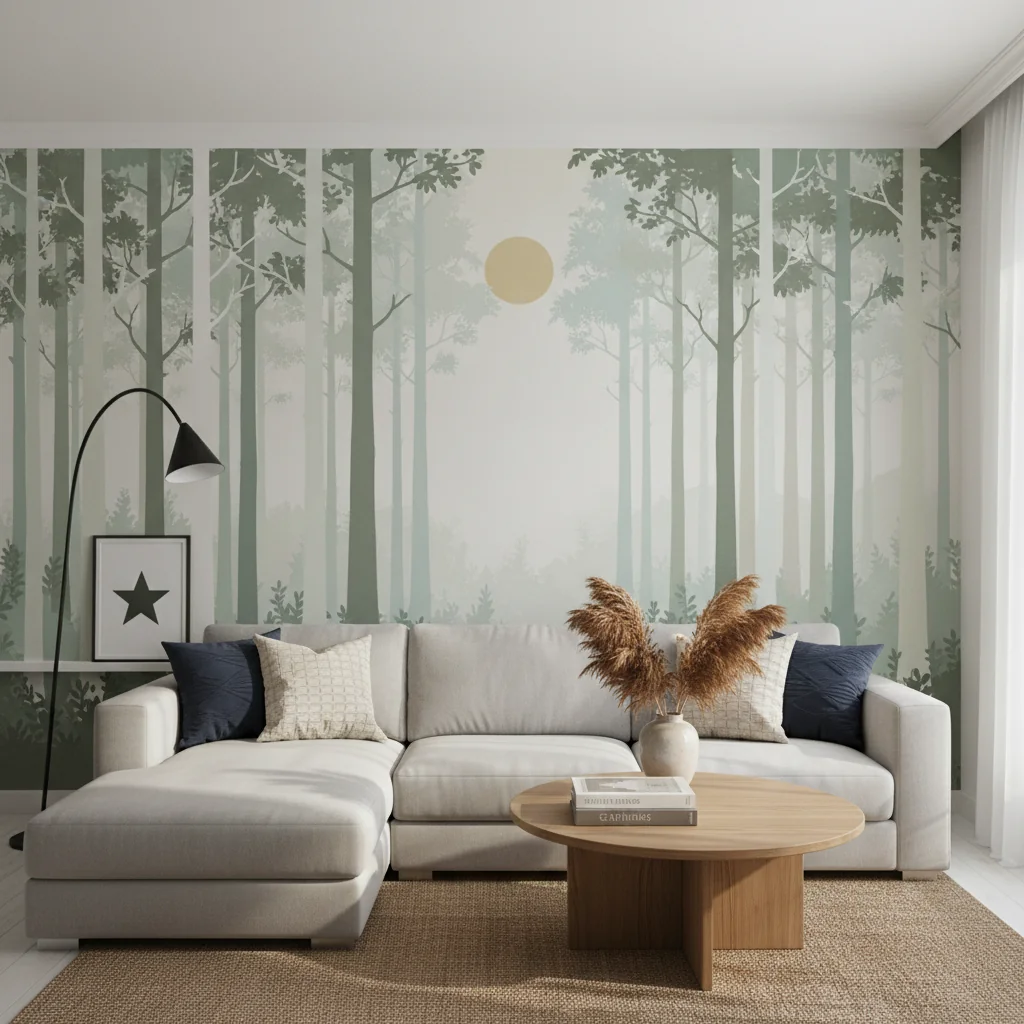
Candice Olson wallpaper represents a distinguished collection of wallcoverings renowned for its sophisticated aesthetic, offering homeowners and designers an accessible pathway to achieving high-end interior design with timeless elegance. These collections, curated by the celebrated designer Candice Olson, consistently feature refined patterns, subtle textures, and a harmonious color palette designed to elevate any room, providing a foundation of understated luxury that integrates seamlessly into diverse decorative schemes. At Starhouse, we recognize the transformative power of a well-chosen wallcovering, and Candice Olson’s designs embody the precision and aspirational quality our customers seek for their living spaces.
Key Takeaways
- Candice Olson wallpaper is characterized by its sophisticated, timeless aesthetic, featuring refined patterns, subtle textures, and elegant color palettes.
- Collections primarily utilize high-quality non-woven materials, offering both traditional (paste-the-wall or pre-pasted) and convenient peel-and-stick options for varied installation needs.
- Key design elements include delicate metallics, mica flakes, and embossed textures that add depth and visual interest without overwhelming a space.
- Accurate measurement is critical for successful installation, requiring calculations for wall dimensions, pattern repeat, and standard roll sizes (typically 20.5″ or 27″ wide).
- Proper wall preparation and adherence to specific installation guidelines for each wallpaper type ensure a professional, lasting finish.
- Styling Candice Olson wallpaper involves complementing its inherent elegance with harmonious furnishings, textiles, and lighting to create a cohesive and refined interior.
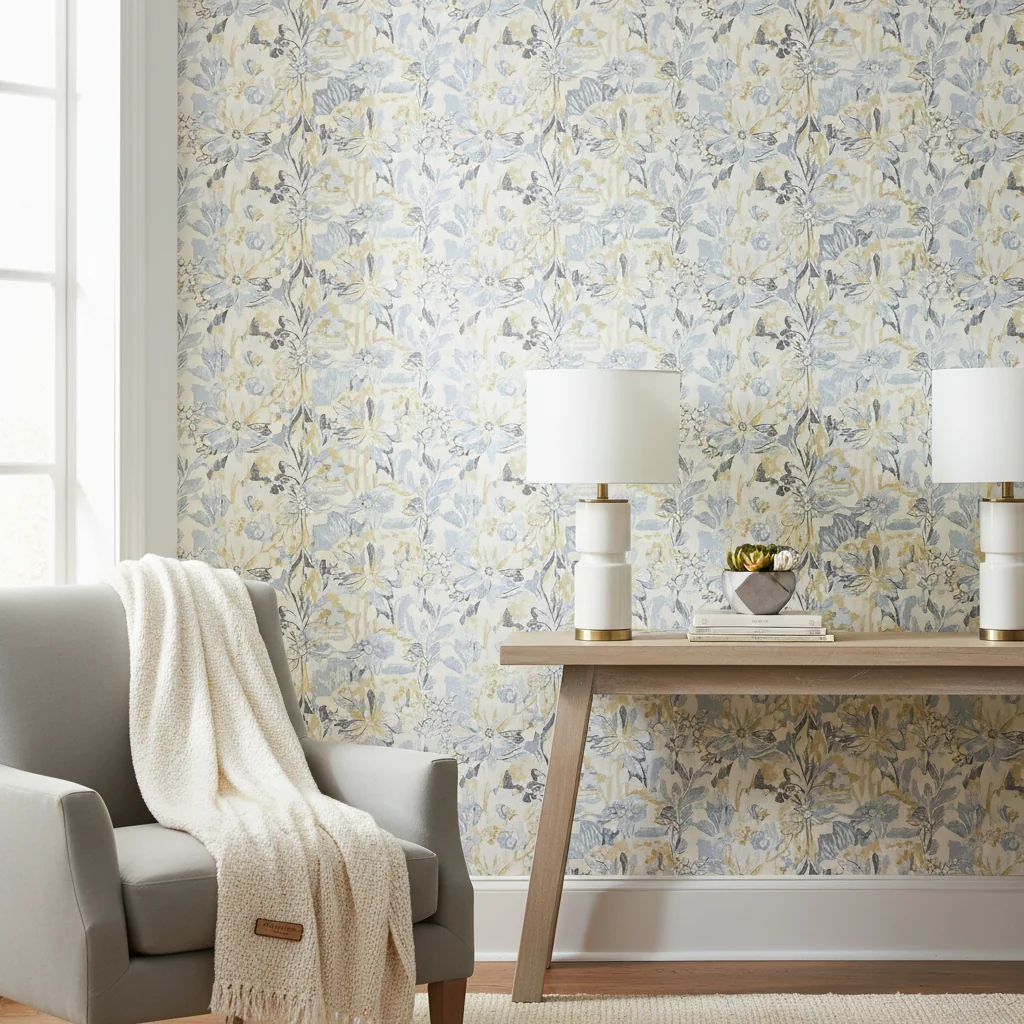
The Signature Style of Candice Olson Wallpaper
Candice Olson wallpaper is renowned for its sophisticated, timeless aesthetic, often characterized by subtle textures, metallic accents, and elegant patterns that elevate any interior with understated luxury. Her design philosophy centers on creating spaces that are both glamorous and livable, achieving a delicate balance between classicism and contemporary appeal. This approach translates directly into her wallpaper collections, which consistently offer designs that feel fresh yet enduring, avoiding fleeting trends in favor of lasting beauty.
The core of Candice Olson’s signature style lies in its ability to introduce visual interest and depth without overwhelming a room. She masterfully employs a palette of muted tones, including serene grays, sophisticated beiges, soft blues, and delicate metallics, which serve as a versatile foundation for any interior scheme. These colors are not merely backgrounds; they possess inherent richness and luminosity that react beautifully to varying light conditions, adding a dynamic quality to the walls.
A hallmark of her collections is the incorporation of tactile elements. Many Candice Olson wallpapers feature embossed details, faux grasscloth textures, or subtle mica flecks that catch the light, creating a three-dimensional effect. This attention to texture is critical for adding warmth and depth, transforming a flat surface into a visually engaging element. The textures are never ostentatious; instead, they are refined and contribute to the overall sense of luxury and quality.
Her patterns are another defining characteristic. While diverse, they consistently lean towards classic motifs reinterpreted with a modern sensibility. Expect to find elegant damasks, updated geometrics, subtle stripes, and organic botanical designs. These patterns are typically rendered in a scale that is impactful but not overpowering, ensuring they complement rather than compete with other design elements in a room. The motifs often feature a gentle shimmer or a matte-and-sheen contrast, adding another layer of sophistication. For instance, a classic damask might be presented with a metallic outline on a matte ground, providing an updated take on a traditional design.
Candice Olson’s wallpaper is designed to be versatile, appealing to a broad range of design preferences from transitional to contemporary, and even updated traditional spaces. It acts as an anchor in a room, providing a sophisticated backdrop that allows furniture, artwork, and accessories to shine. The designs foster an atmosphere of calm elegance, making them particularly well-suited for bedrooms, dining rooms, living areas, and even powder rooms where a touch of glamour is desired. Starhouse curates collections that reflect this commitment to versatility and enduring style, understanding that our customers seek investments in their homes that will stand the test of time.
The brand’s commitment to quality is also integral to its signature style. Candice Olson wallpapers are manufactured with attention to detail, ensuring durability and ease of maintenance. This practical consideration aligns with the aspirational yet livable nature of her overall design philosophy, demonstrating that luxurious aesthetics can also be functional and resilient in a busy home environment.
Exploring the Diverse Types of Candice Olson Wallpaper
Candice Olson’s wallpaper collections encompass a variety of types, primarily focusing on high-quality non-woven and often pre-pasted traditional options, alongside convenient peel-and-stick alternatives, each offering distinct installation and durability characteristics. Understanding these distinctions is crucial for selecting the right wallcovering that meets both your aesthetic desires and practical requirements for installation and longevity. The construction material and adhesive method are the primary differentiators among these types.
The most prevalent type in Candice Olson’s traditional offerings is **non-woven wallpaper**. Non-woven wallpaper is a type of wallpaper made from natural and synthetic fibers, known for its durability, breathability, and ease of installation and removal. This material is highly regarded in the industry for several key advantages:
- Durability: Non-woven wallpapers are remarkably robust, resisting tears and punctures better than traditional paper-backed options. This makes them suitable for high-traffic areas and ensures a longer lifespan.
- Breathability: The fibrous composition allows walls to breathe, which helps prevent moisture buildup and mold growth, a significant benefit in humid environments or older homes.
- Ease of Installation (Paste-the-Wall): Many non-woven wallpapers are designed for “paste-the-wall” application, meaning the adhesive is applied directly to the wall rather than to the back of the wallpaper. This method simplifies the process, reduces mess, and eliminates the need for soaking the paper, making it a favorite among professional installers and DIY enthusiasts alike.
- Strippable Removal: A major advantage of non-woven wallpaper is its strippability. When it’s time for a change, these wallpapers can often be peeled off in full dry strips without damaging the underlying wall surface, making future redecoration considerably easier. Strippable wallpaper is wallpaper that can be removed from the wall in full dry strips, often without the need for steaming or soaking, simplifying future redecoration.
- Dimensional Stability: Non-woven materials do not expand when wet or shrink when dry, ensuring that seams remain tight and the pattern alignment stays consistent over time.
Within the traditional non-woven category, some Candice Olson designs may come **pre-pasted**. Pre-pasted wallpaper has a dried adhesive already applied to its back, which is activated by simply dipping the paper in water. This offers a convenient alternative to applying paste manually, though it still requires careful handling and booking (folding pasted strips to allow adhesive to activate) before installation. While convenient, some find paste-the-wall methods to be less messy and offer more working time.
For those seeking maximum convenience and flexibility, Candice Olson also offers **peel-and-stick wallpaper**. This type of wallpaper features an adhesive backing that is protected by a removable liner. Installation involves simply peeling off the liner and pressing the wallpaper onto a clean, smooth wall surface. Key characteristics include:
- Effortless Installation: No paste or water is required, making it an ideal choice for renters, temporary installations, or those who prefer a quick and clean application process.
- Removability: Peel-and-stick wallpapers are designed for easy removal without leaving residue or damaging walls, offering unparalleled flexibility for design changes.
- Repositionability: During installation, most peel-and-stick wallpapers can be repositioned multiple times, allowing for precise pattern matching and error correction.
- Versatility: Beyond walls, peel-and-stick can be applied to furniture, stair risers, or as shelf liners, offering creative decorative possibilities.
While peel-and-stick offers significant advantages in ease, it is typically recommended for very smooth, well-prepared surfaces to ensure optimal adhesion and a seamless appearance. Traditional non-woven wallpapers, while requiring a bit more effort upfront, generally offer superior durability and a more robust, long-term adhesion, particularly for heavily textured or imperfect walls.
Candice Olson’s commitment to quality ensures that regardless of the type, each wallpaper offers rich color saturation, intricate detailing, and a luxurious finish. The choice between non-woven and peel-and-stick ultimately depends on the project’s scope, the desired permanence, and the installer’s comfort level. At Starhouse, we guide our customers through these choices, ensuring they select a product that not only looks exquisite but also performs beautifully in their home for years to come.
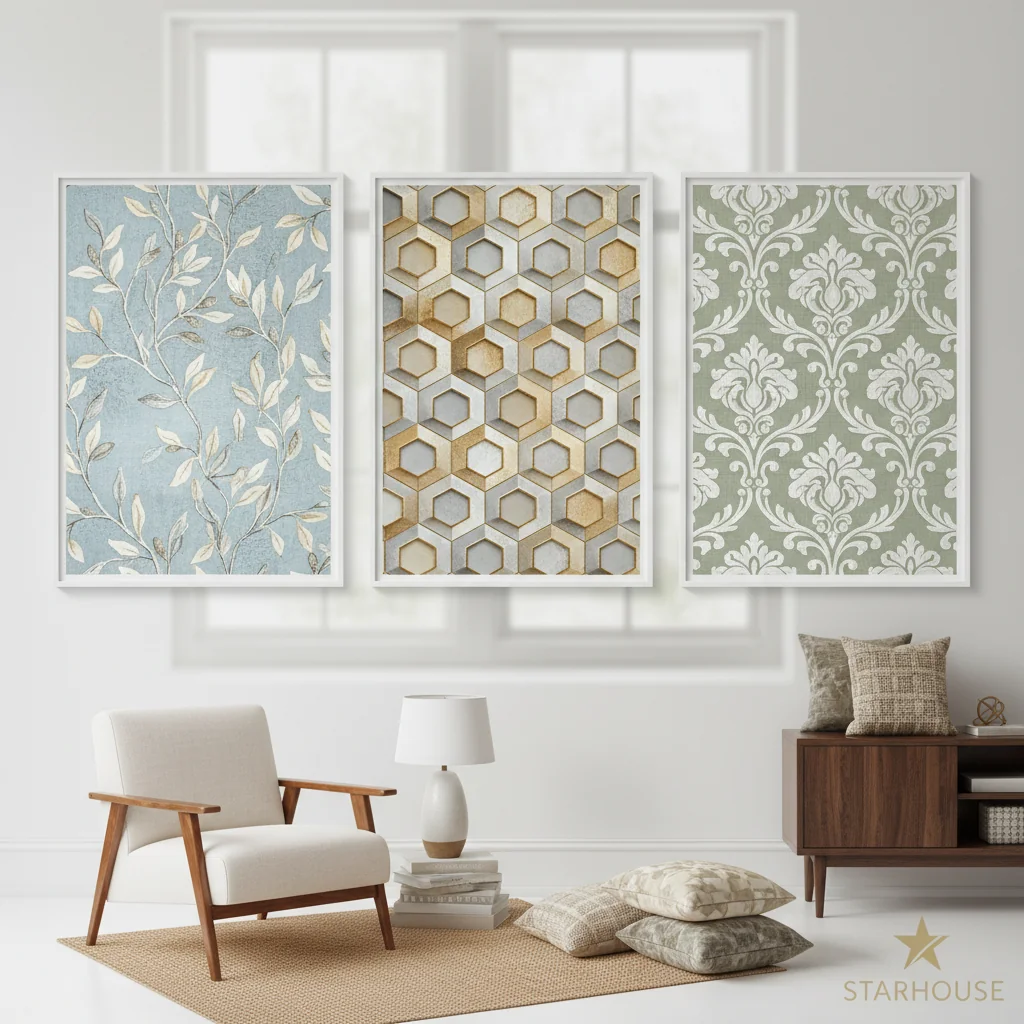
Decoding Candice Olson Wallpaper Patterns and Textures
Candice Olson wallpaper patterns frequently feature refined geometrics, organic botanicals, and classic damasks, often enriched with subtle textures like grasscloth effects, metallic sheens, and mica flakes, all designed to introduce depth and visual interest without overwhelming a space. Her approach to pattern and texture is a cornerstone of her sophisticated aesthetic, ensuring that each design contributes to an atmosphere of understated luxury and timeless appeal.
The patterns themselves are diverse yet consistently elegant. Candice Olson avoids overly bold or trendy motifs, instead opting for designs that possess enduring charm. Here are some key pattern categories and their characteristics:
- Refined Geometrics: These patterns range from subtle trellis designs and interlocking shapes to more intricate abstract arrangements. They often incorporate metallic inks or a sheen-and-matte contrast, which allows the geometric lines to catch the light and create a dynamic visual effect. These patterns are excellent for adding a modern edge or a structured foundation to a room without feeling stark. For example, a delicate silver lattice pattern on a cream background can add architectural interest to a living room.
- Organic Botanicals: Candice Olson’s botanical motifs are never overtly rustic or overly chintzy. Instead, they present flora and fauna in a stylized, often ethereal manner. Think delicate branches, subtle leaf patterns, or abstract floral forms that evoke nature’s beauty without being literal. These designs often feature soft, flowing lines and a harmonious color palette, bringing a sense of calm and natural elegance to bedrooms or dining areas. A whispering willow branch pattern, for instance, can introduce tranquility.
- Classic Damasks and Medallions: Reinterpreted for contemporary tastes, her damasks retain their grandeur but are often softened with modern colorways or subtle textural treatments. They might appear as tone-on-tone designs, where the pattern is created by a shift in sheen rather than a stark color contrast, or they might feature a delicate metallic overlay. These patterns are perfect for adding a touch of traditional luxury and formality to an entryway or a master suite.
- Subtle Stripes and Grasscloth Effects: While seemingly simple, Candice Olson’s stripes often incorporate textural elements, such as a faux linen weave or a metallic pinstripe, adding dimension. Her faux grasscloth wallpapers are particularly noteworthy. They replicate the organic texture and visual warmth of natural grasscloth without the fragility or installation challenges, offering a sophisticated, tactile surface that works beautifully in almost any room. These textural patterns are ideal for providing a serene backdrop that still feels rich and inviting.
Beyond the patterns, the **textures and finishes** are what truly differentiate Candice Olson wallpaper. These elements are meticulously crafted to enhance the visual and tactile experience:
- Embossed Details: Many designs feature raised patterns that create a three-dimensional effect. This embossing adds depth and shadow, making the walls feel more substantial and luxurious. The interplay of light and shadow on these surfaces is a key aspect of their appeal.
- Metallic Inks and Sheens: A signature element, metallic accents (often silver, gold, or champagne tones) are used sparingly but effectively. They might highlight a specific part of a pattern, create an overall subtle shimmer, or provide a contrasting sheen against a matte background. These metallics are never garish; they impart a sophisticated glow that can brighten a room and add a touch of glamour.
- Mica Flakes and Iridescence: Some collections incorporate fine mica flakes or iridescent finishes that create a delicate sparkle or a pearlescent effect. This adds a subtle, almost ethereal quality to the walls, making them appear luminous and dynamic, especially under varying light conditions.
- Faux Textures: Beyond grasscloth, Candice Olson also designs wallpapers that mimic the look and feel of linen, silk, or other fine fabrics. These faux textures offer the aesthetic appeal of natural materials with the durability and ease of maintenance of wallpaper. They are excellent for adding warmth and softness to a space.
The impact of these patterns and textures on a room is profound. They can:
- Add Depth and Dimension: Textural elements and layered patterns prevent walls from appearing flat, creating a more engaging and visually rich environment.
- Enhance Lighting: Metallic and iridescent finishes reflect light, brightening a room and creating a dynamic interplay of light and shadow throughout the day.
- Define Zones: A distinct pattern can help delineate areas in an open-concept space or highlight an architectural feature, such as an accent wall behind a bed or fireplace.
- Create Mood: Soft botanicals can evoke tranquility, while refined geometrics can introduce a sense of order and modernity. The careful selection of pattern and texture directly influences the emotional resonance of a room.
At Starhouse, we understand that selecting the right pattern and texture is a deeply personal decision that shapes the entire ambiance of your home. Candice Olson’s collections offer a curated selection that guarantees sophisticated results, transforming ordinary walls into extraordinary design statements.
Selecting the Ideal Candice Olson Wallpaper for Your Space
Selecting the ideal Candice Olson wallpaper for your space involves a careful assessment of the room’s function, natural light conditions, existing furnishings, and the overall mood you aim to create, ensuring the pattern and texture harmonize with your interior design vision. This methodical approach guarantees a result that is both aesthetically pleasing and perfectly suited to the practical demands of your home.
1. Consider the Room’s Function and Traffic:
- High-Traffic Areas (Hallways, Entryways, Kitchens): For these areas, durability is paramount. Opt for Candice Olson’s non-woven wallpapers, which are generally more resistant to scuffs and easier to clean. Patterns with a slight texture or subtle sheen can also help camouflage minor imperfections or marks. Avoid very delicate or light-colored papers in areas prone to frequent contact or splashing.
- Low-Traffic Areas (Bedrooms, Formal Dining Rooms): In spaces where durability is less of a concern, you have more freedom to explore intricate patterns, delicate textures, or more luxurious finishes like those with significant metallic or mica elements. These rooms can truly showcase the aspirational qualities of Candice Olson’s designs.
- Bathrooms/Powder Rooms: While Candice Olson wallpaper is generally high-quality, ensure the specific product is suitable for humid environments if you’re considering a full bathroom. Non-woven wallpapers are often a good choice due to their breathability. For powder rooms, which typically have less moisture, nearly any of her designs can create a stunning jewel-box effect.
2. Assess Natural Light and Room Size:
- Rooms with Abundant Natural Light: In bright spaces, you can confidently choose darker, richer patterns or those with significant metallic accents. The ample light will prevent the room from feeling closed in and will beautifully highlight the wallpaper’s reflective qualities, adding sparkle and depth.
- Rooms with Limited Natural Light: To brighten and expand such spaces, select Candice Olson wallpapers in lighter hues—creams, soft grays, pale blues—often with a subtle sheen or iridescent finish. These wallpapers reflect available light, making the room feel more open and airy. Avoid overly dark or dense patterns, which can absorb light and make the room appear smaller.
- Small Rooms: While a common misconception is to avoid wallpaper in small rooms, a well-chosen Candice Olson pattern can actually enhance them. Large, open patterns can make a small room feel grander, while subtle textures or tone-on-tone designs add sophistication without overwhelming. Peel-and-stick options are also excellent for small accent walls or defining compact nooks.
- Large Rooms: In expansive rooms, you have the flexibility to use larger-scale patterns or more intricate designs without fear of them dominating the space. A bold geometric or a grand botanical from Candice Olson’s collection can provide a strong focal point and add architectural interest to vast walls.
3. Harmonize with Existing Decor and Color Palette:
- Existing Furniture and Textiles: Bring samples of your existing fabrics, paint colors, and even wood finishes when considering wallpaper options. Candice Olson’s designs are known for their versatility, but ensuring the undertones (warm vs. cool) and overall aesthetic align is crucial. If your furniture is traditional, a classic damask with a modern twist might be ideal. If your style is contemporary, a refined geometric could be a perfect fit.
- Color Palette: Candice Olson’s collections often feature sophisticated, muted palettes. Choose a wallpaper that either complements your current color scheme (e.g., a soft gray wallpaper with existing blue accents) or introduces a new, harmonious hue that you wish to build upon. Remember that the wallpaper should enhance, not clash with, your existing decor.
-
Desired Mood or Ambiance:
- Calm and Serene: Opt for soft, ethereal botanicals or subtle textural papers in cool, muted tones like pale blue, sage, or warm gray.
- Glamorous and Luxurious: Look for patterns with significant metallic accents, embossed textures, or rich, jewel-toned undertones.
- Modern and Sophisticated: Geometrics, abstract patterns, or refined faux textures in neutral or monochromatic schemes are excellent choices.
- Classic and Elegant: Reimagined damasks, sophisticated stripes, or tone-on-tone patterns with a slight sheen will achieve this look.
4. Sample, Sample, Sample:
Always order samples of your top Candice Olson wallpaper choices. View them on your walls in various lighting conditions throughout the day and evening. This step is critical because colors and textures can appear dramatically different in person than on a screen or in a showroom. Place samples next to your furniture, artwork, and existing paint to confirm compatibility.
By systematically evaluating these factors, you can confidently select a Candice Olson wallpaper that not only embodies her signature elegance but also perfectly transforms your specific space into a reflection of your refined taste. At Starhouse, we empower our customers with the knowledge to make such informed and impactful design decisions.
Starhouse is curating its collection to bring you the finest in home décor. Tell us what you’re looking for in Candice Olson wallpaper and get early access to our exclusive selections.
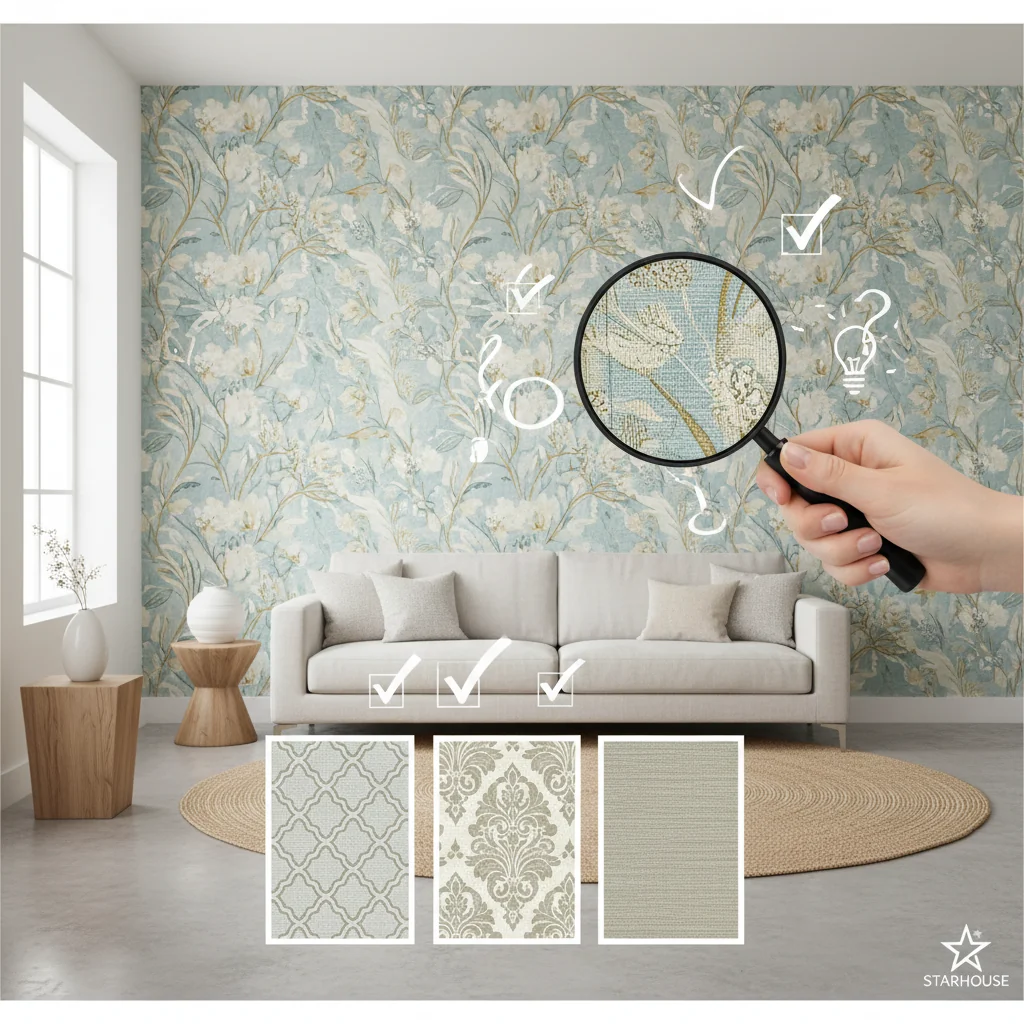
Precision in Measurement: Sizing and Coverage for Candice Olson Wallpaper
Precision in measurement is paramount when purchasing Candice Olson wallpaper to ensure adequate coverage and minimize waste, requiring careful calculation of wall dimensions, pattern repeat, and accounting for standard roll sizes, typically 20.5 inches or 27 inches wide and 33 feet long. Underestimating can lead to costly delays and difficulty finding matching dye lots, while overestimating excessively results in unnecessary expense. A methodical approach to measuring guarantees a seamless and efficient installation.
1. Gather Your Tools:
- Measuring tape (preferably a long, retractable one)
- Pencil
- Pad of paper or calculator
- Step stool or ladder
2. Measure Wall Dimensions:
For each wall you plan to wallpaper, measure the height from the baseboard to the ceiling and the width from corner to corner. Record these measurements accurately, typically to the nearest inch. Do not assume walls are perfectly square or uniform; measure in several places (e.g., height at both ends and the middle of a wall) and use the greatest measurement to ensure you have enough paper for any variations.
3. Calculate the Total Square Footage:
Multiply the height (in feet) by the width (in feet) for each wall to get its square footage. Sum these values to find the total square footage of the area to be covered. For example, a wall that is 8 feet high and 12 feet wide is 96 square feet.
4. Account for Doors and Windows:
While you won’t wallpaper over doors and windows, you still need to factor them into your overall calculation to avoid ordering too little. For simplicity, it’s often recommended to measure as if these openings don’t exist, especially for patterned papers. This provides a buffer for pattern matching and waste. However, if you have very large openings (e.g., a wall with a vast sliding glass door), you can subtract approximately half the square footage of these openings from your total. Never subtract the full area, as you will still need paper to cut around them and for pattern repeats.
5. Understand Wallpaper Roll Sizes:
Candice Olson wallpapers typically come in standard North American roll sizes:
- Single Roll: Approximately 20.5 inches wide by 16.5 feet long, covering about 28 square feet.
- Double Roll: Approximately 20.5 inches wide by 33 feet long, covering about 56 square feet.
- Wider Rolls: Some collections may offer rolls that are 27 inches wide by 27 feet long, covering about 60.75 square feet.
It is crucial to note that wallpaper is almost always sold and priced by the single roll but packaged as a double or triple roll. Always clarify the actual length and width of the roll you are purchasing, as the “single roll” coverage is a theoretical unit. When ordering, you will typically order in terms of double rolls (e.g., “3 double rolls”).
6. Factor in Pattern Repeat:
Pattern repeat is the vertical distance on a wallpaper roll before the pattern begins to repeat itself, a critical measurement for matching seams and calculating material needs. This is arguably the most critical and often overlooked factor in wallpaper measurement. Candice Olson patterns can have repeats ranging from 0 inches (for random match or plain textures) to over 25 inches for large-scale designs. The larger the pattern repeat, the more waste you will incur per strip to ensure a continuous pattern match at the seams.
- No Match/Random Match: No pattern repeat; strips can be hung side-by-side without matching. Minimal waste.
- Straight Match: The pattern matches across the seams at the same height on adjacent strips.
- Drop Match (Offset Match): The pattern matches across the seams, but the pattern on the second strip is dropped or raised a specific distance (e.g., half the pattern repeat) relative to the first. This requires more careful planning and often results in more waste.
7. Calculate the Number of Rolls Needed:
A common method for estimating rolls, especially for patterned paper, is to calculate the number of strips per roll and then the number of rolls needed for the width of your walls.
- Determine Strip Length: Add your wall height (e.g., 96 inches) plus 4-6 inches for trimming at the top and bottom (e.g., 96 + 6 = 102 inches). For patterned paper, round this up to the nearest full pattern repeat. For example, if your repeat is 24 inches, and your strip length is 102 inches, you’ll need 5 repeats (5 x 24 = 120 inches) per strip to ensure a match. This is your effective strip length.
- Strips Per Roll: Divide the total usable length of a double roll (e.g., 33 feet = 396 inches) by your effective strip length (e.g., 120 inches). 396 / 120 = 3.3. Round down to the nearest whole number; so, 3 usable strips per double roll.
- Number of Strips for Walls: Divide the total width of your walls (e.g., 12 feet = 144 inches) by the width of one roll (e.g., 20.5 inches). 144 / 20.5 = 7.02. Round up to 8 strips needed.
- Total Rolls: Divide the total strips needed (8) by the strips per double roll (3). 8 / 3 = 2.67. Round up to 3 double rolls.
General Rule of Thumb for Waste:
Always add a buffer. For papers with a small or no repeat, add 10-15% extra. For large, complex pattern repeats, add 15-20% extra. This accounts for trimming, mistakes, and future repairs. It is far better to have an extra roll (which can often be returned if unopened and in good condition) than to run short and struggle to find a matching dye lot later.
8. Check Dye Lots:
When your wallpaper arrives, inspect each roll to ensure the “dye lot” numbers match. Slight color variations can occur between different production batches. Using rolls from different dye lots on the same wall can result in noticeable color discrepancies. At Starhouse, we emphasize this check to ensure a cohesive and professional finish.
By following these precise measurement and calculation steps, you can confidently order the correct amount of Candice Olson wallpaper, ensuring your project proceeds smoothly and achieves the sophisticated look you envision.
| Characteristic | Non-Woven (Traditional) | Peel-and-Stick | Fabric-Backed Vinyl (Heavy Duty) |
|---|---|---|---|
| Material Composition | Natural & synthetic fibers; breathable | Vinyl or fabric with adhesive backing; often PVC-free options | Vinyl surface with fabric backing for strength |
| Adhesive Method | Paste-the-wall or pre-pasted (activated by water) | Self-adhesive; liner peeled off during installation | Requires professional-grade adhesive paste |
| Installation Difficulty | Moderate (requires paste, booking; easier than paper) | Easy (no paste, no mess; repositionable) | Moderate to Difficult (heavy, requires careful handling) |
| Removal | Strippable (peels off in dry strips, usually without damage) | Fully removable and repositionable without residue | Strippable, but may require scoring/steaming depending on adhesive |
| Durability & Longevity | High; tear-resistant, stable, breathable | Moderate; good for temporary/medium-term use | Very High; extremely durable, washable, impact-resistant |
| Moisture Resistance | Good (breathable, helps prevent mold) | Good (vinyl surface is wipeable) | Excellent (highly water-resistant, ideal for bathrooms) |
| Surface Imperfections | Can subtly mask minor imperfections | Requires very smooth, clean surface for best adhesion | Excellent at concealing wall imperfections due to thickness |
| Ideal Use Cases | Most rooms, accent walls, long-term decor, high-end residential | Rentals, temporary decor, DIY projects, furniture accents, low-moisture areas | Commercial spaces, high-traffic residential, humid environments |
| Approx. Price per Double Roll (USD) | $70 – $150+ | $40 – $100+ | $100 – $250+ |
Installation Best Practices for Candice Olson Wallpaper
Successful installation of Candice Olson wallpaper hinges on thorough surface preparation, including cleaning and priming walls, and utilizing the correct tools and techniques specific to whether you are applying traditional paste-the-wall or peel-and-stick varieties, ensuring a smooth, lasting finish. Proper preparation and execution are critical for achieving the professional, luxurious look that Candice Olson designs promise.
1. Essential Tools for Wallpaper Installation:
- Measuring tape
- Pencil
- Level or plumb bob
- Utility knife with fresh blades
- Smoothing tool (plastic smoother or wallpaper brush)
- Seam roller
- Drop cloths
- Sponge and clean water
- Bucket (for paste or water for pre-pasted)
- Wallpaper paste and paste brush/roller (for unpasted)
- Primer (acrylic-based, specific for wallpaper)
- Step ladder
- Straightedge or metal ruler
2. Crucial Surface Preparation (for all wallpaper types):
This step is non-negotiable for a professional result. Neglecting it is a common mistake that leads to bubbling, peeling, or visible wall imperfections.
- Clean Walls Thoroughly: Wash walls with a mild detergent solution (e.g., TSP substitute) to remove dirt, grease, and grime. Rinse thoroughly with clean water and allow walls to dry completely, typically 24 hours.
- Repair Imperfections: Fill any holes, cracks, or dents with spackle or joint compound. Sand smooth once dry. Even small imperfections will be magnified under wallpaper.
- Remove Old Wallpaper (if applicable): All old wallpaper must be completely removed. Residual adhesive or paper can prevent new wallpaper from adhering properly.
-
Prime Walls: Apply a high-quality, acrylic-based wallpaper primer (also known as a “sizing” primer). This serves multiple functions:
- It creates a consistent surface for the adhesive to bond to, preventing uneven absorption.
- It makes future wallpaper removal much easier by sealing the drywall.
- It provides a uniform color base, which is especially important for lighter wallpapers.
Allow the primer to dry completely according to manufacturer instructions, usually 24-48 hours.
- Ensure Walls are Smooth: For peel-and-stick especially, walls must be perfectly smooth. Any texture will show through and can compromise adhesion.
3. Installation Techniques for Traditional Candice Olson Wallpaper (Non-Woven, Paste-the-Wall or Pre-Pasted):
- Mark Your Starting Point: Do not start in a corner, as corners are rarely perfectly plumb. Measure out from a corner the width of a roll minus 0.5 inch (to allow for wrapping slightly into the corner) and draw a perfectly plumb vertical line using a level. This line will guide your first strip. For patterned paper, consider starting in an inconspicuous area or where the pattern can be centered.
- Cut Your Strips: Measure the wall height and add 4-6 inches for trimming at the top and bottom. For patterned paper, account for the pattern repeat to ensure a match between strips. Cut all necessary strips for one wall at a time.
- Apply Adhesive (for unpasted non-woven): Using a roller or brush, apply a generous, even coat of high-quality, clear, non-staining wallpaper paste directly to the wall section where the first strip will go. Extend the paste slightly wider than the strip.
- Activate Adhesive (for pre-pasted): Roll the cut strip loosely, adhesive side out. Submerge the roll in a tray of clean water for the time specified by the manufacturer (usually 30-60 seconds). “Book” the paper by folding it, adhesive side to adhesive side, top to bottom, and bottom to top, allowing it to rest for 5-10 minutes. This lets the adhesive fully activate and relax the paper.
- Hang the First Strip: Align the first strip with your plumb line, starting from the top, leaving a few inches of excess at the ceiling. Gently press the paper to the wall.
- Smooth Out: Use your smoothing tool to work from the center of the strip outwards, pushing out any air bubbles. Work downwards.
- Trim Excess: Use a sharp utility knife and a straightedge to carefully trim the excess paper at the ceiling and baseboard. Change blades frequently for clean cuts.
- Hang Subsequent Strips: Butt the edge of the next strip tightly against the first, carefully matching the pattern. Do not overlap. Continue smoothing and trimming.
- Seam Rolling: Gently roll the seams with a seam roller to ensure they are fully adhered and lie flat. Avoid pressing too hard, which can squeeze out adhesive or flatten embossed patterns.
- Clean Up: Immediately wipe away any excess paste from seams or the wallpaper surface with a clean, damp sponge. Allow the wallpaper to dry slowly, avoiding drafts or excessive heat.
4. Installation Techniques for Candice Olson Peel-and-Stick Wallpaper:
- Mark Your Starting Point: Similar to traditional wallpaper, draw a plumb line for your first strip.
- Cut Strips: Measure and cut strips, adding 2-4 inches for trimming at top and bottom. Account for pattern repeat.
- Hang the First Strip: Peel back only a few inches of the backing liner from the top of the strip. Align the exposed adhesive edge with your plumb line and press it onto the wall, leaving excess at the ceiling.
- Slow and Steady: Gradually peel more of the backing liner downwards with one hand while simultaneously smoothing the wallpaper onto the wall with your other hand (or smoothing tool). Work from the center outwards to avoid bubbles.
- Repositioning: If you make a mistake, gently peel the strip back and reposition it. This is a key advantage of peel-and-stick.
- Trim and Smooth: Trim excess at the ceiling and baseboard with a sharp utility knife. Smooth out any remaining bubbles.
- Hang Subsequent Strips: Butt the next strip tightly against the previous one, carefully matching the pattern. Overlapping is generally not recommended as it can be visible.
- Final Smoothing: Give the entire wall a final smooth-down to ensure full adhesion.
By adhering to these best practices, installers can confidently achieve a flawless finish with Candice Olson wallpaper, transforming any room with its signature elegance and durability. At Starhouse, we advocate for these precise methods to ensure our customers experience the full beauty and longevity of their chosen wallcoverings.
Care and Maintenance for Lasting Beauty
Proper care and maintenance are essential for preserving the lasting beauty of Candice Olson wallpaper, primarily involving gentle cleaning with a soft, damp cloth and prompt attention to minor repairs, which protects the integrity of its sophisticated finishes. Adhering to specific guidelines ensures the wallpaper retains its vibrant colors, subtle textures, and overall luxurious appeal for many years.
1. Regular Cleaning Practices:
- Dusting: The most frequent maintenance task is regular dusting. Use a soft, dry cloth, a feather duster, or a vacuum cleaner with a soft brush attachment to gently remove surface dust and cobwebs. This prevents dust buildup that can dull the wallpaper’s appearance over time.
-
Spot Cleaning: For minor marks or smudges, Candice Olson wallpapers are generally washable or scrubbable, but always check the specific care symbols provided with your wallpaper roll.
- Washable: Use a clean, soft sponge or cloth lightly dampened with plain water. Gently wipe the affected area.
- Scrubbable: For more stubborn marks, use a mild, non-abrasive soap solution (e.g., a few drops of dish soap in water) on a clean, soft cloth. Avoid harsh chemicals, abrasive cleaners, or scrub brushes, as these can damage the surface, remove finishes like metallic accents, or fade colors.
- Immediate Action: Address spills or stains immediately. The longer a substance sits on the wallpaper, the more likely it is to set and become difficult to remove.
- Test in an Inconspicuous Area: Before applying any cleaning solution to a visible area, always test it on a small, hidden section of the wallpaper (e.g., behind a door or a leftover piece). This confirms that the cleaning agent will not cause discoloration or damage.
- Dry Thoroughly: After cleaning with a damp cloth, gently blot the area dry with a clean, dry cloth to prevent water spots or moisture damage.
2. Protecting Your Wallpaper:
- Avoid Direct Sunlight: Prolonged exposure to direct sunlight can cause wallpaper to fade over time, especially darker or more vibrant colors. Use curtains, blinds, or UV-filtering window films to protect walls in sun-drenched rooms.
- Control Humidity: Excessive humidity can cause wallpaper to lift or develop mold, particularly in bathrooms. Ensure adequate ventilation in these areas. Conversely, extremely dry conditions can sometimes lead to seams shrinking. Maintain a stable indoor humidity level.
- Protect from Physical Damage: Be mindful of furniture placement. Avoid placing furniture directly against wallpaper in a way that causes scuffs or indentations. Use felt pads under furniture legs if they are near walls. In high-traffic areas, consider chair rails or protective wall panels where appropriate.
- Pets and Children: While durable, wallpaper is not impervious to scratches from pets or enthusiastic play from children. Consider placement or protective measures in areas frequently accessed by them.
3. Addressing Minor Repairs:
- Lifting Seams or Edges: This is a common issue that is usually easy to fix. Apply a small amount of clear vinyl-to-vinyl adhesive (available at hardware stores) directly under the lifted edge. Press firmly with a seam roller or clean cloth until the adhesive sets. Wipe away any excess immediately.
- Small Tears or Bubbles: For small tears, carefully apply a tiny amount of adhesive to the underside of the tear and press it back into place. For small bubbles, you can sometimes carefully make a tiny slit with a utility knife, gently squeeze out the air, and then apply a small amount of adhesive underneath before pressing it flat. Always use a very sharp blade for minimal disruption.
- Matching Dye Lots for Repairs: If a larger section is damaged, having a leftover piece from the original dye lot is invaluable for seamless repair. This underscores the importance of saving any excess wallpaper from the initial installation.
By implementing these care and maintenance practices, you ensure that your Candice Olson wallpaper remains a beautiful and enduring feature of your home, reflecting its inherent quality and your discerning taste. Starhouse champions these guidelines to help our customers safeguard their investment in sophisticated home décor.
Styling and Pairing Candice Olson Wallpaper with Your Decor
Styling Candice Olson wallpaper involves thoughtfully pairing its elegant patterns and textures with complementary furnishings, textiles, lighting, and accessories to create a cohesive and refined interior, allowing the wallpaper to serve as a sophisticated backdrop or a focal design element. The key is to build upon the wallpaper’s inherent aesthetic, ensuring that every piece in the room contributes to a harmonious and elevated design narrative.
1. Define the Wallpaper’s Role: Accent or Backdrop?
- As a Focal Accent: If you’ve chosen a Candice Olson wallpaper with a bold pattern, significant metallic sheen, or rich texture, position it as an accent wall. This draws the eye and makes a strong design statement without overwhelming the entire room. Pair it with simpler, complementary paint colors on the remaining walls. For instance, a geometric metallic wallpaper on a wall behind a bed becomes the room’s central feature.
- As a Sophisticated Backdrop: For more subtle patterns, tone-on-tone designs, or faux textures (like grasscloth effects), the wallpaper acts as a rich, layered backdrop. These designs provide depth and interest without demanding primary attention, allowing your furniture and artwork to shine. They create a sense of cohesion and understated luxury throughout the entire space.
2. Harmonizing with Furniture:
- Complementary Styles: Candice Olson’s designs often bridge traditional and contemporary. Pair her wallpapers with furniture that shares this transitional quality. Clean-lined pieces with classic details, or upholstered items in neutral fabrics, work exceptionally well. Avoid overly ornate traditional furniture or stark, minimalist contemporary pieces that might clash with her balanced aesthetic.
- Color and Finish: Select furniture finishes that echo or subtly contrast with the wallpaper’s palette. If the wallpaper has warm undertones (e.g., beige, gold metallics), opt for warm wood tones (walnut, cherry) or brass accents. For cool-toned wallpapers (grays, silvers), cool woods (ash, light oak) or chrome/nickel metals are ideal. Upholstery in solid colors or subtle textures that pick up a secondary color from the wallpaper creates a cohesive look.
- Scale: Ensure the scale of your furniture is appropriate for the wallpaper’s pattern. A large-scale pattern can handle substantial furniture, while a delicate pattern might be better paired with more refined pieces.
3. Integrating Textiles and Soft Furnishings:
- Layering Textures: Candice Olson wallpapers often feature subtle textures. Enhance this by layering textiles with varying textures. Think velvet throw pillows, linen draperies, a chunky knit blanket, or a silk rug. This creates a tactile richness that elevates the room’s comfort and luxury.
- Pattern Play: If your wallpaper has a distinct pattern, keep other fabric patterns minimal or complementary. Use solid-colored drapes or bedding that picks up a tone from the wallpaper. If you introduce another pattern, ensure it’s a different scale (e.g., a small geometric alongside a large floral) and shares the same color family to avoid visual clutter.
- Drapery Choices: Choose draperies that either blend seamlessly with the wall color for a serene look or provide a soft contrast. Sheer or semi-sheer fabrics can allow light to interact beautifully with the wallpaper’s metallic or iridescent qualities.
4. Thoughtful Lighting and Accessories:
- Lighting to Highlight: Lighting is paramount for Candice Olson wallpaper, especially those with metallic or textured finishes. Strategically placed sconces, table lamps, or picture lights can accentuate the wallpaper’s reflective qualities and create dramatic shadow play, highlighting its depth. Warm light (2700K-3000K) often enhances the richness of her palettes.
- Artwork and Mirrors: When hanging artwork, consider how it interacts with the wallpaper. For a patterned paper, choose artwork with simple frames and ample matting to create a visual break. Alternatively, select abstract pieces that echo the wallpaper’s colors or forms. Large mirrors can be particularly effective, reflecting the wallpaper and expanding the sense of space and light.
- Decorative Objects: Select accessories that reinforce the room’s aesthetic. Metallic vases, ceramic sculptures, or carefully chosen decorative boxes can complement the wallpaper’s sophistication. Avoid clutter; Candice Olson’s style thrives on refined curation.
5. Creating a Cohesive Color Story:
- Pull Colors: Identify the dominant and accent colors within your chosen Candice Olson wallpaper. Use these colors as a guide for selecting paint colors for trim, ceilings, and adjacent walls, as well as for your furniture, textiles, and accessories.
- Monochromatic Schemes: Many Candice Olson wallpapers lend themselves beautifully to monochromatic or analogous color schemes, creating a serene and sophisticated environment through subtle variations in hue and texture.
By meticulously considering each element of your decor in relation to your Candice Olson wallpaper, you create an interior that is not just decorated, but thoughtfully designed, reflecting a cohesive vision of elegance and comfort. Starhouse empowers our customers to achieve these elevated design outcomes through informed choices and curated inspiration.
Styling Principles for Candice Olson Wallpaper
- Balance Patterns: If wallpaper features a strong pattern, opt for solid or subtly textured fabrics and furniture.
- Layer Textures: Combine smooth, shiny, and tactile finishes in textiles and furniture to add depth.
- Harmonize Colors: Pull primary and secondary colors from the wallpaper for a cohesive room palette.
- Strategic Lighting: Use lighting to accentuate metallic elements and textures, enhancing the wallpaper’s dynamic qualities.
- Thoughtful Accessories: Choose decorative objects that complement the wallpaper’s style without competing for attention.
- Consider Scale: Match the scale of furniture and artwork to the wallpaper pattern to maintain visual balance.
- Define Role: Decide if the wallpaper is an accent statement or a unifying backdrop, and style accordingly.
Common Mistakes to Avoid When Working with Candice Olson Wallpaper
Avoiding common mistakes when working with Candice Olson wallpaper, such as neglecting proper wall preparation or miscalculating roll quantities, is crucial for achieving a professional finish and maximizing the aesthetic impact of these premium wallcoverings. Many issues that arise during or after installation can be traced back to preventable errors, underscoring the importance of meticulous planning and execution.
1. Skipping or Insufficient Wall Preparation:
This is arguably the most frequent and impactful mistake. Applying wallpaper to dirty, uneven, unprimed, or improperly prepared walls leads to a host of problems:
- Poor Adhesion: Dirt, grease, or old adhesive residue prevents the new wallpaper from sticking properly, leading to peeling.
- Visible Imperfections: Every bump, nail hole, or crack will be magnified once the wallpaper is applied, ruining the smooth, luxurious finish.
- Uneven Drying/Bubbling: Unsealed drywall can absorb adhesive unevenly, causing wallpaper to bubble or dry inconsistently.
- Difficulty in Future Removal: Without a proper primer (sizing), wallpaper can bond directly to drywall, causing damage upon removal.
- Solution: Always clean, repair, sand smooth, and prime walls with a high-quality acrylic-based wallpaper primer (e.g., Zinsser Gardz or Roman PRO-999) and allow it to dry completely.
2. Incorrect Measurement and Under-ordering:
Underestimating the number of rolls needed is a costly mistake. Running out of wallpaper mid-project means waiting for a new order, and worse, the new rolls may come from a different dye lot, resulting in noticeable color variations.
- Solution: Meticulously measure wall height and width, calculate total square footage, and accurately account for pattern repeat and waste (adding 10-20% buffer). Always purchase extra rolls from the same dye lot.
3. Ignoring Dye Lots:
Even if you order enough rolls, failing to check that all rolls have matching dye lot numbers before installation can lead to visible color differences on the wall.
- Solution: Upon receiving your wallpaper, always verify that all rolls share the same dye lot number. If not, contact your supplier immediately for replacements.
4. Improper Pattern Matching:
Especially with Candice Olson’s sophisticated patterns, incorrect pattern matching at seams can disrupt the visual flow and detract from the overall elegance.
- Solution: Understand the pattern match type (random, straight, or drop) and practice aligning strips. Cut strips carefully, allowing ample overlap for trimming at top/bottom, and use a sharp utility knife for precise cuts along the pattern.
5. Starting in a Corner:
Corners are rarely perfectly plumb, and starting there can lead to crooked strips that compound errors across the wall.
- Solution: Always start your first strip from a plumb line drawn a few inches (e.g., 0.5 inch) less than the roll width from a corner. This allows you to wrap slightly into the corner with the first strip and begin the next wall accurately.
6. Overlapping Strips (for most wallpapers):
Most modern wallpapers, especially Candice Olson’s non-woven types, are designed for “butt joint” installation, meaning strips are placed edge-to-edge without overlapping. Overlapping creates visible seams and can prevent proper adhesion.
- Solution: Carefully butt the edges of the strips together. Only overlap if the manufacturer specifically instructs for a “double-cut” seam, which is rare for residential products. Peel-and-stick should also be butted.
7. Using Dull Blades:
A dull utility knife blade will tear and fray the wallpaper, resulting in jagged edges and an unprofessional finish, particularly at the ceiling and baseboard.
- Solution: Always use a fresh, sharp utility knife blade. Change blades frequently, especially when trimming delicate or thick wallpapers.
8. Not Smoothing Out Air Bubbles:
Leaving air bubbles trapped under the wallpaper will result in an uneven, unsightly finish that can eventually lead to peeling.
- Solution: Use a wallpaper smoothing tool (brush or plastic smoother) to gently but firmly work from the center of the strip outwards, pushing all air bubbles towards the edges as you hang each strip.
9. Inadequate Clean-Up:
Allowing excess paste to dry on the surface of the wallpaper or at the seams can leave a visible sheen or attract dirt.
- Solution: Immediately wipe away any excess paste with a clean, damp sponge after hanging each strip and smoothing seams.
By being aware of and actively avoiding these common pitfalls, homeowners and installers can ensure that their Candice Olson wallpaper project is a resounding success, delivering the impeccable finish and enduring elegance expected from such premium wallcoverings. Starhouse encourages a meticulous approach to ensure satisfaction with every design choice.
Frequently Asked Questions About Candice Olson Wallpaper
What is the primary aesthetic of Candice Olson wallpaper?
Candice Olson wallpaper is primarily known for its sophisticated, timeless aesthetic, characterized by elegant patterns, subtle textures, and a harmonious color palette that creates an atmosphere of understated luxury.
Is Candice Olson wallpaper easy to install?
Many Candice Olson wallpapers are designed for ease of installation, particularly her non-woven, paste-the-wall options and peel-and-stick collections, which simplify the process compared to traditional paper-backed wallpapers.
Can Candice Olson wallpaper be removed easily?
Yes, most Candice Olson non-woven wallpapers are strippable, meaning they can be removed in full dry strips without damaging the wall, while her peel-and-stick options are fully removable and repositionable without residue.
How do I clean Candice Olson wallpaper?
Candice Olson wallpaper is typically washable or scrubbable; generally, it can be cleaned with a soft, damp cloth and mild soap for spot cleaning, but always consult the specific care instructions on the roll for best results.
What types of patterns are common in Candice Olson collections?
Common patterns in Candice Olson collections include refined geometrics, organic botanicals, classic damasks, and subtle textural designs, often enhanced with metallic inks or mica flakes for added depth and shimmer.
Do I need to prime my walls before installing Candice Olson wallpaper?
Yes, priming your walls with an acrylic-based wallpaper primer is highly recommended before installing Candice Olson wallpaper, as it ensures proper adhesion, aids in future removal, and creates a uniform surface for a professional finish.
How do I calculate how many rolls of Candice Olson wallpaper I need?
To calculate the number of rolls, measure your walls’ total square footage, factor in the wallpaper’s pattern repeat, and divide by the coverage of a double roll (typically 56 sq ft for 20.5″ wide rolls), always adding a 10-20% buffer for waste and matching.
Conclusion
Candice Olson wallpaper offers an unparalleled opportunity to infuse your home with an enduring sense of sophistication and refined elegance. Her collections, characterized by their timeless patterns, subtle textures, and versatile color palettes, provide a foundation for interiors that are both aspirational and deeply livable. From the practical advantages of high-quality non-woven materials and convenient peel-and-stick options to the meticulous design details that create depth and visual interest, every aspect of Candice Olson’s wallcoverings is crafted to transform a space. By understanding the types, mastering measurement techniques, adhering to best installation practices, and employing thoughtful styling principles, homeowners can confidently achieve a luxurious and cohesive environment.
At Starhouse, we believe that your home should be a sanctuary of style and comfort, reflecting your unique taste with precision and confidence. We are dedicated to curating collections that meet the highest standards of design and quality, ensuring that every element you choose contributes to an extraordinary living experience. Candice Olson wallpaper embodies the very essence of this philosophy, offering a sophisticated canvas upon which to build your dream interior.
As we continue to build our curated collection, we are eager to understand what inspires you. We invite you to be part of our journey, sharing your vision for a beautiful home. Tell us what you’re looking for in high-end home décor and get early access to our exclusive selections, tailored to discerning tastes like yours. Let Starhouse help you define your space with elegance and authority.