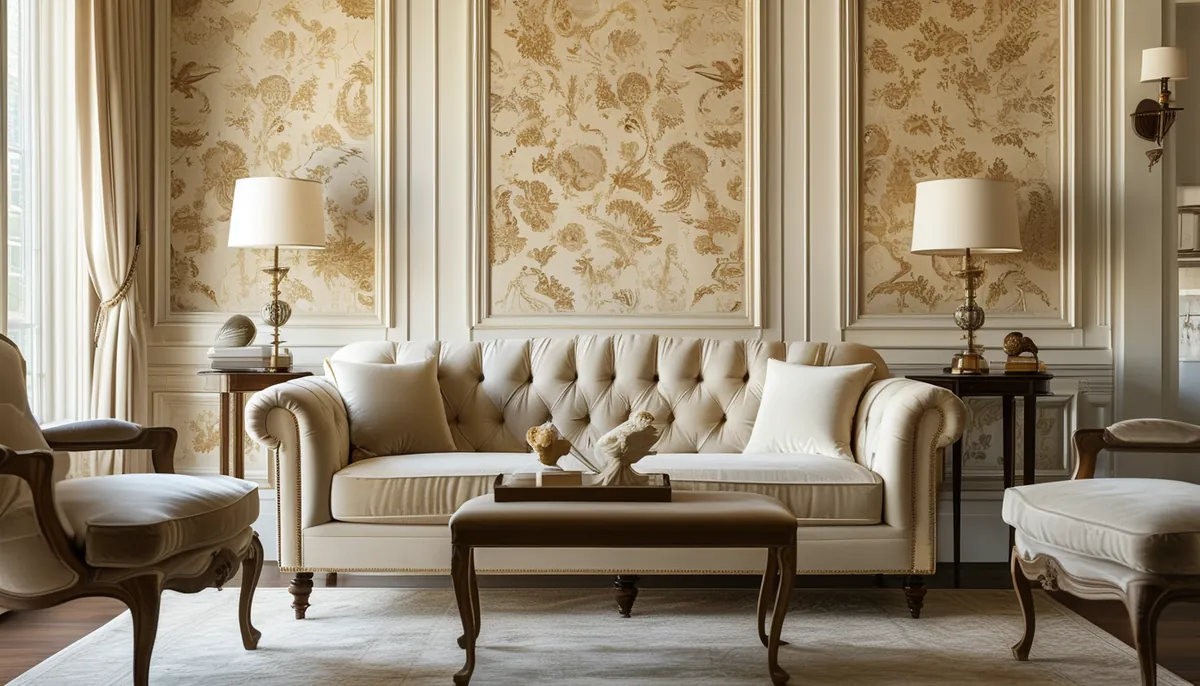
Choosing classic wallpaper patterns is about selecting designs that have stood the test of time, offering a sense of history and enduring beauty. These patterns aren’t just fleeting trends; they are foundational elements that can anchor a room’s aesthetic, providing a rich backdrop that complements a variety of decor styles.
Understanding the appeal of classic designs
Classic wallpaper patterns evoke a sense of familiarity and comfort, often associated with well-established design eras. Think of the intricate florals that graced Victorian parlors, the regal damasks found in stately homes, or the subtle stripes that have always offered a sense of order and sophistication. Their appeal lies in their ability to provide a sense of permanence and history, making a space feel grounded and thoughtfully curated. Unlike modern abstract designs, classic patterns often possess a narrative quality, hinting at stories and traditions.
When selecting a classic pattern, consider its scale and color palette. A large-scale floral can make a dramatic statement in a grand room, while a small, repeating motif might be better suited for a powder room or a cozy study. The color can also transform the feel of a pattern; a classic toile in a soft blue and white feels serene, whereas the same pattern in a bold red and gold can be quite dramatic. The durability and removability of modern wallpapers have made these traditional looks more accessible than ever, allowing you to embrace historical charm without commitment.
Popular classic wallpaper motifs and their origins
Several motifs have consistently reappeared throughout the history of wallpaper design, each carrying its own historical context and aesthetic impact.
Floral patterns: A perennial favorite
Floral wallpapers are perhaps the most enduring classic. Their roots trace back to ancient tapestries and painted silks, evolving into printed papers in the 18th century. From the delicate sprigs of chintz to the opulent bouquets of William Morris, florals offer a connection to nature and a sense of romance. They can range from small, scattered blossoms that create a charming, cottage-like feel to large, dramatic blooms that make a bold statement. Many floral patterns are inspired by specific historical periods, such as the Rococo era’s love for exuberant, naturalistic depictions or the Arts and Crafts movement’s stylized botanical motifs. For example, you can find designs reminiscent of the beautiful flowers on wallpaper that bring life and color to any space.
Damask: Elegance and symmetry
Damask patterns, characterized by their reversible, woven appearance (though printed on wallpaper), are synonymous with luxury and sophistication. Originating from the city of Damascus, these patterns typically feature stylized floral or geometric motifs with a formal, symmetrical arrangement. Damasks often have a subtle sheen or tonal variation that mimics the look of silk or brocade, adding depth and richness to walls. They are ideal for creating a formal dining room, a luxurious bedroom, or an elegant entryway. The complexity of damask can vary from simple, repeating swirls to elaborate crests and botanical elements.
Toile de Jouy: Storytelling on your walls
Toile de Jouy, a French fabric characterized by its single-color (often blue, red, or black) pastoral or scenic design on a white or off-white background, brings a narrative quality to interiors. These patterns typically depict scenes from rural life, classical mythology, or historical events, offering a charming and romantic storytelling element. Toile is excellent for creating a traditional, country-inspired look, and it pairs well with simpler furniture and decor. Its detailed scenes can add a surprising amount of visual interest without overwhelming a space. Consider its use in bedrooms, studies, or even as an accent wall in a living area.
Stripes: Versatility and structure
Stripes are a fundamental element in design, and on wallpaper, they offer incredible versatility. Classic stripes can range from thin, pinstripe-like lines that add subtle texture and a sense of height to a room, to bold, wide bands that create a strong visual statement. Vertical stripes can make ceilings appear higher, while horizontal stripes can make a room feel wider. They are a staple in many traditional styles, from nautical themes to formal menswear-inspired aesthetics. The simplicity of a stripe allows it to pair easily with other patterns or to stand alone as a clean, architectural element. They are a perfect choice for hallways, studies, or children’s rooms.
Plaid and Tartan: Cozy and traditional
Plaid and tartan patterns, with their intersecting bands of color, evoke a sense of warmth, tradition, and rustic charm. Originally associated with Scottish clan tartans, these patterns have become a global symbol of comfort and heritage. They are particularly well-suited for creating a cozy atmosphere in dens, studies, or living rooms. The scale and color combinations of plaids can vary dramatically, from muted, earthy tones to vibrant, contrasting hues, allowing them to adapt to different design sensibilities. A classic plaid can add depth and texture, making a room feel more inviting and lived-in.
Choosing the right classic pattern for your space
Selecting the perfect classic wallpaper pattern involves considering the room’s function, size, and existing decor. The goal is to enhance, not overpower, the space.
Scale and proportion
The size of the pattern relative to the room is critical. Large, bold patterns can overwhelm small spaces, making them feel even more cramped. Conversely, a very small, intricate pattern might get lost in a large room, appearing as a flat texture rather than a distinct design. For smaller rooms like powder rooms or entryways, consider smaller-scale motifs or subtle textures. In larger rooms, you have more freedom to experiment with larger, more dramatic patterns. Always order a sample to see how the pattern looks on your wall in your room’s lighting conditions.
Color palette and mood
The color of the wallpaper significantly impacts the mood of the room. Traditional patterns often come in a wide range of colors, from muted, historical palettes to bright, contemporary interpretations. Light, cool colors can make a room feel larger and more serene, while dark, warm colors can create a cozy, intimate atmosphere. Consider the existing colors in your furniture, flooring, and decor to ensure the wallpaper complements, rather than clashes with, your chosen scheme. For instance, a classic floral in soft pastels can create a romantic, airy feel, while a damask in deep jewel tones might lend a sense of drama and luxury.
Room function and style
The intended use of the room should guide your choice. A busy pattern might be distracting in a home office or bedroom where tranquility is desired. However, such a pattern could be perfect for a dining room or a living area where you want to create a conversation piece. Traditional patterns are inherently suited to certain styles: damask and toile for formal or elegant spaces, plaids for rustic or cozy settings, and florals for romantic or classic interiors. If you’re drawn to patterns but want flexibility, consider exploring geometric wallpaper patterns which also offer a wide range of classic and modern applications.
Installation tips for classic wallpapers
While many classic patterns are available in modern, easy-to-install formats like peel-and-stick, traditional paste-the-wall or paste-the-paper methods still apply to many options. Proper preparation and careful application are key to achieving a professional finish.
Surface preparation
A smooth, clean, and dry surface is essential for any wallpaper installation. Start by removing any old wallpaper, paint, or debris. Fill any holes or cracks with spackle and sand them smooth. The wall should then be primed with a wallpaper primer to ensure good adhesion and to make future removal easier. For certain heavy or textured wallpapers, a liner paper may be recommended to create a uniform surface and prevent pattern irregularities.
Matching patterns
This is where classic patterns can present a challenge. Most patterned wallpapers require a pattern repeat, meaning you’ll need to align successive strips so the design flows seamlessly. The repeat can be straight across (where the pattern matches at the same point on each strip) or a drop match (where the pattern on one strip needs to align with a corresponding point on the next strip, which is offset vertically). Always check the wallpaper’s specifications for its repeat type and size. Cutting strips slightly longer than needed can provide extra material for matching. Take your time during this process; misaligned patterns are a common and noticeable mistake.
Tools and techniques
Essential tools include a sharp utility knife or razor for trimming, a smoothing brush or squeegee to remove air bubbles, a plumb line or level to ensure the first strip is perfectly vertical, and a seam roller for pressing down seams. For paste-the-wall papers, apply the paste directly to the wall. For paste-the-paper, apply paste evenly to the back of the paper and allow it to ‘book’ (sit for a few minutes) according to the manufacturer’s instructions. Work methodically, smoothing out bubbles from the center outwards and trimming excess paper at the ceiling, baseboard, and corners.
Maintaining the beauty of classic wallpaper
Once installed, classic wallpapers require some care to maintain their appearance over time. The maintenance requirements often depend on the type of wallpaper and its finish.
Cleaning
For most classic wallpapers, especially those with a vinyl or washable finish, gentle cleaning is recommended. Use a soft sponge or cloth dampened with mild soap and water. Avoid abrasive cleaners or excessive scrubbing, which can damage the pattern or finish. For delicate papers like uncoated natural fibers or traditional silks, dry dusting with a soft brush or vacuum with a brush attachment is usually the safest method. Always test any cleaning method on an inconspicuous area first.
Avoiding damage
Protect your wallpaper from direct sunlight, as UV rays can cause fading over time, particularly with certain colorants. Avoid placing furniture directly against walls where it can cause abrasion or snagging. In areas prone to moisture, such as bathrooms or kitchens, ensure the wallpaper is rated for such environments and consider using a moisture-resistant sealant in high-splash zones. For areas with high traffic, such as hallways, consider using a more durable type of classic wallpaper, or explore options like easy peel and stick wallpaper which can be replaced more readily if damaged.
When to choose classic patterns over modern alternatives
While modern wallpapers offer bold designs and innovative materials, classic patterns excel in specific contexts and for particular aesthetic goals.
For historical accuracy and period homes
If you are restoring a historic home or aiming for authentic period decor, classic patterns are often non-negotiable. Designs from specific eras, such as Victorian florals, Art Deco geometrics, or Georgian stripes, can authentically recreate the look and feel of the past. Modern interpretations can be used, but true period accuracy often calls for designs that closely mimic original motifs and color palettes.
To add warmth and tradition
Classic patterns inherently bring a sense of warmth, history, and tradition to a space. They can make a room feel more inviting, comfortable, and established. If your goal is to create a cozy retreat, a sophisticated study, or a timeless living area, classic motifs like damask, plaid, or traditional florals can achieve this more effectively than minimalist modern designs.
To create a sense of depth and richness
The intricate details and often tonal variations found in classic patterns can add a layer of depth and richness that is sometimes lacking in simpler modern designs. Damasks, for example, with their subtle sheen and complex motifs, can transform a plain wall into a focal point of luxurious texture. This visual depth can make a room feel more layered and considered.
To complement specific furnishings
Classic patterns often pair exceptionally well with antique or traditional furniture. The ornate details of a damask can echo the carving on a mahogany table, or a floral pattern can complement floral upholstery. If your furniture has a strong traditional character, classic wallpaper can provide a cohesive and harmonious backdrop. For those who appreciate specific designers known for their traditional yet contemporary take on classic motifs, exploring brands like Rifle Paper Co. wallpaper can offer beautiful interpretations.
Exploring contemporary takes on classic designs
The beauty of classic wallpaper patterns is that they are constantly reinterpreted for modern interiors. Designers are updating these timeless motifs with new color palettes, scale adjustments, and material innovations.
Updated color palettes
A classic damask might be rendered in a vibrant, unexpected color like electric blue or neon pink, or a traditional floral could feature a monochromatic scheme in a bold shade. These contemporary color choices breathe new life into familiar patterns, making them suitable for more modern aesthetics while retaining their classic charm. For example, a black and white floral can feel very chic and modern.
Varying scales
Designers frequently play with scale. A tiny, delicate floral might be enlarged to monumental proportions to create a dramatic accent wall. Conversely, a large, sweeping damask could be shrunk down to create a more subtle, textural effect. Adjusting the scale allows classic patterns to fit better into contemporary room dimensions and design preferences.
Material innovations
Modern printing techniques and materials have expanded the possibilities for classic patterns. High-quality vinyl coatings offer increased durability and washability for traditional motifs. Textured papers, metallic inks, and even embossed finishes add tactile and visual interest. Furthermore, the rise of Yellowstone wallpaper designs and similar themes shows how classic motifs can be adapted to specific, evocative aesthetics, proving the enduring appeal of well-executed design.
Ultimately, classic wallpaper patterns offer a way to connect with design history while creating a beautiful and inviting home. Whether you opt for a faithful reproduction or a contemporary update, these enduring motifs provide a foundation for timeless style.