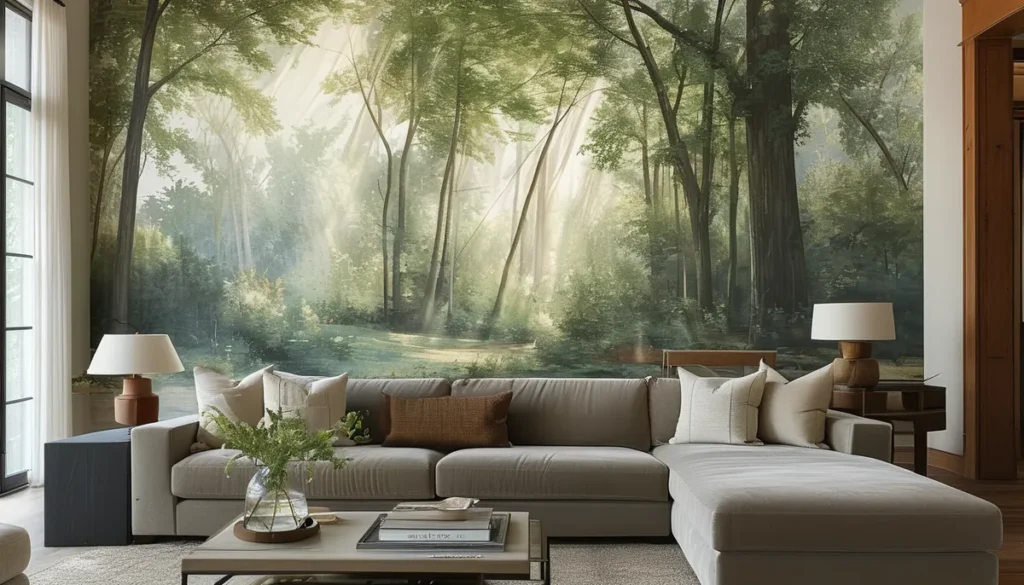
The first decision you face with a designer wall mural is its visual impact. Are you looking for a bold statement piece or a subtle background enhancement? Consider the room’s function and existing decor. For example, a tranquil nature scene might suit a bedroom, while an abstract geometric pattern could energize a home office. Don’t be afraid to mix and match styles. A modern living room might benefit from a vintage-inspired mural, creating an unexpected and sophisticated contrast.
Understanding mural types by material
Designer wall murals come in various materials, each offering distinct durability, texture, and application methods. The most common types include:
- Vinyl murals: These are highly durable and often water-resistant, making them suitable for high-traffic areas or even bathrooms and kitchens. They come in different finishes, from matte to high-gloss, and can be easy to clean.
- Non-woven (or ‘paste-the-wall’) murals: This material is gaining popularity for its ease of installation. You apply the paste directly to the wall, and then hang the paper. It’s breathable and less prone to tearing than traditional paper.
- Textured murals: Some murals incorporate embossed or fabric-like textures, adding a tactile dimension to your wall. These can mimic materials like grasscloth or linen, providing a more luxurious feel.
- Peel-and-stick murals: Ideal for renters or those who like to change their decor frequently, these murals are applied like large decals. They are repositionable and usually removable without damaging the underlying wall. However, ensure your wall surface is smooth and clean for best adhesion.
Assessing mural scale and design
The scale of a designer wall mural is critical. A mural that’s too large can overwhelm a small room, while one that’s too small might get lost in a large space. Look for murals designed with specific room dimensions in mind, or those that can be scaled proportionally. Pay attention to the detail in the design. Highly intricate patterns might require a larger viewing distance to be fully appreciated, whereas simpler, bolder designs can have an immediate impact. Consider the color palette and how it will interact with your existing furniture and paint colors. Harmonious colors will create a cohesive look, while contrasting colors can add drama.
Installation considerations for a professional finish
Proper installation is paramount for the longevity and aesthetic appeal of your designer wall mural. Most murals come with detailed instructions, but general guidelines apply:
Preparing the wall surface
Your wall must be clean, dry, and smooth. Remove any old wallpaper, paint that’s peeling, or bumps. Fill holes and sand them smooth. For non-woven or traditional paste-up murals, applying a primer can ensure better adhesion and make future removal easier. For peel-and-stick murals, a smooth, matte finish is usually best; glossy or heavily textured surfaces can impede adhesion.
Hanging the mural panels
Murals are typically applied in vertical panels. Start in a visible corner or from the center of the wall, depending on the design and your preference. Use a level to ensure the first panel is perfectly straight, as all subsequent panels will align with it. Smooth out any bubbles or wrinkles as you go, working from the center outwards. Trim any excess material at the ceiling, baseboard, and corners with a sharp utility knife.
Choosing between DIY and professional installation
While many peel-and-stick and some non-woven murals are designed for DIY installation, complex designs, large-scale murals, or textured materials might benefit from professional help. A professional installer has the tools and experience to handle tricky corners, ensure perfect alignment, and achieve a seamless finish, especially if you’re working with a very large or custom-sized mural. If you’re unsure about your DIY skills or the complexity of the mural, hiring an expert can save you time, frustration, and potential costly mistakes. For those seeking more elaborate wall coverings, explore the world of designer wallpaper, which often requires professional fitting.
When to choose a wall mural over traditional wallpaper
Designer wall murals offer a unique advantage: they often tell a story or create a distinct focal point. While traditional wallpaper provides pattern and texture, a mural is typically a single, large-scale image or scene. If you want to make a dramatic statement, capture a specific mood, or bring a piece of art onto your wall, a mural is the way to go. For an artistic and often custom look, consider wall mural wallpaper options that are specifically designed for impact.
For more specialized artistic designs, explore the elegance of Chinoiserie mural wallpaper, which brings intricate, traditional scenes to life. If you’re interested in the broader concept of large-scale wall art, what are wall murals and how they can transform a space is a great starting point. Similarly, understanding the nuances of wallpaper murals can help you visualize their potential.