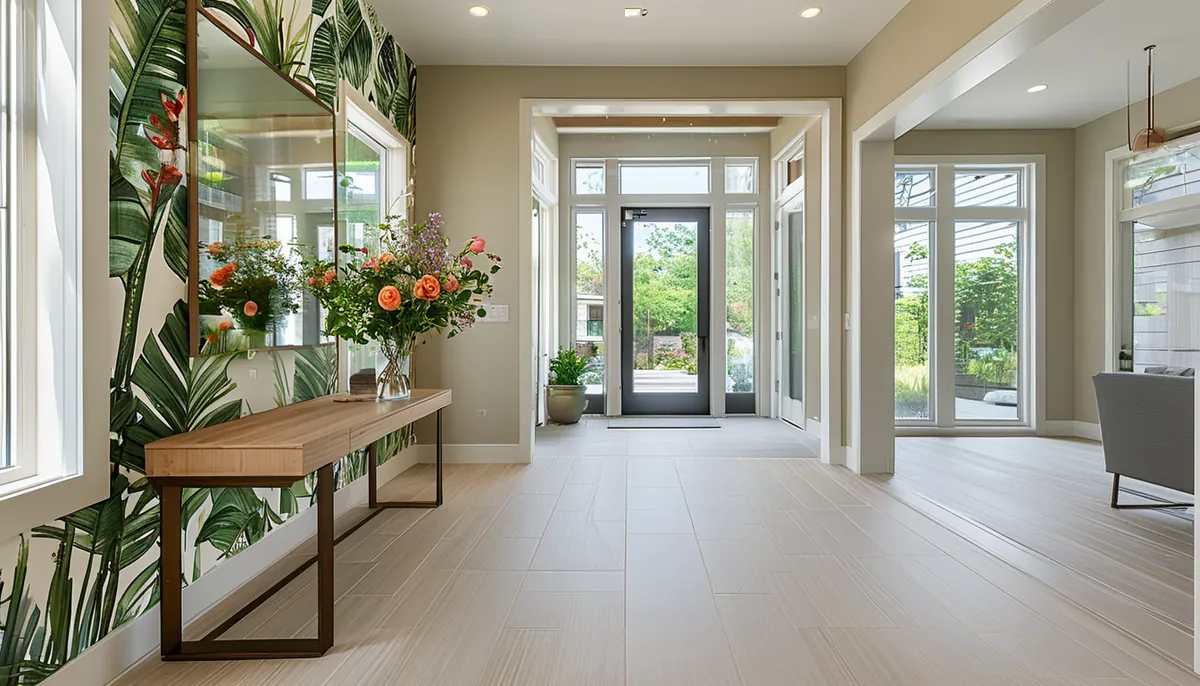
The entryway is the first space guests see when they enter your home. It’s a high-traffic area that needs to be both durable and stylish. Wallpaper can transform this often-overlooked space into a statement of your personal style.
Durability factors for entryway wallpaper
Entryways see constant foot traffic, so durability is paramount. Consider materials that can withstand scuffs, dirt, and potential damage from keys or bags. Vinyl-backed wallpapers are excellent choices due to their scrubbable surfaces and resistance to moisture. High-quality paper-based wallpapers can also work if they have a protective coating, but they might not hold up as well to heavy use.
Peel and stick wallpaper offers a convenient option, but check the manufacturer’s specifications for durability in high-traffic zones. Some are designed for longevity, while others are better suited for temporary applications or less demanding areas. For a truly robust option, look for wallpapers specifically rated for commercial use, even in a residential setting. These often have a thicker construction and a more resilient surface.
Choosing the right type of wallpaper
Solid vinyl wallpaper: This is the gold standard for durability. It’s water-resistant, scrubbable, and can handle frequent cleaning. Ideal for busy households with children or pets.
Heavy-duty paper wallpaper: While traditional, some modern paper wallpapers are coated for enhanced durability. They offer a matte finish and can be very beautiful, but might be less forgiving with heavy cleaning.
Peel and stick wallpaper: These are fantastic for DIY enthusiasts and renters. They are easy to apply and remove, making them versatile. Many are made from PVC or other durable materials, but always verify the product’s lifespan and cleaning instructions.
Textured wallpapers: Grasscloth, linen, or fabric-backed options add depth and warmth. While visually appealing, they can be harder to clean and may snag. They are best suited for entryways with lower traffic or if you’re willing to be extra careful.
Vinyl vs. paper for high-traffic areas
For an entryway, vinyl or vinyl-backed wallpaper is almost always the superior choice. Paper wallpapers, even if thick, are more susceptible to staining and tearing. A spilled drink, a dragged suitcase, or even just the friction from passing by can damage a paper surface more easily than a vinyl one. If you’re drawn to the aesthetic of paper, opt for a premium, coated version or consider using it in a more protected part of the entryway, away from the main path.
Considering the size and style of your entryway
The scale of your wallpaper pattern should complement the size of your entryway. Large, bold patterns can make a small entryway feel even smaller, while tiny, intricate designs might get lost in a spacious hall. For narrow or small entryways, consider lighter colors and vertical stripes to create a sense of height and width. In larger entryways, you have more freedom to experiment with dramatic patterns, murals, or darker colors.
Think about the overall style of your home. Is it modern, traditional, bohemian, or minimalist? Your entryway wallpaper should be a cohesive part of this aesthetic. A geometric pattern might suit a modern home, while a floral or damask print could enhance a more traditional or romantic setting. For a truly unique statement, explore large-scale murals or artistic designs.
Installation considerations
Peel and stick wallpaper installation: This is the easiest method for most homeowners. Start by cleaning the wall thoroughly. Peel back a portion of the backing, align the paper, and smooth it out as you go, working from top to bottom. Overlap seams slightly as recommended by the manufacturer, usually 1/16 to 1/8 inch, to ensure full coverage. Make sure to purchase enough rolls to account for pattern matching and potential mistakes.
Traditional wallpaper installation: This involves applying paste to the back of the paper or to the wall itself. It requires more precision and patience. Ensure walls are properly prepped (primed and smooth) and use a level to hang the first strip perfectly straight. This is crucial, as subsequent strips will follow its lead. Mistakes here are harder to correct than with peel and stick.
Tools you’ll need: For peel and stick, you’ll primarily need a utility knife, a smoother or squeegee, and a measuring tape. For traditional wallpapering, add a paste brush or roller, a seam roller, and a sharp blade for trimming edges.
Common installation mistakes to avoid
Improper wall preparation: Walls must be clean, dry, and smooth. Any bumps, grease, or old, peeling wallpaper will interfere with adhesion and the final look.
Not accounting for pattern repeat: If your wallpaper has a pattern, you need to buy extra to ensure you can match the design across seams. Failing to do so will result in misaligned patterns, which looks unprofessional.
Overstretching the wallpaper: When applying, especially with peel and stick, avoid pulling too hard, as this can distort the pattern or cause the material to tear.
Ignoring manufacturer instructions: Always read and follow the specific guidelines for your chosen wallpaper type and brand. They often contain crucial details about application, overlap, and cleaning.
Maintaining your entryway wallpaper
Regular dusting with a soft cloth is usually sufficient. For vinyl or scrubbable wallpapers, you can use a damp sponge with mild soap and water to clean away dirt or scuffs. Always test cleaning solutions in an inconspicuous area first. Avoid abrasive cleaners or harsh chemicals, which can damage the wallpaper’s surface or color.
For textured wallpapers, gentle vacuuming with a brush attachment can help remove dust without causing damage. If you have a mural or a particularly delicate design, consider professional cleaning if it becomes significantly soiled.
Beyond the entryway: other rooms
While your entryway is the first impression, the principles of choosing durable and stylish wallpaper extend to other areas of your home. Consider the function and traffic of each room when making your selection. Bathrooms and kitchens, for example, benefit from moisture-resistant vinyl or washable options due to humidity and potential splatters. Bedrooms and living rooms offer more flexibility, allowing for a wider range of textures and patterns. For a cohesive home design, think about how the wallpaper in one room flows into the next. You might choose complementary colors or styles, or use a consistent theme throughout. For inspiration on different themes, explore our stunning Yellowstone wallpaper designs or the vibrant patterns in our Rifle Paper Co. wallpaper collection.
Explore our selection of hallway wallpaper
Your hallway connects different parts of your home, and it deserves just as much attention as your entryway. A well-chosen hallway wallpaper can guide guests through your home and add character to what might otherwise be a transitional space. Whether you prefer subtle textures or bold statements, there’s a wallpaper to match. For those seeking ease and flexibility, our guides on easy peel and stick wallpaper and the best high-quality peel and stick wallpaper can help you find the perfect solution for your hallway needs.