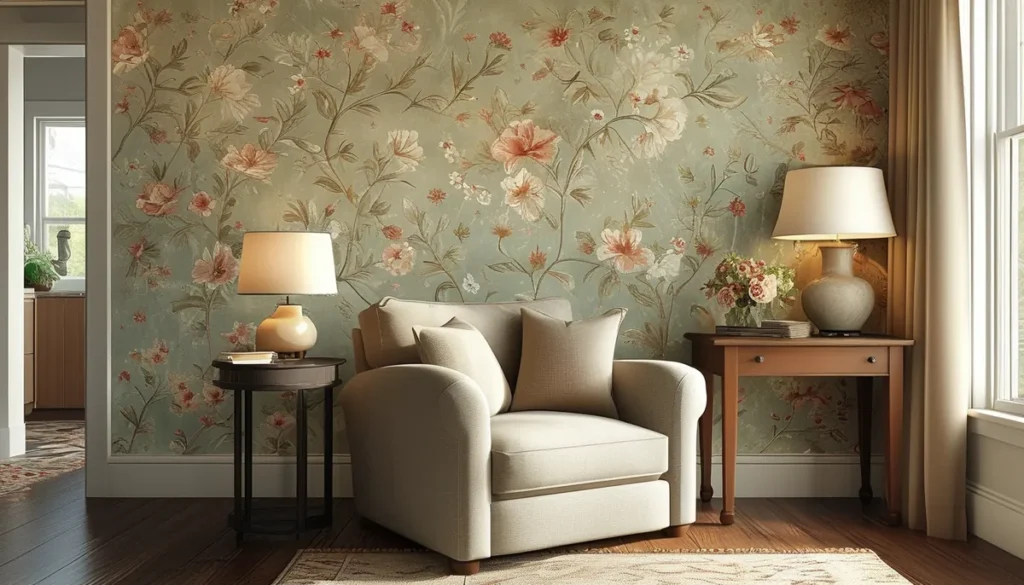
When considering floral pattern wallpaper, the scale of the print dramatically impacts the final look. Large floral pattern wallpaper can make a small room feel grand or overwhelm a large space if not chosen carefully. Conversely, a very small floral print might disappear or appear too busy from a distance.
Understanding floral print scales and their impact
Floral patterns come in a wide range of sizes, from tiny ditsy prints to bold, oversized blooms. The scale you choose should complement the size of your room and the furniture within it.
Small-scale florals
These are ideal for smaller rooms like powder rooms, hallways, or even as an accent on a single wall in a bedroom. They add texture and subtle visual interest without overpowering the space. Think of patterns similar to those found in dainty floral wallpaper or ditsy floral wallpaper. They create a cohesive and often calming effect.
Medium-scale florals
A versatile choice, medium-scale florals work well in most rooms, including living rooms, dining rooms, and master bedrooms. They offer a balanced visual impact, providing enough detail to be interesting but not so much that they dominate the room. This scale often strikes a good balance for creating a welcoming atmosphere.
Large-scale florals
Large floral pattern wallpaper is best suited for larger rooms with higher ceilings or ample wall space. These bold designs can serve as a dramatic focal point. In a grand living room or a spacious dining area, oversized florals can add a sense of luxury and drama. However, be cautious; in a small room, they can make the space feel even smaller and more claustrophobic. They can also be more challenging to pattern match during installation due to the size of the motifs.
Types of floral wallpaper materials
The material of your floral wallpaper affects its durability, ease of installation, and final appearance. Understanding these differences is crucial for making the right choice.
Vinyl wallpaper
Vinyl floral wallpaper is a popular choice for its durability and washability. It’s excellent for high-traffic areas like kitchens, bathrooms, and children’s rooms. The vinyl coating protects the paper from moisture and stains, making it easy to clean with a damp cloth. It often comes pre-pasted or as a peel-and-stick option, simplifying installation.
Non-woven (or ‘paste the wall’) wallpaper
This is a synthetic material that is very durable, breathable, and resistant to shrinking or expanding. Non-woven floral wallpaper is known for being easier to hang than traditional paper because you can paste the wall directly, rather than soaking the paper. It also allows for easier removal, often coming off in one piece without damaging the drywall underneath.
Textured wallpaper
Textured floral wallpapers can include embossed patterns, fabric weaves, or even natural materials like grasscloth. These add a tactile dimension to your walls, providing depth and sophistication. Embossed vinyl or paper offers a raised floral design that can mimic expensive finishes. Grasscloth and linen options bring natural beauty but require more careful handling during installation and are not suitable for high-moisture areas.
Peel-and-stick wallpaper
This is a vinyl-based material with an adhesive backing. It’s incredibly user-friendly, making it a favorite for renters or for DIY enthusiasts. You simply peel off the backing and stick the floral pattern directly to the wall. It’s repositionable and removable, with no messy paste required. While convenient, ensure the wall surface is smooth and clean for best adhesion. This is a great option for accent walls or temporary decor changes.
Choosing the right floral pattern for your room
Beyond scale and material, the style and color of the floral motif play a significant role in setting the mood of your space. Consider the existing decor and the desired atmosphere.
Traditional florals
These often feature classic rose, peony, or damask-inspired floral designs. They work well in rooms with traditional furniture, antique pieces, or a more formal aesthetic. Colors tend to be richer and more subdued, or classic combinations like blue and white. They can evoke a sense of timeless elegance.
Modern and contemporary florals
Modern floral patterns can range from abstract interpretations of blooms to graphic, stylized designs. You might see bold, graphic florals with strong lines or a more minimalist approach. These are perfect for modern floral wallpaper designs, contemporary homes, or spaces aiming for a fresh, updated look. Consider pairing them with clean-lined furniture and a neutral color palette to let the wallpaper stand out.
Vintage and retro florals
Think 1950s-style rose patterns, 1970s-inspired psychedelic blooms, or romantic Victorian-era florals. These add a unique character and nostalgia to a room. They can be paired with vintage furniture or used to create a quirky, eclectic style. They often feature softer, muted color palettes or bold, retro color combinations.
Botanical and nature-inspired florals
These patterns focus on realistic depictions of leaves, flowers, and vines. They bring the outdoors in, creating a serene and natural ambiance. They can range from delicate, intricate illustrations to lush, jungle-like scenes. These are excellent for creating a tranquil retreat in a bedroom or a calming atmosphere in a home office.
Installation guide for floral pattern wallpaper
Proper installation is key to achieving a professional and long-lasting finish. While hiring a professional is always an option, many find wallpapering a rewarding DIY project.
Preparation is crucial
1. Clean the walls: Ensure your walls are clean, dry, and free of dust, grease, or old wallpaper residue. Use a mild detergent and water, then rinse thoroughly. Any imperfections on the wall will show through the wallpaper.
2. Repair imperfections: Fill any holes or cracks with spackle and sand smooth once dry. If you have textured walls, consider applying a wallpaper primer or a thin skim coat of joint compound to create a smoother surface, especially for lighter-colored or thinner wallpapers.
3. Prime the walls: Apply a wallpaper primer. This seals the surface, helps with adhesion, and makes future removal easier. Allow the primer to dry completely according to the manufacturer’s instructions.
4. Mark your starting point: Use a plumb bob or a laser level to draw a perfectly vertical line on the wall. This line will guide your first strip of wallpaper, ensuring it goes on straight. Most wallpaper instructions will tell you where to start, often near a corner but not directly in it, to allow for a clean overlap.
Hanging the wallpaper
1. Cut your strips: Measure the height of your wall and add 4-6 inches for trimming (2-3 inches at the top and bottom). If your wallpaper has a pattern repeat, ensure you account for this when cutting subsequent strips to ensure the pattern matches seamlessly.
2. Apply adhesive (if needed): For traditional or non-woven wallpapers, follow the manufacturer’s instructions for applying paste. Some require pasting the back of the paper, while others (paste-the-wall) require pasting the wall directly. For peel-and-stick, this step is skipped.
3. Hang the first strip: Carefully position the first strip along your plumb line. Allow the excess to overlap onto the ceiling and baseboard. Smooth the paper onto the wall using a wallpaper brush or smoothing tool, working from the center outwards to remove air bubbles.
4. Pattern matching: For subsequent strips, align the pattern with the previous strip before smoothing it onto the wall. This is where intricate floral patterns can be challenging. Take your time to ensure a perfect match. Overlap the edges slightly if the wallpaper type allows (check instructions).
5. Trim the excess: Once a strip is smoothed, use a sharp utility knife and a straight edge (like a metal ruler or a dedicated wallpaper cutting tool) to carefully trim the excess paper at the ceiling and baseboard. Cut with long, smooth strokes.
6. Work your way around: Continue hanging strips, ensuring each pattern repeat aligns perfectly with the previous one. Pay close attention to corners and around windows or doors, making relief cuts as needed and trimming carefully.
Dealing with common challenges
Pattern repeat: This is the vertical distance before the pattern repeats. A larger pattern repeat means more waste, as you’ll need to align larger sections. This is particularly important for large floral pattern wallpaper.
Corners: For inside corners, wrap the wallpaper slightly around the corner (about 1/2 inch) and cut it vertically with a sharp blade. Then, start the next strip in the new corner, slightly overlapping the previous piece. For outside corners, wrap the paper around the corner as far as possible (at least 1 inch) and then score and fold it to create a crisp edge. Start the next strip butting up against this folded edge.
Obstacles (outlets, switches): Turn off the power at the breaker. Hang the wallpaper over the outlet or switch, then make an ‘X’ cut from corner to corner in the center of the opening. Trim away the excess paper around the opening, leaving enough to tuck behind the plate cover.
When to use geometric patterns alongside florals
While floral patterns bring organic beauty, sometimes they benefit from a contrast or complement. Geometric wallpaper patterns can offer this balance. Consider using a bold floral on one wall and a subtle geometric on adjacent walls for a dynamic yet harmonious look. For instance, a large floral print on a feature wall can be balanced by a simple striped or checkered pattern in a complementary color scheme in the rest of the room.
Adding metallic accents to floral designs
For a touch of glamour, explore floral wallpapers with metallic accents. These can catch the light and add a luxurious feel to any room. Metallic inks or foils in floral designs can elevate the pattern, making it stand out, especially in dining rooms or entryways. Consider how these might interact with lighting. For more ideas on this luxurious effect, explore stunning metallic pattern wallpaper.
Maintenance and care of floral wallpaper
The longevity and appearance of your floral wallpaper depend on proper care. Always check the manufacturer’s cleaning instructions, as they vary by material.
Washable wallpapers
Vinyl and some non-woven wallpapers are washable. You can typically clean them with a soft, damp cloth or sponge. For tougher stains, a mild soap solution might be used, but always test in an inconspicuous area first. Avoid abrasive cleaners or excessive moisture, as this can damage the paper or adhesive.
Non-washable wallpapers
Textured wallpapers made from natural fibers like grasscloth or silk are often not washable. These usually require dry dusting with a soft brush or a vacuum cleaner with a brush attachment. Spot cleaning should be avoided unless specifically recommended by the manufacturer, as moisture can cause staining or damage.
Common mistakes to avoid with floral wallpaper
Even with careful planning, some pitfalls can undermine your floral wallpaper project.
- Ignoring the pattern repeat: Not accounting for the pattern repeat leads to excessive waste and difficulty in matching. This is especially true for large-scale prints.
- Improper wall preparation: Hanging wallpaper over unprimed, dirty, or damaged walls will result in poor adhesion and visible imperfections.
- Using the wrong adhesive: Different wallpaper types require specific adhesives. Using the wrong one can lead to peeling or bubbles.
- Over-smoothing: While you need to remove air bubbles, over-working the paper, especially when wet, can stretch it out of shape or remove too much paste.
- Mismatched patterns in corners or seams: This is the most common visual mistake. Take your time and ensure each floral element aligns perfectly.
- Choosing the wrong scale for the room: A large floral pattern in a tiny bathroom can feel overwhelming, while a tiny ditsy print in a vast living room might get lost.
By understanding the scale, material, and proper installation techniques, you can confidently choose and apply floral pattern wallpaper to enhance your home’s aesthetic.