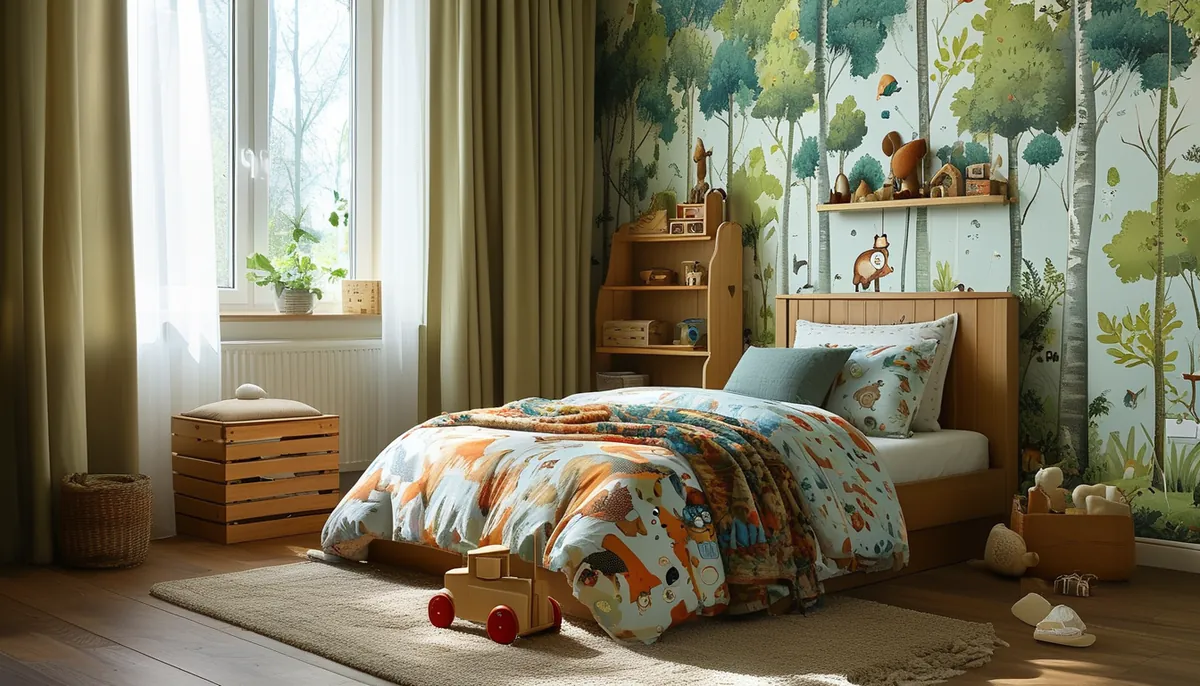
When selecting wallpaper for a child’s room, think beyond just the pattern. Durability, washability, and ease of removal are key factors for high-traffic areas that often see crayon marks and sticky fingers. Consider the age of the child and the room’s purpose – a nursery might need a calmer pattern than a playroom.
Choosing the right wallpaper material for kids’ rooms
Not all wallpapers are created equal, especially when they need to withstand the energy of children. Here’s a breakdown of common materials and their suitability:
Vinyl wallpaper
This is often your best bet for children’s rooms. Vinyl is highly durable, water-resistant, and easy to clean. Most spills and marks can be wiped away with a damp cloth without damaging the paper. It comes in various finishes, from matte to satin, and can mimic other textures. Look for ‘heavy-duty’ or ‘washable’ vinyl for maximum resilience.
Non-woven wallpaper
Made from a blend of paper and synthetic fibers, non-woven wallpaper is breathable, durable, and easier to hang than traditional paper. It’s also strippable, meaning you can often remove it in large sheets without soaking, which is a huge plus for future redecorating. Many non-woven options are washable, making them a good choice for active kids.
Paper wallpaper
While the most eco-friendly and often the most affordable, standard paper wallpaper is generally not recommended for children’s rooms. It’s prone to tearing, staining, and water damage. If you opt for paper, ensure it has a washable coating, but even then, it won’t hold up as well as vinyl or high-quality non-woven options.
Textured wallpapers
Materials like grasscloth or fabric-backed vinyl can add a unique dimension, but they can also be harder to clean and more prone to snagging or damage from playful hands. They are best suited for calmer spaces or as accent walls.
Durable and washable wallpaper designs for kids
The fun factor is crucial for children’s rooms, but practicality shouldn’t take a backseat. Aim for patterns that are engaging but not overly stimulating for sleep areas. Consider these popular themes:
- Animal prints: Whimsical creatures, jungle themes, or friendly farm animals are always a hit.
- Geometric patterns: Bold shapes, stripes, and polka dots can add a modern and playful touch. They also hide minor imperfections well.
- Space and adventure: Rockets, stars, planets, maps, or mountain ranges can spark imagination. Explore designs like those found in our Yellowstone wallpaper collection for adventurous themes.
- Nature-inspired: Forests, flowers, or sea creatures can create a serene or exciting environment. For floral lovers, consider our guide to flowers on wallpaper.
- Character-themed: While popular, be mindful that these can date quickly as children’s interests change.
When choosing a pattern, think about scale. Large, bold patterns can make a small room feel smaller, while tiny, intricate patterns might get lost. Medium-scale designs often offer the best balance.
Removable kids wallpaper: a flexible solution
For parents who love to redecorate frequently or are renting, removable kids wallpaper is a fantastic option. These wallpapers, often made of vinyl or fabric with a special adhesive, can be applied and removed easily without damaging the walls. This is ideal for:
- Nursery to toddler room transitions: Update the look as your child grows without the hassle of traditional wallpaper removal.
- Rented accommodations: Get creative with your decor without worrying about security deposits.
- Temporary themes: Use it for a season or a specific interest, then swap it out.
Look for ‘peel and stick’ options, which are specifically designed for DIY application and removal. A good quality peel and stick wallpaper is essential; ensure it has strong adhesion but peels off cleanly. Our guide to easy peel and stick wallpaper offers more insights.
Installation considerations for removable wallpaper
While easier to install than traditional wallpaper, proper preparation is still key. Ensure your walls are clean, smooth, and dry. Test a small, inconspicuous area first to ensure easy removal. For large murals or complex patterns, having a second person to help can prevent misalignment and bubbles.
Other rooms in the house that benefit from fun wallpaper
While children’s rooms are an obvious choice for vibrant wallpaper, don’t overlook other areas that can benefit from a touch of personality and style:
- Playrooms: This is the ultimate canvas for bold patterns, interactive elements (like chalkboard wallpaper), or themed designs.
- Nurseries: Soft, calming patterns can create a serene environment for newborns.
- Teenagers’ bedrooms: As kids get older, their tastes evolve. Offer options that reflect their personality, from minimalist geometrics to edgy graphics.
- Family rooms or dens: A playful accent wall can add character and warmth to a shared space.
- Bathrooms: For a practical and stylish look, consider moisture-resistant options. Our guide to gray wallpaper for bathrooms might offer inspiration.
- Home offices: A subtle, inspiring pattern can make working from home more enjoyable.
Even in more adult-oriented spaces, wallpaper can add a unique flair. Consider brands like Rifle Paper Co. for charming, eclectic designs that can suit various rooms, as highlighted in our guide to Rifle Paper Co. wallpaper.
Tips for installing wallpaper in a child’s room
Proper installation is crucial for the longevity and appearance of the wallpaper. Here are some tips:
- Prepare the walls: Ensure walls are clean, dry, and smooth. Fill any holes and sand down rough patches. Prime the walls if necessary, especially if you’re going from a dark color to a light wallpaper, or if the existing surface is uneven.
- Measure carefully: Measure each wall and cut your wallpaper panels, allowing for a few inches of extra at the top and bottom for trimming. Always match patterns across seams.
- Use the right tools: Have a sharp utility knife, a straight edge, a smoothing brush or squeegee, a seam roller, and a bucket of water (for traditional paste-the-wall) or a spray bottle (for pre-pasted).
- Paste: If using paste-the-wall or paste-the-paper wallpaper, follow the manufacturer’s instructions for the correct type and amount of paste. For peel-and-stick, the adhesive is already applied.
- Hang straight: Use a level or a plumb line to ensure your first strip is perfectly vertical. Subsequent strips should align with the previous one.
- Smooth out bubbles: Work from the center of the panel outwards with your smoothing tool to push out air bubbles and ensure good adhesion.
- Trim excess: Once the panel is in place, carefully trim the excess wallpaper at the ceiling and baseboard using a sharp knife and straight edge.
- Clean up: Wipe away any excess paste immediately with a damp sponge.
Common mistakes to avoid
- Not preparing the walls: This is the most common mistake and leads to poor adhesion and a less professional finish.
- Not matching patterns: Misaligned patterns are very noticeable and detract from the overall look.
- Using a dull blade: A dull knife will tear the wallpaper instead of cutting it cleanly, resulting in ragged edges.
- Over-pasting: Too much paste can cause the wallpaper to stretch and become difficult to handle, and it can also seep through seams.
- Rushing the process: Take your time, especially when aligning patterns and smoothing out air bubbles.