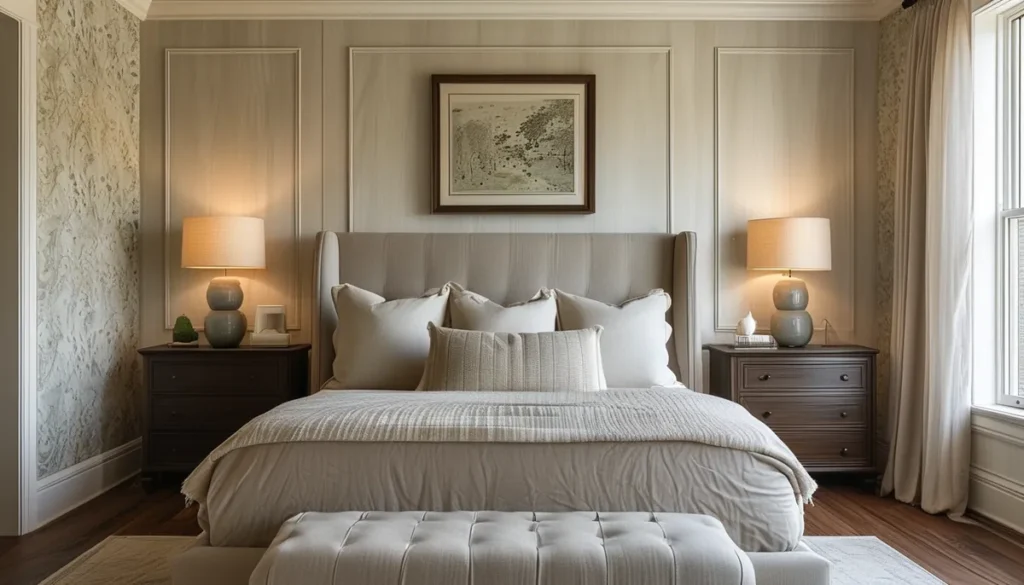
Applying wallpaper to just the lower half of a wall creates a distinct visual effect, often used to mimic wainscoting or simply add a decorative band. Choosing the right wallpaper for this application is key to achieving a polished look. Consider the scale of the pattern: a large-scale pattern might overwhelm a small half-wall area, while a busy, intricate pattern can make the space feel cluttered. For a more subtle effect, opt for textures, subtle geometric designs, or tone-on-tone patterns. If you’re aiming for a bold statement, a vibrant color or a striking graphic print can work well, provided the room’s overall decor supports it. The height of your half wall also plays a role; on shorter half walls, a more delicate pattern or a solid texture might be best, while taller half walls can accommodate more dramatic designs.
When deciding on wallpaper for a half wall, think about how it will interact with the upper portion of the wall, whether it’s painted, another wallpaper, or even wood paneling. Ensure the color palette and style complement each other. For example, a floral wallpaper on the bottom half might pair well with a soft, solid paint color on the top half. If you’re planning to use a patterned wallpaper, consider the repeat of the pattern. A wallpaper with a long repeat might require more careful planning and cutting to ensure the pattern flows seamlessly across the half wall.
For durability, especially in high-traffic areas like hallways or children’s rooms, consider wipeable or scrubbable wallpapers. Vinyl-coated or washable papers are excellent choices. If you’re looking for a more luxurious feel, explore options like grasscloth, silk, or textured fabric wallpapers. These can add a sophisticated dimension that paint alone cannot achieve. Remember to check the manufacturer’s instructions regarding cleaning and maintenance for any wallpaper you choose.
Choosing the right wallpaper material
The material of your half wall wallpaper significantly impacts its appearance, durability, and ease of installation. Here’s a breakdown of common options:
- Paper-backed wallpaper: This is the most traditional type. It’s generally less expensive but also less durable and prone to tearing. It’s not the best choice for high-moisture areas or places with heavy wear.
- Vinyl-backed wallpaper: More durable and scrubbable than paper-backed options, vinyl wallpaper is excellent for hallways, kitchens, and bathrooms. It can withstand moisture and is easier to clean, making it a practical choice for a half wall that might get bumped or scuffed.
- Peel and stick wallpaper: This is a fantastic option for DIYers and renters. It applies easily without paste and can be repositioned or removed without damaging the wall. For a half wall, this offers flexibility in design and is perfect for experimenting with patterns. You can find easy peel and stick wallpaper for a quick update.
- Textile or fabric wallpaper: Offering a rich, tactile dimension, these wallpapers (like grasscloth, silk, or linen blends) add a touch of luxury. They are best suited for low-traffic areas like bedrooms or dining rooms as they can be more delicate and harder to clean.
- Non-woven (or ‘ease of use’) wallpaper: Made from a blend of paper and synthetic fibers, this type is more durable and breathable than traditional paper. It’s easier to hang and remove, making it a good compromise between paper and vinyl.
For a half wall, especially if it’s in an area prone to scuffs or spills, vinyl or peel-and-stick options are generally the most practical. If the half wall is purely decorative, you have more freedom to choose materials like textiles for a more upscale look.
Measuring and calculating wallpaper needs
Accurate measurements are crucial for ordering the correct amount of wallpaper and ensuring a seamless look on your half wall. Start by measuring the total width of the wall section you plan to cover. Then, measure the height from the top of your half wall to the baseboard. Multiply the total width by the height to get the square footage of the area.
Wallpaper is typically sold in rolls. Standard US double rolls are usually around 20.5 inches wide and 33 feet long, covering approximately 56 to 60 square feet. However, always check the specific dimensions on the wallpaper packaging, as sizes can vary. When calculating how many rolls you need, consider the pattern repeat. If your wallpaper has a large pattern repeat (e.g., 20 inches or more), you’ll need to account for extra material to match the pattern correctly. This means you might get fewer usable square feet from each roll than the stated coverage.
A good rule of thumb is to add 10-15% extra to your total square footage calculation to account for waste from trimming, pattern matching, and potential mistakes. It’s always better to have a little extra than to run out of wallpaper mid-project, as dye lots can vary between batches, making it difficult to get an exact match later.
Preparing your half wall for wallpaper
Proper wall preparation is just as important as the wallpaper choice itself. A smooth, clean surface ensures the wallpaper adheres correctly and looks its best.
- Clean the wall: Wipe down the half wall with a mild detergent and water to remove any dirt, grease, or dust. If there’s old wallpaper or paint peeling, remove it completely.
- Repair imperfections: Fill any holes, cracks, or gouges with spackling paste. Once dry, sand the area smooth. For a truly seamless finish, consider priming the entire half wall, especially if you’re covering a dark color with a lighter wallpaper, or if you’re applying wallpaper over a previously painted surface.
- Check for smoothness: Run your hand over the surface. Any bumps or rough spots will be visible through the wallpaper, especially with thinner materials. Sand down any rough patches.
- Consider a primer: A wallpaper primer seals the surface, provides a good base for adhesion, and makes future removal easier. This is especially recommended for porous surfaces like new drywall or heavily textured walls.
For peel and stick wallpaper, the surface should be clean and dry. Some manufacturers recommend a matte finish paint, as glossy or semi-gloss finishes can sometimes hinder adhesion. Always check the manufacturer’s specific preparation guidelines.
Installation tips for half wall wallpaper
Installing wallpaper on a half wall requires careful attention to detail, particularly around edges and corners.
For traditional paste-applied wallpaper:
- Cut your strips: Measure the height of your half wall and add 4-6 inches (2-3 inches at the top and bottom) for trimming. If you have a pattern, ensure your first strip is cut to include the start of the pattern repeat.
- Apply paste: If using paste-the-wall paper, skip this step. If using paste-the-paper, apply an even coat of wallpaper paste to the back of the strip, ensuring edges are well-coated. Let it ‘booking’ (sit folded) for the time recommended by the manufacturer.
- Hang the first strip: Start in a corner or at your starting point. Use a level or a chalk line to ensure the first strip is perfectly vertical. Gently smooth the wallpaper onto the wall using a wallpaper brush or smoothing tool, working from the center outwards to remove air bubbles.
- Trim the edges: Once the strip is in place, use a sharp utility knife or a razor blade to carefully trim the excess wallpaper at the top and bottom.
- Continue with subsequent strips: Hang the next strip, carefully matching the pattern to the previous one. Butt the seams together tightly without overlapping (unless the wallpaper is specifically designed for overlapping).
For peel and stick wallpaper:
- Cut your panels: Measure the height of your half wall. For peel and stick, it’s often easier to cut panels to the exact height, or slightly longer for trimming.
- Peel and stick: Peel back a few inches of the backing paper from the top of the panel. Align the edge with your starting point (use a level for the first panel). Smooth the exposed adhesive section onto the wall.
- Apply gradually: Slowly peel away the backing paper as you smooth the wallpaper onto the wall with a smoothing tool, working out any air bubbles as you go.
- Trim excess: Use a sharp blade to trim any excess at the top and bottom edges.
Dealing with corners and outlets
Corners can be tricky on a half wall. For internal corners, wrap the wallpaper slightly around the corner and trim precisely. For external corners, wrap the paper around and crease it firmly. You can then trim precisely or, for a cleaner finish, cut vertically from the corner to the ceiling/baseboard and wrap the paper around, overlapping slightly on the next wall, ensuring it’s plumb. Always use a sharp blade for clean cuts.
Outlets or switches on a half wall require careful cutting. Turn off the power at the breaker first. Remove the outlet cover. Hang the wallpaper over the opening. Make a small diagonal cut from each corner of the opening towards the center. Then, make small cuts outwards to the edges of the opening, creating flaps. Trim these flaps carefully to fit around the outlet box. Once the wallpaper is dry (for paste-applied), replace the outlet cover. For peel and stick, simply trim the opening precisely before or after application.
Design ideas for half wall wallpaper
Wallpapering a half wall offers a fantastic opportunity to inject personality into a room. Here are some design ideas:
- Wainscoting alternative: Use a classic damask, geometric, or beadboard-style wallpaper on the lower half to mimic the look of traditional wainscoting, but with more pattern and color. Pair with a contrasting paint color or a complementary wallpaper on the upper half.
- Accent band: Create a bold statement by using a vibrant, patterned wallpaper as a decorative band around the room. This works well in dining rooms, living rooms, or even bedrooms. Consider wallpaper with beautiful flowers for a whimsical touch.
- Thematic rooms: In a child’s room or nursery, a playful themed wallpaper on the half wall can be enchanting. Think jungle animals, space motifs, or whimsical characters.
- Bohemian chic: Opt for a textured wallpaper like grasscloth or a bold ethnic-inspired pattern for a bohemian vibe. This can add warmth and character to a living space.
- Modern geometric: A crisp geometric pattern can bring a contemporary feel to any space. Choose bold shapes or subtle, repeating lines.
- Faux finishes: Consider wallpapers that mimic natural materials like wood, brick, or marble for an unexpected textural element.
Why choose wallpaper for your half wall?
Paint is a common choice for half walls, but wallpaper offers a distinct advantage in adding depth, pattern, and personality. While paint offers color, wallpaper can introduce intricate designs, textures, and a tactile quality that paint simply cannot replicate. This is especially true for the lower portion of a wall, which often serves as an accent or a visual anchor. Wallpaper can create a dramatic focal point, break up a large wall, or tie together disparate elements in a room’s decor. For instance, a striking pattern on the lower half can ground a space and prevent it from feeling too stark, even with a lighter color on top. It’s a way to incorporate bold styles or subtle elegance without overwhelming the entire room. If you’re looking to add beautiful Rifle Paper Co. wallpaper or explore other unique designs, a half wall is an excellent canvas.
Considering the St. Jude Dream Home 2026
The St. Jude Dream Home Giveaway is renowned for showcasing stunning home designs, and in projects like the St. Jude Dream Home 2026, wallpaper on half walls is often a key feature. These homes frequently utilize wallpaper to add character and a designer touch to various areas, including rooms with half walls. The selection in such high-profile projects often leans towards trending patterns, sophisticated textures, and high-quality materials that elevate the overall aesthetic. Observing how wallpaper is used on half walls in these aspirational homes can provide valuable inspiration for your own decorating projects, demonstrating how this technique can add both visual interest and a sense of luxury.
Attic guest bedroom transformation with Mira Jean Interiors
Transforming an attic guest bedroom can present unique challenges due to sloped ceilings and often smaller spaces. In a project like the attic guest bedroom transformation by Mira Jean Interiors, wallpaper on a half wall can be a brilliant solution. It can define zones within a potentially awkward layout or add a cozy, finished look to an otherwise unfinished-looking space. For instance, a textured wallpaper on the lower portion of an attic wall can add warmth and visual appeal, making the guest room feel more inviting and professionally decorated. This approach maximizes the impact of the design in a compact area, proving that even challenging architectural features can become design assets with the right application of wallpaper.
Decorative textile wallpaper: design elevated
When you want to move beyond flat prints and introduce a truly luxurious feel, decorative textile wallpaper is the way to go. Materials like silk, linen, grasscloth, and even woven fabrics offer a rich, three-dimensional quality. Applied to a half wall, these textiles can add incredible depth and sophistication. A grasscloth half wall, for example, brings natural texture and an organic feel, perfect for a living room or dining area aiming for an earthy, upscale ambiance. Silk or linen wallpapers offer a subtle sheen and elegant drape, suitable for more formal spaces like a powder room or a master bedroom. The tactile nature of textile wallpaper invites touch and adds a layer of visual complexity that standard paint or even paper wallpapers can’t match. For those seeking stunning Yellowstone wallpaper designs with a textured feel, exploring textile options is a must.
Luxurious fabrics at Milton & King
For homeowners and designers seeking premium wallcoverings, exploring options like those found at Milton & King is essential. They offer a range of luxurious fabrics and high-quality wallpapers, including collections suitable for statement half-wall applications. Their designs often feature intricate patterns, rich textures, and sophisticated color palettes that can significantly elevate a room’s interior. When considering wallpaper for a half wall, especially in spaces where you want to make a significant design impact, looking at curated selections from providers like Milton & King ensures you’re working with materials that offer both aesthetic appeal and lasting quality. Their offerings highlight the potential of wallpaper to be a central element in high-end interior design.
Trade & wholesale accounts
For professionals in the interior design and construction industries, understanding available trade and wholesale accounts for wallpaper suppliers is crucial. These accounts often provide access to exclusive collections, bulk pricing, and dedicated support, which can be invaluable when undertaking projects involving extensive wallpaper use, such as multiple half-wall installations across a development. Special pricing and streamlined ordering processes through wholesale accounts can significantly impact project budgets and timelines. If you are a designer or contractor working with half wall wallpaper regularly, investigating these programs can lead to substantial cost savings and improved efficiency.
Schedule a callback
For personalized design advice or to discuss specific project needs, particularly concerning the application of wallpaper on half walls, many suppliers offer a convenient ‘schedule a callback’ service. This allows you to connect directly with a design consultant or sales representative at a time that suits you best. Whether you’re deliberating between different wallpaper materials, need help calculating quantities for a complex layout, or want expert opinions on pattern selection for your half wall, a scheduled call ensures you receive focused attention. This service is invaluable for ensuring you make informed decisions and achieve the best possible results for your interior design projects.
The versatility of half wall wallpaper means it can adapt to virtually any style, from modern minimalist to classic traditional. By carefully selecting the material, measuring accurately, preparing the wall meticulously, and installing with attention to detail, you can use wallpaper to transform a simple half wall into a compelling design feature that enhances the overall appeal of your home. Remember to check out resources for high-quality peel and stick wallpaper if ease of installation is a priority.